


Data Science Articles
How to Write a Data Analyst Resume With BPO Experience That Gets Your Skills Noticed
Which Data Analytics Certifications Help Accountants and Finance Professionals?
Data Analyst Jobs for BPO Professionals - Best Guide to Roles You Can Apply For
Excel SQL Python for BPO Professionals Best Guide to Move Into Data Science


Get In Touch For Details! Request More Information
Do Financial Analysts Need Machine Learning to Become Data Scientists?
Oct 12, 2026 4 Min Read 77 Views
(Last Updated)
Financial analysts already work with numbers, forecasts, reports, and business performance. If you are considering a move into Data Science, you may wonder whether you need to learn machine learning or whether your existing analytical experience is enough.
Machine learning for financial analysts becomes important when you want to move beyond traditional financial reporting and forecasting toward building predictive models. However, you do not need to master machine learning before beginning your transition. A strong foundation in statistics, SQL, Python, and data analysis will help you understand when machine learning is useful and how to apply it to financial problems.
Your finance background can also be an advantage. Understanding revenue, expenses, risk, and financial behavior helps you identify meaningful questions that technical skills alone cannot answer.
Table of contents
- TL;DR
- Do Financial Analysts Need Machine Learning to Become Data Scientists?
- How Is Machine Learning Used in Finance?
- What Skills Should Financial Analysts Learn First?
- Statistics and Probability
- SQL
- Python
- Data Cleaning and Visualization
- Machine Learning Fundamentals
- How Can Financial Analysts Learn Machine Learning Through Projects?
- How Do You Evaluate a Machine Learning Model in Finance?
- Can You Become a Data Scientist Without Leaving Finance?
- What Mistakes Should You Avoid When Learning Machine Learning?
- Conclusion
- FAQs
- Is machine learning mandatory for financial analysts?
- Can a financial analyst become a Data Scientist?
- Should financial analysts learn Python before machine learning?
- Which machine learning algorithms are useful in finance?
- How can I demonstrate machine learning skills on my resume?
- Is finance experience useful for a Data Scientist?
TL;DR
- Financial analysts do not need machine learning for every analytics role, but it is important for many hands-on Data Scientist positions.
- Start with statistics, SQL, Python, and data preparation before learning advanced algorithms.
- Machine learning can support credit risk assessment, fraud detection, cash flow forecasting, and customer segmentation.
- Your finance experience helps you understand business problems and interpret model results.
- Build practical projects using financial datasets to demonstrate your technical skills.
- Learn model evaluation, data leakage prevention, and explainability before using predictions for financial decisions.
- You can transition gradually by combining finance knowledge with programming and machine learning skills.
Do Financial Analysts Need Machine Learning to Become Data Scientists?
For most hands-on Data Scientist roles, machine learning is an important skill. Data Scientists use it to identify patterns, make predictions, and support decisions using historical data.
Financial analysts, on the other hand, may primarily use spreadsheets, financial models, accounting information, and reporting tools. These skills remain valuable, but they do not automatically prepare you to build and evaluate machine learning models.
The difference is the type of problem you want to solve.
For example, a financial analyst may use historical sales and expenses to prepare a revenue forecast. A Data Scientist might build and compare predictive models using historical revenue, seasonality, customer behavior, and other relevant variables.
Not every Data Scientist position requires the same level of machine learning expertise. However, if your goal is a technical role involving predictive modeling, you should expect to learn it.
Planning to transition from BPO to data analytics? HCL GUVI’s Data Science Course helps you develop practical skills in Python, data analysis, statistics, and visualization through hands-on projects and industry-focused learning.
How Is Machine Learning Used in Finance?
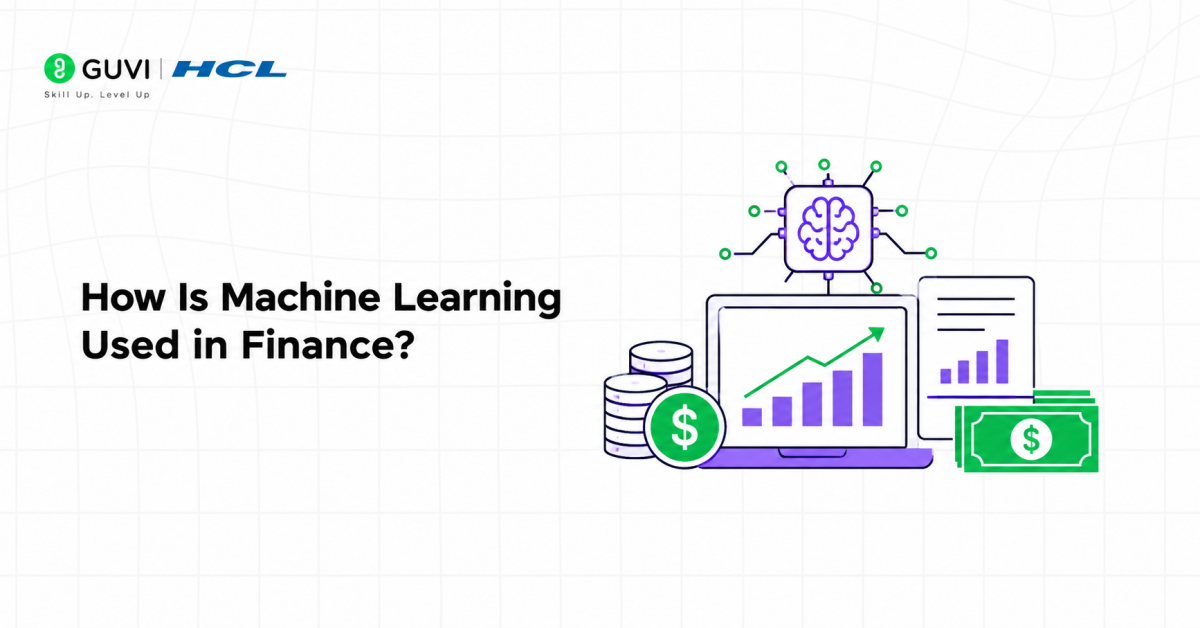
Machine learning helps analyze large datasets and identify patterns that may be difficult to capture through traditional reporting alone.
Common financial applications include:
- Credit risk prediction: Estimating the likelihood that a borrower may default.
- Fraud detection: Identifying unusual transactions or suspicious activity.
- Cash flow forecasting: Predicting future cash inflows and outflows.
- Customer segmentation: Grouping customers based on financial behavior.
- Revenue forecasting: Predicting sales or income using historical and relevant business data.
- Anomaly detection: Flagging unusual expenses, transactions, or financial movements for further investigation.
For example, a financial analyst who regularly reviews loan performance could learn to build a model that estimates default risk. The analyst’s finance knowledge helps define relevant variables, while machine learning provides methods for learning patterns from historical data.
A model that predicts financial outcomes accurately is not automatically suitable for real-world use. Financial decisions may also require explainability, fairness checks, data privacy, and compliance with applicable regulations.
What Skills Should Financial Analysts Learn First?
You do not need to learn every Data Science tool at once. Build your skills in a practical sequence.
1. Statistics and Probability
Start with averages, distributions, correlation, sampling, probability, and hypothesis testing. These concepts help you understand data and evaluate whether observed patterns are meaningful.
2. SQL
SQL helps you retrieve, filter, join, and summarize data stored in databases.
Practice queries involving transaction records, customer accounts, expenses, and revenue tables.
3. Python
Learn Python fundamentals, including variables, loops, functions, lists, dictionaries, and working with files.
Then explore libraries such as:
- Pandas for data manipulation
- NumPy for numerical operations
- Matplotlib for visualization
- scikit-learn for machine learning
4. Data Cleaning and Visualization
Financial data can contain missing values, duplicate transactions, inconsistent categories, and incorrect formats. Learn how to identify and address these issues before modeling.
Visualization also helps you identify trends and explain findings to stakeholders.
5. Machine Learning Fundamentals
Once you understand the basics, learn regression, classification, decision trees, random forests, model evaluation, and cross-validation.
Focus on understanding when to use each technique rather than memorizing algorithms.
How Can Financial Analysts Learn Machine Learning Through Projects?
Practical projects help connect your existing financial knowledge with new technical skills.
Consider these beginner-friendly ideas.
Project 1: Revenue Forecasting
Use historical revenue data to identify trends and compare a simple baseline forecast with a suitable predictive model.
Project 2: Credit Risk Classification
Use an appropriate public dataset to predict whether a borrower may default. Evaluate precision, recall, and other relevant metrics rather than relying only on accuracy.
Project 3: Expense Anomaly Detection
Analyze transaction records to flag unusual spending patterns for further review.
For each project, document the business problem, dataset, data preparation, methodology, evaluation results, and limitations.
Avoid presenting a model’s predictions as guaranteed outcomes. Your objective is to demonstrate sound analytical thinking and responsible use of data.

How Do You Evaluate a Machine Learning Model in Finance?
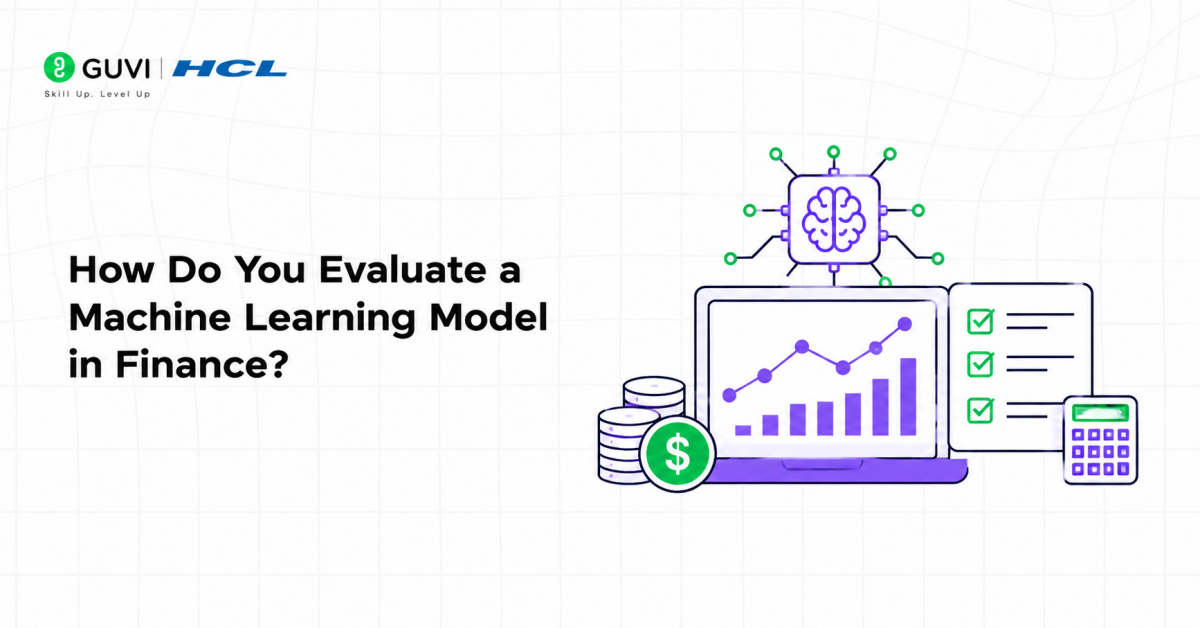
Building a machine learning model is only one part of the process. Financial analysts moving into Data Science must also understand whether a model makes reliable predictions and whether those predictions are useful for business decisions.
Start by learning these evaluation techniques:
- Train-test split: Separate data used to train the model from data used to evaluate it.
- Precision and recall: Measure how effectively a model identifies relevant cases, such as potentially fraudulent transactions.
- Mean absolute error (MAE): Measure the average absolute difference between predicted and actual values in forecasting tasks.
- Cross-validation: Assess how consistently a model performs across different data subsets.
- Time-based validation: For financial forecasting, evaluate models using chronological data splits to avoid using future information to predict the past.
For example, a credit risk model should not be judged by accuracy alone. Missing a high-risk borrower and incorrectly flagging a reliable borrower can have different financial consequences.
Best Practice: Always compare your model with a simple baseline and document its limitations before recommending it for business use.
Can You Become a Data Scientist Without Leaving Finance?
Yes. You can build technical skills while continuing to use your finance experience.
Depending on your current responsibilities, possible intermediate roles include Financial Data Analyst, Risk Analyst, Business Intelligence Analyst, or Analytics Analyst.
These positions can help you gain more experience with datasets, SQL, reporting automation, and statistical analysis. You can then target Data Scientist positions that match your growing technical capabilities.
However, these roles are not guaranteed stepping stones. Review job descriptions carefully because some focus mainly on reporting, while others involve programming, experimentation, or predictive modeling.
Your finance experience is most valuable when you can combine it with demonstrable technical skills.
Pro Tip: Start with a simple statistical or rule-based baseline before building a complex model. This helps you determine whether machine learning provides a meaningful improvement.
What Mistakes Should You Avoid When Learning Machine Learning?
Several common mistakes can slow your progress.
- Skipping statistics: Without understanding the underlying concepts, it is harder to evaluate whether a model’s results are meaningful.
- Learning algorithms without projects: Employers need evidence that you can apply your knowledge to real problems.
- Ignoring data leakage: Using information that would not have been available at prediction time can make a model appear more accurate than it really is.
- Using accuracy alone: For imbalanced financial datasets, metrics such as precision, recall, and the cost of incorrect predictions may be more informative.
- Ignoring explainability: Financial predictions may need clear explanations, particularly when they influence credit, risk, or other important decisions.
Conclusion
Financial analysts do not need to abandon their existing expertise to move into Data Science. Your understanding of financial statements, business performance, risk, and forecasting can provide a strong foundation for solving analytical problems.
However, if you want to build predictive models, you will need to develop skills in statistics, Python, SQL, and machine learning. Start with the fundamentals, apply them through financial projects, and learn to evaluate model performance responsibly.
The strongest transition combines your financial knowledge with practical technical ability. You do not need to learn everything at once, but you should build the skills required for the specific Data Scientist roles you want to pursue.
FAQs
1. Is machine learning mandatory for financial analysts?
No. Many financial analyst roles focus on financial modeling, reporting, Excel, and business analysis. Machine learning becomes more relevant when the role involves predictive modeling or advanced analytics.
2. Can a financial analyst become a Data Scientist?
Yes. A financial analyst can transition by learning statistics, SQL, Python, data preparation, and machine learning while building relevant projects.
3. Should financial analysts learn Python before machine learning?
Yes, basic Python is a practical starting point. It helps you manipulate datasets, automate analysis, visualize information, and implement machine learning algorithms.
4. Which machine learning algorithms are useful in finance?
Linear and logistic regression, decision trees, random forests, and anomaly detection techniques can be useful, depending on the problem and dataset.
5. How can I demonstrate machine learning skills on my resume?
Build projects using relevant financial datasets and explain the business problem, methodology, evaluation metrics, and limitations. Include only skills and results you can confidently discuss.
6. Is finance experience useful for a Data Scientist?
Yes. Finance experience can help you understand financial behavior, business risks, and industry-specific problems. You still need to demonstrate the technical skills required by the role.
Success Stories

About the Author
HCL GUVI
This article was selected and published as part of the HCL GUVI AI Blogathon 2026, an initiative designed to encourage students, AI enthusiasts, and aspiring tech writers to simplify complex AI concepts through impactful technical content. The contest recognized high-quality, original, and insightful AI-focused blogs, with selected authors receiving publication opportunities on the HCL GUVI blog platform along with official author credits and recognition.
View all posts by HCL GUVI
Connect with me @








Did you enjoy this article?