


Data Science Articles
Which Data Analytics Certifications Help Accountants and Finance Professionals?
Data Analyst Jobs for BPO Professionals - Best Guide to Roles You Can Apply For
Excel SQL Python for BPO Professionals Best Guide to Move Into Data Science
Do Financial Analysts Need Machine Learning to Become Data Scientists?


Get In Touch For Details! Request More Information
How to Write a Data Analyst Resume With BPO Experience That Gets Your Skills Noticed
Oct 13, 2026 3 Min Read 24 Views
(Last Updated)
Switching from BPO to Data Analytics requires more than learning technical tools. Your resume must show recruiters how your existing experience connects with the responsibilities of a Data Analyst. If you have worked with customer metrics, quality reports, service-level agreements (SLAs), or performance monitoring, you may already have relevant business knowledge. The goal is to present that experience clearly while demonstrating your ability to analyse data.
Table of contents
- TL;DR
- Quick Answer
- How Is a BPO Resume Different From a Data Analyst Resume?
- Which BPO Skills Should You Highlight on Your Resume?
- Reporting and Performance Monitoring
- Problem-Solving
- Communication
- Process Improvement
- How Should You Structure Your Data Analyst Resume?
- How Can You Write a Strong Professional Summary?
- Which Data Analyst Skills and Keywords Should You Include?
- How Can Projects Strengthen Your Resume?
- Common Resume Mistakes to Avoid
- Conclusion
- FAQs
- Can I apply for Data Analyst jobs with BPO experience?
- Should I include my entire BPO work history?
- Which skills should I highlight on my resume?
- Can I become a Data Analyst without professional analytics experience?
- Should I include BPO metrics on my resume?
- How can I make my resume ATS-friendly?
- Do I need a separate Data Analyst resume?
TL;DR
- Highlight relevant BPO responsibilities instead of listing routine duties.
- Include technical skills such as Excel, SQL, and Power BI only if you can use them.
- Connect your experience with reporting, performance monitoring, and problem-solving to analytics.
- Add practical projects to demonstrate your technical abilities.
- Tailor your resume to each Data Analyst job description.
Quick Answer
| To write a Data Analyst resume with BPO experience, highlight relevant reporting responsibilities, transferable skills, technical knowledge, and analytics projects. Use measurable achievements when you can verify them, and tailor your resume to the role’s requirements. See this Data Analyst resume guide from Indeed India for additional formatting guidance. |
How Is a BPO Resume Different From a Data Analyst Resume?
A traditional BPO resume often emphasises customer handling, communication, process compliance, and service delivery. A Data Analyst resume needs to demonstrate analytical thinking, technical proficiency, data interpretation, and evidence-based problem-solving.
You do not need to remove your BPO experience. Instead, identify responsibilities that demonstrate relevant skills.
For example, monitoring daily quality scores can show familiarity with performance metrics. However, analysing changes in those scores, identifying patterns, and explaining the findings demonstrates a stronger connection to data analysis.
The distinction matters: your resume should show what you can analyse, not simply what you have monitored.
Which BPO Skills Should You Highlight on Your Resume?
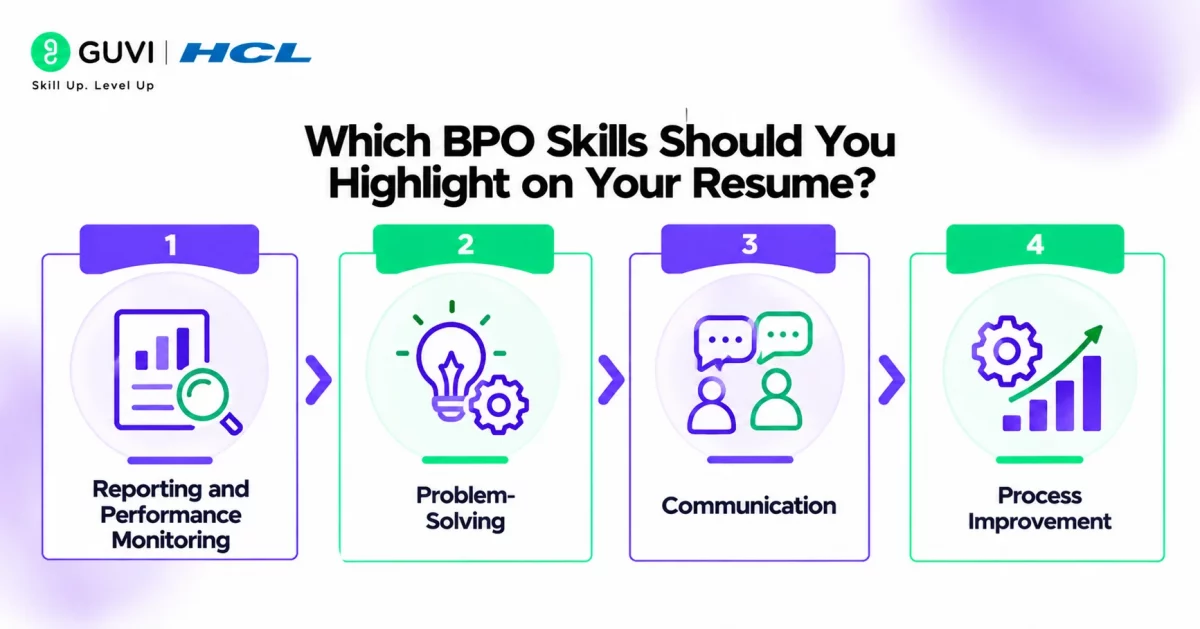
Choose skills that genuinely reflect your experience and support the Data Analyst role you want.
1. Reporting and Performance Monitoring
If you prepared daily, weekly, or monthly reports, mention the metrics you tracked and the purpose of those reports.
For example, reporting on service-level performance or quality scores can demonstrate familiarity with operational data.
2. Problem-Solving
Describe situations where you investigated recurring errors, identified process issues, or helped resolve performance gaps. Explain your actual contribution rather than claiming analytical achievements you did not deliver.
3. Communication
Data Analysts must communicate findings to people who may not have technical backgrounds. Experience explaining performance results to team leads or managers can demonstrate this transferable skill.
4. Process Improvement
If you helped improve a workflow, explain the problem, your contribution, and the outcome. Include measurable results only when you have reliable figures.
How Should You Structure Your Data Analyst Resume?
A clear structure helps recruiters find relevant information quickly.
- Contact information: Include your name, professional email address, phone number, and LinkedIn profile.
- Professional summary: Briefly introduce your BPO background, relevant analytical exposure, and technical skills.
- Technical skills: List tools you can confidently use, such as Excel, SQL, and Power BI.
- Work experience: Highlight relevant responsibilities and verified achievements.
- Projects: Showcase independent or professional data analysis projects.
- Education and certifications: Include relevant qualifications and completed training.
Keep the layout simple and readable. Use standard section headings and avoid decorative elements that make important information difficult to find.
How Can You Write a Strong Professional Summary?
Your summary should connect your previous experience with your target position without claiming that you are already an experienced Data Analyst.
Example:
“BPO professional with experience in customer operations, performance monitoring, and quality reporting. Skilled in Excel, SQL, and Power BI, with practical experience analysing datasets through independent projects. Seeking to apply operational knowledge and analytical skills in a Data Analyst role.”
Use this example only after developing the listed technical skills. If you have not learned SQL or Power BI yet, mention the skills you genuinely possess.
Independent analytics projects can help demonstrate practical skills when your previous job did not involve formal data analysis. A well-documented project can show how you clean data, investigate a question, interpret findings, and communicate conclusions.

Which Data Analyst Skills and Keywords Should You Include?
Recruiters and applicant tracking systems may look for skills relevant to the job description. Include appropriate keywords naturally throughout your resume.
Technical keywords:
- Microsoft Excel
- SQL
- Power BI
- Data cleaning
- Data visualisation
- Dashboard development
- Basic statistics
- Reporting and data analysis
Transferable skills:
- Analytical thinking
- Problem-solving
- Attention to detail
- Communication
- Performance monitoring
- Process improvement
- Stakeholder communication
Do not add every keyword to improve your chances of passing screening. Prioritise the skills required for the specific Data Analyst job and be prepared to demonstrate them during an interview.
How Can Projects Strengthen Your Resume?
If your BPO role did not involve hands-on data analysis, independent projects can demonstrate your technical abilities.
Consider these project ideas:
1. Customer Complaint Analysis: Use a public or synthetic dataset to categorise complaints, compare trends, and identify recurring issues.
2. Service-Level Dashboard: Use Power BI to visualise response times, workload, and service-level performance.
3. Quality Score Analysis: Examine sample quality scores across categories or time periods and present your findings.
For each project, mention the objective, dataset, tools used, analysis performed, and key findings. Include a portfolio or GitHub link when it contains relevant work.
Never publish confidential customer or employer data.
Common Resume Mistakes to Avoid
- Listing skills you cannot demonstrate: Recruiters may test your knowledge during interviews.
- Focusing only on customer service: Include relevant reporting, metrics, and process-related responsibilities.
- Using vague achievements: Explain what you did and why it mattered.
- Ignoring the job description: Adjust relevant skills and project details for each application.
- Exaggerating experience: Distinguish professional responsibilities from independent learning and portfolio projects.
Conclusion
A strong Data Analyst resume with BPO experience connects your existing business knowledge with demonstrable analytical skills. Highlight relevant reporting responsibilities, learn the technical tools required for your target roles, and build projects that prove your abilities.
You do not need to hide your BPO background or misrepresent your experience. Present it strategically, focus on relevant evidence, and tailor your resume to the Data Analyst jobs you want.
FAQs
1. Can I apply for Data Analyst jobs with BPO experience?
Yes. You can apply if you meet the role’s requirements and can demonstrate relevant technical and analytical skills.
2. Should I include my entire BPO work history?
Include relevant responsibilities and achievements from your work history. Prioritise details that support your target role.
3. Which skills should I highlight on my resume?
Depending on the job, relevant skills may include Excel, SQL, Power BI, data cleaning, visualisation, and problem-solving.
4. Can I become a Data Analyst without professional analytics experience?
Yes. Independent projects can demonstrate your ability to analyse data and use relevant tools.
5. Should I include BPO metrics on my resume?
Yes, when relevant. Explain the metrics you monitored and your contribution, ensuring all claims are accurate.
6. How can I make my resume ATS-friendly?
Use clear headings, relevant job-description keywords, readable formatting, and accurate descriptions of your skills.
7. Do I need a separate Data Analyst resume?
It is useful to maintain a tailored resume for Data Analyst applications rather than sending a generic BPO resume unchanged.
Success Stories

About the Author
HCL GUVI
This article was selected and published as part of the HCL GUVI AI Blogathon 2026, an initiative designed to encourage students, AI enthusiasts, and aspiring tech writers to simplify complex AI concepts through impactful technical content. The contest recognized high-quality, original, and insightful AI-focused blogs, with selected authors receiving publication opportunities on the HCL GUVI blog platform along with official author credits and recognition.
View all posts by HCL GUVI
Connect with me @









Did you enjoy this article?