


Data Science Articles
CA to Data Scientist: Skills, Roadmap and Career Path
Can a Senior Accountant With 2–3 Years of Experience Switch to Data Analytics?
CA to Data Analyst: Is It a Good Career Move?
How to Write a Data Analyst Resume With BPO Experience That Gets Your Skills Noticed

Get In Touch For Details! Request More Information
Data Analytics vs Data Science for Finance Professionals: Which Path Fits?
Oct 13, 2026 4 Min Read 27 Views
(Last Updated)
Finance professionals work with numbers every day, from tracking expenses and monitoring budgets to evaluating risks and preparing financial reports. These skills can provide a strong foundation for moving into technology-driven roles. However, when exploring new opportunities, many professionals face a common question: should they choose data analytics or data science?
Understanding data analytics vs data science for finance can help you make a career decision based on your existing experience, technical interests, and long-term goals. Both fields use data to solve business problems, but they differ in the type of work, tools, and technical knowledge involved.
If you have experience in accounting, banking, financial planning, auditing, or reporting, you may already possess valuable domain knowledge. The next step is identifying which career path aligns with your strengths and the skills you are willing to develop.
Table of contents
- TL;DR
- What Is the Difference Between Data Analytics and Data Science in Finance?
- Which Career Path Is Better for Finance Professionals?
- When Should You Choose Data Analytics?
- When Should You Choose Data Science?
- What Skills Do Finance Professionals Need for Each Path?
- How Can You Transition From Finance to Either Career?
- Can You Move From Data Analytics to Data Science Later?
- Conclusion
- FAQs
- Is Data Analytics or Data Science better for finance professionals?
- Can an accountant become a data analyst?
- Do finance professionals need Python for Data Analytics?
- Is Python enough to become a data scientist in finance?
- What projects should finance professionals include in a portfolio?
- Can I switch to Data Science without a mathematics degree?
TL;DR
- Data Analytics focuses on analyzing historical and current data to identify trends, explain business performance, and support decisions.
- Data Science uses statistics, programming, and machine learning to build predictive models and solve complex problems.
- Finance professionals can transition into either field by combining financial knowledge with technical skills.
- Data Analytics is often a practical starting point for professionals experienced in reporting and financial analysis.
- Data Science may suit those interested in advanced statistics, Python programming, and predictive modeling.
- Your choice should depend on your interests, current skills, and preferred type of work rather than salary alone.
What Is the Difference Between Data Analytics and Data Science in Finance?
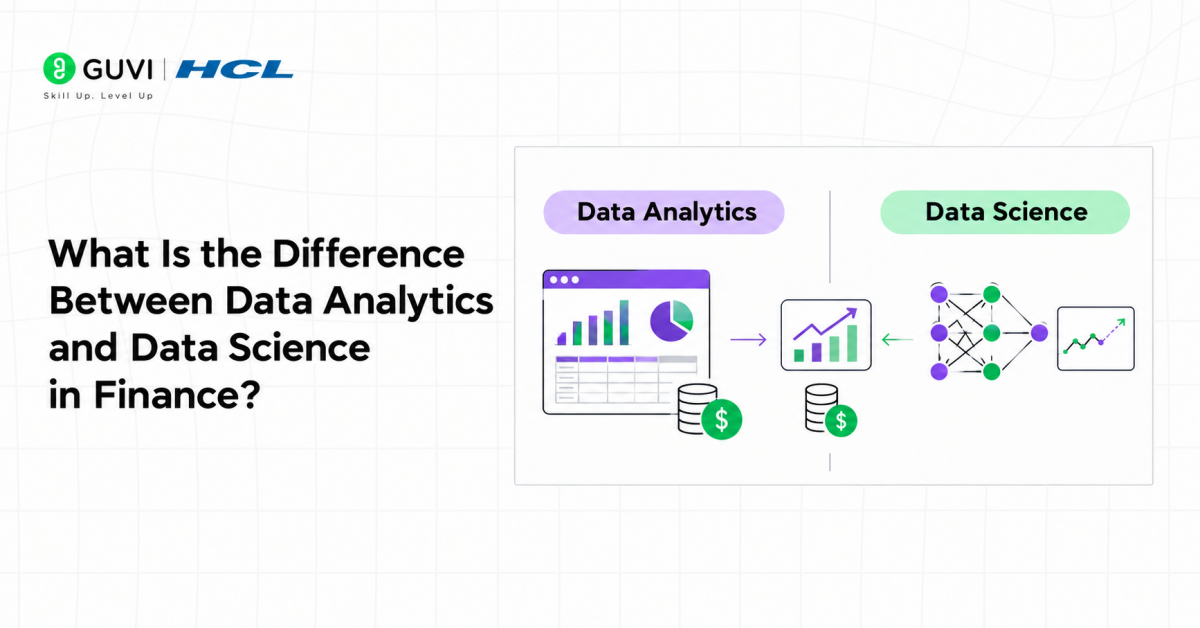
Both fields help financial organizations make informed decisions, but they approach problems differently.
Data Analytics examines financial data to understand what happened, why it happened, and what actions a business should consider. Analysts may study revenue trends, expenses, customer transactions, and operational performance.
Data Science goes further by applying statistical techniques and machine learning to identify complex patterns, estimate future outcomes, and automate certain predictions.
For example, a bank may hire a data analyst to investigate why loan approval times increased. A data scientist might develop a model to estimate the likelihood of loan default using relevant historical data.
The main difference is the objective: analytics emphasizes interpreting data and supporting decisions, while data science often involves developing predictive or statistical solutions.
Which Career Path Is Better for Finance Professionals?
The right choice depends on your previous experience and the kind of problems you enjoy solving.
1. When Should You Choose Data Analytics?
Data Analytics may be a good fit if your current responsibilities involve financial reports, spreadsheets, reconciliations, budgeting, or performance tracking.
Consider this path if you enjoy:
- Preparing reports and explaining financial trends.
- Comparing actual performance with budgets or forecasts.
- Identifying unusual expenses or revenue changes.
- Presenting insights to managers and business teams.
- Using data to recommend practical improvements.
For example, an accountant could analyze monthly expense data to identify departments that consistently exceed their budgets. A banking professional could examine customer transaction patterns to understand changes in product usage.
These tasks build on familiar financial concepts while introducing tools such as Excel, SQL, and Power BI.
2. When Should You Choose Data Science?
Data Science may suit you if you enjoy mathematics, statistics, programming, and investigating problems that require more advanced analysis.
Consider this path if you want to:
- Build models that estimate credit risk.
- Predict cash flow or customer payment behavior.
- Identify potentially fraudulent transactions.
- Apply machine learning to financial datasets.
- Experiment with statistical methods and predictive algorithms.
For example, a data scientist might develop a model that estimates the probability of a borrower missing future loan payments. This requires suitable data, feature preparation, model evaluation, and an understanding of the risks involved.
Data Science generally requires deeper technical preparation, particularly in Python, statistics, and machine learning.
Finance professionals already work with concepts such as risk assessment, budgeting, forecasting, and variance analysis. These skills can provide useful domain knowledge when transitioning into Data Analytics or Data Science, especially when combined with practical technical skills.
What Skills Do Finance Professionals Need for Each Path?
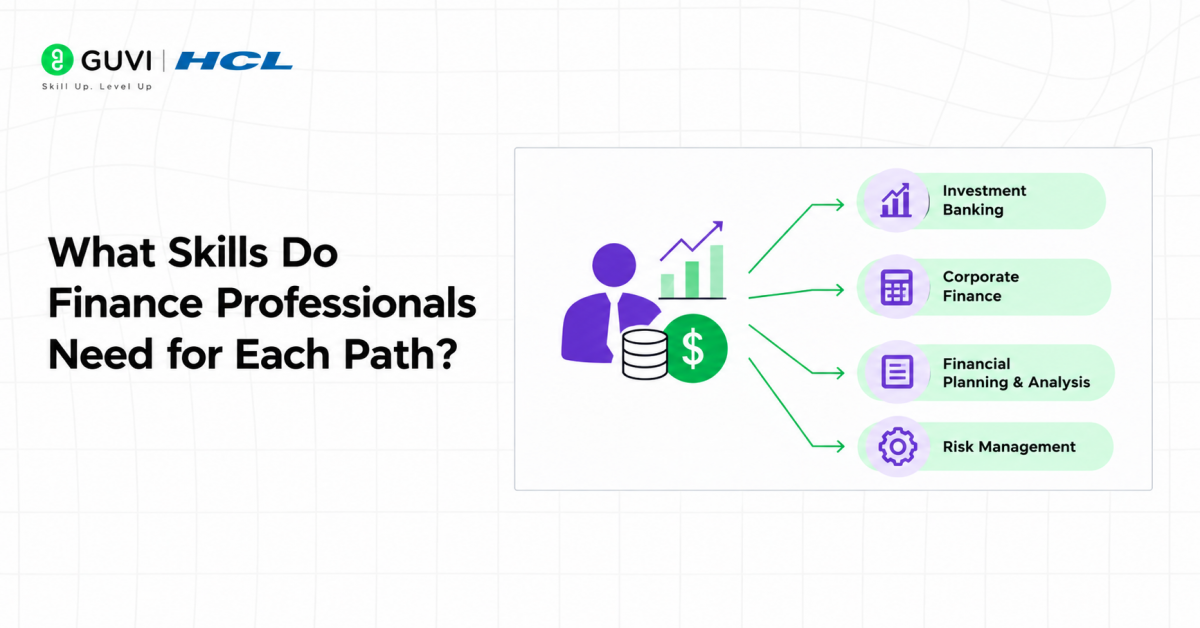
You do not need to abandon your finance background to enter either field. Instead, build technical skills that complement your existing knowledge.
| Skill | Data Analytics | Data Science |
|---|---|---|
| Excel | Important | Useful |
| SQL | Essential for many roles | Important |
| Power BI or Tableau | Commonly used | Useful for communicating results |
| Statistics | Foundational | More advanced |
| Python | Helpful and often required | Core skill |
| Machine learning | Usually optional | Important for many roles |
| Financial knowledge | Valuable | Valuable |
For Data Analytics, begin with Excel, SQL, data cleaning, visualization, and business communication. Learn to transform raw information into clear insights.
For Data Science, strengthen your programming and statistical foundations before moving into machine learning. Learn how to prepare datasets, select suitable models, evaluate predictions, and explain limitations.
Job requirements vary by employer, so review actual job descriptions before deciding which skills to prioritize.
Best Practice: Review job descriptions for your target role before choosing what to learn. Identify the most frequently requested skills, such as SQL, Excel, Power BI, Python, or machine learning, and prioritize them based on your current experience and career goals.

How Can You Transition From Finance to Either Career?
A structured learning plan can help you build skills without starting your career from scratch.
Step 1: Identify your transferable skills.
List your experience with financial reports, budgets, reconciliations, audits, forecasting, or risk assessment. These activities may help you understand business questions and interpret results.
Step 2: Learn the required tools.
For Data Analytics, prioritize Excel, SQL, and Power BI. For Data Science, build on SQL and Python with statistics and machine learning.
Step 3: Build finance-related projects.
Create projects that demonstrate how you apply technical skills to realistic financial problems.
Examples include:
- Budget variance dashboard: Compare planned and actual expenses.
- Loan repayment analysis: Use SQL to examine repayment patterns.
- Cash flow forecasting: Analyze historical cash flow and evaluate a forecasting approach.
- Credit risk model: Build and evaluate a machine learning model using an appropriate public dataset.
Use public or synthetic datasets. Never upload confidential customer, employer, or financial records to a public portfolio.
Step 4: Document your findings.
Explain the business problem, tools used, analysis process, key findings, and limitations. A good project demonstrates your reasoning, not just the final chart or model.
Step 5: Apply for relevant roles.
Look for positions that match your current skills, including financial data analyst, reporting analyst, business analyst, risk analyst, or junior data analyst roles. For Data Science, target opportunities whose requirements match your programming and modeling experience.
Pro Tip: Build your portfolio around financial problems you already understand. A budget variance dashboard or loan repayment analysis can demonstrate both your finance knowledge and your ability to apply data tools to real-world business questions.
Can You Move From Data Analytics to Data Science Later?
Yes. Data Analytics can provide a useful foundation for Data Science, particularly if you develop strong SQL, data preparation, and analytical thinking skills.
You can gradually add Python, probability, statistical modeling, and machine learning. Finance-related projects can help you connect these new skills to your existing industry knowledge.
However, moving from analytics to data science is not automatic. You will still need to demonstrate the technical depth required for the roles you pursue.
If you are unsure which direction to take, start by exploring analytics projects. You can then decide whether you prefer interpreting business performance or building predictive models.
Conclusion
Choosing between data analytics and data science does not mean your finance experience becomes irrelevant. Your understanding of financial processes, business risks, and performance metrics can help you solve problems in either field.
If you enjoy reports, dashboards, and explaining business performance, Data Analytics may be the better starting point. If you are interested in programming, advanced statistics, and predictive models, Data Science may align more closely with your goals.
Start by reviewing job descriptions, learning the core tools, and completing a finance-related project. The best career path is the one that matches your interests and gives you a realistic opportunity to build the skills employers need.
FAQs
1. Is Data Analytics or Data Science better for finance professionals?
Data Analytics may suit professionals experienced in reporting, budgeting, and financial analysis. Data Science may be a better fit for those interested in programming, advanced statistics, and predictive modeling.
2. Can an accountant become a data analyst?
Yes. Accountants can build on their knowledge of financial statements, reconciliations, and reporting by learning Excel, SQL, and a visualization tool such as Power BI.
3. Do finance professionals need Python for Data Analytics?
Not every Data Analytics role requires Python. However, SQL, Excel, and visualization tools are commonly useful, and Python can expand the range of analyses you can perform.
4. Is Python enough to become a data scientist in finance?
No. Python is important, but aspiring data scientists also need statistics, data preparation, model evaluation, and machine learning knowledge, along with relevant project experience.
5. What projects should finance professionals include in a portfolio?
Useful projects include budget variance dashboards, expense analysis, cash flow forecasting, loan repayment analysis, and credit risk modeling. Choose projects that demonstrate skills relevant to your target role.
6. Can I switch to Data Science without a mathematics degree?
It is possible, but you will need to learn the relevant mathematical and statistical concepts. Start with probability, descriptive and inferential statistics, and regression before progressing to machine learning.
Success Stories

About the Author
HCL GUVI
This article was selected and published as part of the HCL GUVI AI Blogathon 2026, an initiative designed to encourage students, AI enthusiasts, and aspiring tech writers to simplify complex AI concepts through impactful technical content. The contest recognized high-quality, original, and insightful AI-focused blogs, with selected authors receiving publication opportunities on the HCL GUVI blog platform along with official author credits and recognition.
View all posts by HCL GUVI
Connect with me @










Did you enjoy this article?