


Data Science Articles
Accountant to Data Analyst: Skills, Roadmap and Career Path (2026)
SQL for customer support executives: What to Learn and How to Practice
Accounting Team Lead to Data Analytics Skills and Roadmap
Can an Insurance Professional Become a Data Analyst Early in Their Career?


Get In Touch For Details! Request More Information
Entry-Level Data Scientist Salary in India 2026: MAANG, Product & Service Companies
Oct 16, 2026 10 Min Read 22200 Views
(Last Updated)
Table of contents
- TL;DR
- Introduction
- What Is the Entry-Level Data Scientist Salary in India in 2026?
- Entry-Level Data Scientist Salary: Quick Comparison
- Salary Reality Check
- Why Do Data Scientist Salary Figures Differ So Much?
- Base salary vs total compensation
- Job title
- Company
- Location
- Experience
- Entry-Level Data Scientist Salary by Experience
- Data Scientist Salary by Company in India
- MAANG Data Scientist Salary in India: What Entry-Level Candidates Should Know
- Google Data Scientist Salary
- Amazon Data Scientist Salary
- MAANG Salary Comparison
- Product-Based vs Service-Based Company Salary
- Product vs Service Companies
- Data Scientist Salary by City in India
- What Skills Can Help You Move Towards Better-Paying Data Science Roles?
- Python
- SQL
- Statistics
- Machine Learning
- Data Visualisation
- Generative AI and Modern Data Skills
- How Can a Fresher Increase Their Data Scientist Salary Potential?
- Can a Non-IT Professional Become an Entry-level Data Scientist?
- Already Working in IT? Use Your Existing Experience
- Software Developer → Data Scientist
- Data Analyst → Data Scientist
- Tester → Data Science
- From Non-IT to Data Science: What Should You Do?
- What If You Don't Have Data Science Experience?
- What Can Your Data Scientist Career Growth Look Like?
- What Actually Determines Your Data Scientist Salary?
- Experience
- Technical skills
- Company
- Location
- Role
- Industry
- Compensation structure
- Is Data Science a Good Career Choice in 2026?
- Ready to Build Your Data Science Skills?
- Final Takeaway
- Our Milestone...
- Frequently Asked Questions
- What is the entry-level Data Scientist salary in India in 2026?
- What is the salary of a Data Scientist fresher in India?
- How much does an entry-level Data Scientist earn at MAANG companies?
- Do product companies pay more than service companies?
- Can a non-IT professional become an Entry-level Data Scientist?
- Which companies pay the highest salary to entry-level Data Scientists in India?
- What skills are needed for an entry-level Data Scientist job?
- Can an IT professional become a Data Scientist?
- Can a non-IT professional become a Data Scientist?
- Do I need a MAANG job to earn a high Entry-level Data Scientist salary?
TL;DR
- Entry-level Data Scientist salary in India in 2026 can vary widely based on company, location, skills and experience.
- For professionals with around 1 year of experience, reported salaries range from ₹3 LPA to ₹25 LPA.
- Product-based companies generally offer higher salary potential than IT services and consulting companies.
- Reported Data Scientist salaries range from around ₹4.5-₹32 LPA in Software Product companies and ₹4-₹25.6 LPA in IT Services & Consulting.
- Internet and technology companies can also offer competitive salaries, with reported Data Scientist salaries ranging from around ₹4.2-₹35 LPA.
- MAANG and other global technology companies can offer much higher total compensation, especially when bonuses and stock are included.
- Python, SQL, statistics, machine learning, data analysis and practical projects are important skills for getting started and moving towards better-paying roles.
- If you’re already working in IT, you can build on your existing experience instead of starting your career from zero.
- If you’re from a non-IT background, you can still move into Data Science by building the right technical foundation and using your existing domain knowledge.
- Your first salary is only the starting point. Stronger technical skills, practical experience and the ability to solve real business problems can help you move into higher-paying Data Science, ML and AI roles.
Introduction
₹6 LPA? ₹12 LPA? Or even ₹30 LPA+? How much can you actually earn as an entry-level Data Scientist in India in 2026?
If you have been checking Data Science jobs recently, you have probably seen salary numbers all over the place. One company may offer a fresher ₹6-8 LPA, while a product company may offer much more. Then you see MAANG salary figures and start wondering, “Can I really get that kind of package as a fresher?”
The truth is, there is no single entry-level Data Scientist salary in India. Your pay can change based on the company you join, your skills, location, projects and the kind of Data Science work you get into.
And when you compare MAANG, product and service companies, you also need to understand the difference between base salary and total compensation.
In this guide, we’ll break down entry-level Data Scientist salaries in India in 2026 across MAANG, product and service companies, the skills you actually need to get started, and how you can grow from your first Data Science job towards better-paying roles.
What Is the Entry-Level Data Scientist Salary in India in 2026?
There is no single salary figure that represents every entry-level Data Scientist in India.
Different salary platforms use different datasets and definitions. Some report base pay, some report total pay, and some combine several experience levels under the Data Scientist title.
For example,
- Levels.fyi currently puts the median total compensation for entry-level Data Scientists in India at ₹14.88 lakh per year, with the 25th percentile at around ₹9.91 lakh and the 75th percentile at around ₹23.04 lakh.
- Glassdoor’s Junior Data Scientist data is more conservative, showing a ₹6.25 lakh median total pay, with reported base pay between ₹4 lakh and ₹7.28 lakh.
- AmbitionBox’s experience-specific data for Data Scientists with one year of experience shows a much wider ₹3 lakh-₹25 lakh annual range, based on thousands of salary submissions.
There isn’t one reliable market-wide number for freshers. Current salary platforms show different ranges because they use different job titles, experience levels and compensation definitions.
For a fresher, the offer you receive can vary significantly by company and role, so the figures above are better used as market indicators rather than guaranteed starting salaries.
Entry-Level Data Scientist Salary: Quick Comparison
| Source | Role/Experience | Reported Salary |
| Levels. fyi | Entry-level Data Scientist | ₹9.9-₹23 LPA, 25th-75th percentile |
| Levels. fyi | Entry-level median total compensation | ₹14.9 LPA |
| Glassdoor | Junior Data Scientist | ₹4-₹7.28 LPA base pay |
| Glassdoor | Junior Data Scientist | ₹6.25 LPA median total pay |
| AmbitionBox | Data Scientist, 1 year | ₹3-₹25 LPA |
The important takeaway is not to pick the highest number and call it the “average salary.”
Salary depends heavily on how the role and compensation are measured.
Salary Reality Check
There is no single market-wide “fresher Data Scientist salary” in India.
The numbers above should be treated as market indicators, not guaranteed starting salaries. A ₹15 LPA total compensation package, for example, does not necessarily mean ₹15 LPA in fixed salary.
Before comparing two offers, check whether the reported figure includes:
- Fixed/base salary
- Variable pay
- Joining bonus
- Performance bonus
- Stock or RSUs
- Other benefits
This becomes especially important when comparing large product companies or MAANG companies with traditional IT services companies.
Why Do Data Scientist Salary Figures Differ So Much?
If you search for “Data Scientist salary in India,” you will probably find numbers ranging from ₹4 LPA to ₹20 LPA or even much higher.
That does not necessarily mean one source is wrong. There are several reasons for the difference.
1. Base salary vs total compensation
A traditional salary figure may represent fixed or base pay.
A product-company or MAANG compensation package can include:
- Base salary
- Annual bonus
- Joining bonus
- Stock or RSUs
- Other benefits
For example, Levels. fyi reports Google’s India Data Scientist L3 compensation at around ₹29.1 lakh total compensation, consisting of approximately ₹22.8 lakh base, ₹5.13 lakh stock, and ₹1.13 lakh bonus.
That is very different from saying “Google pays ₹29 lakh salary.”
It is total compensation, not simply the annual fixed salary.
2. Job title
A fresher may enter the industry as:
- Junior Data Scientist
- Data Scientist
- Associate Data Scientist
- Data Analyst
- Machine Learning Engineer
- Business Analyst
These roles can have different salary ranges even when the work overlaps.
3. Company
A product company with a strong data team may have a very different pay structure from an IT services company.
4. Location
Bengaluru, Hyderabad, Pune, Mumbai, Gurgaon and other major technology hubs can have different salary levels.
5. Experience
Even a one-year difference can change the salary range considerably. AmbitionBox’s available data, for example, shows the reported Data Scientist range moving from ₹3-₹25 LPA at one year to ₹3.7-₹24 LPA at two years and ₹4.5-₹26 LPA at three years.
Entry-Level Data Scientist Salary by Experience
Instead of treating every Data Scientist as a fresher, it makes more sense to look at salary as a career progression.
| Experience | General salary picture |
| 0-1 year | Entry-level/junior roles |
| 1-3 years | Early-career Data Scientist roles |
| 3-5 years | Mid-level roles with greater ownership |
| 5+ years | Senior and specialised roles |
Data Scientists with one year of experience are reported at ₹3-₹25 LPA, while three-year professionals are reported at ₹4.5-₹26 LPA.
However, these are broad market ranges, not guaranteed salaries.
A fresher should not look at the upper end of such a range and assume that it represents a typical starting offer.
Data Scientist Salary by Company in India
Company-wise salary data can be useful when you are comparing your options, but it should always be checked against the role and experience level.
Large technology and product companies may have higher compensation potential for certain Data Science roles, particularly where the work involves machine learning, experimentation, product analytics or AI.
At the same time, service-based companies can provide entry-level professionals with opportunities to work across different clients, industries and projects.
When comparing companies, look beyond the headline salary.
Consider:
| Factor | What to Check |
| Fixed pay | How much reaches your annual fixed salary? |
| Variable pay | Is any part performance-based? |
| Stock | Is equity included and what is the vesting schedule? |
| Role | What will you actually work on? |
| Learning | Will you work with relevant Data Science tools? |
| Growth | What roles can you move into later? |
| Location | Does the location affect your costs and lifestyle? |
A ₹15 LPA offer with a strong fixed component can be more attractive than another ₹15 LPA package with a large variable component.
Always compare the complete offer, not just the CTC number.
MAANG Data Scientist Salary in India: What Entry-Level Candidates Should Know
MAANG companies are often the first thing candidates search for when comparing Data Scientist salaries.
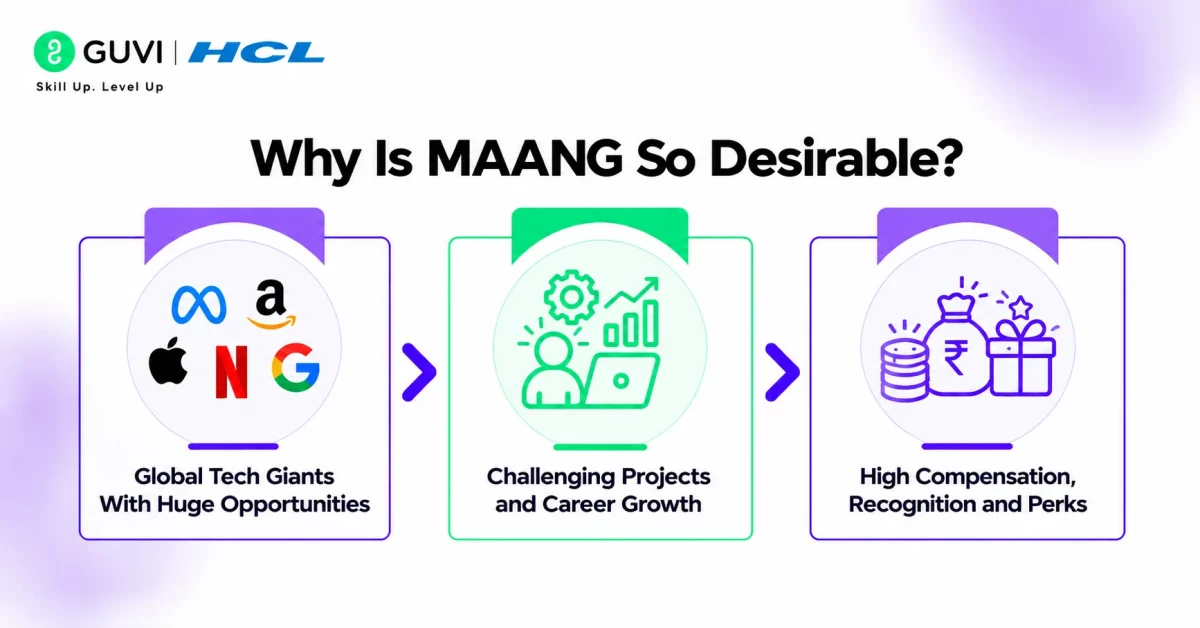
MAANG refers to Meta, Amazon, Apple, Netflix, and Google. These companies attract candidates because of their global presence, large-scale technology environments, challenging projects, and compensation structures.
But there is an important catch.
MAANG does not have one standard Data Scientist salary.
Compensation varies by company, level and the structure of the offer.
Google Data Scientist Salary
Levels. fyi currently lists Google’s Data Scientist levels in India from L3 upward. Google’s entry Data Scientist level, the reported median total compensation is about ₹29.1 lakh per year.
The breakdown is approximately:
- Base: ₹22.8 lakh
- Stock: ₹5.13 lakh
- Bonus: ₹1.13 lakh
However, there is an important detail here: Google L3 Data Scientists in India typically have 3-4 years of experience based on salary submissions.
So this should not be presented as the typical salary of a fresh graduate.
That distinction matters when researching MAANG salaries.
Amazon Data Scientist Salary
For Amazon, Levels.fyi currently lists L4 as the entry Data Scientist level in India.
The reported median total compensation for L4 is approximately ₹34.8 lakh per year, including around ₹26.3 lakh base salary, ₹5 lakh stock and ₹3.5 lakh bonus.
But again, Amazon L4 Data Scientists in India typically have around 3-4 years of experience based on its submissions.
So, while the figure is useful for understanding MAANG compensation, it should not be used as a promise of what a fresher can expect.
MAANG Salary Comparison
| Company | Level | Base | Stock | Bonus | Total Compensation |
| L3 | ₹22.8 LPA | ₹5.13 LPA | ₹1.13 LPA | ₹29.1 LPA | |
| Amazon | L4 | ₹26.3 LPA | ₹5 LPA | ₹3.5 LPA | ₹34.8 LPA |
The biggest lesson here is simple:
Do not compare a MAANG total compensation package with a service-company fixed salary and call it an apples-to-apples salary comparison.
Product-Based vs Service-Based Company Salary
Company type can influence your compensation, but it should not be treated as a simple rule that “product companies always pay more.”
The role itself matters.
A Data Scientist working on recommendation systems, experimentation, pricing or machine learning at a product company may have a different compensation structure from someone working on analytics or client projects at a service company.
Industry data shows broad differences across sectors. Its latest available figures put Data Scientist salaries in software product companies at ₹4.5-₹32 LPA, while IT services and consulting is reported across a broader experience range elsewhere on the platform.
Product vs Service Companies
| Factor | Product-Based Company | Service-Based Company |
| Main focus | Building and improving products | Client projects and services |
| Data work | Often closely tied to product decisions | Can vary by client/project |
| Hiring | Often role-specific | Can vary by project and account |
| Compensation | May include stock and bonuses | More commonly salary + variable components |
| Skills expected | Strong technical and product understanding | Technical + client/domain skills |
| Growth | Depends on role and company | Depends on project, skill and opportunities |
This does not mean one path is automatically better.
For someone starting, a service-based company can provide exposure to different industries and projects. A product company may provide deeper ownership of a specific product or data problem.
The better question is:
Which role will give you the skills and experience you need for your next career move?
Data Scientist Salary by City in India
Location can also influence Data Scientist compensation.
Major technology hubs such as Bengaluru, Hyderabad, Pune, Mumbai, Chennai and Gurugram have large technology and analytics job markets.
Bengaluru – ₹ 12LPA
New Delhi – ₹ 10LPA
Hyderabad – ₹ 9LPA
Mumbai – ₹10 LPA
Pune – ₹8 LPA
However, location should not be treated as a guarantee of higher salary.
The actual offer still depends on:
- Company
- Role
- Experience
- Skills
- Industry
- Compensation structure
If you are comparing salary data by city, make sure the sources are measuring similar roles and experience levels. Comparing a senior Data Scientist salary in Bengaluru with a fresher salary in Chennai, for example, will not give you a meaningful picture.
Netflix stands completely apart from other major tech companies by offering its senior data scientists top-of-market compensation that is primarily all-cash, allowing employees to choose exactly how they want to split their pay between a direct salary and stock options.
What Skills Can Help You Move Towards Better-Paying Data Science Roles?
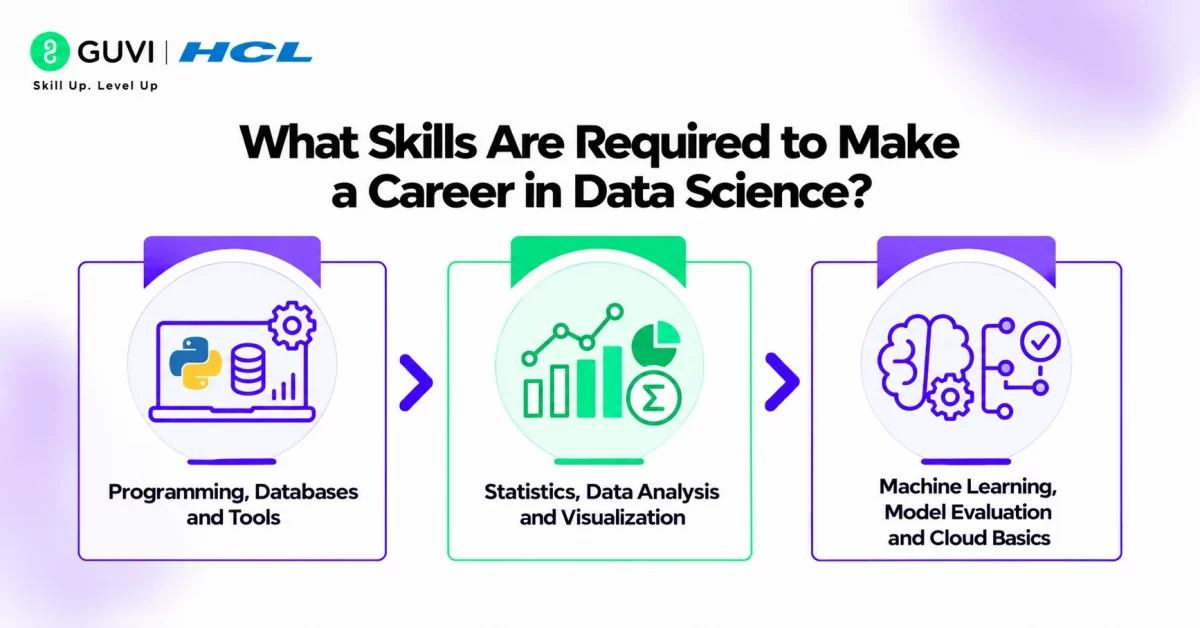
Salary is not attached to one particular skill. Learning Python does not automatically mean you will get a ₹10 LPA package. Similarly, adding a machine learning certificate to your resume does not guarantee a higher offer.
What matters is how well you can use your skills to solve real problems.
1. Python
Python remains one of the core programming languages used in Data Science.
You should be comfortable with:
2. SQL
SQL becomes particularly important when you work with real business data.
You should know how to:
- Write joins
- Use subqueries
- Work with aggregations
- Use window functions
- Clean and analyse data
3. Statistics
You do not need to memorise every statistical formula.
But you should understand concepts such as:
- Probability
- Distributions
- Hypothesis testing
- Correlation
- Regression
- Statistical significance
These concepts become useful when you need to explain whether a pattern in the data is actually meaningful.
4. Machine Learning
Once your basics are strong, you can move into:
- Regression
- Classification
- Clustering
- Feature engineering
- Model evaluation
- Model selection
The important part is not simply knowing the names of algorithms.
You should be able to explain why you selected a particular approach and what the results mean.

5. Data Visualisation
A Data Scientist still needs to communicate findings.
Tools such as Power BI, Tableau, Matplotlib and Seaborn can help depending on the role.
6. Generative AI and Modern Data Skills
For professionals already working in IT, adding modern AI skills can help expand the type of roles they can target.
Depending on the career direction, this can include:
- Generative AI
- LLM concepts
- Prompt engineering
- NLP
- Model deployment
- MLOps
- Cloud platforms
But the priority should still be strong fundamentals.
How Can a Fresher Increase Their Data Scientist Salary Potential?
If you are starting from zero, salary should not be the only goal. Your first objective should be becoming job-ready.
A practical progression could look like this:
Python + SQL
↓
Statistics + Data Analysis
↓
Machine Learning
↓
Real-world Projects
↓
Portfolio + Resume
↓
Interview Preparation
↓
Data Science Role
The biggest gap for many entry-level candidates is not theoretical knowledge. It is the ability to show you can work with messy data and solve a problem from beginning to end.
For example, instead of simply writing:
“Completed a machine learning project.”
Your portfolio should show:
- What problem you solved
- What dataset you used
- How you cleaned the data
- What approach you selected
- Why you selected it
- How you evaluated the model
- What the result means
That gives recruiters something concrete to assess.
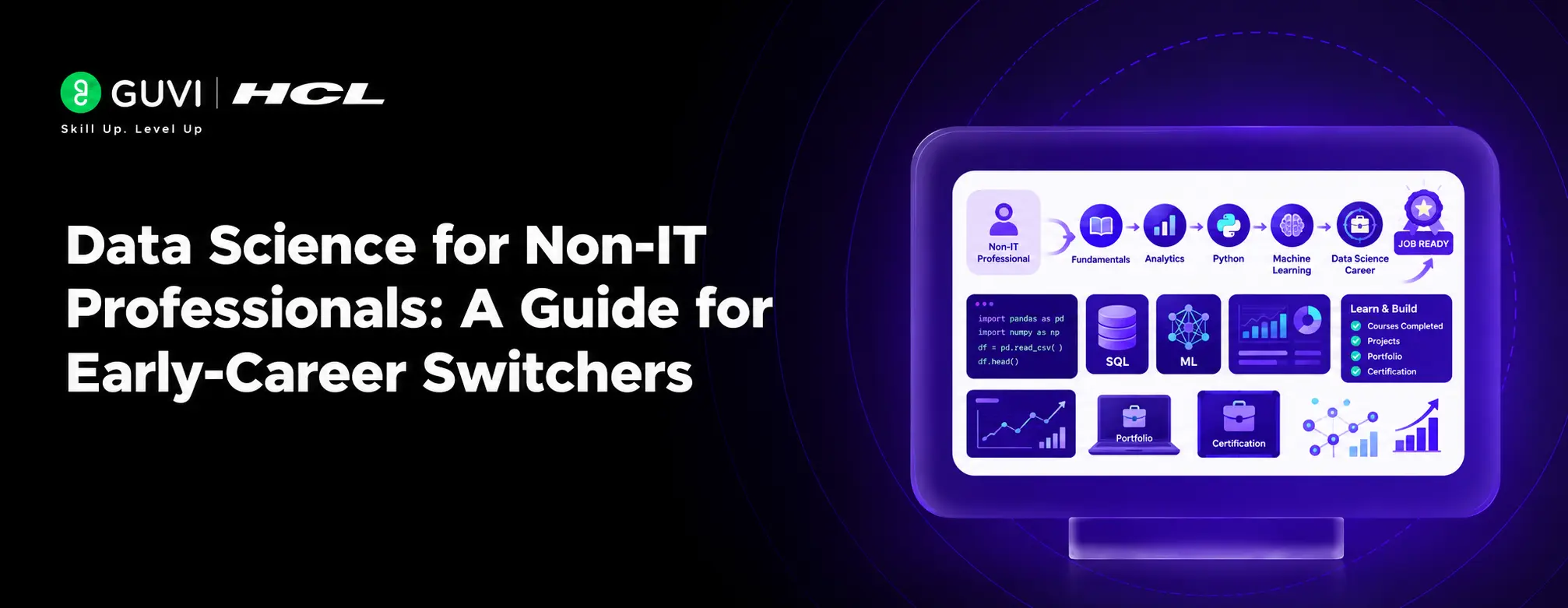
Can a Non-IT Professional Become an Entry-level Data Scientist?
Yes, but the transition usually requires more than completing a course.
If you come from a non-IT background, your existing domain knowledge can be useful.
For example, someone from finance can bring financial-domain knowledge into analytics or fintech. Someone from marketing may have an advantage when working with customer or marketing data.
But you still need to build the technical foundation.
A realistic path is:
Existing domain knowledge
→ Python + SQL
→ Statistics
→ Data analysis
→ Machine learning
→ Projects
→ Portfolio
→ Entry-level opportunity
The starting salary may also be different from the salary of someone entering with several years of directly relevant technical experience.
Already Working in IT? Use Your Existing Experience
If you’re already working in IT, you don’t necessarily need to start your career again from zero. Your existing role may already have given you useful technical experience.
Software Developer → Data Scientist
Your programming, database, API, and software development experience can give you a strong technical foundation.
Focus next on:
- Statistics
- Data analysis
- Machine learning
- Python for Data Science
- Data visualisation
Data Analyst → Data Scientist
This can be a relatively natural transition because you already work with data.
Build on your:
- SQL
- Excel
- BI
- Reporting
- Analytics
with:
- Python
- Statistics
- Machine learning
- Predictive analytics
Tester → Data Science
Testing can give you experience in analytical thinking, debugging, and structured problem-solving.
You may need to strengthen your programming, statistics, and machine learning knowledge, but your previous experience still has value.
Don’t hide your previous experience. Connect it to your new career.
From Non-IT to Data Science: What Should You Do?
For a non-IT professional, the technical learning curve can be bigger. But your previous industry knowledge can still be useful.
Someone from:
- Finance
- Marketing
- Operations
- Sales
- HR
- Business
may already understand real-world problems that companies want to solve using data.
The goal is to combine that domain knowledge with technical skills.
A practical learning path is:
Python → SQL → Statistics → Data Analysis → Machine Learning → Projects
For example, someone from marketing could combine their domain knowledge with SQL, Python, statistics, and analytics to build a data-focused career.
There is no need to pretend that your previous career never happened.
Use what you already know while building what you are missing.
What If You Don’t Have Data Science Experience?
This is where projects can help.
Instead of adding: “Created a machine learning project using Python.” to your resume, explain the problem you solved.
A strong project should show:
- The problem
- The dataset
- Data cleaning
- Your approach
- Why you selected the method
- Model performance
- Key findings
- Business impact
For example, instead of simply saying you built a customer churn model, explain which customer behaviours were associated with churn and how a company could use the model to identify customers who may leave.
That gives recruiters a better idea of how you think.
What Can Your Data Scientist Career Growth Look Like?
Your first offer does not determine your long-term earning potential.
As you gain experience, the role can move from executing individual tasks to taking ownership of larger problems.
A possible progression is:
Entry-Level Data Scientist
→ Data Scientist
→ Senior Data Scientist
→ Lead / Specialised Data Scientist
At each stage, employers may expect more than technical knowledge.
You may need to demonstrate:
- Better problem-solving
- Stronger statistical thinking
- Domain expertise
- Model development
- Production knowledge
- Business understanding
- Communication
- Project ownership
- Mentoring and leadership
This is also why simply collecting more tools is not always the best career strategy.
At some point, depth matters more than the number of technologies on your resume.
What Actually Determines Your Data Scientist Salary?
If two candidates have the same job title, they can still receive very different offers. The major factors include:
Experience
Relevant experience usually has a strong influence on compensation.
Technical skills
Python, SQL, statistics, machine learning and data engineering fundamentals can influence the roles you qualify for.
Company
Different companies have different salary bands and compensation structures.
Location
Technology hubs can have different salary levels from smaller markets.
Role
A Data Scientist, ML Engineer and Data Analyst may work with similar datasets but have different compensation structures.
Industry
Fintech, software, consulting, e-commerce and other sectors can have different salary levels.
Compensation structure
Two ₹15 LPA offers may not actually mean the same thing.
One could have a higher fixed component, while another could include a larger variable component or stock.
Always check the complete offer before comparing salaries.
Explore: Esssential Data Scientist Skills
Is Data Science a Good Career Choice in 2026?
Data Science remains an important career area as organisations continue using data for decision-making, automation, personalisation, forecasting, and AI.
But the entry-level market is also competitive. Knowing Python or completing a machine learning course isn’t enough on its own.
A stronger Data Scientist profile combines: Technical skills, problem-solving, business understanding and practical experience
That’s what can help you move from your first job towards more advanced and better-paying opportunities.
Ready to Build Your Data Science Skills?
If you’re looking to move into Data Science or strengthen your existing skills, a structured learning path can help you go beyond theory and work on practical, industry-relevant projects.
Explore HCL GUVI’s Advanced Data Science Course to build skills across Data Science, Machine Learning, AI, and Generative AI while working towards a career-ready portfolio.
Don’t just learn Data Science. Learn to apply it.
Final Takeaway
The entry-level Data Scientist salary in India can look very different depending on where you get the number from.
Some sources report junior salaries around the ₹5–₹7 LPA range, while broader entry-level compensation datasets show considerably higher numbers. MAANG compensation can go much higher again, but those packages often include stock and bonuses and may correspond to roles that are not intended for fresh graduates.
So, if you are starting your Data Science career, don’t chase a salary number without looking at what sits behind it.
Build strong fundamentals, work on real projects, understand the business problem behind the data and keep adding skills that open better roles.
For IT professionals looking to move into more advanced Data Science and AI work, structured learning can help bridge the gap between existing experience and the technical skills expected in these roles
Our Milestone…
Over the past couple of years, thousands of students have advanced their careers in Data Science using HCL GUVI’s Career Program.
The journey looks different for everyone. The Video featured below conveys how one of our bright candidates: Karthikeyan, became a data scientist coming from a mechanical background. Do hear him out as he tells us about his exceptional journey!
The talk session features the success story of Karthikeyan who had the ultimate goal to upskill themselves, similar to yours. It was their consistent persistence and efforts throughout the journey, ensuring placement assistance, 1:1 mentorship, and an advanced, structured, vetted curriculum that helped them kickstart their career in the most promising field of Data Science.
Frequently Asked Questions
1. What is the entry-level Data Scientist salary in India in 2026?
The median total compensation is around ₹14.9 LPA for entry-level Data Scientists in India, with the 25th-75th percentile at roughly ₹9.9-₹23 LPA.
2. What is the salary of a Data Scientist fresher in India?
There is no single fresher salary. Current salaries show a broad range depending on the company, role and location. ₹6.25 LPA is the median total pay for Junior Data Scientists, while ₹3-₹25 LPA is typical for Data Scientists with one year of experience.
3. How much does an entry-level Data Scientist earn at MAANG companies?
MAANG compensation varies by company and level. For example, ₹29.1 LPA total compensation for Google’s L3 Data Scientist level and about ₹34.8 LPA for Amazon’s L4 level in India. These figures include components such as base salary, stock and bonuses and should not be treated as typical fresher salaries.
4. Do product companies pay more than service companies?
They can, but it is not a universal rule. Compensation depends on the company, role, experience, location and compensation structure. Product-company packages may also include stock or larger variable components, making direct comparisons difficult.
5. Can a non-IT professional become an Entry-level Data Scientist?
Yes. A non-IT professional can transition into Data Science by building skills in Python, SQL, statistics, data analysis and machine learning and demonstrating those skills through practical projects. Existing domain knowledge can also be useful when targeting industry-specific Data Science roles.
6. Which companies pay the highest salary to entry-level Data Scientists in India?
MAANG and large product companies can offer some of the highest compensation packages, but the exact amount depends on the role, level, location, and whether stock and bonuses are included.
7. What skills are needed for an entry-level Data Scientist job?
Python, SQL, statistics, data analysis, machine learning, data visualisation, problem-solving, and communication are important foundations.
8. Can an IT professional become a Data Scientist?
Yes. IT professionals can use their existing programming, database, analytics, testing, or software experience and build the Data Science skills required for the target role.
9. Can a non-IT professional become a Data Scientist?
Yes. Non-IT professionals need to build their technical foundation but can also use their existing domain knowledge to make their profile more relevant.
10. Do I need a MAANG job to earn a high Entry-level Data Scientist salary?
No. Product companies, startups, service companies, and other technology organisations can all provide valuable experience. You can use your first role to build skills and target higher-paying opportunities later.
Success Stories

About the Author
Tushar Vinocha
A seasoned content writer with over four years of experience in crafting both technical and non-technical blogs. My passion for writing is fuelled by a relentless curiosity and a love for following-down the rabbit hole, recently leading me to explore the fascinating fields of Natural Language Processing (NLP), Human psychology and Philosophy. Here, you’ll find a blend of genuine insights, innovative ideas, and refusal to settle for the mundane.
View all posts by Tushar Vinocha
Connect with me @













Did you enjoy this article?