


Data Science Articles
Hypothesis Testing: A Beginner's Guide for Data Scientists
Pandas Advanced Techniques for Data Scientists
Data Warehouse vs. Data Lake vs. Lakehouse: What's the Difference?
SQL Window Functions: Practical Examples Every Analyst Needs


Get In Touch For Details! Request More Information
8 Different Data Science Roles Beyond “Data Scientist”
Jun 08, 2026 5 Min Read 4175 Views
(Last Updated)
“Data Science” is one of the most misused terms in tech hiring. Companies often post a single job description that blurs the lines between six different professions. The result? Candidates apply for roles they’re underprepared for, and professionals end up burnt out doing the work of three people.
Thisarticle breaks down all 8 major data science roles, what each one does, what skills you need, and what you can realistically earn in India in 2026.
Table of contents
- TL;DR Summary
- At-a-Glance Comparison Table
- Data Scientist
- Data Analyst
- Data Architect
- Data Engineer
- Statistician
- Database Administrator (DBA)
- Business Analyst
- Data and Analytics Manager
- Common Mistakes When Choosing a Data Science Role
- Conclusion
- FAQs
- What are the different data science roles?
- Which data science role is best for beginners?
- Which data science role pays the most in India in 2026?
- Do all data science roles require Python?
- What is the difference between a Data Analyst and a Data Scientist?
TL;DR Summary
Thinking about a career in data science but confused by all the job titles?
- Data science is not one job, it’s an umbrella of 8+ distinct roles, each with different tools, responsibilities, and salaries
- Roles range from Data Analyst (entry-friendly, ₹4–10 LPA) to Data Architect and Analytics Manager (senior, ₹20–37 LPA)
- Core skills across all roles: Python, SQL, and data visualisation tools like Power BI or Tableau
- Picking the right role depends on whether you prefer building systems, analysing data, or leading teams
- Most roles are in high demand, India is expected to create 11 million data and analytics jobs by 2026
At-a-Glance Comparison Table
This table gives you a quick snapshot before we dive deeper into each role.
| Role | Primary Tools | Main Focus | India Salary (2026) |
|---|---|---|---|
| Data Scientist | Python, R, SQL, Tableau | Modelling + analysis | ₹10–23 LPA |
| Data Analyst | SQL, Excel, Power BI | Reporting + insights | ₹4–10 LPA |
| Data Architect | SQL, Oracle, NoSQL, ETL | Data infrastructure design | ₹20–35 LPA |
| Data Engineer | Python, Spark, Kafka, AWS | Building data pipelines | ₹5–19 LPA |
| Statistician | R, SAS, SPSS | Statistical analysis | ₹4–9 LPA |
| Database Administrator | MySQL, Oracle, SQL Server | Database performance + security | ₹4–11 LPA |
| Business Analyst | Excel, Tableau, SQL | Process + business decisions | ₹5–12 LPA |
| Analytics Manager | Python, SQL, NoSQL | Leading data teams | ₹19–37 LPA |
Source: Glassdoor India
1. Data Scientist
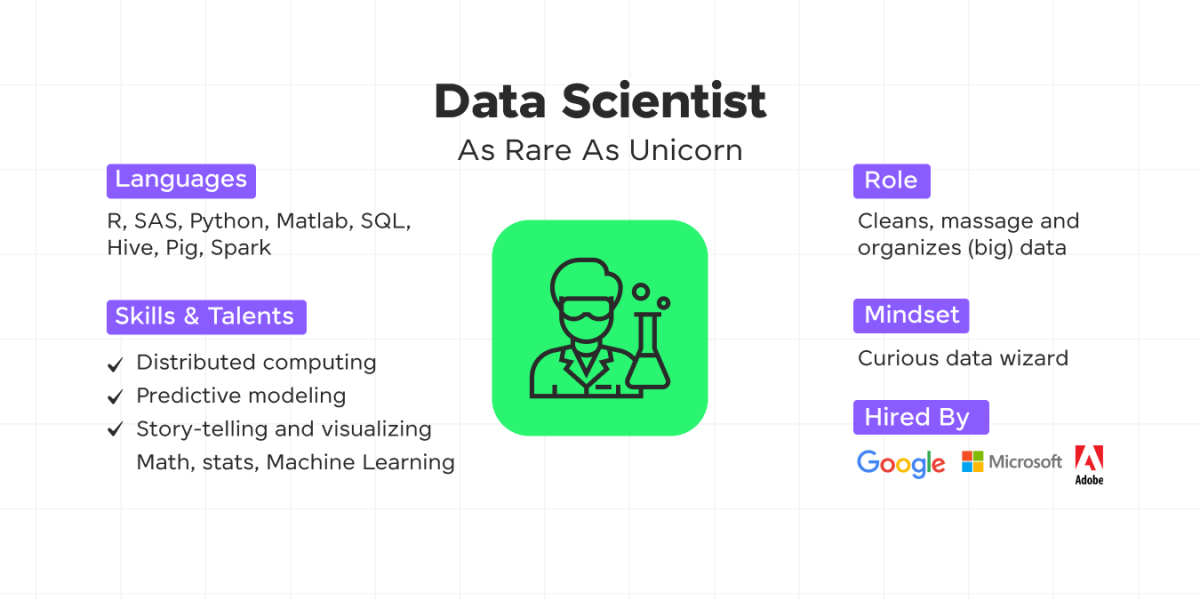
The Data Scientist is the role everyone pictures first, and for good reason. This is a broad, technically demanding position that sits at the intersection of statistics, programming, and business problem-solving.
In smaller companies, a data scientist often ends up doing the work of multiple roles. That can be a great learning opportunity, but it’s important to go in with clear expectations.
Key responsibilities:
- Collecting, cleaning, and analysing large datasets
- Building and evaluating machine learning models
- Visualising data and presenting insights to stakeholders
- Recommending solutions to complex business problems
Tools & skills: Python, R, SQL, Hive, Tableau, machine learning algorithms, statistical modelling
Top hiring companies: Amazon, Microsoft, Deloitte, PwC
India salary (2026): ₹10–23 LPA, with top earners reaching ₹37 LPA at product companies (Source: Glassdoor, April 2026) Glassdoor
2. Data Analyst
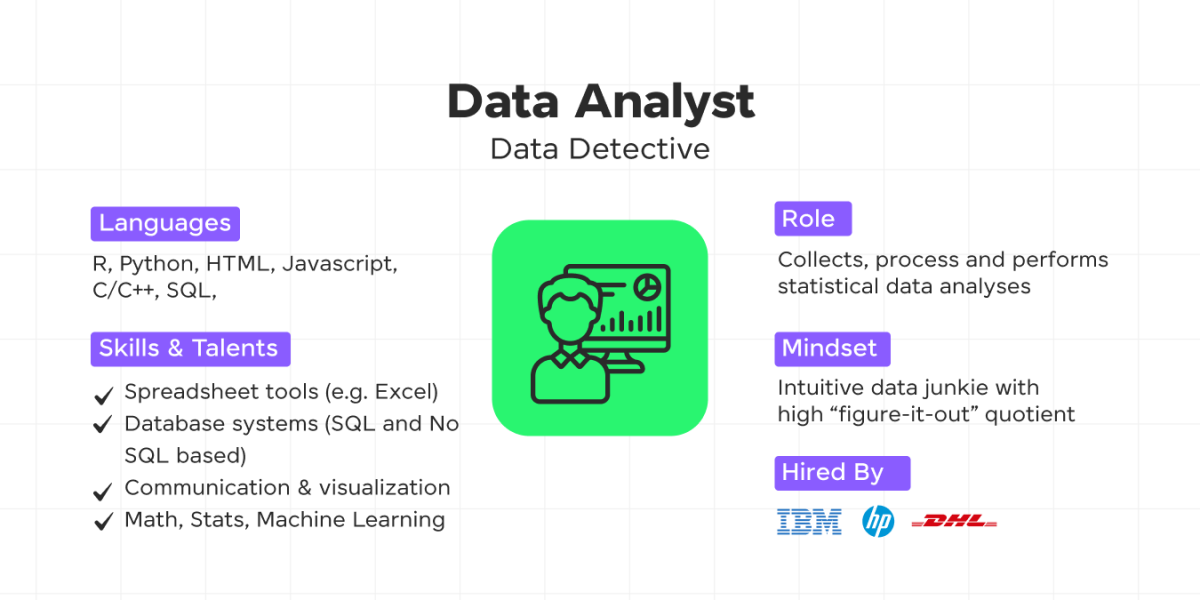
The Data Analyst is often the most accessible entry point into data science. If you enjoy working with data to answer business questions and communicate findings clearly, this role is a natural fit.
Don’t underestimate it, analysts are among the most frequently consulted people in any organisation. Marketing teams, product managers, and finance departments all rely on them for day-to-day decisions.
Key responsibilities:
- Writing SQL queries to extract and interpret data
- Building dashboards in Power BI or Tableau
- Identifying trends and presenting them to non-technical stakeholders
- Validating and cleaning data to maintain accuracy
Tools & skills: SQL, Excel, Power BI, Tableau, Python or R (basic), statistical thinking
Top hiring companies: Google, IBM, Accenture, Facebook
India salary (2026): ₹4.35–10.7 LPA, with a national average of ₹6.5 LPA (Source: Glassdoor, May 2026) Glassdoor
3. Data Architect
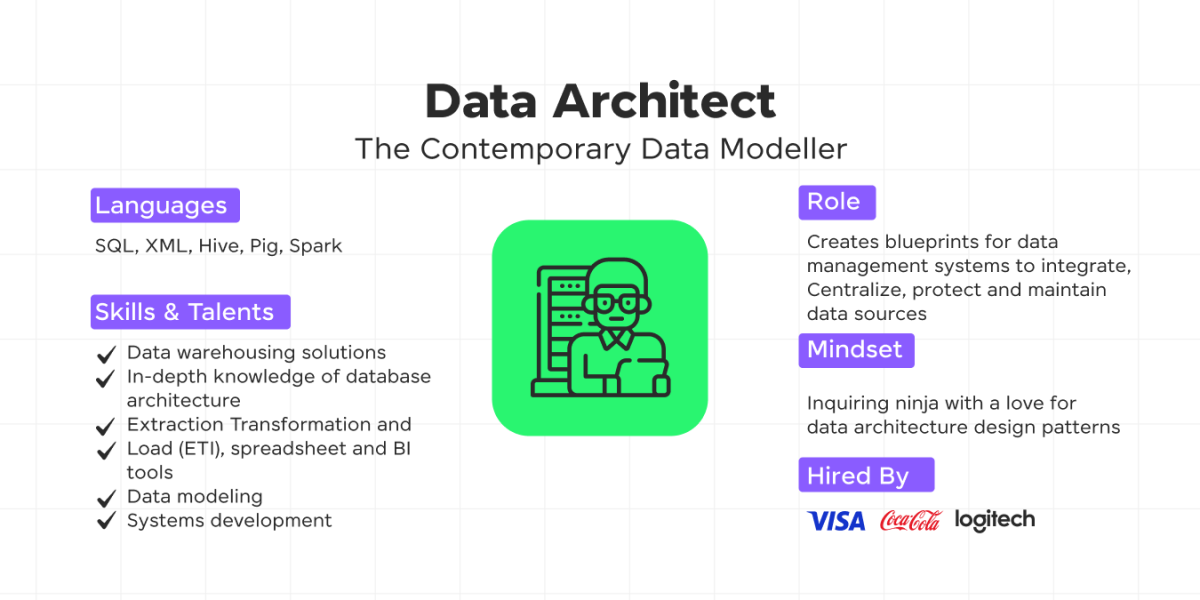
Think of a Data Architect as the city planner of an organisation’s data ecosystem. They don’t just manage databases, they design the entire framework for how data flows, is stored, and is accessed across the company.
This is typically a senior role. Most data architects start as data engineers or analysts before moving into architecture after 5–8 years of experience.
Key responsibilities:
- Designing scalable data storage systems and ETL pipelines
- Setting data security, governance, and quality policies
- Collaborating with IT and management on data strategy
- Overseeing data migration and integration projects
Tools & skills: SQL, Oracle, NoSQL databases, ETL tools, data warehousing, cloud platforms
Top hiring companies: Amazon, IBM, Microsoft, Oracle
India salary (2026): ₹20–35 LPA for experienced professionals, with an average around ₹27 LPA (Source: igmGuru) Igmguru
4. Data Engineer
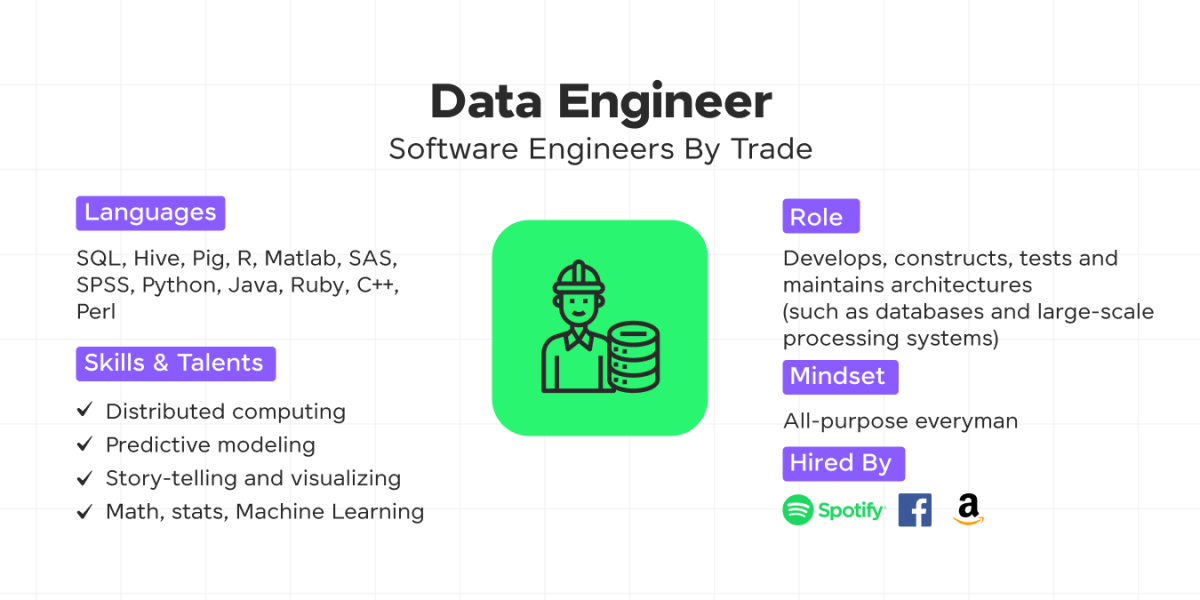
Data Engineers are the backbone of any data-driven organisation. While data scientists get the spotlight, engineers quietly build and maintain the infrastructure that makes data science possible in the first place.
If you enjoy backend development, pipelines, and working at scale, this role offers strong growth and excellent pay even at the mid-level.
Key responsibilities:
- Building and maintaining data pipelines for real-time and batch processing
- Designing data infrastructure on cloud platforms (AWS, GCP, Azure)
- Ensuring data integrity, quality, and security
- Supporting data scientists and analysts with clean, accessible data
Tools & skills: Python, Java, Scala, Apache Spark, Kafka, Hadoop, cloud services
Top hiring companies: Netflix, Google, LinkedIn, Facebook
India salary (2026): ₹5.3–19 LPA (Source: Glassdoor)
Data scientist positions in the US are projected to grow by 36% between 2023 and 2033, far outpacing most occupations.
5. Statistician
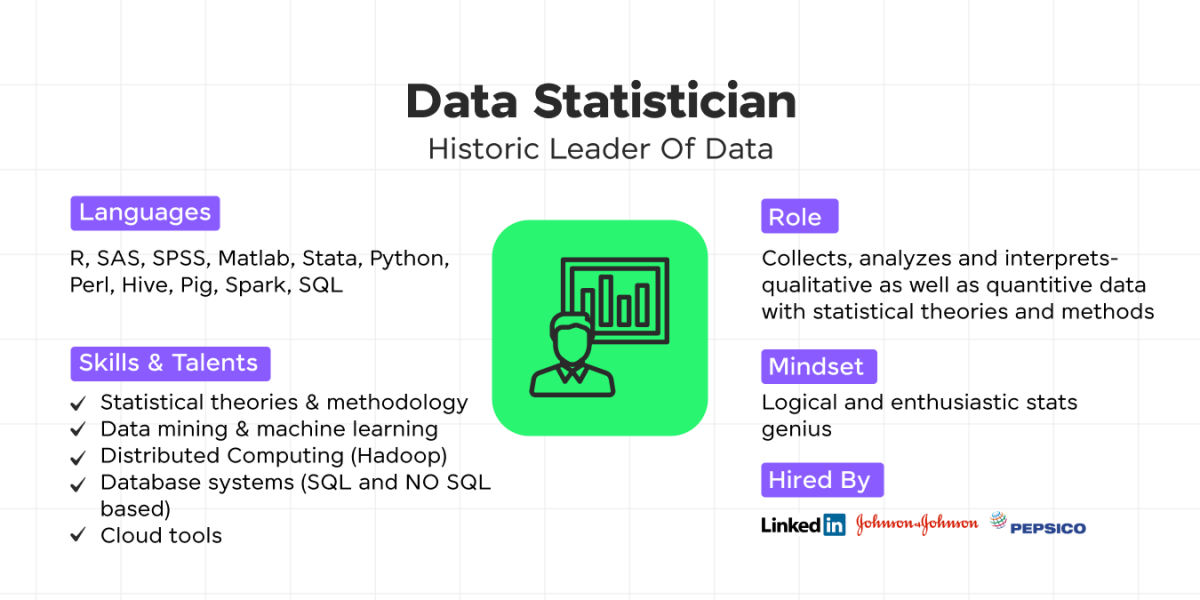
Statisticians are the rigorous thinkers of the data world. While data scientists apply machine learning to predict outcomes, statisticians focus on the mathematical validity of findings, designing experiments, testing hypotheses, and ensuring conclusions are sound.
This role is especially important in industries like healthcare, pharma, and market research, where the cost of getting an analysis wrong is high.
Key responsibilities:
- Designing surveys, A/B tests, and experiments
- Analysing and interpreting data using statistical methods
- Advising teams on the reliability and validity of findings
- Presenting results through charts, reports, and models
Tools & skills: R, SAS, SPSS, Tableau, ggplot2, strong mathematical foundations
Top hiring companies: Pfizer, Merck, Nielsen, Gallup, research institutions
India salary (2026): ₹4–9 LPA (Source: Glassdoor India, 2026)
6. Database Administrator (DBA)
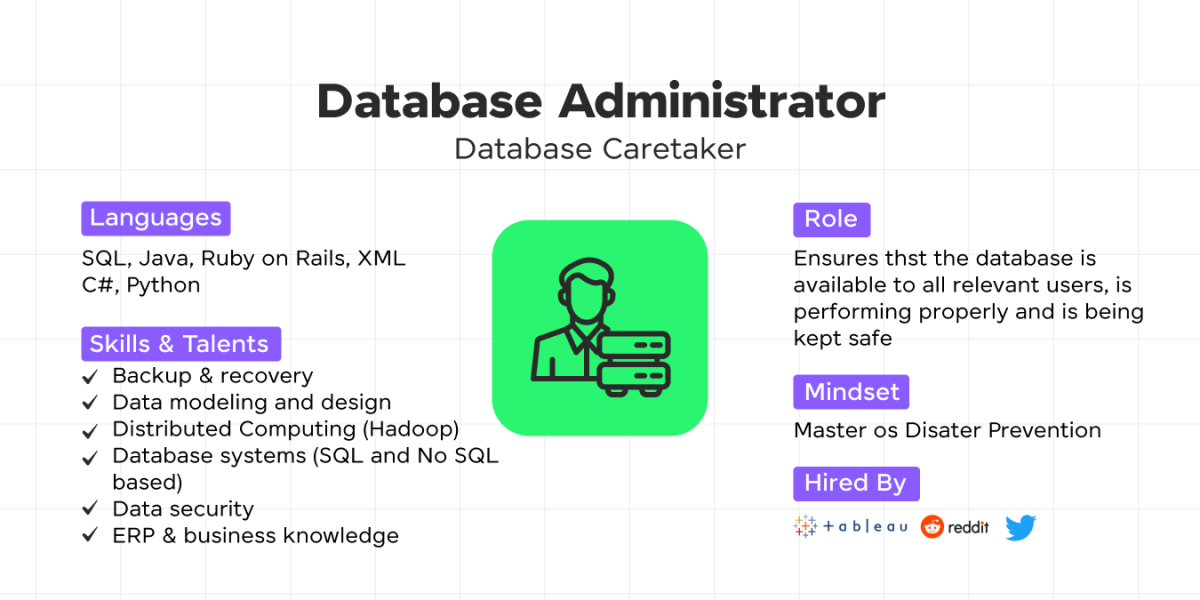
A Database Administrator keeps the organisation’s data safe, fast, and always accessible. It’s not the flashiest role in data science, but it’s one of the most critical, if a database goes down, everything stops.
DBAs are especially in demand in banking, healthcare, and large enterprises where data security and uptime are non-negotiable.
Key responsibilities:
- Installing, configuring, and optimising database servers
- Monitoring performance and implementing recovery strategies
- Managing user access and enforcing data security policies
- Handling large-scale data migrations
Tools & skills: Oracle, MySQL, Microsoft SQL Server, database security tools, backup and recovery systems

Top hiring companies: JPMorgan Chase, IBM, Oracle, Microsoft
India salary (2026): ₹4–11 LPA (Source: Glassdoor India)
7. Business Analyst
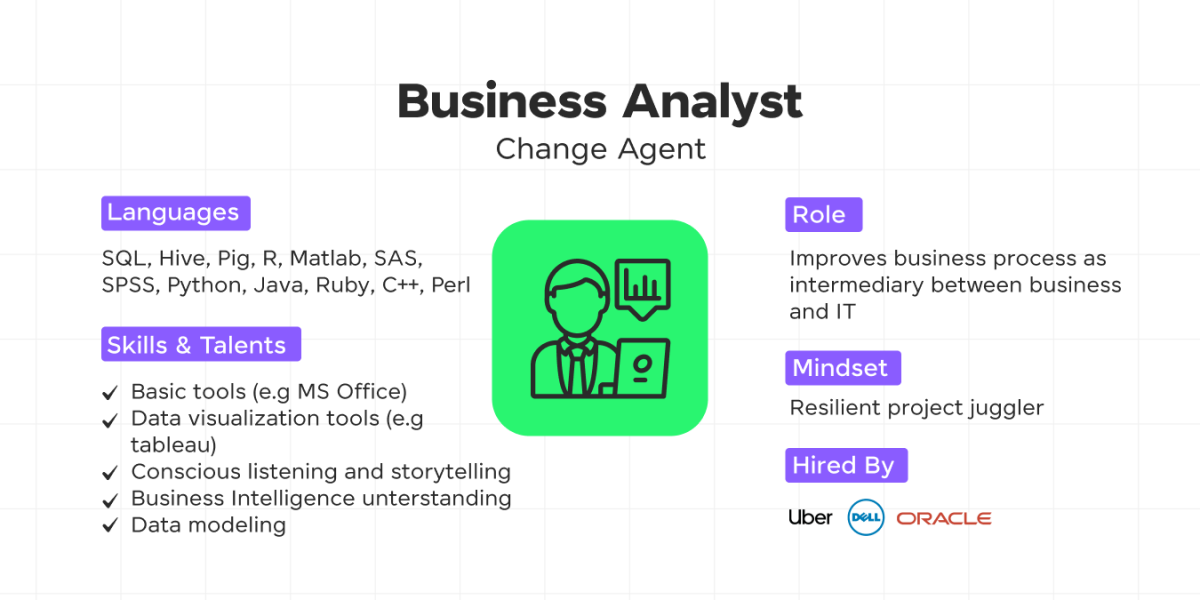
The Business Analyst (BA) sits right at the crossroads of data and decision-making. Unlike purely technical roles, BAs need both analytical ability and strong communication skills to translate data into actionable business strategies.
If you enjoy stakeholder management, process improvement, and using data to drive real business outcomes, this is your role.
Key responsibilities:
- Analysing business processes and identifying improvement areas
- Gathering and documenting requirements from stakeholders
- Building data models and visualisations to support decisions
- Translating technical findings into plain business language
Tools & skills: Excel, Tableau, Power BI, SQL, Agile methodologies, communication skills
Top hiring companies: Deloitte, EY, PwC, KPMG
Business analyst salaries in Bangalore range from ₹6–14 LPA, making it one of the highest-paying cities for the role in India.
India salary (2026): ₹5.3–11 LPA, with a national average near ₹7.5–9.8 LPA (Source: Glassdoor, February 2026) Glassdoor
8. Data and Analytics Manager
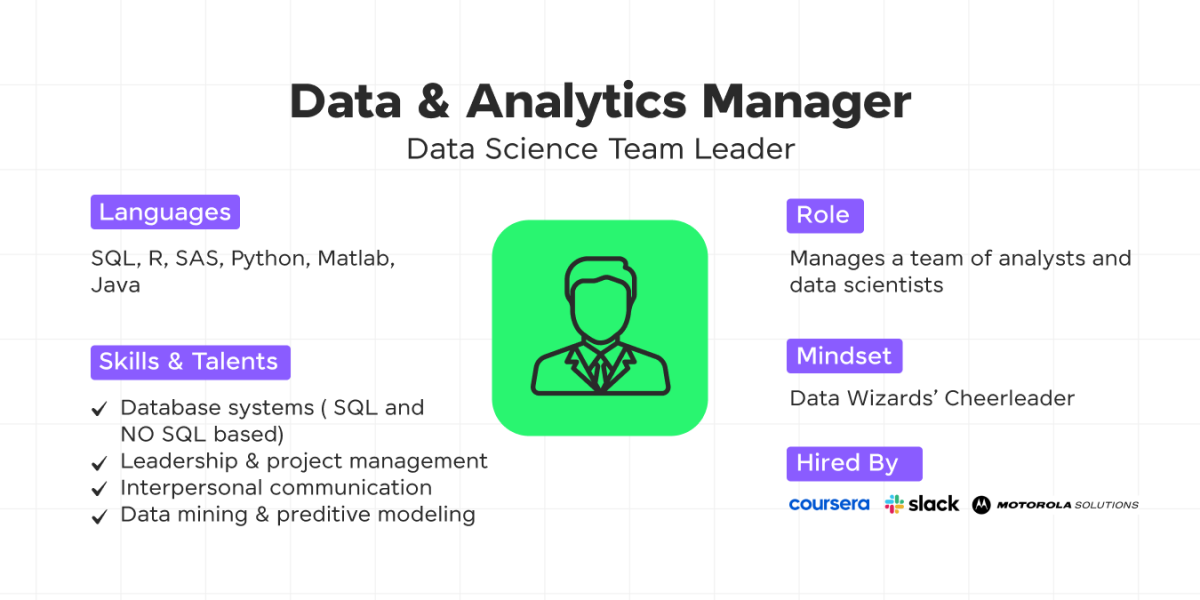
The Data and Analytics Manager is where technical expertise meets leadership. This role oversees a team of data professionals, aligns analytics work with business goals, and ensures that data projects actually move the needle for the organisation.
It’s not just about knowing the tools, you need to know how to manage people, communicate with executives, and keep cross-functional projects on track.
Key responsibilities:
- Leading and coordinating data teams across projects
- Aligning analytics strategy with business objectives
- Communicating insights and progress to senior leadership
- Managing project forecasts, timelines, and tool improvements
Tools & skills: Python, R, SQL, NoSQL, project management tools, leadership and communication
Top hiring companies: Microsoft, Salesforce, Starbucks, Deloitte, Verizon
India salary (2026): ₹19–37 LPA (Source: Glassdoor India)
Common Mistakes When Choosing a Data Science Role
Picking the wrong role wastes months of preparation. Here are the most common errors to avoid.
1. Treating “Data Scientist” as the only goal. Many people fixate on the data scientist title without exploring roles like data engineering or analytics management, which often pay more and have more open positions at any given time.
2. Ignoring the day-to-day reality of a role. Reading only the job title and salary misses the point. A DBA and a data scientist can earn similar salaries but spend their days doing completely different things. Always read job descriptions carefully and talk to people actually doing the role.
3. Skipping foundational skills. Jumping into machine learning without mastering SQL and Python basics is one of the most common and costly mistakes. Every data role depends on clean data, and clean data requires strong fundamentals.
4. Choosing based on salary alone. The highest-paying roles (Architect, Manager) require years of experience. Starting with a role that matches your current skill level leads to faster growth than reaching for a senior title you’re not ready for.
5. Underestimating soft skills. Business Analysts and Analytics Managers spend as much time in meetings and presentations as they do in spreadsheets. Neglecting communication skills limits your ceiling in most data roles.
Before we move into the next section, ensure you have a good grip on data science essentials like Python, MongoDB, Pandas, NumPy, Tableau & Power BI Data Methods. If you are looking for a detailed course on Data Science, you can join HCL GUVI’s Data Science Course with Placement Assistance. You’ll also learn about the trending tools and technologies and work on some real-time projects.
Conclusion
Data science is not one job, it’s a collection of specialised careers, each valuable in its own right. Whether you’re drawn to building infrastructure as a data engineer, analysing trends as a data analyst, or leading teams as an analytics manager, the right entry point depends on your strengths and interests.
The best move you can make right now is to pick one role that genuinely excites you, learn its core tools (start with SQL and Python), and build at least one real project. That combination alone will put you ahead of the majority of job seekers entering the field in 2026.
FAQs
What are the different data science roles?
The 8 main data science roles are Data Scientist, Data Analyst, Data Architect, Data Engineer, Statistician, Database Administrator, Business Analyst, and Data and Analytics Manager. Each role has distinct responsibilities, tools, and salary ranges.
Which data science role is best for beginners?
Data Analyst is the most beginner-friendly entry point. It requires SQL, Excel, and basic visualisation skills, and has a large number of open positions across industries in India.
Which data science role pays the most in India in 2026?
Data Architects and Analytics Managers earn the highest salaries in India, typically ranging from ₹20–37 LPA. Data Scientists at product companies like Google and Amazon can also reach ₹30+ LPA.
Do all data science roles require Python?
Not all, but most do. Python is essential for Data Scientists, Data Engineers, and Analytics Managers. Data Analysts and Business Analysts can start with SQL and Excel, though learning Python significantly boosts your earning potential.
What is the difference between a Data Analyst and a Data Scientist?
A Data Analyst focuses on interpreting existing data, building dashboards, and reporting insights. A Data Scientist goes further, building predictive models, working with machine learning, and solving more complex, open-ended business problems.
Success Stories

About the Author
Vaishali
I'm a seasoned writer with four years of experience across technical, non-technical, and just about every genre or niche you can imagine. Adaptable and curious, I enjoy exploring new topics and making information engaging and easy to understand. Fueled by a steady stream of tea, I approach each project with creativity, reliability, and genuine enthusiasm for storytelling.
View all posts by Vaishali
Connect with me @







Did you enjoy this article?