


Career Articles
Accountant vs Data Analyst Salary in India After Switching Careers - Best Guide
Finance Managers: Could Data Science Be Your Next Career Move?
Insurance Claims Executive to Data Analyst: Is It a Good Switch?
Banking Executive (Loans, KYC) to Data Analyst: Skills and Career Path


Get In Touch For Details! Request More Information

Why Getting a Job After a Career Break Is So Difficult: A Complete Guide to Returning to Work
Sep 11, 2026 10 Min Read 3737 Views
(Last Updated)
A Career Break is a planned or unplanned period away from regular employment for reasons such as caregiving, health, education, relocation, burnout, or personal priorities.
Getting hired after a Career Break can be harder when your skills, resume, network, or recent experience no longer match current roles, but targeted upskilling, recent proof of work, and a clear explanation can make returning easier.
Table of contents
- TL;DR; Summary
- Let’s Understand Career Breaks
- What Is a Career Break?
- Common Reasons - People Take Career Breaks
- Challenges People Face When Returning to Work
- Skill Gaps and Changing Industry Trends
- Employer Bias and Misconceptions
- Low Confidence After a Long Gap
- Difficulty Presenting the Break Positively
- Increased Competition in the Job Market
- Career Break Challenges and How to Address Them
- Complete Guide to Getting a Job After a Career Break in India in 2026
- Step 1: Pick One Target Role
- Step 2: Compare Your Skills With Current Job Descriptions
- Step 3: Create Recent Proof of Work
- Step 4: Update Your Resume and LinkedIn Profile
- Step 5: Apply Through More Than One Route
- Which Returnship Programs Are Available in India in 2026?
- TCS Rebegin
- Restart with Infosys
- Amazon rekindle
- How To Prepare Yourself Before Job Hunting
- Refresh and Update Your Skills
- Identify Strengths Gained During the Break
- Set Realistic Expectations
- Understand Current Hiring Trends
- What Skills Should You Update After a Career Break?
- For Software Roles
- For Data Roles
- For Cloud and DevOps Roles
- For Digital Marketing Roles
- For Non Technical Roles
- How Should You Update Your Resume After a Career Break?
- How To Ace Interviews After a Career Gap
- Explaining Your Career Break Confidently
- Highlighting Updated Skills
- Answering Skill-Based Questions
- Showcasing Projects, Courses, or Freelancing
- How Should You Explain a Career Break in an Interview?
- Can You Change Careers After a Career Break?
- Common Mistakes to Avoid When Restarting After a Career Break
- Taking Too Many Courses
- Hiding the Gap
- Applying Before Updating Your Profile
- Applying Only to Junior Roles
- Waiting Until You Feel Completely Ready
- Prepare for Your Return to Work Interviews with HCL GUVI
- Conclusion
- FAQs
- Is It Difficult to Get a Job After a Career Break?
- How Do I Get a Job After a Long Career Break?
- How Should I Explain a Career Break on My Resume?
- How Should I Explain a Career Break in an Interview?
- Which Companies Offer Returnship Programs in India?
TL;DR; Summary
Returning to work after a Career Break is difficult mainly because recruiters may want evidence that your skills are current, your experience still fits the role, and you are ready to return consistently.
Start by choosing one target role, checking current job descriptions, refreshing only the missing skills, and creating recent proof through projects, freelance work, volunteering, or certifications. Then update your resume, prepare a short explanation for the Career Break, reconnect with former colleagues, and consider returnship programs. In India, companies such as TCS, Infosys, and Amazon currently run structured programs for eligible women returning to work.
A Career Break does not erase your previous experience, but it can change how easily recruiters understand your current fit for a role.
The real challenge is often not the gap itself. Your old tools may have changed, your resume may lack recent proof of work, or you may be applying to roles whose requirements have moved forward while you were away.
For someone returning after a Career Break in 2026, the goal is to make three things clear: what you already know, what you have updated, and why you are ready for the role now.
This guide gives you a practical return to work plan for India, including skills, resume changes, interviews, networking, and current returnship options.
Quick Answer
Returning to work after a career break can be challenging due to skill gaps, employer bias, and confidence issues. The key is to refresh skills, rebuild confidence, adopt smart job search strategies, and present your break positively. With preparation and persistence, you can successfully re-enter the workforce.
Let’s Understand Career Breaks
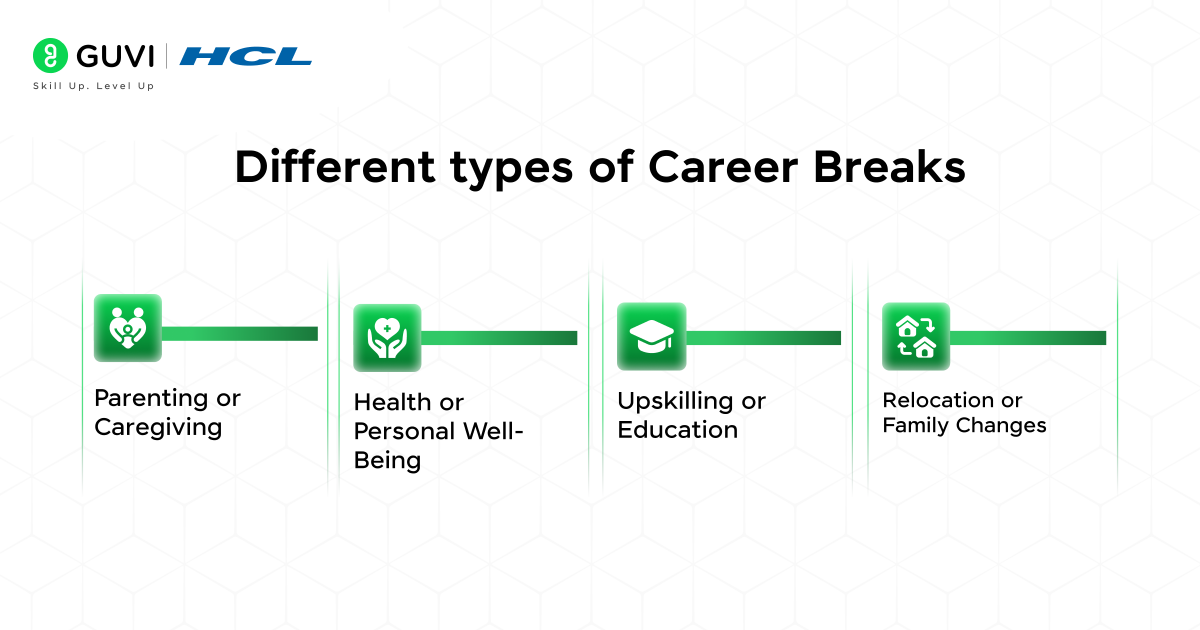
Taking a career break is common, and it can happen for a variety of personal or professional reasons. Every individual’s situation is unique, and a gap in your career does not reduce your skills or potential. Understanding what a career break is and why it happens helps you approach your return-to-work journey with confidence and clarity.
1. What Is a Career Break?
A Career Break is a temporary pause from full time professional employment. It may last a few months or several years and can happen for personal, family, health, education, relocation, caregiving, or career related reasons.
Common reasons include:
- Parenting or caregiving
- Health or personal priorities
- Higher education
- Professional upskilling
- Relocation
- Burnout
- Competitive exam preparation
- Career reassessment
- Layoff followed by an extended job search
The reason does not determine whether you can return successfully. What matters more during your comeback is whether your skills, resume, and job search strategy reflect what employers need now.
For detailed examples of how to explain different gap reasons, use HCL GUVI’s guide on how to address a career gap in your resume and interview.
2. Common Reasons – People Take Career Breaks
People step away from work for many reasons, and each reason can bring new skills, perspectives, or personal growth. Here are some of the most common reasons:
- Parenting or Caregiving: Taking time off to care for children, elderly family members, or dependents.
- Health or Personal Well-Being: Addressing physical or mental health needs that require a pause from work.
- Upskilling or Education: Learning new skills, pursuing certifications, or furthering studies.
- Relocation or Family Changes: Moving to a new city, country, or managing family-related transitions.
- Burnout or Career Reflection: Stepping back to rest, recharge, or rethink career direction.
Challenges People Face When Returning to Work
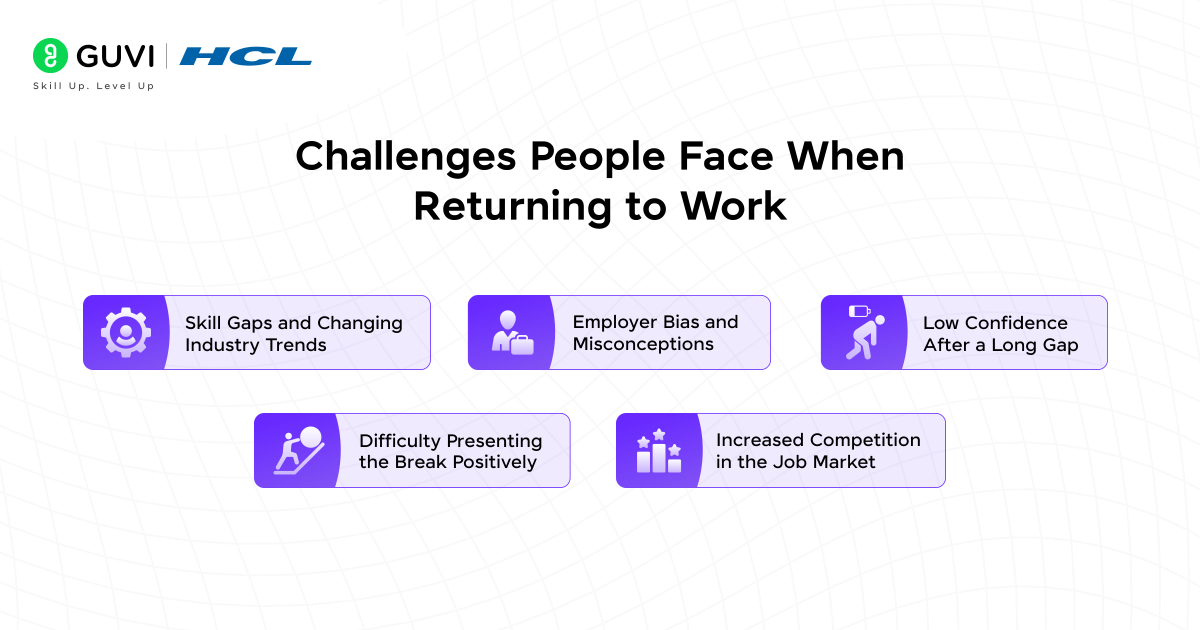
Many beginners assume that the career gap itself is the biggest obstacle, but the challenges of re-entering the workforce go deeper. Understanding these obstacles is the first step toward overcoming them. In this section, we will discuss five major challenges:
- Skill Gaps and Changing Industry Trends
- Employer Bias and Misconceptions
- Low Confidence After a Long Gap
- Difficulty Presenting the Break Positively
- Increased Competition in the Job Market
1. Skill Gaps and Changing Industry Trends
The job market evolves rapidly, and even a short break can leave gaps in your knowledge. Technology, tools, and best practices change constantly, making it essential to stay updated. Skills that were once in demand may now be outdated, and employers expect candidates to have current expertise.
- Rapid Technological Changes: Tools and software evolve quickly, requiring updated skills in areas like data science, AI, or cloud computing.
- Outdated Knowledge: Techniques and workflows you used before your break may no longer be relevant.
- Increased Skill Expectations: Employers now expect hands-on experience with modern tools and frameworks.
2. Employer Bias and Misconceptions
Many recruiters have preconceived notions about career-break candidates. Even if your skills are current, they may question your commitment or assume you are less adaptable. Understanding these biases helps you proactively address concerns during applications and interviews.
- Perceived Skill Obsolescence: Employers may assume your abilities are outdated.
- Commitment Concerns: Recruiters sometimes think break candidates are less dedicated.
- Industry Variations: Bias levels differ across sectors, with some being more open to returnees than others.
3. Low Confidence After a Long Gap
Time away from the workforce can impact your self-belief. Feeling disconnected from corporate culture, worrying about competing with active candidates, or doubting your abilities can make job searching more stressful. Rebuilding confidence is key to presenting yourself effectively.
- Feeling Disconnected: A long break may make you unsure about workplace norms.
- Comparison Pressure: Watching peers progress can cause self-doubt.
- Difficulty Showcasing Talent: Lack of recent experience can make it challenging to demonstrate skills clearly.
4. Difficulty Presenting the Break Positively
Explaining your career break in a positive way can be tricky. Many candidates struggle to highlight personal or professional growth during the gap. An unclear explanation or a poorly structured resume may reduce your chances of getting noticed.
- Unclear Narrative: Not knowing how to describe the break confidently.
- Missed Growth Opportunities: Difficulty emphasising learning or achievements during the gap.
- Resume Challenges: Unsure how to format your CV to showcase your potential effectively.
5. Increased Competition in the Job Market
The job market is highly competitive, and candidates returning from a break compete with both fresh graduates and continuously working professionals. In fields like software, design, analytics, or marketing, continuous learning is often required to stay relevant.
- High Applicant Volume: Many candidates apply for the same roles.
- Competing With Active Professionals: Professionals who never took a break may have more recent experience.
- Industry Expectations: Continuous learning and updated skills are expected in most modern workplaces.
- Why Is Getting a Job After a Career Break Difficult?
- Returning after a Career Break can create questions that continuously employed candidates may not need to answer.
- The main problems usually fall into five areas.
- 1. Your Skills May Need Updating
- A Career Break can create a knowledge gap when your industry changes quickly.
- This is particularly relevant in software development, data, AI, cloud, cybersecurity, digital marketing, and other fields where tools and workflows change frequently.
- What to do: Compare current job descriptions with the skills you had before your break. Refresh only the areas that repeatedly appear in the roles you want.
- 2. Your Resume May Lack Recent Evidence
- Your previous experience still matters, but recruiters may also want proof that you can work with current tools and expectations.
- What to do: Add recent projects, freelance assignments, certifications, volunteer work, consulting, or practical coursework when relevant.
- 3. Recruiters May Ask Whether You Are Ready to Return
- A recruiter may want to understand why you took the Career Break, whether the situation has changed, and whether you are ready for the responsibilities of the role.
- What to do: Prepare a short factual explanation and quickly move the conversation toward your current skills and availability.
- 4. Your Professional Network May Have Become Less Active
- Former colleagues may have moved companies, managers may have changed, and recruiters you knew may no longer work in the same roles.
- What to do: Reconnect before you urgently need a referral. Former colleagues, managers, clients, classmates, and professional communities can all help you understand the current market.
- 5. Confidence Can Drop During a Long Gap
- A long Career Break can make interviews feel unfamiliar even when your underlying professional knowledge is strong.
- What to do: Rebuild confidence through evidence. Complete a project, solve practical problems, update your LinkedIn profile, and practise interviews before judging whether you are ready.
Career Break Challenges and How to Address Them
Use this table to convert the most common return to work problems into practical actions.
| Challenge After the Break | What a Recruiter May Want to Know | What You Should Do | Useful Proof |
| Skills are outdated | Can you work with current tools? | Refresh role specific skills | Course, project, certification |
| No recent employment | Can you still apply your experience? | Build recent practical work | Freelance work, portfolio, project |
| Resume gap | Why were you away? | Explain the gap briefly | Clear resume entry |
| Low interview confidence | Can you communicate your value? | Practise common questions | Mock interviews |
| Weak network | How are you finding relevant roles? | Reconnect with past contacts | Referrals and recommendations |
| Moving into a new field | Are your skills transferable? | Map old skills to the new role | Relevant project or certification |
| Long break | Are you ready to return consistently? | Show current availability and preparation | Updated skills and recent activity |
A Career Break should therefore be treated as a positioning problem as much as an employment history problem.
Complete Guide to Getting a Job After a Career Break in India in 2026
Use this five step process to restart after a Career Break without trying to learn everything again from zero.
Step 1: Pick One Target Role
Do not begin by searching for every job you might qualify for.
Choose a specific role such as:
- Full Stack Developer
- Data Analyst
- Business Analyst
- Digital Marketing Specialist
- QA Engineer
- Project Manager
- Cloud Engineer
- Cybersecurity Analyst
- UI UX Designer
A focused target makes your skill gap much easier to identify.
Step 2: Compare Your Skills With Current Job Descriptions
Open several recent job descriptions for your chosen role.
Write down the skills that appear repeatedly and separate them into:
Already know
Need revision
Need to learn
This prevents a Career Break comeback from turning into months of unnecessary courses.
Step 3: Create Recent Proof of Work
Recent proof helps connect your previous experience with your current abilities.
Depending on the role, this could be:
- A GitHub project
- A Power BI dashboard
- A design portfolio
- A digital marketing campaign
- A case study
- Freelance work
- Open source contribution
- Volunteer project
- Industry certification
Step 4: Update Your Resume and LinkedIn Profile
Your resume should make the Career Break understandable without making it the centre of the document.
Use your summary, skills, previous experience, recent projects, and certifications to show that your profile is current.
Step 5: Apply Through More Than One Route
Do not rely only on job portals.
Use:
- Company careers pages
- Referrals
- Former colleagues
- Professional communities
- Recruitment events
- Returnship programs
- Relevant contract or project roles
The objective is to create several ways for recruiters to discover your profile.
Which Returnship Programs Are Available in India in 2026?
Returnship programs can be useful for some professionals restarting after a Career Break because they are designed specifically around re entry into the workforce.
Three current programs worth knowing are:
TCS Rebegin
TCS Rebegin is currently available for women professionals across India who want to restart their careers after a break.
TCS states that applicants need at least two years of continuous prior work experience. Candidates can have varying lengths or multiple breaks, and selection remains based on the normal TCS hiring process.
Restart with Infosys
Restart with Infosys is designed for experienced women professionals returning after a Career Break.
The current program requires a minimum six month break and more than two years of continuous professional experience before the break. Infosys says candidates may be considered for full time or fixed term employment based on their expertise and available opportunities.
Amazon rekindle
Amazon India’s rekindle program supports women returning after a Career Break of 12 months or more.
The program includes interview support, orientation, mentorship, and on the job learning for candidates who meet the requirements of available roles.
| Important Returnship eligibility differs by company. Do not assume every program accepts every applicant after a Career Break. Check the current official program page, experience requirement, break duration requirement, job location, and open positions before applying. |
Infosys reported that more than 900 women who had taken career breaks were onboarded through its Restart with Infosys program in FY26, following a large hiring drive across five campuses in India.
This is useful evidence that a Career Break does not automatically remove experienced professionals from consideration. Dedicated return to work hiring routes are actively being used by large employers in India.
How To Prepare Yourself Before Job Hunting
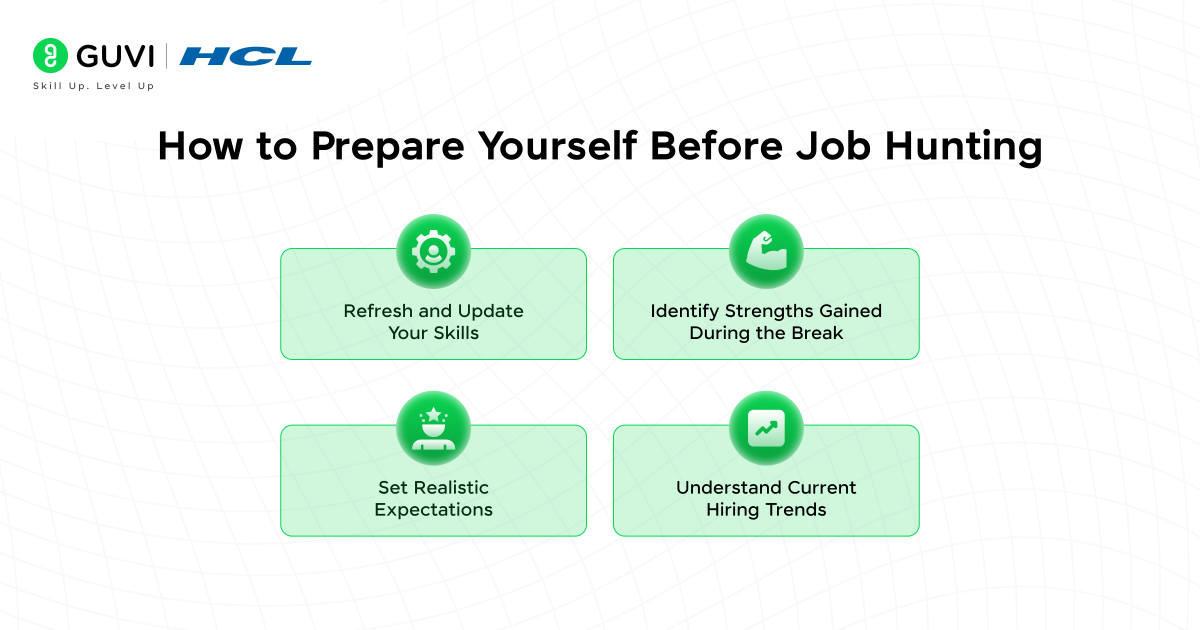
Preparation is the key to a smoother and more confident return to work. Taking time to refresh your skills, recognise your strengths, and understand the current job market can make your job search more effective. In this section, we will cover four important steps:
- Refresh and Update Your Skills
- Identify Strengths Gained During the Break
- Set Realistic Expectations
- Understand Current Hiring Trends
1. Refresh and Update Your Skills
Skills can become outdated quickly, especially in fast-evolving fields like technology, analytics, and digital marketing. Updating your knowledge ensures you stay competitive and confident when applying for roles.
- Online Courses and Certifications: Take structured courses to learn modern tools and concepts.
- Trending Topics: Explore areas like data analytics, cloud computing, and digital marketing to stay current.
- Hands-On Tools: Practice tools such as Python, SQL, Git, or Power BI to demonstrate practical expertise.

2. Identify Strengths Gained During the Break
Career breaks often provide opportunities to develop personal and professional strengths. Recognising these skills helps you present yourself positively to employers.
- Time Management: Learning to balance personal commitments and responsibilities.
- Adaptability: Navigating new situations and challenges effectively.
- Communication Skills: Caregiving, volunteering, or projects improve collaboration and expression.
- Practical Examples: Personal projects or freelancing work offer strong example points for resumes and interviews.
3. Set Realistic Expectations
Returning to work requires understanding your current position relative to the market. Setting achievable goals reduces stress and helps you plan effectively.
- Market Awareness: Research roles, salaries, and industry requirements to align expectations. Example – Power BI Developer
- Start Small: Consider internships, returnships, or project-based roles to rebuild experience.
- Flexibility: Be open to hybrid work, part-time, or freelance opportunities as stepping stones.
4. Understand Current Hiring Trends
The hiring process has evolved, and knowing what employers look for can give you an edge. Understanding trends helps tailor your approach and improves your chances of selection.
- Skill-Based Hiring: Employers prioritise candidates who demonstrate current practical skills.
- LinkedIn and Networking: Recruiters rely heavily on online profiles and professional networks.
- Portfolio and Projects: Employers prefer candidates who can showcase tangible features of their work.
What Skills Should You Update After a Career Break?
Do not choose skills simply because they are trending.
The right skills after a Career Break are the skills required by the specific role you want now. Review current job descriptions first, identify repeated requirements, and then decide what you actually need to refresh.
For Software Roles
Focus on your main programming language, Git, APIs, databases, testing, frameworks, and deployment concepts relevant to the position.
If you are returning to software development, HCL GUVI’s Software Development Roadmap 2026 can help you compare current development skills and decide which areas need revision.
For Data Roles
Review Excel, SQL, Power BI, Python, statistics, data visualization, and other tools that repeatedly appear in your target job descriptions.
HCL GUVI’s Data Analyst Career Roadmap provides a structured path covering Excel, statistics, SQL, visualization, Python, projects, and portfolio preparation.
For Cloud and DevOps Roles
Refresh Linux, networking, Git, cloud fundamentals, CI/CD, containers, Infrastructure as Code, and monitoring according to the role.
If DevOps is your return path, use HCL GUVI’s guide on what to learn to become a DevOps Engineer in 2026 to review the current learning sequence from Linux and networking to cloud, Docker, Kubernetes, automation, and monitoring.
For Digital Marketing Roles
Review SEO, paid advertising, social media, analytics, content marketing, email marketing, campaign measurement, and the current platforms used by employers.
HCL GUVI’s Digital Marketing Career Roadmap can help you identify which digital marketing skills and tools are most relevant before you begin applying again.
For Non Technical Roles
Focus on the tools and workflows currently used in your profession along with communication, stakeholder management, analysis, problem solving, and relevant domain knowledge.
If analytical thinking is important for your target role, HCL GUVI’s guide on analytical skills and how to improve them can help you strengthen problem solving, data interpretation, and decision making.
A Career Break does not mean every skill you had has expired. Start with a gap analysis, refresh only what your target role requires, and avoid collecting courses or certifications without a clear reason.
How Should You Update Your Resume After a Career Break?
Your resume should explain your employment timeline without hiding your experience behind the gap.
A simple Career Break entry can include:
Career Break | March 2024 to June 2026
Took planned time away for family responsibilities while completing relevant professional learning and maintaining industry knowledge.
Keep the explanation short.
Then give more space to:
- Recent skills
- Relevant certifications
- Projects
- Freelance or volunteer work
- Previous achievements
- Tools you currently know
Do not turn your entire resume into an explanation of why you were away.
Also review HCL GUVI’s ATS Friendly Resume Format 2026 guide when updating the document. Use a readable layout, standard headings, relevant keywords, and the file format requested by the employer.
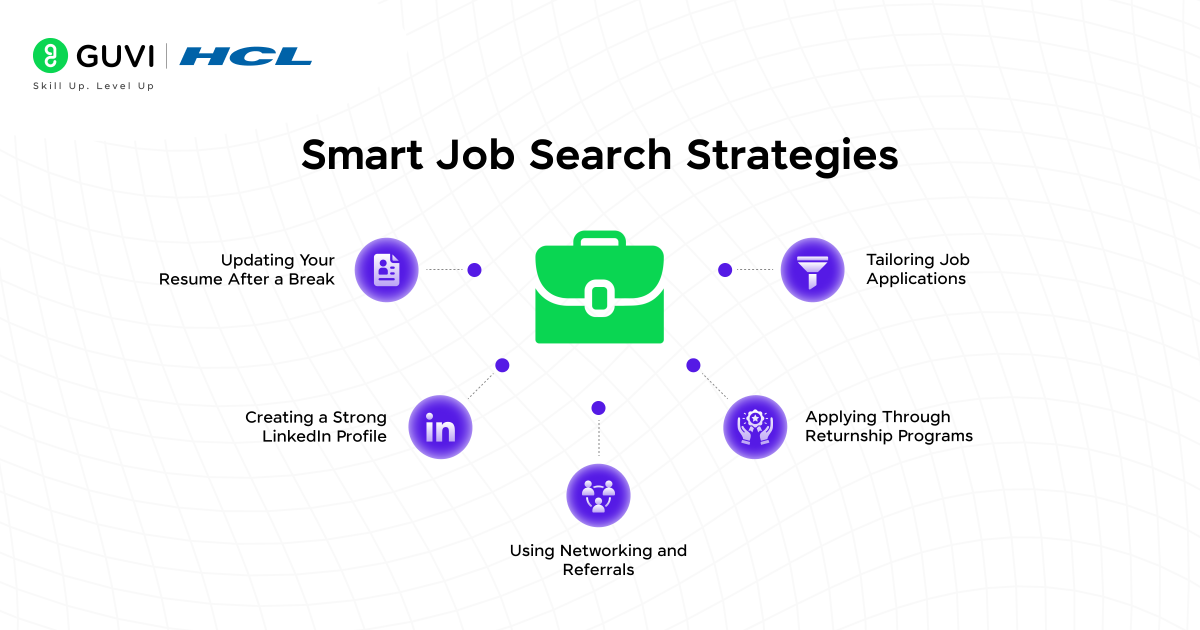
How To Ace Interviews After a Career Gap
Interviews are the final step before securing a job, and they can feel intimidating after a career break. Presenting your gap confidently while highlighting your updated skills and experiences can significantly improve your chances. This section provides practical strategies to help you excel in interviews.
- Explaining Your Career Break Confidently
- Highlighting Updated Skills
- Answering Skill-Based Questions
- Showcasing Projects, Courses, or Freelancing
1. Explaining Your Career Break Confidently
How you explain your career break can shape the interviewer’s perception. A short, honest explanation paired with what you learned during the break creates a positive impression.
- Be Honest: Give a clear and truthful reason for your break.
- Focus on Growth: Highlight skills, experiences, or personal development gained during the gap.
- Positive Attitude: Frame the break as a conscious choice that added value to your profile.
2. Highlighting Updated Skills
Demonstrating that your skills are current reassures employers about your readiness for the role.
- New Tools & Technologies: Mention software, programming languages, or tools learned recently.
- Practical Examples: Share example projects, freelance work, or personal initiatives.
- Certifications: Highlight completed certifications to show formal validation of your skills.
3. Answering Skill-Based Questions
Many interviews focus on how effectively you can apply your skills. Clear, structured answers demonstrate competence.
- Structured Responses: Use frameworks like STAR (Situation, Task, Action, Result) for clarity.
- Practice Common Questions: Prepare answers for frequently asked questions in your industry.
- Problem-Solving: Show your ability to analyse and solve real-world challenges.
4. Showcasing Projects, Courses, or Freelancing
Presenting tangible work helps employers see your practical abilities.
How Should You Explain a Career Break in an Interview?
A Career Break answer should normally do three things:
Reason → What happened during the break → Why you are ready now
For example:
“I took a planned break to handle family responsibilities that required my attention. During that period, I stayed connected to my field and recently refreshed my skills through practical project work. My circumstances are now settled, and I am ready to return to a full time role.”
You do not need to provide private details that are not relevant to your ability to do the job.
After explaining the Career Break, move quickly toward your current skills, previous experience, and interest in the role.
Prepare for the rest of the interview as seriously as any continuously employed applicant. HCL GUVI’s interview preparation guide can help you practise introductions, HR questions, communication, and role specific preparation.
Can You Change Careers After a Career Break?
Yes. A Career Break can also become a transition point if you no longer want to return to your previous profession.
Start by identifying transferable skills from your earlier experience.
For example:
A project manager may already have planning, stakeholder communication, budgeting, and coordination skills.
A teacher may have communication, presentation, training, and curriculum planning skills.
A sales professional may have customer research, negotiation, communication, and revenue experience.
You can then add the technical or role specific skills required by your new field.
If you are considering a complete shift, HCL GUVI’s guide to the best jobs for career change in 2026 can help you compare paths such as data analytics, software development, cybersecurity, cloud, digital marketing, UI UX, and business analysis.
A Career Break does not require you to return to exactly the same job you left.
- Portfolio & GitHub Links: Share evidence of your hands-on projects.
- Hands-On Experience: Highlight tasks or achievements from personal or freelance projects.
- Course Achievements: Mention notable accomplishments from relevant courses or workshops.
Common Mistakes to Avoid When Restarting After a Career Break
1. Taking Too Many Courses
Collecting certifications without applying the skills can delay your return.
Fix: Learn what your target job requires and build one practical proof of work.
2. Hiding the Gap
Trying to manipulate dates can create inconsistencies later.
Fix: Explain the Career Break briefly and accurately when it needs to be addressed.
3. Applying Before Updating Your Profile
Sending the same old resume you used before your break may not represent your current skills.
Fix: Update your resume, LinkedIn profile, projects, and role specific keywords first.
4. Applying Only to Junior Roles
A long Career Break does not automatically mean your previous experience has disappeared.
Fix: Compare your actual experience and current skill level with the role instead of automatically restarting at entry level.
5. Waiting Until You Feel Completely Ready
You may keep postponing applications while trying to learn one more tool.
Fix: Begin applying once your core skills match realistic roles and continue improving during the search.
Prepare for Your Return to Work Interviews with HCL GUVI
A Career Break interview can involve questions about your employment gap, current skills, previous experience, career goals, and readiness to return.
HCL GUVI’s Interview Preparation Course can help you practise resume presentation, communication, common interview questions, body language, and mock interviews. Use it alongside role specific preparation so you are ready to explain both your professional experience and what you bring to the role now.
Conclusion
Returning after a Career Break becomes easier when you stop treating the gap as the only problem to solve. Choose a clear target role, compare your skills with current requirements, build recent proof of work, update your resume, reconnect with your network, and prepare a concise explanation for interviews.
Professionals in India can also explore current returnship programs from employers such as TCS, Infosys, and Amazon when they meet the eligibility criteria. A Career Break is part of your employment timeline, but your current skills, experience, preparation, and ability to contribute should remain the main focus of your comeback.
FAQs
1. Is It Difficult to Get a Job After a Career Break?
A Career Break can make the job search more difficult when your skills, resume, or recent experience do not match current role requirements. Your chances improve when you update relevant skills, show recent proof of work, and explain the gap clearly.
2. How Do I Get a Job After a Long Career Break?
Choose one target role, analyse current job descriptions, update only the skills you need, create recent practical work, refresh your resume and LinkedIn profile, reconnect with your network, and start applying. Returnship programs may also be worth exploring if you meet their eligibility criteria.
3. How Should I Explain a Career Break on My Resume?
Add a short entry showing the dates and a brief reason when the gap needs explanation. Keep the Career Break description concise and use the rest of the resume to highlight current skills, previous achievements, certifications, and projects.
4. How Should I Explain a Career Break in an Interview?
Explain the reason briefly and honestly, mention anything relevant you did during the break, and end with why you are ready now. Do not spend most of the interview defending the gap.
5. Which Companies Offer Returnship Programs in India?
Current examples include TCS Rebegin, Restart with Infosys, and Amazon India’s rekindle program for eligible women returning after a Career Break. Each program has different experience and break requirements, so check the current official eligibility before applying.
Success Stories

About the Author
Reemsha Khan
Always been a storyteller at heart. Now, I turn complex topics into simple, easy-to-understand stories through content. Hope you find it helpful.
View all posts by Reemsha Khan
Connect with me @










Did you enjoy this article?