


Career Articles
BPO to Data Analyst : Is It Time to Switch? | Skills, Roadmap & Career Path
Finance Career Growth After 5+ Years: Should You Add Data Skills?
What BPO Skills for Data Analytics Transfer to a Data Analyst Career? - Best Guide
Which Data Roles Suit a BPO Team Lead With People-Management Experience?


Get In Touch For Details! Request More Information
Do Managers Need Coding to Move Into Data Analytics or Data Science?
Oct 09, 2026 4 Min Read 24 Views
(Last Updated)
If you have spent four or more years in management, operations, sales, finance, or another non-IT role, moving into data analytics or data science can feel like a major career change. You may already understand business performance, manage teams, and make decisions using reports, but you might wonder whether learning to code is necessary.
The answer depends on the role you want. Manager coding for data science is an important consideration because data analysts, data scientists, and analytics managers have different technical responsibilities. Some roles require regular programming, while others focus more on business insights, reporting, and decision-making.
For experienced professionals, the goal is not necessarily to become a software developer. It is to learn the technical skills needed for your target role while making use of your existing business and leadership experience.
Table of contents
- TL;DR
- Do Managers Need Coding to Enter Data Analytics?
- Is Coding Necessary for Data Science?
- Which Skills Should Experienced Managers Learn First?
- Excel for Business Analysis
- SQL for Working With Databases
- Power BI for Reporting and Visualization
- Python for Advanced Analysis
- Data Analyst vs Data Scientist: How Much Coding Do You Need?
- Can Your Management Experience Help You Transition?
- How Can You Learn Coding Without Starting Your Career From Zero?
- How Long Does It Take a Manager to Learn Coding for Data Analytics?
- Should You Switch to Data Analytics or Data Science After Four Years in Management?
- Conclusion
- FAQs
- Do managers need coding to become Data Analysts?
- Is Python mandatory for Data Science?
- Can a non-IT manager learn data analytics?
- Should experienced managers learn SQL or Python first?
- Can I move directly into an Analytics Manager role?
- Is Data Science better than Data Analytics for managers?
TL;DR
- Managers do not always need coding to enter data analytics, but technical skills can improve their opportunities.
- Excel, SQL, and Power BI are useful starting points for business-focused analytics roles.
- Data science generally requires stronger programming skills, particularly Python or R.
- Experienced managers can use their business knowledge, stakeholder management, and decision-making experience in analytics.
- You do not need to learn every programming language or advanced algorithm before applying for relevant roles.
- Choose your learning path based on whether you want to analyze data, build predictive models, or lead analytics teams.
- Practical projects can help demonstrate your skills when transitioning from a non-IT background.
Do Managers Need Coding to Enter Data Analytics?
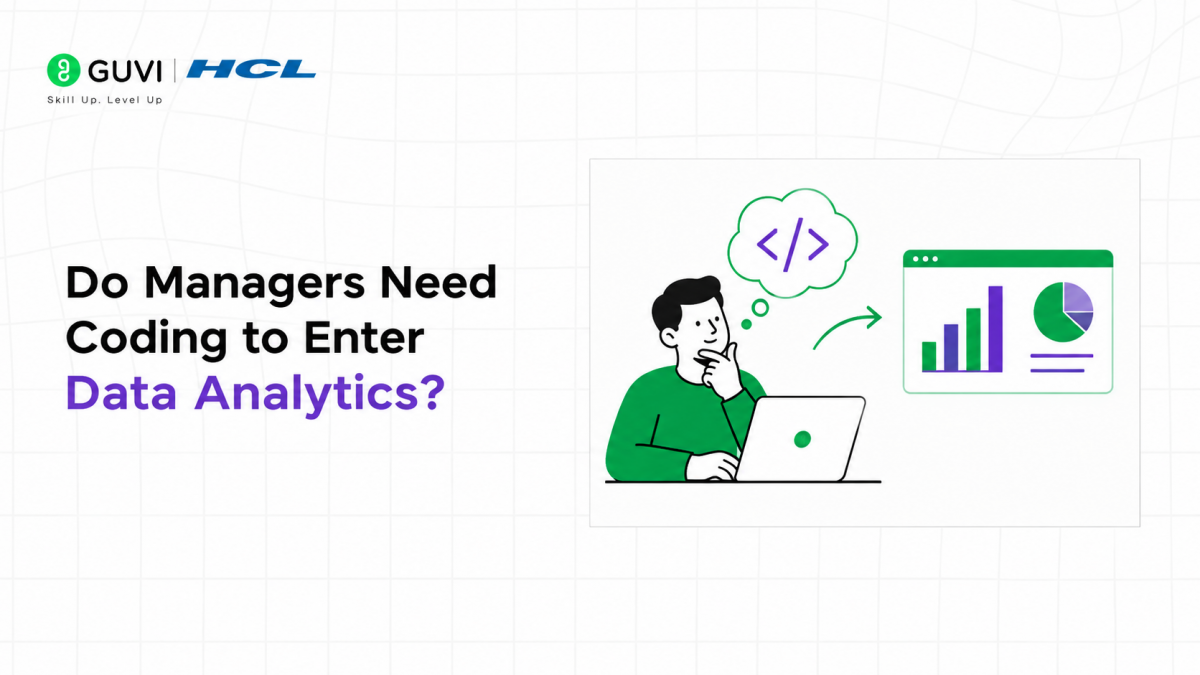
Not always. The amount of coding required depends on the responsibilities of the role.
Many business-focused analytics positions emphasize reporting, dashboard development, performance tracking, and interpreting data. You may be able to start with Excel, SQL, and Power BI without becoming proficient in a general-purpose programming language immediately.
For example, an operations manager might analyze productivity, customer satisfaction, costs, or service-level performance using dashboards and structured queries.
However, if the role involves automating complex analysis, working with large datasets, or developing advanced analytical solutions, programming becomes more valuable.
The important distinction is between using data to make business decisions and building technical solutions to analyze data.
Looking to transition into data analytics or data science? HCL GUVI’s Data Science Course helps you build practical skills in Python, data analysis, statistics, and machine learning through hands-on projects and industry-focused learning.
Is Coding Necessary for Data Science?
For most hands-on Data Scientist roles, coding is an important skill.
Data Scientists often use programming to clean datasets, explore patterns, build machine learning models, test hypotheses, and evaluate results.
Python is a common starting point because it supports data analysis, visualization, and machine learning through libraries such as Pandas, NumPy, and scikit-learn.
You may also need to understand:
- Data preparation and cleaning
- Basic statistics and probability
- Model training and evaluation
- Feature engineering
- Data visualization
- Experimentation and validation
You do not need to master everything at once. Start with Python fundamentals and gradually apply them to small data projects.
If you prefer business strategy and team leadership over hands-on modeling, analytics management or business intelligence leadership may be a better fit than a technical Data Scientist position.
Which Skills Should Experienced Managers Learn First?
Your learning path should match the type of work you want to do.
1. Excel for Business Analysis
Start with formulas, PivotTables, lookup functions, charts, and data cleaning. These skills can help you examine business performance and identify trends.
2. SQL for Working With Databases
SQL helps you retrieve and analyze information stored in databases. Learn filtering, grouping, joins, subqueries, and common table expressions.
SQL is useful for both business analysts and many data science professionals.
3. Power BI for Reporting and Visualization
Power BI helps you transform data into interactive dashboards and reports. Learn how to prepare data, create relationships, build visualizations, and communicate findings.
4. Python for Advanced Analysis
If you want to pursue hands-on Data Science or more technical analytics roles, learn Python basics, data structures, functions, Pandas, and data visualization.
Pro Tip: Learn tools by solving business problems rather than completing tutorials alone. For example, analyze monthly sales, team productivity, customer retention, or operating costs using a dataset.
Data Analyst vs Data Scientist: How Much Coding Do You Need?
| Role | Typical Coding Requirement | Main Focus |
|---|---|---|
| Reporting or MIS Analyst | Low to moderate | Reports, spreadsheets, dashboards |
| Data Analyst | Moderate | SQL, analysis, visualization, business insights |
| Business Intelligence Analyst | Low to moderate or higher | Data modeling, dashboards, reporting |
| Data Scientist | High for most hands-on roles | Python or R, statistics, machine learning |
| Analytics Manager | Varies by role | Team leadership, strategy, insights, delivery |
These are general patterns, not strict rules. Some Data Analyst roles require substantial Python, while some analytics managers remain involved in technical work.
Always review the job description to understand the actual expectations.
Can Your Management Experience Help You Transition?
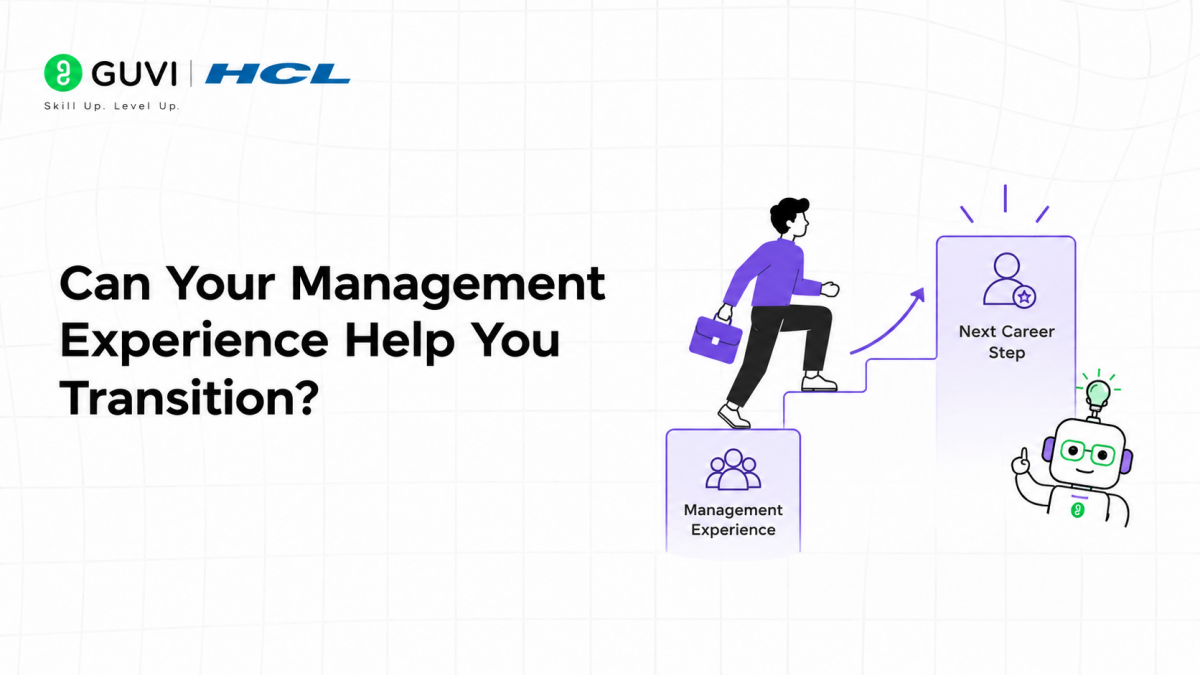
Yes. Your existing experience can be valuable when combined with the right analytical skills.
Managers often understand business objectives, performance indicators, customer needs, budgets, and operational challenges. These skills can help them identify meaningful questions and explain why an analysis matters.
For example, a sales manager may understand why revenue is declining but need SQL and visualization skills to investigate the trend. A workforce manager may understand staffing challenges and use data to evaluate attendance, workload, and productivity.
Your experience is most useful when you can demonstrate how you have used data to support decisions. If your previous role did not involve much analysis, build projects that demonstrate this capability.

How Can You Learn Coding Without Starting Your Career From Zero?
You can build your technical skills gradually while using your existing experience as a foundation.
Step 1: Choose a target role.
Decide whether you prefer reporting, business analytics, data analysis, or hands-on Data Science.
Step 2: Learn the relevant tools.
Begin with Excel and SQL. Add Power BI for dashboards or Python if your target role requires programming.
Step 3: Build two or three practical projects.
Examples include a sales performance dashboard, customer churn analysis, or employee productivity analysis.
Step 4: Connect your projects to business outcomes.
Explain what question you investigated, how you analyzed the data, what you discovered, and what action the findings could support.
Step 5: Apply for suitable roles.
Look for positions that value your previous industry knowledge alongside your new technical skills. Depending on your background, reporting, operations analytics, business intelligence, or business analyst roles may offer a practical starting point.
Business knowledge can help analysts and Data Scientists ask better questions. Understanding a company’s customers, operations, and goals helps connect technical findings to decisions that matter.
How Long Does It Take a Manager to Learn Coding for Data Analytics?
The time required depends on your starting point, available study hours, and target role. You can begin learning basic analytics tools without leaving your current job.
- First month: Learn Excel fundamentals, data cleaning, and basic SQL queries.
- Months 2–3: Practice SQL joins, build Power BI dashboards, and analyze real-world datasets.
- Months 3–6: If targeting Data Science, learn Python, basic statistics, and introductory machine learning. Build practical projects alongside your learning.
These are approximate learning milestones, not guaranteed timelines for becoming job-ready. Experienced managers can use their existing business knowledge to select relevant projects and understand the problems they are solving.
Pro Tip: Set aside 30–60 minutes a day for learning and practice. Focus on completing projects and explaining your findings rather than collecting certificates alone.
Should You Switch to Data Analytics or Data Science After Four Years in Management?
Choose based on the work you want to perform, not only on salary or job titles.
Data Analytics may suit you if you enjoy investigating business performance, building reports, finding trends, and explaining insights.
Data Science may suit you if you are interested in programming, statistics, experimentation, and predictive modeling.
If you want to focus on strategy, stakeholder communication, and leading analytical teams, consider analytics management or business intelligence leadership. However, these positions may require prior analytics experience, so moving directly into a management role in a new technical field is not always realistic.
Conclusion
Managers with four or more years of experience do not necessarily need to become expert programmers to move into data analytics. Business-focused roles may require more analytical thinking, SQL, and dashboard skills than advanced coding. However, a hands-on Data Science career generally requires a stronger foundation in programming, statistics, and machine learning.
Start by identifying the role that fits your interests, learn the tools it requires, and build projects that connect your previous experience with data-driven problem-solving. Your management background can remain an asset while you develop the technical skills needed for your next career stage.
FAQs
1. Do managers need coding to become Data Analysts?
Not always. Many Data Analyst roles emphasize SQL, spreadsheets, visualization, and business interpretation, although some require Python or other programming skills.
2. Is Python mandatory for Data Science?
Python is widely used in Data Science, and many hands-on roles require programming. Some roles use R or other tools, but learning Python is a practical starting point.
3. Can a non-IT manager learn data analytics?
Yes. Start with Excel, SQL, and a visualization tool such as Power BI. Build projects using business datasets to develop and demonstrate practical skills.
4. Should experienced managers learn SQL or Python first?
SQL is a useful first step for many analytics roles because it helps you retrieve and analyze database information. Learn Python next if your target roles involve advanced analysis or machine learning.
5. Can I move directly into an Analytics Manager role?
It depends on your existing experience and technical knowledge. Management skills are valuable, but employers may also expect experience delivering analytics projects or leading analytics teams.
6. Is Data Science better than Data Analytics for managers?
Neither is universally better. Data Analytics often focuses on understanding business performance, while Data Science typically involves more programming, statistics, and predictive modeling. Choose the path that matches the work you enjoy.
Success Stories

About the Author
HCL GUVI
This article was selected and published as part of the HCL GUVI AI Blogathon 2026, an initiative designed to encourage students, AI enthusiasts, and aspiring tech writers to simplify complex AI concepts through impactful technical content. The contest recognized high-quality, original, and insightful AI-focused blogs, with selected authors receiving publication opportunities on the HCL GUVI blog platform along with official author credits and recognition.
View all posts by HCL GUVI
Connect with me @











Did you enjoy this article?