


Data Science Articles
What Is Finance Analytics? Career Scope and Job Roles
Marketing Analyst to Data Scientist: Skills and Career Path
Healthcare Team Leads, Operations Managers and Implementation Leads to Analytics Leadership
Non-Voice Process Associate to Data Analyst: Career Path and Skills


Get In Touch For Details! Request More Information
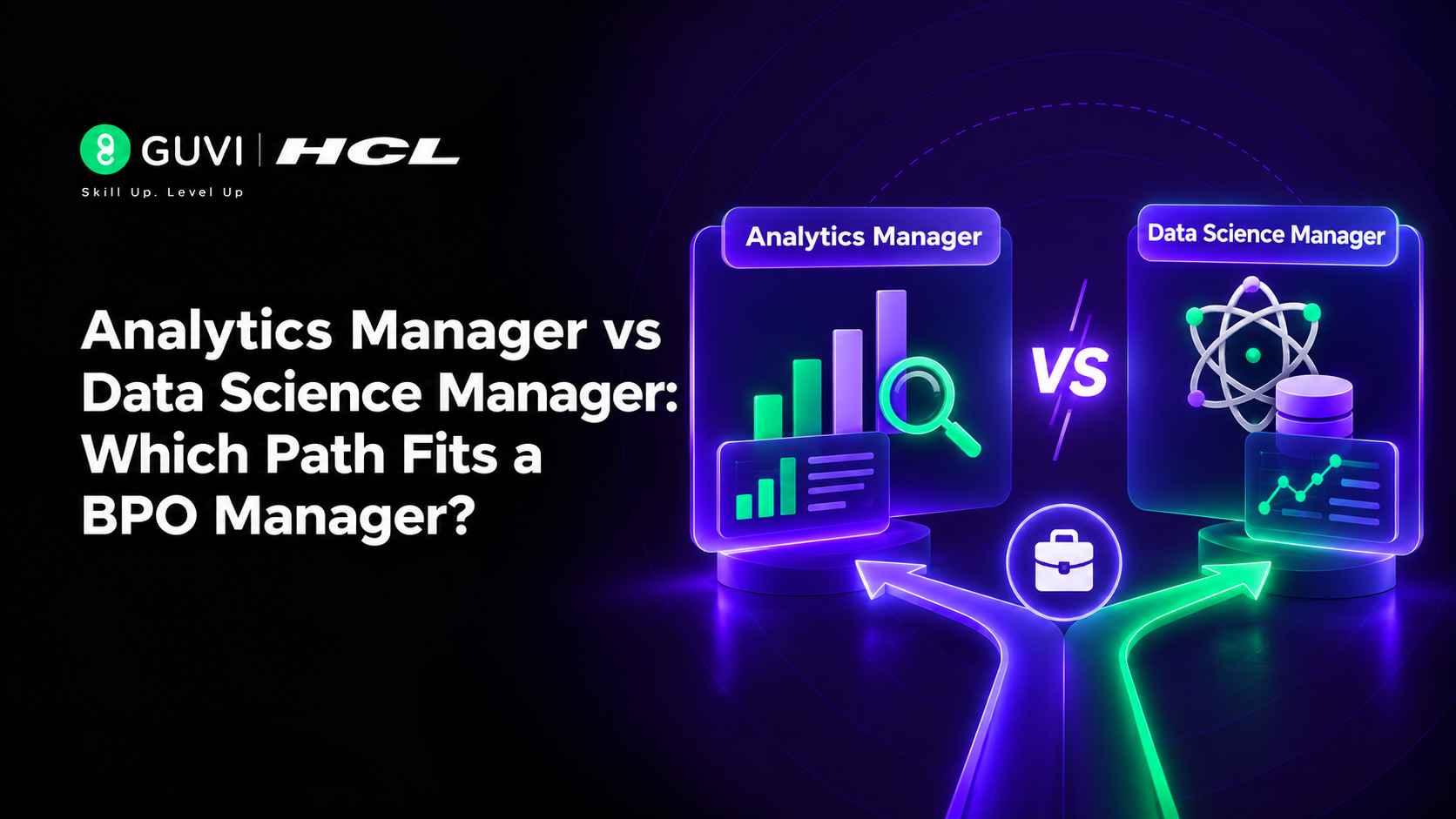
Analytics Manager vs Data Science Manager: Which Path Fits a BPO Manager?
Nov 02, 2026 6 Min Read 27 Views
(Last Updated)
The global big data analytics market is projected to grow from $447.68 billion in 2026 to $1.18 trillion by 2034, as reported by Fortune Business Insights. With businesses investing more in data-driven decisions, can experienced BPO managers build careers in analytics or data science?
Your experience managing teams, tracking SLAs, analysing performance, and planning workforce requirements provides a useful foundation. However, Analytics Manager and Data Science Manager roles require different technical skills and expertise.
Read this guide to compare salaries, responsibilities, required skills, and career paths to find out which role suits your BPO experience.
Quick Answer
Both offer career opportunities for BPO managers. Key differences include:
- Analytics Manager: KPIs, reporting, and business insights.
- Data Science Manager: AI, machine learning, and predictions.
- Key Skills: SQL, Power BI, Python, and statistics.
- BPO Experience: Reporting, workforce planning, and leadership.
- Best Fit: Analytics is a more direct path; data science requires advanced technical skills.
Table of contents
- BPO Manager vs Analytics Manager vs Data Science Manager: Key Differences
- Key Responsibilities of an Analytics Manager
- Key Responsibilities of a Data Science Manager
- Which BPO Management Skills Are Transferable to Analytics and Data Science?
- What Technical Skills Do BPO Managers Need for Analytics and Data Science Careers?
- Skills Required to Become an Analytics Manager
- Skills Required to Become a Data Science Manager
- Which Career Path Is Better for a BPO Manager: Analytics or Data Science?
- Which Career Path Matches Your BPO Experience?
- How to Switch From BPO Management to Analytics Management or Data Science Management
- Step 1: Identify Your Transferable BPO Skills
- Step 2: Build Essential Technical Skills
- Step 3: Complete BPO-Based Analytics Projects
- Step 4: Gain Relevant Professional Experience
- Step 5: Develop Analytics Leadership Skills
- Analytics Manager vs Data Science Manager Salary in India (2026)
- Common Mistakes BPO Managers Should Avoid When Switching Careers
- Conclusion
- FAQs
- Can a BPO manager become an Analytics Manager without an IT degree?
- Is Analytics Manager easier to become than Data Science Manager?
- Which certifications are useful for BPO managers switching to analytics?
- How long does it take to move from BPO management into analytics leadership?
- Will a BPO manager earn more after switching to data analytics or data science?
BPO Manager vs Analytics Manager vs Data Science Manager: Key Differences
BPO Managers, Analytics Managers, and Data Science Managers all contribute to business performance, but their responsibilities and technical requirements differ. Here is a quick comparison:
| Comparison Factor | BPO Manager | Analytics Manager | Data Science Manager |
| Primary Focus | Operations and service delivery | Business analytics and insights | Predictive analytics and AI |
| Key Responsibilities | Team targets, SLAs, quality, staffing | KPI analysis, dashboards, reporting | ML models, forecasting, AI projects |
| Performance Metrics | AHT, CSAT, FCR, SLAs | Business KPIs, trends, efficiency | Model accuracy, business impact |
| Technical Skills | Excel, MIS, WFM tools | SQL, Power BI, Tableau, Excel | Python, SQL, Statistics, ML |
| Coding Requirements | Generally minimal | Mainly SQL | Advanced Python and ML |
| Tools Used | Excel, CRM, WFM software | SQL, Power BI, Tableau | Python, Scikit-learn, ML platforms |
| Technical Complexity | Operational | Moderate to advanced | Advanced |
| Career Entry Path | BPO Team Leader | BI Analyst, Analytics Lead | Data Scientist, Lead Data Scientist |
| Long-Term Growth | Operations Head, Delivery Director | Head of Analytics, BI Director | Head of Data Science, AI Director |
Key Responsibilities of an Analytics Manager
An Analytics Manager works with operations teams, business leaders, and analysts to improve performance. Their responsibilities include:
- Performance Analytics: Monitor Average Handle Time (AHT), Customer Satisfaction (CSAT), First Call Resolution (FCR), SLAs, and agent productivity to identify performance gaps.
- Workforce Analytics: Analyse staffing requirements, occupancy, shrinkage, and schedule adherence to improve workforce planning and resource allocation.
- Business Intelligence: Manage Power BI dashboards, automate MIS reporting, and ensure business teams have access to accurate performance data.
- Operational Improvement: Investigate recurring customer complaints, service delays, and productivity issues to recommend process improvements.
- Team Leadership: Guide data analysts and BI professionals, review analytical findings, and communicate recommendations to clients and senior management.
Key Responsibilities of a Data Science Manager
Data Science Managers oversee the development of predictive solutions and ensure that technical projects address genuine business needs. Their responsibilities include:
- Predictive Analytics: Develop forecasting approaches for customer demand, call volumes, staffing requirements, and employee attrition.
- Machine Learning Projects: Guide model development, testing, validation, and performance monitoring to ensure reliable predictions.
- Customer Behaviour Analysis: Use customer interactions and service data to identify churn risks, engagement patterns, and customer segments.
- AI and Automation: Oversee NLP-based complaint classification, intelligent call routing, and AI-assisted workforce forecasting.
- Technical Leadership: Manage data scientists, review modelling approaches, coordinate deployment with engineering teams, and connect technical outcomes with business goals.
Which BPO Management Skills Are Transferable to Analytics and Data Science?
BPO managers already make decisions using operational reports, performance indicators, and customer information. Although these responsibilities are not the same as professional analytics work, they provide valuable business knowledge.
The advantage is knowing what the numbers mean in a real BPO environment. Here are the transferable skills that can support a career in analytics or data science:
- KPI Management: Experience with AHT, FCR, CSAT, SLAs, and quality scores helps you identify meaningful performance indicators and investigate changes in service quality.
- Workforce Planning: Understanding staffing, shrinkage, occupancy, and scheduling provides a foundation for workforce analytics and demand forecasting.
- Performance Reporting: Reviewing MIS reports, quality scorecards, and operational dashboards helps you interpret data and identify performance gaps.
- Process Improvement: Experience reducing handling delays, improving workflows, and resolving operational issues is useful when translating analytical findings into practical changes.
Advance your BPO management career with HCL GUVI’s Data Science Course. Build practical skills in SQL, Python, statistics, and machine learning through live online classes, real-world projects, and expert mentorship. Strengthen your analytical expertise to explore career opportunities in analytics management and data science.
What Technical Skills Do BPO Managers Need for Analytics and Data Science Careers?
Skills Required to Become an Analytics Manager
- Advanced Excel and Power Query: Clean datasets, consolidate operational reports, and analyse performance trends.
- SQL: Extract, filter, and combine customer service, workforce, and performance data from databases.
- Power BI and Tableau: Develop dashboards for SLAs, CSAT, agent productivity, and workforce efficiency.
- Statistics and Business Analytics: Interpret trends, compare performance, and identify factors contributing to operational problems.
- Data Storytelling: Explain analytical findings clearly and recommend actions that business teams can implement.
- Data Governance: Maintain reporting accuracy, data quality, and responsible handling of customer and employee information.
Skills Required to Become a Data Science Manager
- Python and SQL: Analyse large datasets, develop analytical workflows, and understand model-related code.
- Probability and Statistics: Apply regression, hypothesis testing, and statistical methods to evaluate data and model results.
- Machine Learning: Understand classification, regression, forecasting, and predictive modelling techniques.
- ML Frameworks: Gain experience with Scikit-learn and relevant machine learning libraries.
- Model Evaluation and MLOps: Understand model accuracy, data leakage, deployment, monitoring, and performance changes.
- Technical Project Leadership: Manage data science teams, review technical decisions, and coordinate AI projects with business stakeholders.
Which Career Path Is Better for a BPO Manager: Analytics or Data Science?
- Choose Analytics Management If You Enjoy Business Performance
Analytics management may suit you if you enjoy reviewing performance reports, understanding why service levels change, and improving team productivity.
Experience analysing SLAs, AHT, CSAT, workforce occupancy, and operational costs provides a relevant foundation. The next step is developing SQL, Power BI, statistics, and professional analytics project experience.
This path can lead towards Operations Analytics Lead, Business Intelligence Lead, and Analytics Manager positions.
- Choose Data Science Management If You Enjoy Predictive Modelling and AI
Data science may be more appealing if you want to understand how businesses predict customer behaviour, forecast demand, and automate decisions using machine learning.
For example, rather than reporting employee attrition, you may be interested in developing models that identify factors associated with future resignations.
However, moving into data science management requires substantial experience in Python, statistics, machine learning, model evaluation, and technical project delivery. BPO leadership experience alone is unlikely to meet these requirements.
- Consider Your Existing Technical Experience
Your current responsibilities can influence how quickly you are ready for an analytics career transition.
A BPO manager who already develops Power BI dashboards or works with SQL has a stronger technical starting point than someone whose responsibilities focus entirely on team supervision.
Similarly, experience with workforce forecasting or statistical analysis may provide a foundation for advanced analytics, although it does not replace hands-on machine learning expertise.
- Evaluate the Time Needed to Reach Management
Both Analytics Manager and Data Science Manager are leadership positions, not typical entry-level jobs.

A BPO manager may first need professional experience in business intelligence, workforce analytics, or operations analytics. Moving into data science management often requires an additional period of hands-on work as a data scientist or technical analytics specialist.
The more practical approach is to choose a career direction first, develop the required technical skills, and build relevant project experience before targeting management positions.
Which Career Path Matches Your BPO Experience?
| Your BPO Experience or Interest | Relevant Career Direction |
| SLA and Performance Reporting | Business Analytics |
| MIS Dashboards and Reporting Automation | Business Intelligence |
| Workforce Planning and Scheduling | Workforce Analytics |
| CSAT and Customer Retention | Customer Analytics |
| Statistical Forecasting and Machine Learning | Data Science |
| AI Project Delivery and Technical Leadership | Data Science Management |
How to Switch From BPO Management to Analytics Management or Data Science Management
Step 1: Identify Your Transferable BPO Skills
Start by connecting your current responsibilities with analytics work. Focus on:
- Performance Management: Experience tracking SLAs, AHT, CSAT, and productivity supports business analytics.
- Workforce Planning: Knowledge of staffing, scheduling, and attrition is useful for forecasting and workforce analytics.
- Leadership: Managing teams and presenting client reports develops skills needed for analytics leadership.
Step 2: Build Essential Technical Skills
Start with common analytics tools before specialising based on your career goal:
- Analytics Manager Path: Learn advanced Excel, SQL, Power BI, Tableau, and business statistics.
- Data Science Manager Path: Build on these foundations with Python, machine learning, predictive modelling, and statistical analysis.
Step 3: Complete BPO-Based Analytics Projects
Use public or synthetic datasets to demonstrate how you can solve familiar operational problems:
- Analytics Projects: Build SLA performance dashboards, analyse AHT and FCR trends, and track workforce productivity.
- Data Science Projects: Develop call volume forecasting, employee attrition prediction, or customer churn models.
Step 4: Gain Relevant Professional Experience
Before targeting management positions, develop practical experience delivering analytical projects. Suitable career paths include:
- Analytics Management: Progress through Operations Analyst, BI Analyst, Analytics Lead, or similar roles.
- Data Science Management: Gain experience as a Data Analyst, Data Scientist, and eventually Lead Data Scientist.
Step 5: Develop Analytics Leadership Skills
Your BPO management background can support your progression, but technical leadership requires additional experience. Prioritise:
- Project Delivery: Lead analytics initiatives, monitor results, and connect findings with business outcomes.
- Technical Expertise: Learn to review dashboards and data quality for analytics management or machine learning models and deployment for data science management.
- Team Leadership: Gain experience mentoring analysts or data scientists and communicating technical recommendations to stakeholders.
Analytics Manager vs Data Science Manager Salary in India (2026)
Here is a comparison of Analytics Manager and Data Science Manager salaries in India, based on Glassdoor estimates:
| Salary Factor | Analytics Manager | Data Science Manager |
| Average Annual Base Salary | ₹21 LPA | ₹32 LPA |
| Typical Base Salary Range | ₹14-28.6 LPA | ₹25-39.5 LPA |
| Average Additional Annual Pay | ₹3 LPA | ₹4 LPA |
| Main Salary Drivers | BI expertise, analytics delivery, leadership | ML expertise, technical delivery, leadership |
| Relevant Experience | Analytics and BI project management | Hands-on data science and ML leadership |
Source: Glassdoor India, 2026. Figures are approximate salary estimates across industries, not BPO-specific offers. Actual compensation varies by experience, employer, location, and responsibilities.
Common Mistakes BPO Managers Should Avoid When Switching Careers
BPO managers bring valuable operational experience, but moving into analytics or data science requires a different set of technical responsibilities. Avoid these common mistakes:
- Applying Directly for Senior Analytics Jobs: Managing BPO teams does not automatically qualify you to manage technical analysts or data scientists. Build relevant analytics experience first.
- Learning Tools Without Practical Projects: Knowing Power BI or Python commands is not enough. Demonstrate how you use them to investigate business problems.
- Ignoring SQL: Many analytics roles require database querying, even when the primary responsibility involves reporting and dashboards.
- Choosing Data Science Only for Higher Salaries: Data science management typically requires deeper programming, mathematical, and machine learning expertise.
- Overlooking Relevant Intermediate Roles: Workforce Analyst, BI Analyst, Operations Analytics Lead, and Data Scientist positions can provide experience for future management opportunities.
- Using Confidential BPO Data: Avoid uploading customer records, employee information, or restricted operational reports into personal projects. Use public or synthetic datasets instead.
Conclusion
The choice between Analytics Manager and Data Science Manager depends on how you want to use your BPO management experience. Analytics management builds more directly on performance reporting, workforce planning, and operational decision-making, whereas data science management requires deeper expertise in Python, statistics, and machine learning.
Start by developing SQL, Excel, and Power BI skills, then gain practical analytics experience through BPO-focused projects. Your existing leadership skills can support future management responsibilities, but relevant technical experience will determine how successfully you make the transition.
FAQs
Can a BPO manager become an Analytics Manager without an IT degree?
Yes. An IT degree is not mandatory for every Analytics Manager position. BPO managers can transition by developing SQL, Excel, Power BI, statistics, and business analytics skills. However, employers generally expect relevant analytics experience before offering management responsibilities.
Is Analytics Manager easier to become than Data Science Manager?
Analytics management is generally a more closely related career path for BPO managers experienced in MIS reporting, workforce planning, and KPI analysis. Data science management requires more advanced programming, statistics, machine learning, and technical project experience.
Which certifications are useful for BPO managers switching to analytics?
The Google Data Analytics Professional Certificate, IBM Data Analyst Professional Certificate, and Microsoft Power BI Data Analyst Associate (PL-300) can help develop relevant skills. Professionals interested in data science can explore additional Python, statistics, and machine learning training.
How long does it take to move from BPO management into analytics leadership?
The timeline depends on your technical background and professional experience. Foundational analytics skills may be developed over several months, but progressing into an Analytics Manager or Data Science Manager position generally requires additional hands-on project experience and leadership responsibilities.
Will a BPO manager earn more after switching to data analytics or data science?
A salary increase is possible but not guaranteed. Analytics and data science management roles can offer competitive compensation, although BPO managers entering technical positions may initially earn less. Compare your current salary, benefits, technical readiness, and long-term career opportunities before switching.
Success Stories

About the Author
Vaishali
I'm a seasoned writer with four years of experience across technical, non-technical, and just about every genre or niche you can imagine. Adaptable and curious, I enjoy exploring new topics and making information engaging and easy to understand. Fueled by a steady stream of tea, I approach each project with creativity, reliability, and genuine enthusiasm for storytelling.
View all posts by Vaishali
Connect with me @







Did you enjoy this article?