


Artificial Intelligence and Machine Learning Articles
Finance Manager to Data Analytics: Career Growth, Salary and Seniority
How to Evaluate LLM Outputs in Production Deployments
AI/ML Skills Gap 2026: Why Companies Can't Find Job-Ready Talent
20 AI/ML Interview Questions Recruiters Can Use Without a Tech Background - Best Guide


Get In Touch For Details! Request More Information

What is BERT in NLP? A Beginner’s Guide
Aug 19, 2026 5 Min Read 907 Views
(Last Updated)
BERT is a language understanding model developed by Google AI that improved how machines understand human text. Earlier NLP models struggled to understand context because they processed text in only one direction.
Google AI introduced BERT to solve this limitation using bidirectional context understanding. Today, BERT powers NLP applications such as search engines, chatbots, question answering systems, and text classification.
This article covers what BERT is, how it works, transformer architecture, features, applications, benefits, limitations, and fine-tuning.
Table of contents
- TL;DR
- Why Was BERT Introduced?
- Understanding the Transformer Architecture
- What is Self Attention?
- How Does BERT Work?
- Masked Language Modeling
- Next Sentence Prediction
- Key Features of BERT
- Bidirectional Processing
- Pretrained Language Model
- Contextual Language Understanding
- Transfer Learning Support
- State of the Art NLP Performance
- Types of BERT Models
- BERT Base
- BERT Large
- DistilBERT
- RoBERTa
- ALBERT
- BERT Applications in NLP
- Question Answering
- Text Classification
- Search Engines
- Chatbots and Conversational AI
- Named Entity Recognition
- Content Recommendation Systems
- Fine-Tuning in BERT
- Example Fine-Tuning Tasks
- Advantages of BERT
- Better Contextual Understanding
- Improved Search Relevance
- Strong Transfer Learning
- State of the Art Performance
- Reduced Feature Engineering
- Limitations of BERT
- High Computational Cost
- Slower Inference
- Resource Intensive
- Limited Context Window
- BERT vs Traditional NLP Models
- Future of BERT and NLP
- Conclusion
- FAQs
- What does BERT stand for?
- Why is BERT important in NLP?
- What is fine-tuning in BERT?
- Is BERT a transformer model?
- Where is BERT used in real life?
TL;DR
- BERT (Bidirectional Encoder Representations from Transformers) is a pre-trained language model developed by Google AI that was released in 2018.
- Unlike prior models, BERT processes language bidirectionally, which greatly aids in understanding text context.
- BERT models are based on the transformer architecture, and a strong focus on context understanding is inherent.
- This enables BERT to power applications such as question answering models, text classification, and sentiment analysis, and it can also be found in search engines and chatbots.
- Fine-tuning allows BERT models to achieve impressive accuracy on various NLP tasks while being computationally less demanding than fully trained models from scratch.
- BERT represents one of the breakthroughs in both deep learning and Natural Language Understanding.
What is BERT?
BERT, which stands for Bidirectional Encoder Representations from Transformers, is a natural language processing (NLP) model developed by Google AI and released in 2018. It is designed to help machines understand human language more accurately by analyzing the context of words within a sentence. Unlike earlier NLP models that processed text in only one direction, BERT is bidirectional, meaning it examines both the words before and after a target word to better understand its meaning and context.
Why Was BERT Introduced?

Before BERT, NLP systems heavily depended on Recurrent Neural Networks (RNNs) and similar sequential language models that lacked an understanding of long-range dependencies and relationships.
Google AI introduced BERT to boost performance on the following NLP tasks:
• Search Queries
• Question answering
• Text summarization
• Language translation
• Sentiment analysis
The aim was for machines to read and interpret the intent and meaning behind text, rather than simply picking up on individual keywords.
BERT became especially useful in improving Google Search by allowing for better interpretation of conversational search queries.
Understanding the Transformer Architecture

BERT is built upon transformer architecture, which was first introduced in the research paper “Attention Is All You Need.”
The self-attention mechanism employed by Transformers allows the system to analyse different words in the input sequence. Instead of reading them word by word and deciding what to focus on, transformers consider the meaning of words depending on every other word in the sequence.
This offers numerous advantages:
• Faster training
• Better context awareness
• More parallelism
• Better long-range language models
BERT predominantly uses the encoder part of the transformer architecture.
What is Self Attention?
Self-attention enables a language model to identify important words in text.
Example:
“The animal didn’t cross the street because it was tired.”
Here, the model can learn that “it” actually refers to “animal”. It allows the language model to grasp context for improved language representation.
How Does BERT Work?
BERT uses two distinct and important methods:
1. Masked Language Modeling
In masked language modeling, certain words in a sentence are randomly replaced with a special “[MASK]” token. The model then attempts to predict the missing word using the surrounding context.
Example:
“The cat sat on the [MASK].”
Based on the surrounding words, the model predicts the missing word as “mat.”
This helps BERT develop a stronger understanding of bidirectional language context.
2. Next Sentence Prediction
BERT also endeavors to understand the relationships between sentences, enabling it to ascertain if a sentence would logically follow another.
Example:
Sentence A: “I opened the laptop.”
Sentence B: “The screen came on.”
This method enhances models for both dialogue generation and answering questions.
Key Features of BERT

Bidirectional Processing
The meaning of words is interpreted in the context of words that both come before and follow them in a sentence.
Pretrained Language Model
The initial training phase of BERT has been performed on extensive text datasets, preparing it to be further tuned for other NLP tasks.
Contextual Language Understanding
This feature refers to BERT’s ability to represent the meaning of words based on the context of the text they appear in.
Transfer Learning Support
Developers can utilize the pre-trained BERT model for various NLP tasks by fine-tuning it. It eliminates the need to train from scratch.
State of the Art NLP Performance
BERT was able to achieve some of the best performances across numerous NLP tasks when it was first introduced.
Types of BERT Models
There are several types of BERT models available for different purposes:
BERT Base
The standard model has a relatively smaller parameter size, offering good performance and fast speed.
BERT Large
A more extensive model with more parameters that delivers higher accuracy, however, it demands more computational power.
DistilBERT
A more lightweight and faster version of BERT, optimized for faster execution times at the cost of slightly reduced accuracy.
RoBERTa
An optimized variant of BERT that improves the training methodology for better performance.
ALBERT
This version aims for memory efficiency by implementing parameter sharing across transformer layers.
BERT Applications in NLP
BERT has proven to be instrumental in revolutionizing many NLP applications:
Question Answering
BERT models are capable of providing accurate answers by extracting relevant information from large documents. Applications such as virtual assistants and search result enhancement benefit from this.
BERT is widely used in question answering systems using transformers for extracting accurate answers from large text datasets.
Text Classification
BERT models are widely employed for:
• Spam detection
• Topic categorization
• Sentiment analysis
• Email filtering
Search Engines
The Google Search engine utilizes BERT’s language understanding abilities to interpret complex user queries.
Chatbots and Conversational AI
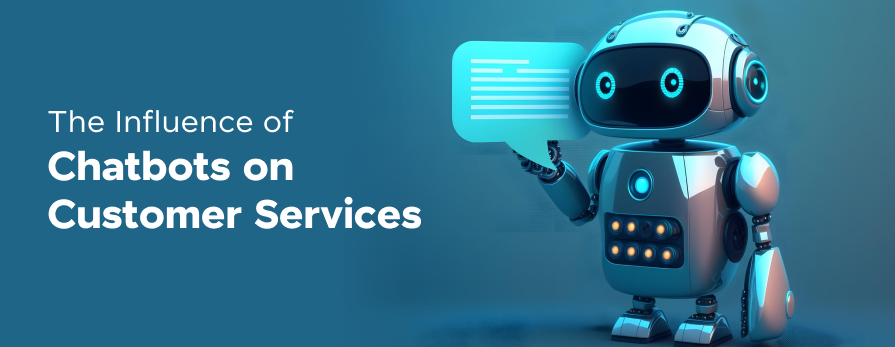
Chatbots are able to maintain more natural conversations and understand user intent better due to the language understanding capabilities of BERT.
Named Entity Recognition
BERT can effectively identify and extract key entities such as people, locations, organizations, and products from text.

Content Recommendation Systems
Online platforms that recommend products, articles, or media based on user preferences are employing BERT to understand their content better.
Fine-Tuning in BERT

BERT’s strength lies in its fine-tuning capability. Instead of building a completely new deep learning model from scratch, developers can take a pre-trained BERT model and tweak its parameters so it’s best suited for a particular task. The upside to this approach is that it saves computational resources and time while still producing strong NLP results, even if your dataset for fine-tuning is relatively small.
Typical steps involved in fine-tuning BERT include:
- Load a pre-trained BERT model.
- Append additional task-specific layers on top of the pre-trained model.
- Train the modified model on a task-specific dataset.
- Optimize the performance of the adapted model for the desired NLP task.
For example, a business may want to fine-tune BERT for customer reviews to classify their sentiment (positive/negative), to automatically label and route customer requests, or to improve chatbot performance on customer service questions.
A simple example of BERT-based sentiment analysis using the Hugging Face Transformers library:
from transformers import pipeline
classifier = pipeline(“sentiment-analysis”)
result = classifier(“BERT makes NLP easier to understand.”)
print(result)
This example uses a pre-trained BERT model to analyze the sentiment of a sentence. The model automatically predicts whether the text expresses a positive or negative sentiment.
Fine-tuning allows developers to customize BERT for multiple real-world NLP applications without building a language model entirely from scratch.
Example Fine-Tuning Tasks
• Sentiment analysis
• Question answering
• Language translation
• Text summarization
• Document classification
MetaMask has become one of the most widely used gateways to the Web3 ecosystem, with tens of millions of users using it to interact with decentralized applications, NFT platforms, DeFi protocols, and blockchain networks. Beyond Ethereum, MetaMask also supports multiple Ethereum-compatible chains such as Polygon, Arbitrum, Optimism, Avalanche, and Base, allowing users to switch between networks while using the same wallet interface.
Advantages of BERT
Better Contextual Understanding
BERT captures word meaning more accurately compared to older NLP systems.
Improved Search Relevance
Search engines deliver more relevant and human-like results.
Strong Transfer Learning
Fine-tuning enables efficient adaptation across industries.
State of the Art Performance
BERT achieved breakthroughs in NLP benchmarks.
Reduced Feature Engineering
Developers no longer need extensive manual NLP rule creation.
If you want to understand AI concepts in detail, consider exploring an ebook covering practical projects and industry-focused learning resources, which can help significantly.
Limitations of BERT
Despite its advantages, BERT also has limitations.
High Computational Cost
Training and fine-tuning large BERT models require powerful GPUs and high memory.
Slower Inference
Large transformer models can increase prediction latency.
Resource Intensive
BERT models consume significant storage and computational resources.
Limited Context Window
BERT has input length limitations for extremely large documents.
BERT vs Traditional NLP Models

Traditional NLP systems relied heavily on:
• Bag of Words
• TF IDF
• Recurrent Neural Networks
• LSTMs
These approaches often struggled with contextual understanding.
BERT improved NLP significantly because it:
• Understands bidirectional context
• Uses transformer architecture
• Supports transfer learning
• Delivers higher accuracy
• Handles complex language patterns
This shift accelerated the growth of modern AI-driven language systems.
Future of BERT and NLP
BERT enabled the development of advanced transformer-based AI models.
Today, many modern NLP systems are inspired by the BERT architecture, including:
• GPT models
• T5
• XLNet
• ELECTRA
• DeBERTa
Future NLP systems will likely focus on:
• More efficient transformer architectures
• Multimodal AI systems
• Faster inference models
• Better reasoning capabilities
• Improved conversational intelligence
As AI adoption increases, BERT-based NLP systems will continue shaping search engines, digital assistants, automation platforms, and enterprise AI applications.
Modern AI systems such as BERT and ChatGPT are built using transformer-based models. Transformer AI: A Guide to the Engine Behind Modern AI explains how transformers improved contextual language understanding in NLP.
After understanding the pros, risks, and real-world impact of Artificial Intelligence, learners can strengthen their practical AI skills through HCL GUVI’s AI & Machine Learning Course, which covers machine learning, deep learning, NLP, generative AI, and industry-focused AI applications.
Conclusion
BERT became a breakthrough in natural language understanding because it helped machines understand context more like humans. Its bidirectional processing, transformer architecture, and pre-trained learning approach transformed NLP research and real-world AI systems.
Today, BERT powers search engines, conversational AI, text classification systems, and many modern deep learning applications. Its influence also inspired the development of newer transformer models that continue advancing the AI industry.
For beginners entering NLP and deep learning, understanding BERT provides a strong foundation for exploring modern AI systems and transformer-based architectures.
FAQs
1. What does BERT stand for?
BERT stands for Bidirectional Encoder Representations from Transformers.
2. Why is BERT important in NLP?
BERT improves contextual language understanding by processing text bidirectionally, leading to higher NLP accuracy.
3. What is fine-tuning in BERT?
Fine-tuning means adapting a pre-trained BERT model for specific NLP tasks using smaller datasets.
4. Is BERT a transformer model?
Yes. BERT is based on transformer architecture and primarily uses transformer encoders.
5. Where is BERT used in real life?
BERT is used in Google Search, chatbots, recommendation systems, sentiment analysis, question answering, and many AI-powered NLP applications.
Success Stories

About the Author
Vishalini Devarajan
An Aerospace Engineer turned content writer, I focus on making complex concepts easy to understand through well-structured, reader-friendly blogs. Whether it’s a technical topic or a non-technical one, I love creating content that is clear, engaging, and impactful.
View all posts by Vishalini Devarajan
Connect with me @












Did you enjoy this article?