


Career Articles
How I Switched from Web Developer to ML Engineer (A Web Developer's Real Story)
PHP Developer Resume: Writing Guide & Key to Landing Your Dream Job
My Frontend Developer Interview at Google: What Really Happens Behind Closed Doors
Future of Electric Vehicle Course: Fast-Track Your EV Career


Get In Touch For Details! Request More Information

Top Jobs After Computer Engineering in India in 2025
Feb 04, 2026 5 Min Read 1652 Views
(Last Updated)
India produces more than 1.5 million engineering graduates each year, and a large share of them come from computer science programs. This scale creates strong competition, which pushes students to look for roles that match current industry demand in 2025. The job market in India continues to reward roles that offer measurable impact on business outcomes. Graduates aim for positions that provide stability and clear advancement, which aligns with the expectations of companies that value candidates who understand real-world applications of technology and who can work with teams that manage ambitious goals. This sets the stage for several sought-after job roles that attract computer engineering graduates across the country.
Ready to explore the full list of high-growth careers? Read the complete blog to choose the path that fits your goals for 2025.
Table of contents
- Quick Answer
- Importance of Computer Engineering
- Top 10 Jobs After Computer Engineering in India in 2025
- Software Engineer
- Skills Required
- Data Scientist
- Skills Required
- Cybersecurity Engineer
- Skills Required
- DevOps Engineer
- Skills Required
- Product Manager
- Skills Required
- Cloud Engineer or Cloud Architect
- Skills Required
- Embedded Systems Engineer
- Skills Required
- Machine Learning Engineer
- Skills Required
- UI and UX Designer
- Skills Required
- Site Reliability Engineer (SRE)
- Skills Required
- Top Tips for Building a Strong Career After Computer Engineering
- Conclusion
- FAQs
- Which job is best after completing computer engineering in India?
- Does computer engineering offer good career growth in India?
- What skills help computer engineering graduates get better jobs?
Quick Answer
Computer engineering graduates often choose roles in software development, data science, cybersecurity, DevOps, product management, cloud engineering, embedded systems, machine learning, UI and UX design and site reliability. These paths offer strong demand, clear growth and meaningful impact across India’s tech sector.
- The Indian IT sector continues to record steady growth in job openings, with projections indicating a rise of up to 20%.
- A report by the Telecom Sector Skill Council found that only about 40% of Indian graduates in computer science, the IT sector, and mathematics are considered job-ready.
- The India Skills Report 2025 lists the employability rate for B.Tech graduates as 71.5%, yet many still struggle to find jobs that align with their core discipline.
Importance of Computer Engineering

Computer engineering holds strong importance because it supports the systems that power communication, finance, healthcare and education across India. It builds the foundation for software, hardware and networks that support daily activities for individuals and organisations, which strengthens its role in modern infrastructure. The field helps companies create reliable tools that solve practical problems through structured logic and measurable results, and this practical value shapes the direction of many industries.
Career options expand across software development, artificial intelligence, cybersecurity and product roles, which widens the range of opportunities available to graduates. Each path requires clarity about required skills and long-term growth, and this clarity guides students toward informed career choices. This breadth gives computer engineering a central role in shaping careers that remain relevant in 2025.
Top 10 Jobs After Computer Engineering in India in 2025
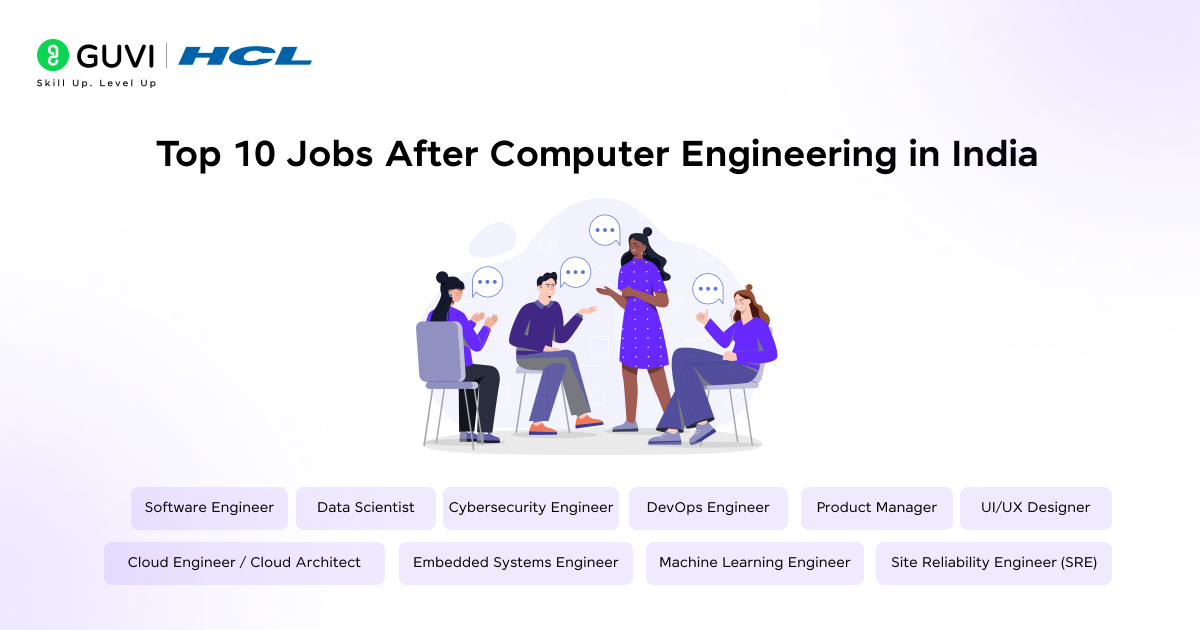
1. Software Engineer
A software engineer career remains a strong choice after computer engineering because the role uses the core abilities developed throughout the degree, such as algorithmic reasoning and structured coding. Companies across India depend on software engineers to build applications that support millions of users and manage crucial business tasks. Computer engineering offers a clear advantage because students learn system behaviour in depth, which helps them create reliable and scalable digital solutions. This foundation supports long-term growth in backend, frontend or full-stack development.
Skills Required
- Strong command of Java, Python or C++ with clarity in syntax and logic
- Solid understanding of data structures and algorithmic problem solving
- Ability to design clean and modular software architectures
- Use of Git for version control and collaborative development
- Skill in debugging and structured testing
Average Pay: Around ₹6,00,000 per year
Source: Glassdoor

2. Data Scientist
A data scientist’s role attracts computer engineering graduates because the field rewards mathematical clarity and logical evaluation. Companies across finance and healthcare depend on insights that come from analysing structured and unstructured datasets. Computer engineering students learn how algorithms behave and how data influences output, which strengthens their ability to build dependable models. This creates a role where technical reasoning and statistical understanding combine to guide important decisions.
Skills Required
- Strong foundation in statistics and probability for modelling
- Proficiency in Python or R for analytical workflows
- Clear understanding of supervised and unsupervised ML methods
- Skill in processing high-volume datasets with accuracy
- Ability to visualise trends through charts, dashboards and reports
Average Pay: Around 9,00,000 per year
Source: Glassdoor
3. Cybersecurity Engineer
A cybersecurity engineer position suits computer engineering graduates because the field requires clear knowledge of networks, operating systems, and system vulnerabilities. Indian companies prioritise security due to rising digital transactions and frequent threat attempts. A graduate with computer engineering understands how data moves between components, which helps them detect weak points and apply preventive measures. This role remains valuable since organizations focus heavily on safe and reliable digital environments.
Skills Required
- Knowledge of network protocols and common attack behaviours
- Understanding of cryptographic principles and secure communication
- Ability to analyse threats and evaluate system risks
- Skill in conducting ethical hacking and identifying vulnerabilities
- Awareness of standard security frameworks used in organisations
Average Pay: Around ₹8,00,000 per year
Source: Glassdoor
4. DevOps Engineer
A DevOps engineer’s career benefits from a computer engineering background because the role demands accuracy in understanding system flow and deployment behaviour. Companies across India aim to reduce downtime and speed up release cycles, which increases the importance of DevOps practices. A graduate with computer engineering can analyse how systems behave under changing conditions and use automation to remove delays. This creates a strong environment for professionals who enjoy combining code with operational clarity.
Skills Required
- Clear understanding of CI and CD pipelines for smoother releases
- Knowledge of Docker and Kubernetes for container orchestration
- Familiarity with cloud platforms such as AWS, Azure or GCP
- Ability to automate tasks with scripting languages
- Understanding of system administration for stable operations
Average Pay: Around ₹8,00,000 per year
Source: Glassdoor
5. Product Manager
A product manager role becomes a strong option after computer engineering because graduates understand how technical choices influence user outcomes. Indian tech companies rely on product managers to guide development teams and maintain progress toward business goals. Computer engineering offers clarity about system constraints, which helps product managers plan features with precision. This supports long-term growth into strategy and leadership roles.
Skills Required
- Ability to translate technical requirements into usable features
- Skill in evaluating user needs through structured analysis
- Capability to plan roadmaps that align with business direction
- Understanding of user testing and product feedback cycles
- Strong coordination across design, engineering and business teams
Average Pay: Around 15,00,000 per year
Source: Glassdoor
6. Cloud Engineer or Cloud Architect
A cloud engineer role aligns strongly with computer engineering because both involve reasoning about performance, architecture and distributed systems. Companies across India continue shifting to cloud platforms to support large workloads and rapid scaling. A graduate with computer engineering understands operating systems and networks, which helps them design and manage cloud environments effectively. This role also influences cost control and security planning, which raises its value in modern enterprises.
Skills Required
- Ability to design cloud environments with scalable architecture
- Knowledge of AWS, Azure or GCP cloud services
- Skill in planning secure configurations for cloud applications
- Understanding of cost control and resource allocation strategies
- Capability to manage migration from on-premise systems
Average Pay: Around ₹8,00,000 per year
Source: Glassdoor
7. Embedded Systems Engineer
An embedded systems engineer’s career reflects the technical depth of computer engineering because it blends electronics knowledge with software precision. Industries such as IoT and telecom rely on embedded systems that must operate with accuracy under strict constraints. Computer engineering graduates learn about processors, memory behaviour and microcontrollers, which prepares them to design reliable firmware. This role rewards attention to detail and a strong understanding of hardware-software interaction.
Skills Required
- Proficiency in C and C++ for low-level development
- Understanding of microcontrollers and microprocessor behaviour
- Skill in working with RTOS for time-sensitive tasks
- Knowledge of basic electronics and signal control
- Ability to work with strict resource limits in embedded devices
Average Pay: Around ₹5,40,000 per year
Source: Glassdoor
8. Machine Learning Engineer
A machine learning engineer role suits computer engineering graduates because the field involves linear algebra and algorithm design. Computer engineering supports a structured approach to building and optimising models that function under real workloads. This strength in technical reasoning helps graduates deploy solutions that remain stable and accurate.
Skills Required
- Strong foundation in linear algebra and probability
- Knowledge of TensorFlow or PyTorch for model development
- Ability to evaluate models through clear metrics
- Skill in building structured data pipelines
- Understanding of deployment practices for production ML models
Average Pay : Between ₹5,37,500 per year
Source: Glassdoor
9. UI and UX Designer
One of the best roles you can pursue after completing computer engineering is UI and UX design because it blends creativity with technical clarity. Companies across India treat user experience as a central part of product success, which raises demand for designers who understand system behaviour. A computer engineering graduate can plan interfaces that align with performance realities and create layouts that support user flow. This blend of creativity and technical thinking strengthens the impact of the final product.
Skills Required
- Proficiency in Figma or Sketch for visual design
- Understanding of interaction principles that guide user flow
- Ability to analyse user behaviour through structured research
- Skill in preparing prototypes for testing and review
- Capability to coordinate with engineering teams for accurate implementation
Average Pay: Around ₹6,40,000 per year
Source: Glassdoor
10. Site Reliability Engineer (SRE)
A site reliability engineer role suits computer engineering graduates because it requires clarity in system reliability and failure response. Companies with large platforms aim to deliver uninterrupted services, and SRE teams play a vital role in achieving this. Computer engineering helps students understand infrastructure components which support accurate monitoring and automation. This leads to stable systems and improved user experience for large-scale digital platforms.
Skills Required
- Understanding of reliability principles and performance behaviour
- Skill in capacity evaluation for varying workloads
- Ability to manage incidents and prepare structured responses
- Knowledge of automation tools for reducing manual effort
- Ability to monitor systems through metrics and alerts
Average Pay: 1,200,000 per year
Source: Glassdoor
Want to land one of the top tech jobs after computer engineering? Learn the most in-demand skills with our Full Stack Development Course, designed to help you build real-world projects, master front-end and back-end technologies, and earn an industry-recognised certification that boosts your career in India’s tech market.
Top Tips for Building a Strong Career After Computer Engineering
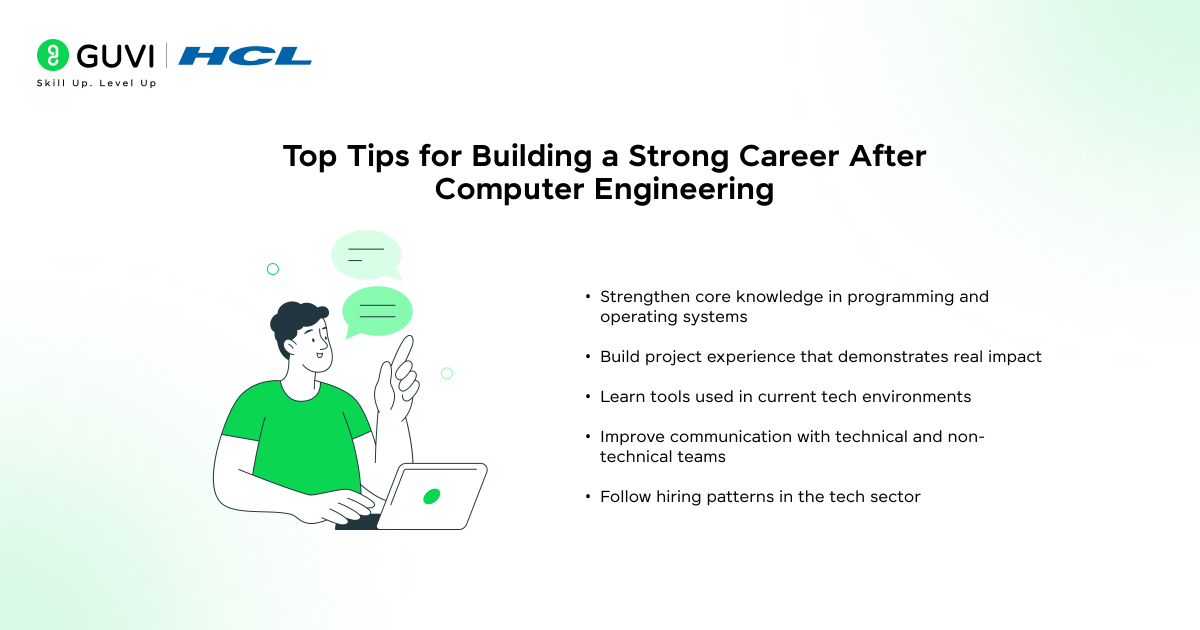
- Strengthen Core Knowledge: A solid understanding of programming and operating systems shapes the foundation needed for roles across software, data and cloud. This depth helps you reason through complex tasks and build solutions that support real business needs.
- Build Project Experience That Shows Real Impact: Projects highlight how you apply concepts to tangible outcomes. Recruiters value work that demonstrates problem-solving and the ability to deliver results in settings that resemble industry challenges. A clear project portfolio often leads to stronger opportunities.
- Learn Tools Used in Current Tech Environments: Knowledge of widely used tools for development, data processing, security and cloud systems raises your chances of securing a role aligned with your strengths. Each tool adds clarity to your technical profile and shows readiness for real workplace expectations.
- Improve Communication Across Technical and Non-Technical Teams. Clear communication helps you explain decisions and contribute to teamwork that drives meaningful outcomes. This skill becomes essential in roles where coordination shapes the quality of the final product.
- Follow Hiring Patterns in the Tech Sector: Awareness of which skills companies prioritise guides your learning path. This awareness helps you focus on areas that support long-term relevance and stable growth across India’s technology landscape.
Conclusion
Computer engineering creates strong career possibilities because the field builds technical depth that supports real industry needs. The strength of this foundation helps graduates understand how software, data and systems influence daily operations in companies across India. This understanding guides them toward roles that offer steady advancement and measurable impact.
Graduates benefit when they study market demand and shape their skills around clear goals, which strengthens their confidence while choosing a career path. A thoughtful approach helps them match their abilities with opportunities that provide stability and meaningful contributions to India’s growing technology landscape.
FAQs
1. Which job is best after completing computer engineering in India?
The best job depends on your strengths, yet roles such as software engineer, data scientist, cybersecurity engineer and cloud engineer often stand out because they offer clear demand, stable growth and strong relevance across major industries.
2. Does computer engineering offer good career growth in India?
Computer engineering offers strong career growth because companies across finance, healthcare, telecom and product development depend on reliable software, secure systems and data-driven solutions. This demand creates steady opportunities for skilled graduates.
3. What skills help computer engineering graduates get better jobs?
Graduates benefit from strong coding skills, clarity in problem solving, knowledge of networks, understanding of cloud systems and familiarity with tools used in modern development. These skills help them qualify for roles that impact business results across India’s tech sector.
Success Stories

About the Author
Vaishali
I'm a seasoned writer with four years of experience across technical, non-technical, and just about every genre or niche you can imagine. Adaptable and curious, I enjoy exploring new topics and making information engaging and easy to understand. Fueled by a steady stream of tea, I approach each project with creativity, reliability, and genuine enthusiasm for storytelling.
View all posts by Vaishali
Connect with me @
















Did you enjoy this article?