


Career Articles
BPO Experience for Data Analyst Jobs Does It Count When Applying? - Best Guide
What's Career Growth After 5 Years in BPO? Are You Missing Out on a Data Analyst Career?
BPO vs Data Analyst Salary in India: What Changes After the Switch?
How to Switch From BPO to Data Analytics in 2026: Best Skills, Roadmap & Jobs


Get In Touch For Details! Request More Information
If you have spent four or more years working in BPO and have progressed into a Team Leader role, moving into Data Analytics can feel like starting over. You may already have leadership experience, business knowledge, and a strong understanding of performance metrics, but you may wonder whether employers will consider you for Data Analyst positions.
The good news is that your experience does not have to go to waste. A team leader to data analyst transition can work when you connect your existing experience with new skills such as Excel, SQL, Power BI, and data analysis.
For experienced BPO professionals, the goal should not be to present yourself as a fresher. Instead, position yourself as an experienced professional adding analytical capabilities to an existing business background.
Table of contents
- TL;DR
- Can a BPO Team Leader Become a Data Analyst?
- Which BPO Skills Can Help You Become a Data Analyst?
- What Skills Should a BPO Team Leader Learn?
- Excel
- SQL
- Power BI
- Basic Statistics
- Should a BPO Team Leader Apply for Fresher Data Analyst Jobs?
- Will You Need to Take a Salary Cut?
- How Can You Build an Analytics Portfolio?
- Customer Support Dashboard
- Employee Performance Dashboard
- Workforce Analysis
- SLA Performance Analysis
- How Should You Explain the Career Transition in an Interview?
- What Is the Best Career Strategy for a 4+ Year BPO Team Leader?
- Is the Team Leader to Data Analyst Transition Worth It?
- Conclusion
- FAQs
- Can a BPO Team Leader become a Data Analyst?
- Do I need to leave my BPO experience off my Data Analyst resume?
- Should a BPO Team Leader apply for fresher Data Analyst jobs?
- Will I get a lower salary after switching to Data Analytics?
- What should I learn first to become a Data Analyst?
- Is moving from BPO Team Leader to Data Analyst worth it?
TL;DR
- A team leader to data analyst transition is possible without completely starting your career again.
- BPO Team Leaders already have experience with KPIs, performance reports, productivity, quality, and business operations.
- Learn Excel, SQL, Power BI, data visualization, and basic statistics to build technical credibility.
- Avoid applying only for fresher Data Analyst roles if you have 4+ years of experience.
- Consider Operations Analyst, Reporting Analyst, Workforce Analyst, Business Analyst, and Data Analyst roles.
- Build projects around real BPO-related problems to connect your previous experience with analytics.
- A temporary salary adjustment may happen, but choosing the right role can create stronger long-term career growth.
Can a BPO Team Leader Become a Data Analyst?
Yes, a BPO Team Leader can become a Data Analyst by combining existing business experience with practical analytics skills.
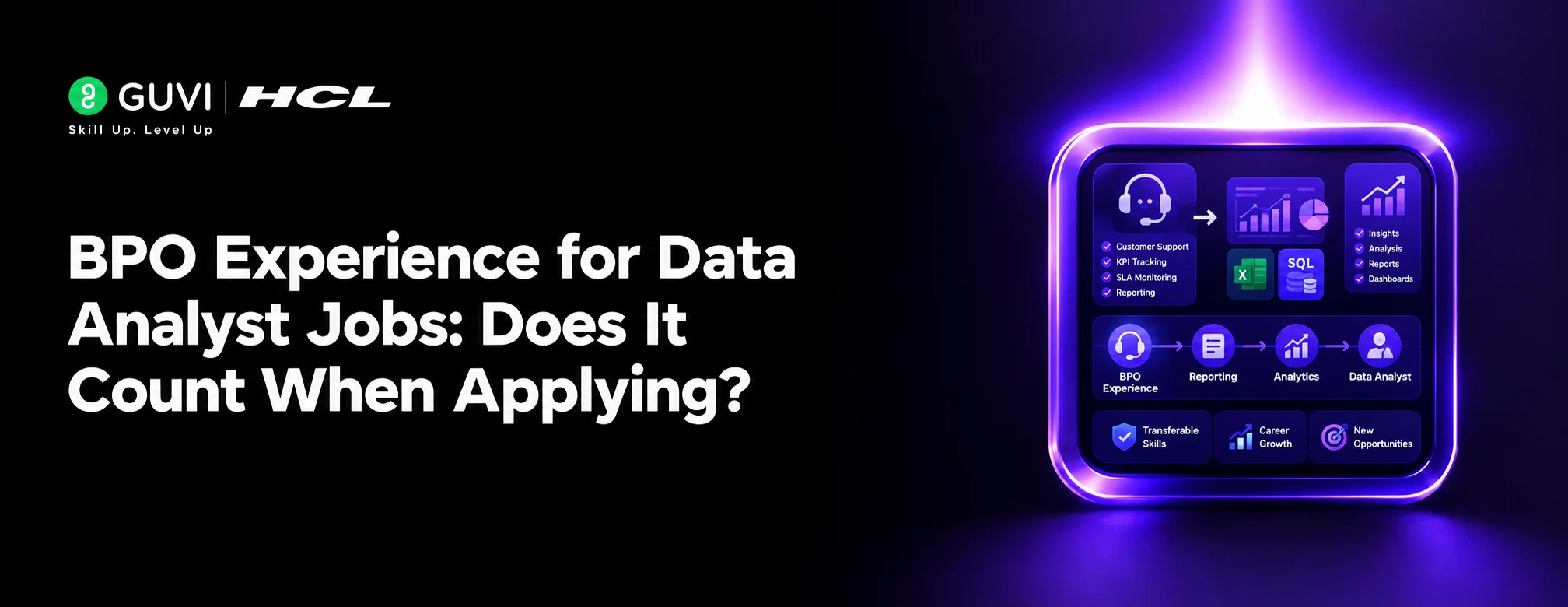
As a Team Leader, you may already work with daily reports, productivity numbers, quality scores, attendance, customer satisfaction, SLA performance, and team KPIs. These are all forms of business data.
The difference is that a Data Analyst is expected to go beyond monitoring numbers. You need to clean data, identify trends, investigate problems, create dashboards, and communicate insights that support business decisions.
Your existing experience gives you the business context. Learning analytics tools gives you the technical capability.
Thinking about moving from BPO to data analytics? HCL GUVI’s Data Science Course helps you build practical skills in Python, data analysis, statistics, and machine learning through hands-on projects and industry-focused learning.
Which BPO Skills Can Help You Become a Data Analyst?
Your previous experience can become an advantage if you present it correctly.
For example, instead of simply saying:
Managed a team of customer support executives.
You could highlight relevant responsibilities such as:
- Monitored team productivity and quality metrics.
- Prepared and reviewed performance reports.
- Tracked SLA and customer satisfaction trends.
- Identified performance gaps and process issues.
- Presented operational insights to management.
- Used Excel to analyze team or process data.
Only include responsibilities you actually performed. The goal is to show your analytical exposure without exaggerating your technical experience.
Pro Tip: Build your first analytics projects around problems you already understand, such as employee productivity, customer satisfaction, SLA performance, or workforce planning.
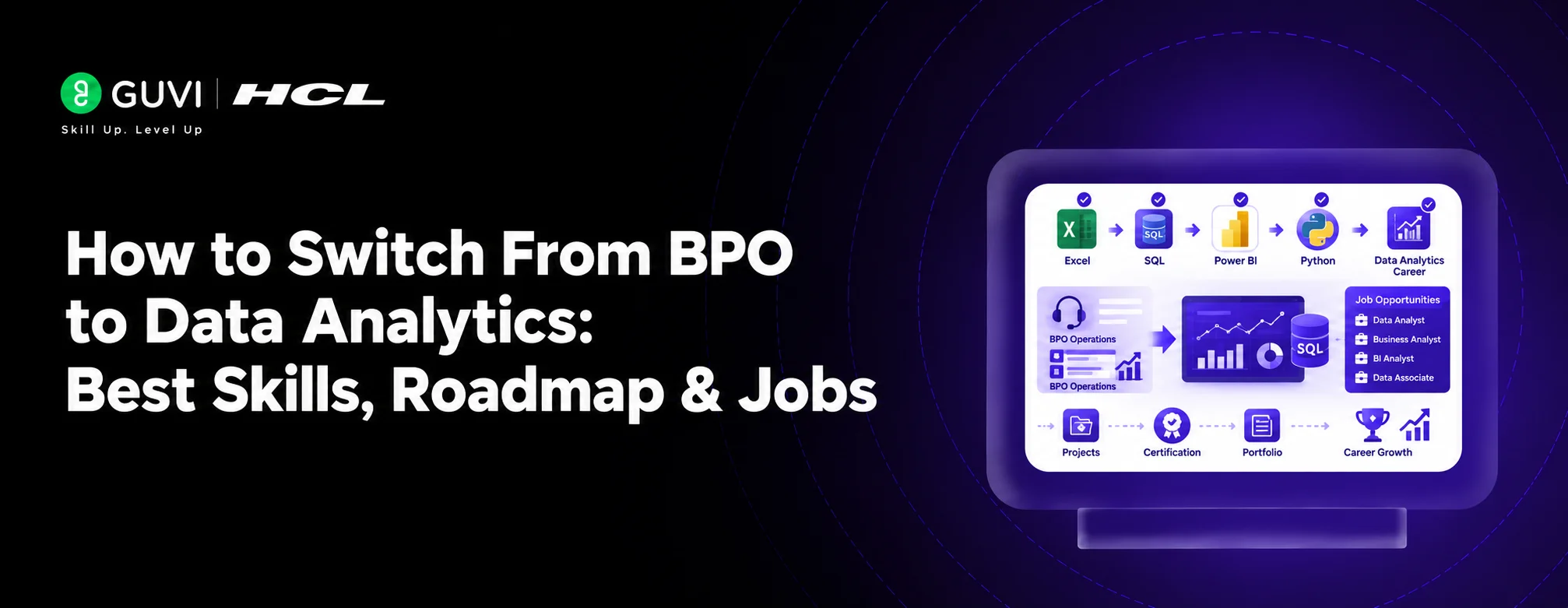
What Skills Should a BPO Team Leader Learn?
You do not need to learn every technology associated with Data Science.
Focus first on the skills commonly required for analyst roles.
1. Excel
Learn:
- Pivot tables
- XLOOKUP
- Conditional formulas
- Data cleaning
- Charts
- Basic dashboards
2. SQL
Focus on:
- SELECT and WHERE
- GROUP BY
- JOINs
- CASE statements
- Subqueries
- CTEs
- Window functions
3. Power BI
Learn how to:
- Import and clean datasets
- Create relationships
- Build dashboards
- Use filters and slicers
- Create calculated measures
- Present business insights
4. Basic Statistics
Understand averages, percentages, distributions, correlation, and basic statistical interpretation.
The objective is not simply to operate these tools. You should be able to use them to answer business questions.
Should a BPO Team Leader Apply for Fresher Data Analyst Jobs?
Not necessarily.
If you have four or more years of professional experience, applying only for fresher roles can cause you to lose the value of your existing career experience.
Instead, explore roles such as:
- Data Analyst
- Operations Analyst
- Reporting Analyst
- Workforce Analyst
- Business Analyst
- MIS Analyst
- Customer Insights Analyst
- Business Intelligence Analyst
For example, a Team Leader who has managed performance data may be a strong fit for an Operations Analyst position. From there, moving into a dedicated Data Analyst role can become easier.
A transition such as:
BPO Team Leader → Operations Analyst → Data Analyst → Senior Data Analystmay be more practical than trying to compete directly with fresh graduates for entry-level positions.
Will You Need to Take a Salary Cut?
Possibly, but it is not automatic.
A salary reduction becomes more likely if an employer treats you as a complete fresher because you lack professional analytics experience.
However, your salary position may be stronger if you can demonstrate:
- Leadership experience
- Business knowledge
- Reporting experience
- KPI ownership
- Process improvement
- Strong Excel skills
- SQL and Power BI knowledge
- Relevant analytics projects
Do not evaluate an opportunity based only on the first salary. Look at the actual responsibilities, technical exposure, career progression, and future opportunities.
A moderate short-term adjustment may be worth considering if the role provides genuine analytics experience and a clear path toward more senior positions.
How Can You Build an Analytics Portfolio?
Your portfolio should demonstrate that you can turn business data into useful insights.

Consider projects such as:
1. Customer Support Dashboard
Analyze ticket volume, resolution time, customer satisfaction, and SLA performance.
2. Employee Performance Dashboard
Analyze productivity, attendance, quality scores, and monthly performance.
3. Workforce Analysis
Study staffing levels, workload, attendance, and productivity to identify workforce trends.
4. SLA Performance Analysis
Analyze missed SLAs and identify patterns that may contribute to poor service performance.
These projects are particularly useful for BPO professionals because they connect your previous domain knowledge with your new analytical skills.
How Should You Explain the Career Transition in an Interview?

Avoid saying that you simply want to leave BPO or move into IT for a higher salary.
Instead, connect your previous experience with your new career direction.
For example:
“I have several years of experience in BPO operations and team management, where I worked with performance metrics, reports, and operational data. Over time, I became interested in understanding the trends behind these numbers. I developed my skills in Excel, SQL, Power BI, and data analysis and built projects using operational datasets. I now want to combine my business experience and analytical skills in a dedicated data role.”
This explanation shows that your career transition is a logical progression rather than a complete career reset.
What Is the Best Career Strategy for a 4+ Year BPO Team Leader?
Your biggest advantage is your professional experience.
Instead of trying to hide your BPO background, use it to differentiate yourself.
| Existing Experience | Analytics Direction |
|---|---|
| Team management | Stakeholder management |
| KPI monitoring | Data analysis |
| Performance reports | Reporting and dashboards |
| SLA tracking | Operations analytics |
| Quality monitoring | Customer and quality analytics |
| Process improvement | Business analysis |
This positioning can help you target roles where employers value both business understanding and technical analytics skills.
Domain knowledge can become a significant advantage in analytics. An analyst who understands customer operations, workforce management, or service processes can often interpret business data more effectively than someone who only knows the technical tools.
Is the Team Leader to Data Analyst Transition Worth It?
It can be, especially if you genuinely enjoy working with data and want to build a long-term analytics career.
However, do not switch simply because Data Analyst sounds like a higher-paying role. First understand what the job actually involves.
Before accepting an offer, compare:
- Salary
- Analytical responsibilities
- SQL and BI exposure
- Learning opportunities
- Career progression
- Company stability
- Future role options
A job titled “Data Analyst” that mainly involves repetitive Excel reporting may not provide the career growth you expect.
Conclusion
A team leader to data analyst transition does not mean throwing away the career you have already built. Your experience managing teams, monitoring KPIs, reviewing reports, and solving operational problems can provide valuable business context for an analytics career.
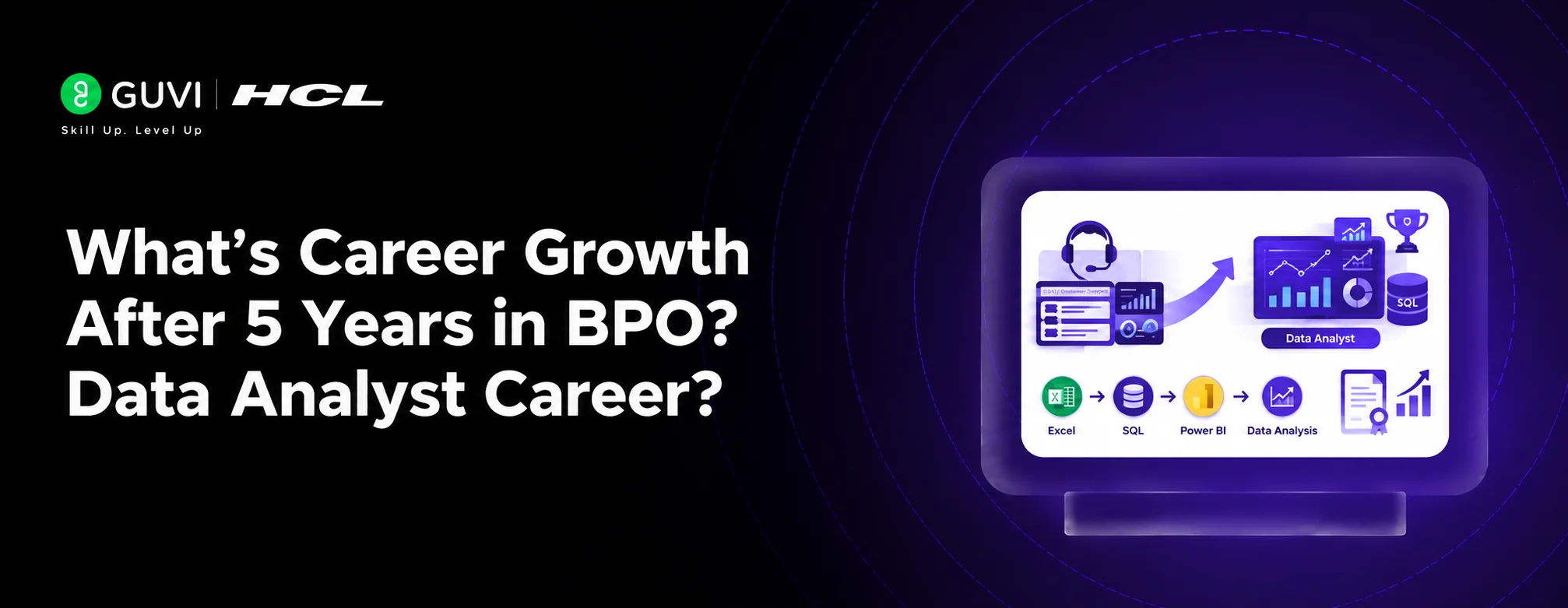
The key is to add the right technical skills and communicate your experience differently. Build practical projects, learn Excel, SQL, and Power BI, and target roles where your existing experience remains relevant.
You may not need to start from zero. The strongest career transition combines what you already know with the analytical skills needed for your next role.
FAQs
1. Can a BPO Team Leader become a Data Analyst?
Yes. A BPO Team Leader can transition into Data Analytics by building skills in Excel, SQL, Power BI, statistics, and data visualization while using existing business experience.
2. Do I need to leave my BPO experience off my Data Analyst resume?
No. Your BPO experience can be valuable, particularly if you worked with KPIs, reports, customer data, quality metrics, or process improvement. Highlight the analytical and business aspects of your responsibilities.
3. Should a BPO Team Leader apply for fresher Data Analyst jobs?
Not necessarily. With four or more years of experience, consider experienced-hire Data Analyst, Operations Analyst, Reporting Analyst, Workforce Analyst, or Business Analyst positions.
4. Will I get a lower salary after switching to Data Analytics?
It is possible, especially if you enter an entry-level role. However, relevant experience, strong analytics skills, and the right role can help reduce the need for a major salary adjustment.
5. What should I learn first to become a Data Analyst?
Start with Excel, SQL, Power BI, data cleaning, visualization, and basic statistics. Focus on applying these skills to practical business problems.
6. Is moving from BPO Team Leader to Data Analyst worth it?
It can be worthwhile if you want a long-term career in analytics and are prepared to develop the required skills. Compare the new role’s responsibilities, salary, learning opportunities, and career progression before making the switch.
Success Stories

About the Author
HCL GUVI
This article was selected and published as part of the HCL GUVI AI Blogathon 2026, an initiative designed to encourage students, AI enthusiasts, and aspiring tech writers to simplify complex AI concepts through impactful technical content. The contest recognized high-quality, original, and insightful AI-focused blogs, with selected authors receiving publication opportunities on the HCL GUVI blog platform along with official author credits and recognition.
View all posts by HCL GUVI
Connect with me @












Did you enjoy this article?