


Artificial Intelligence and Machine Learning Articles
AI/ML Skills Gap 2026: Why Companies Can't Find Job-Ready Talent
20 AI/ML Interview Questions Recruiters Can Use Without a Tech Background - Best Guide
How Industry-Backed AI/ML Bootcamps Are Changing the AI/ML Hiring Pipeline - Best Guide 2026
From IT Support to AI Engineer: A Realistic Career Switch Guide 2026

Get In Touch For Details! Request More Information
Lovable Shopify Integration: A Practical Guide to Building Smarter
Aug 05, 2026 4 Min Read 1604 Views
(Last Updated)
At 2:13 AM, a customer opens your store.
No marketers are awake. No support agent on duty. No salesperson guiding them.
But, decisions are being made.
They scroll. Pause. Compare. Hesitate.
And in that hesitation lies the difference between a lost visitor and a completed purchase.
The majority of eCommerce sites fail at this moment not because of poor products, but because they don’t react. They don’t adapt. They don’t keep up with them.
But what if instead:
- The store re-orders itself slightly depending on what you are looking for.
- Products are not offered randomly, but relevantly.
- A quiet guide is there – subtle, but present.
It feels less random. and more personal.
That’s not futuristic. That’s what the Lovable Shopify Integration offers now.
This blog isn’t about what Lovable Shopify Integration is. It explains how it works, how to put it to work in your business, and how to turn it into measurable growth not just hype.
Quick Answer:
Lovable Shopify Integration connects Lovable AI with your Shopify store to deliver real-time personalization, smarter recommendations, and better conversions.
Table of contents
- Understanding Lovable Beyond the Buzzword
- What Lovable Actually Does
- How Lovable works with Shopify
- Data Ingestion Layer
- Intelligence Layer (AI)
- Execution Layer
- Where Most Shopify Stores Go Wrong (And How Lovable Fixes It)
- Problem 1: Static Experiences
- Problem 2: Data Without Action
- Problem 3: Decision Friction
- Deep Dive: Real Features That Drive Real Revenue
- Contextual Recommendation Systems
- Predictive Search (Not Just Smart Search)
- Micro-Personalization at Scale
- AI-Assisted Conversion Nudges
- Step-by-Step Implementation
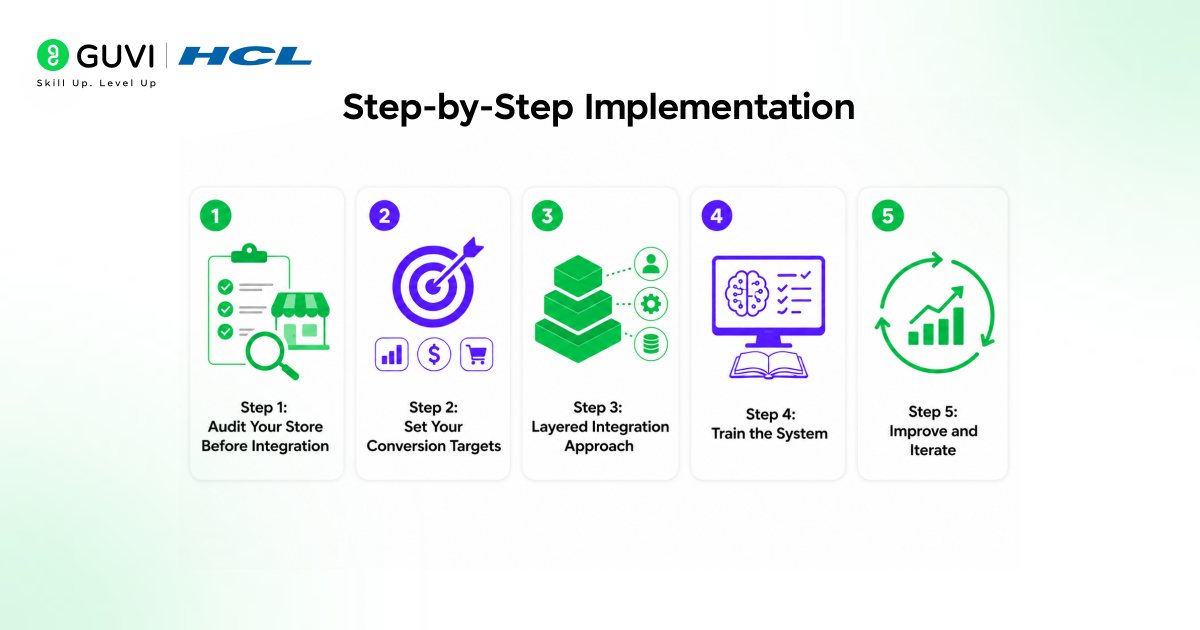
- Step 1: Audit Your Store Before Integration
- Step 2: Set Your Conversion Targets
- Step 3: Layered Integration Approach
- Step 4: Train the System
- Step 5: Improve and Iterate
- Advanced Strategies Most People Don’t Use (But Should)
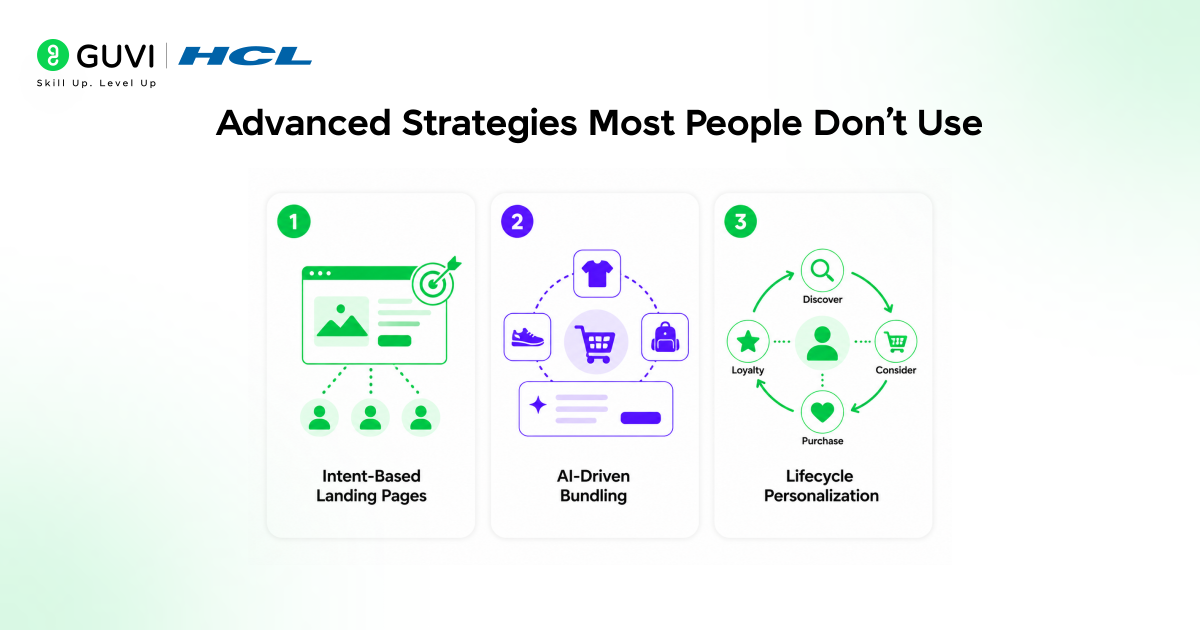
- Intent-Based Landing Pages
- AI-Driven Bundling
- Lifecycle Personalization
- Wrapping up:
- FAQs
- What is Lovable Shopify Integration?
- Do I need coding skills to use it?
- How quickly can I see results?
- Is it suitable for small businesses?
Understanding Lovable Beyond the Buzzword
When people hear “AI integration” they think:
- Chatbots
- Automation
- Generic recommendations
That’s a shallow understanding.
Lovable operates differently. It’s not just a feature, it’s a behavior intelligence layer.
What Lovable Actually Does
Rather than reacting to commands, Lovable:
- Interprets user behavior patterns
- Identifies micro-intent signals
- Predicts next likely actions
- Adjusts the storefront dynamically
Think of it Like This:
- Shopify store → Like a supermarket aisle
- Store with Lovable → Like a personal shopper
How Lovable works with Shopify
In order to use it to its full potential, you need to understand the inner workings of it (not too technical though).
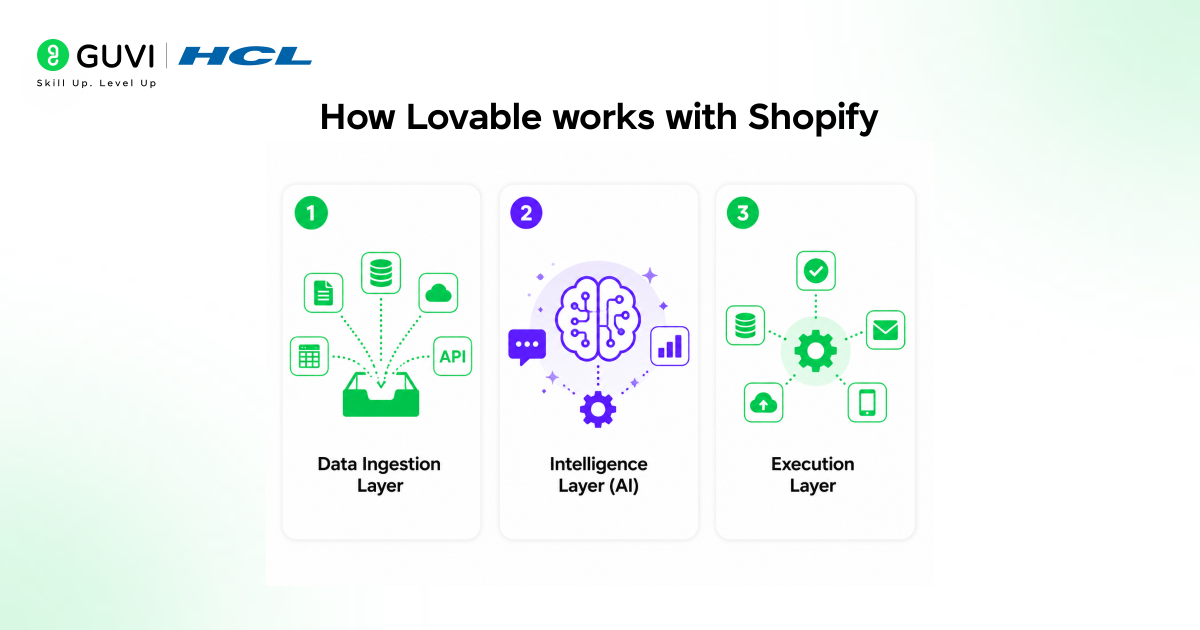
1. Data Ingestion Layer
Lovable imports structured and unstructured data from Shopify:
- Product metadata
- Customer profiles
- Purchase history
- Clickstream behavior
This is not just stored, it’s continuously updated.
2. Intelligence Layer (AI)
This is what makes Lovable so cool.
It applies:
- Behavioral modeling
- Pattern recognition
- Predictive analytics
It doesn’t just answer:
“What did the user click?”
It answers:
“Why did they click – and what will they click next?”
3. Execution Layer
This is what the customer sees.
Lovable translates insights into:
- Real-time recommendations
- Dynamic UI adjustments
- Smart search outputs
- Trigger-based interactions
Take a look at: How to Use Lovable AI With Demo Project
Where Most Shopify Stores Go Wrong (And How Lovable Fixes It)
Problem 1: Static Experiences
Most stores:
- Show the same homepage to everyone
- All customers, no matter if they’re new, returning, or a valuable customer, are shown the same content, which ignores user preferences and limits customer engagement.
- Offer generic product listings
- There is no sorting of products based on user behavior and interests, resulting in unnecessary searching.
Lovable Fix:
- Real time personalised storefront per user session
- Lovable adapts the storefront in real time, showing different products, layouts, and recommendations based on each user’s behavior and intent.
Problem 2: Data Without Action
Stores collect:
- Analytics
- Many Shopify stores collect data on clicks, page views and other actions, but these are often only analysed later instead of being instanly.
- Reports
- Businesses generate detailed reports, but these insights are rarely applied in real-time to influence the customer experience.
But don’t use them in real time
Lovable Fix:
- Instant decision-making based on live data
- Lovable reacts in real-time to user actions, and alters recommendations, search results, or offers to sway their behaviour.
Problem 3: Decision Friction
Users leave because:
- Too many choices
- Customers can be overwhelmedby too many choices, delaying a decision or even leaving the site.
- No guidance
- Without recommendations or guidance, customers have difficulty making a suitable selection and lose trust in their purchase.
Lovable Fix:
- Guided discovery
- Lovable helps users narrow down options, which allows them to browse in a focused and relevant way.
- Context-aware suggestions
- Product suggestions are made according to user actions, helping users to make fast, informed choices.
Take a look at: How to Create a Portfolio Website Using Lovable AI
Deep Dive: Real Features That Drive Real Revenue
Let’s dig deeper than the features and how they can improve business outcomes.
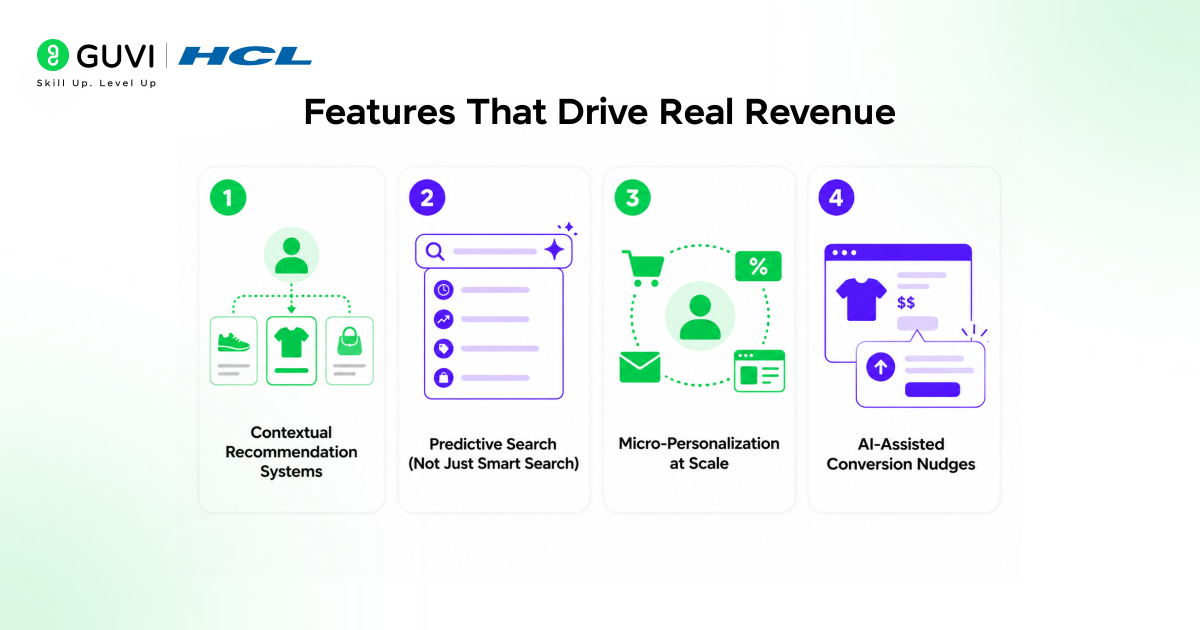
1. Contextual Recommendation Systems
Recommendations are not equal – Lovable prioritises context, not chance.
Lovable distinguishes between:
- Exploratory intent (browsing)
- When browsing, Lovable offers popular or visually appealing products to keep them engaged.
- Transactional intent (ready to buy)
- When users are ready to buy, Lovable presents high-convert products, promotions and relevant add-ons..
Example:
User behavior:
- Views 3 budget phones
- This indicates price sensitivity and a focused product category.
- Sorts by price
- This indicates the user is shopping around and probably making a buying decision.
Lovable response:
- Shows best-value phones:Instead of random products, Lovable highlights options that balance price and features.
- Highlights discounts: Users concerned with price are offered discounts to increase conversions.
- Adds urgency cues: Text such as “Only 2 left” or “Limited time only” reduce hesitation.
Impact:
- Higher conversion probability: Personalised suggestions increase the likelihood of purchase.
- Reduced decision time: Lovable reduces the search, which means quicker purchase times.
2. Predictive Search (Not Just Smart Search)
Traditional search:
- Matches keywords
- It just matches exact words or synonyms without taking into account the user’s search intent.
Lovable search:
- Matches intent + context + history
- It takes into account the user, the user’s history and the user’s intent.
Example:
Search: “gym wear”
Lovable considers:
- Gender: It personalises search results depending on whether you normally search for men’s or women’s products.
- Past purchases: If the user has bought high quality products before, it shows more of these.
- Price sensitivity: It displays products in the user’s price range.
Output:
A highly personalized, curated catalog, rather than a generic product list.
Personalized experiences can increase eCommerce conversion rates by up to 20% or more.
Many Shopify stores use their data mainly for reporting, not for real-time decision-making.
AI-driven recommendations can significantly boost average order value (AOV) by suggesting more relevant products to customers.

3. Micro-Personalization at Scale
Instead of broad segmentation, Lovable focuses on individual-level personalization.
Each visitor gets:
- Unique product ordering: The order of products is reordered based on the user’s interests and actions.
- Personalized banners: On the homepage, banners are tailored to user preferences or previous activity.
- Custom offers: Discounts and promotions are tailored to increase the likelihood of conversion for that specific user.
4. AI-Assisted Conversion Nudges
Lovable recognises nuanced signs of hesitation.
Lovable identifies:
- Repeated product views: Suggests the user is interested but may be unsure because of price.
- Long dwell time: Indicates consideration and may require further persuasion.
- Cart inactivity: Indicates interest but not commitment.
Then triggers:
- Discounts: A small discount will encourage them to buy.
- Social proof: Rating, reviews or “bestseller” badging create credibility.
- Stock urgency: Scarcity message leads to quicker purchase.
Take a look at: How to Build a Wedding Website Using No-Code AI Tools (2026 Guide)
Step-by-Step Implementation
Step 1: Audit Your Store Before Integration
This is overlooked by many and this is a source of lost sales.
Check:
- Are product descriptions structured?
- Clear, consistent descriptions help AI to understand product relationships.
- Are categories logical?
- Logical categories help AI suggest related products.
- Is tagging consistent?
- Filtering and personalisation rely on good tagging.
Why it matters:
AI depends on clean, structured data to deliver accurate and meaningful outputs.
Step 2: Set Your Conversion Targets
Don’t “set up AI,” set up success.
Decide:
- Increase AOV?
- Focus on bundling and upselling strategies.
- Reduce bounce rate?
- Optimise first impressions and personalisation.
- Improve retention?
- Use re-engagement and lifecycle personalization.
Lovable should be configured based on your goal, not randomly.
Step 3: Layered Integration Approach
Instead of enabling everything at once:
Phase 1:
- Smart search
- Delivers quick product discovery, with limited complexity.
- Basic recommendations
- Provides personalisation without complexity.
Phase 2:
- Behavioral personalization
- Begins to personalize the in-store experience.
- AI chat
- Provides real-time assistance and guided shopping.
Phase 3:
- Predictive automation
- Automates decisions such as offers and recommendations.
- Advanced segmentation
- Delivers very targeted messages.
Step 4: Train the System
Even AI needs to be trained.
Feed:
- Customer segments: Allows Lovable to recognise user types.
- Product relationships: Determines what to recommend as a group.
- Business rules: Keeps AI on track with your priorities.
Step 5: Improve and Iterate
After launch:
- Monitor performance: Analyze usage of AI-powered features.
- Adjust rules: Optimise recommendations and triggers for better outcomes.
- Refine personalization: Improve accuracy over time for better outcomes.
AI is not “set and forget”. It’s “set and evolve.”
Advanced Strategies Most People Don’t Use (But Should)
1. Intent-Based Landing Pages
Don’t create one page for everyone:
- Dynamically customize landing pages: Lovable personalises based on interest to improve campaigns.
2. AI-Driven Bundling
Automatically create bundles based on
- Purchase patterns: Groups products commonly purchased.
- Product compatibility: Ensures items logically fit as a bundle.
3. Lifecycle Personalization
Different strategies for:
- New users: Emphasise exploration and confidence.
- Returning users: Show products they’ve viewed or related items.
- High-value customers: Give valuable offers and recommendations.
Build real-world AI skills and learn how to create intelligent systems like Lovable with HCL GUVI’s AI & ML Course. Gain hands-on experience, work on industry-relevant projects, and turn your knowledge into practical impact.
Wrapping up:
The reason most eCommerce stores fail is not because of the products they sell, or the prices they set, but because they fail to react to customers at the time and place they need to. Lovable Shopify Integration does this by transforming your Shopify site into a platform that thinks, learns and responds in the moment. It’s not about making your store more complex, but about making it more relevant and less risky. If used correctly, Lovable doesn’t just enhance your store – it makes it smarter as each visitor interacts with it.
FAQs
1. What is Lovable Shopify Integration?
It connects Lovable AI with your Shopify store to enable personalization, automation, and smarter customer interactions.
2. Do I need coding skills to use it?
No, there is typically no need for coding experience. While most of the integrations are no-code or low-code, advanced integrations will require an API (Application Programming Interface).
3. How quickly can I see results?
You will typically see some basic improvements quickly, but you will need to continue to optimize the integration to gain maximized performance.
4. Is it suitable for small businesses?
Yes, it helps smaller stores compete by automating and improving customer experience.
Success Stories

About the Author
Vishalini Devarajan
An Aerospace Engineer turned content writer, I focus on making complex concepts easy to understand through well-structured, reader-friendly blogs. Whether it’s a technical topic or a non-technical one, I love creating content that is clear, engaging, and impactful.
View all posts by Vishalini Devarajan
Connect with me @






Did you enjoy this article?