


Artificial Intelligence and Machine Learning Articles
Finance Manager to Data Analytics: Career Growth, Salary and Seniority
How to Evaluate LLM Outputs in Production Deployments
AI/ML Skills Gap 2026: Why Companies Can't Find Job-Ready Talent
20 AI/ML Interview Questions Recruiters Can Use Without a Tech Background - Best Guide
Get In Touch For Details! Request More Information
Doubling Down on Secure Vibe Coding: A Complete Guide
Jun 15, 2026 5 Min Read 600 Views
(Last Updated)
Let me tell you a story. A developer built her first app on a coding platform. It worked perfectly. Users loved it. Then one day, a security researcher found a vulnerability. Her app was leaking user data. She had no idea it was even possible.
She needed a platform that kept her secure without her having to become a security expert. No constant worrying. No sleepless nights wondering if she missed something. That is exactly why we are doubling down on secure vibe coding.
In this guide, we will break down what secure vibe coding is, why it matters, how it works, and what it means for you as someone building apps on Replit.
Quick TL;DR Summary
- This guide explains what secure vibe coding is and why it marks a major turning point in how developers build safely on Replit.
- You will learn exactly how Replit protects your apps automatically without you needing to configure complex security settings.
- The guide covers the specific security features Replit brings, including automatic secret management, secure deployments, and built-in vulnerability protection.
- Real-world examples show you how secure vibe coding handles tasks like protecting API keys, securing user data, and preventing common attacks.
- Practical tips help you understand what you should do to build more securely on Replit right from your very first project.
- You will also learn about the additional security layers Replit is adding and what the commitment to secure vibe coding means for the future of the platform.
Table of contents
- What Is Secure Vibe Coding?
- Why Security on Coding Platforms Used to Be So Complicated
- What Makes It Different From Traditional Platform Security?
- How Secure Vibe Coding Actually Works
- Step 1: Start Secure
- Step 2: Code Safely
- Step 3: Store Secrets Properly
- Step 4: Deploy Securely
- Step 5: Stay Protected
- Real World Examples of What Secure Vibe Coding Prevents
- The Layers of Security in Secure Vibe Coding
- Best Practices for Building Secure Applications
- Conclusion
- FAQs
- Does secure vibe coding mean I never have to worry about security?
- Can I still configure additional security measures if I want?
- What happens if Replit detects a security issue in my deployed app?
- Is secure vibe coding available on all Replit plans?
- How does secure vibe coding compare to security on other platforms?
What Is Secure Vibe Coding?
Secure vibe coding is a philosophy. It means you can build apps with confidence, knowing the platform has your back on security. You focus on creating, while Replit focuses on keeping things secure.
Why Security on Coding Platforms Used to Be So Complicated
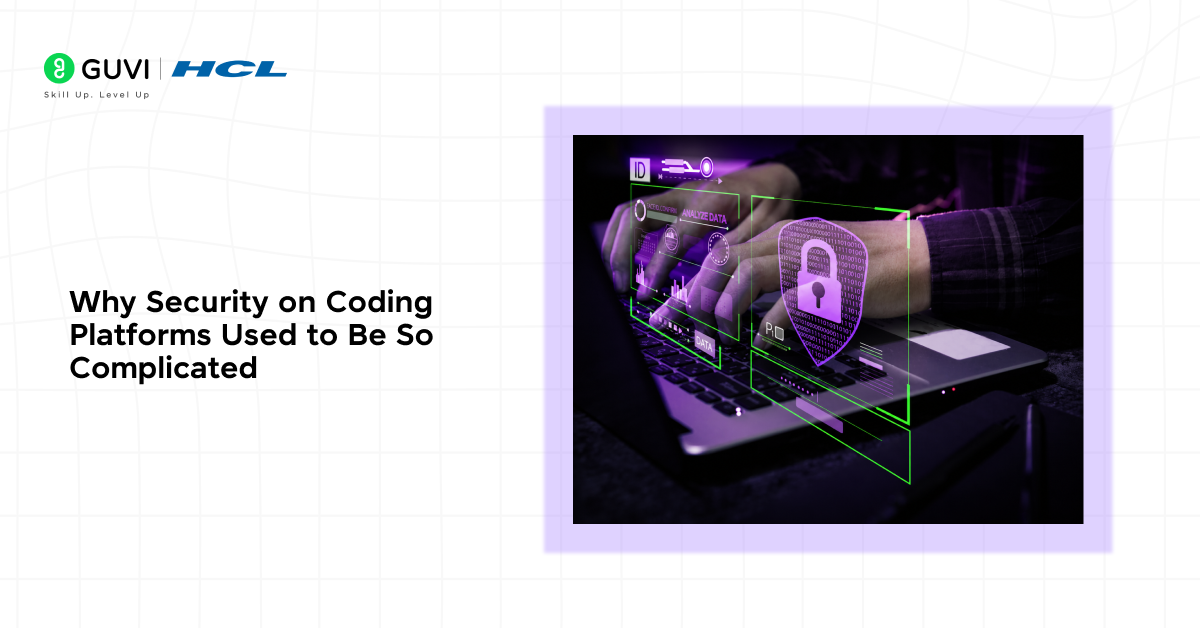
Most developers building on online platforms know this struggle well. You want to build an app that handles user logins or processes payments. Reasonable features. But the security requirements? You need to understand encryption. Configure environment variables correctly. Secure your database connections. Prevent SQL injection. Stop cross-site scripting attacks. Set up proper authentication.
Secure vibe coding changes that. Replit builds security into the platform itself. The system catches common mistakes automatically. It warns you before you accidentally expose secrets. It deploys your apps with security best practices built in.
Think of the difference between building a house where you have to install every lock, alarm, and security camera yourself versus moving into a building that already has security infrastructure in place. Secure vibe coding is the second option.
Read More: How Is Cyber Security Important To Our Lives?
What Makes It Different From Traditional Platform Security?
Traditional coding platforms give you tools for security but leave the implementation entirely up to you. You get environment variables, but you have to remember to use them. You get HTTPS, but you have to configure it. You get authentication libraries, but you have to implement them correctly.
Secure vibe coding is different in three main ways.
- It Works by Default
Security is not something you add on later. Every Replit project starts with security features already enabled. Environment variables are encrypted. Deployments use HTTPS automatically. Secrets never appear in your code or logs.
- It Guides You Away From Mistakes
The platform actively helps you avoid security problems. Try to commit an API key to your code? Replit warns you. About to deploy with a weak password? The system catches it. Building a login form? Replit suggests secure patterns.
- It Updates Security Automatically
When new security threats emerge, Replit updates the platform to protect against them. You do not need to manually patch libraries or update security configurations. The protection happens automatically.
How Secure Vibe Coding Actually Works
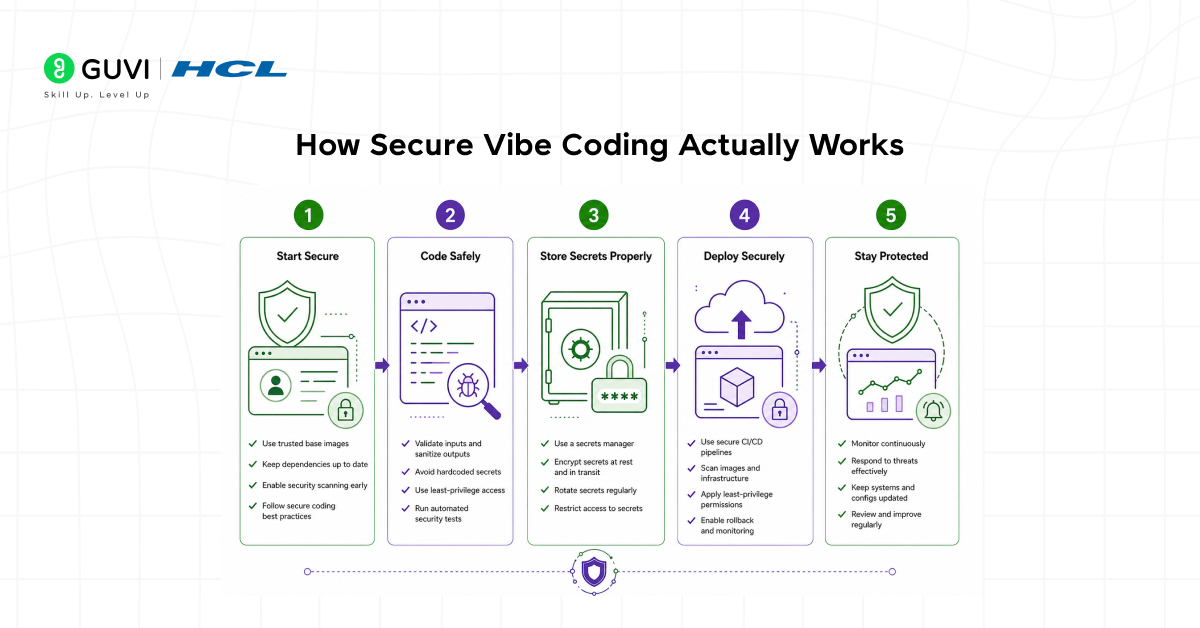
Here is a simple breakdown of what happens when you build on Replit with secure vibe coding.
Step 1: Start Secure
You Start With Security Built In The moment you create a new Replit project, security features are already active. Encrypted storage. Secure connections. Protected secrets. Everything starts safe by default.
Step 2: Code Safely
It Guides You While You Code As you write code, Replit watches for security issues. About to hardcode a password? It suggests using secrets instead. Writing a database query? It recommends safe patterns that prevent injection attacks.
Step 3: Store Secrets Properly
It Manages Secrets Automatically API keys, passwords, and tokens go into Replit’s encrypted secret storage. They never appear in your code. Never show up in version control. Never leak in error messages. The system handles all of this automatically.
Step 4: Deploy Securely
It Deploys With Protection When you deploy your app, Replit applies security best practices automatically. HTTPS connections. Secure headers. Protected endpoints. DDoS protection. All configured without you touching a settings file.
Step 5: Stay Protected
It Monitors and Updates After deployment, Replit continues monitoring for threats. New vulnerability discovered in a library you use? The platform alerts you and helps you update. Attack pattern detected? The system blocks it automatically.
Replit’s secret scanning technology can detect over 500 types of API keys, tokens, and credentials. This means whether you are using Stripe, OpenAI, AWS, or smaller services, Replit can recognize these patterns and warn you if sensitive data appears in your code.
Real World Examples of What Secure Vibe Coding Prevents
- For student developers:
You build a homework assignment app that stores grades. Without thinking about security, you could accidentally expose student data. Secure vibe coding ensures data stays private and connections stay encrypted automatically.
- For side project builders:
You create a Discord bot and forget you left your bot token in the code. You push it to a public repository. Before it goes live, Replit catches the token and warns you to move it to secrets.

- For startup founders:
You build a SaaS product and deploy it quickly. Secure vibe coding ensures your deployment uses HTTPS, your database connections are encrypted, and your authentication follows security best practices without you configuring each piece manually.
- For API developers:
You create a public API and need to prevent abuse. Rate limiting, authentication, and DDoS protection are built into Replit deployments, protecting your API without you setting up separate services.
The Layers of Security in Secure Vibe Coding
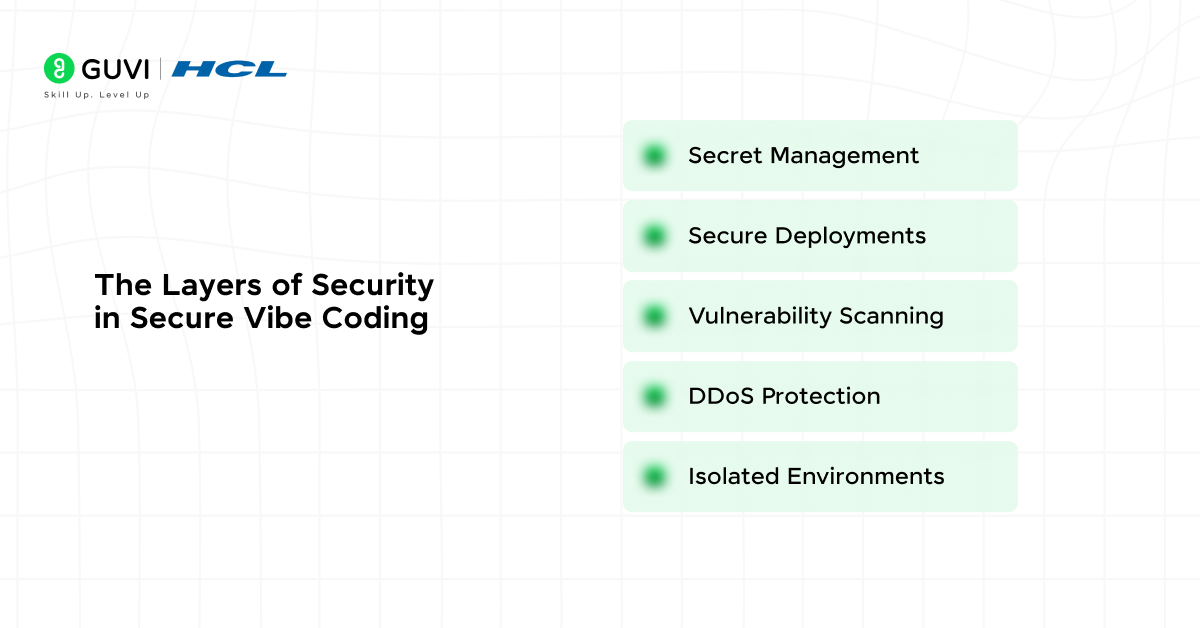
Replit’s commitment to secure vibe coding goes deeper than one feature. It is multiple layers working together to keep you safe.
- Secret Management
All sensitive data gets encrypted automatically. API keys, database passwords, authentication tokens. They live in encrypted storage, never in your code. Replit injects them securely at runtime.
- Secure Deployments
Every deployment uses HTTPS by default. No configuration needed. Secure headers prevent common attacks like clickjacking and cross-site scripting. Certificate management happens automatically.
- Vulnerability Scanning
Replit scans your dependencies for known security issues. When a library you use has a vulnerability, you get notified with clear steps to fix it. No manual security audits required.
- DDoS Protection
Deployed apps get automatic protection against denial-of-service attacks. Rate limiting prevents abuse. The infrastructure handles traffic spikes without your app going down.
- Isolated Environments
Every Replit project runs in its own isolated container. Even if one project has issues, it cannot affect others. Your work stays separate and secure.
The term “vibe coding” comes from the idea of building based on feeling and creativity rather than getting stuck in configuration and setup.
Secure vibe coding extends this philosophy to security—so you can focus on creating with confidence instead of worrying about whether something was misconfigured.
Best Practices for Building Secure Applications
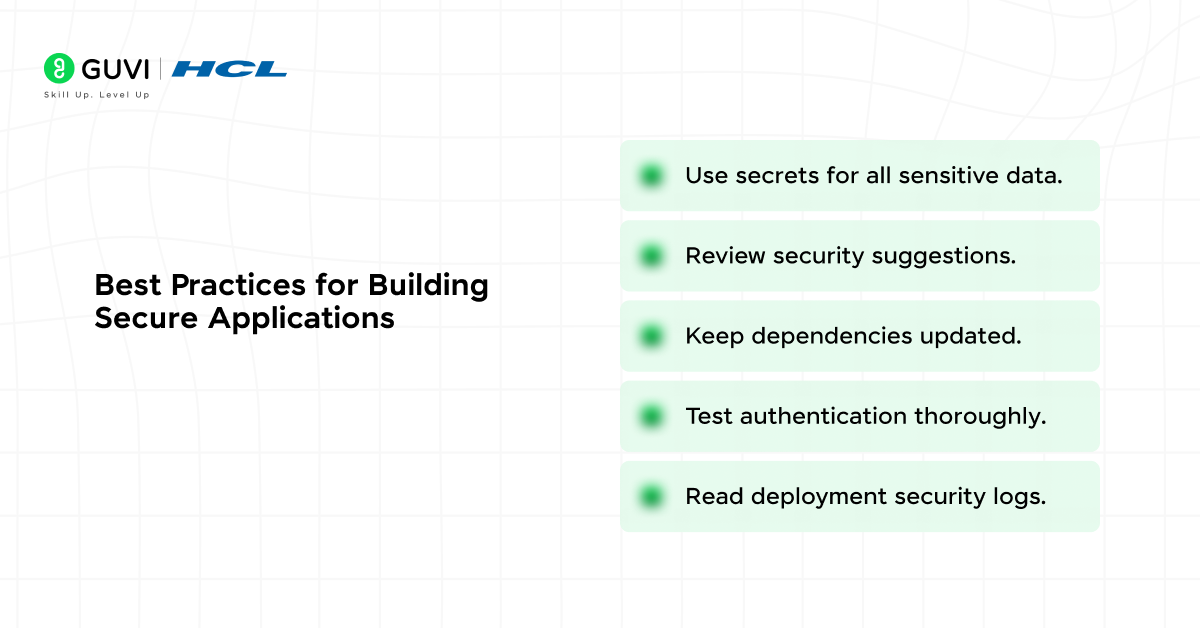
- Use secrets for all sensitive data.
Never hardcode API keys, passwords, or tokens. Always use Replit’s secret management, even for development and testing.
- Review security suggestions.
When Replit suggests a more secure approach, read why. Understanding the security reasoning makes you a better developer.
- Keep dependencies updated.
When Replit alerts you about vulnerable libraries, update them promptly. Old dependencies are common attack vectors.
- Test authentication thoroughly.
Even with secure defaults, test your login flows. Try edge cases. Make sure users cannot access data they should not see.
- Read deployment security logs.
After deploying, check what security features are active. Understanding what protection you have helps you identify gaps.
If you want to learn more about doubling down on our commitment to secure vibe coding, do not miss the chance to enroll in HCL GUVI’s Intel & IITM Pravartak Certified Artificial Intelligence & Machine Learning course. Endorsed with Intel certification, this course adds a globally recognized credential to your resume, a powerful edge that sets you apart in the competitive AI job market.
Conclusion
Replit’s commitment to secure vibe coding is a genuine step forward. It is not just about adding security features. It is about fundamentally rethinking how security works on a coding platform. You should build with confidence. You should experiment freely. You should deploy without fear.
That is what secure vibe coding delivers. Security by default. Guidance while you code. Protection when you deploy. Monitoring after you ship. All wrapped in a platform that lets you focus on creating.
The future of coding platforms is not making developers into security experts. It is making platforms secure enough that developers can focus on what they do best. Building amazing things.
FAQs
1. Does secure vibe coding mean I never have to worry about security?
No. Secure vibe coding handles platform-level security and guides you toward secure patterns, but you still need to write secure application logic and follow best practices.
2. Can I still configure additional security measures if I want?
Yes. Secure vibe coding provides strong defaults, but you have full control to add additional security layers specific to your application’s needs.
3. What happens if Replit detects a security issue in my deployed app?
Replit will alert you with details about the issue and recommended fixes. For critical vulnerabilities, you may get guidance on immediate steps to protect your users.
4. Is secure vibe coding available on all Replit plans?
Core security features like secret management and secure deployments are available across Replit plans. Some advanced security features may vary by plan tier.
5. How does secure vibe coding compare to security on other platforms?
Secure vibe coding emphasizes security by default and automatic protection. Traditional platforms often require manual security configuration, which increases the chance of mistakes.
Success Stories

About the Author
Vishalini Devarajan
An Aerospace Engineer turned content writer, I focus on making complex concepts easy to understand through well-structured, reader-friendly blogs. Whether it’s a technical topic or a non-technical one, I love creating content that is clear, engaging, and impactful.
View all posts by Vishalini Devarajan
Connect with me @







Did you enjoy this article?