


Career Articles
Capgemini Exceller Technical Assessment 2026: AI + Technical - Best Guide
Cognizant GenC Elevate Exam Pattern & Syllabus for Freshers 2026 - Best Guide
Capgemini Exceller Placement Papers and Solutions 2026 - Best Guide
How to Pass the Accenture Recruitment Process 2026/27: The Complete Guide


Get In Touch For Details! Request More Information
Imposter Syndrome in Tech: Recognizing and Overcoming It
Jul 29, 2026 4 Min Read 326 Views
(Last Updated)
Many talented developers, including senior engineers and tech leads, quietly struggle with feeling like a fraud despite years of solid work and real accomplishments. Imposter syndrome in tech is so widespread that it has become a regular topic at conferences, in engineering team retrospectives, and in mentorship conversations across the industry. Recognizing it for what it is, a common psychological pattern rather than a reflection of actual competence, is the first step toward managing it.
Table of contents
- TL;DR Summary
- What Is Imposter Syndrome in Tech?
- Why Is Imposter Syndrome So Common in the Tech Industry?
- Common Signs of Imposter Syndrome in Developers
- Practical Strategies to Manage Imposter Syndrome in Tech
- Keep a "Wins" Document
- Normalize Not Knowing Things
- Talk About It With Peers
- Separate Feelings From Facts
- Set Realistic Learning Expectations
- Seek Mentorship and Feedback
- Common Mistakes When Dealing With Imposter Syndrome
- Conclusion
- FAQs
- What is imposter syndrome in tech?
- Is imposter syndrome common among experienced developers?
- What causes imposter syndrome in software engineering specifically?
- How can I tell if I have imposter syndrome or am actually underqualified?
- Does imposter syndrome go away with experience?
- Should I talk to my manager about feeling like an imposter?
- Is imposter syndrome more common in self-taught developers or bootcamp graduates?
- When should imposter syndrome be taken seriously as a mental health concern?
TL;DR Summary
- Imposter syndrome in tech is the persistent feeling of self-doubt where developers and tech professionals believe they are not as skilled or qualified as others perceive them to be, despite clear evidence of their abilities.
- It is extremely common in software engineering due to the field’s fast pace, constant learning curve, and visible comparison through code reviews and interviews.
Want to build technical confidence through structured learning and real project experience? Explore HCL GUVI’s Full Stack Development Course, designed to help you build practical skills and a stronger sense of capability through hands-on practice.
What Is Imposter Syndrome in Tech?
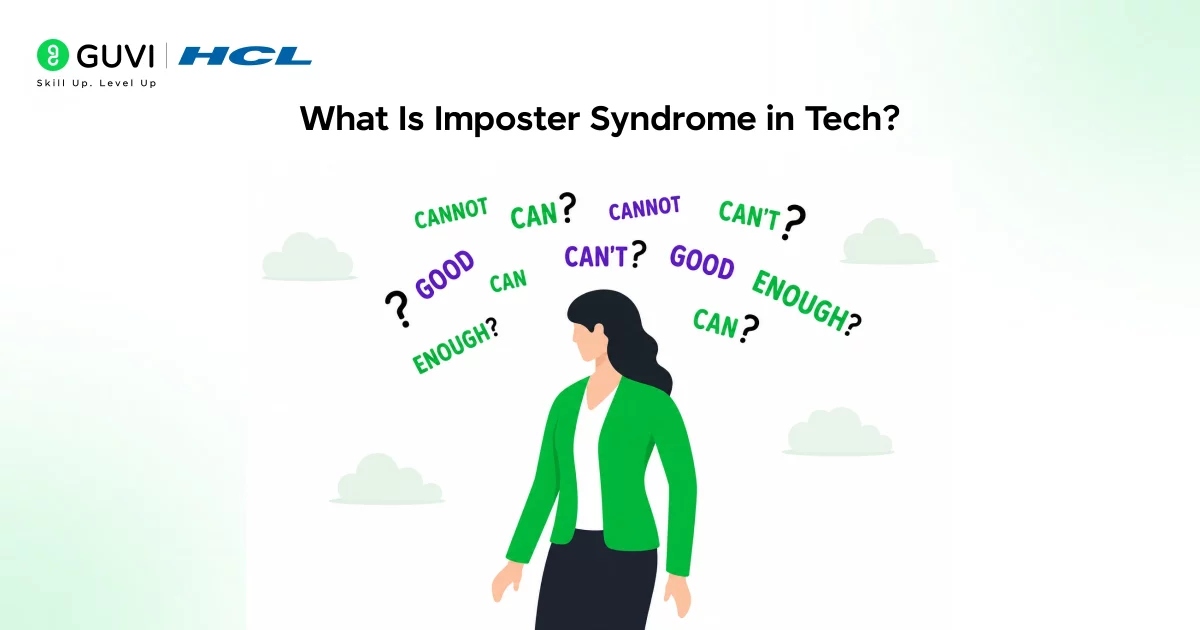
Imposter syndrome is a psychological pattern where a person doubts their accomplishments and has a persistent fear of being exposed as a fraud, regardless of actual evidence of competence or success. The term was first introduced by psychologists Pauline Clance and Suzanne Imes in 1978.
In tech specifically, this often shows up as:
- Feeling like you only got the job through luck rather than skill
- Believing your colleagues are far more capable than you, even when their experience level is similar
- Attributing success to external factors rather than your own ability
- Feeling anxious before code reviews or technical interviews even when well prepared
- Avoiding new challenges out of fear that failure will “expose” you
Imposter syndrome is not a clinical diagnosis. It is a recognized psychological pattern, and experiencing it does not mean something is wrong with you.
Read More: Overcome Imposter Syndrome in UI/UX Design: Top 10 Expert Tips!
Why Is Imposter Syndrome So Common in the Tech Industry?

Several factors specific to tech make imposter syndrome especially common among developers.
- Relentless pace of change: New frameworks and tools emerge constantly, making it easy to feel perpetually behind
- Comparison is built into the culture: Code reviews and interviews involve having your work directly, often publicly, evaluated
- Visible skill gaps: Different specializations (backend vs frontend) can feel like inadequacy rather than simply different skill sets
- Non-traditional paths: Bootcamp grads and self-taught developers often feel they must “catch up” to CS degree holders
- Curated social media success: Platforms like LinkedIn often show only wins, distorting what normal progress looks like.
Want to build technical confidence through structured learning and real project experience? Explore HCL GUVI’s Full Stack Development Course, designed to help you build practical skills and a stronger sense of capability through hands-on practice.
Common Signs of Imposter Syndrome in Developers
| Sign | What It Looks Like |
| Discounting success | Believing a promotion was luck, not skill |
| Overworking to “prove” worth | Working far beyond what the role requires |
| Fear of being “found out” | Anxiety that colleagues will discover you’re “not good enough” |
| Avoiding visibility | Staying quiet in meetings despite having valid input |
| Perfectionism | Refusing to ship code unless it feels flawless |
| Constant comparison | Measuring yourself against the most experienced person in the room |
Recognizing these patterns in yourself is often the first real step toward addressing them directly.
A widely cited study published in the International Journal of Behavioral Science found that an estimated 70% of people experience imposter syndrome at some point in their careers, regardless of industry or experience level. This highlights how common feelings of self-doubt can be—even among highly capable professionals—and why recognizing and addressing them is an important part of long-term personal and career growth.
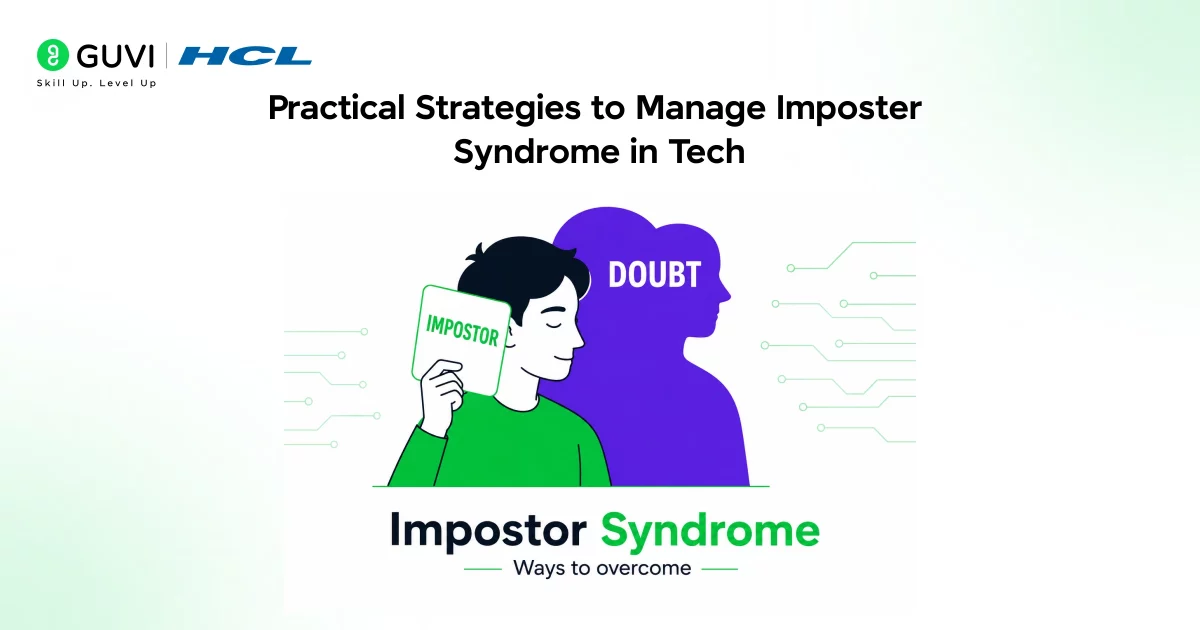
Practical Strategies to Manage Imposter Syndrome in Tech
1. Keep a “Wins” Document
Maintain a running list of completed projects, positive feedback, resolved bugs, and milestones. When self-doubt creeps in, this document provides concrete evidence to counter it, rather than relying on memory alone during a moment of anxiety.
2. Normalize Not Knowing Things
Senior engineers Google basic syntax regularly and ask questions in code reviews. Not knowing something instantly is not a sign of inadequacy, it is a normal part of working in a field that is too large for any one person to fully master.
3. Talk About It With Peers
Imposter syndrome thrives in silence because it convinces you that you are the only one struggling. Open conversations with teammates or mentors often reveal that even respected colleagues experience the same doubts.
4. Separate Feelings From Facts
Feeling unqualified is not the same as being unqualified. Performance reviews, completed projects, and resolved tickets are facts. The feeling of inadequacy is a separate, often inaccurate, internal narrative.

5. Set Realistic Learning Expectations
Tech moves fast, but no one is expected to know every framework or tool. Focus on depth in your current role and pick up new skills as they become relevant, rather than trying to learn everything at once.
6. Seek Mentorship and Feedback
Regular, honest feedback from a mentor or manager replaces internal guesswork with actual data about your performance, which is often far more positive than your internal narrative suggests.
The term “imposter syndrome” was first studied among high-achieving women in academic and professional settings. However, subsequent research has shown that imposter syndrome affects people of all genders, backgrounds, and experience levels. From students and early-career professionals to senior leaders and executives, many individuals experience persistent self-doubt despite clear evidence of their competence and accomplishments.
Common Mistakes When Dealing With Imposter Syndrome
1. Trying to “earn” confidence through endless achievement: Believing that one more certification or one more project will finally make the feeling go away often leads to burnout instead, since the feeling rarely resolves through external validation alone.
2. Staying silent instead of reaching out: Avoiding conversations about self-doubt out of fear of seeming weak or incompetent often reinforces isolation and makes the pattern harder to break.
3. Comparing yourself to a curated online presence: Measuring your progress against someone’s LinkedIn highlights ignores the setbacks and struggles that are rarely posted publicly.
4. Treating every mistake as proof of inadequacy: Equating a single bug, failed interview, or critical code review comment with overall incompetence overlooks the broader pattern of your actual work and growth.
5. Ignoring persistent distress instead of seeking support: If self-doubt becomes overwhelming or starts affecting daily functioning, mentorship and peer conversations may not be enough, and speaking with a mental health professional can provide more structured support.
Conclusion
Confidence in tech is built gradually through real experience, not through eliminating doubt entirely, and most developers who feel like imposters today will look back in a few years and recognize just how far they have actually come.
Recognizing the signs, separating feelings from facts, and talking openly with peers and mentors are practical steps that consistently help developers build a more accurate, grounded sense of their own competence.
FAQs
What is imposter syndrome in tech?
It is a psychological pattern where tech professionals doubt their skills and fear being exposed as unqualified, despite clear evidence of their actual competence and achievements.
Is imposter syndrome common among experienced developers?
Yes. Surveys and studies consistently show that even senior engineers and engineering managers report experiencing imposter syndrome regularly, regardless of their experience level.
What causes imposter syndrome in software engineering specifically?
The fast pace of new technology, public code review culture, frequent comparison through interviews, and the self-taught nature of many tech careers all contribute to its prevalence in the field.
How can I tell if I have imposter syndrome or am actually underqualified?
Look at concrete evidence like performance reviews, completed projects, and peer feedback. Imposter syndrome involves doubt despite positive evidence, while a genuine skill gap usually comes with consistent, specific feedback pointing to it.
Does imposter syndrome go away with experience?
For many people it lessens but does not disappear entirely, since new roles, responsibilities, or teams can trigger it again even after years of success.
Should I talk to my manager about feeling like an imposter?
Yes, if you feel comfortable. Many managers have experienced it themselves and can offer perspective, concrete feedback, and reassurance grounded in your actual performance.
Is imposter syndrome more common in self-taught developers or bootcamp graduates?
It can be more pronounced in non-traditional paths due to comparison with formally trained peers, but it affects developers across all educational backgrounds, including those with computer science degrees.
When should imposter syndrome be taken seriously as a mental health concern?
If self-doubt becomes persistent, overwhelming, or starts affecting daily functioning, sleep, or overall wellbeing, it is worth speaking with a mental health professional for additional support beyond peer or mentor conversations.
Success Stories

About the Author
Vishalini Devarajan
An Aerospace Engineer turned content writer, I focus on making complex concepts easy to understand through well-structured, reader-friendly blogs. Whether it’s a technical topic or a non-technical one, I love creating content that is clear, engaging, and impactful.
View all posts by Vishalini Devarajan
Connect with me @















Did you enjoy this article?