


Career Articles
Accountant vs Data Analyst Salary in India After Switching Careers - Best Guide
Finance Managers: Could Data Science Be Your Next Career Move?
Insurance Claims Executive to Data Analyst: Is It a Good Switch?
Banking Executive (Loans, KYC) to Data Analyst: Skills and Career Path


Get In Touch For Details! Request More Information

Career Change at 25: Is It Too Late? A Realistic Guide
Aug 04, 2026 8 Min Read 8326 Views
(Last Updated)
Table of contents
- TL;DR Summary
- Understanding Career Change at 25
- Why Change Career at 25?
- How to Approach a Career Change at 25?
- Step 1: Perform a Self-Assessment
- Step 2: Research Career Options
- Step 3: Identify Transferable Skills
- Step 4: Upskill Strategically
- Step 5: Gain Real-World Experience
- Step 6: Build Your Personal Brand
- Step 7: Plan Financially
- Step 8: Apply Strategically
- Best Career Changes at 25 for Better Salary Growth in India
- Career Change from Core Engineering to Software at 25
- Step 1: Choose Your Target Software Career
- Step 2: Build Strong Programming Fundamentals
- Step 3: Learn Industry-Relevant Tools and Technologies
- Step 4: Build Real Projects
- Step 5: Gain Practical Experience
- Step 6: Prepare for Interviews and Start Applying
- Overcoming Common Challenges
- Financial Constraints
- Impostor Syndrome
- Gaining Credibility
- Career Change at 25 Without Losing Years of Experience
- The Long-Term Benefits of a Career Change at 25
- Alignment with Personal Interests and Values
- Greater Career Satisfaction
- Enhanced Long-Term Career Growth
- Increased Adaptability and Lifelong Learning
- Conclusion
- FAQs
- Is it too late to change careers at 25?
- How do I know if changing careers is the right decision?
- How can I gain experience in a new field without starting from scratch?
- What if I need to take a pay cut during the transition?
- How long does it take to successfully transition into a new career?
TL;DR Summary
Planning a career change at 25? Remember these key takeaways:
- You’re not starting from scratch. Your previous experience still matters.
- Research careers based on your interests, skills, and market demand.
- Learn relevant skills through structured upskilling and real-world projects.
- Focus on long-term growth rather than just immediate salary.
- Stay consistent and approach your career transition with a clear roadmap.
Understanding Career Change at 25
At 25, you might find yourself questioning your career choices. Maybe the job you once thought would be perfect no longer feels fulfilling, or you’ve discovered new interests that are pulling you in a different direction.
A career change at 25 might seem overwhelming, but it’s a pivotal moment where self-awareness and action can pave the way for a more rewarding professional journey.
In this article, we will speak about everything you need to know about career change at 25, offering practical steps and insights to ensure your transition is both intentional and successful. So, without further ado, let us get started!
Why Change Career at 25?
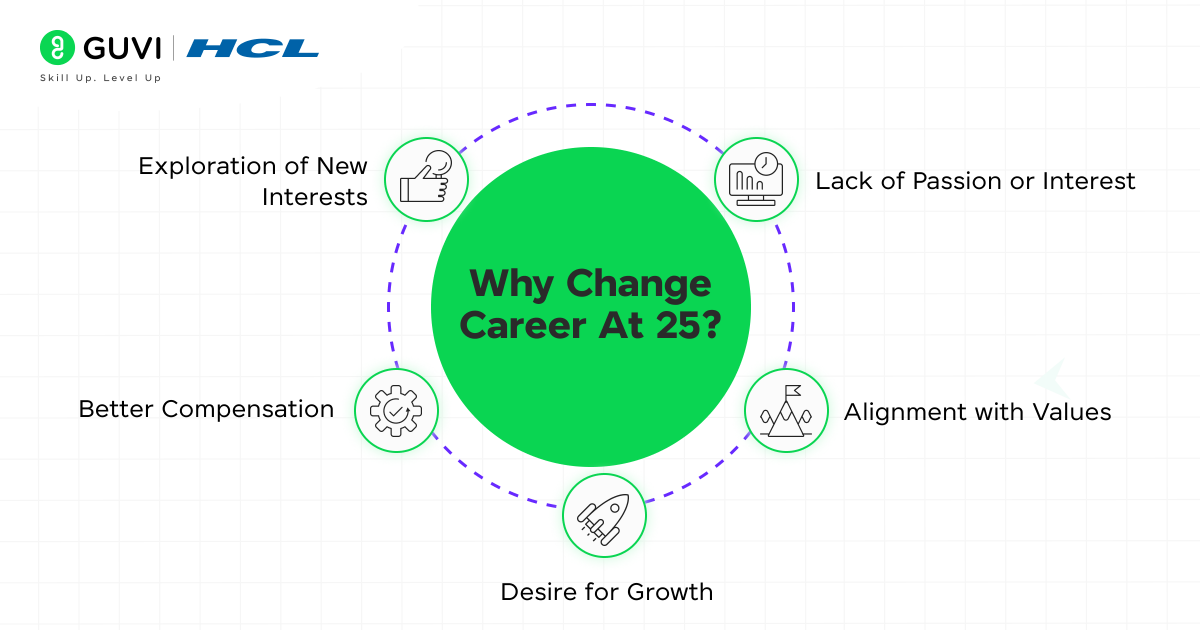
Let’s start with some context. At 25, you’ve likely gained 2–5 years of work experience, depending on when you entered the workforce. This experience, whether positive or negative, is invaluable. It has shaped your understanding of professional life and given you clarity about what you want and don’t want in a career.
Here are some common reasons why people consider a career change at 25:
- Lack of Passion or Interest: You may have chosen your current career due to external pressures or limited exposure to other fields. Over time, you might realize it doesn’t ignite your passion.
- Desire for Growth: Your current role might lack opportunities for advancement, learning, or challenges, leaving you feeling stagnant.
- Better Compensation: It’s common to want financial growth, and some careers simply offer more lucrative opportunities than others.
- Alignment with Values: As you mature, your priorities might shift. Perhaps you want a career that aligns more closely with your values, such as sustainability, helping others, or work-life balance.
- Exploration of New Interests: With more exposure to the world, you might discover fields that genuinely excite you, prompting a desire to pivot.
Some of today’s fastest-growing industries, such as AI, cybersecurity, cloud computing, and data analytics, actively hire professionals from diverse educational and career backgrounds who are willing to learn new skills.
How to Approach a Career Change at 25?
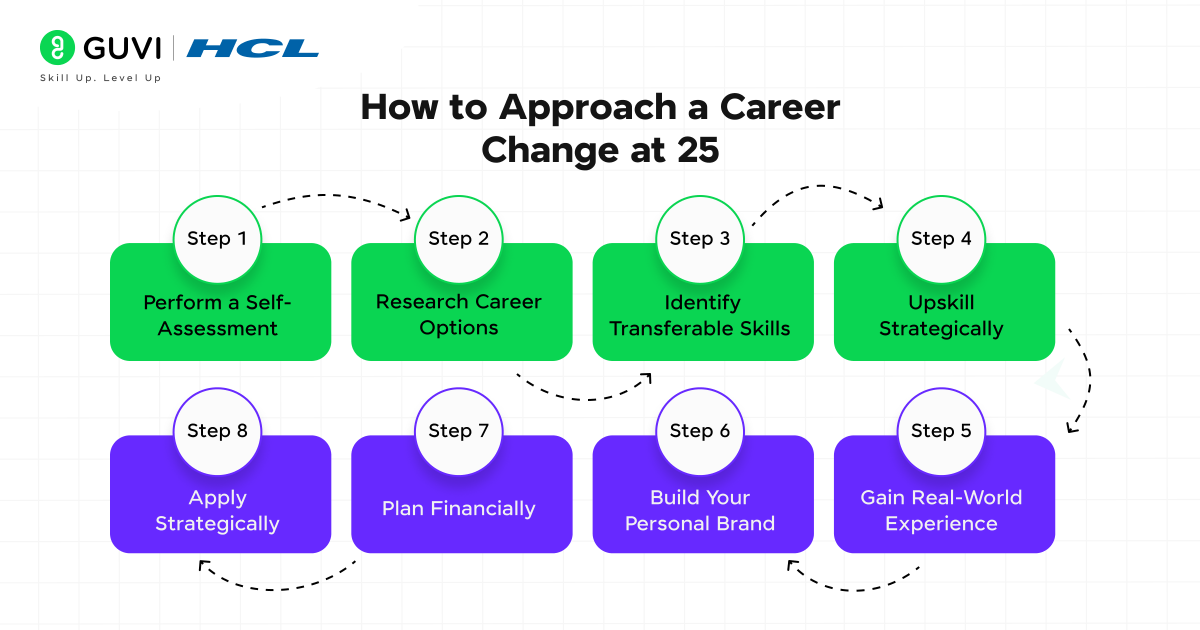
Changing careers at 25 is a bold and exciting step, but it requires careful planning and execution. To make a career change at 25, you need to evaluate your goals, identify the steps required, and strategically position yourself in your desired field.
Let’s break this process into a detailed, step-by-step approach:
Step 1: Perform a Self-Assessment
The first step in a career change is understanding why you want to switch careers and what you truly want from your professional life. This clarity will guide your decisions.
Questions to Ask Yourself:
- Why do I want to change careers?
- Are you feeling stuck, underpaid, unchallenged, or uninspired?
- Is the work environment misaligned with your values or goals?
- What am I passionate about?
- Identify activities, topics, or industries that excite you.
- Consider hobbies or past experiences that brought you joy and fulfillment.
- What are my strengths and weaknesses?
- List skills you excel in and areas where you need improvement.
- What does success look like for me?
- Is it financial security, work-life balance, professional growth, or making an impact?
Step 2: Research Career Options
Once you have a clear understanding of your motivations and strengths, it’s time to explore possible career paths.
How to Research:
- Identify Target Roles:
- Investigate Industries:
- What industries align with your passions and values? For instance, someone passionate about sustainability might explore renewable energy or environmental consulting.
- Understand Market Demand:
- Research fields that are growing or have strong future prospects. Examples include technology (AI, cybersecurity), healthcare, and digital marketing.
- Conduct Informational Interviews:
- Reach out to professionals in your desired field. Ask about their experiences, challenges, and advice for someone entering the industry.
- Create a Shortlist:
- Narrow your options to 2–3 potential careers that align with your skills, interests, and goals.
Resources to Leverage:
- LinkedIn: Use its networking features and job postings to learn about roles.
- Industry Blogs/Podcasts: Follow thought leaders to stay updated on trends. Read industry blogs about the potential career options available.
- Professional Groups: Join forums, Facebook groups, or Reddit communities related to your chosen field.
Step 3: Identify Transferable Skills
One of the biggest misconceptions about career changes is that you’re starting from scratch. In reality, you’re bringing a wealth of experience and transferable skills to the table.
Steps to Identify Transferable Skills:
- Review Your Past Roles:
- Think about skills you’ve used in past jobs, internships, or volunteer experiences.
- Identify Cross-Industry Skills:
- Communication: Writing, presenting, or negotiating.
- Problem-Solving: Creative solutions or conflict resolution.
- Project Management: Planning, organization, and deadline management.
- Technical Proficiency: Mastery of tools (e.g., Microsoft Excel, coding, or graphic design).
- Map Skills to Target Roles:
- Compare your skills with the requirements of your desired roles. Highlight overlapping areas to build confidence and clarity.
Step 4: Upskill Strategically
Changing careers often requires learning new skills. Fortunately, the rise of online learning platforms and flexible educational programs makes upskilling accessible to everyone.
How to Upskill:
- Take Online Courses:
- Platforms like HCL GUVI, Coursera, Udemy, and LinkedIn Learning offer affordable courses in fields like coding, marketing, or data analysis.
- Earn Certifications:
- Many industries value certifications provided by institutions like HCL GUVI’s Certified Career Courses that can boost your resume.
- Attend Bootcamps:
- Coding boot camps or digital marketing programs provide immersive, fast-tracked learning experiences.
- Leverage Free Resources:
- YouTube tutorials, blogs, and podcasts are excellent for gaining foundational knowledge.
- Consider Formal Education:
- For careers like nursing, law, or engineering, formal education may be necessary. Research part-time or online programs that allow you to work while studying.
Step 5: Gain Real-World Experience
Employers value hands-on experience. Building a portfolio or gaining practical exposure can set you apart as a candidate.
Ways to Gain Experience:
- Freelance Work:
- Platforms like Upwork or Fiverr allow you to work on real projects and build a portfolio.
- Volunteer:
- Offer your skills to non-profits or startups to gain experience while giving back.
- Internships:
- Many companies offer paid or unpaid internships to career changers.
- Personal Projects:
- Build a portfolio through personal projects. For example, aspiring graphic designers can create mock campaigns or logos.
Step 6: Build Your Personal Brand
Your personal brand communicates who you are and what you bring to the table. It’s crucial for making a strong impression in your new field.
Steps to Create Your Brand:
- Update Your LinkedIn Profile:
- Rewrite your summary to reflect your new career goals.
- Highlight transferable skills, certifications, and relevant projects.
- Build a Portfolio:
- Showcase examples of your work, including freelance projects, coursework, or personal initiatives.
- Create an Elevator Pitch:
- Craft a 1–2 sentence pitch explaining your career transition and goals.
- Network Intentionally:
- Attend industry events, webinars, or meetups.
- Join online communities or forums in your chosen field.
Step 7: Plan Financially
Career changes can involve a temporary pay cut or gaps in income. Being financially prepared will reduce stress during the transition.
Financial Tips:
- Save Up:
- Build an emergency fund with 3–6 months of living expenses.
- Budget:
- Cut unnecessary expenses and prioritize essential spending.
- Side Hustles:
- Take on freelance work, part-time jobs, or consulting gigs to support yourself.
Step 8: Apply Strategically
Once you’ve built skills, gained experience, and refined your personal brand, it’s time to apply for jobs in your new field.
Application Tips:
- Tailor Your Resume:
- Emphasize transferable skills and relevant experiences.
- Write a Compelling Cover Letter:
- Explain your career change and how your background makes you a unique candidate.
- Prepare for Interviews:
- Be ready to address why you’re transitioning and highlight your passion and preparation.
Approaching a career change at 25 requires thoughtful planning, self-awareness, and persistence. By following these detailed steps, you can confidently navigate the transition and set yourself up for long-term success.
Explore: How to Start Your Career at 35: A Practical Guide
Best Career Changes at 25 for Better Salary Growth in India
Once you’ve identified your interests and strengths, it’s time to explore some of the most promising career switch options that offer strong long-term growth. While no career guarantees
instant success, several industries in India continue to see rising demand, competitive salaries, and ample opportunities for professionals willing to upskill. The table below highlights some of the most promising high-paying careers you can transition into at 25.
| From Career | To Career | Estimated Transition Time | Potential Salary Growth* | Difficulty |
| Customer Support / BPO | Data Analyst | 6–9 months | High | Medium |
| Mechanical / Civil / Electrical Engineer | Software Developer | 6–12 months | High | High |
| Sales Executive | Digital Marketing Specialist | 3–6 months | Medium to High | Low |
| Manual Tester | Automation Tester | 4–8 months | High | Medium |
| Finance / Accounting | Business Analyst | 6–9 months | High | Medium |
| Content Writer | UX Writer / Product Content Strategist | 4–8 months | Medium to High | Medium |
| Operations Executive | Project Manager | 8–12 months | High | Medium |
| Graduate in Any Discipline | Cybersecurity Analyst | 8–12 months | High | High |
Salary growth depends on your previous experience, location, skill level, and the organisation you join.
The best career change in India is not necessarily the one with the highest salary, but the one that aligns with your strengths, interests, and long-term goals. Before making a decision, evaluate the skills required, learning investment, industry demand, and the kind of work you see yourself enjoying for years to come. A thoughtful transition today can open the door to a more fulfilling and financially rewarding career tomorrow.
Career Change from Core Engineering to Software at 25
One of the most common examples of a career change in India is professionals transitioning from core engineering disciplines such as mechanical, civil, electrical, or electronics engineering into software roles. The good news is that your engineering background already equips you with analytical thinking and problem-solving skills that are highly valued in the tech industry. With the right learning path and consistent practice, this transition is entirely achievable at 25.

Step 1: Choose Your Target Software Career
Software is a broad field, so begin by deciding which role aligns best with your interests. Popular options include software development, data analytics, data science, cybersecurity, cloud computing, DevOps, quality assurance (QA), and AI/ML. Research the required skills, day-to-day responsibilities, and job opportunities before committing to a path.
Step 2: Build Strong Programming Fundamentals
Before learning advanced tools, develop a solid foundation in programming. Learn a language such as Python, Java, or JavaScript, and strengthen your understanding of data structures, algorithms, object-oriented programming, and problem-solving. These fundamentals will make learning new technologies much easier.
Step 3: Learn Industry-Relevant Tools and Technologies
Once your basics are in place, focus on the technologies required for your chosen role. For example, aspiring software developers can learn Git, SQL, databases, APIs, and relevant frameworks, while data analysts may focus on Excel, SQL, Python, and visualization tools. A structured learning roadmap helps you stay focused and job-ready.
Step 4: Build Real Projects
Projects demonstrate your practical skills far better than certificates alone. Create applications, dashboards, or automation projects that solve real-world problems and showcase them on GitHub or in a professional portfolio. These projects become valuable talking points during interviews.
Step 5: Gain Practical Experience
Look for internships, freelance projects, hackathons, open-source contributions, or personal projects that provide hands-on exposure. Even small real-world experiences help bridge the gap between learning and employment while building confidence.
Step 6: Prepare for Interviews and Start Applying
Tailor your resume to highlight your transferable engineering skills, newly acquired technical expertise, and project work. Practise coding problems, technical interviews, and behavioural questions, then begin applying consistently for entry-level software roles and transition opportunities.
Pro Tip: You don’t have to discard your engineering background to succeed in software. Many employers value professionals who combine domain knowledge with technical skills, making your previous experience an advantage rather than a setback.
Overcoming Common Challenges
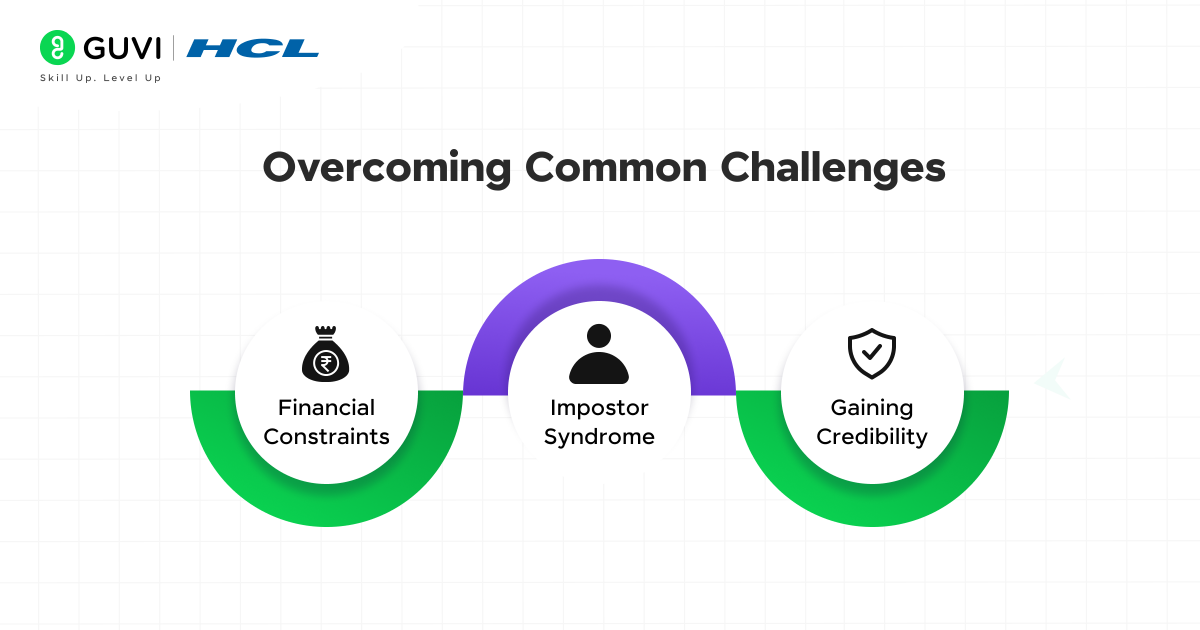
1. Financial Constraints
Starting over might mean a temporary pay cut. Here’s how to manage:
- Save Before Transitioning: Build a financial cushion to support yourself during the shift.
- Side Hustles: Consider part-time work or freelancing to supplement your income.
2. Impostor Syndrome
Feeling like you don’t belong in your new field?
- Reframe Your Mindset: Everyone starts somewhere. Your willingness to learn and adapt is a strength.
- Leverage Your Unique Perspective: Your diverse background can be an asset in bringing fresh ideas to your new industry.
3. Gaining Credibility
If you lack experience, focus on small wins:
- Earn certifications.
- Contribute to open-source projects (tech fields).
- Write blogs or create content about your learning journey.
Career Change at 25 Without Losing Years of Experience
A successful career change at 25 doesn’t mean leaving your previous experience behind. In most cases, the skills, industry knowledge, and professional maturity you’ve already developed continue to add value in your new role. The key is to build on your existing strengths while learning the skills your target career demands.
- Identify your transferable skills: Communication, problem-solving, project management, analytical thinking, and teamwork are valuable across industries and can give you an edge over entry-level candidates.
- Leverage your domain expertise: Your industry knowledge can become a unique advantage. For example, engineers moving into software or finance professionals transitioning into business analytics often bring valuable real-world context to their new roles.
- Highlight achievements, not just job titles: Focus on measurable results, projects, and responsibilities that demonstrate your ability to adapt, learn, and deliver impact, regardless of the industry.
- Bridge the skill gap strategically: Rather than starting from scratch, upskill in the areas your target role requires through projects, certifications, or practical experience to make your transition smoother.
- Position your experience as an advantage: The best career switch options build on what you already know. Combining your previous experience with new, in-demand skills creates a stronger and more competitive professional profile.
The Long-Term Benefits of a Career Change at 25
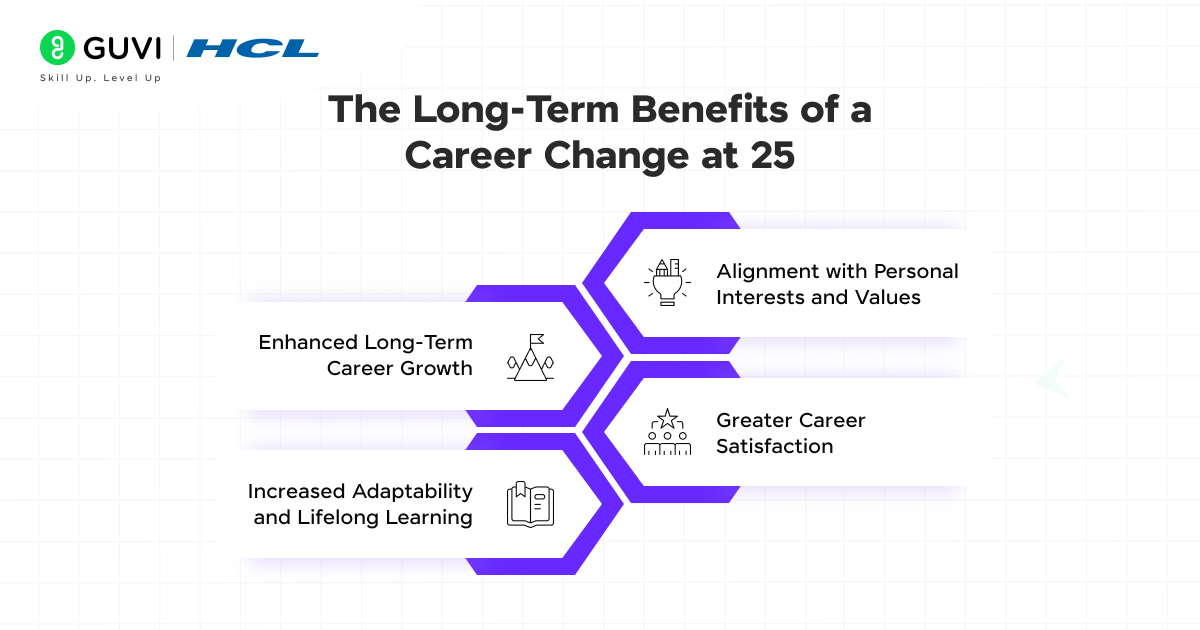
Changing careers at 25 might seem daunting, but it’s a decision that can significantly impact your life in positive ways. Here’s why:
1. Alignment with Personal Interests and Values
At 25, you’re likely more self-aware than you were at 18 or 21. A career change at this stage allows you to pursue a path that aligns better with your interests, passions, and core values.
- Increased Motivation: Doing work you’re genuinely passionate about fuels your drive and enthusiasm, making each day feel more purposeful.
- Value-Driven Work: Choosing a career that aligns with your principles (e.g., sustainability, creativity, helping others) leads to greater satisfaction and pride in what you do.
2. Greater Career Satisfaction
Career satisfaction is one of the most significant determinants of long-term happiness. Making a career change at 25 allows you to move toward roles and environments that suit your personality and aspirations.
- Customized Roles: You can find or shape roles that better suit your skills, strengths, and working style, whether it’s collaborative, creative, or independent.
- Avoiding Burnout: Transitioning to a career you enjoy helps mitigate the risk of burnout, which often stems from prolonged dissatisfaction and disengagement in work.
3. Enhanced Long-Term Career Growth
Switching to a more dynamic or high-demand field at 25 can unlock better opportunities for career advancement over the years.
- Higher Salary Potential: Many fields offer higher earning potential, especially if you enter an industry that values your transferable skills and willingness to learn.
- Better Career Trajectory: By entering a growing field (e.g., tech, healthcare, renewable energy), you position yourself for roles with upward mobility and evolving opportunities.
4. Increased Adaptability and Lifelong Learning
Changing careers at 25 often requires learning new skills, building resilience, and adapting to unfamiliar environments—all of which are invaluable in today’s rapidly changing world.
- Embracing a Growth Mindset: Making a bold change helps you develop the mindset that learning and growth are lifelong pursuits, which is critical for staying relevant in the workforce.
- Future-Proofing Your Career: By entering a forward-thinking field, you’re better equipped to handle changes in the job market caused by automation, globalization, or economic shifts.
The long-term benefits of a career change at 25 extend far beyond just the immediate perks of a new job. From greater alignment with your passions and values to enhanced financial stability and personal growth, making this decision now positions you for a fulfilling and thriving career.
Planning a career change in India becomes much easier when you have a structured learning path and practical experience. If you’re looking to build job-ready skills, explore HCL GUVI’s premier, industry-aligned career programmes with hands-on projects, expert mentorship, and placement support to confidently transition into your next career.
Conclusion
In conclusion, a career change at 25 isn’t a setback, it’s a strategic move toward a more fulfilling future. By reflecting on your goals, researching your options, and taking practical steps, you can create a career that genuinely excites and inspires you.
Remember, your career isn’t a straight path. It’s okay to take detours and make adjustments as you grow and evolve. The important thing is to take action and trust the process. Your future self will thank you!
FAQs
1. Is it too late to change careers at 25?
Not at all! At 25, you have the advantage of work experience combined with the flexibility to adapt and learn. It’s the perfect time to pivot before becoming deeply entrenched in a particular career path.
2. How do I know if changing careers is the right decision?
Reflect on your current job’s impact on your happiness, growth, and goals. If it feels unaligned with your passions or values, or if you’re craving new challenges, a career change might be worth considering.
3. How can I gain experience in a new field without starting from scratch?
Leverage transferable skills, pursue certifications, or volunteer in roles related to your target field. Freelancing, internships, or personal projects can also help build relevant experience and credibility.
4. What if I need to take a pay cut during the transition?
While a temporary pay cut is common, think of it as an investment in your future. Plan financially by saving, budgeting, or supplementing income through side gigs to ease the transition.
5. How long does it take to successfully transition into a new career?
The timeline varies based on the complexity of the field and your starting point. On average, it can take 6 months to 2 years to reskill, gain experience, and secure a stable role in a new industry!
Success Stories

About the Author
Lukesh S
A professional content writer who has experience in freelancing and now working as a Technical Content Writer at HCL GUVI having sound knowledge in Blog Writing and Creative Writing!
View all posts by Lukesh S
Connect with me @












Did you enjoy this article?