


Full Stack Development Articles
Claude for Architecture and Engineering Documentation
Freelancing as a Python Developer: Getting Your First Client

Get In Touch For Details! Request More Information
Full Stack Developer Portfolio in 2026: An Insightful Guide to Showcase Your Skills Like a Pro
Feb 12, 2026 5 Min Read 3899 Views
(Last Updated)
In today’s tech-driven job market, employers are no longer investing their time and effort in assessing candidates’ resumes. In fact, the majority of the tech companies are gradually shifting their emphasis to judging individuals by their portfolio. Many of us have the common misconception that resumes and portfolios are equivalent, but they are not. Resumes are limited to showcasing your qualifications and experience, whereas a portfolio is much broader in scope, highlighting your actual work and skills in action.
Similarly, having a strong Full Stack Developer portfolio doesn’t just act as a facilitator in landing a job; it’s also essential in reflecting a clear picture of your programming capabilities, design sense, and problem-solving approach, and, more importantly, it also exhibits how proficient you are in integrating the front-end and back-end parts of the applications.
This blog on “Full Stack Developer Portfolio” will serve as a guide for readers aspiring to build a career in full-stack development or enhance their professional portfolio. So, without any further ado, let’s get started.
Table of contents
- Why a Full Stack Developer Portfolio Matters
- Key Elements of a Full Stack Developer Portfolio
- Choosing the Right Tech Stack to Highlight
- Showcasing Your Best Projects
- Writing Impactful Project Descriptions
- Adding Live Demos and GitHub Links
- Crafting an Engaging “About Me” Section
- Including Testimonials and Client Feedback
- Optimizing Your Portfolio for SEO
- Dos and Don’ts for a Full Stack Developer Portfolio
- A. Dos:
- B. Don’ts:
- Conclusion
- FAQs
- Why is a Full-stack developer's portfolio significant?
- What should I include in my portfolio?
- How can I make my portfolio stand out?
Why a Full Stack Developer Portfolio Matters
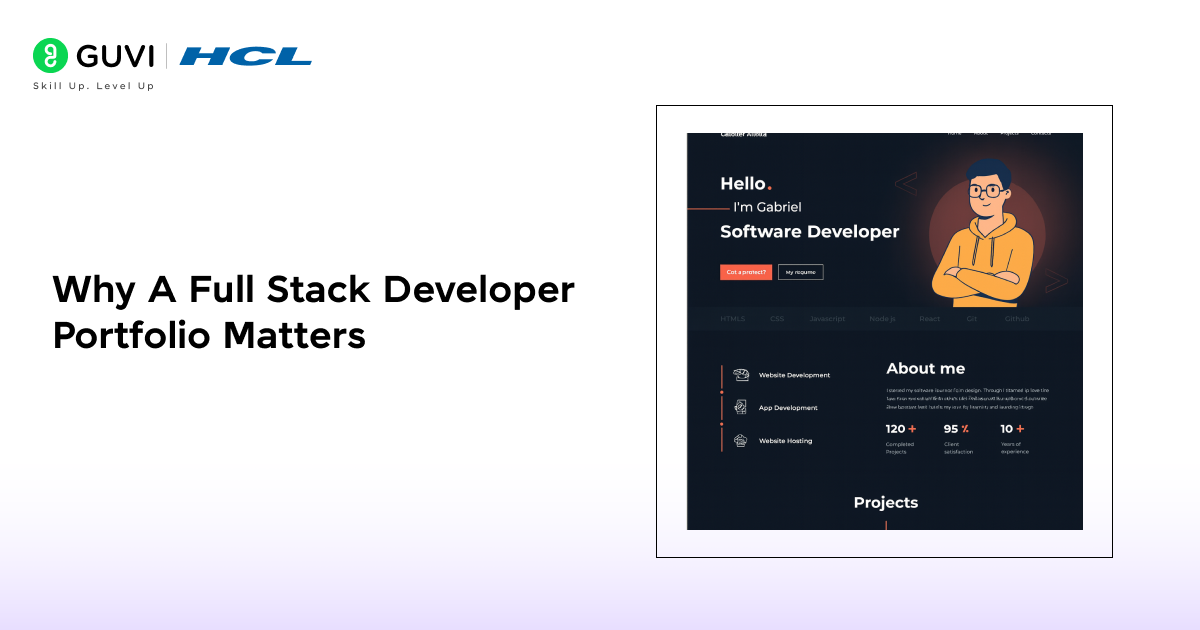
A Full-stack developer’s portfolio is of utmost importance because it acts as a practical proof of an individual’s technical competency in building real-world projects and functionalities. In simple terms, it is a collection of your professional or technical work that bridges the gap between what you claim to know and what you can actually develop.
Having a comprehensive and impactful full-stack developer portfolio helps grab the attention of employers and increases your chances of getting hired. From recruiters, clients, to collaborators, anyone can see the quality of contribution you made in building full-stack applications and platforms. This portfolio represents more than theoretical knowledge. And especially in an era where artificial intelligence (AI) and automation are reshaping the hiring process, portfolios still are an authentic source of evidence of your human touch — your unique logic, style, and adaptability.
Without having a genuine and effective full-stack developer Portfolio, advancing your career as a full-stack developer will be highly challenging. Even the proficient ones become invisible in this crowded job market if their portfolio doesn’t speak to their skills.
Key Elements of a Full Stack Developer Portfolio
The following are the key elements of a Full Stack Developer Portfolio that enhance the quality and effectiveness of a Full Stack Developer Portfolio:
1. Choosing the Right Tech Stack to Highlight
Choosing the right technology stack can enhance your Full Stack Developer Portfolio by demonstrating to employers that your expertise and technical knowledge align with their business requirements and objectives.
For example, if a company is looking to create scalable and modern web applications, then they will prefer to hire a MERN or MEAN stack developer.
What to Include:
- List your primary front-end technologies (e.g., React, Angular, Vue).
- Mention back-end frameworks (e.g., Node.js, Django, Spring Boot).
- Include databases you’ve worked with (e.g., MongoDB, MySQL, PostgreSQL).
- Add tools for version control, CI/CD, or deployment (e.g., Git, Docker, AWS).
- Highlight any testing or automation tools you use (e.g., Jest, Selenium).
Pro Tip:
Always prioritize highlighting your tech stack using visual icons and organizing different tools by category. Doing this will help you instantly catch the attention of recruiters.
2. Showcasing Your Best Projects
The projects you have worked on or were deployed to are the most core aspect of your Full Stack Developer Portfolio. Projects are the evidence that proves your technical proficiency on various front-end and back-end tools and also validates your creativity and analytical problem-solving abilities.
Each project you mentioned in the Full Stack Developer Portfolio must include the challenges you faced during the development process, how you managed multiple tasks, and your approach to turning ideas into features and functionalities.
What to Include:
- 3–5 top projects showing full-stack skills
- Brief description of each project and its purpose
- Technologies and tools used
- GitHub links or live demos
- Screenshots or visuals for appeal
Pro Tip:
When mentioning project details in your Full Stack Developer Portfolio, only choose those that demonstrate product-building depth and have created a real-world impact. In addition to that, combine a short backstory that describes the issues each project addresses.
3. Writing Impactful Project Descriptions
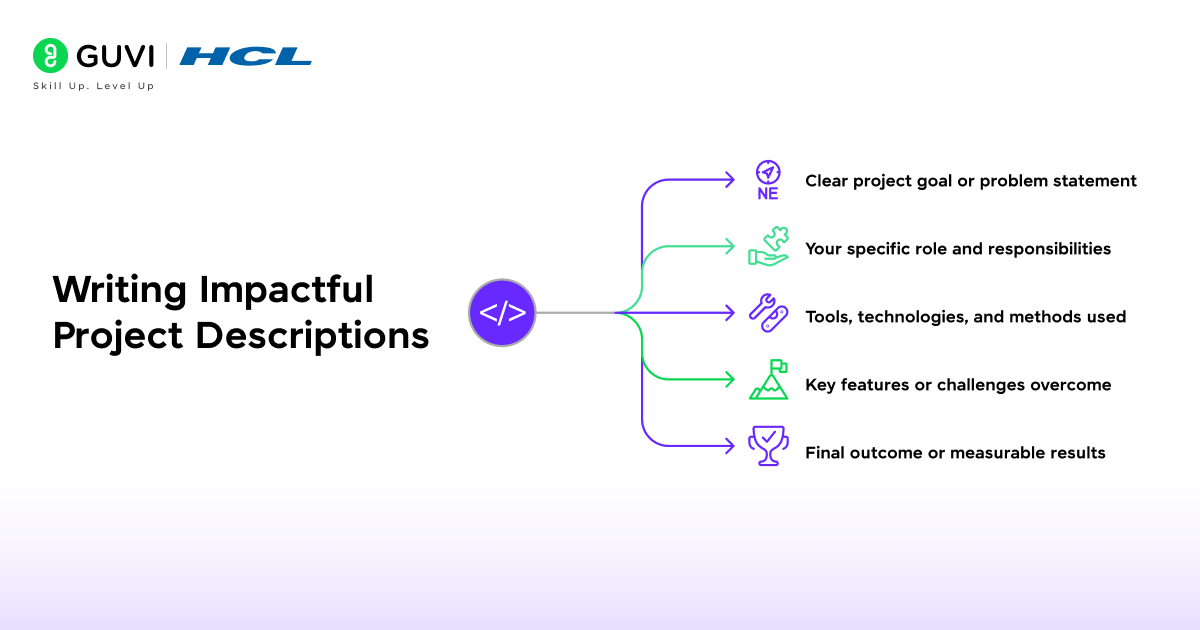
Project descriptions are a group of statements that provide crisp and concise information about your project development journey. A well-structured description highlights how the application’s features and functionalities solve real-world issues.
There should be a proper flow in writing the description: first, identify the problem, then implement solutions, and finally, describe the tools and algorithms used to resolve the issues.
What to Include:
- Clear project goal or problem statement
- Your specific role and responsibilities
- Tools, technologies, and methods used
- Key features or challenges overcome
- Final Outcome or measurable results
Pro Tip:
Use short yet engaging language and focus on the metrics, results, and optimization techniques that enhanced the build quality and performance of the applications. Don’t forget to quantify the elements within your project.
For instance, instead of just writing plain wordy texts, use lines like “minimized the page load time by 30%” or “increased the user engagement rate by 4x“.
4. Adding Live Demos and GitHub Links
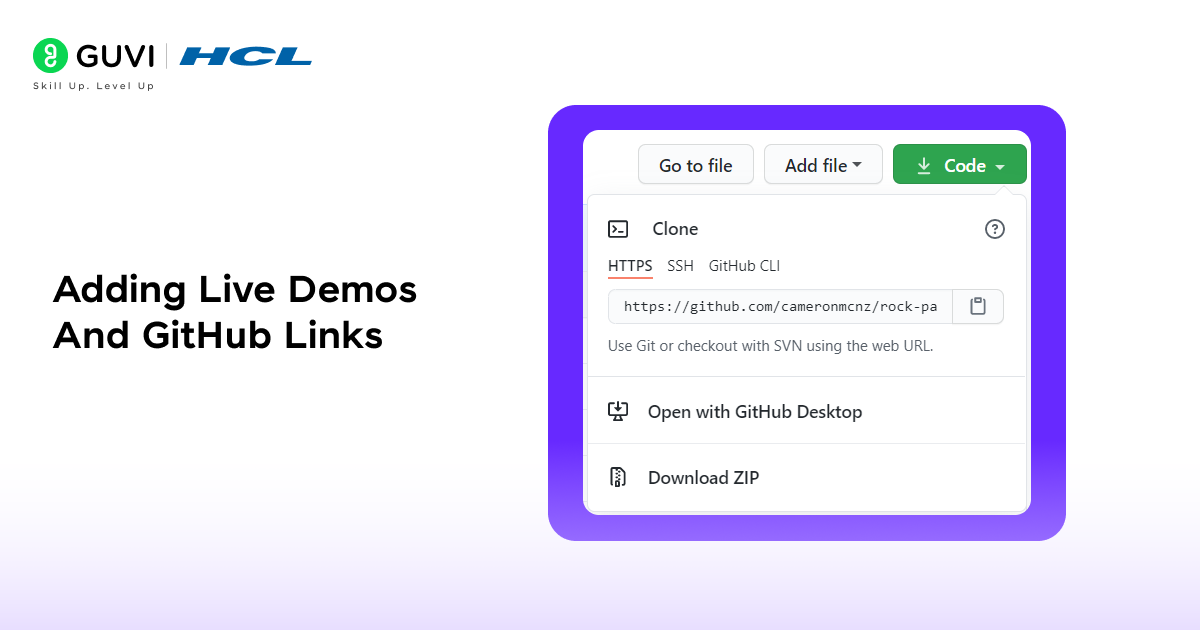
Live demos and GitHub links are the essential elements inside a Full Stack Developer Portfolio because these are points from which recruiters can navigate to your actual project work and contributions. These elements help convey the vital factors of your development capability, such as functionality, usability, and code quality.
A live, workable demo of your project allows employers to gain a comprehensive understanding of your coding standards and the level of customization involved in designing and developing each component.
What to Include:
- Live demos on platforms like Netlify, Vercel, or Heroku
- GitHub repository for each project
- README file with setup and usage
- Key commits or version history
- Instructions to run the project locally
Pro Tip:
When linking GitHub repos and live demos, always ensure the projects are fully functional, responsive, and provide a seamless navigational flow for end users. Broken links or malfunctioning demos can make your portfolio futile.
5. Crafting an Engaging “About Me” Section
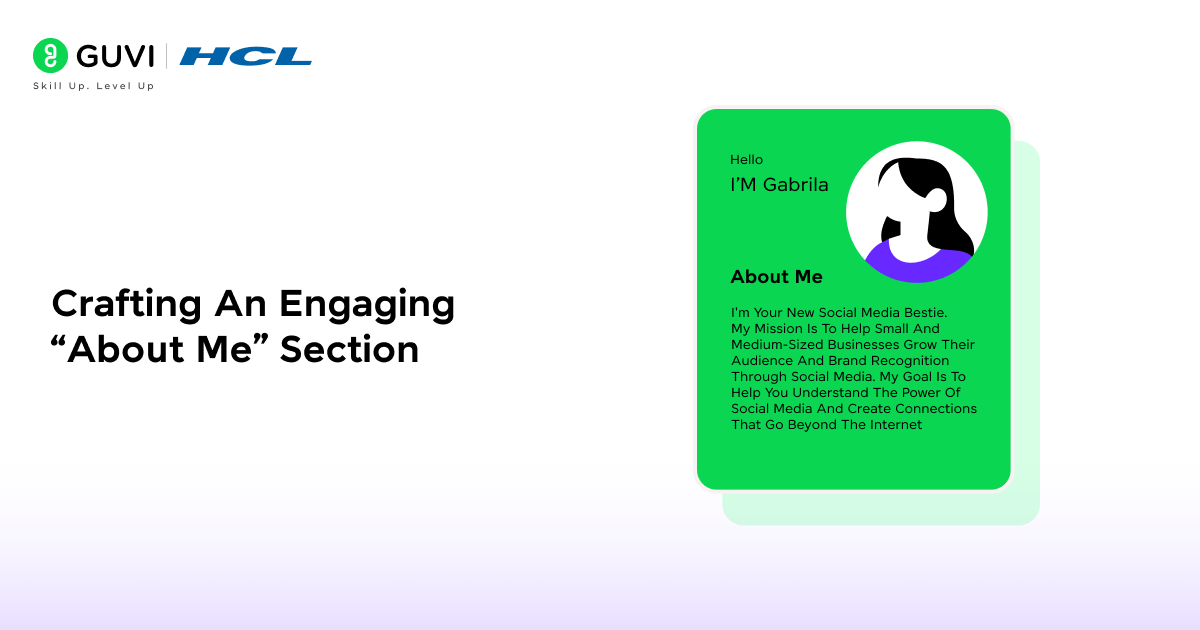
The “About Me” is a tiny section, yet a vital part of a Full Stack Developer Portfolio. It’s a brief biography of yourself that helps you form a personal connection with recruiters and clients. A well-crafted section includes your purpose that drives you forward, what your career objectives are, and the reasons that make you love the full-stack development process.

What to Include:
- A brief personal introduction and background
- Your journey into full-stack development
- Core skills and areas of expertise
- Professional values, work style, or philosophy
- A fun or unique fact to make you memorable
Pro Tip:
Don’t get excited while drafting this section; always be concise and maintain clarity when writing the “About Me” section. As this section acts as an introduction to your portfolio, keep the writing style in first person and balance professionalism with your personality.
6. Including Testimonials and Client Feedback
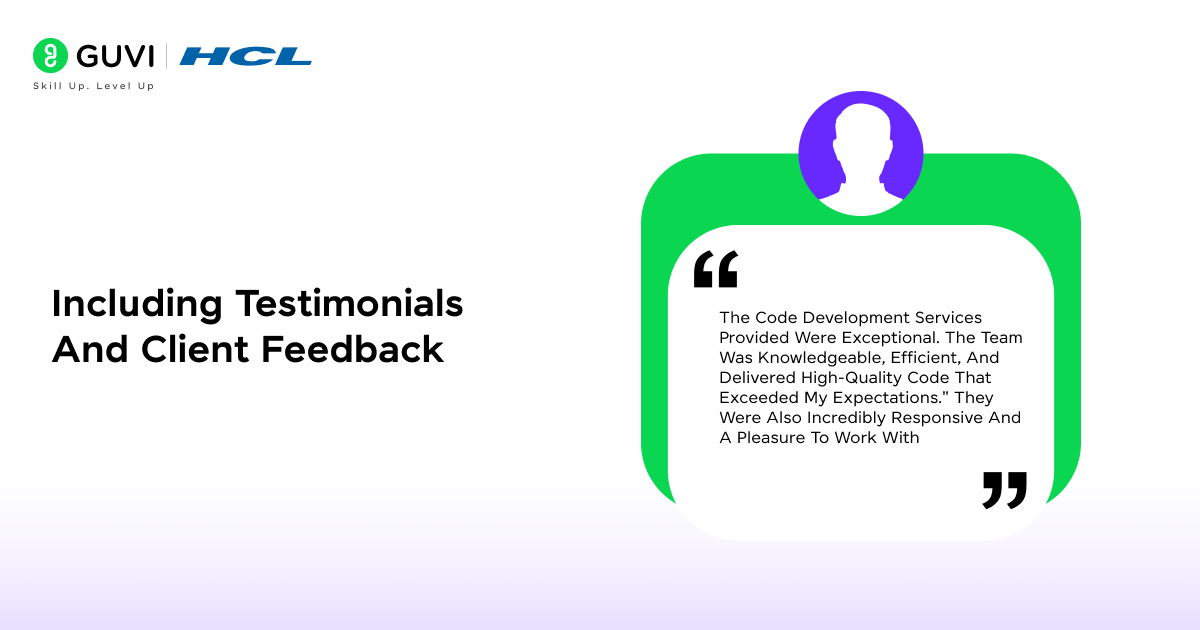
The majority of professionals who create their portfolio don’t include testimonials and client feedback. It’s an unpopular choice but very effective, as it is a powerful way to establish trust and credibility among the viewers.
The demand for your technical contribution can increase significantly through this section, as it will serve as social proof, demonstrating to recruiters and business stakeholders your credibility and reliability as a developer. Even including a few genuine feedback can make a big difference.
What to Include:
- Short quotes from clients, colleagues, or mentors
- Name, role, and company of the reviewer
- Skills or projects mentioned
- Collaboration context or project duration
- Measurable results or achievements
Pro Tip:
Before using feedback and reviews on your project, always ask for permission and include only honest and impactful testimonials. Adding elements such as a profile photo or a LinkedIn profile of the people, along with their company and designation, can further improve the authenticity and trust.
7. Optimizing Your Portfolio for SEO

Strengthening the online presence of your Full Stack Developer Portfolio is another crucial aspect to get noticed by employers, clients, and search engines. Even if your portfolio consists of the best projects and all the relevant skills, it becomes isolated and useless if it doesn’t rank in the search results.
For this reason, optimizing your Full Stack Developer Portfolio for SEO (Search Engine Optimization) becomes necessary. The most vital factors for an SEO-friendly portfolio are proper documentation of details, a sequential order of sections (well-structured), rich keyword integration, and engaging components (such as images, graphs, etc).
What to Include:
- Use relevant keywords like “Full Stack Developer,” your tech stack, and project types.
- Optimize page titles, headings, and meta descriptions
- Add alt text for images and screenshots
- Use descriptive URLs for projects and pages
- Ensure fast loading speed and mobile responsiveness
Pro Tip:
Incorporate statements with rich keywords throughout your content and maintain the same consistency and writing flow in project descriptions, headings, and meta tags. Use high-quality compressed images and visual components, descriptive file names, and ensure fast rendering times for a better user experience (UX).
Note: Always keep updating your portfolio regularly, as it is an essential tool that demonstrates growth, activity, and relevance in your field.
Dos and Don’ts for a Full Stack Developer Portfolio
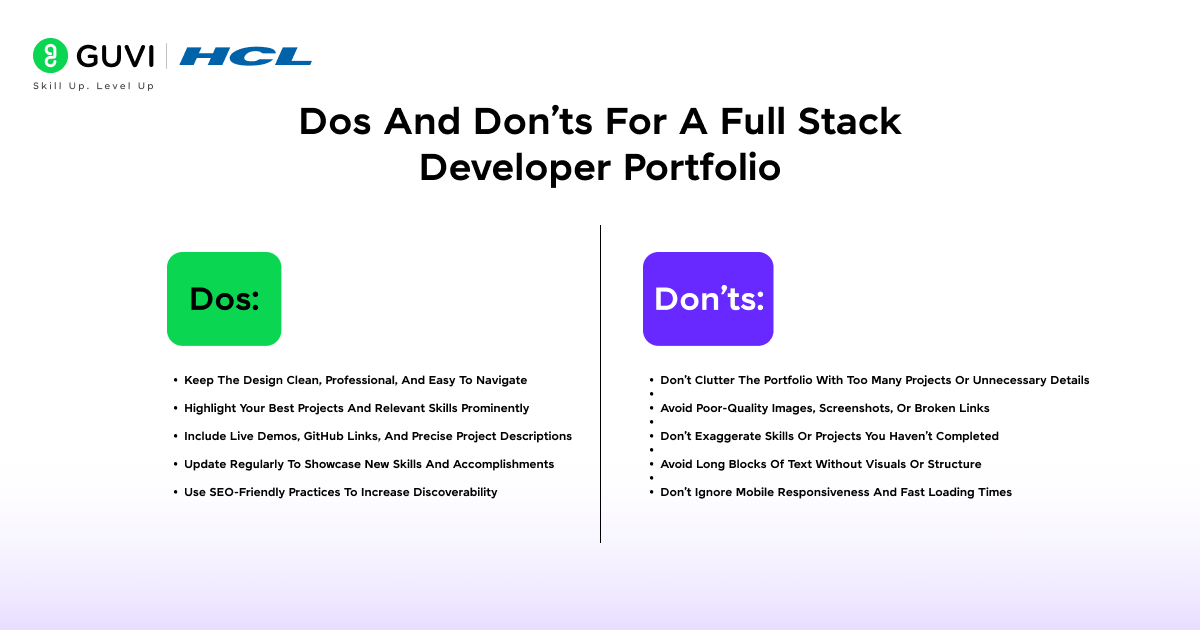
A thoughtful and attention-grabbing portfolio showcases your skills effectively and helps make a lasting impression on viewers. But before creating a Full-Stack Developer Portfolio, let us look at some of the dos and don’ts.
A. Dos:
- Keep the design clean, professional, and easy to navigate
- Highlight your best projects and relevant skills prominently
- Include live demos, GitHub links, and precise project descriptions
- Update regularly to showcase new skills and accomplishments
- Use SEO-friendly practices to increase discoverability
B. Don’ts:
- Don’t clutter the portfolio with too many projects or unnecessary details
- Avoid poor-quality images, screenshots, or broken links
- Don’t exaggerate skills or projects you haven’t completed
- Avoid long blocks of text without visuals or structure
- Don’t ignore mobile responsiveness and fast loading times
Landing a proper full-stack development role in this current job market has become very tough for freshers and professionals. As it is a role that demands a lot of responsibilities and high-level skills, companies are very selective when hiring for this role. But don’t worry, it’s a challenging journey, but not impossible. With HCL GUVI’s IITM Pravartak Certified MERN Full Stack Development Course with AI Integration, you can gradually enhance your skills up to advanced levels and be proficient enough to crack any top software companies. Join us today and start strong with industry-relevant training and step-by-step career guidance.
Conclusion
In conclusion, your Full Stack Developer Portfolio is more than a collection of your professional works; it’s basically your personal brand that represents your proficiency in skills, risk-taking abilities, and problem-solving competency. In other words, it is your ticket to grab better career opportunities in the software industry. We also went through all the essential elements that should be included in your portfolio, from choosing the right technology stack to optimizing it for the best SEO performance.
At last, I just want to suggest that craft your Full Stack Developer Portfolio thoughtfully, keep it updated, and let it confidently tell your story — because in the developer world, your work must honestly speak louder than words.
FAQs
Why is a Full-stack developer’s portfolio significant?
A Full Stack Developer Portfolio shows your fundamental skills and projects, helping recruiters see what you can do beyond your resume. Without it, standing out is harder.
What should I include in my portfolio?
Include your tech stack, top projects with demos and GitHub links, skills, About Me section, and testimonials. Use clear descriptions and visuals.
How can I make my portfolio stand out?
Focus on quality projects, SEO, live demos, skill visuals, and authentic testimonials. Keep it clean, concise, and regularly updated.
Success Stories




























Did you enjoy this article?