


DevOps Articles
How Network Administrators Can Transition into DevOps Engineering
Is DevOps Training a Good Investment for Experienced IT Professionals?

Get In Touch For Details! Request More Information
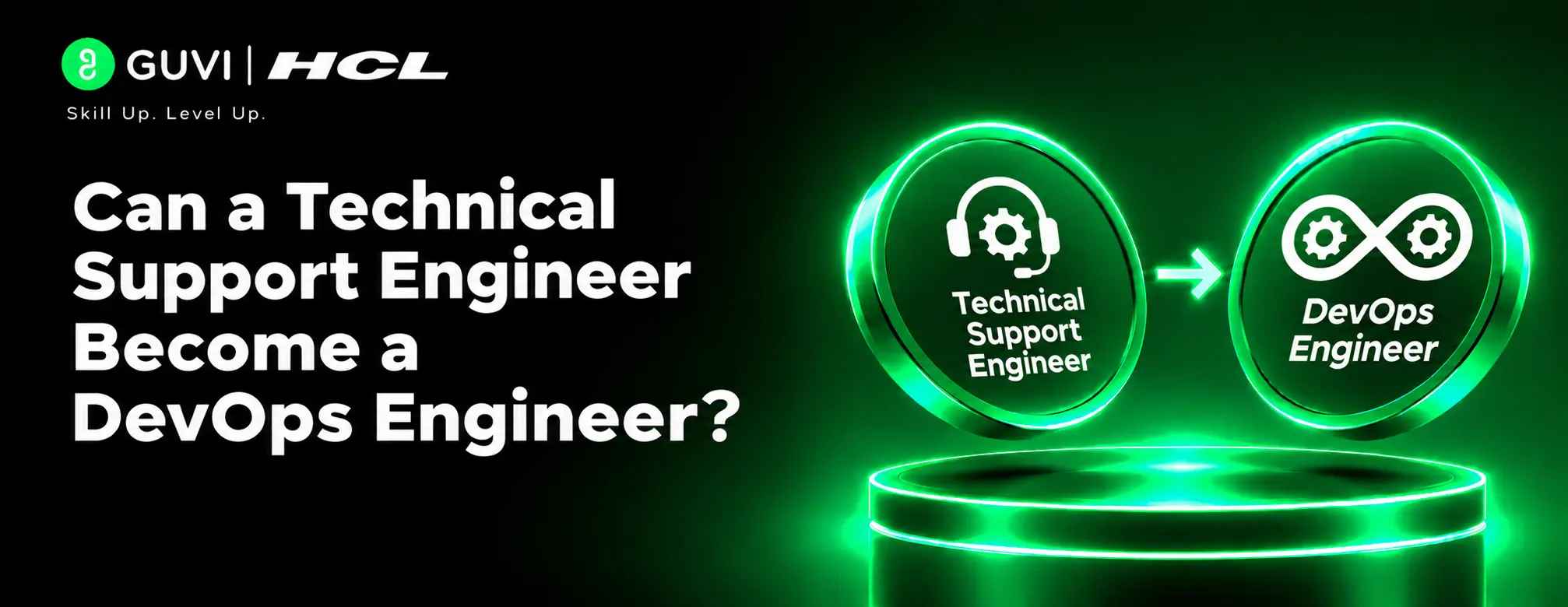
Can a Technical Support Engineer Become a DevOps Engineer?
Nov 10, 2026 3 Min Read 53 Views
(Last Updated)
Technical Support Engineers work with applications, operating systems, servers, and infrastructure to resolve technical problems. Their experience with troubleshooting and system maintenance can provide a strong starting point for a career in DevOps engineering.
However, the transition requires more than learning a few tools. It involves understanding automation, cloud infrastructure, software deployment, and collaboration between development and operations teams.
Table of contents
- TL;DR
- Quick Answer
- Understand How Technical Support Experience Relates to DevOps
- Identify Your Transferable Skills
- Understand the Difference Between Both Roles
- Develop the Technical Skills Required for DevOps
- Learn Linux and Scripting
- Strengthen Your Git and Networking Knowledge
- Explore Cloud Computing and DevOps Technologies
- Choose One Cloud Platform
- Understand Containers and CI/CD
- Learn Infrastructure Automation
- Practise Infrastructure as Code
- Explore Configuration Management
- Build Practical DevOps Projects
- Create an End-to-End Cloud Deployment Project
- Prepare for the Transition into DevOps
- Gain Practical Workplace Exposure
- Update Your Resume and Explore Suitable Roles
- Conclusion
- Frequently Asked Questions
- Can a Technical Support Engineer become a DevOps Engineer without coding experience?
- How long does it take to transition from technical support to DevOps?
- Which programming language should Technical Support Engineers learn?
- Is cloud certification necessary for becoming a DevOps Engineer?
- Does technical support experience count towards DevOps jobs?
- Which DevOps tools should beginners learn?
- Which jobs can Technical Support Engineers apply for before becoming DevOps Engineers?
TL;DR
- Technical support experience provides a foundation for entering DevOps.
- Learn Linux, Python or Bash, Git, networking, and cloud computing.
- Develop practical knowledge of Docker, CI/CD, Kubernetes, and Terraform.
- Build an end-to-end project to demonstrate your technical abilities.
- Prepare your resume and explore suitable entry-level opportunities.
Quick Answer
| A Technical Support Engineer can become a DevOps Engineer by expanding their knowledge of IT operations into automation, cloud computing, and software delivery. Building practical projects and gaining exposure to deployment workflows can help demonstrate readiness for DevOps opportunities. |
Understand How Technical Support Experience Relates to DevOps
1. Identify Your Transferable Skills
Technical Support Engineers develop several abilities that are relevant to DevOps environments. Depending on their responsibilities, their experience may include:
- Investigating application errors and system failures.
- Monitoring server performance and availability.
- Analysing logs to identify technical problems.
- Managing user permissions and access requests.
- Resolving network and configuration issues.
2. Understand the Difference Between Both Roles
- Technical Support Engineers primarily focus on resolving existing technical issues and maintaining service availability. DevOps Engineers work across development and operations to improve application building, testing, deployment, and maintenance.
- The main shift is from responding to problems towards preventing them through automation and standardised workflows. DevOps professionals also collaborate closely with developers, testers, and infrastructure teams throughout the software delivery lifecycle.
Develop the Technical Skills Required for DevOps
1. Learn Linux and Scripting
Linux is widely used in cloud infrastructure, application hosting, and DevOps environments. Start by understanding:
- File and directory management.
- User permissions and process administration.
- Service management and package installation.
- Log inspection and system troubleshooting.
- Command-line operations.
Start with simple exercises, such as writing a script to check server availability, collect system information, or generate reports. Focus on understanding the logic before attempting complex automation.
2. Strengthen Your Git and Networking Knowledge
Git allows teams to track changes, manage versions, and collaborate on technical projects. Learn how to create repositories, commit changes, use branches, and resolve basic conflicts.
Networking knowledge is equally important when working with distributed applications. Revise these concepts:
- TCP/IP and DNS.
- HTTP and HTTPS.
- SSH connections.
- IP addressing and subnetting.
- Firewalls and load balancing.
Explore Cloud Computing and DevOps Technologies
1. Choose One Cloud Platform
Start with AWS, Microsoft Azure, or Google Cloud. Learning one platform thoroughly is more useful initially than studying multiple platforms without practical experience.
Focus on its essential services:
- Compute: Virtual machines and computing resources.
- Networking: Virtual networks, subnets, and routing.
- Storage: Cloud-based file and object storage.
- Security: Identity management and access controls.
- Monitoring: Resource utilisation and service health.
2. Understand Containers and CI/CD
- Docker packages applications and their dependencies into containers, making deployments more consistent across environments. Learn to create images, run containers, and manage application configurations.
- You should also understand Continuous Integration and Continuous Delivery (CI/CD). Tools such as Jenkins and GitHub Actions automate application building, testing, and deployment whenever developers update their code.
Learn Infrastructure Automation
1. Practise Infrastructure as Code
Infrastructure as Code (IaC) allows engineers to provision and manage infrastructure using configuration files.
Practise creating a small cloud environment by following these steps:
- Install Terraform and configure a test environment.
- Define the required cloud resources.
- Review the proposed infrastructure changes.
- Apply the configuration and verify the resources.
- Store the configuration files in GitHub.
2. Explore Configuration Management
Ansible helps automate configuration tasks across multiple systems. It can install packages, manage services, and maintain consistent settings through reusable playbooks.

Begin with a simple exercise that configures a Linux virtual machine. Gradually explore how Ansible manages multiple systems and reduces repetitive administrative work.
DevOps is a combination of practices rather than a single technology. It brings development and operations teams together through automation, continuous delivery, monitoring, and shared responsibility for application performance.
Build Practical DevOps Projects
Create an End-to-End Cloud Deployment Project
Build one project that combines Terraform, Docker, and GitHub Actions or Jenkins.
Include:
- Cloud infrastructure with suitable networking and security settings.
- Application source code stored in GitHub.
- Terraform configurations for resource provisioning.
- Docker packaging for the application.
- Automated testing through a CI/CD pipeline.
- Deployment to a test environment.
- Basic health checks to identify failures.
Add an architecture diagram and document the deployment process. A complete implementation demonstrates how infrastructure provisioning and application delivery work together.
Ready to move beyond traditional IT roles? HCL GUVI’s AI Cloud Computing & DevOps Programme helps you develop practical cloud and DevOps skills through expert-led learning, real-world projects and career preparation.
Prepare for the Transition into DevOps
1. Gain Practical Workplace Exposure
Look for opportunities to participate in activities beyond regular support responsibilities. You could assist with deployment validation, monitoring improvements, cloud migration, or infrastructure automation.
Collaborating with development and operations teams can also help you understand release procedures, production environments, and the responsibilities involved in maintaining applications.
2. Update Your Resume and Explore Suitable Roles
Present your technical support experience through relevant responsibilities and measurable contributions. Highlight work involving incident resolution, server monitoring, Linux administration, and scripting.
Include your completed projects, GitHub repositories, and cloud-related certifications where applicable.
You can explore roles such as:
- Junior DevOps Engineer.
- Cloud Operations Engineer.
- Cloud Support Engineer.
- Infrastructure Engineer.
- Build and Release Engineer.
Compare job descriptions with your current abilities and address important skill gaps before applying with your resume.
Conclusion
Technical Support Engineers already understand important aspects of IT operations. By developing scripting, cloud, containerisation, and automation skills, they can expand that experience into DevOps engineering. Focus on practical implementation, collaborate with experienced teams, and build projects that demonstrate your abilities.
Frequently Asked Questions
1. Can a Technical Support Engineer become a DevOps Engineer without coding experience?
Yes. You can start with basic Python or Bash scripting and gradually improve. However, programming fundamentals are important for automating infrastructure and deployment activities.
2. How long does it take to transition from technical support to DevOps?
The timeline depends on your existing knowledge, learning consistency, and practical exposure. Building foundational skills and completing relevant projects may take several months.
3. Which programming language should Technical Support Engineers learn?
Python is a useful starting point because it supports scripting, automation, and API interactions. Bash is also valuable for Linux administration.
4. Is cloud certification necessary for becoming a DevOps Engineer?
No. Certifications can demonstrate foundational knowledge, but practical experience and project work are equally important when applying for jobs.
5. Does technical support experience count towards DevOps jobs?
Yes. Experience with troubleshooting, system monitoring, incident management, and application support can be relevant. Candidates should also demonstrate automation and deployment knowledge.
6. Which DevOps tools should beginners learn?
Start with Git, Linux, Python or Bash, Docker, and one CI/CD platform. Then progress to Terraform, Ansible, Kubernetes, and cloud services.
7. Which jobs can Technical Support Engineers apply for before becoming DevOps Engineers?
Consider Cloud Support Engineer, Cloud Operations Engineer, Junior DevOps Engineer, Infrastructure Engineer, and Build and Release Engineer positions.
Success Stories

About the Author
HCL GUVI
This article was selected and published as part of the HCL GUVI AI Blogathon 2026, an initiative designed to encourage students, AI enthusiasts, and aspiring tech writers to simplify complex AI concepts through impactful technical content. The contest recognized high-quality, original, and insightful AI-focused blogs, with selected authors receiving publication opportunities on the HCL GUVI blog platform along with official author credits and recognition.
View all posts by HCL GUVI
Connect with me @






















Did you enjoy this article?