


DevOps Articles
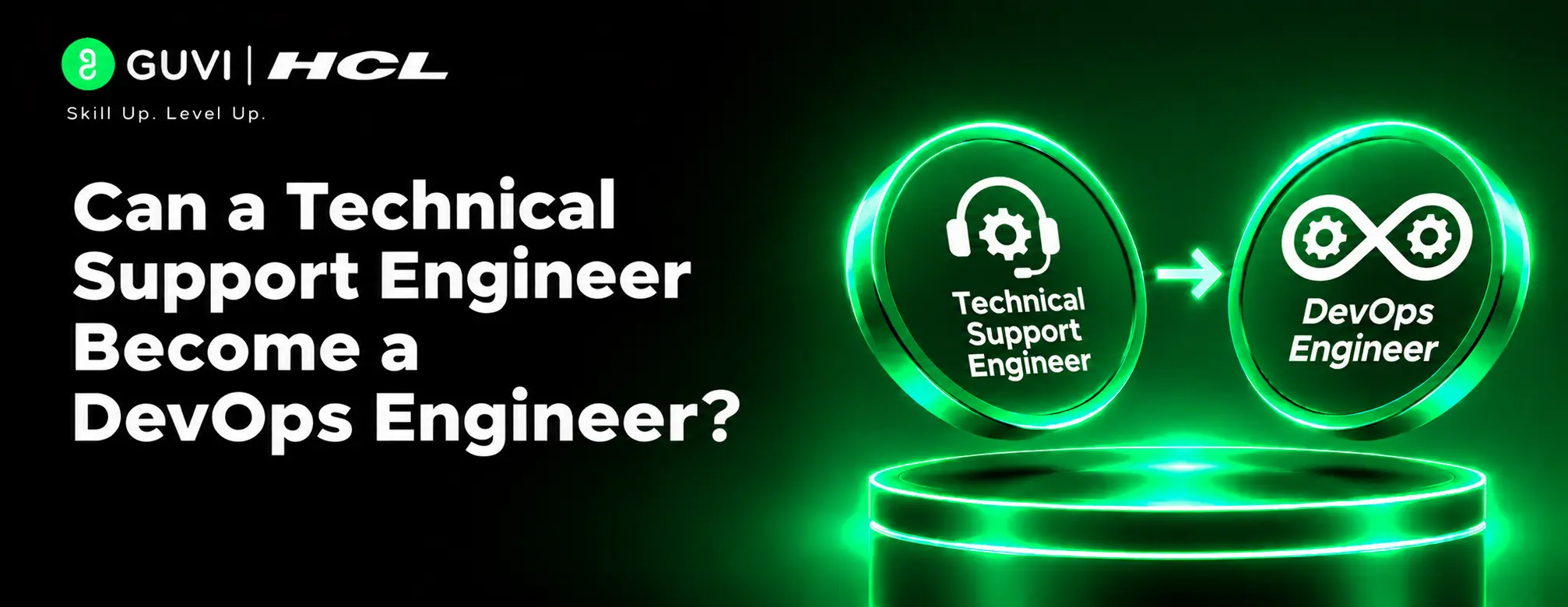
Can a Technical Support Engineer Become a DevOps Engineer?
How to Move from Application Support to DevOps Engineering
How to Compare DevOps Courses Based on Projects, Mentorship & Career Support
Is a Mentor-Led DevOps Program Worth It for Working Professionals in India?

Get In Touch For Details! Request More Information
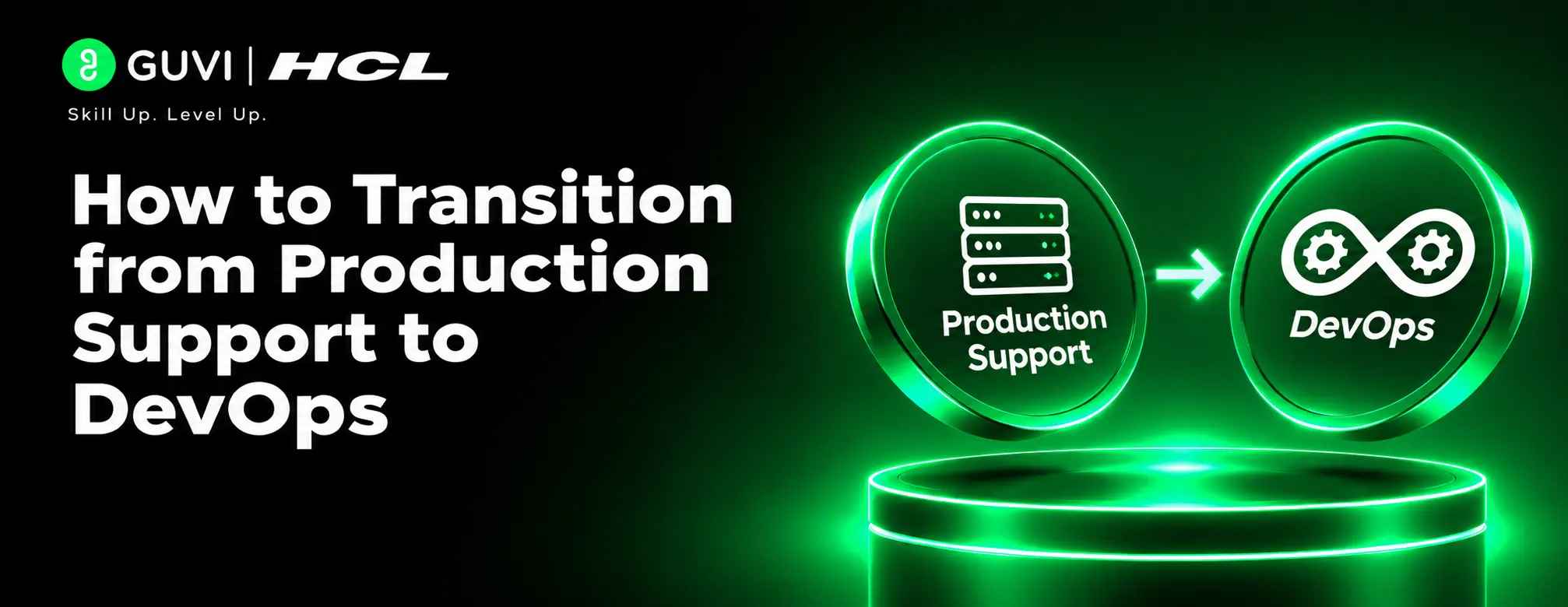
How to Transition from Production Support to DevOps
Nov 10, 2026 3 Min Read 59 Views
(Last Updated)
Production support engineers understand application monitoring, incident management, and troubleshooting. This experience provides a useful foundation for moving into DevOps.
The transition involves learning automation, cloud infrastructure, and deployment tools. The goal is to move from resolving recurring issues to preventing them through better engineering practices.
Table of contents
- TL;DR
- Quick Answer
- Understand How Production Support Connects to DevOps
- Identify Your Transferable Skills
- Understand the Shift to DevOps
- Develop the Essential Technical Skills
- Strengthen Linux and Networking Knowledge
- Learn Scripting and Version Control
- Learn Cloud and DevOps Tools
- Explore a Cloud Platform
- Understand CI/CD and Containers
- Apply Automation to Infrastructure and Support Tasks
- Learn Infrastructure as Code
- Automate Repetitive Support Activities
- Build Practical DevOps Projects
- Create a CI/CD Deployment Pipeline
- Add Monitoring to Your Project
- Gain Experience in Your Current Organisation
- Volunteer for Automation and Deployment Tasks
- Collaborate with DevOps Teams
- Prepare for DevOps Job Applications
- Update Your Resume with Relevant Experience
- 2 . Apply for Suitable Transition Roles
- Conclusion
- Frequently Asked Questions
- Can a production support engineer become a DevOps engineer?
- Which skills should I learn first?
- Is coding required for DevOps?
- How long does the transition take?
- Which projects should I build?
- Can I move into DevOps within my current company?
- Which roles can I apply for?
TL;DR
- Build on your application troubleshooting and monitoring experience.
- Learn Linux, Git, Python or Bash, and cloud fundamentals.
- Practice CI/CD, Docker, and Terraform.
- Automate repetitive support tasks.
- Build practical projects and seek DevOps opportunities.
Quick Answer
| Learn Linux, scripting, Git, cloud platforms, and CI/CD. Use your support experience to identify tasks that can be automated. Build projects involving application deployment, monitoring, and infrastructure management. You can also gain practical experience by collaborating with your organisation’s DevOps team. |
Understand How Production Support Connects to DevOps
1. Identify Your Transferable Skills
Production support involves monitoring applications, analysing logs, investigating failures, and resolving incidents. These responsibilities develop troubleshooting and system management skills that are useful in DevOps.
For example, investigating a failed application helps you understand system dependencies and performance issues. This knowledge is valuable when managing deployments and maintaining reliable environments.
2. Understand the Shift to DevOps
Production support focuses on maintaining application availability and resolving issues. DevOps extends this work to automated deployments, infrastructure management, and continuous monitoring.
Instead of repeatedly fixing the same problems, DevOps engineers build automated processes to prevent them. This requires a stronger understanding of scripting, deployment workflows, and infrastructure tools.
Recurring production issues can reveal opportunities for automation. A frequently failing service, for example, can be monitored through automated health checks and alerts instead of relying entirely on manual checks.
Develop the Essential Technical Skills
1. Strengthen Linux and Networking Knowledge
Learn Linux commands, file permissions, process management, services, and log analysis. These skills help you manage servers and investigate application issues.
Revise DNS, IP addresses, ports, HTTP, SSH, and firewall concepts. Understanding these areas makes it easier to troubleshoot communication between applications and infrastructure.
2. Learn Scripting and Version Control
Learn Python or Bash to automate tasks such as health checks, log analysis, and service monitoring. Start with small scripts that solve problems you have encountered at work.
Use Git and GitHub to manage scripts and configuration files. Practise creating repositories, committing changes, and working with branches.
Learn Cloud and DevOps Tools
1. Explore a Cloud Platform
Choose AWS, Microsoft Azure, or Google Cloud. Learn virtual machines, storage, networking, access management, and monitoring.
Focus on creating and managing basic cloud resources. Understanding how applications run in cloud environments will help you move beyond traditional support responsibilities.
2. Understand CI/CD and Containers
Learn how CI/CD pipelines automate application building, testing, and deployment. Practice creating a basic pipeline using Jenkins or GitHub Actions.
Then learn Docker to package applications into containers. Explore Kubernetes after understanding container fundamentals and how containerised applications are deployed.
Apply Automation to Infrastructure and Support Tasks
1. Learn Infrastructure as Code
Terraform allows you to provision and manage infrastructure through configuration files. Start by creating virtual machines, networks, and subnets in a test environment.
Practise using variables and reusable modules to organise your configurations. Store your files in GitHub to track changes.
2. Automate Repetitive Support Activities
Identify manual tasks such as checking disk usage, reviewing logs, and monitoring application availability. Use Python or Bash to automate one of these activities.
For example, create a script that checks service health, records results, and alerts you when a service becomes unavailable. Document how it works and the problem it solves.

Build Practical DevOps Projects
1. Create a CI/CD Deployment Pipeline
Automate basic testing, package the application with Docker, and deploy it to a test environment.
Document the pipeline stages and deployment process. This project demonstrates your understanding of automated software delivery.
2. Add Monitoring to Your Project
Monitor application availability and identify failures after deployment. Configure basic alerts for service interruptions.
Include the monitoring setup in your project documentation. This shows how you can use your support experience to improve application reliability.
Ready to move beyond traditional IT roles? HCL GUVI’s AI Cloud Computing & DevOps Programme helps you develop practical cloud and DevOps skills through expert-led learning, real-world projects and career preparation.
Gain Experience in Your Current Organisation
1. Volunteer for Automation and Deployment Tasks
Look for opportunities to automate operational activities or assist with deployment testing. Start with small tasks that fit your current responsibilities.
Discuss these opportunities with your manager. Practical contributions can help you gain relevant experience before changing roles.
2. Collaborate with DevOps Teams
Work with development, infrastructure, and DevOps engineers to understand their deployment processes. Ask to contribute to monitoring improvements, release activities, or infrastructure projects.
This exposure helps you understand how teams manage applications throughout the delivery process.
Prepare for DevOps Job Applications
1. Update Your Resume with Relevant Experience
Add your projects using GitHub links to demonstrate your work. Explain the problem each project solves instead of simply listing technologies.
2 . Apply for Suitable Transition Roles
Consider roles such as:
- Junior DevOps Engineer
- Cloud Operations Engineer
- Build and Release Engineer
- Site Reliability Engineering Associate
Review job descriptions and tailor appropriate resumes. Prepare to explain your support experience, automation scripts, and deployment projects during interviews.
Conclusion
Production support gives you a practical foundation for DevOps through experience with applications, incidents, and troubleshooting. Your next step is to develop automation, cloud, and deployment skills.
Build projects that solve real operational problems and look for opportunities to work with DevOps teams. This will help you demonstrate your readiness for a DevOps engineering role.
Frequently Asked Questions
1. Can a production support engineer become a DevOps engineer?
Yes. Experience in troubleshooting, monitoring, and incident management provides a useful foundation. Learning automation, cloud platforms, and CI/CD can help you make the transition.
2. Which skills should I learn first?
Start with Linux, networking, Git, and Python or Bash. Then learn cloud platforms, CI/CD, Docker, and Terraform.
3. Is coding required for DevOps?
Advanced programming is not always necessary, but scripting is important. Python and Bash help automate operational tasks and manage repetitive processes.
4. How long does the transition take?
It depends on your existing knowledge and practice time. Focus on developing practical skills and completing projects rather than following a fixed timeline.
5. Which projects should I build?
Start with a health-check script, automated log monitoring, or disk usage monitoring. Then build a CI/CD pipeline that deploys a containerised application.
6. Can I move into DevOps within my current company?
Yes. Ask to contribute to automation, deployment testing, monitoring, or infrastructure projects. Working with the DevOps team can provide relevant experience.
7. Which roles can I apply for?
Consider Junior DevOps Engineer, Cloud Operations Engineer, Build and Release Engineer, and Site Reliability Engineering Associate roles.
Success Stories

About the Author
HCL GUVI
This article was selected and published as part of the HCL GUVI AI Blogathon 2026, an initiative designed to encourage students, AI enthusiasts, and aspiring tech writers to simplify complex AI concepts through impactful technical content. The contest recognized high-quality, original, and insightful AI-focused blogs, with selected authors receiving publication opportunities on the HCL GUVI blog platform along with official author credits and recognition.
View all posts by HCL GUVI
Connect with me @

























Did you enjoy this article?