


Artificial Intelligence and Machine Learning Articles
Finance Manager to Data Analytics: Career Growth, Salary and Seniority
How to Evaluate LLM Outputs in Production Deployments
AI/ML Skills Gap 2026: Why Companies Can't Find Job-Ready Talent
20 AI/ML Interview Questions Recruiters Can Use Without a Tech Background - Best Guide


Get In Touch For Details! Request More Information
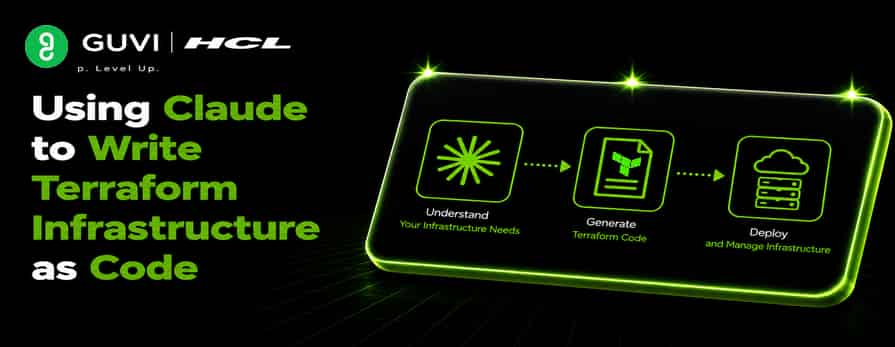
Using Claude to Write Terraform Infrastructure as Code
Aug 21, 2026 3 Min Read 368 Views
(Last Updated)
Managing cloud infrastructure manually can be slow, error-prone, and difficult to scale. Terraform solves this by enabling Infrastructure as Code (IaC), allowing teams to provision and manage cloud resources using declarative configuration files. Claude helps engineers write Terraform configurations, automate repetitive coding tasks, review infrastructure definitions, and troubleshoot deployment issues. This guide explains how Claude to write Terraform Infrastructure and automation, simplifies cloud provisioning, and accelerates DevOps workflows.
Table of contents
- TL;DR Summary
- Direct Answer
- Why Infrastructure as Code Matters
- How Claude Improves Terraform Development
- Generates Terraform Code
- Simplifies Terraform Automation
- Reviews Infrastructure Configurations
- Essential Terraform Components
- Providers
- Resources
- Variables and Outputs
- Modules
- Using Claude for Cloud Provisioning
- Infrastructure Generation
- Configuration Review
- Deployment Troubleshooting
- Documentation
- Benefits of Terraform Automation
- Faster Infrastructure Development
- Improved Consistency
- Better Collaboration
- Easier Infrastructure Management
- Which DevOps Professionals Should Use Claude?
- DevOps Engineers
- Cloud Engineers
- Platform Engineers
- Site Reliability Engineers (SREs)
- Cloud Architects
- Tasks You Can Automate with Claude
- Infrastructure as Code
- Cloud Provisioning
- DevOps Documentation
- What AI Should Not Replace
- Best Practices
- Conclusion
- FAQs
- How does Claude help write Terraform Infrastructure as Code?
- Can Claude automate Terraform configuration creation?
- What is Infrastructure as Code?
- Can Claude review existing Terraform code?
- Is AI useful for cloud provisioning?
- Can beginners use Claude to learn Terraform?
- Why is Terraform automation important?
TL;DR Summary
- Claude generates Terraform configurations quickly.
- AI simplifies Infrastructure as Code development.
- Terraform automation reduces repetitive work.
- Cloud provisioning becomes faster and more consistent.
- Human review remains essential before deployment.
Data Point: According to the HashiCorp State of Cloud Strategy Survey, organizations continue to increase Infrastructure as Code adoption to improve automation, standardization, and scalability across cloud environments.
Source: https://www.hashicorp.com/en/blog/hashicorp-state-of-cloud-strategy-survey-2024-cloud-maturity
Direct Answer
| Claude helps engineers create Infrastructure as Code by generating Terraform configurations, reviewing infrastructure definitions, supporting Terraform automation, and simplifying cloud provisioning. By producing reusable Terraform modules, identifying configuration issues, and recommending infrastructure best practices, Claude enables DevOps teams to automate cloud deployments while maintaining secure, scalable, and well-documented infrastructure through human validation. |
Why Infrastructure as Code Matters
Infrastructure as Code enables organizations to provision, configure, and manage cloud infrastructure using version-controlled configuration files instead of manual processes.
Benefits include:
- Faster cloud deployments
- Consistent infrastructure
- Reduced configuration errors
- Improved scalability
- Easier collaboration
- Better disaster recovery
How Claude Improves Terraform Development
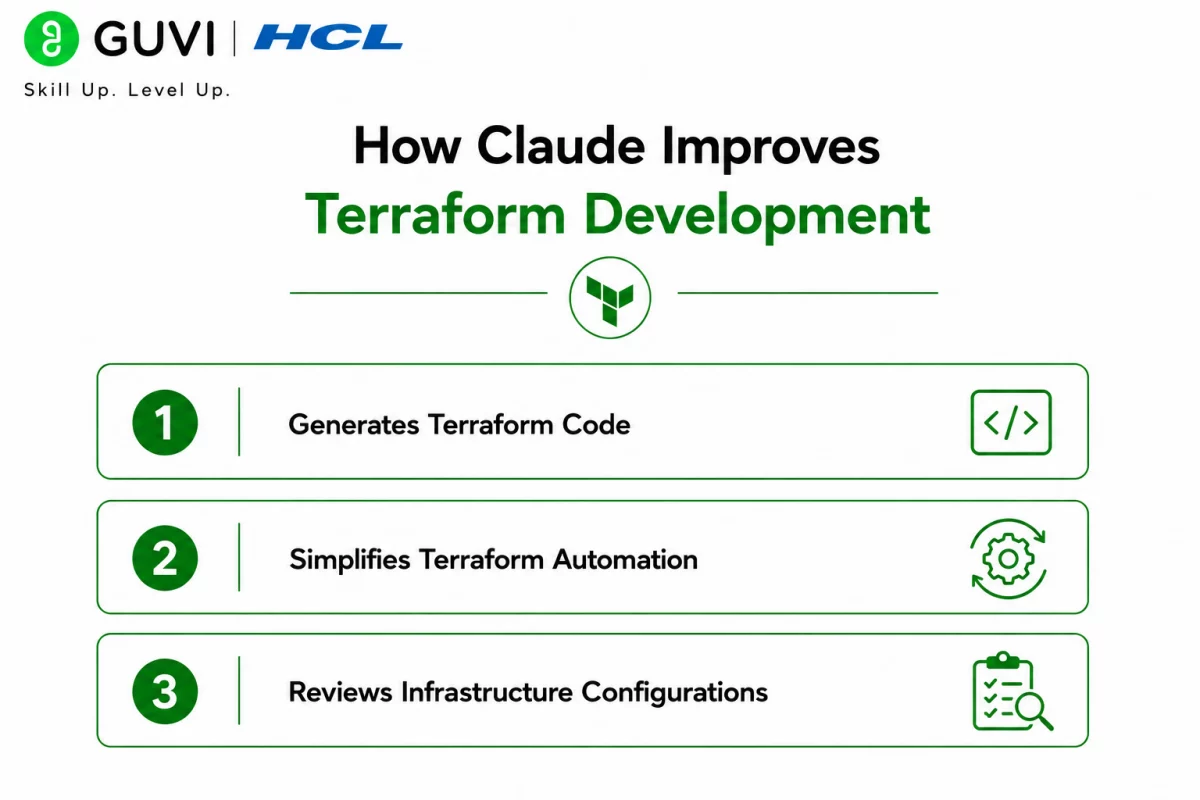
Claude assists DevOps engineers by generating, reviewing, and explaining Terraform configurations.
Generates Terraform Code
Claude creates Terraform resources, variables, outputs, modules, providers, and backend configurations using Infrastructure as Code best practices.
Simplifies Terraform Automation
Claude helps automate repetitive infrastructure tasks by generating reusable templates and modular Terraform code.
Reviews Infrastructure Configurations
Claude analyzes Terraform files, identifies syntax or configuration issues, and recommends improvements for maintainability and security.
Essential Terraform Components
Understanding Terraform’s core building blocks makes Infrastructure as Code easier to manage.
Providers
Providers connect Terraform with cloud platforms such as AWS, Azure, Google Cloud, and other supported services.
Resources
Resources define cloud infrastructure including virtual machines, storage, networking, databases, and security groups.
Variables and Outputs
Variables improve configuration flexibility, while outputs expose useful deployment information after infrastructure is provisioned.
Modules
Modules promote code reuse by organizing infrastructure into maintainable, reusable components.
Using Claude for Cloud Provisioning
Claude supports multiple Infrastructure as Code workflows beyond writing Terraform files.
Infrastructure Generation
Generate complete Terraform configurations for cloud environments based on deployment requirements.
Configuration Review
Review existing Terraform code for readability, consistency, and Infrastructure as Code best practices.
Deployment Troubleshooting
Analyze Terraform errors, explain failed deployments, and recommend practical solutions.
Documentation
Generate infrastructure documentation, module explanations, deployment guides, and operational runbooks.
Benefits of Terraform Automation
AI-powered Terraform automation improves DevOps productivity while reducing repetitive coding tasks.
Faster Infrastructure Development
Generate reusable Terraform configurations in minutes instead of writing infrastructure manually.
Improved Consistency
Maintain standardized Infrastructure as Code across multiple environments and cloud platforms.
Better Collaboration
Enable developers, DevOps engineers, and cloud architects to review Terraform configurations together.
Easier Infrastructure Management
Maintain organized, scalable, and reusable cloud infrastructure throughout the application lifecycle.
Which DevOps Professionals Should Use Claude?
Claude is valuable for professionals managing cloud infrastructure, Infrastructure as Code, and automated deployment pipelines. It helps reduce repetitive coding while improving infrastructure consistency and deployment quality.
DevOps Engineers
DevOps engineers can generate Terraform configurations, automate cloud deployments, review infrastructure code, and maintain reusable Infrastructure as Code templates.
Cloud Engineers
Cloud professionals can provision cloud resources, optimize infrastructure configurations, and standardize multi-cloud deployments using AI-assisted Terraform workflows.
Platform Engineers
Platform teams can create reusable Terraform modules, maintain shared infrastructure templates, and enforce consistent cloud provisioning practices.
Site Reliability Engineers (SREs)
SREs can troubleshoot infrastructure deployments, review Terraform configurations, automate operational tasks, and improve infrastructure reliability.
Cloud Architects
Cloud architects can design scalable infrastructure, review Terraform modules, standardize cloud environments, and document deployment architectures.

Professionals interested in cloud infrastructure, Infrastructure as Code, CI/CD, and automation can strengthen their expertise through HCL GUVI’s DevOps Course.
Terraform supports hundreds of providers, allowing organizations to provision infrastructure across major cloud platforms, SaaS services, networking solutions, and Kubernetes environments using a single Infrastructure as Code workflow.
Tasks You Can Automate with Claude
Claude simplifies many repetitive Terraform automation tasks involved in cloud infrastructure management.
Infrastructure as Code
- Terraform configuration generation
- Module creation
- Variable definition
- Output generation
- Provider configuration
Cloud Provisioning
- Infrastructure deployment templates
- Resource configuration
- Multi-environment setup
- Infrastructure validation
- Deployment troubleshooting
DevOps Documentation
- Terraform documentation
- Infrastructure runbooks
- Module documentation
- Deployment guides
- Architecture documentation
The HCL GUVI’s Artificial Intelligence eBook introduces the fundamentals of generative AI, prompt engineering, machine learning, and intelligent automation. It helps learners understand how AI supports Infrastructure as Code, cloud automation, DevOps workflows, and responsible AI adoption in modern software engineering.
What AI Should Not Replace
AI should not replace:
- Infrastructure architecture decisions
- Security reviews
- Production deployment approvals
- Disaster recovery planning
- Compliance validation
- Cost optimization decisions
- Performance testing
- Engineering judgment
Human oversight ensures cloud infrastructure remains secure, scalable, compliant, and aligned with business requirements.
Warning: AI-generated Terraform configurations should always be reviewed and tested before deployment. Verify provider settings, IAM permissions, networking rules, state management, security groups, and environment-specific variables. Claude can accelerate Infrastructure as Code development but should not replace proper testing, peer reviews, security assessments, or production change management.
Best Practices
- Validate Terraform configurations before deployment.
- Store Terraform code in version control.
- Use reusable modules for common infrastructure.
- Protect sensitive values with secure secret management.
- Review AI-generated infrastructure for security and compliance.
- Test infrastructure changes in non-production environments first.
- Run terraform plan before every production deployment.
Conclusion
Claude simplifies Infrastructure as Code by generating Terraform configurations, improving Terraform automation, supporting efficient cloud provisioning, and enhancing DevOps workflows. By accelerating infrastructure development, reviewing configuration files, and promoting Terraform best practices, Claude helps engineering teams deploy scalable cloud environments more efficiently while ensuring critical architecture, security, and deployment decisions remain under human oversight.
FAQs
1. How does Claude help write Terraform Infrastructure as Code?
Claude generates Terraform configuration files, modules, variables, outputs, and provider settings while following Infrastructure as Code best practices for cloud deployments.
2. Can Claude automate Terraform configuration creation?
Yes. Claude can generate reusable Terraform templates, infrastructure modules, deployment configurations, and resource definitions based on project requirements.
3. What is Infrastructure as Code?
Infrastructure as Code (IaC) is the practice of provisioning and managing infrastructure through code instead of manual configuration, improving consistency, automation, and scalability.
4. Can Claude review existing Terraform code?
Yes. Claude can review Terraform files, identify configuration issues, recommend best practices, improve readability, and suggest optimizations for infrastructure code.
5. Is AI useful for cloud provisioning?
Yes. AI helps accelerate cloud provisioning by generating infrastructure templates, explaining Terraform configurations, and assisting with troubleshooting while requiring human validation before deployment.
6. Can beginners use Claude to learn Terraform?
Absolutely. Claude can explain Terraform concepts, generate beginner-friendly examples, describe Infrastructure as Code principles, and guide users through cloud provisioning workflows.
7. Why is Terraform automation important?
Terraform automation enables teams to provision cloud infrastructure consistently, reduce manual errors, improve deployment speed, simplify infrastructure management, and support scalable DevOps practices across multiple cloud environments.
Success Stories

About the Author
HCL GUVI
This article was selected and published as part of the HCL GUVI AI Blogathon 2026, an initiative designed to encourage students, AI enthusiasts, and aspiring tech writers to simplify complex AI concepts through impactful technical content. The contest recognized high-quality, original, and insightful AI-focused blogs, with selected authors receiving publication opportunities on the HCL GUVI blog platform along with official author credits and recognition.
View all posts by HCL GUVI
Connect with me @













Did you enjoy this article?