


AWS Kubernetes Articles
Istio Service Mesh Tutorial for Beginners
Crossplane Tutorial: A Practical Guide for Learners


Get In Touch For Details! Request More Information
How to Get AWS Certified: Study Plan, Tips & Free Resources
Sep 13, 2026 4 Min Read 618 Views
(Last Updated)
Cloud computing continues to reshape the technology landscape, and AWS remains one of the most widely used cloud platforms. As cloud adoption grows, AWS certifications help professionals validate their skills and enhance career opportunities. HCL GUVI’s Cloud Computing Course offers hands-on cloud projects, guided learning paths, and industry-focused training designed to build real-world expertise.
Table of contents
- TL;DR Summary
- What Is AWS Certification?
- Why Should You Get AWS Certified?
- Industry Recognition
- Structured Learning Path
- Improved Cloud Knowledge
- Better Career Opportunities
- Increased Confidence
- AWS Certification Path Explained
- Foundational Level
- Associate Level
- Professional Level
- Specialty Level
- AWS Certification Study Plan
- Week 1: Learn Cloud Computing Fundamentals
- Week 2: Learn Core AWS Services
- Week 3: Learn Storage and Database Services
- Week 4: Focus on Networking and Security
- Week 5: Hands-On Practice
- Week 6: Practice Questions
- Week 7: Review Weak Areas
- Week 8: Final Revision and Exam Readiness
- Best Free Resources for AWS Certification
- AWS Skill Builder
- AWS Free Tier
- AWS Documentation
- AWS Cloud Quest
- AWS Builder Center
- Common AWS Certification Mistakes
- Memorizing Instead of Understanding
- Ignoring Hands-On Practice
- Skipping Practice Exams
- Studying Too Many Services at Once
- Not Reviewing Weak Areas
- Tips to Pass Your AWS Certification Exam
- Follow the Official Exam Guide
- Focus on Core Services
- Study Consistently
- Use Official Resources
- Take Mock Tests
- Conclusion
- FAQs
- Which AWS certification should beginners start with?
- How long does it take to prepare for AWS certification?
- Is AWS certification difficult?
- Can I pass the AWS certification without experience?
- Are AWS certifications worth it?
- Which AWS certification is most popular?
- What free resources can help me prepare for AWS certification?
TL;DR Summary
- AWS certifications validate cloud computing skills and help professionals demonstrate industry-recognized expertise.
- Beginners should start with AWS Certified Cloud Practitioner before progressing to Associate-level certifications.
- A structured study plan combined with hands-on practice significantly improves exam readiness.
- AWS offers several free learning resources, including AWS Skill Builder, practice question sets, and cloud labs.
- Consistent practice, revision, and mock exams can increase your chances of passing AWS certification exams.
What Is AWS Certification?
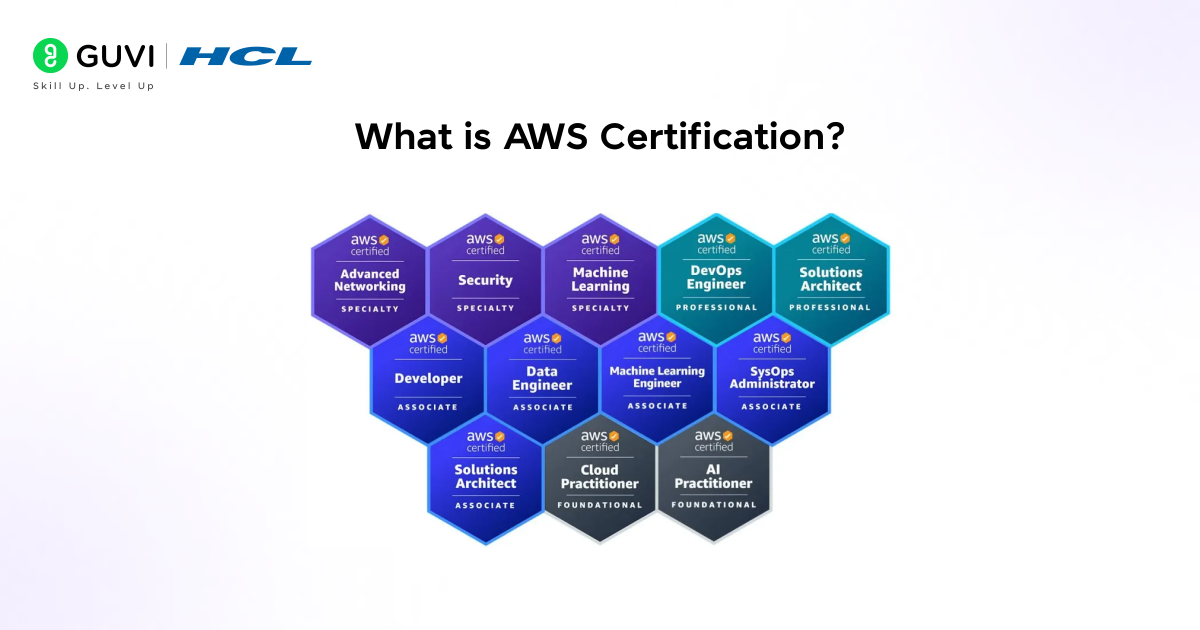
AWS Certification is a credential program designed to validate an individual’s knowledge and skills in cloud computing using Amazon Web Services. AWS certifications are organized into different levels based on experience and technical expertise, helping professionals demonstrate their cloud capabilities to employers. AWS currently offers certifications across Foundational, Associate, Professional, and Specialty levels.
These certifications are widely recognized in the technology industry and can help learners establish a structured cloud learning path while improving their understanding of AWS services and best practices.
Example
A beginner with little cloud experience may start with the AWS Certified Cloud Practitioner certification. After gaining foundational knowledge and hands-on experience, they can move to certifications such as AWS Certified Solutions Architect – Associate or AWS Certified CloudOps Engineer – Associate based on their career goals.
Why Should You Get AWS Certified?
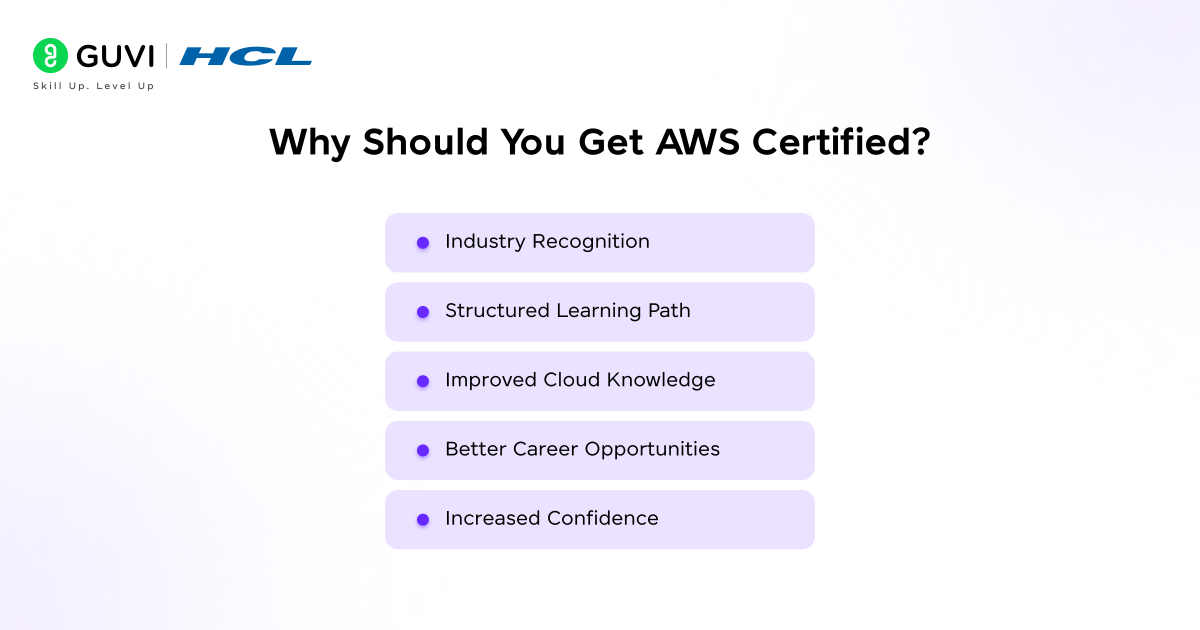
Industry Recognition
AWS certifications are recognized globally and demonstrate validated cloud expertise to employers and recruiters.
Structured Learning Path
Certification preparation provides a clear roadmap for learning cloud concepts, AWS services, security practices, and architecture principles.
Improved Cloud Knowledge
Preparing for AWS exams requires understanding how various AWS services work together in real-world scenarios.
Better Career Opportunities
Cloud computing continues to be a high-demand field, and certifications can help candidates stand out during job applications and interviews.
Increased Confidence
Certification preparation helps learners gain confidence when discussing cloud technologies, deployment strategies, and architecture decisions.
AWS Certification Path Explained
AWS certifications are divided into multiple levels to match different experience levels and career objectives.
Foundational Level
The Foundational level is designed for beginners who want to build a broad understanding of cloud computing and AWS services.
Popular Certification:
AWS Certified Cloud Practitioner
Associate Level
Associate certifications focus on specific technical roles and require deeper knowledge of AWS services and cloud architecture.
Popular Certifications:
- AWS Certified Solutions Architect – Associate
- AWS Certified Developer – Associate
- AWS Certified CloudOps Engineer – Associate
Professional Level
Professional certifications validate advanced cloud expertise and are intended for experienced cloud professionals.
Popular Certifications:
- AWS Certified Solutions Architect – Professional
- AWS Certified DevOps Engineer – Professional
Specialty Level
Specialty certifications focus on advanced domains such as security, networking, and other specialized AWS areas.
AWS Certification Study Plan
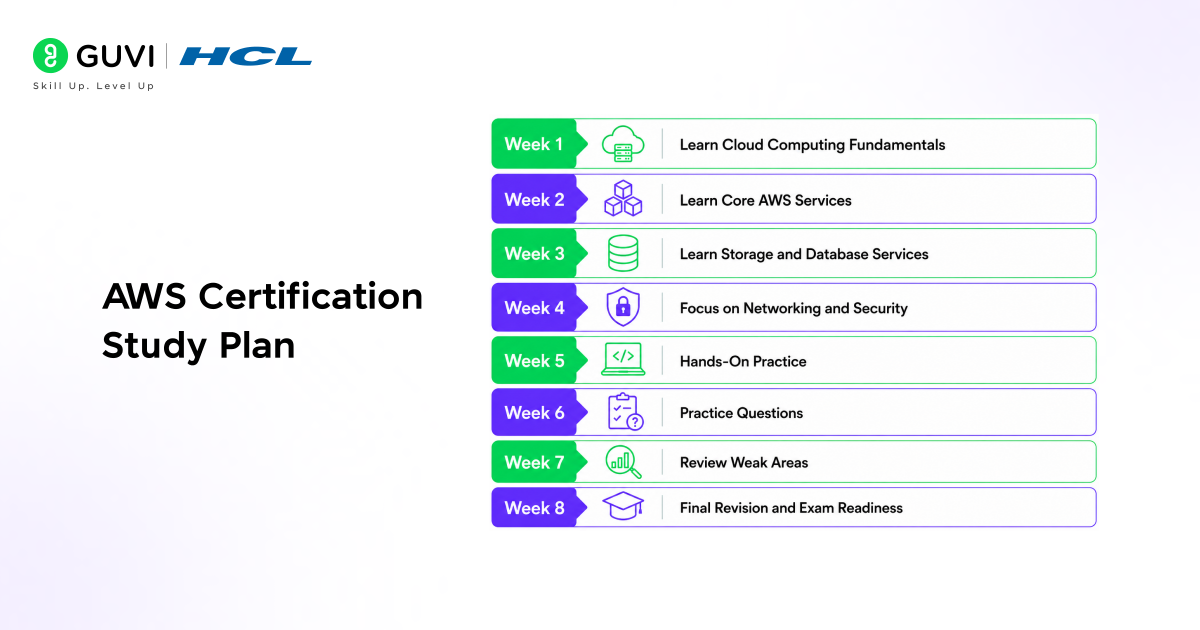
A structured study plan helps learners cover important topics without feeling overwhelmed.
Week 1: Learn Cloud Computing Fundamentals
Begin by understanding:
- Cloud computing concepts
- AWS global infrastructure
- Shared responsibility model
- Cloud pricing basics
Focus on building a strong conceptual foundation before diving into AWS services.
Week 2: Learn Core AWS Services
Become familiar with the most commonly tested AWS services:
- Amazon EC2
- Amazon S3
- AWS IAM
- Amazon VPC
Understanding these services is essential because they appear frequently across multiple certification exams.
Week 3: Learn Storage and Database Services
Study the major AWS storage and database offerings:
- Amazon S3
- Amazon EBS
- Amazon RDS
- Amazon DynamoDB
Pay special attention to when and why each service should be used.
Week 4: Focus on Networking and Security
Networking and security concepts play a significant role in AWS certifications.
Key topics include:
- VPCs
- Security Groups
- Network ACLs
- IAM Policies
- Route 53
Week 5: Hands-On Practice
Theory alone is not enough. Use AWS Free Tier to:
- Launch EC2 instances
- Create S3 buckets
- Configure IAM users
- Build simple cloud projects
Hands-on experience helps reinforce concepts and improves retention.
Week 6: Practice Questions
Begin working through exam-style questions.
AWS Skill Builder provides official practice question sets that help learners understand the format and difficulty level of certification exams.
Week 7: Review Weak Areas
Identify topics where your performance is weaker.
Revisit:
- Networking
- Security
- Storage
- Monitoring
- Architectural design concepts
Strengthening weak areas often produces the biggest score improvements.
Week 8: Final Revision and Exam Readiness
During the final week:
- Review notes
- Revisit difficult topics
- Complete practice exams
- Focus on exam strategies
Avoid learning entirely new topics at this stage and concentrate on consolidating existing knowledge.

Looking to strengthen your cloud deployment and automation skills? Download HCL GUVI’s DevOps eBook to explore CI/CD pipelines, infrastructure automation, cloud deployment strategies, and DevOps best practices used by modern engineering teams.
Best Free Resources for AWS Certification
1. AWS Skill Builder
AWS Skill Builder is AWS’s official learning platform and provides free exam preparation courses, practice question sets, and guided learning paths.
2. AWS Free Tier
AWS Free Tier allows learners to gain practical experience with AWS services while staying within free usage limits.
Hands-on practice remains one of the most effective ways to prepare for certification exams.
3. AWS Documentation
AWS documentation provides detailed explanations of services, configurations, use cases, and best practices.
4. AWS Cloud Quest
AWS Cloud Quest offers a gamified learning experience that helps learners develop practical AWS skills through interactive challenges.
5. AWS Builder Center
AWS Builder Center provides learning content, community resources, and hands-on guidance for cloud learners and builders.
After you earn an AWS Certification, AWS provides a 50% discount voucher that can be applied toward the cost of another AWS Certification exam. This benefit makes it more affordable to pursue multiple certifications, helping learners progress through certification paths while reducing overall exam expenses.
Common AWS Certification Mistakes
Memorizing Instead of Understanding
Many learners focus on memorizing facts rather than understanding why AWS services are used in particular situations.
Ignoring Hands-On Practice
Practical experience helps learners answer scenario-based questions more effectively.
Skipping Practice Exams
Practice exams help identify weak areas and familiarize candidates with exam formats.
Studying Too Many Services at Once
Trying to learn every AWS service simultaneously often leads to confusion and information overload.
Not Reviewing Weak Areas
Many candidates spend too much time reviewing strengths instead of improving weaker topics.
To prevent these mistakes and gain structured cloud computing experience, HCL GUVI’s Cloud Computing Course offers guided AWS projects, hands-on labs, deployment exercises, and practical cloud training aligned with industry needs.
Tips to Pass Your AWS Certification Exam
Follow the Official Exam Guide
Always review the official AWS exam guide before starting preparation.
Focus on Core Services
Master commonly tests services before exploring advanced topics.
Study Consistently
Daily study sessions are generally more effective than occasional marathon sessions.
Use Official Resources
AWS Skill Builder, documentation, and official practice questions should form the foundation of your preparation.
Take Mock Tests
Mock exams help build confidence and improve time management skills before exam day.
Conclusion
AWS certification can be an excellent way to validate cloud computing skills and build credibility in the technology industry. By following a structured study plan, gaining hands-on experience through AWS Free Tier, and using official learning resources, candidates can significantly improve their chances of success. Whether you are preparing for Cloud Practitioner or planning a long-term cloud career, consistent learning and practical experience remain the keys to becoming AWS certified.
FAQs
1. Which AWS certification should beginners start with?
Most beginners start with AWS Certified Cloud Practitioner because it covers foundational cloud concepts and AWS services.
2. How long does it take to prepare for AWS certification?
Preparation time varies, but many beginners spend between 6 and 8 weeks studying for entry-level certifications.
3. Is AWS certification difficult?
The difficulty depends on your experience level and chosen certification. Entry-level certifications are generally more accessible than Professional-level exams.
4. Can I pass the AWS certification without experience?
Yes. Many beginners successfully pass foundational certifications by following a structured study plan and using hands-on labs.
5. Are AWS certifications worth it?
AWS certifications can help validate skills, strengthen resumes, and improve career opportunities in cloud computing.
6. Which AWS certification is most popular?
AWS Certified Solutions Architect – Associate remains one of the most widely pursued AWS certifications.
7. What free resources can help me prepare for AWS certification?
AWS Skill Builder, AWS Free Tier, AWS Documentation, AWS Cloud Quest, and AWS Builder Center are among the most useful free resources available.
Success Stories

About the Author
Vishalini Devarajan
An Aerospace Engineer turned content writer, I focus on making complex concepts easy to understand through well-structured, reader-friendly blogs. Whether it’s a technical topic or a non-technical one, I love creating content that is clear, engaging, and impactful.
View all posts by Vishalini Devarajan
Connect with me @









Did you enjoy this article?