


Data Structure Articles
What is an Algorithm? A Simple Guide for Beginners
Difference between Algorithm and Program: What Sets Them Apart
What Are the Characteristics of an Algorithm? Definition, Features, and Examples


Get In Touch For Details! Request More Information

What makes one programmer solve complex problems faster while another struggles with the same challenge? The difference often starts with the language chosen to learn Data Structures and Algorithms. Each language shapes how a coder thinks and governs data. C builds precision through memory control, Python focuses on clarity, and Java balances readability with performance. Selecting the right language creates a smoother path to mastering algorithmic thinking.
Read the full blog to find which language fits your DSA journey best.
- Over 11.6 million developers worldwide use C/C++, highlighting its strong presence in performance-critical and system-level domains.
- Around 72% of working developers use Python professionally, proving its role as a core language for data structure and algorithm design.
- Nearly 42% of recruiters in 2025 prefer candidates with Python expertise. It highlights how strongly it dominates the programming landscape.
Table of contents
- What is Data Structures and Algorithms (DSA)?
- C++
- Core Features of C++ in DSA
- Advantages of Using C++ for DSA
- Top Applications of C++ in DSA
- Python
- Core Features of Python in DSA
- Advantages of Using Python for DSA
- Top Applications of Python in DSA
- Java
- Core Features of Java in DSA
- Advantages of Using Java for DSA
- Top Applications of Java in DSA
- JavaScript
- Core Features of JavaScript in DSA
- Advantages of Using JavaScript for DSA
- Top Applications of JavaScript in DSA
- C
- Core Features of C in DSA
- Advantages of Using C for DSA
- Top Applications of C in DSA
- Comparison Table: Best Programming Languages for DSA
- Conclusion
- FAQs
- Which programming language is easiest to start learning Data Structures and Algorithms?
- Why is C++ considered powerful for mastering DSA?
- Can JavaScript be used to learn and apply DSA concepts?
What is Data Structures and Algorithms (DSA)?
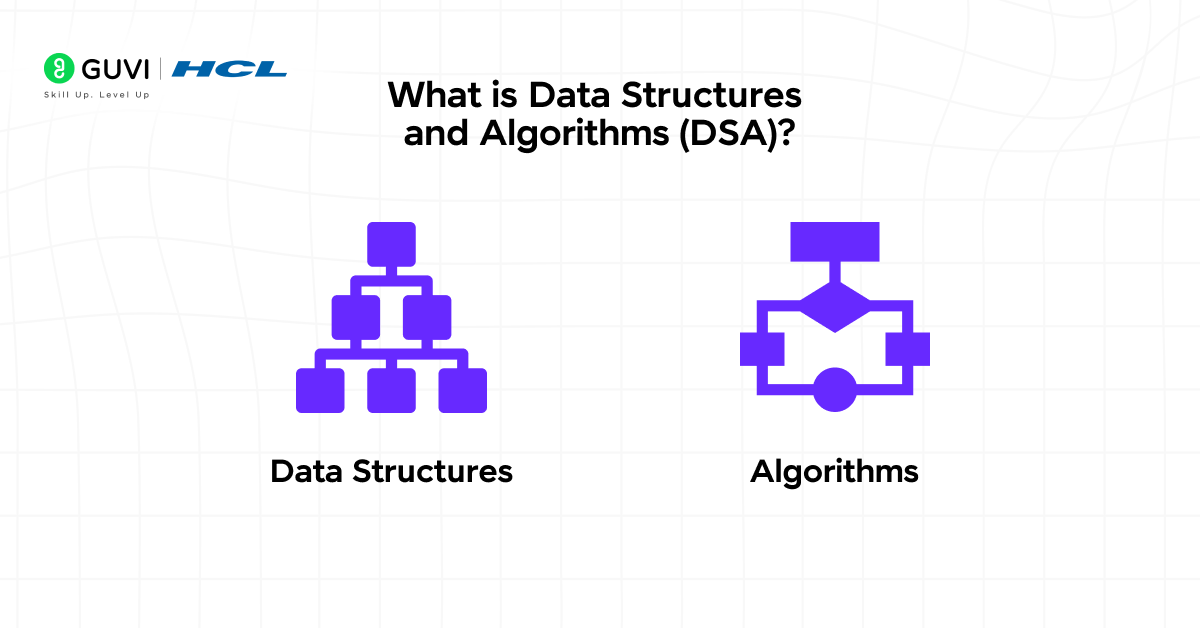
Data Structures and Algorithms (DSA) form the foundation of efficient programming and problem-solving. A data structure defines how information is organized and stored within a program. On the other hand, an algorithm outlines the sequence of steps used to process that information. Together, they determine how quickly and effectively a program can perform tasks. Understanding DSA builds the proficiency to design programs that are structured and performance-driven.
Let us now learn about the top 5 programming languages for mastering Data Structures and Algorithms.
1. C++
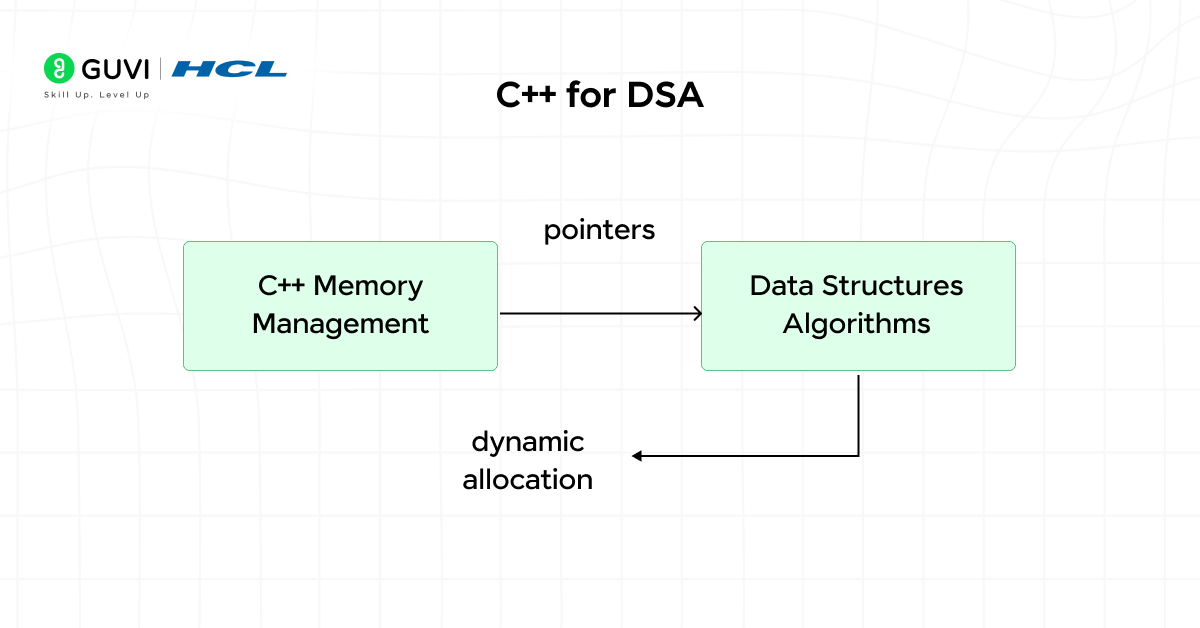
C++ holds a unique position among programming languages for mastering Data Structures and Algorithms. It connects conceptual understanding with practical execution through precise control over structured programming and strong performance.
Core Features of C++ in DSA
1. Balanced Abstraction and Control: C++ in DSA allows developers to manage memory manually while offering abstraction through classes and templates. This helps in writing algorithms that are both efficient and organized.
2. Reusable and Modular Code: Templates and classes in C++ encourage reusability. Programmers can create modular structures that simplify debugging and maintainability without affecting performance.
3. Compile-Time Efficiency: C++ compiles directly to machine code, which reduces overhead and speeds up execution. This characteristic makes it ideal for time-critical algorithmic tasks.
4. Extensive Community and Resources: The long-standing popularity of C++ has resulted in a vast collection of libraries, tutorials, and open-source projects. These resources make learning DSA through C++ easier and more accessible.
5. Seamless Transition to Advanced Programming: C++ helps learners transition smoothly into more complex fields like data engineering and machine learning due to its foundational relevance and system-level capability.
Advantages of Using C++ for DSA
- Object-Oriented Programming Support: Classes and objects in C++ allow logical grouping of data and functions. This structure helps in modeling complex systems and building reusable, modular code.
- Rich Standard Template Library (STL):
STL provides ready-to-use implementations of data structures such as vectors, queues, stacks, maps, and sets. It also includes efficient algorithms for searching, sorting, and manipulation. - Compatibility with System-Level Programming: C++ bridges the gap between hardware and software. Its compatibility with system resources allows programmers to write optimized algorithms for performance-critical applications.

Top Applications of C++ in DSA
1. Game Development: Game engines rely on C++ for handling physics calculations, pathfinding algorithms, and real-time rendering. Efficient DSA usage ensures smooth gameplay and optimized resource management.
2. Operating Systems and System Tools: C++ plays a vital role in building kernels, compilers, and resource schedulers. Algorithms written in C++ help process scheduling and system-level data handling.
3. Financial and Trading Systems: High-frequency trading platforms use C++ to process millions of transactions in real time. Its speed and data handling capacity make it ideal for algorithmic trading and predictive analytics.
4. Artificial Intelligence and Machine Learning Frameworks: Core components of AI frameworks use C++ for performance-sensitive computations. Algorithms developed in C++ help accelerate data processing and model training.
5. Embedded and IoT Systems: C++ supports direct hardware interaction, which makes it valuable in embedded programming. Efficient algorithms help control sensors and process input data precisely.
Limitations of Using C++ for DSA
- Manual memory management can lead to errors like memory leaks.
- The syntax is complex, which may confuse beginners.
Take the first step toward mastering Data Structures and Algorithms with the language that defines precision: C++! Learn how to structure logic efficiently, optimize performance, and build problem-solving confidence through our expert-guided learning path C++ tutorial.
2. Python
Python is one of the most learner-friendly languages for understanding DSA. It allows programmers to focus on problem-solving rather than language complexity. The language is widely used for algorithmic prototyping and learning-based environments due to its readability and simplicity.
Core Features of Python in DSA
1. Simplified Syntax and Readability: Python syntax is easy to understand and write. This helps learners concentrate on algorithmic thinking rather than handling complex syntax rules.
2. Rich Built-in Data Structures: Python provides built-in structures such as lists, tuples, sets, and dictionaries. These can be used directly without manual implementation, which allows faster development and testing of algorithms.
3. Extensive Standard Library: The Python Standard Library contains modules that support algorithms for searching, sorting, and mathematical computation. It also provides utilities for managing data efficiently.
4. Strong Community and Resources: Python has an active developer community that contributes open-source tools and problem-solving platforms. This helps learners gain guidance and access reliable support material.
5. Integration with Other Technologies: Python works smoothly with frameworks and external libraries used in data science and artificial intelligence. This helps in extending algorithmic applications into advanced domains.
Advantages of Using Python for DSA
- Rapid Prototyping: The language allows developers to write and test algorithms quickly. This accelerates experimentation with different approaches during problem-solving.
- Library Support for Advanced Algorithms: Libraries like NumPy, NetworkX, and SciPy simplify the process of implementing graph-based and numerical algorithms.
- Cross-Platform Compatibility: Python code runs across operating systems without modification. This helps in building algorithms that are portable and adaptable to different environments.
Top Applications of Python in DSA
1. Data Science and Machine Learning: Python serves as the foundation for machine learning models and data manipulation. Algorithms related to regression and clustering are implemented through libraries such as scikit-learn and TensorFlow.
2. Automation and Scripting: Python’s algorithmic efficiency is applied to automate repetitive tasks, data extraction, and file handling. Its logical structures simplify automation processes across industries.
3. Artificial Intelligence and Natural Language Processing: Algorithms for text classification and recommendation systems are commonly developed using Python because of its powerful AI libraries and readability.
4. Web Development and Backend Optimization: Frameworks such as Django and Flask use Python algorithms to manage user requests, optimize database operations, and handle authentication efficiently.
5. Cybersecurity and Ethical Hacking: Python supports the creation of algorithms for encryption, password cracking simulations, and vulnerability scanning. Its data structures are vital for storing and processing large data logs.
Limitations of Using Python for DSA
- Slower execution speed compared to compiled languages like C++ or Java.
- High memory consumption affects performance in large-scale applications.
3. Java
Java is a structured and versatile language that offers an excellent environment for mastering Data Structures and Algorithms. It combines clarity with robustness, which helps programmers design scalable and maintainable solutions. Its platform independence and reliability make it suitable for both academic learning and enterprise-level implementation of DSA concepts.
Core Features of Java in DSA
1. Strong Object-Oriented Design: Java organizes code into classes and objects, which encourages logical thinking and modular problem-solving. This structure helps in building algorithms that are organized and easy to maintain.
2. Automatic Memory Management: The garbage collection system in Java handles memory allocation and deallocation automatically. It reduces the chances of memory leaks and allows developers to focus on algorithm design.
3. Comprehensive Collection Framework: Java’s collection framework provides ready-to-use implementations of data structures such as lists and queues. It also includes stacks, maps, and sets for handling complex data operations.
4. Platform Independence: Programs written in Java run on any system that supports the Java Virtual Machine (JVM). This portability helps in executing algorithms across various platforms without modification.
5. Exception Handling and Reliability: Java’s robust error-handling mechanism ensures that programs execute safely even during unexpected situations. This stability is essential when testing and optimizing algorithms.
Advantages of Using Java for DSA
- Structured Learning Environment: Java syntax enforces disciplined coding habits, which build a clear foundation for understanding algorithmic logic and structured program flow.
- Wide Range of Built-in Tools: Java provides built-in APIs that simplify sorting and data filtering. They also assist in performing mathematical and computational operations efficiently.
- Integration with Modern Development Ecosystems: Java integrates with frameworks and databases used in enterprise software. It supports the application of DSA principles in practical and performance-driven environments.
Top Applications of Java in DSA
1. Enterprise Software Development: Java-based enterprise systems rely on efficient algorithms for transaction handling and resource allocation. They are also used to manage large-scale data operations that require precision and speed.
2. Android Application Development: Data structures and algorithms are used for optimizing UI rendering. They are also employed for database operations and user interactions that require real-time response.
3. Web Application Backend Systems: Frameworks such as Spring and Hibernate use Java to manage backend logic and data processing. They also depend on optimized algorithms for request handling and reducing response delays.
4. Data Processing and Analytics: Java powers distributed systems like Hadoop for large-scale data processing. It also supports algorithms that handle real-time computations across multiple nodes.
5. Cloud Computing and Microservices: Java algorithms support load balancing and request routing. They are also vital for allocating resources efficiently in distributed environments.
Limitations of Using Java for DSA
- Verbose syntax makes code longer and harder to read for beginners.
- Slower startup time due to Java Virtual Machine (JVM) initialization.
4. JavaScript

JavaScript is one of the most widely used languages for learning and applying DSA in real-world web and application development. It offers flexibility and direct interaction with the browser environment, which helps developers visualize how algorithms work.
Core Features of JavaScript in DSA
1. Versatile Programming Paradigm: JavaScript supports both procedural and object-oriented approaches. It allows programmers to apply different algorithmic styles with utmost precision. It helps in building modular code and encourages reusable logic across functions.
2. Dynamic Typing and Flexibility: Variables in JavaScript do not require predefined types. This flexibility allows developers to focus on problem-solving and structured logic without being constrained by type declarations.
3. Built-in Data Structures: JavaScript provides built-in structures such as arrays, objects, maps, and sets. These are used to implement algorithms related to searching, sorting, and data manipulation efficiently.
4. Extensive Standard Methods: The language offers built-in methods for iteration, transformation, and filtering of datasets. Functions like map(), filter(), and reduce() simplify the implementation of algorithms.
5. Asynchronous Processing: JavaScript handles asynchronous operations effectively through promises and async functions. This feature supports algorithmic processing for tasks like data fetching and event handling.
Advantages of Using JavaScript for DSA
- Seamless Integration with Web Technologies: JavaScript interacts directly with HTML and CSS, which helps in applying DSA concepts to real projects. It also supports building algorithms that control page rendering and user interaction.
- Rich Ecosystem of Libraries: Libraries such as Lodash, D3.js, and TensorFlow.js simplify complex algorithmic operations. They also extend the capabilities of data processing and visualization.
- Cross-Platform Support: JavaScript runs on browsers and servers using Node.js. This flexibility allows algorithms to be applied both on the client side and backend efficiently.
Top Applications of JavaScript in DSA
1. Frontend Web Development: JavaScript uses algorithms to deal with data rendering and interactive elements. It also applies DSA principles to manage dynamic content and user input efficiently.
2. Backend Development with Node.js: Node.js uses JavaScript to execute algorithms for request handling and data routing. It also supports algorithms that manage concurrency and process asynchronous tasks smoothly.
3. Data Visualization and Analysis: Libraries such as D3.js and Chart.js apply sorting and searching algorithms to process datasets. They also visualize complex relationships in an understandable format.
4. Game Development: JavaScript supports logic for animations and collision detection. It also uses algorithms for pathfinding, physics simulation, and score tracking.
5. Artificial Intelligence in the Browser: Frameworks such as TensorFlow.js apply mathematical and optimization algorithms for model training. They also perform predictions directly within the browser environment.
Limitations of Using JavaScript for DSA
- Lacks native support for complex data structures like trees or heaps.
- Performance depends heavily on the browser or runtime engine.
5. C
C stands as one of the most foundational languages for understanding the DSA roadmap. It brings programmers closer to the hardware level. It builds a clear sense of how data is stored and processed. Learning DSA in C develops precision and analytical thinking because every operation depends on explicit memory control and structured logic.
Core Features of C in DSA
1. Direct Memory Access: C authorizes programmers to control memory allocation using pointers and manual management functions. This control helps in designing efficient algorithms that minimize resource usage and maximize speed.
2. Structured Programming Approach: Programs in C are divided into logical functions and modules, which improve readability and maintainability. It helps in building algorithms with clear flow and predictable execution.
3. Strong Relationship with Hardware: C operates close to machine instructions, which offers insights into how algorithms interact with system components. This feature makes C ideal for understanding computational limits and optimizing code performance.
4. Portable and Lightweight: C programs can run on multiple systems with minimal changes. This portability allows learners to test algorithms across different platforms and environments.
5. Foundation for Other Languages: Many languages, such as C++ and Python, are influenced by C. Understanding the importance of DSA through C builds a solid foundation for transitioning to more complex programming ecosystems.
Advantages of Using C for DSA
- Efficient Resource Management: Manual control over memory through functions like malloc() and free() allows programmers to optimize data storage. It also reduces unnecessary memory consumption in large-scale operations.
- Improved Logical Thinking: C requires explicit handling of data structures such as arrays and linked lists. It helps programmers understand how memory and data movement affect algorithm behavior.
- Ease of Debugging and Control: C provides step-by-step control of execution through tools like GDB. It also helps trace logical errors in algorithms through manual inspection of memory and variable states.
Top Applications of C in DSA
1. Operating System Development: C is used to build kernels and process schedulers. It also supports memory management algorithms that manage CPU time and hardware communication efficiently.
2. Embedded Systems Programming: C helps control microcontrollers and sensors in devices. It also supports algorithmic operations that handle real-time responses and low-level hardware functions.
3. Compiler and Interpreter Design: C forms the base of many compilers and interpreters. Algorithms in C manage lexical analysis and optimization stages effectively.
4. Database Management Systems: C implements storage and retrieval algorithms for structured data. It also supports query optimization and indexing in relational systems.
5. Networking and Communication Protocols:
C algorithms handle packet routing and data transfer across networks. They also maintain communication reliability through error-checking and synchronization logic.
Limitations of Using C for DSA
- Requires manual memory allocation and deallocation.
- No built-in support for complex data structures like lists or maps.
Transform your logical foundation into real-world intelligence! Enroll in our AI Software Development Course to apply your Data Structures and Algorithms knowledge in building intelligent, data-driven applications. Master coding, machine learning, and AI development, all guided by industry experts and powered by hands-on projects.
Comparison Table: Best Programming Languages for DSA
| Language | Best For | Key Strengths | Limitations | Ideal For |
| C++ | Performance & Competitive Programming | High speed, STL support, Object-Oriented | Complex syntax, manual memory management | Students preparing for coding interviews or competitive programming |
| Python | Beginners & Rapid Prototyping | Simple syntax, rich libraries, cross-platform | Slower execution, high memory usage | Learners focusing on AI, ML, and data analysis |
| Java | Scalable Application Development | Platform-independent, robust, object-oriented | Verbose syntax, slower startup time | Developers building enterprise or Android applications |
| JavaScript | Web-Based Algorithm Implementation | Asynchronous handling, versatile, library-rich | Weak typing, lacks advanced data structures | Manual memory management lacks built-in structures |
| C | Foundation & System-Level Programming | Direct memory access, efficient, hardware-level control | Manual memory management, lacks built-in structures | Beginners building a strong DSA foundation or learning low |
Level up your coding logic with our DSA for Programmers course! Learn Data Structures and Algorithms in the language that suits your style, whether it’s C, C++, Java, or Python. This program helps you master core concepts, solve complex problems, and get interview-ready with hands-on practice and expert guidance
Conclusion
Selecting the best language for learning Data Structures and Algorithms depends on how you want to grow as a programmer. C strengthens logic and memory control. C++ adds structure and performance. Python promotes clarity and simplicity. Java provides scalability and reliability. JavaScript connects algorithmic logic with interactivity. Each language shapes a different problem-solving mindset. Start with one that aligns with your goals and build your DSA mastery step by step.
FAQs
1. Which programming language is easiest to start learning Data Structures and Algorithms?
Python is the easiest language for beginners to start learning DSA. Its clean syntax helps focus on logic instead of complex syntax rules. It also provides built-in data structures like lists and dictionaries that simplify implementation.
2. Why is C++ considered powerful for mastering DSA?
C++ offers a balance between performance and structure. It allows manual memory control and uses the Standard Template Library (STL) to simplify complex data operations. This combination helps in writing efficient and organized algorithms for both academic and competitive programming.
3. Can JavaScript be used to learn and apply DSA concepts?
Yes, JavaScript supports the practical application of DSA through web development and data processing. Its built-in arrays, maps, and sets help implement algorithms directly in browser-based or server-side environments. It is also useful for visualizing algorithm behavior through interactive projects.
Success Stories

About the Author
Vaishali
I'm a seasoned writer with four years of experience across technical, non-technical, and just about every genre or niche you can imagine. Adaptable and curious, I enjoy exploring new topics and making information engaging and easy to understand. Fueled by a steady stream of tea, I approach each project with creativity, reliability, and genuine enthusiasm for storytelling.
View all posts by Vaishali
Connect with me @











Did you enjoy this article?