


Artificial Intelligence and Machine Learning Articles
Finance Manager to Data Analytics: Career Growth, Salary and Seniority
How to Evaluate LLM Outputs in Production Deployments
AI/ML Skills Gap 2026: Why Companies Can't Find Job-Ready Talent
20 AI/ML Interview Questions Recruiters Can Use Without a Tech Background - Best Guide
Get In Touch For Details! Request More Information

10 Best MLOps Books in 2026 (For Engineers, Architects & Teams)
Sep 21, 2026 6 Min Read 7387 Views
(Last Updated)
The best MLOps books to read in 2026 cover everything from core machine learning foundations to enterprise-scale deployment. Whether you’re an engineer, architect, or team lead, this list breaks down the right MLOps books based on your role and experience level.
Each book here has been chosen for practical value, not just popularity. From production pipelines to governance and design patterns, these MLOps books help you move from theory to real-world implementation.
Table of contents
- TL;DR Summary
- What is MLOps?
- MLOps Books Compared by Focus Area and Skill Level
- 10 Must-Read MLOps Books for Beginners and Professionals
- MLOps Engineering at Scale by Carl Osipov
- Designing Machine Learning Systems by Chip Huyen
- Building Machine Learning Powered Applications by Emmanuel Ameisen
- Introducing MLOps: How to Scale Machine Learning in the Enterprise by Mark Treveil and The Dataiku Team
- The Hundred-Page Machine Learning Book by Andriy Burkov
- Building Machine Learning Pipelines by Hannes Hapke and Catherine Nelson
- Practical MLOps by Noah Gift and Alfredo Deza
- Hands-On Machine Learning with Scikit-Learn, Keras, and TensorFlow by Aurélien Géron
- Implementing MLOps in the Enterprise: A Production-First Approach by Yaron Haviv & Noah Gift
- Machine Learning Design Patterns by Valliappa Lakshmanan, Sara Robinson, and Michael Munn
- Conclusion
- FAQs
- What is MLOps?
- Which MLOps book is best for beginners?
- Do I need coding experience to read MLOps books?
- Which MLOps book is best for enterprise implementation?
- Can MLOps books help you switch careers?
TL;DR Summary
- This list covers 10 MLOps books ranging from beginner foundations to enterprise-scale production systems.
- The Hundred-Page Machine Learning Book is the right starting point if you’re new to machine learning itself.
- Practical MLOps and Building Machine Learning Pipelines focus on hands-on tools, code, and real deployment workflows.
- Enterprise leaders scaling AI across teams will get the most value from Implementing MLOps in the Enterprise and Introducing MLOps.
- For system architecture and reliability, Machine Learning Design Patterns and Designing Machine Learning Systems offer the deepest technical grounding.
What is MLOps?
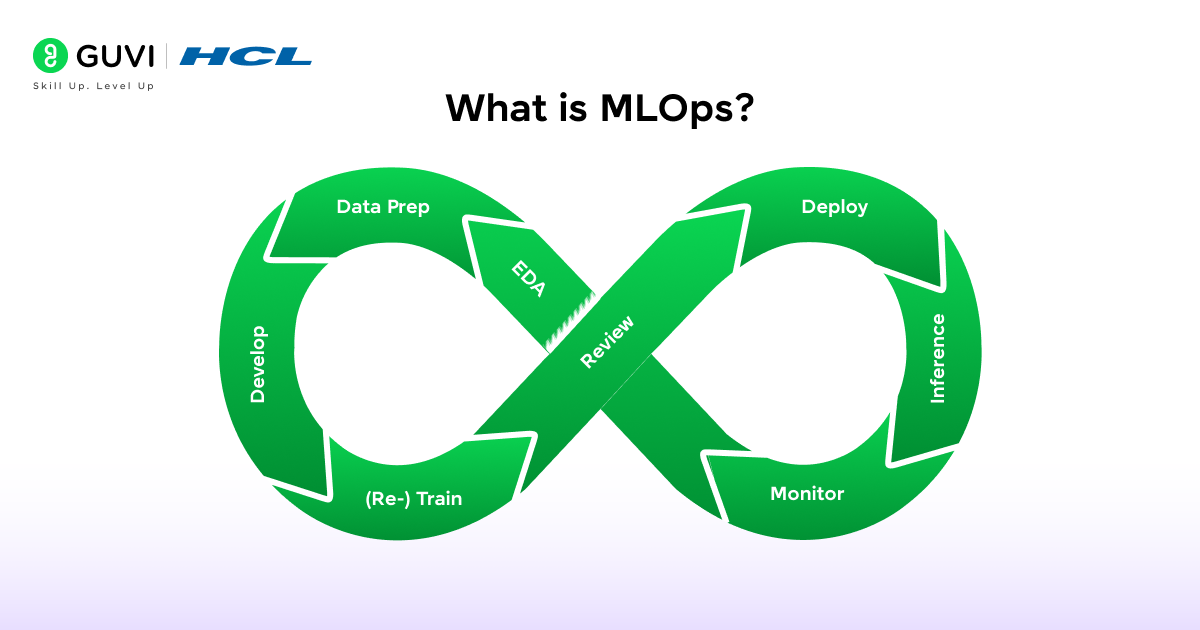
MLOps, or Machine Learning Operations, is a discipline that connects model creation with real-world deployment. It ensures that models built in experimentation perform reliably in production, which keeps predictions accurate under real-world conditions.
The approach focuses on stability and repeatability, ensuring innovation doesn’t remain limited to research labs.
It introduces automation and version control, which help teams manage models with the same discipline used in software development. This structure lets machine learning systems evolve continuously while maintaining quality as data and business goals change.
MLOps Books Compared by Focus Area and Skill Level
Use this MLOps books comparison table to quickly find the right pick for your skill level and focus area:
| Book | Author(s) | Best For | Focus Area | Book Link |
|---|---|---|---|---|
| MLOps Engineering at Scale | Carl Osipov | Data Engineers and Scientists | Deploying ML models in production environments | Link |
| Designing Machine Learning Systems | Chip Huyen | Machine Learning Engineers | End-to-end ML system design | Link |
| Building Machine Learning Powered Applications | Emmanuel Ameisen | Practitioners moving from academic ML to applied development | Turning ML ideas into working products | Link |
| Introducing MLOps | Mark Treveil and The Dataiku Team | Enterprise Data Leaders | Scaling MLOps across the enterprise | Link |
| The Hundred-Page Machine Learning Book | Andriy Burkov | Beginners | Core machine learning foundations | Link |
| Building Machine Learning Pipelines | Hannes Hapke and Catherine Nelson | Professionals | Building ML pipelines with TFX | Link |
| Practical MLOps | Noah Gift and Alfredo Deza | Engineers building scalable MLOps solutions | CI/CD, orchestration, and model drift prevention | Link |
| Hands-On Machine Learning with Scikit-Learn, Keras, and TensorFlow | Aurélien Géron | Developers and Engineers | Applied ML and deep learning foundations | Link |
| Implementing MLOps in the Enterprise | Yaron Haviv & Noah Gift | Enterprise Architects | Production-first enterprise ML deployment | Link |
| Machine Learning Design Patterns | Valliappa Lakshmanan, Sara Robinson, and Michael Munn | Machine Learning Engineers | Reusable design patterns for ML systems | Link |
Turn MLOps knowledge into real-world skills. Master model training, CI/CD integration, and production monitoring with HCL GUVI’s Intel & IITM Pravartak Certified AI/ML Course — the exact principles top MLOps engineers use to scale real-world AI systems. Get hands-on project experience and earn a certification that validates your expertise in operational AI.
10 Must-Read MLOps Books for Beginners and Professionals
Whether you’re new to MLOps or looking to strengthen your production skills, here are 10 MLOps books covering everything from core ML concepts to enterprise-scale deployment:
1. MLOps Engineering at Scale by Carl Osipov
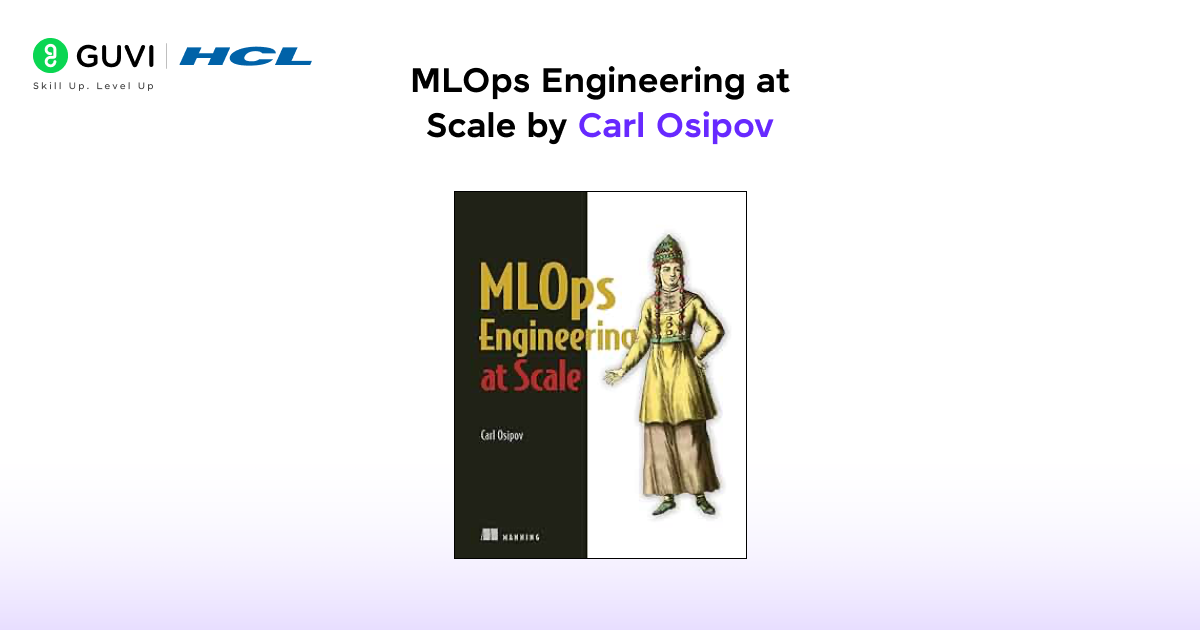
This book takes a practical approach to understanding how machine learning systems move from prototypes to production environments. Carl Osipov explains the entire MLOps journey through examples that balance engineering logic with business relevance.
The narrative focuses on how large-scale deployments succeed when automation, collaboration, and monitoring align. It gives readers a grounded view of how to translate data-driven insights into systems that sustain performance and reliability at scale.
Key Highlights:
- Explains how to build reproducible ML workflows that adapt to complex environments
- Covers the use of CI/CD principles in managing machine learning pipelines
- Offers detailed insights into model versioning, monitoring, and lifecycle governance
- Provides case studies that link MLOps strategies to real-world organizational outcomes
Ideal For:
- Data engineers and scientists looking to deploy models in production environments
- AI practitioners interested in scaling automation and maintaining operational quality
- Technology leaders who want to align machine learning practices with long-term business value
Get here: MLOps Engineering at Scale by Carl Osipov
2. Designing Machine Learning Systems by Chip Huyen
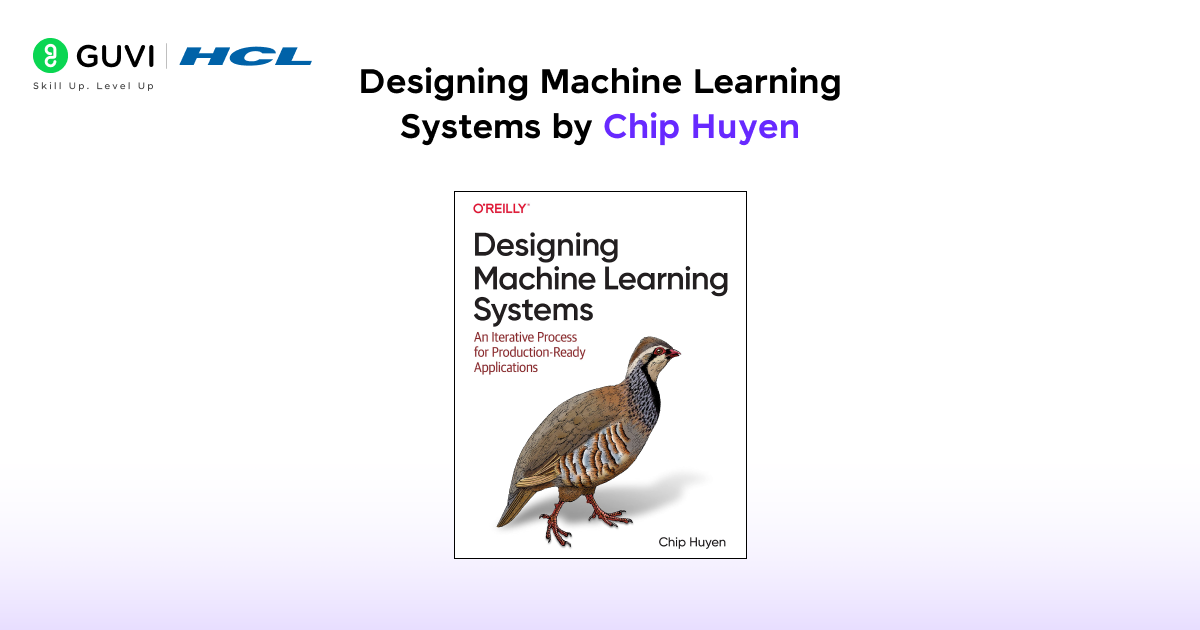
This book offers a deep exploration of how machine learning projects evolve from ideas into functional systems. Chip Huyen combines technical detail with product awareness, showing how successful ML products depend on careful design rather than pure algorithms.
The writing bridges research and implementation, helping readers understand how models fit within real-world software pipelines. It explains how structure, deployment, and feedback loops come together to make machine learning both scalable and sustainable.
Key Highlights:
- Explains end-to-end system design, from data collection to monitoring and iteration
- Teaches how to balance performance, latency, and maintainability in production ML
- Includes real-world examples that show how teams at scale manage deployment cycles
- Focuses on integrating ML workflows into broader software engineering practices
Ideal For:
- Machine learning engineers aiming to strengthen system design skills
- Product developers seeking to build reliable AI-driven features
- Data scientists transitioning from experimentation to deployment
Get here: Designing Machine Learning Systems by Chip Huyen
3. Building Machine Learning Powered Applications by Emmanuel Ameisen
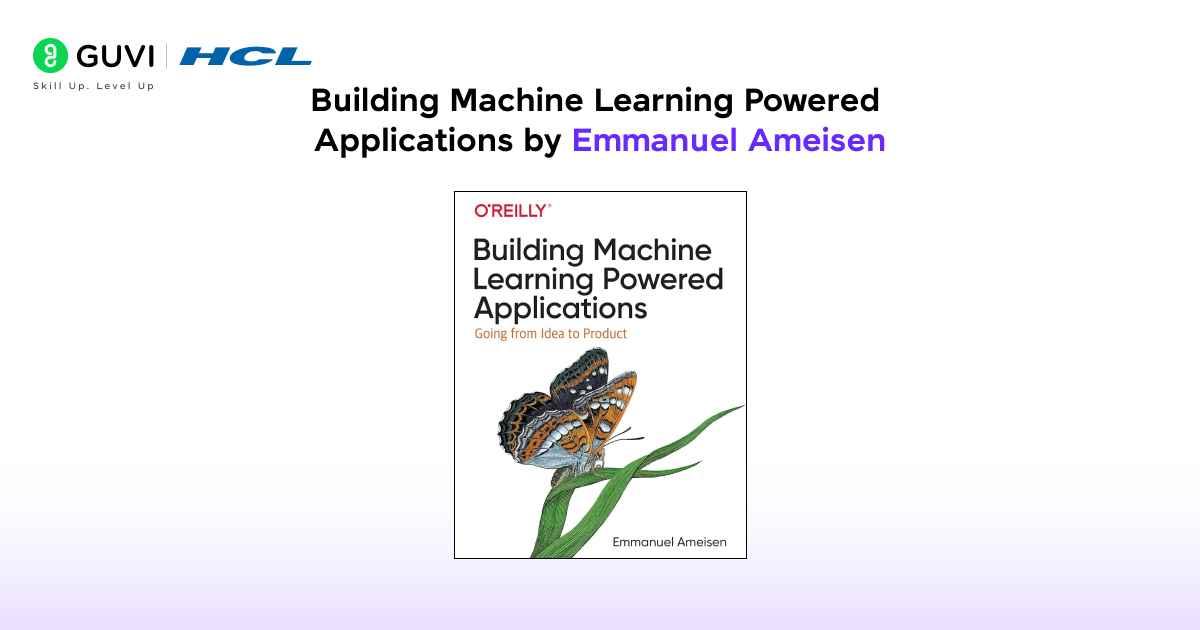
Emmanuel Ameisen’s book provides a complete roadmap for turning machine learning ideas into working products. It emphasizes process over theory, guiding readers through problem definition, experimentation, and deployment.
The book uses practical projects to show how iteration and measurement shape model success. Each concept connects back to real applications, creating a clear understanding of how to manage complexity without losing focus on performance and usability.
Key Highlights:
- Offers a step-by-step approach to transforming prototypes into deployed ML solutions
- Covers experimentation design, evaluation metrics, and production readiness
- Demonstrates how to maintain data quality and prevent model decay
- Emphasizes cross-functional collaboration between engineering and product teams
Ideal For:
- Practitioners moving from academic ML to applied development
- Developers integrating AI features into existing applications
- Teams looking to streamline experimentation and deployment cycles
Get here: Building Machine Learning Powered Applications by Emmanuel Ameisen
4. Introducing MLOps: How to Scale Machine Learning in the Enterprise by Mark Treveil and The Dataiku Team
This book focuses on how organizations operationalize machine learning beyond isolated projects. Mark Treveil and the Dataiku team explain the methods that transform AI initiatives into enterprise-level systems.
The content connects strategy with execution, showing how governance, scalability, and automation work together to make MLOps a repeatable business function. It gives readers a clear view of how to manage the human, technical, and ethical dimensions of large-scale AI.
Key Highlights:
- Outlines best practices for scaling ML operations within enterprise settings
- Details frameworks for governance, compliance, and risk management
- Describes how cross-team workflows enable continuous delivery of AI models
- Links MLOps maturity to measurable business outcomes
Ideal For:
- Enterprise data leaders building AI infrastructure at scale
- ML engineers seeking to align technical processes with business strategy
- Organizations looking to formalize and expand their MLOps practices
5. The Hundred-Page Machine Learning Book by Andriy Burkov
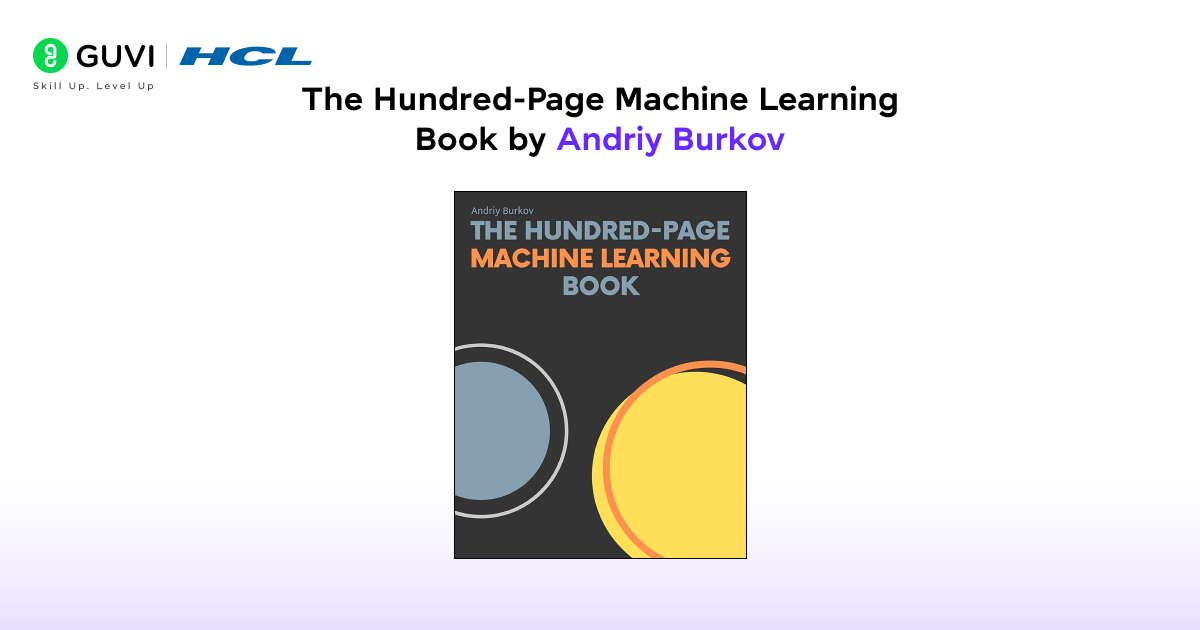
Andriy Burkov delivers a concise yet comprehensive overview of machine learning that feels both approachable and technically sound. The book condenses complex ideas into clear explanations without losing depth, which makes it a solid foundation for anyone looking to grasp the fundamentals of the field.
It connects algorithms, data preparation, and evaluation in a way that builds understanding layer by layer. Readers gain a complete perspective of how models think, learn, and evolve, even within a compact format.

Key Highlights:
- Covers the core principles of supervised and unsupervised learning
- Explains model evaluation, regularization, and optimization in practical terms
- Offers visual summaries that make advanced topics easier to retain
- Serves as both a starting point and a quick reference for practitioners
Ideal For:
- Beginners seeking a clear and structured entry into machine learning
- Professionals revisiting foundational concepts for applied projects
- Readers who prefer concise yet meaningful technical writing
Get here: The Hundred-Page Machine Learning Book by Andriy Burkov
6. Building Machine Learning Pipelines by Hannes Hapke and Catherine Nelson
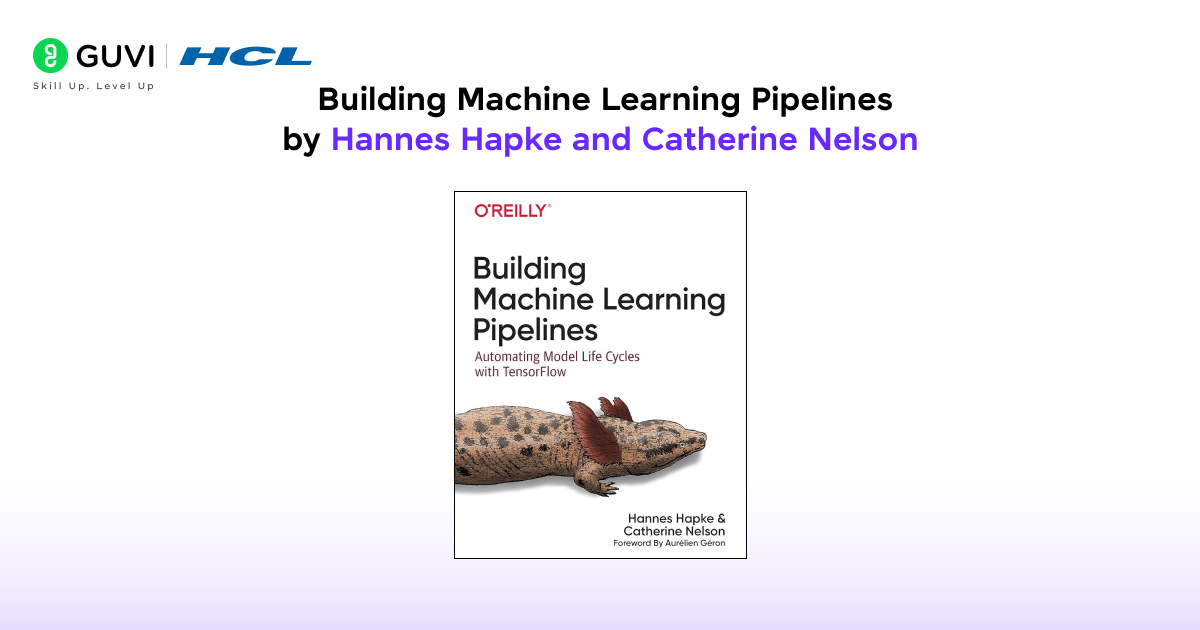
This book presents a practical guide to designing and managing ML pipelines that can scale from experimentation to production. Hannes Hapke and Catherine Nelson explain how each stage of a pipeline connects to form a cohesive workflow.
The authors use real tools and frameworks, making the concepts directly applicable to modern ML environments. Their focus on collaboration, automation, and reproducibility provides readers with a blueprint for managing machine learning in real-world operations.
Key Highlights:
- Breaks down data ingestion, transformation, and model deployment workflows
- Shows how to use TensorFlow Extended (TFX) for pipeline automation
- Teaches reproducibility through version control and metadata tracking
- Links technical design decisions to business reliability and speed
Ideal For:
- Data engineers creating structured ML pipelines for production systems
- Machine learning developers managing end-to-end model lifecycles
- Teams focused on maintaining consistency and transparency in AI workflows
Get here: Building Machine Learning Pipelines by Hannes Hapke and Catherine Nelson
7. Practical MLOps by Noah Gift and Alfredo Deza
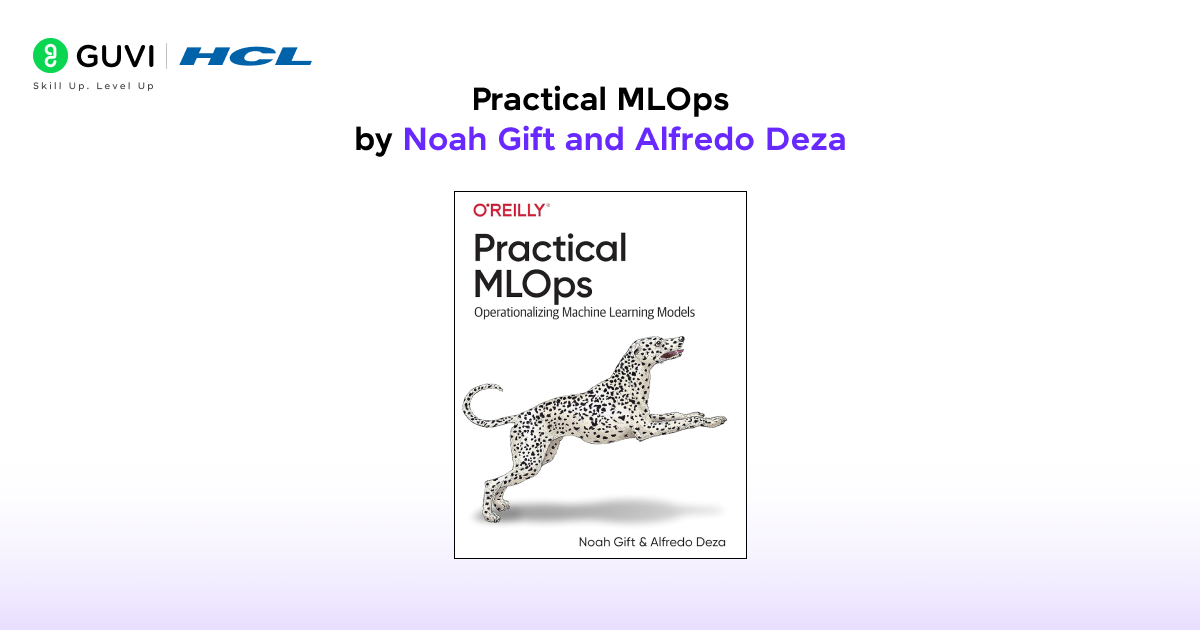
This book focuses on building real-world MLOps systems that sustain accuracy, scalability, and business impact. Noah Gift and Alfredo Deza bring together engineering discipline and operational strategy to show how ML can deliver continuous value.
Their writing moves beyond tools and frameworks to explain the mindset required for successful automation. It emphasizes how observability, reproducibility, and efficiency define mature AI operations.
Key Highlights:
- Describes how to deploy, monitor, and maintain machine learning systems
- Focuses on CI/CD, workflow orchestration, and model drift prevention
- Includes practical case studies with cloud and container-based examples
- Provides actionable guidance for developing production-ready ML pipelines
Ideal For:
- Engineers building scalable MLOps solutions in cloud environments
- Data scientists transitioning into applied production roles
- Organizations implementing long-term ML operations and monitoring strategies
Get here: Practical MLOps by Noah Gift and Alfredo Deza
8. Hands-On Machine Learning with Scikit-Learn, Keras, and TensorFlow by Aurélien Géron
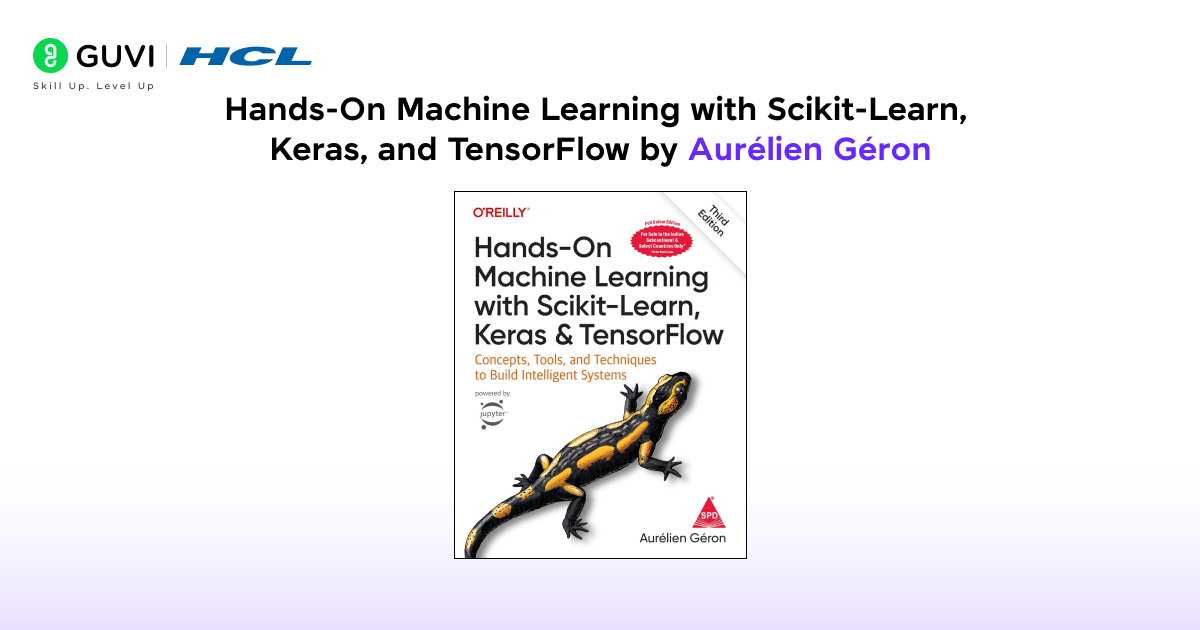
Aurélien Géron’s book remains one of the most practical resources for anyone serious about mastering applied machine learning. It moves beyond surface theory and shows how concepts translate into real implementation.
The writing emphasizes understanding through doing, which helps readers connect algorithms with outcomes. Géron introduces core ideas such as gradient descent, regularization, and deep learning while explaining how each fits into the overall system design.
The book’s structured walkthroughs make it valuable for both learners and professionals refining their workflow.
Key Highlights:
- Covers model training, evaluation, and deployment using Scikit-Learn, Keras, and TensorFlow
- Provides clear code examples that build step by step from simple to advanced models
- Teaches optimization, interpretability, and error analysis with practical clarity
- Focuses on how to apply theory efficiently in production-grade environments
Ideal For:
- Developers and engineers looking to build solid ML foundations
- Practitioners applying deep learning in real-world systems
- Learners aiming for a complete hands-on understanding of the ML workflow
Get here: Hands-On Machine Learning with Scikit-Learn, Keras, and TensorFlow by Aurélien Géron
9. Implementing MLOps in the Enterprise: A Production-First Approach by Yaron Haviv & Noah Gift
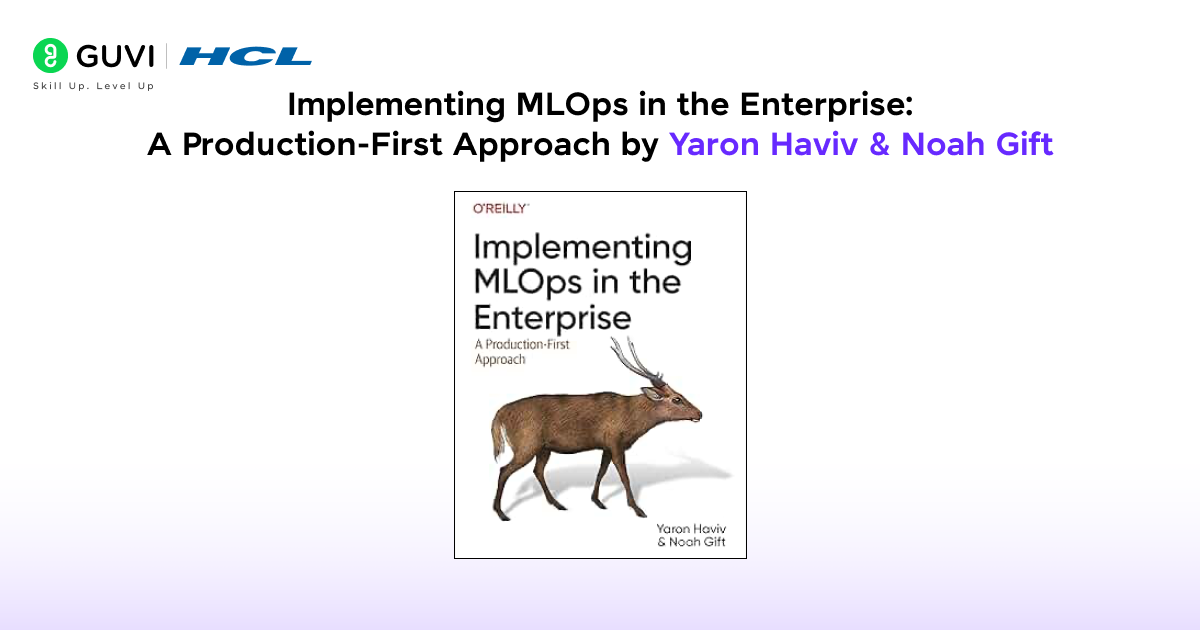
This book focuses on how large organizations bring stability and scale to machine learning systems. It introduces a production-first mindset that prioritizes performance, reliability, and governance from the start.
The content shows how MLOps integrates with business infrastructure while maintaining flexibility for innovation. Through case studies and architectural patterns, the authors explain how enterprises manage risk and sustain continuous delivery of AI models.
Key Highlights:
- Provides detailed strategies for enterprise-level ML deployment and monitoring
- Explains how to align data engineering, DevOps, and AI under one operational framework
- Discusses compliance, traceability, and responsible model management
- Offers templates for building secure and scalable MLOps environments
Ideal For:
- Enterprise architects overseeing large AI systems
- Data leaders implementing long-term governance in machine learning
- Organizations transitioning from pilot projects to operational maturity
Get here: Implementing MLOps in the Enterprise: A Production-First Approach
10. Machine Learning Design Patterns by Valliappa Lakshmanan, Sara Robinson, and Michael Munn
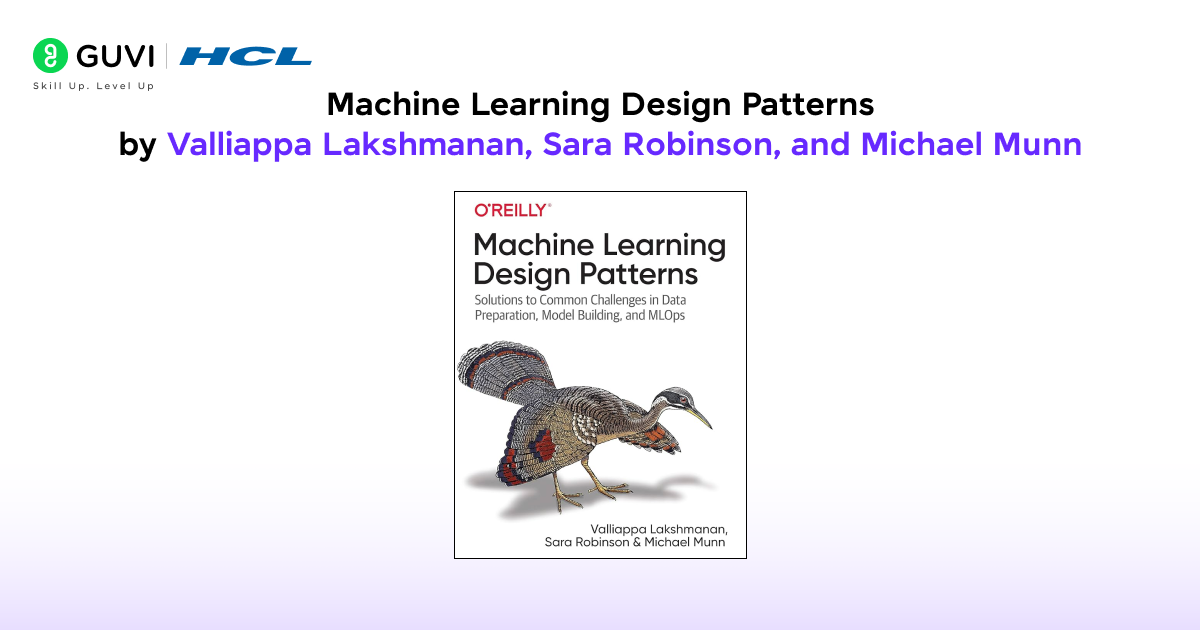
This book focuses on the engineering principles that make machine learning systems reliable and adaptable. It organizes the experience of Google’s ML engineers into design patterns that solve recurring technical challenges in production environments.
Each pattern shows how small architectural decisions can determine performance, scalability, and long-term maintainability. The writing balances explanation and practicality, making it valuable for both technical teams and decision-makers.
Readers learn how real-world ML systems evolve through structured reasoning and consistent practices rather than ad hoc experimentation.
Key Highlights:
- Explains proven patterns for data processing, training, deployment, and serving
- Shows how to build modular ML systems that are easier to maintain and extend
- Connects design thinking with measurable operational outcomes
- Uses Google Cloud and TensorFlow examples that translate well to any platform
Ideal For:
- Machine learning engineers solving production-level architecture challenges
- Data scientists transitioning toward scalable deployment work
- Technical leads building reusable and maintainable AI infrastructure
Get here: Machine Learning Design Patterns by Valliappa Lakshmanan, Sara Robinson, and Michael Munn
Conclusion
MLOps represents more than a technical framework; it is a mindset that unites innovation with discipline. The books in this list offer both vision and practicality, helping teams move from experimentation to consistent delivery. By mastering these ideas, professionals learn to build systems that scale intelligently and evolve with purpose in an AI-driven world.
FAQs
1. What is MLOps?
MLOps is the practice of deploying, monitoring, and maintaining machine learning models in production reliably.
2. Which MLOps book is best for beginners?
The Hundred-Page Machine Learning Book by Andriy Burkov. It builds core ML concepts before diving into MLOps-specific practices.
3. Do I need coding experience to read MLOps books?
Some, yes. Books like Building Machine Learning Pipelines involve hands-on code, while Introducing MLOps stays conceptual and non-technical.
4. Which MLOps book is best for enterprise implementation?
Implementing MLOps in the Enterprise by Yaron Haviv and Noah Gift. It’s built around production-first thinking at scale.
5. Can MLOps books help you switch careers?
Yes. Practical MLOps and Building Machine Learning Powered Applications focus on real workflows employers look for.
Success Stories







Did you enjoy this article?