


Database Articles
SQL Window Functions: Practical Examples Every Analyst Needs
Microservices vs Monolith: Making the Right Architectural Choice
DuckDB Tutorial: Learn DuckDB Step-by-Step (2026 Guide)
How to Use MySQL Workbench for Database Design and Querying: Complete and Best Guide


Get In Touch For Details! Request More Information
Database Indexing: How Indexes Work and Improve Speed
Aug 13, 2026 4 Min Read 372 Views
(Last Updated)
Database indexing is a technique used to improve the speed of data retrieval operations in a database. Instead of scanning every row in a table, an index helps the database quickly locate the required data. Proper indexing can significantly improve query performance, but excessive or unnecessary indexes can increase storage usage and slow down write operations.
Table of contents
- TL;DR
- What Is Database Indexing?
- Why Is Database Indexing Important?
- How Do Database Indexes Work?
- What Are the Different Types of Database Indexes?
- When Should You Use Database Indexes?
- Database Indexing Best Practices
- Key Takeaways
- Conclusion
- FAQs
- What is database indexing?
- How does a database index work?
- Do indexes improve database performance?
- What are the main types of database indexes?
- Can too many indexes be harmful?
TL;DR
- Database indexes help retrieve data faster.
- Indexes work similarly to an index in a book — they help locate information quickly.
- Proper indexing improves query performance and reduces search time.
- Too many indexes can negatively impact insert, update, and delete operations.
- Understanding when to use indexes is essential for efficient database design.
Want to master database concepts that power modern data-driven applications? Explore HCL GUVI’s Data Science Course, designed to help you build strong foundations in SQL, databases, data analysis, and machine learning through hands-on projects, real-world datasets, and industry-relevant skills.
What Is Database Indexing?
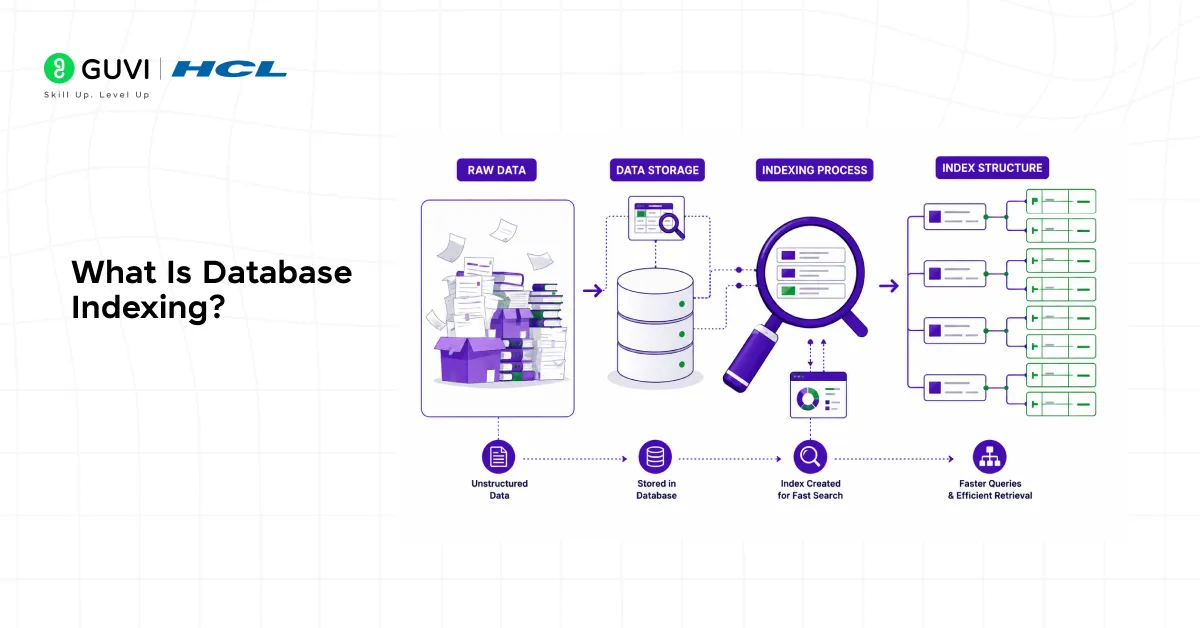
Database indexing is a technique used to speed up data retrieval in a database table. Without an index, the database may need to scan every row in a table to find the requested information.
Think of a database index like the index section at the back of a textbook. Instead of reading every page to find a topic, you use the index to jump directly to the relevant page. Database indexes work in a similar way — they help the database find data faster.
For example, imagine a table containing one million customer records. Searching for a specific customer without an index can be time-consuming. With an index, the database can locate the record much more efficiently.
Read More: Mastering Database Optimization: Advanced Indexing Techniques for Performance
Most relational database management systems automatically create indexes for primary keys because these columns are frequently used for searches, joins, and enforcing uniqueness. A well-designed database index can reduce query execution time from several seconds to milliseconds on large datasets, making applications significantly faster and more responsive.
Why Is Database Indexing Important?
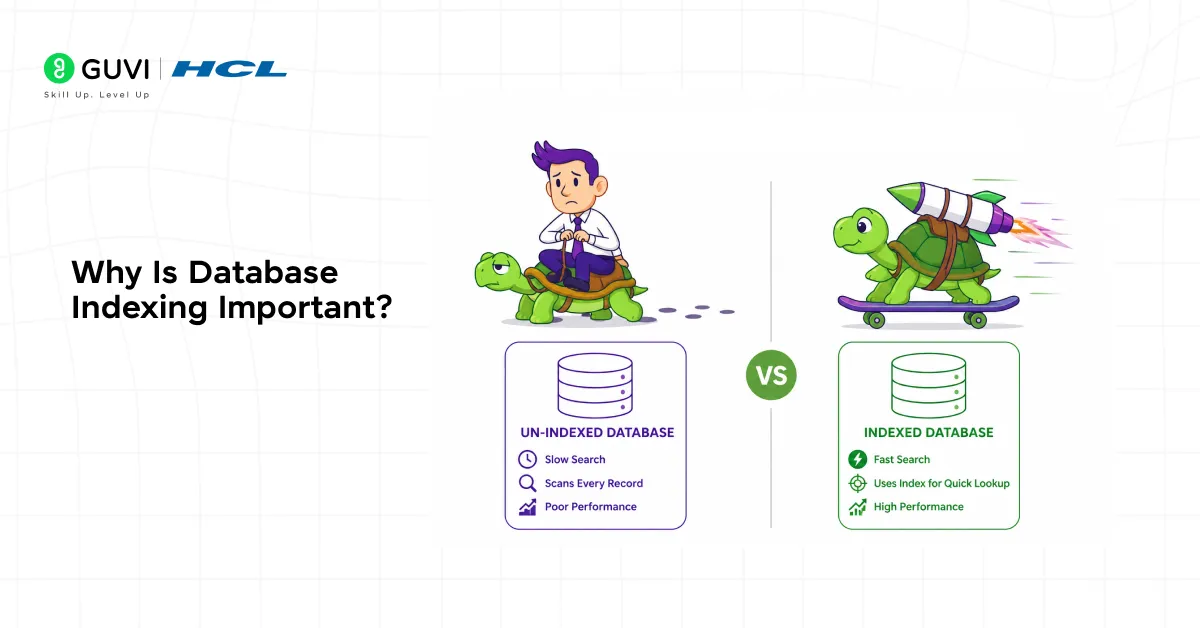
As databases grow, query performance becomes increasingly important. A query that takes milliseconds on a small dataset can take several seconds or even minutes on a larger one.
Database indexing improves performance by reducing the amount of data the database needs to scan during query execution.
Some major benefits include:
- Faster query execution. Indexes help the database locate records quickly instead of performing full table scans.
- Improved application performance. Faster database queries often lead to better user experiences.
- Efficient data retrieval. Indexes reduce the workload required to search large datasets.
- Better scalability. Proper indexing helps databases maintain performance as data volumes increase.
Data Point: In large databases, a properly designed index can reduce query execution time from several seconds to a fraction of a second.
How Do Database Indexes Work?
A database index is a separate data structure that stores indexed column values along with pointers to the corresponding table rows.
When a query searches for a value in an indexed column, the database can use the index instead of scanning every row.
For example, consider the following query:
SELECT * FROM customers
WHERE customer_id = 105;
Without an index, the database checks every row until it finds the matching record.
With an index on customer_id, the database can jump directly to the required row — significantly reducing search time.
The process generally works as follows:
- The database receives a query.
- The query optimizer checks for available indexes.
- If a suitable index exists, it uses the index to locate data.
- The database retrieves the matching rows.
This approach reduces unnecessary scanning and improves overall efficiency.
Want to master database concepts that power modern data-driven applications? Explore HCL GUVI’s Data Science Course, designed to help you build strong foundations in SQL, databases, data analysis, and machine learning through hands-on projects, real-world datasets, and industry-relevant skills.
What Are the Different Types of Database Indexes?
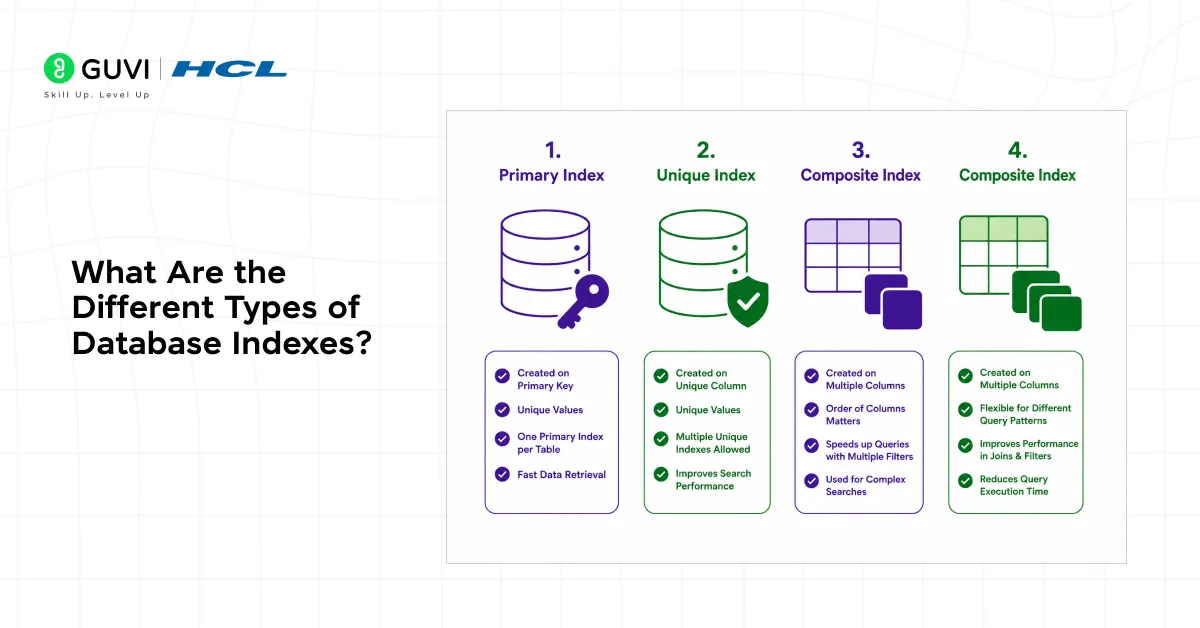
Different types of indexes serve different purposes. Choosing the right type depends on your query patterns and database requirements.
- Primary Index
A primary index is automatically created when a primary key is defined.
Characteristics include:
- Unique values.
- Fast record retrieval.
- Automatic creation in most databases.
Example:

CREATE TABLE users (

    user_id INT PRIMARY KEY,

    username VARCHAR(50)

);
The database automatically creates an index on user_id.
- Unique Index
A unique index ensures that duplicate values cannot exist within a column.
Example:
CREATE UNIQUE INDEX idx_email

ON users(email);
This guarantees that each email address remains unique.
- Composite Index
A composite index includes multiple columns.
Example:
CREATE INDEX idx_name_city

ON customers(last_name, city);
Composite indexes are useful when queries frequently filter using multiple columns.
- Full-Text Index
A full-text index is designed for searching large text fields.
Common use cases include:
- Search engines.
- Product searches.
- Blog search functionality.
Pro Tip: Create indexes based on actual query patterns rather than indexing every column in a table.
When Should You Use Database Indexes?
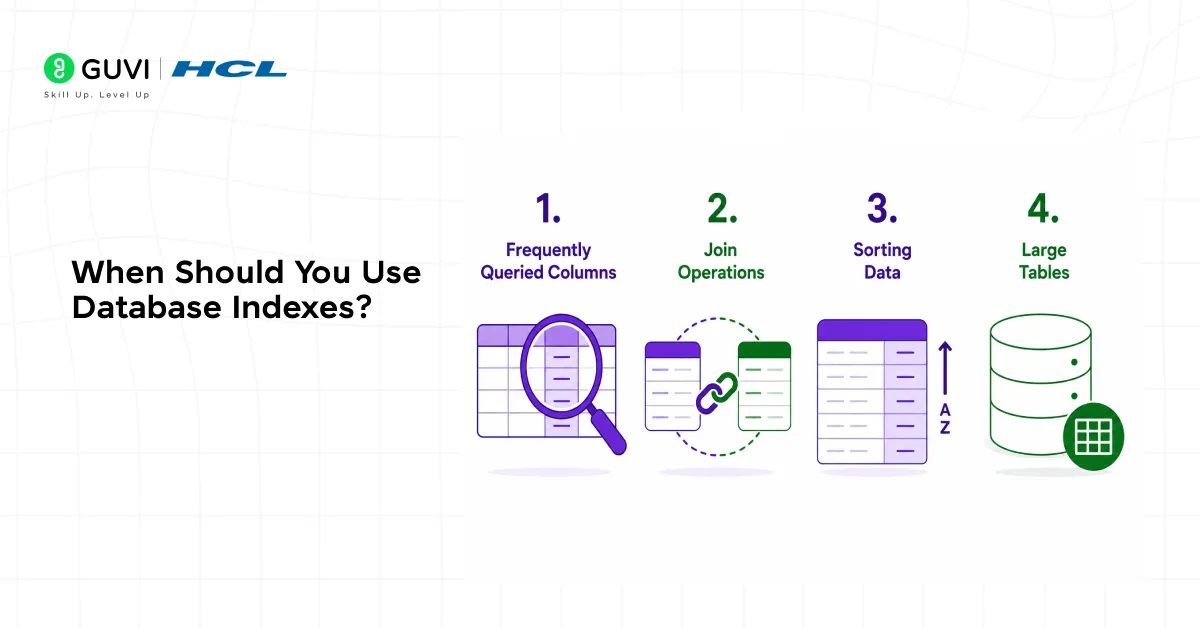
Indexes are beneficial when queries frequently search, filter, sort, or join data.
Common scenarios include:
- Frequently Queried Columns
If a column appears regularly in WHERE clauses, indexing can improve performance.
Example:
SELECT * FROM orders

WHERE order_status = 'Completed';- Join Operations
Indexes help databases efficiently match records during JOIN operations.
Example:
SELECT *

FROM orders

JOIN customers

ON orders.customer_id = customers.customer_id;- Sorting Data
Indexes can improve the performance of ORDER BY queries.
Example:
SELECT *

FROM products

ORDER BY price;- Large Tables
The larger the table, the greater the performance benefits of indexing.
Indexes are particularly valuable when dealing with thousands or millions of rows.
Database Indexing Best Practices
Effective indexing requires careful planning and ongoing monitoring.
Some best practices include:
- Index columns frequently used in WHERE clauses.
- Create indexes for commonly used JOIN conditions.
- Monitor query performance regularly.
- Remove unused indexes.
- Avoid creating duplicate indexes.
- Test indexing strategies before deploying them to production.
Best Practice: Always analyze query execution plans before creating new indexes — this helps ensure that indexes are solving actual performance problems.
Key Takeaways
- Database indexing improves query performance by reducing search time.
- Indexes work similarly to a book index by helping databases locate information quickly.
- Common index types include primary, unique, composite, and full-text indexes.
- Indexes are especially useful for filtering, sorting, and joining large datasets.
- Too many indexes can negatively impact write performance.
- Effective indexing requires balancing speed, storage, and maintenance costs.
Conclusion
Database indexing is one of the most important techniques for improving database performance. By allowing databases to locate records efficiently, indexes reduce query execution times and enhance application responsiveness.
However, indexing is not a one-size-fits-all solution. The key is understanding how your application accesses data and creating indexes that support those access patterns. When used strategically, database indexes can dramatically improve performance while keeping your database scalable and efficient.
FAQs
What is database indexing?
Database indexing is a technique that improves the speed of data retrieval operations by creating a structure that helps the database locate records quickly. It reduces the need for full table scans.
How does a database index work?
A database index stores indexed values along with pointers to table rows. This allows the database to find matching records without scanning every row.
Do indexes improve database performance?
Yes, indexes can significantly improve read performance by reducing query execution time. However, they may slightly slow down insert, update, and delete operations.
What are the main types of database indexes?
Common types include primary indexes, unique indexes, composite indexes, and full-text indexes. Each serves a specific purpose based on query requirements.
Can too many indexes be harmful?
Yes, excessive indexing increases storage requirements and can slow down write operations. Indexes should be created only when they provide measurable performance benefits.
Success Stories

About the Author
Vishalini Devarajan
An Aerospace Engineer turned content writer, I focus on making complex concepts easy to understand through well-structured, reader-friendly blogs. Whether it’s a technical topic or a non-technical one, I love creating content that is clear, engaging, and impactful.
View all posts by Vishalini Devarajan
Connect with me @














Did you enjoy this article?