


Cloud Computing Articles
From Beginner to DevOps Engineer: How HCL GUVI Zen Class Helps You Get There
12 Important Azure Admin Roles and Responsibilities- Complete Guide


Get In Touch For Details! Request More Information
Tech for Sustainability with Green Computing: Driving a Greener Future
Apr 29, 2026 2 Min Read 1934 Views
(Last Updated)
Table of contents
- Introduction
- What is Green Computing?
- Energy-Efficient Data Centers
- Innovations in Green Data Centers:
- Carbon-Neutral Cloud Providers
- Startups Leading the Green Tech Revolution
- What Can Individuals Do?
- Future Outlook
- Conclusion
Introduction
Technology is often seen as a double-edged sword; while it fuels innovation and progress, it also consumes vast amounts of energy and resources. According to the International Energy Agency (IEA), data centers alone consume about 1–1.5% of global electricity, and their demand is rising rapidly with the growth of cloud computing, AI, and digital transformation.
To address this challenge, Green Computing has emerged as a powerful solution that blends technology with sustainability. From energy-efficient data centres to carbon-neutral cloud providers and sustainable tech startups, the world is moving toward a carbon-conscious digital era.
What is Green Computing?
Green computing is the practice of designing, using, and managing technology with minimal environmental impact. It involves:
- Using renewable energy sources for operations
- Optimizing hardware and software to consume less power
- Recycling and reusing electronic waste
- Creating carbon-neutral or carbon-negative tech ecosystems
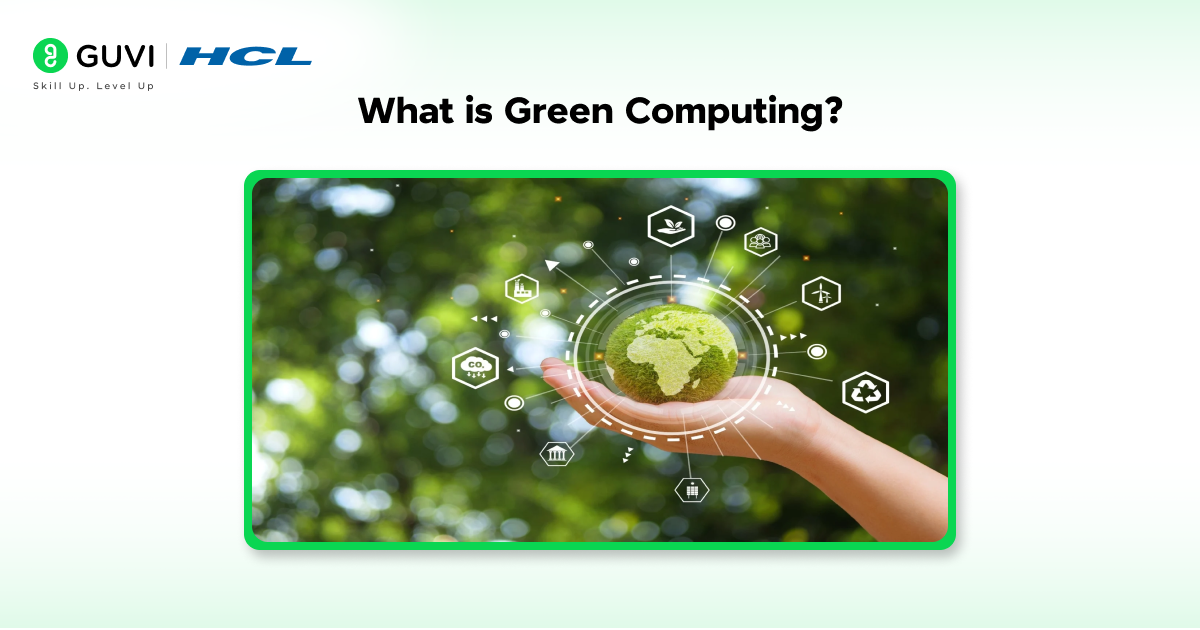
It’s not just about saving electricity, it’s about ensuring that technology helps the planet instead of harming it.
Energy-Efficient Data Centers
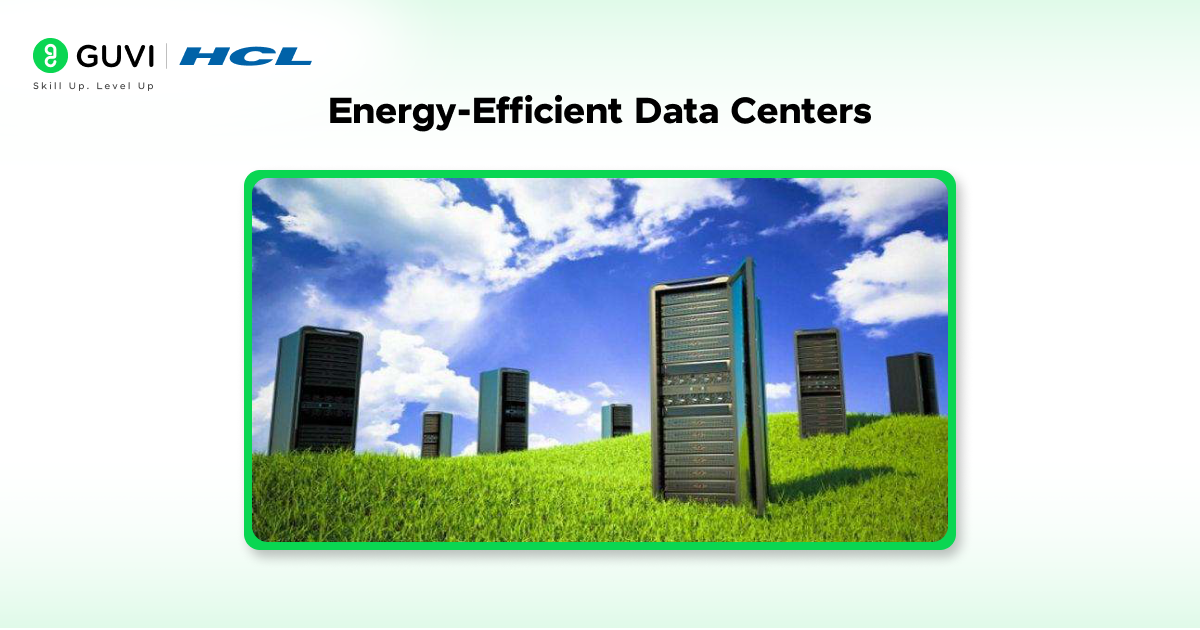
Data centers are often referred to as the “factories of the digital age.” They host everything from social media to banking apps, but consume enormous power, especially for cooling.
Innovations in Green Data Centers:
- Liquid Cooling Systems → Instead of cooling servers with air, companies use liquid immersion to reduce power usage by up to 40%.
- AI-Driven Optimization → Algorithms adjust cooling and workload distribution in real time to minimize energy waste.
- Server Virtualization → Multiple virtual machines run on fewer physical servers, reducing hardware requirements.
Case Example – Google Data Centers
Google’s data centers use AI developed by DeepMind to manage cooling systems. This reduced energy consumption for cooling by 40%, saving millions in operational costs while lowering their carbon footprint.
Explore: Promising Scope of Cloud Computing in 2025
Carbon-Neutral Cloud Providers
The cloud industry is undergoing a massive green shift:
- Google Cloud → First major company to run on 100% renewable energy since 2017.
- Microsoft Azure → Aims to be carbon negative by 2030, meaning it’ll remove more CO₂ than it emits.
- Amazon AWS → Targeting net-zero carbon by 2040 with massive wind and solar projects.
Use Case – Spotify’s Carbon-Neutral Cloud Migration
Spotify migrated its infrastructure to Google Cloud, citing its carbon-neutral operations. This allowed Spotify to cut down its environmental impact while scaling its services globally.

Startups Leading the Green Tech Revolution
Beyond the tech giants, startups are making sustainability mainstream:
- Climeworks → Direct air capture to remove CO₂ and store it underground.
- Ampere Computing → Builds low-power processors, helping cloud providers cut energy use.
- Zap Energy → Working on nuclear fusion to generate clean, limitless energy.
- Sustainder → Smart street lighting that reduces city power usage by up to 60%.
Use Case – Ampere Computing + Oracle Cloud
Oracle adopted Ampere’s ARM-based processors for its Oracle Cloud Infrastructure (OCI). These processors consume less than half the power of traditional chips, making Oracle Cloud one of the most energy-efficient platforms.
Also Read: What is Cloud Computing? A Comprehensive Guide
What Can Individuals Do?
Sustainability is not just for big corporations. Everyday users can also contribute by:
- Choosing devices with eco-certifications (ENERGY STAR, EPEAT).
- Using cloud storage from green providers like Google or Microsoft.
- Enabling dark mode and power-saving features on phones and laptops.
- Recycling old devices responsibly instead of dumping them as e-waste.
Future Outlook
Green computing isn’t just a trend; it’s the future. With AI-powered optimization, renewable-powered data centers, and carbon-neutral innovations, technology can truly align with sustainability goals.
The ultimate vision is a net-zero digital ecosystem, where every click, stream, and code execution runs on clean energy.
Be part of the sustainable tech revolution! Learn how AI and ML power energy-efficient systems and smarter applications with HCL GUVI’s IITM Pravartak Certified AI & Machine Learning Course, gain hands-on experience in building intelligent systems that optimize performance while reducing resource consumption.
Conclusion
Green computing is bridging the gap between technological innovation and environmental responsibility. From Spotify’s cloud migration to Google’s AI-driven energy savings, real-world use cases prove that sustainability is achievable without compromising growth.
The big question is: Will green technology become the standard, not the exception, in the next decade?
Success Stories

About the Author
Lavish Jain
A Professional Developer Mentor and Corporate Trainer with over 10 years of experience, I have contributed to technological advancements through comprehensive training and mentorship. My journey includes pivotal roles at Cluebix, Focus-4D,ThoughtWorks, and currently with Guvi -HCL Group, where I shape the careers of aspiring developers. I specialize in simplifying complex concepts, making them accessible to learners at all levels, and have successfully trained lakhs of budding developer through corporate and boot camp courses focused on full-stack development.
View all posts by Lavish Jain
Connect with me @













Did you enjoy this article?