


Artificial Intelligence and Machine Learning Articles
AI/ML Skills Gap 2026: Why Companies Can't Find Job-Ready Talent
20 AI/ML Interview Questions Recruiters Can Use Without a Tech Background - Best Guide
How Industry-Backed AI/ML Bootcamps Are Changing the AI/ML Hiring Pipeline - Best Guide 2026
From IT Support to AI Engineer: A Realistic Career Switch Guide 2026

Get In Touch For Details! Request More Information
10 Best AI Tools for Personalized Learning in 2026
Sep 16, 2026 6 Min Read 28065 Views
(Last Updated)
AI tools for personalized learning are software powered by artificial intelligence that adapt content, pace, and teaching methods to each student’s individual needs. Instead of one-size-fits-all material, these tools analyse performance and adjust in real time, giving more practice where needed.
This matters because no two students learn the same way, and traditional teaching often leaves some behind. AI now built into tutoring apps, quiz platforms, and study tools gives both teachers and students smarter, more responsive learning experiences.
Table of contents
- TL;DR Summary
- What Is Personalized Learning?
- AI Tools for Personalized Learning: Comparative Overview
- Top AI Tools for Personalized Learning Explained
- Khanmigo
- Duolingo Max
- Wayground
- Magic School AI
- NotebookLM
- Speechify
- Brainly
- Grammarly
- Quizlet
- Claude
- Key Benefits of Using AI Tools for Personalized Learning
- How to Choose the Right AI Tool for Personalized Learning
- Conclusion
- FAQs
- What is the best AI tool for personalized learning?
- Is ChatGPT good for personalized learning?
- Are AI tools for personalized learning free?
- Can AI really personalize learning for each student?
- Do teachers use AI tools for personalized learning?
TL;DR Summary
- AI tools for personalized learning adapt content, pace, and feedback based on how you specifically learn, not a fixed lesson plan.
- Tools like Khanmigo and Claude explain concepts based on how you ask, not a generic script.
- NotebookLM and Quizlet focus on what you already have or already got wrong, not random content.
- Different tools solve different problems, so the right pick depends on what you’re actually trying to do.
- Try one or two from this list and see what actually fits how you learn.
What Is Personalized Learning?
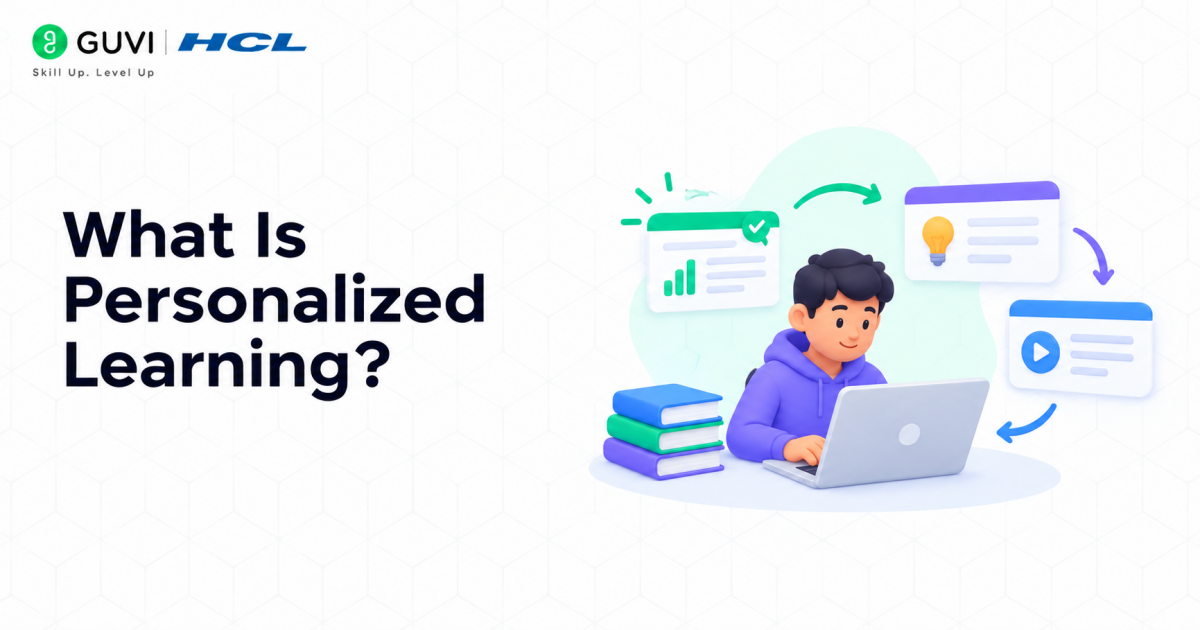
Personalized learning is teaching that adjusts to the student instead of making the student adjust to it. If you pick things up fast, you move ahead. If a topic isn’t clicking, you get more time and a different explanation until it does. Nobody’s stuck waiting, and nobody’s left behind.
AI tools for personalized learning do this same job, just at a much bigger scale. They watch how you answer, where you get stuck, and how fast you’re actually learning, then quietly change the lesson to fit you. No two students end up doing the exact same thing, because no two students need the exact same thing.
Also Read: Best AI Tools for Data Analysis
Want to take your AI learning further? HCL GUVI’s Artificial Intelligence and Machine Learning Programme offers 120+ hours of live classes, 25+ curriculum modules, and 1:1 mentor support, covering everything from Python and machine learning to LLMs, RAG systems, and AI agents. With 10+ real-world projects, placement assistance, and mock interviews, it’s designed to take you from the basics to job-ready, hands-on skills. Enroll today and start building the AI skills that shape tomorrow’s careers!
AI Tools for Personalized Learning: Comparative Overview
Here’s a quick comparative overview of the top AI tools for personalized learning, based on what each one does best.
| Tool | What It Does | Best For | Key Feature | Official Link |
|---|---|---|---|---|
| Khanmigo | AI tutor that guides students to answers instead of just giving them | Students and teachers wanting one on one style tutoring | Personalized learning paths across Khan Academy’s content library | Link |
| Duolingo Max | AI-powered language learning with adaptive lessons and conversation practice | Anyone learning a new language | Explains mistakes and lets you role-play real conversations | Link |
| Wayground | AI-supported platform for quizzes, lessons, and classroom activities (formerly Quizizz) | Teachers building interactive, individualized classroom content | Adjusts difficulty and accommodations per student in real time | Link |
| Magic School AI | AI toolkit that helps teachers create lesson plans, materials, and assessments | Educators wanting to save planning time | Generates content tailored to different student skill levels | Link |
| NotebookLM | AI tool that turns your own notes and documents into personalized study material | Students studying from their own class notes or textbooks | Creates summaries, quizzes, and audio explainers from your material | Link |
| Speechify | AI text-to-speech tool that reads content aloud in a personalized voice and pace | Auditory learners or students with reading difficulties | Adjusts speed, tone, and voice to match how you learn best | Link |
| Brainly | AI-powered homework help platform with step-by-step explanations | Students stuck on specific homework problems | Gives personalized explanations, not just final answers | Link |
| Grammarly | AI writing assistant that gives feedback based on your writing style and skill level | Students and professionals improving writing skills | Adapts suggestions to your tone, goals, and skill level | Link |
| Quizlet | AI-powered flashcard and study tool that adapts to what you know and don’t know | Students memorizing terms, concepts, or vocabulary | Learn mode focuses more on what you consistently get wrong | Link |
| Claude | AI assistant that explains concepts and adjusts explanations based on how you ask | Students needing detailed, personalized explanations on any subject | Adapts depth and style of explanation to your understanding | Link |
Also Read: Best AI Tools for Students 2026
Top AI Tools for Personalized Learning Explained
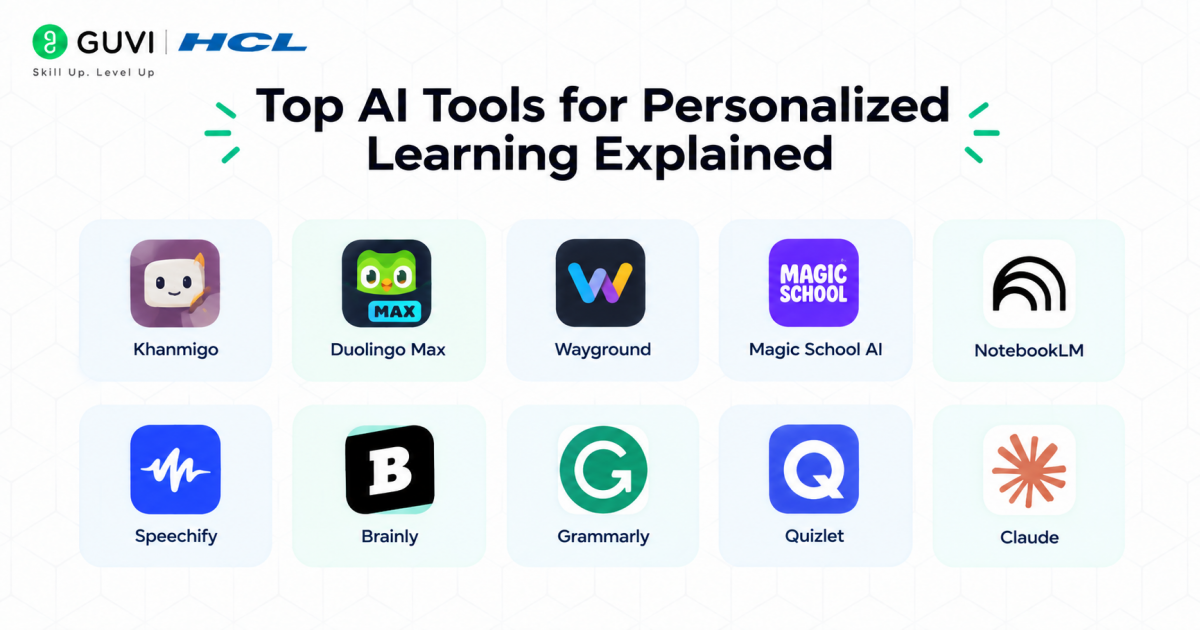
These are the following best AI tools for personalized learning:
1. Khanmigo
Official Link: Khanmigo
What it is: Khanmigo is Khan Academy’s AI tutor that guides students toward answers instead of just handing them out, based on how each student is learning.
Key features:
- Personalized tutoring across math, science, humanities, and test prep
- Uses a Socratic approach, asking questions instead of giving direct answers
- Tracks student progress and adjusts explanations accordingly
- Available for teachers, students, and parents
Best for: Students and teachers who want a tutor style AI that supports understanding, not just quick answers.
Pricing: Free for U.S. teachers; paid plans for students and parents (around $4/month).
2. Duolingo Max
Official Link: Duolingo Max
What it is: Duolingo Max is an AI-enhanced version of Duolingo that adds deeper explanations and real conversation practice to help you actually understand a language, not just memorize it.
Key features:
- Explain My Answer, which breaks down why an answer was right or wrong
- Roleplay, letting you practice real conversations with an AI character
- Adjusts difficulty based on your progress and mistakes
- Built on the same gamified structure as regular Duolingo
Best for: Language learners who want more context and speaking practice beyond basic lessons.
Pricing: Paid subscription, priced higher than standard Duolingo Super.
3. Wayground
Official Link: Wayground
What it is: Wayground, formerly known as Quizizz, is an AI-supported platform teachers use to create quizzes, lessons, and interactive classroom activities that adjust to individual students.
Key features:
- AI tools for translation, difficulty adjustments, and accessibility support
- Individualized accommodations like dyslexia-friendly fonts and read-aloud
- Wide library of ready-made and customizable resources
- Live and homework style session modes
Best for: Teachers wanting to personalize classroom content and support without extra manual work.
Pricing: Free plan available; paid plans unlock more features.
4. Magic School AI
Official Link: Magic School AI
What it is: Magic School AI is a toolkit for teachers that helps them generate lesson plans, materials, and assessments tailored to different students without spending hours on prep.
Key features:
- Dozens of AI tools for lesson planning, IEP support, rubrics, and more
- Generates content adapted to different grade levels and skill levels
- Helps create differentiated materials for diverse classrooms
- Saves significant planning and grading time
Best for: Teachers who want to personalize materials for their students without doing it all manually.
Pricing: Free plan available; paid plans unlock more advanced tools.
5. NotebookLM
Official Link: NotebookLM
What it is: NotebookLM is Google’s AI tool that turns your own notes, documents, or textbooks into personalized study material, built specifically around what you’re actually studying.
Key features:
- Summarizes and organizes your own uploaded material
- Generates quizzes and study guides from your notes
- Creates audio explainers (like a podcast) based on your content
- Answers questions using only your uploaded sources, reducing generic answers
Best for: Students who want study material generated from their own class notes or textbooks, not generic content.
Pricing: Free to use.
6. Speechify
Official Link: Speechify
What it is: Speechify is an AI text-to-speech tool that reads any content aloud, adjusting voice, tone, and pace to match how a learner processes information best.
Key features:
- Converts text, PDFs, and articles into natural sounding speech
- Adjustable reading speed and multiple voice options
- Supports learners with dyslexia or reading difficulties
- Works across documents, web pages, and study material
Best for: Auditory learners or students who find it easier to absorb information by listening rather than reading.
Pricing: Free plan available; paid plans unlock premium voices and features.

7. Brainly
Official Link: Brainly
What it is: Brainly is an AI-powered homework help platform that gives students step-by-step explanations for specific problems, instead of just handing over the final answer.
Key features:
- AI-generated explanations alongside a large community answer database
- Covers subjects from math to science to literature
- Step-by-step breakdowns to help you understand the process, not just the result
- Mobile app support for quick homework help on the go
Best for: Students stuck on a specific homework problem who want to understand the reasoning behind the answer.
Pricing: Free plan available; paid plan unlocks unlimited AI help and expert answers.
8. Grammarly
Official Link: Grammarly
What it is: Grammarly is an AI writing assistant that reviews your writing and gives feedback based on your tone, goals, and current skill level, helping you improve gradually rather than just fixing mistakes.
Key features:
- Real time grammar, clarity, and tone suggestions
- Adjusts feedback based on the type of writing (academic, casual, professional)
- Explains why a correction is being suggested, not just what to change
- Works across browsers, documents, and apps
Best for: Students and professionals looking to improve their writing skills over time, not just fix one document.
Pricing: Free plan available; paid plans unlock deeper feedback and tone adjustments.
9. Quizlet
Official Link: Quizlet
What it is: Quizlet is a flashcard and study tool that uses AI to figure out what you actually know and what you keep getting wrong, then adjusts what it shows you next.
Key features:
- AI-powered Learn mode that focuses more on your weak areas
- Auto-generates flashcards and practice tests from your notes
- Spaced repetition to help you retain information longer
- Multiple study modes, including games and practice tests
Best for: Students memorizing terms, vocabulary, or concepts for tests and exams.
Pricing: Free plan available; paid plan unlocks additional AI features and removes ads.
10. Claude
Official Link: Claude
What it is: Claude is an AI assistant that explains concepts and adjusts its explanations based on how you ask, making it useful for personalized, on-demand learning across almost any subject.
Key features:
- Explains concepts at different levels of depth depending on how you phrase your question
- Can break down complex topics step by step until they make sense
- Works well for essays, coding, research, and general subject explanations
- Adapts tone and complexity based on the conversation
Best for: Students who want detailed, personalized explanations on any topic, not just pre-set lessons.
Pricing: Free plan available; paid plans unlock higher usage limits and advanced features.
Key Benefits of Using AI Tools for Personalized Learning
AI tools for personalized learning work by paying attention to what you individually need, whether that’s a concept you’re stuck on, a language you’re practicing, or your own notes you want turned into something useful. That’s what actually sets them apart from just having more content available.
Here’s what that looks like in practice.
- Adjusts to your actual skill level: Tools like Duolingo Max and Wayground change difficulty based on your answers, so you’re not stuck redoing what you already know or jumping ahead too fast.
- Explains things based on how you ask: Tools like Khanmigo and Claude respond to how you’re thinking through a problem, not just giving a fixed explanation for everyone.
- Turns your own material into study content: NotebookLM builds summaries, quizzes, and explainers directly from your notes or textbooks, so what you study actually matches your coursework.
- Focuses on your specific weak points: Quizlet’s Learn mode and Brainly’s step-by-step help both zero in on what you personally keep getting wrong, instead of repeating everything equally.
- Adapts to how you consume information: Speechify adjusts pace and voice for auditory learners, while Grammarly adjusts its feedback to your writing style and skill level over time.
- Gives feedback without the wait: Whether it’s a wrong answer, a grammar mistake, or a confusing concept, most of these tools respond immediately instead of making you wait for a review.
How to Choose the Right AI Tool for Personalized Learning
Picking the right tool isn’t about finding the single “best” one, it’s about matching it to what you’re actually trying to do. A student cramming for exams needs something different than a teacher trying to manage twenty different learning paces at once.
Here’s a simple way to think about it based on your situation.
| Tool | Best For | Why It Fits |
|---|---|---|
| Khanmigo | Getting tutored through tough problems | It walks you through the thinking, not just the answer |
| Duolingo Max | Actually getting better at a language | It explains your mistakes and lets you practice real conversations |
| Wayground | Running quizzes that adapt to each student | It adjusts difficulty and support for individual kids |
| Magic School AI | Planning lessons without burning hours | It builds differentiated material fast |
| NotebookLM | Studying smarter from your own notes | It turns your material into quizzes and summaries |
| Speechify | Learning by listening instead of reading | It reads content aloud at your pace and voice |
| Brainly | Getting unstuck on homework fast | It breaks problems down step by step |
| Grammarly | Improving writing gradually | It adapts feedback to your style and skill level |
| Quizlet | Memorizing terms for a test | It keeps drilling what you actually get wrong |
| Claude | Understanding a concept, any concept | It adjusts explanation depth to how you ask |
Conclusion
AI tools for personalized learning aren’t about replacing how people learn, they’re about finally making learning fit the person instead of the other way around. Whether it’s a student catching up on a tough concept or a teacher trying to support thirty different learning paces at once, the right tool can turn a frustrating experience into one that actually clicks. Try a couple from this list, see what works for you, and build from there.
FAQs
1. What is the best AI tool for personalized learning?
There’s no single best tool, it depends on your need. Khanmigo suits tutoring, Duolingo Max suits languages, and Quizlet suits memorization.
2. Is ChatGPT good for personalized learning?
Yes, tools like ChatGPT and Claude can explain concepts based on how you ask, but they’re general-purpose, not built specifically for structured learning paths.
3. Are AI tools for personalized learning free?
Most offer a free plan with limited features, while advanced tools and higher usage limits usually require a paid subscription.
4. Can AI really personalize learning for each student?
Yes, to an extent. AI adjusts pace, difficulty, and explanations based on your responses, though it still works best alongside human guidance.
5. Do teachers use AI tools for personalized learning?
Yes, many teachers use tools like Wayground and Magic School AI to create differentiated content and support students at different levels.
Success Stories







Did you enjoy this article?