


Software Automation & Testing Articles
How to Use Claude for A/B Testing Content Variations
Load Testing Your Application with k6: A Practical Introduction
Cypress Component Testing Tutorial: Test Your UI in a Real Browser, Not a Fake One
Manual Tester Roles and Responsibilities: 12 Important Duties for Career Growth


Get In Touch For Details! Request More Information
Best Ways to Learn Automation Testing in 2026
Sep 23, 2026 5 Min Read 9497 Views
(Last Updated)
Running the same test manually for the hundredth time gets old fast. That’s exactly the problem automation testing solves, and why more QA folks are picking it up as a core skill rather than a nice-to-have.
If you’re wondering where to start or which tools actually matter right now, this guide breaks it down simply, no fluff, just what works.
Table of contents
- TL;DR Summary
- What is Automation Testing?
- Best Resources to Learn Automation Testing
- Best Online Courses for Automation Testing
- Best Certifications for Automation Testers
- Best YouTube Channels for Automation Testers
- Best Books to Build Strong Foundations in Automation Testing
- Steps to Begin Your Automation Testing Journey
- Strengthen Your Programming Skills
- Choose the Right Automation Tools
- Enroll in Structured Courses
- Engage with the Community
- Obtain Relevant Certifications
- Conclusion
- FAQs
- Is automation testing a good career choice in 2026?
- Can I learn automation testing without a coding background?
- Which tool should beginners learn first for automation testing, Selenium or Playwright?
- How much time does it take to become job-ready in automation testing?
- Do automation testers need to keep learning new tools every year?
TL;DR Summary
- This blog covers what automation testing is and why it matters for QA folks.
- It helps you find learning resources, including online courses, certifications, YouTube channels, and books.
- It also guides you through five steps to begin: strengthen your programming skills, choose the right tools, enroll in structured courses, engage with the community, and get relevant certifications.
What is Automation Testing?
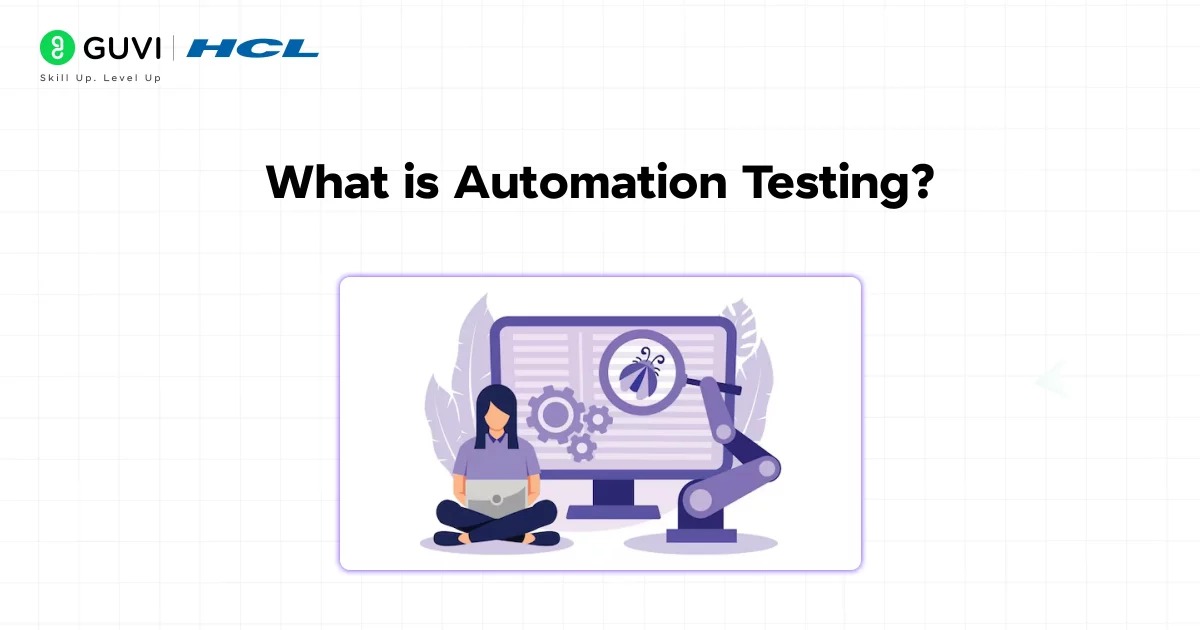
Automation testing involves the use of specialized tools and scripts to execute test cases, reducing or eliminating the need for manual intervention.
This approach ensures consistent, repeatable, and efficient testing processes, which are crucial for maintaining software quality in fast-paced development environments.
By automating repetitive, time-consuming tasks, testers can focus on complex scenarios and edge cases, improving overall test coverage and reliability.
Best Resources to Learn Automation Testing
To become proficient in automation testing, you need both theoretical knowledge and practical skills. Below is a curated list of online courses, certifications, YouTube channels, and books to guide you:
1. Best Online Courses for Automation Testing
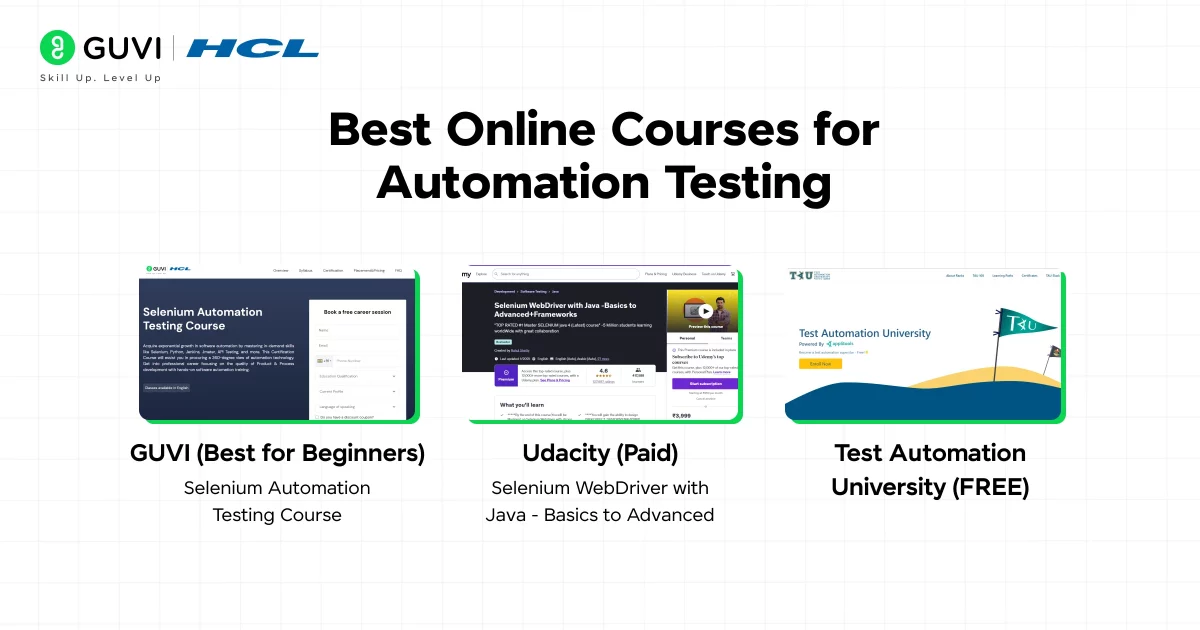
Structured courses offer a systematic approach to learning, combining theory with hands-on practice. Here are some top-rated online courses:
a. Selenium Automation Testing Course – HCL GUVI (Best for Beginners)
This HCL GUVI course is designed for beginners who want to start their automation testing journey with Selenium WebDriver. It offers hands-on training, live mentorship, and certification to help you gain real-world experience.
- What You’ll Learn:
- Selenium WebDriver with Java
- TestNG Framework for test automation
- CI/CD Integration with Jenkins
- Maven & POM (Page Object Model)
- Automating Web Applications with practical projects
- Who Should Take This Course?
- Manual testers looking to transition into automation
- Software engineers who want to implement test automation
- Beginners with little to no prior experience in automation
- Enroll Here: HCL GUVI’s Selenium Automation Testing Course
b. Selenium WebDriver with Java – Basics to Advanced (Udemy – Paid)
This comprehensive Udemy course covers Selenium WebDriver, one of the most widely used tools for automation testing. It takes you from the basics to advanced concepts, including framework development.
- What You’ll Learn:
- Java programming essentials for testers
- Selenium WebDriver setup and architecture
- Building test frameworks from scratch
- Who Should Take This Course?
- Testers with basic programming knowledge
- Individuals aiming to specialize in web automation
- Professionals seeking hands-on framework development experience
- Enroll Here: Selenium WebDriver with Java
c. Test Automation University (Free)
Test Automation University offers many free courses covering various automation tools and practices. It’s an excellent starting point for beginners and a valuable resource for experienced testers looking to expand their skill set.
- What You’ll Learn:
- Fundamentals of test automation
- Tool-specific tutorials (e.g., Selenium, Appium)
- Best practices in automation
- Who Should Take This Course?
- Aspiring automation testers
- Manual testers transitioning to automation
- Experienced testers seeking to learn new tools
- Enroll Here: Test Automation University
2. Best Certifications for Automation Testers
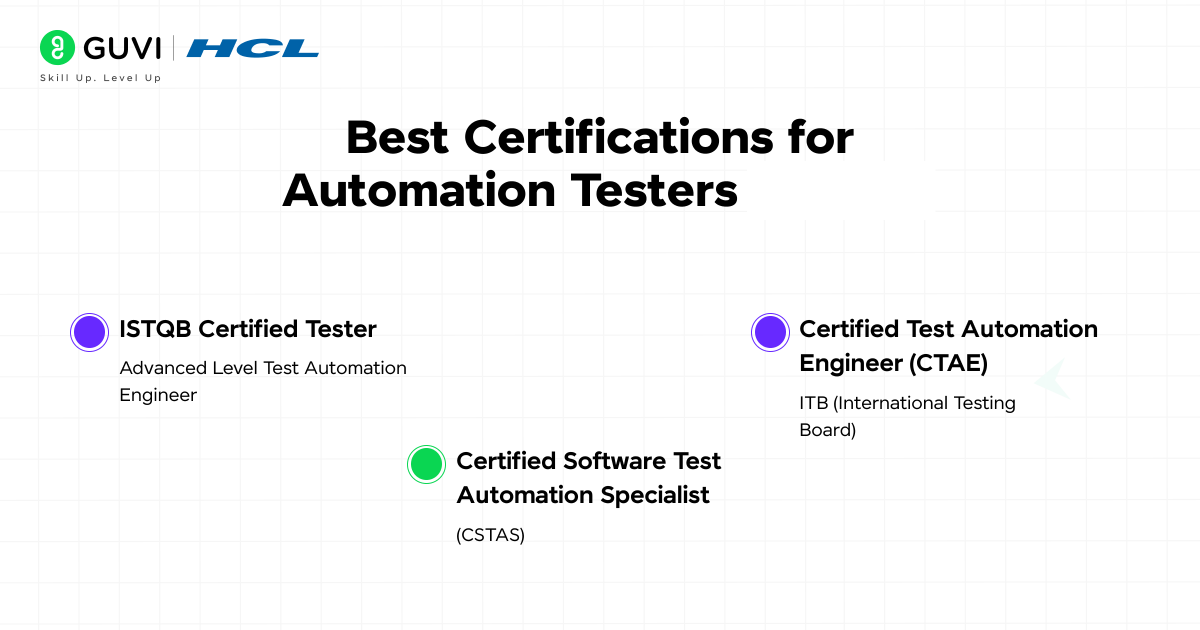
Certifications validate your expertise and enhance your professional credibility. Here are some esteemed certifications to consider:
a. ISTQB Certified Tester – Advanced Level Test Automation Engineer
This certification focuses on designing, developing, and maintaining test automation solutions. It’s globally recognized and ideal for professionals aiming to demonstrate their automation proficiency.
- What You’ll Learn:
- Automation concepts and methodologies
- Design and development of test automation architectures
- Deployment and maintenance of automated test solutions
- Who Should Get This Certification?
- Experienced testers seeking formal recognition
- Automation engineers aiming for career advancement
- Professionals involved in test automation projects
- Link to Certification: ISTQB Test Automation Engineer
b. Certified Software Test Automation Specialist (CSTAS)
The CSTAS certification emphasizes practical skills in automation testing, covering various tools and best practices. It’s suitable for those looking to validate their hands-on experience.
- What You’ll Learn:
- Automation testing fundamentals
- Tool-specific training (e.g., Selenium, QTP)
- Framework development and scripting
- Who Should Get This Certification?
- Testers with practical automation experience
- Individuals seeking to formalize their skills
- Professionals aiming for roles requiring certified expertise
- Link to Certification: CSTAS Certification
c. Certified Test Automation Engineer (CTAE) – ITB (International Testing Board)
The Certified Test Automation Engineer (CTAE) certification validates expertise in automation testing, including scripting, tool implementation, and automation strategies.
- What You’ll Learn:
- Principles of test automation and tool selection
- Test automation architecture and design patterns
- Scripting techniques and automation best practices
- Integration of test automation with CI/CD pipelines
- Who Should Get This Certification?
- Testers looking to specialize in test automation
- QA engineers aiming to develop custom automation frameworks
- Professionals wanting to implement test automation in Agile and DevOps environments
- Link to Certification: CTAE Certification
3. Best YouTube Channels for Automation Testers
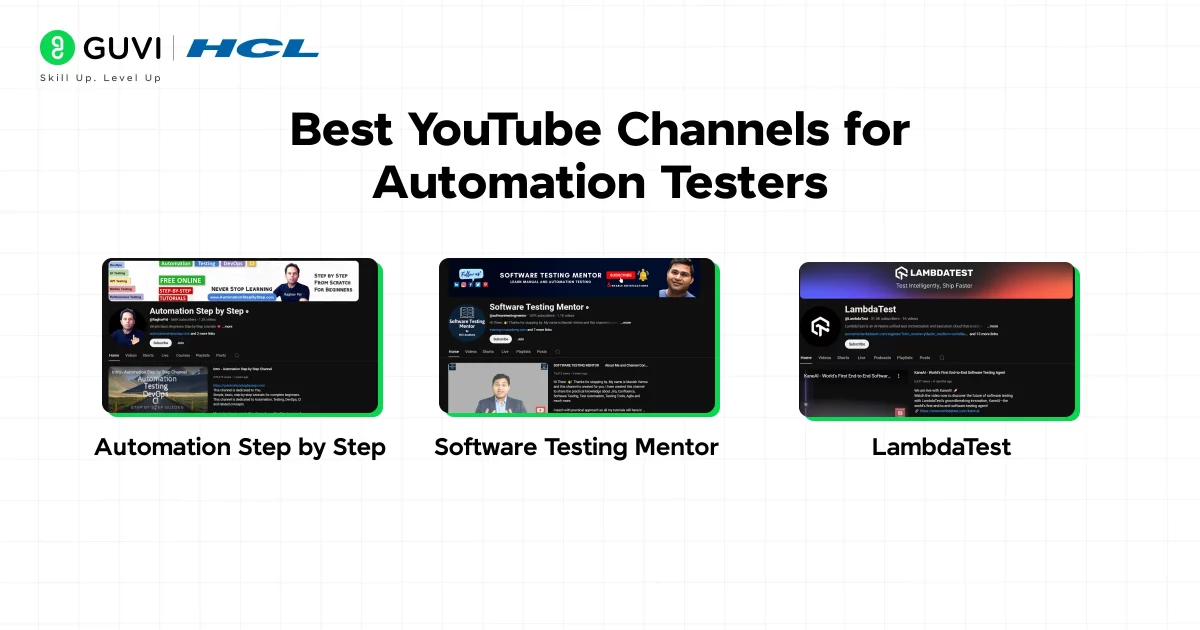
YouTube offers a wealth of free resources for visual and practical learners. Here are some top channels:
a. Automation Step by Step
This channel provides comprehensive tutorials on various automation tools and practices, making complex topics accessible to beginners.
- What You’ll Learn:
- Selenium WebDriver tutorials
- API testing with Postman and RestAssured
- Jenkins CI/CD pipeline setup
- TestNG and JUnit framework concepts
- Who Should Follow This Channel?
- Beginners in automation testing
- Manual testers transitioning to automation
- Professionals looking for structured, easy-to-follow tutorials
- Watch Here: Automation Step by Step
b. Software Testing Mentor
This channel provides in-depth software testing content, including test automation, ISTQB certification preparation, and Agile testing methodologies.
- What You’ll Learn:
- Selenium, Appium, and API automation
- Performance testing with JMeter
- Software testing career guidance
- ISTQB exam preparation
- Who Should Follow This Channel?
- Testers preparing for ISTQB certifications
- Automation professionals looking for tool-specific guidance
- Beginners seeking practical knowledge
- Watch Here: Software Testing Mentor
c. TestMu AI

TestMu AI (formerly LambdaTest) is a cloud-based testing platform that offers tutorials, expert webinars, and discussions on test automation trends and best practices.
- What You’ll Learn:
- Selenium Grid and parallel test execution
- Cypress, Playwright, and TestNG tutorials
- DevOps and CI/CD integration for test automation
- Latest trends in automation testing
- Who Should Follow This Channel?
- Testers interested in cloud-based automation
- DevOps professionals integrating testing into CI/CD
- Advanced testers looking for high-level concepts
- Watch Here: TestMu AI YouTube Channel
4. Best Books to Build Strong Foundations in Automation Testing
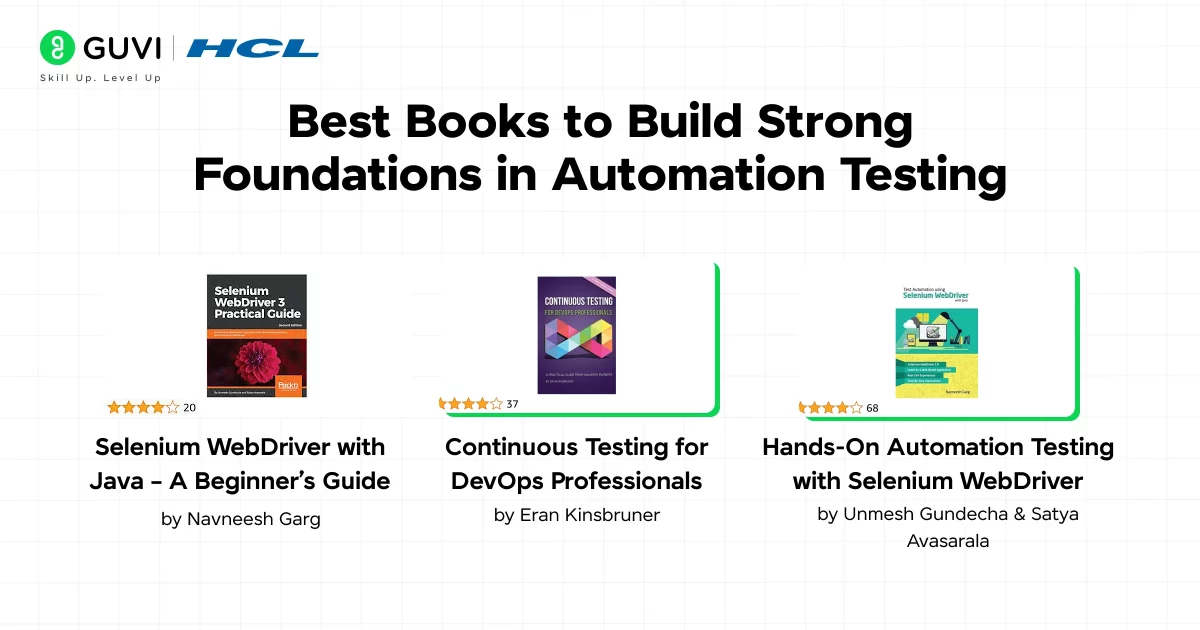
Books are an invaluable resource for gaining in-depth knowledge and mastering automation testing principles. Here are some of the best books to read:
a. “Selenium WebDriver with Java – A Beginner’s Guide” by Navneesh Garg
- What You’ll Learn:
- Selenium WebDriver fundamentals
- Java programming for testers
- Framework development (Page Object Model, Data-Driven Testing)
- Real-world automation scenarios
- Who Should Read It?
- Beginners with little or no coding experience
- Manual testers transitioning to automation
- Java developers interested in test automation
- Get It Here: Selenium WebDriver with Java
b. “Continuous Testing for DevOps Professionals” by Eran Kinsbruner
- What You’ll Learn:
- Integrating automation testing into DevOps pipelines
- Best practices for continuous testing
- Mobile and cloud-based testing strategies
- Case studies and industry trends
- Who Should Read It?
- Test automation professionals working in DevOps
- Software engineers integrating testing into CI/CD
- Test architects designing scalable automation solutions
- Get It Here: Continuous Testing for DevOps Professionals
c. “Hands-On Automation Testing with Selenium WebDriver” by Unmesh Gundecha & Satya Avasarala
This book provides a practical approach to learning Selenium WebDriver and is ideal for those who want hands-on experience in automation testing.
- What You’ll Learn:
- Core Selenium WebDriver concepts and best practices
- How to build robust and maintainable test automation frameworks
- Integration with TestNG, Cucumber, and Jenkins for CI/CD
- Advanced automation techniques like handling dynamic elements and parallel execution
- Who Should Read It?
- Beginners looking for a step-by-step guide to Selenium
- Manual testers transitioning to automation
- Software testers aiming to build scalable automation frameworks
- Get It Here: Hands-On Automation Testing with Selenium WebDriver
Steps to Begin Your Automation Testing Journey
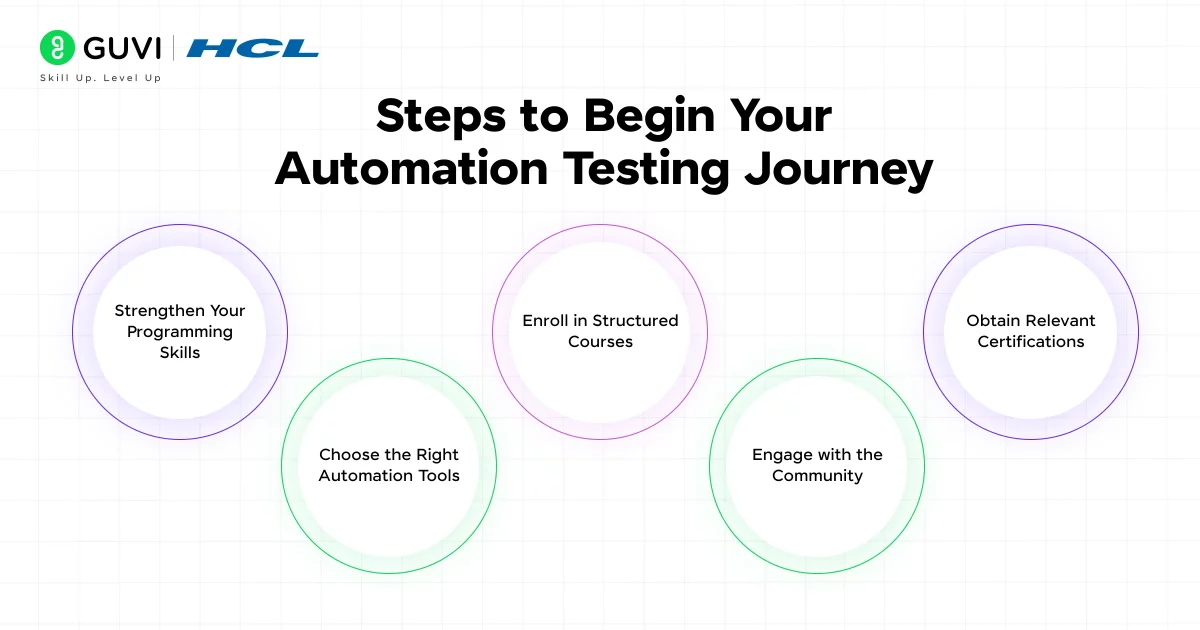
1. Strengthen Your Programming Skills
A solid grasp of programming is essential to create and maintain automated tests. While the choice of language depends on your project’s requirements, popular options include:
- Python: Known for its simplicity and readability, making it ideal for beginners.
- Java: Widely used in enterprise environments with extensive community support.
- JavaScript: Essential for web applications, especially with frameworks like Node.js.
2. Choose the Right Automation Tools
Selecting appropriate tools is critical. Consider the application type (web, mobile, desktop), technology stack, and team expertise. Notable tools are:
- Selenium: Ideal for web applications, supporting multiple browsers and programming languages.
- Appium: Suitable for automating mobile applications across various platforms.
- TestNG: A testing framework inspired by JUnit, designed for test configuration and parallel execution.
3. Enroll in Structured Courses
Formal training can provide a comprehensive understanding of automation testing principles and practices. Consider the following courses:
- Test Automation University: Offers free, community-driven courses on a range of automation topics.
- Coursera: Provides courses like “Automated Software Testing” that cover fundamentals and advanced concepts.
- Udemy: Hosts a variety of courses on automation tools and frameworks.
4. Engage with the Community
Participating in forums and communities can enhance your learning experience:
- Ministry of Testing: A global community offering forums, meetups, and resources dedicated to software testing.
- Reddit’s r/QualityAssurance: A platform to discuss challenges, share resources, and seek advice from fellow testers.
5. Obtain Relevant Certifications
Certifications can validate your expertise and enhance your professional credibility:
- ISTQB Test Automation Engineer: Focuses on designing, developing, and maintaining test automation solutions.
- Certified Software Test Automation Specialist (CSTAS): Emphasizes practical skills in automation testing.
Conclusion
Learning automation testing isn’t about picking the fanciest tool on the list, it’s about building the habit of writing tests that actually hold up when the app changes. Start small, stay consistent, and the rest falls into place faster than you’d think. Pick one tool, build one real project, and the confidence follows on its own.
FAQs
1. Is automation testing a good career choice in 2026?
Yes, automation testing remains in high demand as companies push for faster, more reliable software releases.
2. Can I learn automation testing without a coding background?
You can start with basic testing concepts, but you’ll need to learn some programming (Python, Java, or JavaScript) to write real test scripts.
3. Which tool should beginners learn first for automation testing, Selenium or Playwright?
Playwright is easier to pick up and increasingly preferred for new projects, but Selenium still has the largest job market.
4. How much time does it take to become job-ready in automation testing?
Most people reach a job-ready level in 3 to 6 months with consistent, hands-on practice.
5. Do automation testers need to keep learning new tools every year?
Yes, tools and frameworks evolve fast, so staying updated is part of the job, not optional.
Success Stories














Did you enjoy this article?