


Career Articles
How Can a BPO Professional With 5–10 Years of Experience Get a Data Analyst Job?
Can an Operations Assistant Manager Switch to Data Analytics or Data Science?
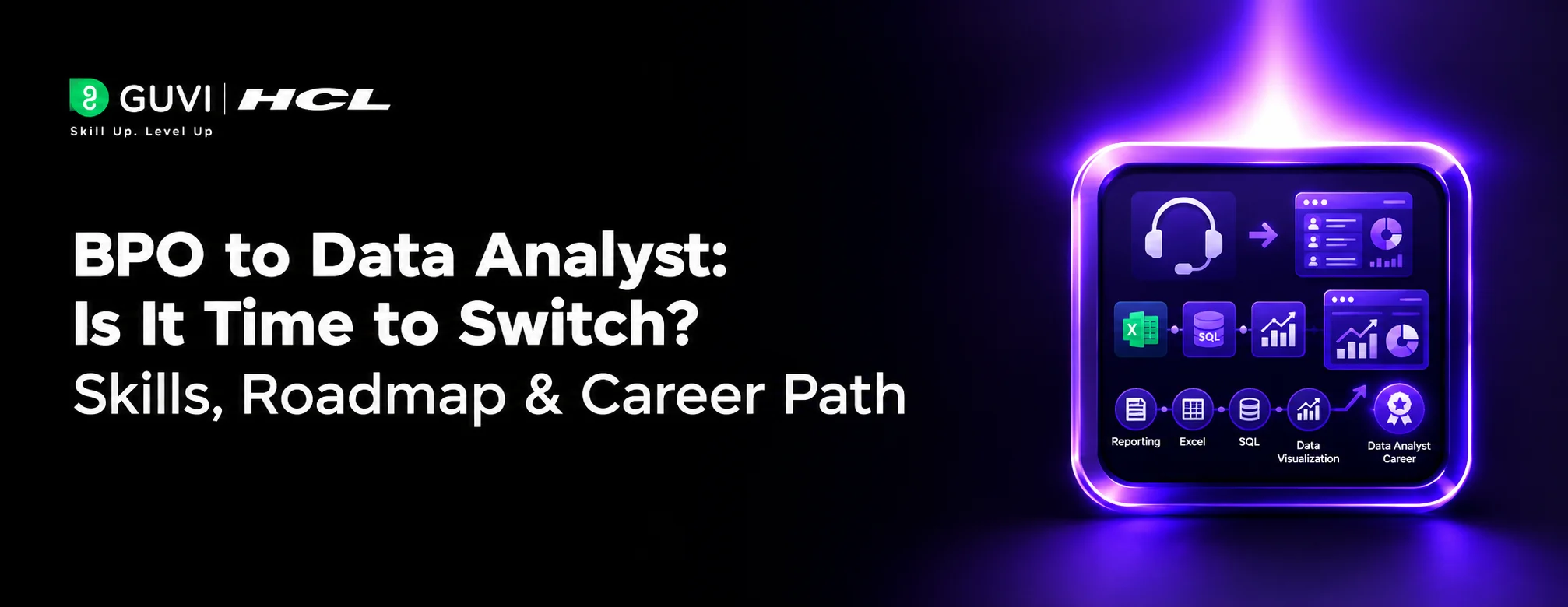
BPO to Data Analyst : Is It Time to Switch? | Skills, Roadmap & Career Path
Do Managers Need Coding to Move Into Data Analytics or Data Science?


Get In Touch For Details! Request More Information
How Long Does It Take to Move From BPO to Data Analytics?
Oct 12, 2026 4 Min Read 31 Views
(Last Updated)
Moving from BPO to Data Analytics can be an appealing option if you want to build a career around data, business insights, and decision-making. However, if you already have several years of experience in customer service, operations, quality, or team management, you may wonder how long it will take to make the switch without losing the value of your existing experience.
The BPO to data analyst timeline depends on your current skills, available learning time, target role, and practical experience. Some professionals may become ready to apply for entry-level or adjacent analytics roles within a few months, while others may need longer to build technical confidence and a project portfolio.
The goal is not simply to finish a course. It is to demonstrate that you can use data to solve business problems while making the most of your previous work experience.
Table of contents
- TL;DR
- How Long Does It Take to Move From BPO to Data Analytics?
- What Should You Learn During the First Three Months?
- Month 1: Strengthen Excel and Data Fundamentals
- Month 2: Learn SQL
- Month 3: Build Power BI Dashboards
- How Does the Timeline Differ for Professionals With Under 4 Years of Experience?
- How Does the Timeline Differ for Professionals With 4+ Years of Experience?
- What Can Delay Your BPO to Data Analyst Transition?
- How Can You Speed Up the Transition?
- When Should You Start Applying for Data Analyst Jobs?
- Conclusion
- FAQs
- How long does it take to become a Data Analyst after BPO?
- Can I become a Data Analyst in three months?
- What should BPO professionals learn first?
- Can a BPO Team Leader switch to Data Analytics after four years?
- Do I need a certification to become a Data Analyst?
- Will I get a higher salary after moving from BPO to Data Analytics?
TL;DR
- The BPO to Data Analyst transition may take around 3–6 months of focused preparation, although individual timelines vary.
- Learn Excel, SQL, Power BI, data cleaning, and basic statistics.
- Professionals with under four years of experience can focus on building core skills and practical projects.
- Professionals with 4+ years of experience should highlight transferable business, reporting, and leadership experience.
- Build two or three projects that demonstrate how you analyze business problems.
- Apply for relevant roles before you feel you have mastered every tool.
- Your first analytics role may not offer an immediate salary increase, so evaluate its responsibilities and long-term growth potential.
How Long Does It Take to Move From BPO to Data Analytics?
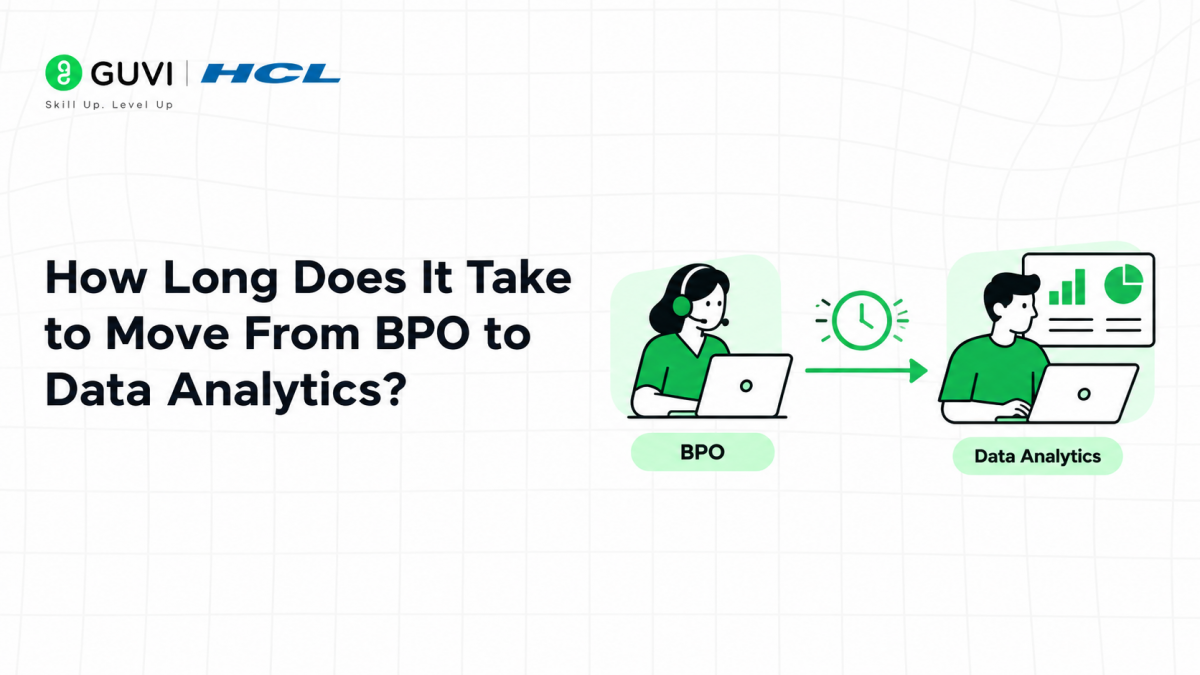
For many career switchers, 3–6 months can be a reasonable initial preparation target if they study consistently and already have basic computer and spreadsheet skills. This is an estimate, not a guarantee of employment.
Your timeline may be shorter if you already prepare reports, use Excel regularly, or analyze KPIs at work. If you are completely new to data tools or have limited study time, you may need six months or longer.
| Preparation Stage | Approximate Timeline | Main Goal |
|---|---|---|
| Excel and data fundamentals | Weeks 1–4 | Clean data and create basic reports |
| SQL | Weeks 5–8 | Query and analyze datasets |
| Power BI | Weeks 9–12 | Build interactive dashboards |
| Portfolio projects and interview preparation | Months 4–6 | Demonstrate practical ability and prepare applications |
You can adjust this plan based on your existing skills. You also do not need to finish every stage before applying for suitable reporting or junior analyst positions.
Looking to transition into data analytics or data science? HCL GUVI’s Data Science Course helps you build practical skills in Python, data analysis, statistics, and machine learning through hands-on projects and industry-focused learning.
What Should You Learn During the First Three Months?
Your first three months should focus on practical skills rather than trying to learn every analytics technology.
Month 1: Strengthen Excel and Data Fundamentals
Start with spreadsheet skills that help you organize and interpret business data.
Focus on:
- Pivot tables and lookup functions
- Conditional formulas
- Data cleaning and formatting
- Charts and summary reports
- Basic percentages, averages, and trends
If you already prepare BPO reports, use that experience to understand how raw data becomes useful information.
Month 2: Learn SQL
SQL helps you retrieve and analyze data from databases. Begin with simple queries and gradually work toward more complex analysis.
Practice:
- SELECT and WHERE
- GROUP BY and aggregate functions
- JOINs
- CASE statements
- Subqueries and common table expressions
For example, you could use SQL to identify which customer support teams have the highest ticket volumes or lowest resolution rates.
Month 3: Build Power BI Dashboards
Learn to turn data into clear visual reports using Power BI.
Practice importing data, cleaning it, creating relationships, building charts, and presenting insights.
A useful project could be a customer support dashboard that tracks ticket volume, resolution time, customer satisfaction, and SLA performance.
Pro Tip: If you already use Excel at work, do not spend weeks repeating concepts you understand. Move toward SQL and dashboard development while strengthening any gaps in your fundamentals.
How Does the Timeline Differ for Professionals With Under 4 Years of Experience?
If you have less than four years of experience, your transition strategy can focus on building technical foundations and demonstrating that you can apply them independently.
Your preparation priorities should include:
- Excel, SQL, and Power BI
- Basic statistics and analytical thinking
- Two or three practical projects
- Resume and interview preparation
- Applications for suitable junior or early-career analyst roles
You may have less leadership experience to leverage, but your current BPO knowledge can still help you build relevant projects.
For example, you could analyze customer satisfaction, employee attendance, quality scores, or service-level performance.
The key is to show employers that you can do more than follow instructions or prepare routine reports. You should be able to identify patterns and explain what the results mean.
How Does the Timeline Differ for Professionals With 4+ Years of Experience?
If you have four or more years of experience, you should approach the transition differently.
You may already understand business processes, KPIs, customer operations, quality management, or team performance. Your task is to combine that experience with the technical skills required for analytics.
Instead of applying only for fresher positions, explore roles such as:
- Operations Analyst
- Reporting Analyst
- Workforce Analyst
- MIS Analyst
- Business Analyst
- Data Analyst
Your portfolio should reflect your experience level. Rather than building only basic charts, investigate a business problem, explain your methodology, identify trends, and recommend possible actions.
For example, a BPO Team Leader could create a workforce analysis project that investigates absenteeism, workload, productivity, and SLA performance.

You may need more time if you are learning technical tools from scratch, but you do not need to discard your previous experience to enter analytics.
What Can Delay Your BPO to Data Analyst Transition?
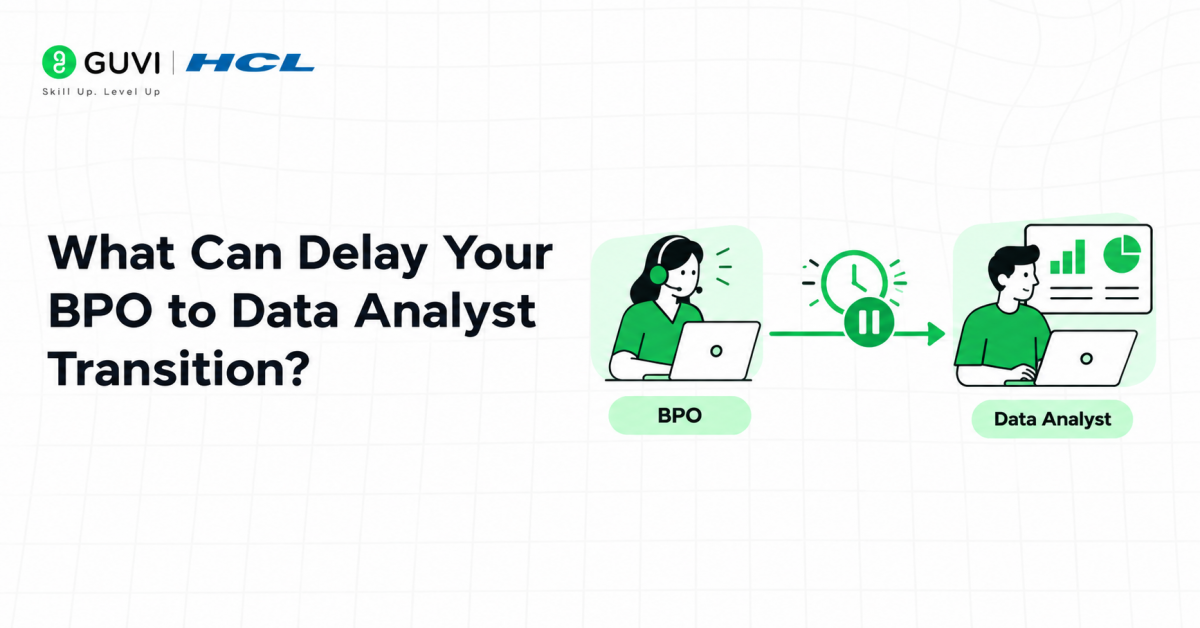
Several common challenges can extend your preparation period.
Learning too many tools at once: Focus on Excel, SQL, and Power BI before adding technologies that are not required for your target roles.
Watching tutorials without practicing: Employers need evidence that you can work with data independently. Build projects using realistic datasets.
Waiting until you feel completely ready: You do not need to master every analytics skill before applying. Start applying when you can demonstrate the core requirements of suitable positions.
Ignoring your previous experience: Your BPO background may be relevant to operations analytics, customer insights, and workforce analysis. Use it to make your applications more targeted.
Having unrealistic salary expectations: A career switch does not guarantee an immediate salary increase. Evaluate the role’s learning opportunities, responsibilities, and future progression alongside compensation.
How Can You Speed Up the Transition?
You can make your preparation more efficient by following a structured approach.
- Choose a target role. Decide whether you want to work in reporting, operations analytics, business intelligence, or general Data Analytics.
- Study consistently. Set aside a realistic amount of time each week and practice what you learn.
- Use familiar business problems. Analyze datasets related to customer service, quality, productivity, or operations.
- Build two or three complete projects. Include the problem, data preparation, analysis, visualizations, findings, and recommendations.
- Prepare your resume early. Highlight relevant reporting, KPI analysis, process improvement, and stakeholder communication experience.
- Apply while continuing to learn. Use job descriptions and interview feedback to identify skills you still need to improve.
Your first analytics project does not need to involve advanced machine learning. A well-executed project that identifies a business problem, analyzes reliable data, and explains actionable findings can demonstrate valuable analyst skills.
When Should You Start Applying for Data Analyst Jobs?
Start applying when you can demonstrate the core skills required for the roles you are targeting.
For many beginner-friendly positions, that means being able to clean a dataset, write basic SQL queries, create a dashboard, interpret results, and explain your approach clearly.
You should also have at least one or two projects you can discuss confidently during an interview.
Do not treat the three-to-six-month estimate as a deadline. Your readiness matters more than the number of weeks you have studied. If you are already doing analytical work in your BPO role, you may be able to start applying sooner.
Conclusion
Moving from BPO to Data Analytics can take several months of focused preparation, but there is no fixed timeline that guarantees a job. Your progress depends on the skills you already have, how consistently you practice, and the roles you target.
If you have less than four years of experience, concentrate on building strong technical foundations and practical projects. If you have four or more years of experience, combine those skills with your knowledge of business operations, reporting, and performance management.
The most effective approach is to learn with a clear goal, demonstrate your abilities through projects, and begin applying when you are ready for the responsibilities of your target role.
FAQs
1. How long does it take to become a Data Analyst after BPO?
A focused preparation period of around three to six months may be a reasonable starting target. The actual time depends on your existing skills, practice schedule, project experience, and job requirements.
2. Can I become a Data Analyst in three months?
It is possible to build foundational skills in three months, especially if you already know Excel and can study consistently. Securing a job may take additional time for projects, interviews, and applications.
3. What should BPO professionals learn first?
Start with Excel, SQL, Power BI, data cleaning, and basic statistics. These skills can prepare you for many reporting and analytics tasks.
4. Can a BPO Team Leader switch to Data Analytics after four years?
Yes. A Team Leader can use experience with KPIs, reports, operations, and process improvement while developing technical analytics skills. Roles such as Operations Analyst or Reporting Analyst may also be worth considering.
5. Do I need a certification to become a Data Analyst?
A certification can provide structure and demonstrate learning, but it does not replace practical skills. Projects, technical knowledge, and your ability to explain findings are also important.
6. Will I get a higher salary after moving from BPO to Data Analytics?
Not necessarily at the beginning. Your salary will depend on the role, employer, location, technical skills, and previous experience. Consider the long-term growth opportunity as well as the initial offer.
Success Stories

About the Author
HCL GUVI
This article was selected and published as part of the HCL GUVI AI Blogathon 2026, an initiative designed to encourage students, AI enthusiasts, and aspiring tech writers to simplify complex AI concepts through impactful technical content. The contest recognized high-quality, original, and insightful AI-focused blogs, with selected authors receiving publication opportunities on the HCL GUVI blog platform along with official author credits and recognition.
View all posts by HCL GUVI
Connect with me @










Did you enjoy this article?