


AWS Kubernetes Articles
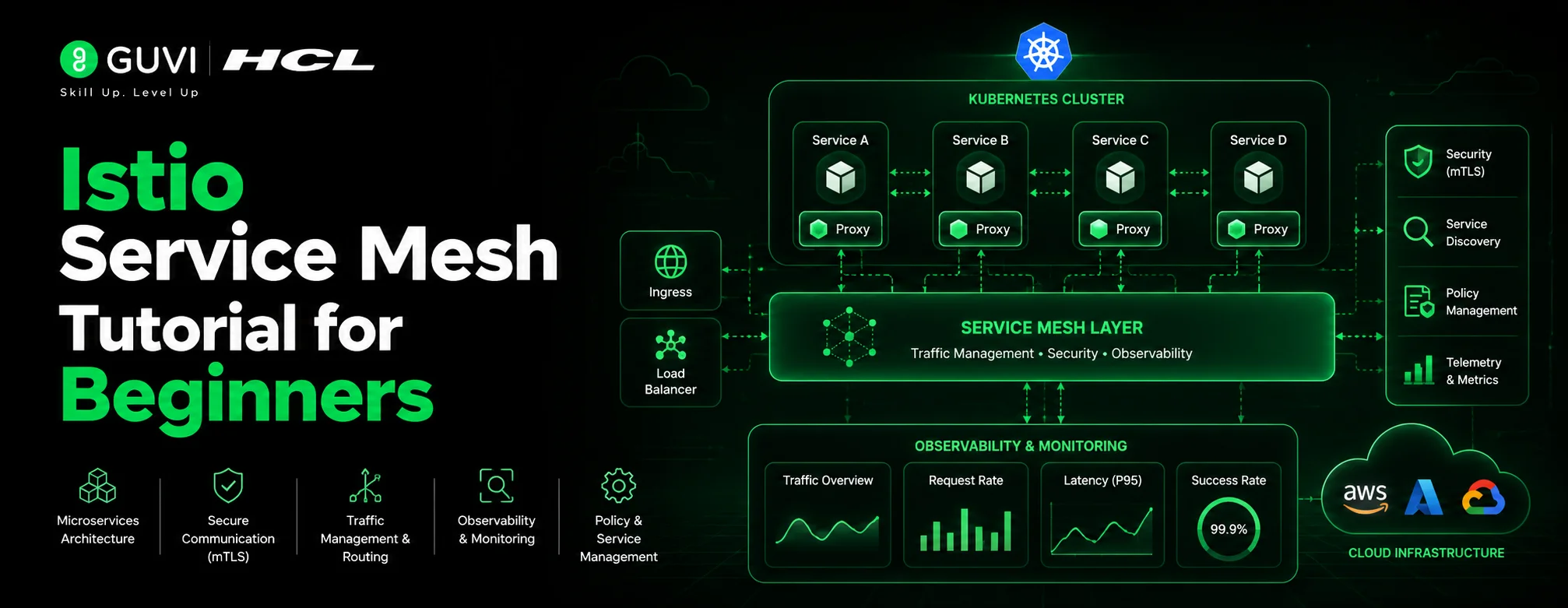
Istio Service Mesh Tutorial for Beginners
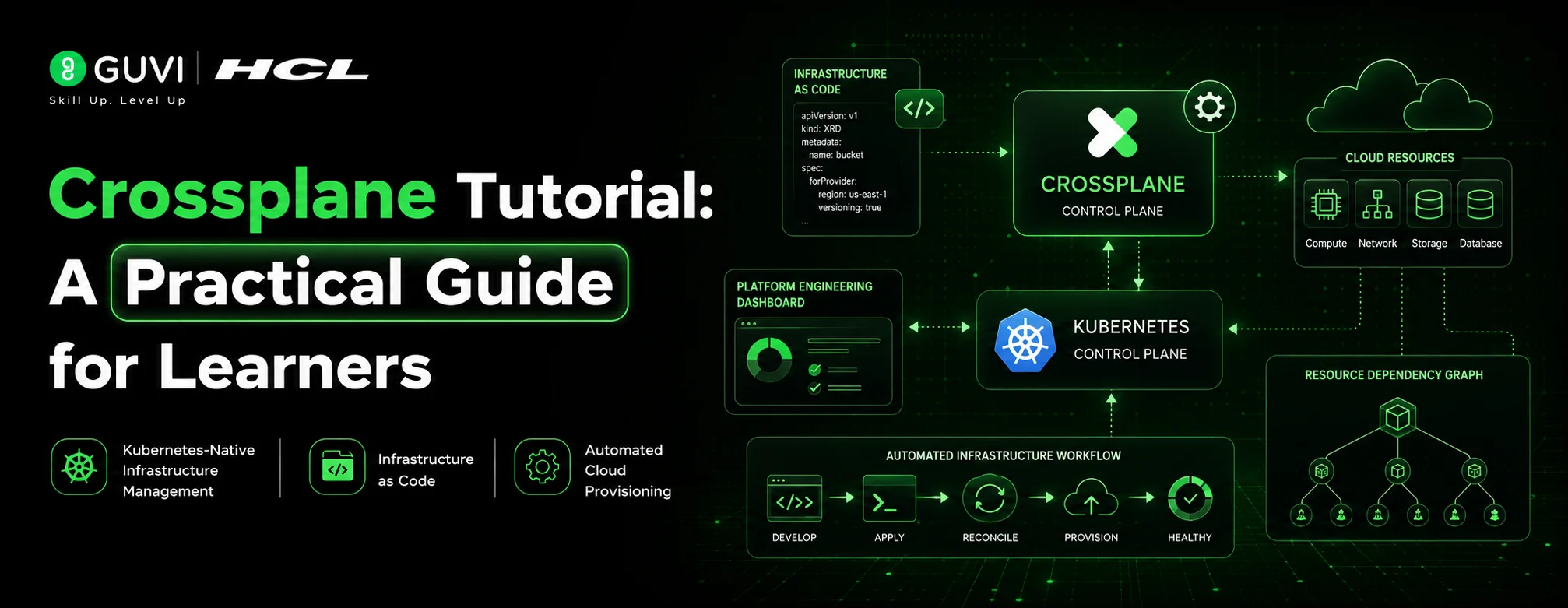
Crossplane Tutorial: A Practical Guide for Learners


Get In Touch For Details! Request More Information
AWS Cloud Computing Interview Questions for Freshers and Experienced Professionals 2026
Jul 21, 2026 5 Min Read 423 Views
(Last Updated)
Many freshers and working professionals preparing for cloud roles struggle to find AWS cloud computing interview questions that go beyond surface-level definitions. AWS interviews test both your theoretical knowledge and your ability to apply concepts to real-world scenarios. Knowing which questions to prepare for and how to answer them clearly can make the difference between landing a cloud role and missing it.
Table of contents
- Quick TL;DR
- What Is AWS Cloud Computing?
- Why Do Companies Ask AWS Interview Questions?
- Beginner AWS Cloud Computing Interview Questions
- Intermediate AWS Cloud Computing Interview Questions
- Advanced AWS Cloud Computing Interview Questions
- Real-World Example of AWS in Action
- Common Mistakes in AWS Interviews
- Conclusion
- FAQ
- What are the most common AWS cloud computing interview questions?
- Is AWS certification required to crack an AWS interview?
- What AWS knowledge is expected for a fresher interview?
- How do I prepare for AWS interviews without prior experience?
- What AWS services are asked most in DevOps interviews?
- How important is IAM in AWS interviews?
- Can freshers get AWS jobs in India without work experience?
- What is the difference between AWS and other cloud providers like Azure and GCP?
Quick TL;DR
- AWS cloud computing interview questions test your understanding of Amazon Web Services’ core concepts, services, and architecture.
- Interviewers typically cover EC2, S3, IAM, VPC, Lambda, RDS, and cloud computing fundamentals.
- This guide covers the most frequently asked AWS interview questions across beginner, intermediate, and advanced levels, with clear answers to help you prepare confidently for your next cloud role.
What Is AWS Cloud Computing?
AWS (Amazon Web Services) is the world’s most widely used cloud platform, offering over 200 fully featured services including computing, storage, databases, and machine learning.
It follows three main cloud service models: Infrastructure as a Service (IaaS), Platform as a Service (PaaS), and Software as a Service (SaaS). Understanding these models is a must before any AWS interview.
Why Do Companies Ask AWS Interview Questions?
AWS holds the largest share of the global cloud market, making AWS skills one of the most in-demand competencies across software engineering, DevOps, and data roles.
Companies use AWS interview questions to verify that candidates can design scalable architectures, manage cloud security, optimize costs, and troubleshoot real infrastructure issues.
Explore HCL GUVI’s AWS Fundamental Course, designed for beginners and working professionals aiming to crack cloud interviews in 2026.
Beginner AWS Cloud Computing Interview Questions
- What is Amazon EC2?
Amazon EC2 (Elastic Compute Cloud) provides resizable virtual servers in the cloud. It lets you run applications without physical hardware and scale compute capacity based on demand.
- What is Amazon S3?
Amazon S3 (Simple Storage Service) is object storage that lets you store and retrieve any amount of data from anywhere. Data is stored as objects inside containers called buckets, commonly used for backups, static websites, and archiving.
- What is the difference between S3 and EBS?
S3 is object storage for files, images, and backups accessed over the internet. EBS (Elastic Block Store) is block storage attached directly to an EC2 instance, like a hard drive. EBS is accessible only by the instance it is attached to.
- What is IAM in AWS?
IAM (Identity and Access Management) controls who can access your AWS resources and what actions they can perform. It lets you create users, groups, and roles with permissions assigned through policies.
- What is a Region and Availability Zone in AWS?
A Region is a physical location where AWS operates multiple data centres. Each Region has two or more Availability Zones, each with its own power, cooling, and networking. Deploying across multiple AZs protects against data centre failures.
- What is Auto Scaling in AWS?
Auto Scaling automatically adjusts the number of EC2 instances based on traffic. It adds instances when demand rises and removes them when demand drops, keeping your application available without paying for idle resources.
Amazon Web Services (AWS) began its public cloud journey in 2006 with just three foundational services: Amazon S3 for storage, Amazon EC2 for virtual computing, and Amazon SQS for message queuing. What started as a small set of infrastructure services has grown into the world’s largest cloud computing platform, offering hundreds of services across computing, databases, analytics, networking, artificial intelligence, and security. Today, AWS powers applications for startups, enterprises, educational institutions, and government organizations worldwide, and it continues to play a major role in shaping the modern cloud computing ecosystem.

Intermediate AWS Cloud Computing Interview Questions
- What is a VPC in AWS?
A VPC (Virtual Private Cloud) is a logically isolated network within AWS where you launch resources. It gives you full control over IP ranges, subnets, route tables, and internet gateways.
- What is the difference between a public subnet and a private subnet?
A public subnet has a route to the internet through an Internet Gateway. A private subnet has no direct internet route, making it ideal for databases and backend services that should not be publicly accessible.
- What is Amazon RDS?
Amazon RDS (Relational Database Service) is a managed service for setting up and scaling relational databases. It supports MySQL, PostgreSQL, Oracle, SQL Server, and Amazon Aurora, and handles backups and patching automatically.
- What is AWS Lambda?
AWS Lambda is a serverless compute service that runs your code in response to events like HTTP requests or S3 uploads. You pay only for the compute time your code actually uses, with no servers to manage.
- What is CloudWatch in AWS?
Amazon CloudWatch monitors AWS resources and applications by collecting metrics, logs, and events. It lets you set alarms that trigger actions when thresholds are crossed, making it essential for debugging and performance monitoring.
AWS Lambda is one of the most widely adopted serverless computing services in the world, handling massive volumes of event-driven workloads every month. With Lambda, developers can run code without provisioning or managing servers, allowing them to focus on application logic while AWS automatically handles infrastructure scaling, availability, and maintenance. This serverless approach has become increasingly popular for use cases such as real-time data processing, API backends, automation workflows, file processing, and IoT applications. By eliminating much of the operational overhead associated with traditional infrastructure management, Lambda has helped make serverless computing one of the fastest-growing areas of cloud adoption.
Advanced AWS Cloud Computing Interview Questions
- What is the difference between horizontal and vertical scaling?
Vertical scaling increases the size of a single instance. Horizontal scaling adds more instances to distribute the load. AWS recommends horizontal scaling for production workloads as it improves fault tolerance and removes single points of failure.
- What is the difference between Security Groups and Network ACLs?
Security Groups are stateful firewalls applied at the instance level. Network ACLs are stateless and applied at the subnet level. With Security Groups, return traffic is automatically allowed. With Network ACLs, both inbound and outbound rules must be explicitly set.
- What is AWS CloudFormation?
CloudFormation is an infrastructure-as-code service that lets you define AWS resources using JSON or YAML templates. It automates the creation and configuration of your entire infrastructure, ensuring consistent and repeatable deployments.
Real-World Example of AWS in Action
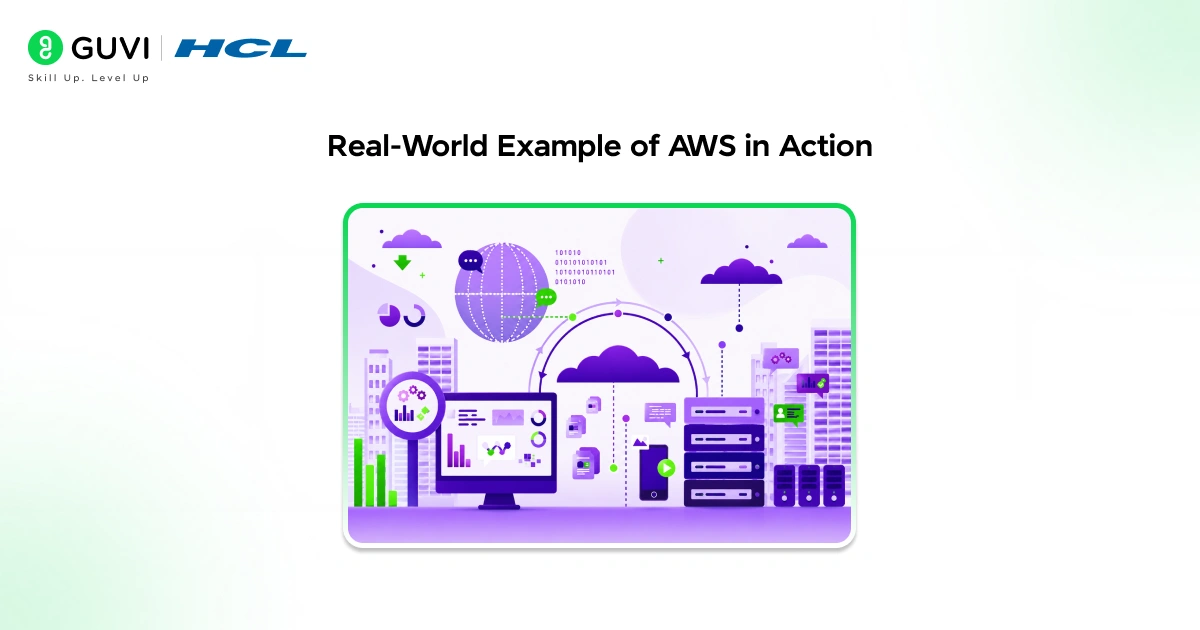
Consider a food delivery platform operating across multiple cities in India. EC2 instances behind an Elastic Load Balancer handle incoming order requests. RDS with Multi-AZ deployment manages the order database with automatic failover.
S3 stores menu images and receipts. Lambda processes payment confirmations asynchronously. CloudWatch monitors latency and triggers Auto Scaling during peak meal hours. This architecture is standard across fintech, e-commerce, and food tech companies on AWS.
Common Mistakes in AWS Interviews
1. Memorising definitions without understanding use cases: Interviewers ask follow-up questions about trade-offs and real scenarios. Learn not just what each service does, but when and why to use it over an alternative.
2. Confusing similar services: Candidates often mix up S3 with EBS, RDS with DynamoDB, or Security Groups with Network ACLs. Study paired services carefully, as these comparisons appear in almost every AWS interview.
3. Ignoring the pricing model: AWS pricing comes up frequently in architect roles. Know the differences between on-demand, reserved, and spot instances and when each is the right choice.
4. Not knowing IAM deeply enough: IAM is tested at every level. Go beyond the basics and understand roles versus users, managed versus inline policies, and cross-account access.
5. Skipping hands-on practice: Interviewers can quickly spot candidates who have only read about AWS. Use the AWS Free Tier to build and deploy real projects before your interview.
Want to build job-ready AWS skills with hands-on projects and real-world scenarios? Explore HCL GUVI’s AWS Fundamental Course, designed for beginners and working professionals aiming to crack cloud interviews in 2026.
Conclusion
As cloud adoption accelerates across industries in India and globally, AWS skills remain among the most valued in the job market. Cracking AWS cloud computing interview questions takes more than memorising service names.
It requires understanding how services work together, when to use each one, and how to build reliable, cost-efficient architectures. Start with beginner questions, practise on the AWS Free Tier, and build your way up to advanced architecture topics.
FAQ
1. What are the most common AWS cloud computing interview questions?
The most commonly asked questions cover EC2, S3, IAM, VPC, Lambda, RDS, Auto Scaling, and CloudWatch. Interviewers at all levels also ask about differences between similar services, cloud security, and cost optimisation.
2. Is AWS certification required to crack an AWS interview?
AWS certification is not mandatory but strengthens your profile significantly. The AWS Certified Cloud Practitioner is ideal for freshers, while the AWS Certified Solutions Architect Associate is the most valued certification for cloud engineer roles.
3. What AWS knowledge is expected for a fresher interview?
Freshers should know core services like EC2, S3, IAM, and VPC, understand IaaS, PaaS, and SaaS, and be able to explain Regions, Availability Zones, and Auto Scaling clearly.
4. How do I prepare for AWS interviews without prior experience?
Start with the AWS Free Tier, which gives hands-on access to over 100 services at no cost. Build simple projects like hosting a static website on S3 or launching an EC2 instance alongside structured learning.
5. What AWS services are asked most in DevOps interviews?
DevOps interviews focus on EC2, IAM, VPC, CloudFormation, CodePipeline, CodeDeploy, CloudWatch, Elastic Load Balancer, and Auto Scaling. Knowledge of ECS or EKS is increasingly expected for senior roles.
6. How important is IAM in AWS interviews?
IAM is tested in almost every AWS interview. Be comfortable explaining users, groups, roles, policies, and the principle of least privilege. Cross-account access and role assumption come up frequently in intermediate and advanced rounds.
7. Can freshers get AWS jobs in India without work experience?
Yes. Many companies hire freshers for cloud support and junior engineer roles based on AWS certification and hands-on project experience. Building and hosting a real project on AWS before your interview gives you a clear advantage.
8. What is the difference between AWS and other cloud providers like Azure and GCP?
AWS is the oldest and largest platform with the widest range of services. Azure integrates tightly with Microsoft tools. GCP is preferred for data and machine learning workloads. AWS is the most asked-about platform in Indian and global cloud interviews.
Success Stories

About the Author
Vishalini Devarajan
An Aerospace Engineer turned content writer, I focus on making complex concepts easy to understand through well-structured, reader-friendly blogs. Whether it’s a technical topic or a non-technical one, I love creating content that is clear, engaging, and impactful.
View all posts by Vishalini Devarajan
Connect with me @







Did you enjoy this article?