


Product Management Articles
Enterprise Product Management: Unique Challenges, Skills & Strategy
B2B vs B2C Product Management: Key Differences, Skills, Strategy & Career Scope
Working with Engineers as a Product Manager: A Practical Guide


Get In Touch For Details! Request More Information
How Product Managers Plan Successful Product Launches
Sep 13, 2026 4 Min Read 495 Views
(Last Updated)
A great product does not achieve success simply because it is well-built. Many products with excellent features fail due to a poorly planned launch process.
This is where product managers play a vital role. They coordinate teams, define launch goals, prepare market strategies, manage risks, and ensure customers receive value right from the start.
Modern product launches have become more complicated than ever. Product managers now work closely with engineering, design, marketing, sales, customer success, analytics, and AI tools to carry out successful launches. Rather than seeing launch day as the finish line, leading companies view product launches as a continuous process of learning, optimizing, and growing.
In this article, you will learn how product managers plan successful product launches , the stages involved, common challenges, best practices, and the skills needed to deliver products that customers actually adopt.
Table of contents
- TL;DR
- What Is a Product Launch?
- Why Product Managers Own Product Launches
- How Product Managers Plan a Launch
- Understanding the Customer Problem
- Defining Success Metrics
- Creating a Launch Roadmap
- Conducting Launch Readiness Reviews
- How Product Managers Execute a Launch
- Aligning Cross-Functional Teams
- Preparing Go-to-Market Activities
- Running Controlled Rollouts
- Monitoring Launch Day Performance
- Measuring Launch Success
- Common Product Launch Challenges
- Misalignment Between Teams
- Unclear Messaging
- Last-Minute Scope Changes
- Poor Readiness Planning
- Limited Customer Feedback
- Best Practices for Product Launch Execution
- Start Planning Early
- Focus on Customer Outcomes
- Build Strong Cross-Functional Communication
- Test Extensively
- Treat Launches as Learning Opportunities
- The Future of Product Launch Management
- Conclusion
- FAQs
- What does a product manager do during a product launch?
- Why is launch planning important in product management?
- What metrics measure product launch success?
- What is launch readiness in product management?
- How is AI changing product launch management?
TL;DR
- Product managers lead the planning, coordination, and execution of product launches.
- Successful launches begin with market research, customer understanding, and clear business goals.
- Product managers bring together engineering, marketing, sales, and support teams around a shared launch plan.
- Modern launch strategies focus on readiness, customer adoption, and ongoing improvement rather than just launch day.
- Metrics such as activation, adoption, retention, and customer feedback help measure launch success.
What Is a Product Launch?
A product launch is the process of introducing a new product, feature, or service to customers. It includes everything from planning and development to marketing, sales support, customer communication, and analysis after the launch.
A launch is not just an announcement. It is a coordinated effort designed to create awareness, generate demand, drive adoption, and deliver results.
For product managers, a launch marks the moment when months of research, development, and teamwork become visible to customers.
Why Product Managers Own Product Launches
Product managers sit at the center of the product ecosystem.
They understand customer needs, business goals, technical limits, and market opportunities. Because of this unique role, they are responsible for bringing multiple teams together and making sure everyone works toward the same goal.
A product manager typically coordinates:
- Engineering teams are building the product.
- Design teams are improving user experience.
- Marketing teams are creating awareness.
- Sales teams are preparing for customer conversations.
- Customer support teams addressing user issues.
- Leadership teams tracking business results.
Without a product manager driving coordination, launch activities can easily become scattered and ineffective.
How Product Managers Plan a Launch
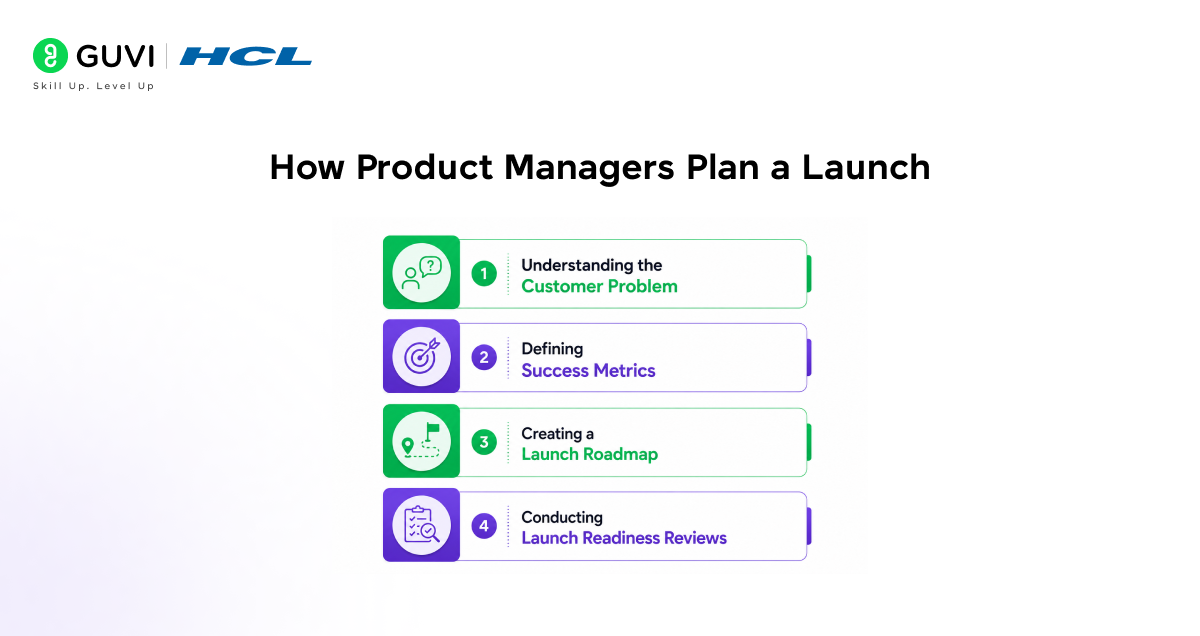
1. Understanding the Customer Problem
The first step is identifying the customer problem that the product solves.
Product managers conduct market research, analyze user behavior, review customer feedback, and study competitors to validate demand.
The goal is to ensure the product addresses a real need instead of just adding features.
2. Defining Success Metrics
Before launch planning starts, product managers set clear success criteria.
Common launch metrics include:
- User signups
- Feature adoption
- Customer retention
- Revenue growth
- Conversion rates
- Customer satisfaction scores
Clear metrics help teams understand what success looks like and guide them throughout the launch process.
3. Creating a Launch Roadmap
A launch roadmap outlines major milestones, timelines, dependencies, and deliverables.
This roadmap helps teams stay on the same page and ensures critical tasks are completed before launch day.
Product managers often work backward from the launch date to determine deadlines and responsibilities.
4. Conducting Launch Readiness Reviews
Before releasing a product, teams need to ensure that all critical functions are prepared.
Launch readiness reviews evaluate:
- Product quality
- Technical stability
- Documentation
- Sales training
- Marketing assets
- Customer support preparation
This process helps identify risks before they affect customers.
As AI becomes increasingly integrated into product workflows, many teams are using rapid validation techniques before development. Learn how AI Prototyping for Product Managers helps accelerate idea validation and product planning.
Many modern product teams are shifting their focus from building a Minimum Viable Product (MVP) to creating a Minimum Lovable Product (MLP). While an MVP is designed to validate an idea with the fewest possible features, an MLP goes a step further by ensuring that early users genuinely enjoy the experience. The goal is to deliver just enough functionality to solve a real problem while also creating a positive emotional connection with users. Products that achieve this balance often see stronger adoption, higher retention, more word-of-mouth growth, and better-quality customer feedback, helping teams build momentum from the very first release.
How Product Managers Execute a Launch
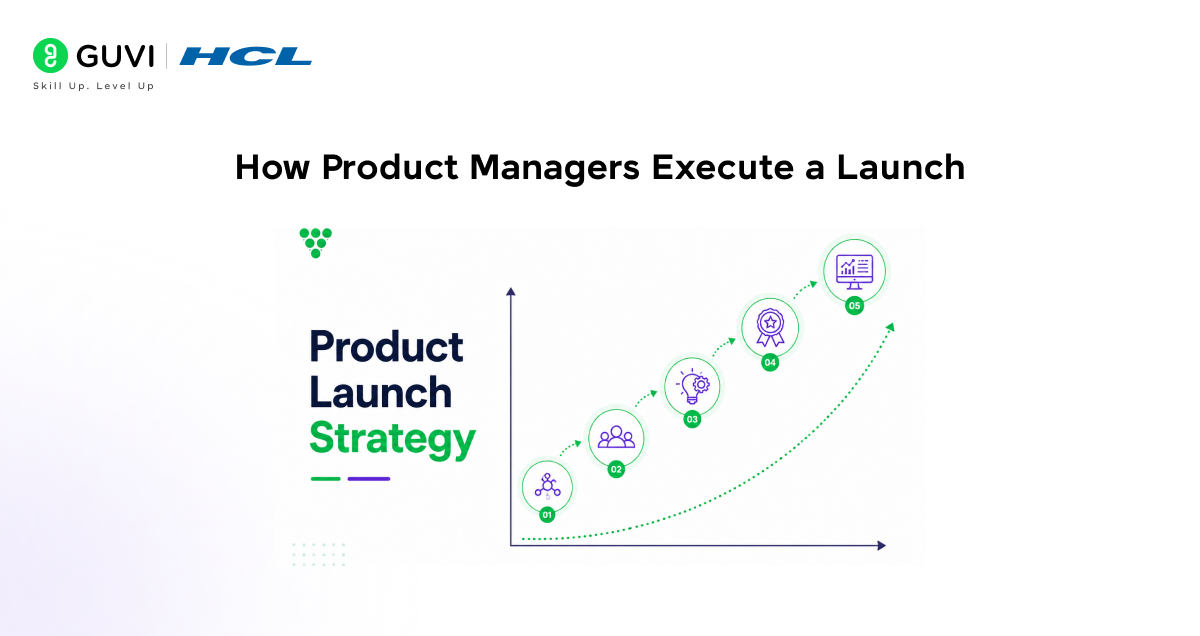
1. Aligning Cross-Functional Teams
Execution begins by ensuring every department understands its role.
Product managers organize launch meetings, communicate priorities, track dependencies, and remove obstacles that could delay progress.
Cross-functional alignment often plays a significant role in successful launches.
2. Preparing Go-to-Market Activities
A go-to-market strategy outlines how customers will learn about and adopt the product.
This may include:
- Product announcements
- Content marketing campaigns
- Email campaigns
- Product demonstrations
- Webinars
- Sales enablement materials
The goal is to communicate the product’s value clearly to the target audience.

3. Running Controlled Rollouts
Many organizations no longer release products to all users at once.
Instead, they use phased rollouts that allow teams to monitor performance, gather feedback, and fix issues before a broader release.
This reduces risk while enhancing customer experience.
4. Monitoring Launch Day Performance
Launch day demands continuous monitoring.
Product managers keep track of:
- System performance
- User activity
- Adoption trends
- Customer feedback
- Technical issues
Quick responses help minimize disruptions and maintain customer trust.
Faster experimentation and automation are becoming essential for modern product teams. This guide, How n8n Accelerates Product Development with Lovable, explores how teams can streamline product development workflows.
Measuring Launch Success
A launch is only successful if it delivers measurable outcomes.
Product managers typically evaluate performance using metrics such as:
- User acquisition
- Product activation
- Daily active users
- Feature adoption rates
- Customer retention
- Revenue impact
- Net Promoter Score
- Customer support volume
These metrics help determine if the launch met its goals and show opportunities for future improvements.
Modern product execution is becoming more data-driven than ever. HCL GUVI’s AI Ebook introduces key AI concepts that are helping product teams make smarter decisions throughout the product lifecycle.
Common Product Launch Challenges
1. Misalignment Between Teams
Different departments may have conflicting priorities, leading to delays and confusion.
2. Unclear Messaging
Customers may find it challenging to understand a product’s value if the messaging is inconsistent.
3. Last-Minute Scope Changes
Unexpected feature requests can create launch risks and disrupt timelines.
4. Poor Readiness Planning
Incomplete training, missing documentation, or insufficient support preparation can negatively impact customer experience.
5. Limited Customer Feedback
Launching without enough validation increases the risk of low adoption.
Best Practices for Product Launch Execution
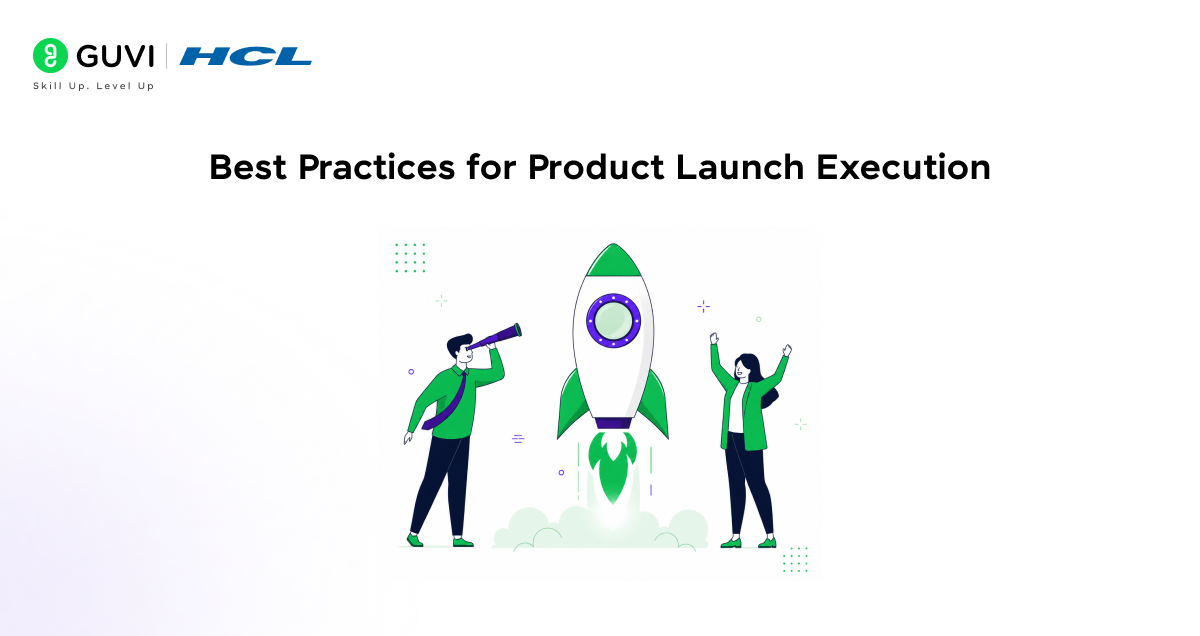
1. Start Planning Early
Successful launches often begin months before release to allow enough time for testing, training, and preparation.
2. Focus on Customer Outcomes
Every launch decision should connect back to customer needs and business value.
3. Build Strong Cross-Functional Communication
Frequent updates help teams stay aligned and prevent surprises.
4. Test Extensively
Product quality directly affects customer trust and adoption.
5. Treat Launches as Learning Opportunities
The best product managers see launches as experiments rather than one-time events. They gather feedback, analyze data, and continuously improve the product.
Effective launch execution also depends on strong operational planning. Understanding the fundamentals of Production Management can provide valuable insights into managing processes and resources efficiently.
The Future of Product Launch Management
Product launch management is rapidly evolving.
Artificial intelligence is helping product managers analyze customer behavior, identify launch risks, automate reporting, and make better decisions. Organizations increasingly use AI analytics, experimentation platforms, and predictive insights to improve launch outcomes.
Future product managers will spend less time gathering data and more time interpreting insights, making strategic choices, and coordinating teamwork across departments.
Looking to become a product manager? HCL GUVI’s Product Management Programme covers product strategy, customer research, market analysis, product lifecycle management, and real-world business applications to help you build industry-ready product management skills.
Conclusion
Product launches are among the most crucial responsibilities of a product manager. Success requires much more than simply releasing a feature or announcing a new product.
Effective product managers combine customer understanding, strategic planning, cross-functional coordination, launch readiness checks, and data-driven decision-making to achieve meaningful outcomes.
As technology continues to develop, the ability to plan and execute successful launches will remain one of the most valuable skills in product management. Organizations that master launch execution can speed up adoption, enhance customer satisfaction, and create long-term business growth.
FAQs
1. What does a product manager do during a product launch?
A product manager coordinates planning, aligns teams, manages timelines, tracks risks, and ensures the product successfully reaches customers.
2. Why is launch planning important in product management?
Launch planning helps teams stay organized, reduces risks, improves collaboration, and increases the chances of customer adoption.
3. What metrics measure product launch success?
Common metrics include user adoption, activation rates, retention, revenue growth, customer satisfaction, and engagement levels.
4. What is launch readiness in product management?
Launch readiness is the process of making sure that product, marketing, sales, support, and operational teams are fully prepared before the release.
5. How is AI changing product launch management?
AI helps product managers analyze customer behavior, automate reporting, predict outcomes, identify risks, and enhance decision-making for launches.
Success Stories

About the Author
Vishalini Devarajan
An Aerospace Engineer turned content writer, I focus on making complex concepts easy to understand through well-structured, reader-friendly blogs. Whether it’s a technical topic or a non-technical one, I love creating content that is clear, engaging, and impactful.
View all posts by Vishalini Devarajan
Connect with me @








Did you enjoy this article?