


Product Management Articles
Enterprise Product Management: Unique Challenges, Skills & Strategy
B2B vs B2C Product Management: Key Differences, Skills, Strategy & Career Scope
Working with Engineers as a Product Manager: A Practical Guide


Get In Touch For Details! Request More Information
Product Manager vs Project Manager: Key Differences Explained
Jul 20, 2026 6 Min Read 538 Views
(Last Updated)
Imagine you are building a house. A project manager ensures the house is built on time, within budget, and following the plan. A product manager decides what kind of house to build, who will live in it, and what features it needs. These are two different roles with different goals, even though both are essential for success.
The confusion between a product manager and a project manager is common. Many people think they do the same job, but they have very different responsibilities. A product manager focuses on what to build and why. A project manager focuses on how to build it and when it gets done.
If you are considering a career in management, working in a tech company, or trying to understand organizational roles, understanding the difference between a product manager and a project manager is essential. These roles shape how products get created and delivered to customers.
This guide explains the key differences, responsibilities, and product manager vs project manager and how they work together.
Table of contents
- Quick TL;DR Summary
- Who Is a Product Manager?
- Who Is a Project Manager?
- Key Differences: Product Manager vs Project Manager
- Responsibilities Comparison
- How They Work Together
- Overlap Between Roles
- When You Need Product Manager vs Project Manager
- Skills Required for Each Role
- Career Paths
- Product manager career progression
- Project manager career progression
- When Roles Combine
- Conclusion
- FAQs
- Can one person be both product manager and project manager?
- Which role pays more?
- Do I need technical skills for either role?
- Which role is better for someone from engineering?
- What if product manager and project manager disagree?
Quick TL;DR Summary
- This guide explains the key differences between product manager and project manager, two distinct roles that often get confused but have different focuses and responsibilities.
- You will learn that product managers focus on what product to build and why, while project managers focus on how to build it and managing timelines, budgets, and resources.
- The guide covers specific responsibilities of each role including product strategy, market research, roadmap creation, timeline management, and team coordination.
- Practical examples show how product manager and project manager collaborate, where their responsibilities overlap, and where they diverge in their work.
- You will understand the different skills required for each role, career paths for both positions, and how companies organize these roles.
What Is a Product Manager and Project Manager?
A Product Manager and a Project Manager play distinct but complementary roles in product development. A Product Manager focuses on defining what should be built, who it is for, and why it matters based on customer needs and business objectives. They establish the product vision, strategy, and roadmap that guide development decisions. A Project Manager, on the other hand, is responsible for ensuring that the product is delivered on time, within budget, and according to quality standards by coordinating teams, managing schedules, allocating resources, and resolving execution challenges. In simple terms, the Product Manager determines the direction of the product, while the Project Manager oversees its successful delivery.
From understanding Product Manager salaries to becoming one, take the next step with IIM Indore’s 8-month Certificate Programme in Product Management (CP PM) and learn how to build products that create real business impact.
Who Is a Product Manager?
- The vision setter
A product manager is responsible for the vision and strategy of a product. They decide what features to build, who the product is for, and how it fits into the company’s overall strategy.
- Understanding customer needs
Product managers spend time understanding what customers want and need. They talk to customers, analyze market trends, and gather feedback to inform product decisions.
- Creating the product roadmap
The product roadmap is a strategic plan showing what will be built over time and why. Product managers create and maintain this roadmap, prioritizing features based on customer value and business goals.
- Making key decisions
Product managers decide which features to build first, which customers to target, and how to position the product in the market. These decisions shape the entire product.
- Talking to stakeholders
Product managers communicate with executives, engineers, designers, and customers. They explain the vision and get buy-in from different parts of the organization.
- Measuring success
Product managers define what success looks like through metrics like user engagement, revenue, customer satisfaction, and market share. They track these metrics to understand if the product is working.
Read More: Cursor for Product Managers: A Complete Guide to AI Workflows
Who Is a Project Manager?
- The execution coordinator
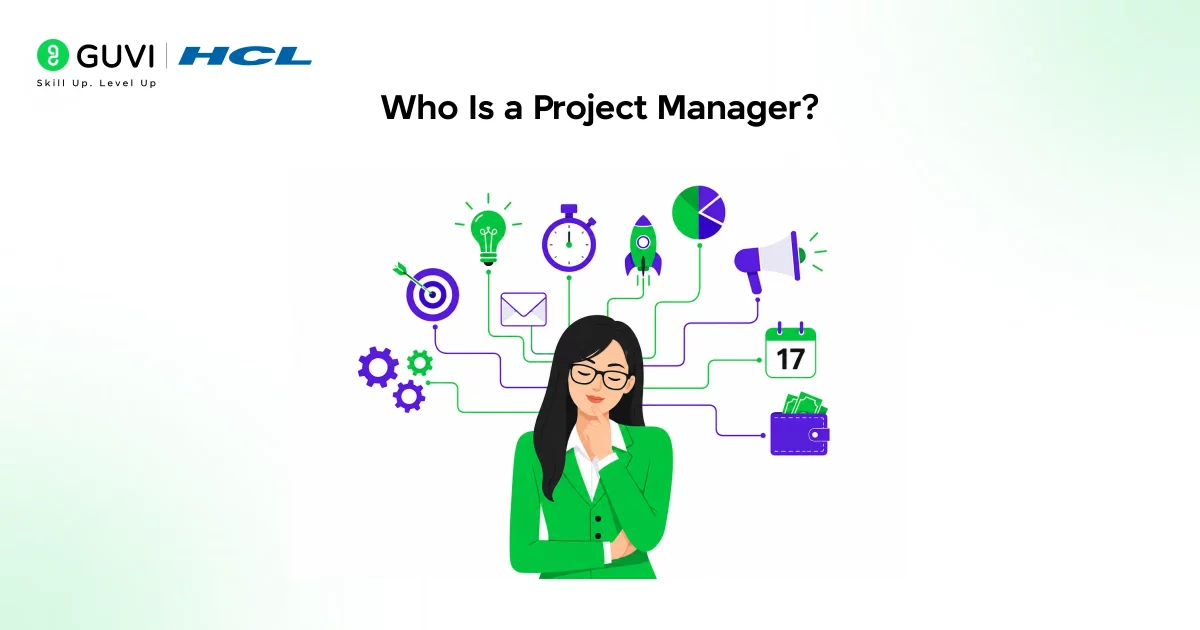
A project manager makes sure things get done. They coordinate work, manage timelines, allocate resources, and remove obstacles so the team can deliver the product.
- Planning and scheduling
Project managers create detailed plans for how the work will happen. They break down large projects into smaller tasks, estimate how long each takes, and schedule them.
- Managing resources
Project managers allocate team members to tasks, manage budgets, and ensure resources are used efficiently. They make sure the right people work on the right things at the right time.
- Tracking progress
Project managers monitor project progress daily. They use tools and meetings to track what is done, what is in progress, and what remains. They identify issues early.
- Managing risks and issues
Project managers identify potential problems before they happen. When issues do occur, they solve them quickly to keep the project on track.
- Keeping the team aligned
Project managers run meetings, communicate status updates, and ensure everyone knows their responsibilities. They keep the team focused and motivated.
Key Differences: Product Manager vs Project Manager
| Aspect | Product Manager | Project Manager |
| Focus Area | What to build and why | How to build it and when it gets done |
| Time Horizon | Months to years (strategic thinking) | Days to weeks (tactical execution) |
| Main Question | Is this the right thing to build? | Are we building it right? |
| Key Responsibility | Customer value and business success | On-time and on-budget delivery |
| Relationship with Customers | Direct interaction, gathering feedback | Limited direct interaction, receives requirements |
| Metrics for Success | User engagement, revenue, market share | Timeline adherence, budget management, quality |
| Decision-Making Style | Strategic, data-driven, customer-focused | Operational, process-focused, constraint-aware |
| Required Skills | Business sense, customer empathy, strategy | Planning, organization, communication |
Research in product development consistently shows that many product failures occur not because teams execute poorly, but because they build products that do not solve a meaningful customer problem or address a real market need. This highlights the importance of product discovery, customer research, and strategic decision-making—core responsibilities of a Product Manager. While Project Managers play a critical role in ensuring initiatives are delivered efficiently, on time, and within scope, delivering the wrong product flawlessly rarely leads to success. As a result, many organizations are investing more heavily in product management capabilities, emphasizing customer insight, validation, and product strategy alongside strong execution and delivery practices.
Responsibilities Comparison
- Product Manager responsibilities
- Creating product vision and strategy
- Researching markets and customers
- Prioritizing features and creating roadmaps
- Writing requirements and specifications
- Conducting user research
- Analyzing competitive landscape
- Making go or no-go decisions
- Measuring product metrics
- Communicating with customers
- Managing product lifecycle
- Project Manager responsibilities
- Creating project plans and schedules
- Allocating team resources
- Tracking project progress
- Managing project budget
- Identifying and mitigating risks
- Solving problems and removing obstacles
- Running project meetings
- Managing project documentation
- Ensuring quality standards
- Communicating status updates
While both Product Managers and Project Managers play critical roles in successful organizations, they often find satisfaction in different aspects of their work. Product managers typically focus on customer needs, product strategy, and long-term vision, while project managers concentrate on coordinating teams, managing timelines, budgets, and ensuring successful delivery. Because product management is closely tied to shaping what gets built and why, many professionals are drawn to it for its strategic and customer-centric nature. Career transitions from project management into product management are relatively common, especially among professionals seeking greater involvement in product strategy, though both paths offer unique challenges, rewards, and opportunities for growth depending on an individual’s interests and strengths.

How They Work Together
- Product manager sets direction
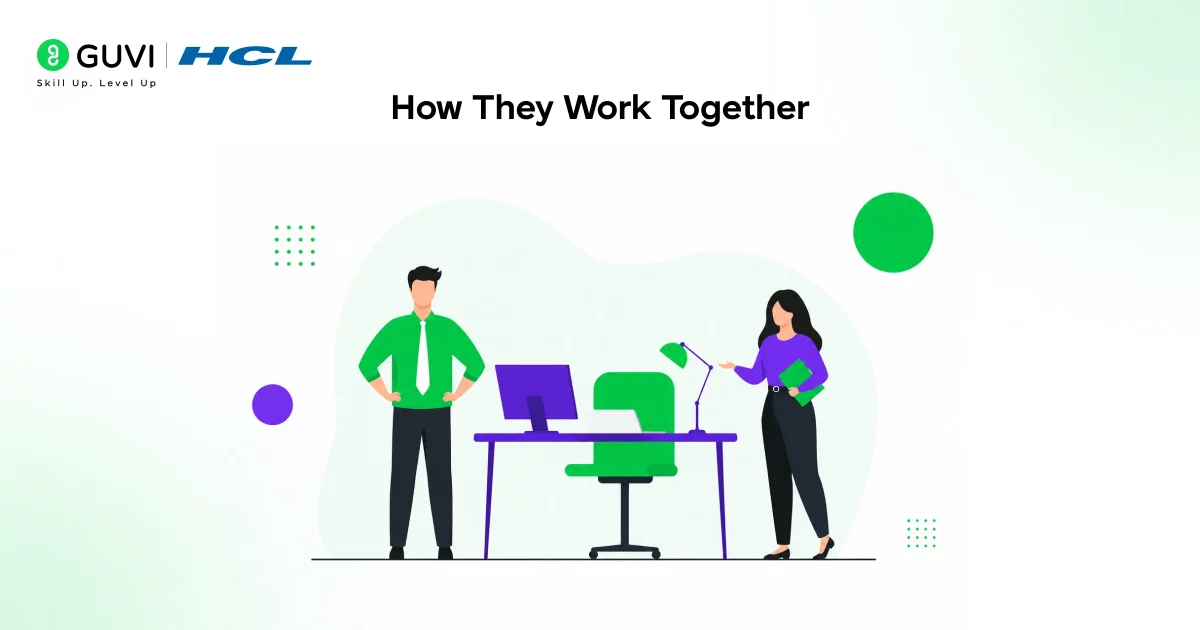
The product manager decides what to build and creates a roadmap. This provides the project manager with clear requirements and priorities.
- Project manager plans execution
The project manager takes the product manager’s vision and creates a detailed plan for how to execute it. They estimate timelines and resource needs.
- Collaboration on trade-offs
When there are constraints like tight deadlines or limited budget, product manager and project manager work together to decide what features to cut or delay.
- Shared communication
Both roles communicate with different audiences. Product manager talks to customers and executives. Project manager talks to the team and tracks internal progress.
- Different perspectives in meetings
In product meetings, the product manager leads strategy discussions. In status meetings, the project manager leads progress updates. They need each other’s input in both.
- Defining success together
Product manager defines what success looks like in business terms. Project manager defines what success looks like in execution terms. Both are needed for overall success.
Overlap Between Roles
- Areas where responsibilities overlap
Both manage stakeholders and communicate status Both participate in prioritization decisions Both think about timeline and feasibility Both care about quality Both work with engineering teams Both document decisions and requirements
- Why overlap exists
Products are complex. Neither role can succeed alone. The overlap creates natural collaboration points where product and project perspectives combine.
- Potential conflicts
Product managers might prioritize features that are hard to build in the timeline. Project managers might push back on scope because of constraints. Managing these tensions is part of normal operations.
When You Need Product Manager vs Project Manager
- You need a product manager when
- Starting a new product or business Confused about what customers actually want
- Multiple possible directions for the product
- Need to compete in the market
- Want to grow revenue and user engagement
- Launching into new markets
- You need a project manager when
- Managing complex projects with many moving parts
- Multiple teams need coordination
- Budget is limited and must be managed carefully
- Timeline is tight and cannot slip
- Many dependencies between tasks
- Quality standards must be maintained
- You might need both when
- Building products with long-term vision and near-term deadlines
- Working in large organizations with many teams
- Managing custom client projects with product evolution
- Scaling a startup from MVP to enterprise
To learn more on how to become a Product Manager and their salary, enroll in IIM Indore’s 8-month Certificate Programme in Product Management (CP PM). This comprehensive program helps you develop the skills and confidence to build, launch, and scale products that drive growth and innovation in today’s AI-powered economy, equipping you with industry-relevant expertise to excel in strategic product leadership roles.
Skills Required for Each Role
- Product manager skills
- Strategic thinking and business analysis
- Customer empathy and research skills
- Data analysis and metrics interpretation
- Communication and presentation
- Prioritization and decision making
- Market understanding
- Technical literacy (not necessarily coding)
- Leadership without authority
- Writing clear requirements
- Creativity and innovation thinking
- Project manager skills
- Planning and scheduling
- Risk management
- Resource allocation
- Problem solving
- Communication and reporting Process management
- Budget management
- Attention to detail
- Team motivation
- Conflict resolution
- Stakeholder management Tools and software proficiency
Career Paths
Product manager career progression
- Associate Product Manager
- Product Manager
- Senior Product Manager
- Group Product Manager
- Director of Product
- Vice President of Product
- Chief Product Officer
Project manager career progression
- Project Coordinator
- Project Manager
- Senior Project Manager
- Program Manager
- PMO Director
- Director of Project Management
When Roles Combine
- Product owner in Agile
In Agile teams, sometimes one person does both roles. This person is called a “Product Owner”. They define requirements like a product manager and coordinate sprints like a project manager.
- Small startup situations
Early-stage startups often have one person managing both product and project responsibilities due to limited budget. As the company grows, these roles separate.
- Challenges of combining roles
Combining roles is difficult because they require different mindsets. Strategic thinking and tactical execution pull in different directions. Most successful companies separate these roles once they can afford to.
Conclusion
Product manager and project manager are two distinct roles with different focuses, responsibilities, and success metrics. The product manager focuses on what to build and why. The project manager focuses on how to build it and when it gets done.
Understanding the difference between product manager and project manager helps companies organize effectively. It also helps people choose the right career path based on their strengths and interests.
Both roles are essential for successful products. The best products result from great product strategy executed flawlessly. Product managers provide strategy. Project managers ensure flawless execution. Together, they create products that customers love and companies profit from.
FAQs
1. Can one person be both product manager and project manager?
Yes, but it is challenging. Small teams and startups often combine these roles. However, the different mindsets required make it difficult. Most successful companies separate these roles.
2. Which role pays more?
Salaries are similar, though they vary by location, company, and experience. Senior product managers sometimes earn slightly more due to business impact, but differences are minimal.
3. Do I need technical skills for either role?
Product managers benefit from technical literacy but do not need coding skills. Project managers need to understand workflows and processes but not necessarily technical depth.
4. Which role is better for someone from engineering?
Engineers often transition to project manager or technical product manager roles. The technical background helps both paths, though the mindset shift differs.
5. What if product manager and project manager disagree?
Disagreements happen naturally. Good organizations have processes to resolve disagreements based on data, customer needs, and business goals. Both perspectives are valuable.
Success Stories

About the Author
Vishalini Devarajan
An Aerospace Engineer turned content writer, I focus on making complex concepts easy to understand through well-structured, reader-friendly blogs. Whether it’s a technical topic or a non-technical one, I love creating content that is clear, engaging, and impactful.
View all posts by Vishalini Devarajan
Connect with me @








Did you enjoy this article?