


Product Management Articles
Enterprise Product Management: Unique Challenges, Skills & Strategy
B2B vs B2C Product Management: Key Differences, Skills, Strategy & Career Scope
Working with Engineers as a Product Manager: A Practical Guide


Get In Touch For Details! Request More Information
What Is the Product Life Cycle? A Complete Beginner’s Guide
Aug 18, 2026 8 Min Read 715 Views
(Last Updated)
Every product follows a predictable journey from idea to decline: it’s developed and tested, launched, grows to a peak, then matures and eventually declines or gets replaced. This pattern, called the product life cycle, helps managers decide pricing, marketing, investment, and when to innovate.
The product life cycle explains why products like the early iPod disappear, why Netflix transformed its business model, and why legacy brands like Coca‑Cola keep investing in promotion. Knowing a product’s stage guides strategy: aggressive promotion and growth investment early on, efficiency and differentiation in maturity, and either reinvention or phase‑out during decline.
In this article, we will walk through everything you need to understand about the product life cycle. We will cover what it is, why it matters, each of its stages in detail with real-world examples, the marketing strategies that work best at each stage, the limitations of the model, and how companies use it to make smarter decisions.
Table of contents
- TL;DR
- The Origin of the Product Life Cycle
- Why the Product Life Cycle Matters
- Stage 1: Development
- Stage 2: Introduction
- Stage 3: Growth
- Stage 4: Maturity
- Stage 5: Saturation
- Stage 6: Decline
- Marketing Strategies Across the Life Cycle
- Limitations of the Product Life Cycle Model
- Wrapping Up
- FAQ
- Q: How do I know which stage my product is in?
- Q: What pricing strategy should I use at launch?
- Q: How do you extend the maturity stage?
- Q: When should a company discontinue a product vs reinvent it?
- Q: What are the main limitations of the PLC model?
TL;DR
- The Product Life Cycle (PLC) maps a product’s journey: Development → Introduction → Growth → Maturity (→ Saturation) → Decline.
- Each stage requires different actions: R&D and testing in development, awareness-building in introduction, scaling and differentiation in growth, retention and cost-efficiency in maturity, and cost‑cutting or reinvention in decline.
- Marketing mix (pricing, promotion, distribution) should change with the stage—penetration or skimming at launch, heavy promotion in growth, loyalty programs in maturity, and harvest/divest in decline.
- The PLC is a strategic guide, not a precise predictor; products can skip stages, re-enter growth after reinvention, or have prolonged maturity through extensions.
- Use PLC to time investments, manage product portfolios, and decide when to innovate, retire, or pivot offerings.
What Is the Product Life Cycle?
The product life cycle describes the journey a product goes through from its initial development to its eventual decline in the market. It explains how sales, profits, and market performance change over time as a product evolves.
Key Stages:
- Development: Product is created and tested, no sales yet.
- Introduction: Product is launched in the market with low awareness.
- Growth: Sales increase rapidly as demand rises.
- Maturity: Sales peak and competition becomes strong.
- Saturation: Market becomes crowded and growth slows.
- Decline: Sales drop and the product is gradually phased out.
Take your product management skills to the next level with HCL GUVI’s IIM Indore Product Management Course. Learn how to build, launch, and scale products with confidence.
The Origin of the Product Life Cycle
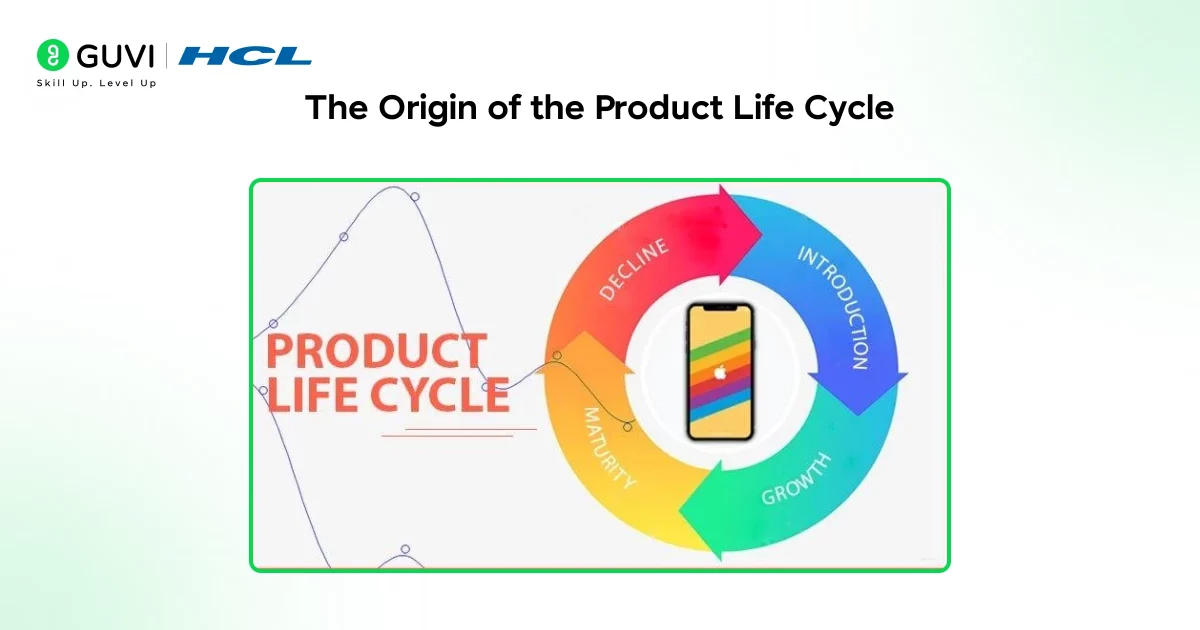
The concept was introduced by economist Theodore Levitt in a landmark 1965 Harvard Business Review article.
- Levitt’s model proposed that, like living organisms, products have a finite lifespan characterized by distinct stages: introduction, growth, maturity, and decline. Today, many models have expanded this to include a crucial preliminary stage: development.
- The product life cycle is the journey a product takes from ideation and development to the time it is removed from the market. It is a method for dividing the life of a product from its beginning to its eventual end.
- The product life cycle lets companies make sense of this journey. They can then use this knowledge to make more informed decisions, tailor their strategies, invest in the right areas, and decide on the next best steps.
- The model has remained influential for six decades because it reflects a universal truth about markets: no product dominates forever.
- Consumer preferences shift, technology advances, and competitors constantly improve their offerings. The companies that survive are the ones that anticipate these shifts rather than being caught off-guard by them.
The product life cycle concept goes back to Theodore Levitt’s 1965 Harvard Business Review article and has shaped marketing strategy for decades. It explains how products typically move through stages such as introduction, growth, maturity, and decline.
Real-world examples make this pattern clear. The iPod followed a full lifecycle, moving from rapid growth to eventual decline as smartphones replaced standalone music devices. In contrast, Netflix effectively restarted its lifecycle by shifting from DVD rentals to streaming, creating a new growth trajectory instead of fading away.
Why the Product Life Cycle Matters
Understanding the Product Life Cycle is not just an academic exercise. It is a practical decision-making framework used every day by product managers, marketers, and executives.
- Understanding the product lifecycle is a powerful tool used by product managers, marketers, and executives to make strategic decisions. The model provides a framework for deciding on pricing, marketing spend, market expansion, and feature development.
- A company that treats a product in its decline stage the same way it treats a product in its growth stage will waste resources.
- Pouring heavy marketing investment into a product the market no longer wants produces poor returns. Conversely, under-investing in a product that is entering its growth phase means ceding market share to competitors at the exact moment momentum is building.
- An effective marketer tries to extend the growth stage in order to maximize revenue and profits and to extend the maturity stage in order to fund the development and introduction of new products. The goal is never just to understand the cycle passively. It is to actively influence it.
Stage 1: Development
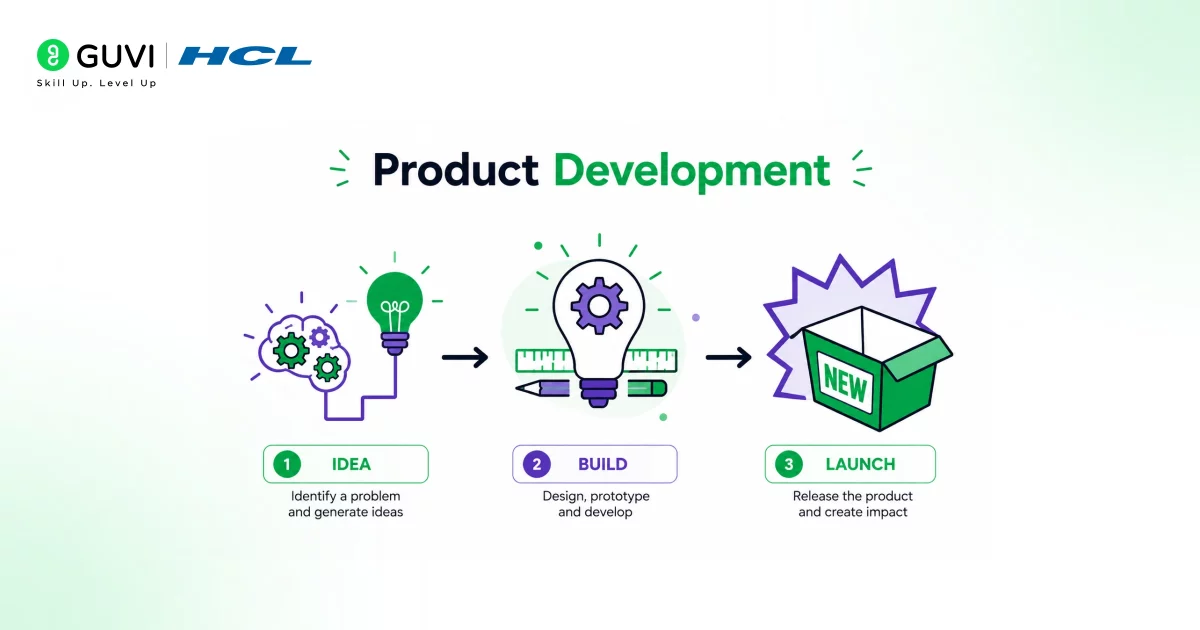
- Every product begins before it reaches the market. The development stage covers everything from the initial idea through research, prototyping, testing, and refinement until the product is ready to launch.
- The development stage involves determining which product you want to create based on market research and your understanding of your target market.
- It generally involves identifying
- A potential product addressing a consumer need,
- Researching market trends and competitors to validate the idea and performing concept testing
- Gathering feedback from real consumers, developing product concepts and prototypes,
- Testing prototypes in context, iterating and
- Improving the product,
- Securing investment and planning supply chains,
- Releasing the product to a limited market.
- During this stage, the company generates no revenue. All activity is pure cost: salaries for researchers and designers, materials for prototypes, and costs of testing and iteration.
- This is why development timelines and budgets matter so much. Every month of development is a month of cash outflow with no income to offset it.
- The R&D stage can be a long, bumpy road because the steps will not necessarily be linear. Testing, refining, and iterating can take weeks, months, or even years, depending on your research and the complexity of your product.
- Customer feedback is key during your product’s development phase, but you also need to set a timeline, especially since you will not be driving revenue at this stage.
- The iPhone went through years of secretive development before its 2007 launch. Apple invested massively in this stage, building something entirely new in a market dominated by very different devices.
- That investment in development is what made the explosive growth stage that followed possible.
Stage 2: Introduction
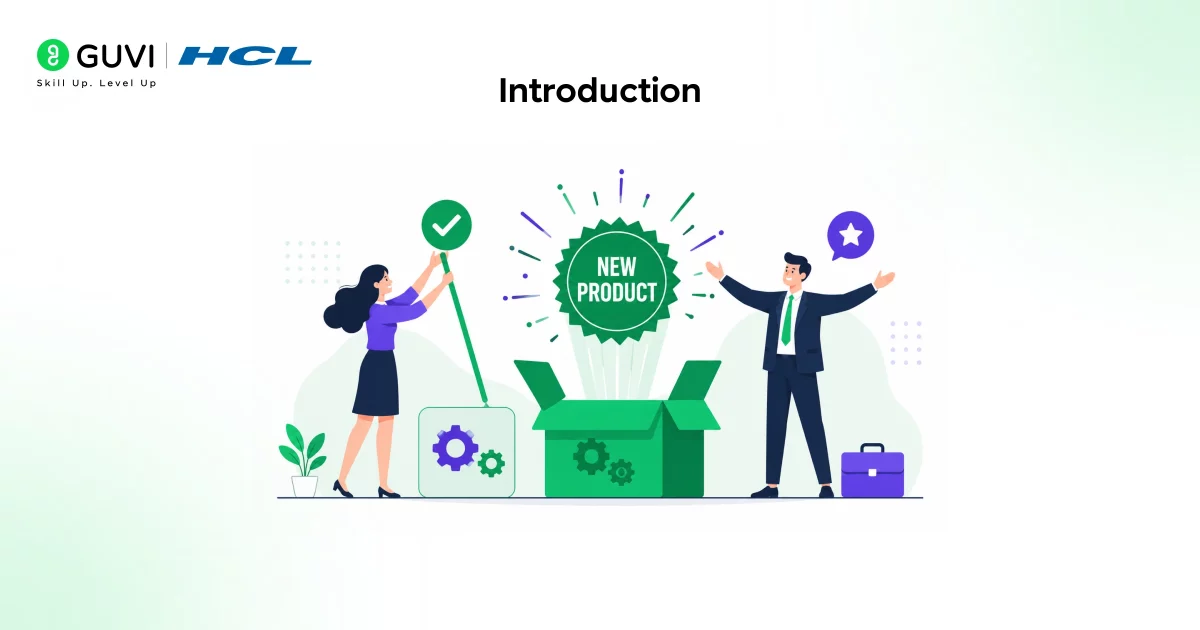
The introduction stage begins when the product is officially launched in the market. This is typically the most expensive stage from a marketing standpoint and the riskiest from a business standpoint.
- The introduction stage is characterised by low sales volume, limited product adoption, and slowly increasing demand. At this point, marketing becomes your best friend. You need to build brand awareness and introduce your product to consumers.
- During the introduction phase, a product is launched into the market. As awareness builds, this stage is often characterized by high investment costs and low sales volumes.
- Marketing strategies at this juncture focus on product promotion and attempts to stimulate market demand.
- At this stage, the company must make a critical pricing decision. A penetration pricing strategy sets the price low to attract early adopters and grab market share quickly, accepting thin margins in exchange for volume.
- A price skimming strategy sets the price high to recover development costs from buyers who are willing to pay a premium for being first, then gradually lowers prices as the market broadens.
- Your strategy will differ depending on the market. If competition is low at this stage, you should focus on getting consumers to understand your product and how it meets their needs.
- If you are already entering a market with established competition, you will need to invest a lot of time in product differentiation to get consumers to switch from their existing product preferences.
- Many products fail at this stage. The market either does not understand the product, does not see enough value to change existing habits, or a better-funded competitor responds more aggressively than anticipated.
- Only products that successfully cross the introduction stage to genuine market acceptance move on to growth.
Stage 3: Growth

- The growth stage is where a successful product finds its momentum. Sales begin rising rapidly, brand awareness spreads, and the business starts generating meaningful profit.
- During the growth stage, demand rises, competitors enter, and businesses focus on differentiation and expanding market share.
- The growth stage follows where the product gains market acceptance and sales volume increases significantly. Marketing efforts during this phase are directed toward brand differentiation and market expansion.
- The growth stage is also when competitors begin paying serious attention. A product that is clearly finding traction attracts imitators and rival brands who want a piece of the emerging market.
- This is when the company must invest in what makes its product distinctively better, whether through features, branding, distribution, or customer experience.
- During the growth stage, you will also experience a rise in competition and market saturation. As your product catches on, others will notice and enter the market alongside you.
- With competition increasing, comparing your product to competitors may show you how to increase your market share and improve your product for a secondary or tertiary release.
- The iPhone’s growth stage, roughly from 2007 to 2012, was one of the most dramatic in consumer technology history.
- Apple sold millions of units, app developers flooded the platform, and the entire smartphone category was redefined around what Apple had introduced.
- Marketing during this period shifted from explaining what an iPhone was to emphasizing the ecosystem and experience it offered.
Stage 4: Maturity
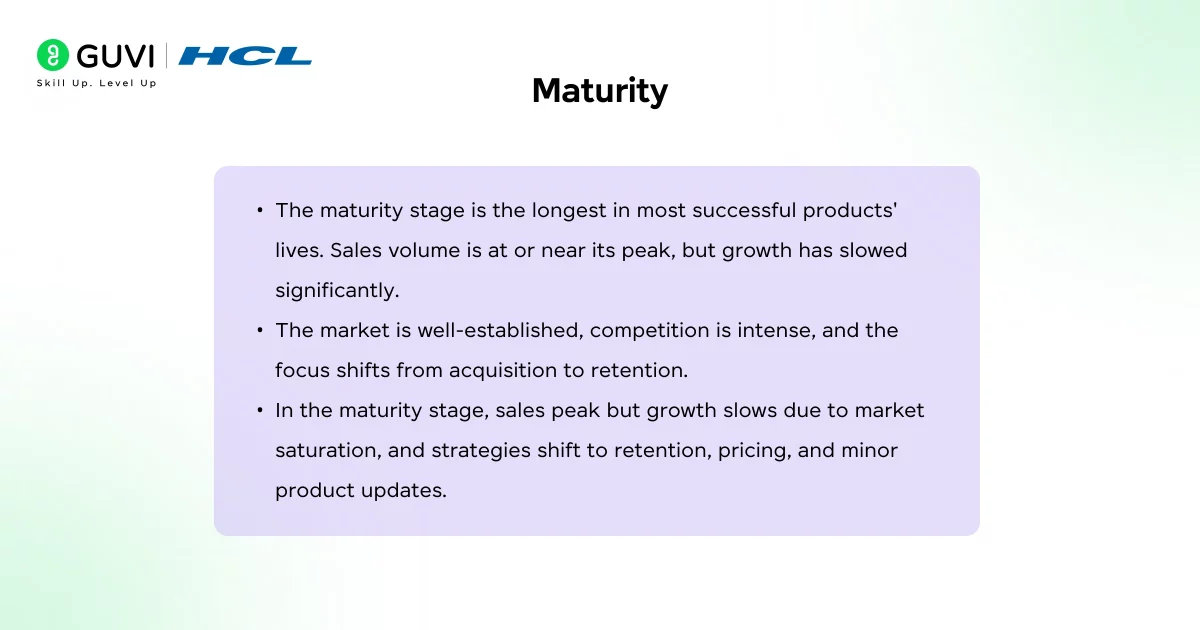
- The maturity stage is the longest in most successful products’ lives. Sales volume is at or near its peak, but growth has slowed significantly.
- The market is well-established, competition is intense, and the focus shifts from acquisition to retention.
- In the maturity stage, sales peak but growth slows due to market saturation, and strategies shift to retention, pricing, and minor product updates.
- With maturity usually comes a decline in sales and market growth. The keyword here is growth, as you may not experience a decline in actual sales volume.
- Rather, the consistent growth you would experience during the previous stage will slow. Sales may be flat month over month, even year over year for some.
- You might see increased efforts in marketing strategies as competitors strive for their piece of the market share. Price undercutting, promotions, and social media campaigns begin in earnest, with each competitor striving to achieve a certain amount of market share.
- Companies in the maturity stage typically pursue strategies to extend this profitable period as long as possible.
- These include product line extensions adding new models or variants, entering new geographic markets, finding new customer segments that have not yet adopted the product, and investing in brand loyalty programs to reduce churn.
- Apple has been able to maintain the iPhone at the mature stage for an extended period by regularly releasing updates, redesigns, and renewed marketing efforts to keep the product relevant and appealing to consumers.
- Each new iPhone model is not a new product in the product life cycle sense. It is an extension strategy that keeps the core iPhone franchise in the maturity stage rather than allowing it to slide into decline.

Stage 5: Saturation
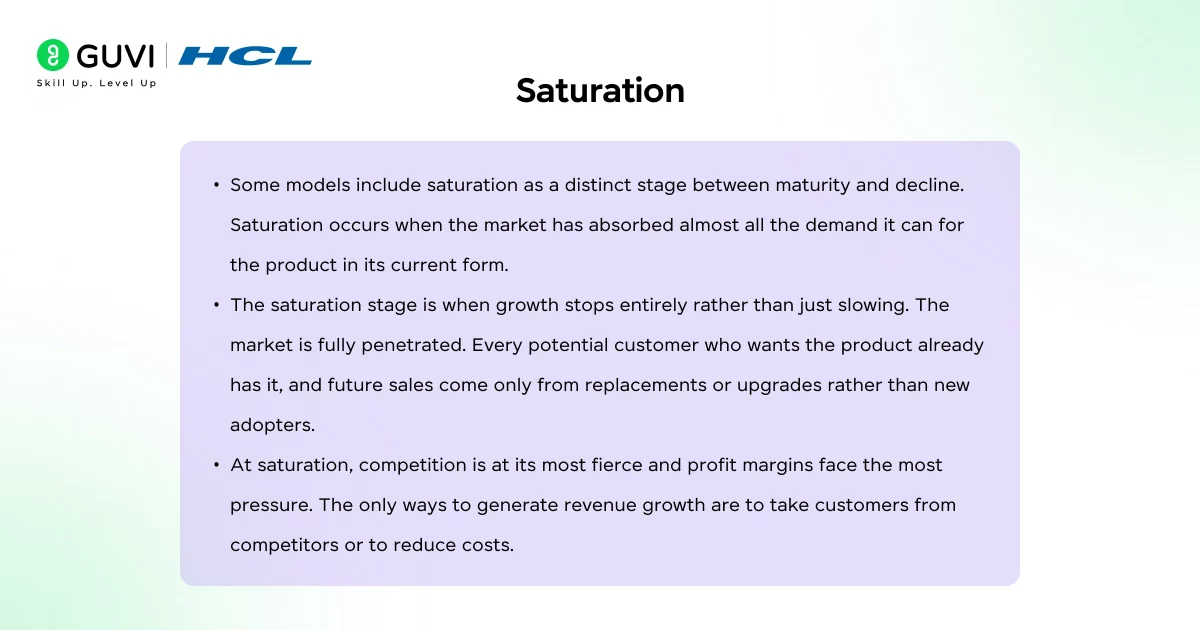
- Some models include saturation as a distinct stage between maturity and decline. Saturation occurs when the market has absorbed almost all the demand it can for the product in its current form.
- The saturation stage is when growth stops entirely rather than just slowing. The market is fully penetrated. Every potential customer who wants the product already has it, and future sales come only from replacements or upgrades rather than new adopters.
- At saturation, competition is at its most fierce and profit margins face the most pressure. The only ways to generate revenue growth are to take customers from competitors or to reduce costs.
- Marketing spending tends to stay high because losing market share at this stage directly translates to revenue decline, while the ceiling for growth is effectively zero.
Now that you understand the product life cycle and its stages, are you ready to learn how to build, launch, and manage products like a pro? Enroll in HCL GUVI’s IIM Indore Product Management Course and master end‑to‑end product management, from ideation to go‑to‑market strategy.Take your product management skills to the next level with HCL GUVI’s IIM Indore Product Management Course. Learn how to build, launch, and scale products with confidence.
Stage 6: Decline
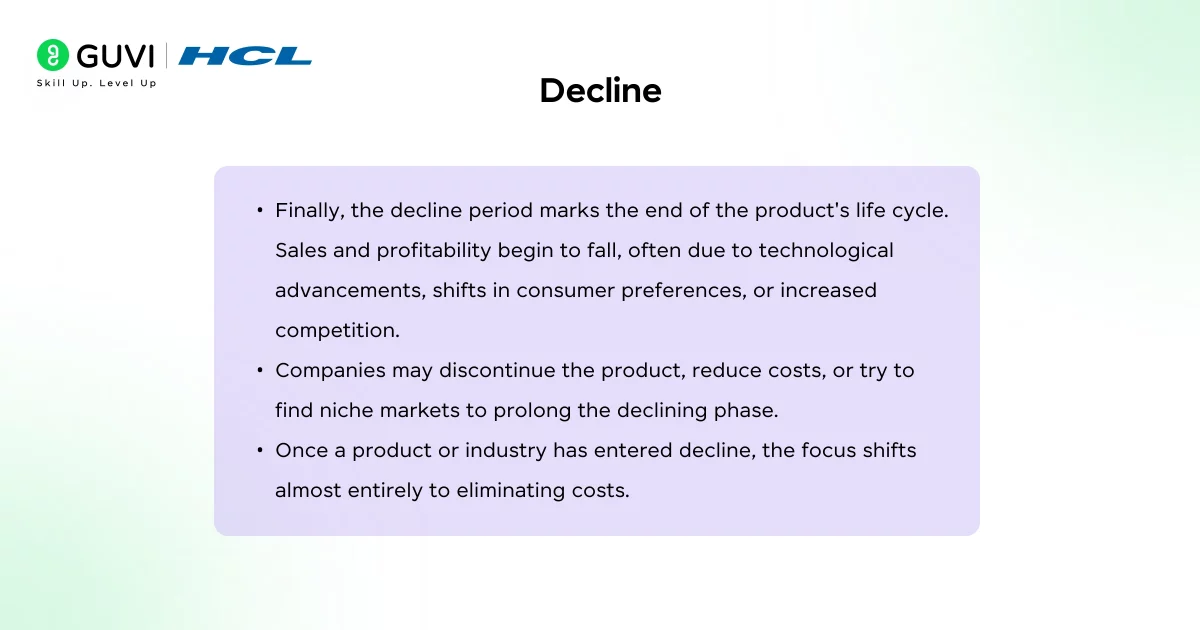
The decline stage begins when sales start falling consistently and the trajectory points toward the product’s eventual exit from the market.
- Finally, the decline period marks the end of the product’s life cycle. Sales and profitability begin to fall, often due to technological advancements, shifts in consumer preferences, or increased competition.
- Companies may discontinue the product, reduce costs, or try to find niche markets to prolong the declining phase.
- Once a product or industry has entered decline, the focus shifts almost entirely to eliminating costs.
- Little if any marketing spending goes into products in this life stage, because the marketing investment is better spent on other priorities. For goods, distributors will seek to eliminate inventory by cutting prices.
- Often a primary focus for marketers during this stage is to transition customers to newer products that are earlier in the product life cycle and have more favorable economics.
- The iPod is a perfect example of a product that went through a complete and well-managed decline. The iPod was a massive success for years after its first release in 2001, yet it was discontinued in early 2022.
- As the iPod began to fall off, Apple did not simply sit around with its fingers crossed, hoping it would rebound. It was already well into developing new, innovative products like the iPhone and iPad.
- Companies facing decline have several options. They can harvest the product, minimizing all investment while milking remaining profits as long as possible.
- They can divest it, selling the product line to another company for whom it might still be valuable. They can exit the market completely by discontinuing the product. Or they can reinvent, using a fundamental change to essentially begin a new Product Life Cycle.
- Netflix’s reinvention from DVD mail service to streaming is the most famous example of this last approach.
- Rather than allowing the DVD business to decline gracefully while watching revenue shrink, Netflix invested aggressively in a completely new delivery model and essentially launched a new product that is now in its own maturity stage.
Read More: Cursor for Product Managers: A Complete Guide to AI Workflows
Marketing Strategies Across the Life Cycle
- Introduction stage
- Goal: build awareness and educate the market.
- Tactics: advertising that explains the product’s purpose and value, targeted distribution to early adopters, and messaging that highlights novelty and need.
- Pricing: either penetration pricing to gain users quickly or higher pricing to recover development costs.
- Growth stage
- Goal: create differentiation and preference.
- Tactics: emphasize why the product is better than competitors, expand distribution aggressively, and scale marketing to capture market share.
- Pricing: may be lowered or adjusted to accelerate adoption.
- Maturity stage
- Goal: drive loyalty and retention.
- Tactics: focus on customer satisfaction, product updates and line extensions to renew interest, and promotions or loyalty programs to prevent defection to competitors.
- Decline stage
- Goal: minimize costs and manage the product exit.
- Tactics: sharply reduce marketing spend, inform loyal customers about continued availability, and guide users toward successor or alternative products.
Limitations of the Product Life Cycle Model
The product life cycle is a useful framework, but it is not a perfect predictor of what will happen to any given product.
- A marketer looking for the next feature to add to a digital camera to extend the maturity phase could easily miss the impact that the smartphone would have. In theory, the product life cycle follows a predictable path that is easy to understand.
- This might suggest that the marketer just needs to gear up for the ride and be ready to adjust tactics as the product moves through its life cycle. To the contrary, a marketer’s job is much less passive. Instead, the marketer’s goal is to influence the life cycle.
- Not all products follow the classic curve. Some products skip stages, like a new iPhone launch that moves immediately from development into growth because it builds on an established platform with waiting customers.
- Some products experience multiple growth phases due to reinvention or entry into new markets. Some products in apparent decline are revived by a single innovation that sends them back into growth.
- Applying growth-stage tactics to a mature product or vice versa is a recipe for failure. Ignoring the decline stage and holding onto a declining product for too long can drain resources that could be better invested in new, developing products.
- The model is a guide, not a guarantee. The most skilled product managers and marketers use it to inform their thinking rather than to dictate it mechanically.
Wrapping Up
The product life cycle is one of the most durable and practically useful frameworks in business. By recognizing which stage a product is in, companies can make better decisions about where to invest, how to price, what to communicate, and when to start building the next thing.
The companies that consistently outperform over long periods, Apple, Coca-Cola, and Netflix, are not those that built one great product and held on. They are the ones who mastered the art of managing products through their life cycles while constantly seeding the next generation of growth.
For anyone entering product management, marketing, or business strategy, understanding the product life cycle is not optional background knowledge. It is the conceptual foundation on which most strategic decisions about products are built.
Every pricing call, every marketing campaign, every reinvestment decision is made more clearly when you know where the product actually stands in its journey from idea to obsolescence.
FAQ
Q: How do I know which stage my product is in?
A: Look at sales trend (rising, peaking, or declining), market penetration (how many potential customers already own it), competition intensity, profit margins, and customer behavior (first‑time buyers vs repeat/replacement purchases). Combine data with market research and usage patterns to place the product.
Q: What pricing strategy should I use at launch?
A: Two common choices: penetration pricing (low price to gain market share quickly) or price skimming (high initial price to recover R&D costs from early adopters). Choose based on competition, price sensitivity, and whether you need rapid adoption or quick ROI.
Q: How do you extend the maturity stage?
A: Use product‑line extensions, feature updates, improved customer service, geographic expansion, targeting new segments, loyalty programs, bundling, and promotional campaigns to renew demand and delay decline.
Q: When should a company discontinue a product vs reinvent it?
A: Discontinue if the product is unprofitable, has no strategic fit, and reinvestment costs are unjustified. Reinvent if the market still has value, you can leverage existing assets/brand, and new investment offers a plausible path back to growth (e.g., new delivery model or major feature shift).
Q: What are the main limitations of the PLC model?
A: It’s a simplification. Not all products follow the textbook curve; timing is uncertain; external shocks (technology shifts, regulation, and disruptive entrants) can upend expectations; and the model doesn’t prescribe exact tactics; managers must combine PLC insight with market data and strategy.
Success Stories

About the Author
Vishalini Devarajan
An Aerospace Engineer turned content writer, I focus on making complex concepts easy to understand through well-structured, reader-friendly blogs. Whether it’s a technical topic or a non-technical one, I love creating content that is clear, engaging, and impactful.
View all posts by Vishalini Devarajan
Connect with me @







Did you enjoy this article?