


Digital Marketing Articles
What is Performance Marketing? Complete Guide for 2026
What is the Voice of the Customer and Why Does it Matter
What is A/B Testing in Marketing? A Beginner’s Guide to Smarter Campaign Optimization
What is Lead Nurturing in Marketing? A Practical Guide for Beginners


Get In Touch For Details! Request More Information
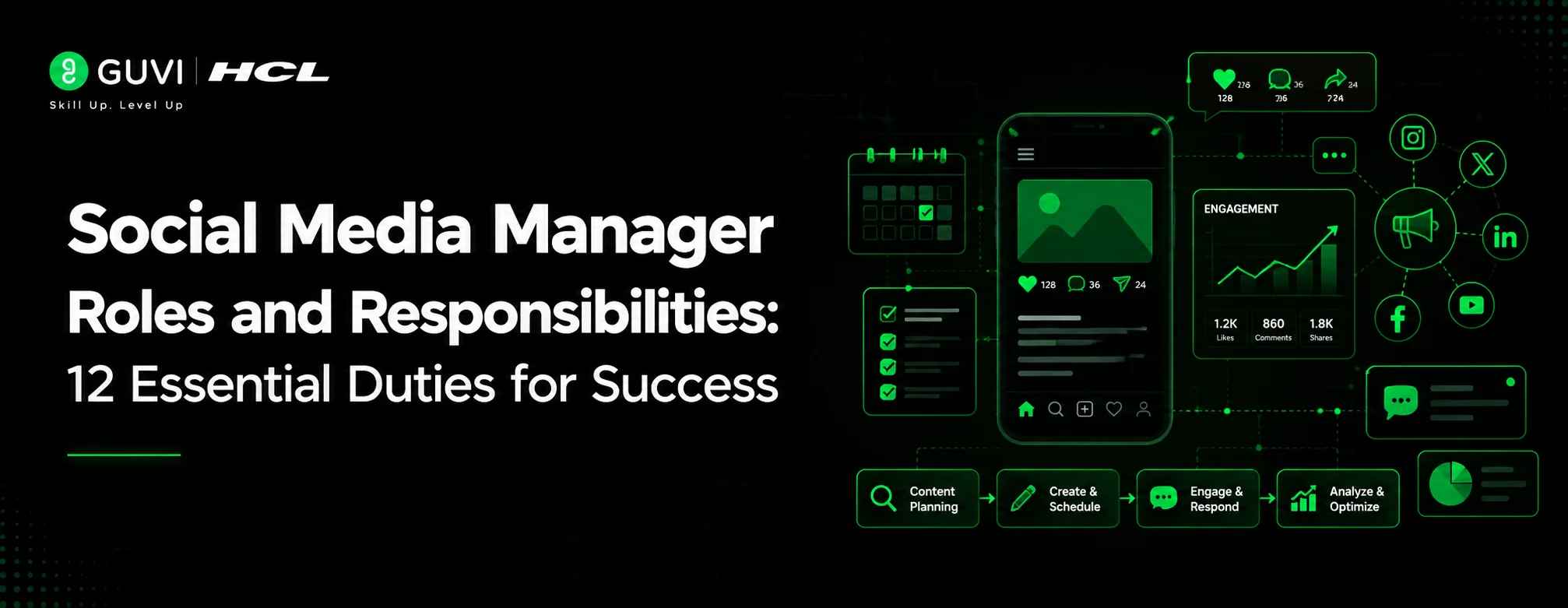
Social Media Manager Roles and Responsibilities: 12 Essential Duties for Success
Jul 09, 2026 9 Min Read 414 Views
(Last Updated)
Table of contents
- TL;DR Summary
- What Does a Social Media Manager Do?
- What is a Social Media Manager?
- Why is a Social Media Manager Important?
- Social Media Manager Roles and Responsibilities
- Creating a Social Media Strategy
- Planning the Content Calendar
- Creating and Coordinating Content
- Managing Social Media Platforms
- Writing Captions and Social Copy
- Community Engagement and Reply Management
- Tracking Trends and Platform Updates
- Running Campaigns and Promotions
- Tracking Analytics and Performance
- Managing Brand Voice and Consistency
- Coordinating with Teams
- Reporting and Improving Social Media Performance
- Daily Tasks of a Social Media Manager
- Skills Required to Become a Social Media Manager
- Technical and Marketing Skills
- Soft Skills
- Tools Used by Social Media Managers
- Social Media Manager vs Similar Roles
- Social Media Manager Career Path for Freshers
- Entry-Level Roles
- Mid-Level Roles
- Advanced Roles
- Social Media Manager Roles in 2026
- Real-World Example: Social Media Manager in an EdTech Company
- Common Mistakes to Avoid While Becoming a Social Media Manager
- Posting Without a Strategy
- Chasing Every Trend
- Ignoring Comments and DMs
- Looking Only at Likes
- Using AI Without Human Review
- Best Practices for Social Media Managers
- Simple Social Media Manager Checklist
- Build Digital Marketing Skills with HCL GUVI
- Conclusion
- FAQs
- What are the main roles and responsibilities of a social media manager?
- Is social media manager a good career for freshers?
- What skills are required to become a social media manager?
- Does a social media manager need design skills?
- What tools do social media managers use?
- What is the daily work of a social media manager?
- Is a social media manager the same as a content creator?
- Can a social media manager become a digital marketing manager?
- Is AI useful for social media managers?
- Which industries hire social media managers?
TL;DR Summary
Social media manager roles and responsibilities include planning content, managing social media platforms, creating campaigns, engaging with followers, tracking analytics, studying trends, coordinating with teams, and protecting the brand’s online image. A social media manager is not just someone who posts on Instagram or LinkedIn. The role connects content, strategy, community, data, brand voice, and business goals. Freshers can start by learning content planning, copywriting, platform basics, analytics, design tools, scheduling tools, and social media marketing fundamentals.
Social media manager roles and responsibilities are important to understand if you want to build a career in digital marketing, branding, content, or online community management.
Many beginners think this role is only about posting reels, captions, or memes. But a social media manager does much more than that.
This role includes planning, content execution, audience engagement, analytics, campaign support, trend tracking, and brand communication.
In this guide, you will learn the role in a simple, practical, and beginner-friendly way.
What Does a Social Media Manager Do?
A social media manager roles and responsibilities includes managing a brand’s presence across platforms like Instagram, LinkedIn, YouTube, Facebook, X, Pinterest, and sometimes community platforms.
Their job is to make sure the brand communicates clearly, posts consistently, responds to the audience, tracks performance, and improves results over time.
A social media manager may work on:
- Content planning
- Social media calendars
- Caption writing
- Creative coordination
- Community engagement
- Campaign execution
- Analytics tracking
- Competitor research
- Trend monitoring
- Brand voice
- Influencer coordination
- Paid campaign support
- Reporting
- Crisis communication
For example, if an EdTech company is launching a new course, the social media manager may plan announcement posts, student testimonials, reels, LinkedIn updates, stories, YouTube Shorts, and performance reports.
What is a Social Media Manager?
A social media manager is a marketing professional who plans, manages, and improves a brand’s social media presence.
The role combines creativity, communication, strategy, analytics, and audience understanding.
A social media manager does not only create posts. They also understand why a post should be created, who it is for, where it should be published, when it should go live, and how success will be measured.
In small companies, one person may handle planning, writing, posting, designing, replying, and reporting.
In larger companies, a social media manager roles and responsibilities includes working with content writers, designers, video editors, performance marketers, brand managers, and customer support teams.
Why is a Social Media Manager Important?
A social media manager is important because social media is often the first place people notice, judge, follow, question, or trust a brand.
A brand may have a good product, but if its social media presence looks inactive, confusing, or inconsistent, people may lose interest.
Social media managers help brands:
- Build awareness
- Educate audiences
- Increase engagement
- Support lead generation
- Improve brand trust
- Respond to customer queries
- Promote campaigns
- Share updates
- Understand audience behavior
- Create a consistent brand voice
For example, when a startup launches a new app feature, the social media manager can turn that update into posts, short videos, FAQs, carousels, stories, and customer responses.
Understanding the pillars of social media marketing helps social media managers balance content, engagement, analytics, community, and business goals and also helps the learner understand the importance of social media manager roles and responsibilities for a company.
Social Media Manager Roles and Responsibilities
Social media manager roles and responsibilities can change based on the company, industry, audience, and team size.
However, most social media managers handle strategy, content, posting, engagement, analytics, campaigns, trends, and reporting.
1. Creating a Social Media Strategy
One of the most important social media manager roles and responsibilities is to create a strategy that explains what the brand wants to achieve and how social platforms will help.
A social media manager plans the goals, target audience, platforms, content themes, posting frequency, tone, and success metrics.
Common strategy tasks include:
- Defining content goals
- Choosing platforms
- Understanding audience segments
- Planning content pillars
- Studying competitors
- Setting engagement goals
- Aligning social media with business goals
For example, a B2B SaaS company may use LinkedIn for thought leadership, while a fashion brand may focus more on Instagram Reels and influencer content.
A clear social media marketing strategy helps managers decide what to post, which platforms to focus on, and how to measure success.
Understanding digital marketing strategies for B2B and B2C helps social media managers adjust tone, platforms, content formats, and campaign goals based on the audience.

2. Planning the Content Calendar
A content calendar helps the team plan what to post and when to post it.
It keeps social media activity organized and avoids last-minute confusion.
A social media manager roles and responsibilities may include:
- Daily posts
- Weekly themes
- Campaign content
- Festival posts
- Product announcements
- Reels and Shorts
- LinkedIn posts
- Stories
- Polls
- Carousels
- Webinar promotions
- Customer testimonials
For example, if a company has a product launch next month, the social media manager may plan teaser posts, launch posts, feature explainers, founder messages, and user-generated content.
3. Creating and Coordinating Content
Social media managers are often involved in content creation, even if they do not design everything themselves.
They may write captions, create post briefs, suggest reel ideas, review creatives, and coordinate with designers or video editors.
Common content tasks include:
- Writing captions
- Creating post ideas
- Preparing creative briefs
- Reviewing designs
- Suggesting video hooks
- Checking brand tone
- Improving post clarity
- Rewriting content for each platform
For example, the same campaign message may need a short reel caption for Instagram, a professional version for LinkedIn, and a community-style post for Facebook.
Social media managers can use AI tools for content creation for ideas, captions, scripts, and repurposing, but every output should be reviewed for brand voice and accuracy.
Understanding content marketing helps social media managers create posts that educate, engage, and move users toward action.
4. Managing Social Media Platforms
A Social media manager roles and responsibilities also includes handling the brand’s accounts across different platforms.
Each platform has a different audience behavior, content style, and posting format.
The role may involve managing:
- YouTube
- X
- Threads
- WhatsApp Channels
- Community groups
For example, LinkedIn may need professional insights, while Instagram may need visual storytelling, short videos, and interactive stories.
A good social media manager understands platform differences instead of posting the same content everywhere.
5. Writing Captions and Social Copy
Social media copy must be clear, short, engaging, and aligned with the brand voice.
A social media manager writes captions, hooks, headlines, story text, post descriptions, and call-to-action lines.
Good social copy should:
- Grab attention quickly
- Explain the message clearly
- Match the platform tone
- Encourage action
- Avoid unnecessary jargon
- Sound natural and human
For example, a course promotion caption should not only say “Join now.” It should explain the benefit, who it is for, and why the learner should care.
6. Community Engagement and Reply Management
Social media is not a one-way channel.
A social media manager also replies to comments, answers questions, manages DMs, responds to mentions, and supports community conversations.
Community tasks include:
- Replying to comments
- Answering basic questions
- Handling DMs
- Responding to mentions
- Managing feedback
- Escalating complaints
- Encouraging discussion
- Tracking repeated queries
For example, if many users ask about course fees under a post, the social media manager may reply clearly and also inform the marketing team to create a fee-related FAQ post.
Using polls, quizzes, questions, and stories can help brands boost engagement with interactive content instead of only posting one-way updates.
7. Tracking Trends and Platform Updates
Social platforms change quickly. Formats, algorithms, audience behavior, and content trends keep evolving.
A social media manager follows trends carefully, but does not blindly copy every viral format.
Trend-related tasks include:
- Tracking trending formats
- Studying competitor content
- Monitoring platform updates
- Identifying useful content ideas
- Understanding audience reactions
- Adapting trends to brand voice
- Avoiding irrelevant trend-chasing
For example, a finance brand should not use every meme trend just because it is viral. The trend should fit the brand’s audience and message.
8. Running Campaigns and Promotions
Social media manager roles and responsibilities also support campaigns for product launches, events, webinars, offers, hiring, brand awareness, and lead generation.
Campaign work includes planning content, coordinating timelines, publishing posts, tracking performance, and improving campaign communication.
A campaign may include:
- Teaser posts
- Launch posts
- Reels
- Testimonials
- Founder videos
- Influencer posts
- Paid ad creatives
- Stories
- Live sessions
- FAQs
- Reminder posts
- Result reports
For example, during a placement preparation campaign, the social media manager may create a campaign calendar with mock test posts, student pain points, success stories, and CTA-based content.
9. Tracking Analytics and Performance
Analytics help social media managers understand what is working and what is not.
A social media manager checks performance data and uses it to improve future content.
Important metrics include:
- Reach
- Impressions
- Engagement rate
- Saves
- Shares
- Comments
- Clicks
- Follower growth
- Watch time
- Profile visits
- Leads
- Conversion rate
For example, if carousel posts get more saves but reels get more reach, the social media manager may use both formats for different goals.
10. Managing Brand Voice and Consistency
A brand should sound consistent across platforms.
A social media manager helps maintain the right tone, style, message, and visual direction.
Brand consistency includes:
- Tone of voice
- Caption style
- Visual style
- Logo usage
- Hashtag style
- Response style
- Content themes
- Campaign messaging
For example, a youth-focused EdTech brand may use a friendly and motivational tone, while a B2B cybersecurity company may use a more professional and trust-focused tone.
11. Coordinating with Teams
Social media managers work with many teams because social media touches marketing, sales, design, product, support, HR, and leadership.
They may coordinate with:
- Content writers
- Designers
- Video editors
- Performance marketers
- SEO teams
- Product teams
- Sales teams
- Customer support
- Influencers
- Founders
- HR teams
For example, if users complain about login issues under a post, the social media manager may coordinate with support or product teams before replying.
12. Reporting and Improving Social Media Performance
Reporting is one of the most important social media manager responsibilities.
Reports help teams understand content performance, audience behavior, campaign results, and future improvements.
A simple report may include:
- Best-performing posts
- Weak-performing posts
- Engagement trends
- Follower growth
- Website clicks
- Lead performance
- Audience insights
- Campaign learnings
- Next-month recommendations
For example, if educational reels perform well but offer posts that get low engagement, the social media manager may suggest using more value-first content before promotional content.
This shows how important Social media manager roles and responsibilities are for an organization or a business to grow.
DataReportal reported that there were 5.79 billion social media user identities worldwide at the start of April 2026, equal to 69.9% of the global population. This shows why brands need skilled social media managers who can plan content, manage communities, and build trust across platforms.
Daily Tasks of a Social Media Manager
A Social media manager roles and responsibilities daily work depends on the company, industry, and team size.
In most roles, the day includes checking comments, reviewing content, posting updates, tracking trends, coordinating with teams, and checking performance.
A simple day may look like this:
9:30 AM: Check comments, DMs, mentions, campaign updates, and urgent queries.
10:30 AM: Review the content calendar and confirm posts planned for the day.
12:00 PM: Coordinate with designers, writers, video editors, or marketing teams for upcoming creatives.
2:00 PM: Publish posts, stories, reels, or LinkedIn updates based on the schedule.
4:00 PM: Check post performance, audience responses, trends, and competitor activity.
5:30 PM: Update reports, plan next-day content, document learnings, and share status with the team.
In small companies, one person may handle content, posting, replies, basic design, and reporting.
In larger companies, responsibilities may be divided across strategy, content, community, paid social, influencer marketing, and analytics teams.
Skills Required to Become a Social Media Manager
A social media manager roles and responsibilities needs both creative and analytical skills.
You do not need to become perfect at everything on day one, but you should understand how content, audience, platforms, and performance connect.
Technical and Marketing Skills
Important skills include:
- Social media strategy
- Content planning
- Copywriting
- Basic design sense
- Short-form video understanding
- Platform knowledge
- Hashtag research
- Trend analysis
- Analytics interpretation
- Campaign planning
- Community management
- Basic paid ads knowledge
- Influencer coordination
- Reporting
- AI tool usage
For freshers, the best starting point is learning content calendars, caption writing, platform basics, Canva, analytics, and audience engagement.
Soft Skills
Soft skills are equally important because social media manager roles and responsibilities also includes to interact with audiences and internal teams every day.
Important soft skills include:
- Communication
- Creativity
- Patience
- Empathy
- Time management
- Adaptability
- Attention to detail
- Collaboration
- Problem-solving
- Brand judgment
For example, if a user posts an angry comment, the social media manager must respond calmly, avoid defensive language, and escalate the issue if needed.
Tools Used by Social Media Managers
Social media manager roles and responsibilities includes using tools for planning, design, scheduling, analytics, collaboration, and reporting.
| Category | Examples |
| Design Tools | Canva, Adobe Express, Figma |
| Scheduling Tools | Buffer, Hootsuite, Later, Sprout Social |
| Analytics Tools | Meta Business Suite, LinkedIn Analytics, YouTube Studio |
| Writing Tools | Google Docs, Grammarly, ChatGPT |
| Project Management | Notion, Trello, ClickUp, Asana |
| Video Tools | CapCut, Adobe Premiere Pro, Canva Video |
| Research Tools | Google Trends, AnswerThePublic, platform search |
| Reporting Tools | Google Sheets, Looker Studio, Excel |
| Collaboration Tools | Slack, Google Drive, Microsoft Teams |
| AI Tools | ChatGPT, Gemini, Canva AI, Meta AI tools |
Freshers do not need to learn every tool at once.
Start with Canva, Meta Business Suite, LinkedIn Analytics, Google Sheets, and one scheduling tool.
Learning the right social media marketing tools can help managers plan content, schedule posts, track analytics, and manage campaigns more efficiently.
Social Media Manager vs Similar Roles
Many beginners confuse social media manager roles and responsibilities with content creators, digital marketers, community managers, and performance marketers.
These roles overlap, but they are not the same.
| Role | Main Focus | Example Work |
| Social Media Manager | Overall social media presence | Strategy, posting, engagement, reporting |
| Content Creator | Creating content assets | Reels, videos, posts, photos |
| Digital Marketer | Wider online marketing | SEO, ads, email, social, analytics |
| Community Manager | Audience conversations | Replies, groups, discussions, feedback |
| Performance Marketer | Paid campaigns | Ad setup, targeting, budget, conversions |
| Brand Manager | Brand positioning | Messaging, campaigns, identity, perception |
A social media manager may do some content creation, community management, and campaign support, especially in smaller companies.
However, the core role is to manage the brand’s social media direction and performance.
The growing scope of digital marketing also makes social media management a strong starting point for roles in branding, content, performance marketing, and growth marketing.
A social media manager can grow into digital marketing by learning SEO, paid ads, email marketing, analytics, and campaign strategy.
Social Media Manager Career Path for Freshers
A social media manager role is a good career option for freshers interested in digital marketing, content, branding, and audience communication.
You can start with basic content and platform tasks, then grow into strategy and leadership roles.
Entry-Level Roles
- Social Media Intern
- Social Media Executive
- Content Marketing Intern
- Digital Marketing Executive
- Community Executive
- Junior Social Media Associate
At this stage, you may handle captions, posting, comments, simple reports, content calendars, and competitor research.
Freshers preparing for social media roles can also practice social media interview questions and answers to understand common concepts, tools, campaigns, and analytics-based questions.
Mid-Level Roles
- Social Media Manager
- Social Media Strategist
- Community Manager
- Content Marketing Specialist
- Brand Communications Executive
- Influencer Marketing Executive
At this stage, you may manage campaigns, teams, reports, platform strategies, and brand communication.
Advanced Roles
- Senior Social Media Manager
- Digital Marketing Manager
- Brand Manager
- Content Marketing Manager
- Growth Marketing Manager
- Social Media Lead
- Head of Social
At this stage, you may work on brand growth, team management, campaign strategy, budgets, analytics, and cross-channel marketing.
If you are starting from scratch, learning the steps to become a social media manager can help you plan your skills, portfolio, and job preparation better.
Freshers can build a stronger portfolio by working on practical social media project ideas like content calendars, campaign plans, analytics reports, and brand audits.
If you want to grow beyond social media management, a digital marketing career roadmap can help you plan the next skills to learn.
Social Media Manager Roles in 2026
Social media manager roles and responsibilities are changing in 2026 because AI tools, short-form video, creator marketing, social search, and community-led branding are becoming more important.
Earlier, social media management was mostly about posting content regularly.
Now, social media managers need to understand content strategy, audience behavior, AI-assisted workflows, platform analytics, social listening, and brand trust.
Important 2026 trends include:
- AI-assisted content creation
- Short-form video growth
- Social media as a search channel
- Creator and influencer collaborations
- Community-led marketing
- Social customer care
- LinkedIn personal branding
- Data-driven content planning
- More focus on authenticity
- Brand safety and misinformation management
This means social media managers should not depend only on trends.
They need human judgment, audience understanding, creativity, and data-backed decision-making.
Following the top social media trends helps managers understand new formats, platform changes, creator behavior, and audience preferences.
Modern social media managers can use AI tools for social media to generate ideas, draft captions, repurpose content, and speed up campaign planning.
Learning AI tools for digital marketing can help social media managers speed up research, ideation, campaign planning, and reporting.
HubSpot’s 2026 State of Marketing Report says 80% of marketers use AI for content creation, and 75% use it for media production. This shows why modern social media managers should know how to use AI tools, but still rely on human creativity, brand understanding, and content judgment.
Real-World Example: Social Media Manager in an EdTech Company
Imagine an EdTech company in Bengaluru is launching a placement preparation platform for freshers.
The company wants to promote mock tests, coding practice, aptitude questions, interview tips, and company-specific preparation resources.
The social media manager supports the campaign by:
- Planning a 30-day content calendar
- Creating Instagram carousel ideas
- Writing LinkedIn posts for job seekers
- Coordinating reels with the video team
- Sharing student pain-point posts
- Promoting mock test features
- Replying to student questions
- Tracking saves, shares, clicks, and leads
- Reporting which content gets the best response
During the campaign, the manager notices that posts about “common interview mistakes” get more saves, while posts about “company mock tests” get more clicks.
Based on this, the manager suggests creating more educational posts first and adding product CTAs naturally.
This shows how social media manager roles and responsibilities directly support brand awareness, student engagement, lead generation, and business growth.
Common Mistakes to Avoid While Becoming a Social Media Manager
1. Posting Without a Strategy
Many beginners post randomly without knowing the goal, audience, or message.
Fix it by creating content pillars, monthly themes, and clear goals for every platform.
2. Chasing Every Trend
Not every trend is right for every brand.
Fix it by checking whether the trend matches the brand voice, audience, and message before using it.
3. Ignoring Comments and DMs
Social media is not only about publishing content.
Fix it by replying to comments, answering questions, tracking repeated doubts, and escalating important issues.
4. Looking Only at Likes
Likes are not the only sign of success.
Fix it by tracking saves, shares, clicks, comments, watch time, leads, and conversions based on the campaign goal.
5. Using AI Without Human Review
AI tools can help with ideas and drafts, but they can also create generic or incorrect content.
Fix it by checking tone, accuracy, originality, brand voice, and audience fit before publishing.
Best Practices for Social Media Managers
A good social media manager balances creativity, consistency, data, and audience understanding.
Follow these best practices:
- Create a monthly content calendar
- Use clear content pillars
- Write platform-specific captions
- Review analytics every week
- Keep brand voice consistent
- Respond to comments and messages
- Use AI tools carefully
- Repurpose content smartly
- Track competitor activity
- Test different formats
- Document campaign learnings
- Avoid posting only promotional content
Simple Social Media Manager Checklist
Before publishing a post, ask:
- Who is this post for?
- What problem does it solve?
- Does it match the brand voice?
- Is the hook strong?
- Is the caption clear?
- Is the creative easy to understand?
- Is there a CTA if needed?
- Is the post suitable for the platform?
- Are hashtags and tags checked?
- How will performance be measured?
This checklist helps beginners avoid random posting and create more useful social media content.
Build Digital Marketing Skills with HCL GUVI
Social media management is a great starting point for careers in digital marketing, branding, content strategy, and growth marketing. To grow in this role, you need practical skills in content planning, social media strategy, analytics, campaign execution, AI tools, and performance tracking.
Explore HCL GUVI’s Digital Marketing Course to build job-ready digital marketing skills with hands-on learning and placement guidance.
Conclusion
Social media manager roles and responsibilities include planning strategy, creating content calendars, managing platforms, writing captions, engaging with audiences, tracking analytics, supporting campaigns, and improving brand visibility. This role is no longer limited to posting content. It now connects creativity, data, community, AI tools, customer care, and business growth. Freshers can start by learning platform basics, content planning, copywriting, Canva, analytics, and social media reporting. With consistent practice, this role can lead to strong careers in digital marketing, brand management, content strategy, and growth marketing.
FAQs
1. What are the main roles and responsibilities of a social media manager?
A social media manager plans content, manages social platforms, writes captions, engages with followers, tracks analytics, supports campaigns, and improves brand presence online.
2. Is social media manager a good career for freshers?
Yes, it is a good career for freshers who enjoy content, communication, creativity, digital marketing, and audience engagement. Freshers can start with internships or social media executive roles.
3. What skills are required to become a social media manager?
Important skills include content planning, copywriting, platform knowledge, analytics, community management, basic design sense, trend awareness, communication, and reporting.
4. Does a social media manager need design skills?
A social media manager does not need to be a professional designer, but basic design sense is useful. Knowing Canva, layout basics, and visual storytelling can help.
5. What tools do social media managers use?
Social media managers use tools like Canva, Meta Business Suite, LinkedIn Analytics, Hootsuite, Buffer, Google Sheets, Notion, Trello, CapCut, and AI writing tools.
6. What is the daily work of a social media manager?
Daily work includes checking comments, planning posts, coordinating creatives, publishing content, replying to messages, tracking trends, checking analytics, and updating reports.
7. Is a social media manager the same as a content creator?
No. A content creator mainly creates content, while a social media manager plans strategy, manages platforms, tracks performance, handles engagement, and aligns content with business goals.
8. Can a social media manager become a digital marketing manager?
Yes. A social media manager can grow into digital marketing by learning SEO, paid ads, email marketing, analytics, campaign planning, and growth marketing.
9. Is AI useful for social media managers?
Yes, AI can help with content ideas, captions, scripts, reports, and repurposing. However, human review is important for accuracy, creativity, brand tone, and audience relevance.
10. Which industries hire social media managers?
Social media managers are hired in IT, SaaS, EdTech, fashion, beauty, healthcare, real estate, finance, media, digital marketing agencies, startups, and service-based companies.
Success Stories

About the Author
Reemsha Khan
Always been a storyteller at heart. Now, I turn complex topics into simple, easy-to-understand stories through content. Hope you find it helpful.
View all posts by Reemsha Khan
Connect with me @








Did you enjoy this article?