


Digital Marketing Articles
What is Performance Marketing? Complete Guide for 2026
What is the Voice of the Customer and Why Does it Matter
What is A/B Testing in Marketing? A Beginner’s Guide to Smarter Campaign Optimization
What is Lead Nurturing in Marketing? A Practical Guide for Beginners


Get In Touch For Details! Request More Information
Video SEO and YouTube Marketing Skills You Should Master in 2026
Sep 02, 2026 5 Min Read 453 Views
(Last Updated)
Videos are no longer created only for views. They are built to rank, attract the right audience, hold attention, and drive action. With YouTube becoming a major search platform for tutorials, reviews, product research, and brand discovery, businesses need more than random uploads to grow. Video SEO and YouTube marketing help creators, marketers, and brands turn video content into a long-term visibility and lead generation channel.
This guide explains what Video SEO and YouTube marketing mean, the key skills to learn, and the career opportunities available after mastering them.
Table of contents
- TL;DR
- What Is Video SEO and YouTube Marketing?
- Importance of Video SEO and YouTube Marketing
- Video SEO and YouTube Marketing Skills You Should Master
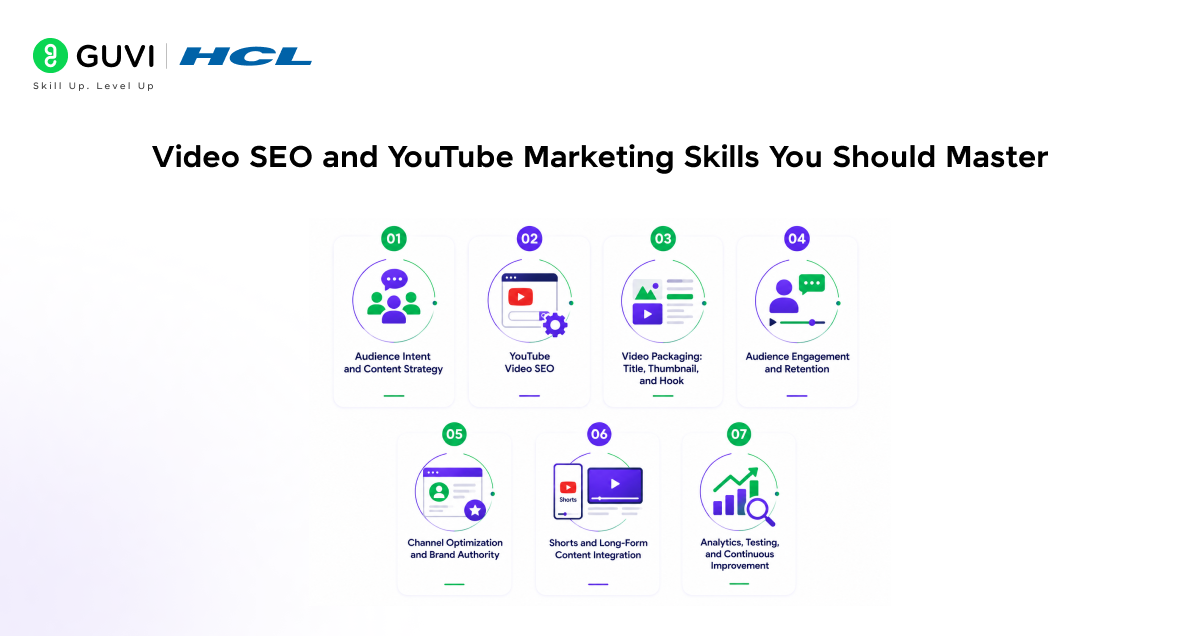
- Audience Intent and Content Strategy
- YouTube Video SEO
- Video Packaging: Title, Thumbnail, and Hook
- Audience Engagement and Retention
- Channel Optimization and Brand Authority
- Shorts and Long-Form Content Integration
- Analytics, Testing, and Continuous Improvement
- Cross-Platform Promotion and Distribution
- Careers After Learning Video SEO and YouTube Marketing
- Conclusion
- FAQs
- What is Video SEO?
- Why is YouTube marketing important?
- How do keywords help in YouTube SEO?
- What improves YouTube video ranking?
- Is Video SEO a good career skill in 2026?
TL;DR
- Video SEO helps your videos rank better on YouTube and Google search.
- YouTube marketing helps you reach the right audience, build trust, and drive action.
- Titles, thumbnails, and hooks decide the first click, so they must be clear and engaging.
- Watch time, retention, comments, and CTAs improve performance and help videos get recommended.
- These skills can lead to roles in SEO, content marketing, social media, YouTube management, and performance marketing.
What Is Video SEO and YouTube Marketing?
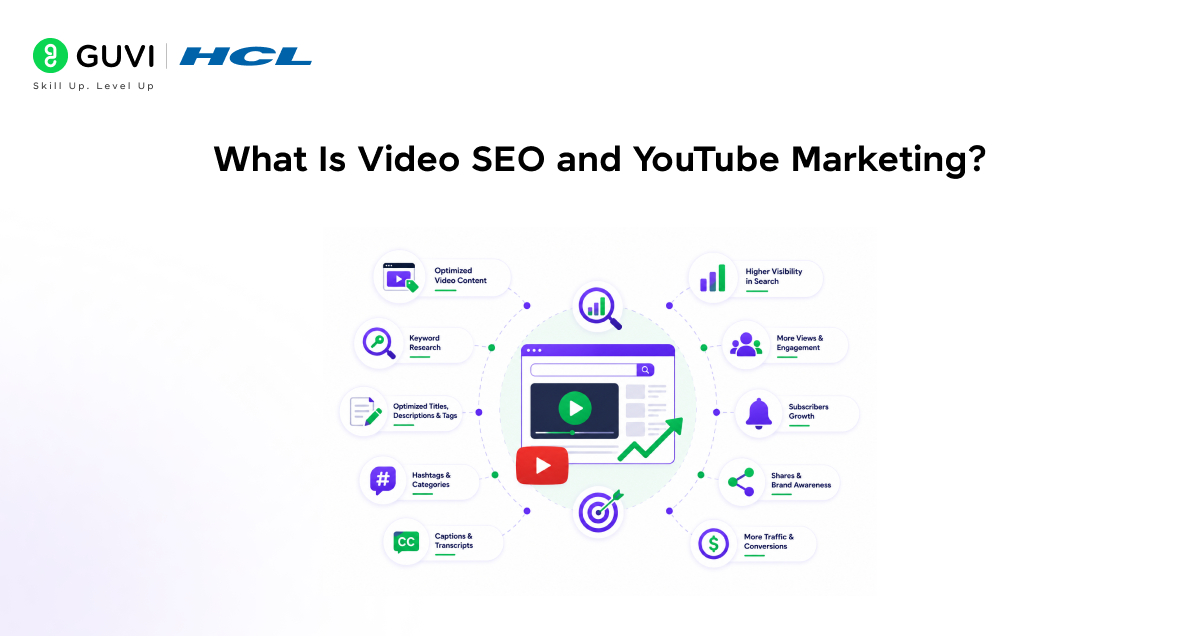
Video SEO and YouTube marketing is the process of optimizing videos, channels, and content strategies to improve visibility on YouTube and Google search. It involves keyword research, title optimization, video descriptions, tags, thumbnails, audience retention, watch time, playlists, and analytics. The goal is to help videos reach the right audience, rank better in search results, appear in recommendations, and convert viewers into subscribers, leads, or customers.
- Websites with video content are 50x to 53x more likely to appear on Google’s first page than pages containing only text.
Importance of Video SEO and YouTube Marketing
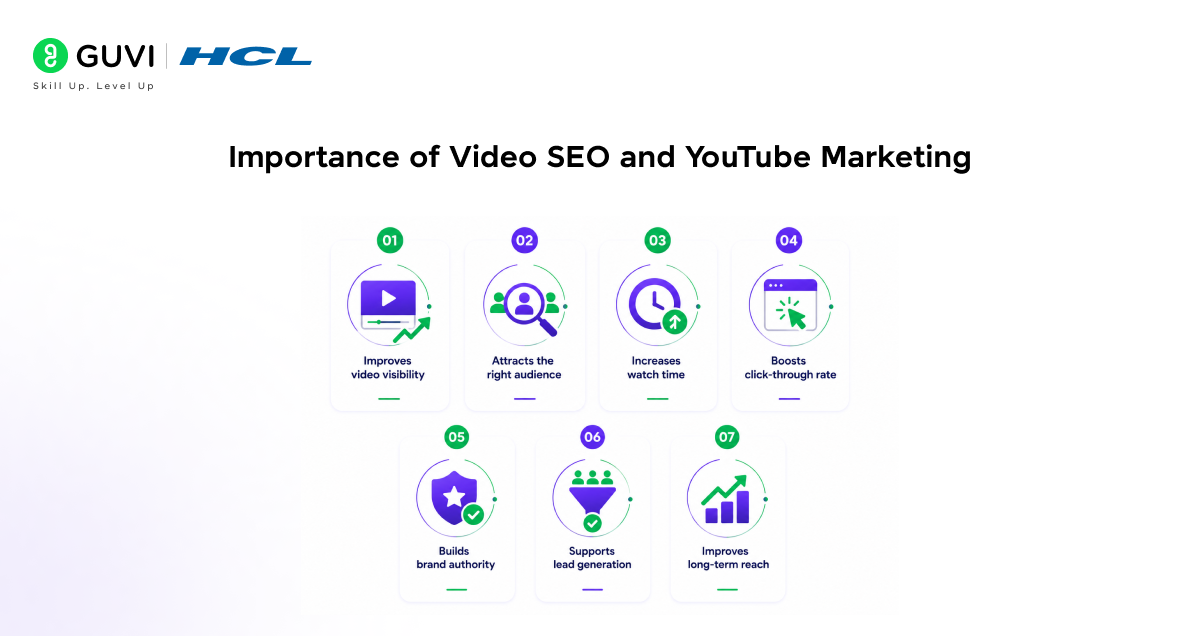
- Improves Video Visibility: Helps videos rank higher on YouTube search and Google video results.
- Attracts the Right Audience: Uses keywords and search intent to reach people actively looking for that topic.
- Increases Watch Time: Better hooks, structure, and pacing keep viewers engaged for longer.
- Boosts Click-Through Rate: Strong titles and thumbnails encourage more users to click on the video.
- Builds Brand Authority: Consistent, optimized videos make a channel look more credible and trusted.
- Supports Lead Generation: YouTube videos can drive traffic to websites, landing pages, products, or courses.
- Improves Long-Term Reach: Well-optimized videos can continue bringing views for months or years.
Master the skills needed to grow brands online with HCL GUVI’s Digital Marketing Course. Learn through a 100% online, self-paced format and earn a globally recognised certification. Get full lifetime access to course content, dedicated forum support to clear your doubts, access to 4 gamified practice platforms, and learn with confidence backed by a 7-Day Refund Policy.
Video SEO and YouTube Marketing Skills You Should Master
1. Audience Intent and Content Strategy
Every successful YouTube strategy starts with understanding why people search for a topic. Some viewers want quick answers. Some want product comparisons. Others want tutorials, reviews, explanations, or entertainment.
A strong content strategy should begin with the following areas:
- Search Intent: Identify whether the audience wants to learn, compare, solve a problem, or make a buying decision.
- Content Buckets: Build repeatable themes such as tutorials, case studies, product explainers, industry updates, interviews, and Shorts.
- Example: A fitness brand can create separate playlists for “home workouts,” “weight loss tips,” “beginner strength training,” and “healthy meal ideas.”
- Competitor Review: Study top-ranking videos in your niche to understand common title patterns, thumbnail styles, video length, and content gaps.
2. YouTube Video SEO
YouTube relies on metadata, viewer behavior, content relevance, and engagement signals to decide which videos appear in search and recommendations. Good SEO helps the platform understand your video and show it to the right audience.
The core parts of YouTube SEO include:
- Keyword Research: Use YouTube Suggest, Google Trends, VidIQ, TubeBuddy, and competitor videos to find what people actually search for.
- Titles: Keep titles clear, specific, and clickable. Place the main keyword naturally near the beginning.
- Example: Instead of “Marketing Tips for Beginners,” use “Digital Marketing Strategy for Beginners: 7 Steps That Work.”
- Descriptions: Add the primary keyword early, then explain what the video covers. Include timestamps, useful links, and related terms.
- Tags and Hashtags: Use tags to support context, not to stuff keywords. Add relevant hashtags such as #VideoSEO, #YouTubeMarketing, or #DigitalMarketing only when they fit naturally.
- Chapters: Add timestamps to improve navigation, viewer experience, and search visibility.
3. Video Packaging: Title, Thumbnail, and Hook
Before viewers watch your video, they judge its value through the title and thumbnail. This makes packaging one of the most important parts of YouTube marketing.
A strong video package should focus on these elements:
- Thumbnail: Use clear visuals, readable text, strong contrast, and one focused idea.
- Title: Create curiosity without misleading the viewer.
- Example: “I Tried YouTube SEO for 30 Days” is stronger than “YouTube SEO Experiment” because it creates a clear story.
- Opening Hook: Capture attention within the first 3 to 5 seconds. Tell viewers what they will gain and why they should keep watching.
- Example: “Most YouTube videos fail because the topic is right, but the packaging is wrong.”
- YouTube processes over 3 billion searches monthly and powers around 80% of Google video snippets.
4. Audience Engagement and Retention
The YouTube algorithm rewards videos that keep viewers watching and encourage meaningful interaction. Watch time, retention, comments, likes, shares, and repeat views all help YouTube understand viewer satisfaction.
To improve engagement and retention, focus on these factors:
- Audience Retention: Use storytelling, pattern changes, visuals, examples, and clear pacing to avoid drop-offs.
- Viewer Satisfaction: Deliver what the title promised. Avoid long introductions that delay the main value.
- Call to Action: Guide viewers toward one clear next step.
- Example: “Watch this next if you want to learn how to write better YouTube titles” works better than asking viewers to like, comment, subscribe, and share all at once.
- Community Signals: Reply to comments, ask useful questions, and turn audience feedback into future video ideas.

5. Channel Optimization and Brand Authority
Video SEO works better when the whole channel is structured clearly. A well-optimized channel helps YouTube understand your niche and helps viewers trust your content.
Your channel authority can improve through these steps:
- Channel Keywords: Add relevant keywords in YouTube Studio to define your niche.
- Channel Description: Explain who the channel is for, what topics it covers, and why viewers should subscribe.
- Playlists: Organize videos into keyword-focused playlists to increase session time.
- Example: A SaaS channel can create playlists like “Product Tutorials,” “Customer Success Stories,” “Feature Updates,” and “Marketing Automation Tips.”
- Channel Trailer: Use a short trailer to tell new visitors what they can expect from the channel.
6. Shorts and Long-Form Content Integration
YouTube Shorts can help channels reach new viewers quickly, while long-form videos build deeper trust and authority. The best strategy connects both formats instead of treating them separately.
A balanced Shorts and long-form strategy may include:
- Shorts for Discovery: Use Shorts to share quick tips, myths, highlights, behind-the-scenes clips, or strong opinions.
- Long-Form for Depth: Use longer videos for tutorials, reviews, breakdowns, interviews, and case studies.
- Example: A 45-second Short on “3 YouTube SEO mistakes” can lead viewers to a full video on “Complete YouTube SEO Strategy for Beginners.”
- Repurposing: Turn one long video into multiple Shorts, LinkedIn posts, X threads, and newsletter snippets.
7. Analytics, Testing, and Continuous Improvement
YouTube marketing improves when decisions are based on data, not guesswork. Analytics show what attracts viewers, where they drop off, and which topics deserve more content.
The most useful performance signals to track are:
- CTR: Track whether titles and thumbnails are strong enough to earn clicks.
- Average View Duration: Check how long viewers stay before leaving.
- Retention Graph: Study where viewers drop off and improve future scripts accordingly.
- Traffic Sources: Identify whether views come from search, suggested videos, browse features, Shorts, or external platforms.
- A/B Testing: Test different thumbnails, titles, hooks, and video formats.
- Example: When a video has high impressions but low CTR, the topic may be strong but the title or thumbnail needs improvement.
8. Cross-Platform Promotion and Distribution
YouTube growth should not depend only on the YouTube algorithm. External promotion helps generate early traction and brings qualified viewers from other platforms.
Video distribution works better when it includes these channels:
- Social Sharing: Share videos on LinkedIn, Reddit, X, Facebook groups, and niche communities where the topic is relevant.
- Email Marketing: Add videos to newsletters, onboarding emails, and product education campaigns.
- Blog Embedding: Embed YouTube videos inside SEO blogs to improve engagement and increase video views.
- Example: A video on “How to Use Google Analytics 4” can be embedded inside a detailed GA4 tutorial blog.
- Community Distribution: Share videos in meaningful conversations rather than posting links randomly.
Careers After Learning Video SEO and YouTube Marketing
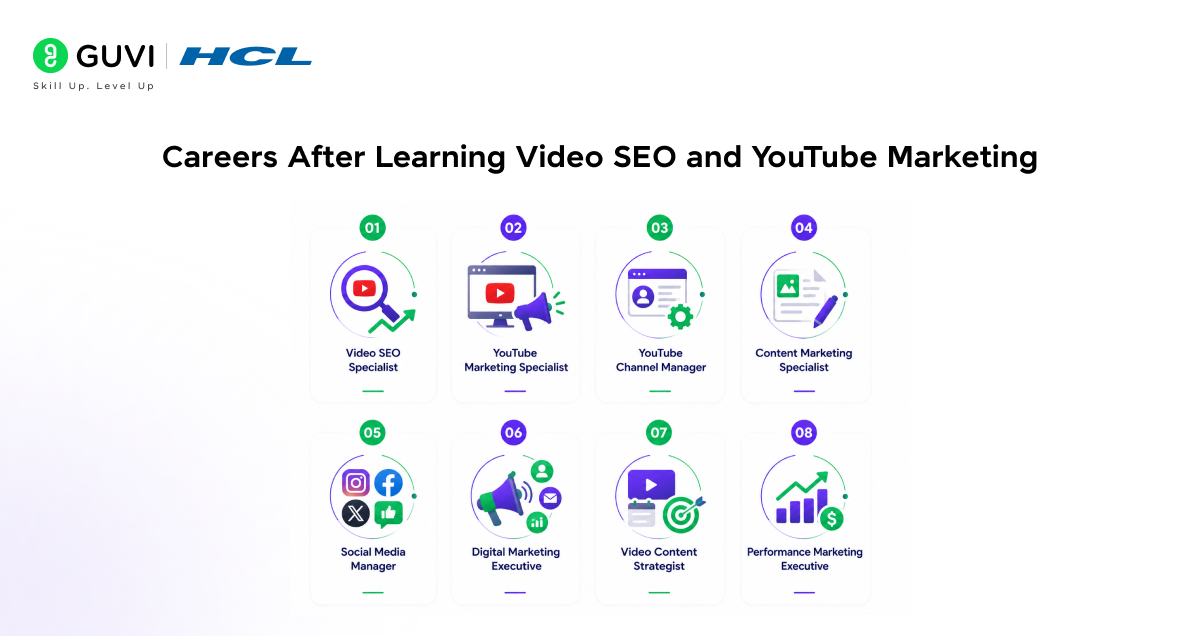
Here are some career paths you can explore after building these skills:
- Video SEO Specialist: Optimizes video titles, descriptions, tags, thumbnails, and playlists to improve YouTube search visibility.
- YouTube Marketing Specialist: Plans YouTube campaigns, manages channel growth, and improves views, subscribers, and audience engagement.
- YouTube Channel Manager: Handles content planning, upload schedules, analytics, community engagement, and overall channel performance.
- Content Marketing Specialist: Uses videos, blogs, social posts, and email campaigns to build brand visibility and generate leads.
- Social Media Manager: Promotes YouTube content across platforms like LinkedIn, Instagram, Reddit, X, and Facebook.
- Digital Marketing Executive: Works on SEO, paid campaigns, video marketing, analytics, and multi-channel promotion.
- Video Content Strategist: Plans video topics, formats, content calendars, audience journeys, and platform-specific strategies.
- Performance Marketing Executive: Uses YouTube ads, remarketing campaigns, and analytics to improve conversions and ROI.
Conclusion
Video SEO and YouTube marketing are useful skills for anyone who wants to grow in digital marketing in 2026. Good videos do more than get views. They help people find your brand, understand your message, trust your content, and take action. With the right mix of keywords, thumbnails, hooks, retention, analytics, and promotion, YouTube can become a strong long-term growth channel. Learning these skills can also help you explore roles in SEO, content marketing, social media, and performance marketing.
FAQs
What is Video SEO?
Video SEO is the process of optimizing videos with the right keywords, titles, descriptions, thumbnails, tags, and engagement signals so they can rank better on YouTube and Google search.
Why is YouTube marketing important?
YouTube marketing helps brands reach people who are already searching for tutorials, reviews, product comparisons, and educational content. It also supports brand awareness, traffic, and lead generation.
How do keywords help in YouTube SEO?
Keywords help YouTube understand what your video is about. They also help your video appear in search results when users look for related topics.
What improves YouTube video ranking?
Strong titles, relevant descriptions, high click-through rate, good watch time, audience retention, comments, playlists, and consistent posting can improve YouTube video ranking.
Is Video SEO a good career skill in 2026?
Yes. Video SEO is a useful career skill because brands need professionals who can improve video visibility, manage YouTube channels, analyze performance, and drive audience growth.
Success Stories

About the Author
Vaishali
I'm a seasoned writer with four years of experience across technical, non-technical, and just about every genre or niche you can imagine. Adaptable and curious, I enjoy exploring new topics and making information engaging and easy to understand. Fueled by a steady stream of tea, I approach each project with creativity, reliability, and genuine enthusiasm for storytelling.
View all posts by Vaishali
Connect with me @








Did you enjoy this article?