


Artificial Intelligence and Machine Learning Articles
AI/ML Skills Gap 2026: Why Companies Can't Find Job-Ready Talent
20 AI/ML Interview Questions Recruiters Can Use Without a Tech Background - Best Guide
How Industry-Backed AI/ML Bootcamps Are Changing the AI/ML Hiring Pipeline - Best Guide 2026
From IT Support to AI Engineer: A Realistic Career Switch Guide 2026
Get In Touch For Details! Request More Information

Roles and Responsibilities of AI Professionals: A Complete Career Guide (2026)
Jun 18, 2026 6 Min Read 3416 Views
(Last Updated)
Roles and Responsibilities of AI professionals have become increasingly important as Artificial Intelligence continues to transform industries worldwide. Artificial Intelligence is no longer a niche skill; it is the backbone of modern business. From personalizing your Netflix feed to powering fraud detection at banks, AI professionals are the builders behind these intelligent systems.
But if you’re a student or job seeker wondering what an AI professional actually does every day, this guide is for you.
In this complete guide, you’ll discover:
• Every major role and responsibility of AI professionals, explained clearly
• A salary comparison table for AI roles in India (2026)
• The exact skills you need to get hired
• How to start your AI career without a traditional degree
Table of contents
- TL;DR
- What Is an AI Professional?
- Why Are AI Professionals So In-Demand Right Now?
- AI Professional Roles at a Glance: Comparison Table
- What Are the Core Roles and Responsibilities of AI Professionals?
- Designing and Building AI Models
- Data Collection, Cleaning, and Pipeline Management
- Researching and Optimizing Algorithms
- Deploying AI Systems to Production
- Monitoring, Maintenance, and Continuous Improvement. Key monitoring tasks:
- Building Scalable AI Infrastructure
- Ethical AI, Governance, and Compliance
- How Do AI Professionals Impact Business and Society?
- Business Impact
- Societal Impact
- Which Industries Hire AI Professionals?
- What Skills Do AI Professionals Need?
- AI Career Path: From Beginner to Senior AI Professional
- How to Start Your AI Career in 2026 (Even Without a Degree)
- Conclusion
- Frequently Asked Questions
- What do AI professionals do?
- What is the difference between a Data Scientist and an ML Engineer?
- Do I need a degree to work in AI?
- Which programming language is most important for AI?
- How much can AI professionals earn in India?
- Which industries hire AI professionals?
- What skills are required for an AI career?
- What is AI ethics, and why is it important?
- Is AI a good career in India in 2026?
- How can beginners start a career in AI?
TL;DR
- AI professionals build, deploy, and maintain intelligent systems that learn from data and automate decisions.
- The field includes roles such as Machine Learning Engineer, Data Scientist, AI Research Scientist, MLOps Engineer, NLP Engineer, Computer Vision Engineer, and AI Product Manager.
- Core responsibilities include building AI models, managing data pipelines, researching algorithms, deploying models, monitoring performance, and ensuring ethical AI practices.
- AI talent is in high demand across healthcare, finance, retail, manufacturing, education, and government sectors.
- Python, Machine Learning, Deep Learning, Generative AI, MLOps, Cloud Computing, and Data Engineering are the most important skills for aspiring AI professionals.
- AI careers offer strong salary growth, with senior specialists and AI leaders earning ₹30–50+ LPA and beyond.
- A traditional degree is not mandatory; practical skills, portfolio projects, certifications, and real-world experience can help candidates break into the field.
What Is an AI Professional?
An AI professional is a specialist who designs, builds, deploys, and maintains artificial intelligence systems. The roles and responsibilities of AI professionals include building machine learning models, managing data, optimizing algorithms, and ensuring AI systems work effectively in real-world applications.
AI professionals work across multiple specializations, including machine learning engineering, data science, AI research, and MLOps. What unites them is the ability to translate data into intelligent, real-world solutions.
Quick Definition
An AI professional builds and maintains systems that use data to learn, predict, and automate. They work with tools like Python, TensorFlow, PyTorch, and cloud platforms such as AWS or Google Cloud.
A common question today is: “Will AI replace programmers?” This article on Will AI Replace Programmers? discusses how AI professionals are helping tech teams grow, and not take over.
Why Are AI Professionals So In-Demand Right Now?
The demand for AI talent has skyrocketed in recent years. Here’s why:
- India’s AI market is projected to reach $17 billion by 2027 (NASSCOM, 2024)
- The World Economic Forum estimates that AI will create 97 million new jobs globally by 2026
- Companies in healthcare, finance, retail, and manufacturing are all actively hiring AI talent
- Generative AI adoption (ChatGPT, Gemini, Copilot) has created entirely new job categories like Prompt Engineers and AI Product Managers
AI Professional Roles at a Glance: Comparison Table
Here’s a quick-reference overview of the most in-demand AI roles in 2026:
| AI Job Role | Core Responsibilities | Key Tools | Avg. Salary (India) |
| Machine Learning Engineer | Build, train, and deploy ML models | Python, TensorFlow, PyTorch, AWS | ₹12–30 LPA |
| Data Scientist | Analyze data, build predictive models | Python, R, SQL, Tableau | ₹10–25 LPA |
| AI Research Scientist | Develop new algorithms and architectures | PyTorch, JAX, CUDA, LaTeX | ₹18–40+ LPA |
| MLOps Engineer | Automate ML pipelines and deployments | Docker, Kubernetes, MLflow, CI/CD | ₹14–28 LPA |
| Data Engineer | Build data pipelines and infrastructure | Spark, Kafka, Airflow, SQL | ₹10–22 LPA |
| NLP Engineer | Build language models and a chatbot | Hugging Face, BERT, GPT APIs | ₹12–28 LPA |
| Computer Vision Engineer | Image/video recognition systems | OpenCV, YOLO, CNNs, TensorFlow | ₹12–26 LPA |
| AI Product Manager | Define AI product roadmap and strategy | Jira, Figma, SQL, and AI literacy | ₹15–35 LPA |
| AI Ethics & Governance Specialist | Ensure fairness, compliance, and safety | Fairness toolkits, Policy frameworks | ₹10–20 LPA |
Master Python, Machine Learning, Deep Learning, Generative AI, and MLOps through live mentor-led training, hands-on projects, and personalized career support. Designed for students, freshers, and professionals, this program helps you build industry-ready AI skills and accelerate your career growth. Explore HCL GUVI AI & ML Course
What Are the Core Roles and Responsibilities of AI Professionals?
The major roles and responsibilities of AI professionals cover multiple areas, including AI model development, data management, research, deployment, monitoring, infrastructure management, and ethical AI practices.
1. Designing and Building AI Models
One of the key roles and responsibilities of AI professionals is designing and training AI models that can analyze data, identify patterns, and make accurate predictions.
AI professionals design the architecture of machine learning models, choosing the right algorithm, configuring layers in a neural network, and training the model on data to solve a specific problem.
This is the most core responsibility of an AI professional. It involves:
- Choosing the right ML algorithm for the problem (e.g., Random Forest vs. Neural Network)
- Writing code to build and train models using frameworks like TensorFlow or PyTorch
- Evaluating model accuracy using metrics like precision, recall, and F1 score
- Iterating on the model architecture to improve performance
Real-world example: A team at a healthcare startup builds an AI model that detects early signs of diabetic retinopathy from retina scans, achieving 94% accuracy and enabling early treatment for thousands of patients.
2. Data Collection, Cleaning, and Pipeline Management
What This Means
Data is the fuel for AI. AI professionals gather raw data from multiple sources, clean it to remove errors or inconsistencies, and build automated pipelines that keep data flowing to the model.
Key tasks include:
- Collecting data from APIs, databases, web scraping, and sensors
- Removing duplicates, handling missing values, and normalizing formats
- Building ETL (Extract, Transform, Load) pipelines using tools like Apache Airflow or Spark
- Ensuring data quality and freshness for production models
Real-world example: An e-commerce company’s AI team builds a pipeline that ingests 2 million product reviews daily, cleans the data, and feeds it to a sentiment analysis model, helping the business respond to negative trends 10x faster.
Looking for a guided path into Artificial Intelligence? HCL GUVI AI & ML Course helps learners build job-ready skills through hands-on learning and real-world applications.
3. Researching and Optimizing Algorithms
What This Means
AI is a fast-moving field. AI research professionals read new papers (from arXiv, NeurIPS, ICLR), implement cutting-edge techniques, and test whether they improve model performance.
This responsibility includes:
- Reading and implementing research papers on new architectures (Transformers, Diffusion Models, etc.)
- Running A/B tests to compare different model approaches
- Using hyperparameter tuning with tools like Optuna or Ray Tune
- Benchmarking models against industry standards
4. Deploying AI Systems to Production
What This Means
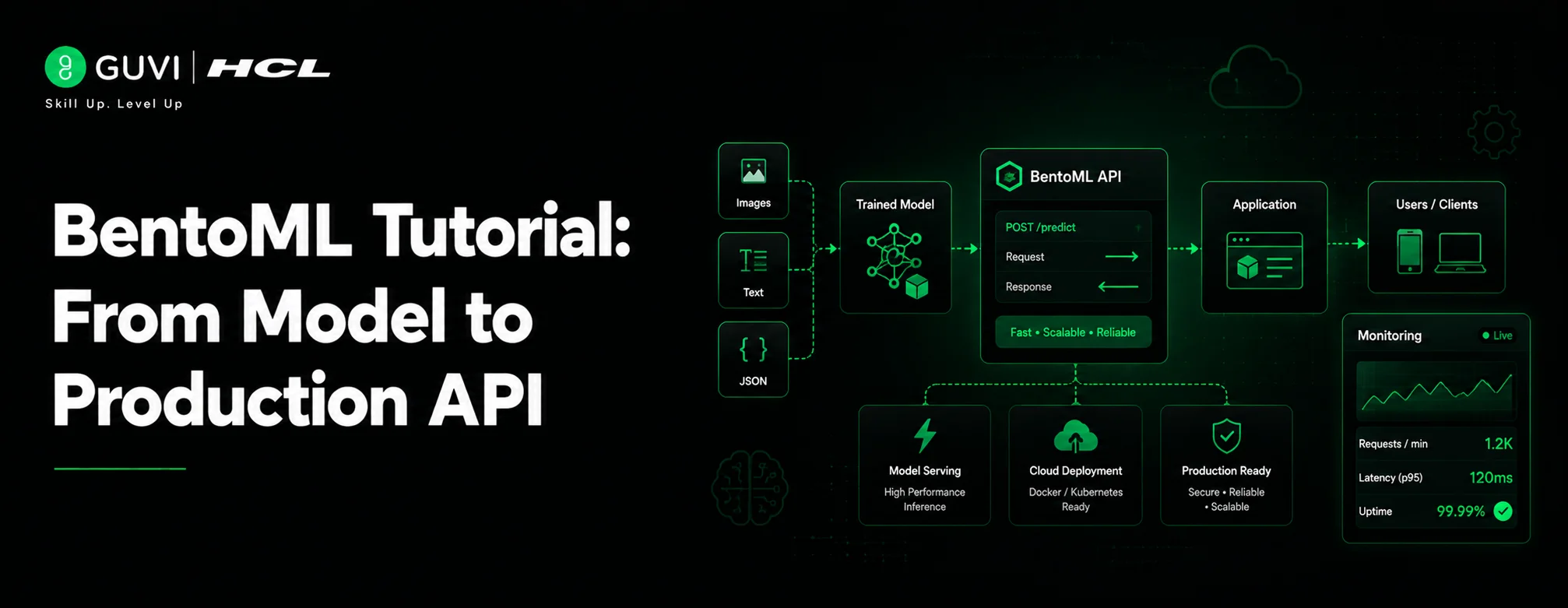
A model that lives only in a notebook has no value. AI professionals package models into APIs, containerize them with Docker, and deploy them to cloud platforms so real users can interact with them. This responsibility includes:
- Packaging models as REST APIs using FastAPI or Flask
- Containerizing applications with Docker and Kubernetes
- Deploying to AWS SageMaker, Google Vertex AI, or Azure ML
- Setting up CI/CD pipelines for automated model updates
Real-world example: An AI professional at a fintech company deploys a credit scoring model as a REST API that processes 50,000 loan applications per day with a sub-100ms response time.
5. Monitoring, Maintenance, and Continuous Improvement. Key monitoring tasks:
- Tracking model accuracy, latency, and error rates with dashboards (Grafana, MLflow)
- Detecting data drift, when incoming data patterns change over time
- Scheduling automated retraining pipelines
- Setting up alerts for model performance degradation
6. Building Scalable AI Infrastructure
Infrastructure responsibilities include:
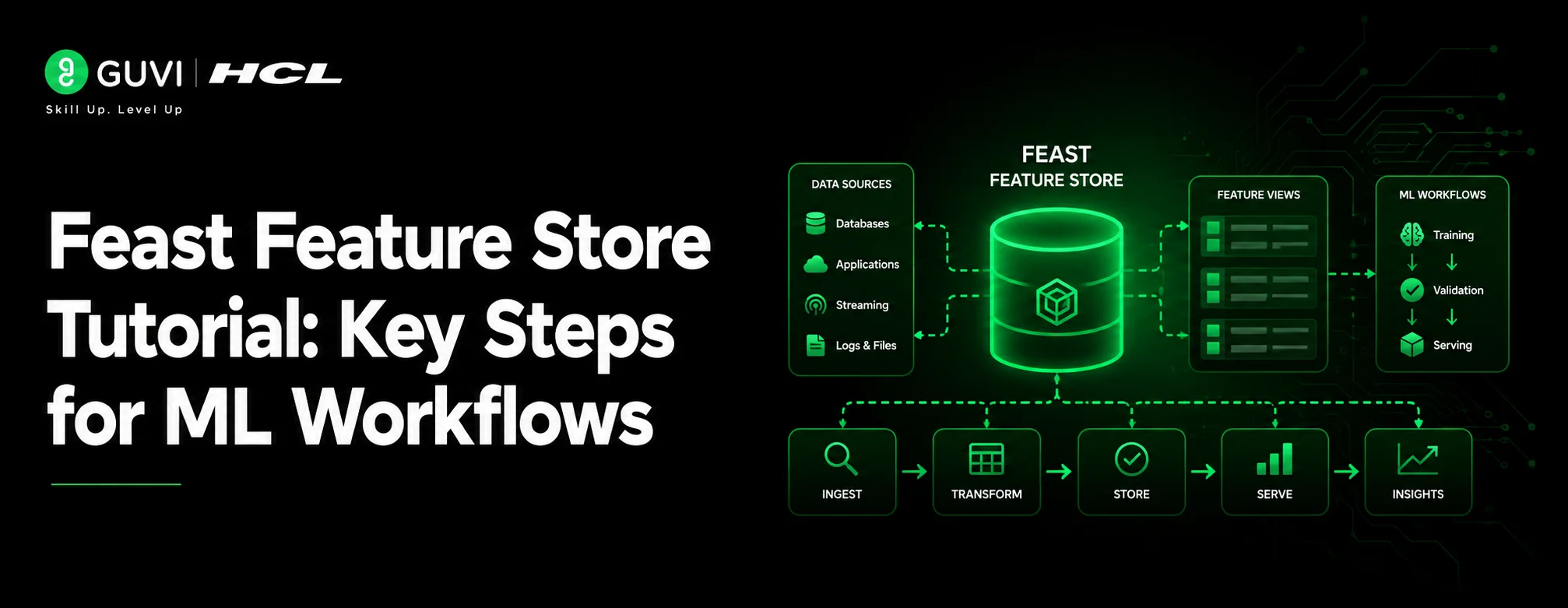
- Designing feature stores for reusable ML features
- Setting up experiment tracking with MLflow or Weights & Biases
- Managing GPU clusters for large model training
- Building data lakes and warehouses on AWS S3, Google BigQuery, or Snowflake

7. Ethical AI, Governance, and Compliance
Ethical AI responsibilities include:
- Running bias and fairness audits on models using tools like IBM AI Fairness 360
- Writing model cards and datasheets for documentation and accountability
- Ensuring explainability for high-stakes decisions (loans, hiring, healthcare)
- Staying current with AI regulations in India and globally
Real-world example: A hiring AI platform discovers its resume screening model is biased against certain college names. The AI ethics team audits the model, removes the biased features, and documents the fix, building trust with enterprise clients.
How Do AI Professionals Impact Business and Society?
The impact of AI professionals goes far beyond writing code. Here’s how they’re changing the world:
Business Impact
- Cost reduction: AI automates repetitive tasks, saving companies millions in operational costs
- Better decisions: Predictive models give businesses insights that humans alone couldn’t find in large datasets
- 24/7 operations: AI-powered systems operate continuously without fatigue or error
- Competitive advantage: Companies with strong AI teams move faster and respond smarter to market changes
Societal Impact
- Healthcare: AI models diagnose diseases earlier, Google’s DeepMind detected eye diseases with 94% accuracy
- Climate: AI is used to optimize energy grids, predict extreme weather, and reduce carbon emissions
- Education: Adaptive learning systems personalize content for millions of students simultaneously
- Accessibility: AI-powered tools help people with disabilities communicate, navigate, and work
Which Industries Hire AI Professionals?
AI is not just a tech-sector phenomenon. Here are the top industries actively hiring AI professionals in India:
- Healthcare & Pharma: Medical imaging, drug discovery, patient risk prediction
- Banking & Finance: Fraud detection, algorithmic trading, credit scoring, chatbots
- E-Commerce & Retail: Recommendation engines, dynamic pricing, demand forecasting
- Manufacturing: Predictive maintenance, quality control, robotic automation
- Education (EdTech): Adaptive learning, student performance analytics, AI tutors
- Automotive: Self-driving vehicle systems, route optimization, driver safety
- Government & Defence: Surveillance, traffic management, cybersecurity
- Agriculture: Crop yield prediction, soil analysis, drone monitoring
What Skills Do AI Professionals Need?
Here’s a clear breakdown of the skills required across different levels:
| Skill Category | What You Need to Learn | Why It Matters |
| Programming | Python (primary), R, SQL, Bash scripting | Every AI workflow starts with cod |
| Mathematics | Linear Algebra, Calculus, Probability, Statistics | Required to understand and tune ML models |
| Machine Learning | Supervised, Unsupervised, Reinforcement Learning | Core of all AI model development |
| Deep Learning | Neural Networks, CNNs, RNNs, Transformers | Powers image, language, and speech AI |
| Generative AI | LLMs, Prompt Engineering, RAG, Fine-tuning | The fastest growing skill in 2024-25 |
| MLOps & Deployment | Docker, Kubernetes, MLflow, CI/CD, FastAPI | Makes AI usable in the real world |
| Cloud Platforms | AWS SageMaker, GCP Vertex AI, Azure ML | Where most production AI systems run |
| Data Engineering | QL, Spark, Airflow, Kafka, BigQuery | Feeds clean data to AI models |
| Soft Skills | Communication, Problem Solving, Domain Knowledge | Differentiates senior AI professionals |
AI Career Path: From Beginner to Senior AI Professional
Here’s a realistic AI career progression for someone starting in India today:
- Beginner (0–1 year): Learn Python, Statistics, and basic ML. Build 2–3 portfolio projects. Apply for AI Intern or Junior Data Analyst roles.
- Junior AI Professional (1–3 years): Work on real datasets, contribute to model building, learn cloud tools. Salary: ₹8–15 LPA.
- Mid-Level AI Engineer (3–6 years): Lead model deployments, mentor juniors, specialize in NLP/CV/GenAI. Salary: ₹15–28 LPA.
- Senior AI Professional (6+ years): Define AI strategy, lead teams, publish research or patents. Salary: ₹28–50+ LPA.
- AI Lead / Director: Drive the AI roadmap across business units, work closely with CXOs. Salary: ₹50+ LPA.
How to Start Your AI Career in 2026 (Even Without a Degree)
You do NOT need a Computer Science degree to start an AI career. Here’s a step-by-step roadmap:
Step 1 – Learn Python: Start with Python basics, then move to NumPy, Pandas, and Matplotlib.
Step 2 – Master the Math: Study Statistics, Probability, and Linear Algebra at a practical level. Khan Academy and 3Blue1Brown are great free resources.
Step 3 – Learn ML & Deep Learning: Use Scikit-learn for classical ML, then TensorFlow/PyTorch for deep learning. Complete Kaggle competitions.
Step 4 – Build Portfolio Projects: Aim for 3–5 projects covering different domains (e.g., NLP chatbot, image classifier, recommendation system). Host on GitHub.
Step 5 – Get Certified & Apply: Take a structured course like HCL GUVI AI & ML Zen Class that includes live projects, career support, and interview prep.
Conclusion
The roles and responsibilities of AI professionals are broad, exciting, and increasingly essential to every industry. From training machine learning models to ensuring ethical compliance, AI professionals are the architects of the intelligent systems shaping our future.
Whether you’re a student, a working professional looking to switch careers, or someone who has always been curious about AI, the opportunities in this field have never been greater.
The best time to start learning AI was yesterday. The second-best time is right now.
Explore: Artificial Intelligence and Machine Learning Course, which teaches you Python, machine learning, deep learning, and gives you hands-on assignments to build your portfolio.
These courses can help you learn the skills you need to start your career as an AI professional.
Frequently Asked Questions
1. What do AI professionals do?
They build, deploy, monitor, and improve AI systems that learn from data and automate decisions.
2. What is the difference between a Data Scientist and an ML Engineer?
Data Scientists analyze data and build insights, while ML Engineers deploy and scale AI models in production.
3. Do I need a degree to work in AI?
No. Strong skills, projects, certifications, and practical experience can be enough to land AI roles.
4. Which programming language is most important for AI?
Python is the industry standard, followed by SQL for data handling.
5. How much can AI professionals earn in India?
Salaries typically range from ₹6–12 LPA for beginners to ₹30–50+ LPA for senior specialists.
6. Which industries hire AI professionals?
Healthcare, finance, retail, manufacturing, education, automotive, and technology companies actively hire AI talent.
7. What skills are required for an AI career?
Python, Machine Learning, Deep Learning, Statistics, Cloud Computing, MLOps, and problem-solving skills.
8. What is AI ethics, and why is it important?
AI ethics ensures systems are fair, transparent, secure, and compliant with regulations.
9. Is AI a good career in India in 2026?
Yes. Strong demand, skill shortages, and high salaries make AI one of India’s fastest-growing career paths.
10. How can beginners start a career in AI?
Learn Python, master ML fundamentals, build projects, create a portfolio, and gain hands-on experience through courses and internships.
Success Stories

About the Author
Salini Balasubramaniam
A curious, information-savvy writer loves to turn deep insights into authentic and engaging content that connects. With experience in writing for brands and driving audience engagement, I believe that words can make a powerful difference.
View all posts by Salini Balasubramaniam
Connect with me @






Did you enjoy this article?