


Artificial Intelligence and Machine Learning Articles
How to Evaluate LLM Outputs in Production Deployments
AI/ML Skills Gap 2026: Why Companies Can't Find Job-Ready Talent
20 AI/ML Interview Questions Recruiters Can Use Without a Tech Background - Best Guide
How Industry-Backed AI/ML Bootcamps Are Changing the AI/ML Hiring Pipeline - Best Guide 2026


Get In Touch For Details! Request More Information
Mock Interviews: The Smart Way to Prepare Better
Jul 14, 2026 5 Min Read 865 Views
(Last Updated)
You have the skills. You have the experience. You have spent hours reading about the company, memorizing your resume, and rehearsing answers in your head while staring at the ceiling at midnight.
Then the interview starts and your mind goes blank.
The question is perfectly reasonable. You have answered it a hundred times in your head. But right now, with someone watching you, judging you, and typing notes while you speak, everything you prepared evaporates.
Sound familiar?
This guide changes that.
Table of contents
- Quick TL;DR Summary
- Why Most Interview Prep Does Not Work
- What Mock Interviews Actually Do For You
- The Interview Types You Need to Practice
- The Feedback Loop That Makes You Better
- Things That Silently Kill Interview Performance
- Your Simple Weekly Practice Plan
- Week 1: Foundation
- Week 2: Behavioral Deep Dive
- Week 3: Live Sessions
- Week 4: Polish and Pressure
- Final Thoughts
- FAQs
- How many mock interviews should I do before the real thing?
- What if I have nobody to practice with?
- Should I memorize my answers word for word?
- How do I handle a question I genuinely do not know how to answer?
- Is mock practice worth it even if I am experienced?
Quick TL;DR Summary
- Mock interviews are practice sessions that simulate real interview conditions so you build confidence, catch weak answers, and fix them before they cost you a job offer.
- This guide covers why mock interviews work, how to run them effectively, what to practice for different interview types, and how to use feedback to actually improve.
- You will get practical tools, honest advice, and a step-by-step approach to turning interview practice into interview performance.
- By the end you will know exactly how to prepare, what to focus on, and how to walk into your next interview feeling genuinely ready instead of just hoping for the best.
Why Most Interview Prep Does Not Work
Most people prepare the same way.
Read tips online. Rehearse answers mentally. Feel reasonably prepared. Walk in and immediately realize that thinking about answering a question and actually answering it out loud in front of a person are completely different experiences.
Reading is passive. Interviews are performance.
Mock interviews are the only thing that closes that gap.
Read More: Answers To 15 Most Common Job Interview Questions
What Mock Interviews Actually Do For You

- They Make the Uncomfortable Comfortable
The first time you answer “tell me about yourself” out loud to someone, it feels awkward.
The tenth time, it feels natural. The twentieth time, it feels effortless.
Mock interviews compress this learning curve. By the time you sit in the real interview, none of it feels new.
- They Show You Which Answers Are Actually Weak
In your head, every answer sounds great.
Out loud, in real time, polished answers reveal themselves as rambling, vague, or missing the point entirely.
You cannot fix a problem you cannot see. Mock interviews make the invisible visible.
- They Build Communication as a Muscle
Delivering a structured, confident answer is a physical skill as much as a mental one.
Your voice. Your pacing. Your eye contact. The way you organize thoughts under pressure.
These improve through repetition. Mock interviews give you the repetitions.
- They Teach You to Think on Your Feet
Not every interview question is one you prepared for.
Mock interviews that include unexpected questions teach you to think clearly when you do not have a rehearsed answer ready. This is arguably the most valuable skill in any interview and it only develops through realistic practice.
Research shows that candidates who practice with mock interviews are significantly more likely to perform confidently in real interviews, as repeated practice helps reduce stress, improve clarity of thought, and strengthen communication skills under pressure.
The Interview Types You Need to Practice
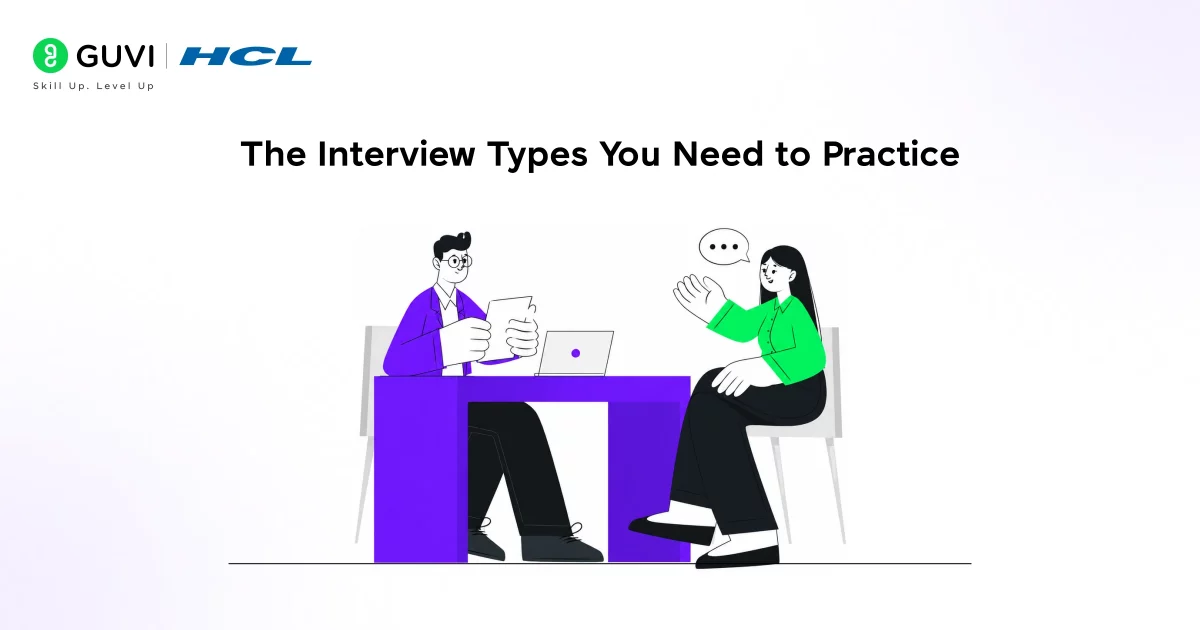
- Behavioral Interviews
These use “tell me about a time when” questions to understand how you handle real situations.
Use the STAR method: Situation, Task, Action, Result.
Knowing the framework is one thing. Delivering a crisp compelling story using it is another. Practice until your stories feel natural, not recited. Aim for 90 seconds to two minutes per answer.
Practice these questions:
- “Tell me about a time you failed and what you learned.”
- “Describe a situation where you disagreed with your manager.”
- “Give me an example of when you went above and beyond.”
- “Tell me about a time you handled a difficult colleague.”
- “Describe a situation where you had to meet a tough deadline.”
- Technical Interviews
Technical interview not just whether you can solve a problem but whether you can communicate your thinking while solving it.
Interviewers want to see how you approach problems, not just the final answer.
What to practice:
- Talking through your thought process out loud as you work
- Explaining your approach before you start implementing
- Asking clarifying questions before diving into a solution
- Recovering gracefully when you hit a dead end
Sample technical practice prompts:
- “Reverse a linked list and explain every step as you go.”
- “How would you design a URL shortening service?”
- “Walk me through how you would debug a production issue.”
- “Explain the difference between a stack and a queue to a non-technical person.”
- HR and Culture Fit Interviews
HR and Culture Fit Interviews feel easier than technical ones and that is exactly why people underprepare for them.
Generic answers make you forgettable. Specific answers make you memorable.
“I am a team player” tells an interviewer nothing. “I initiated weekly cross-team syncs that reduced project delays by thirty percent” tells them everything.
Practice these questions:
- “Why do you want to work here specifically?”
- “Where do you see yourself in five years?”
- “What is your greatest weakness and what are you doing about it?”
- “How do you handle pressure or stressful situations?”
- “Tell me something about yourself that is not on your resume.”
- Case Interviews
Common in consulting and strategy roles. You get a business problem and work through it live.
The right answer matters less than the quality of your structured thinking.
Practice these scenarios:
- “How would you estimate the number of coffee shops in Mumbai?”
- “A retail client’s profits dropped 20 percent. Walk me through how you would diagnose this.”
- “Should a telecom company enter the streaming market? Build your case.”
- “How would you price a new product with no market data?”
Explore: Top 30 Tableau Interview Questions and Answers for All Levels
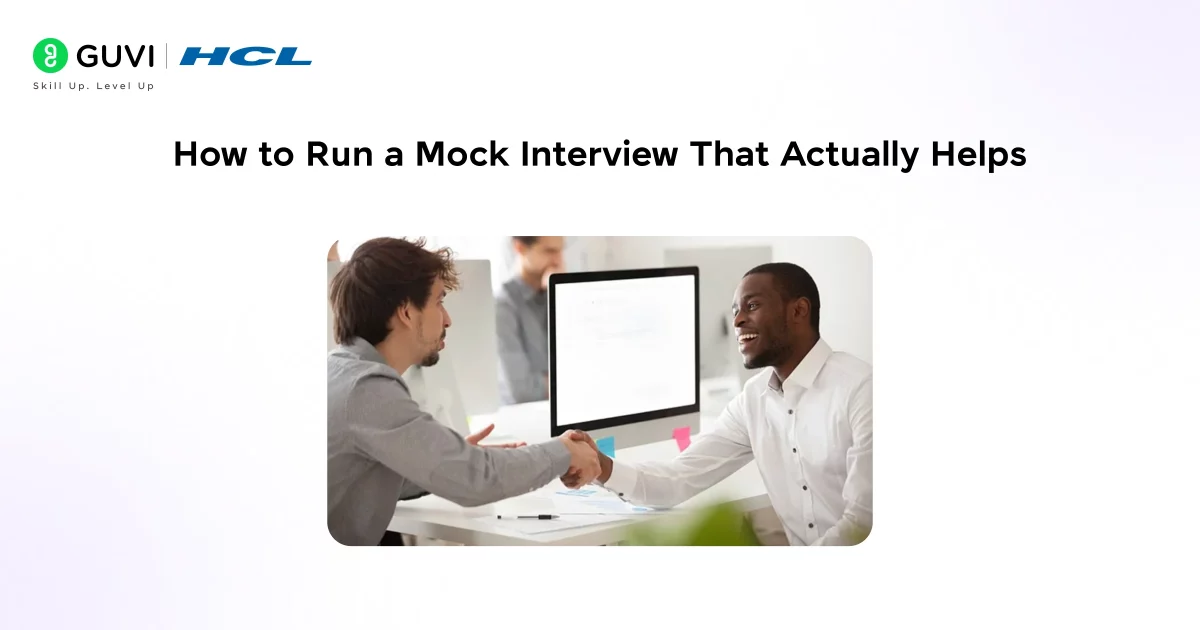
- Make It Feel Real
A casual bedroom practice session does not prepare you for a formal interview.
Dress the part. Sit up straight. Use the exact setup you will use for the real thing.
The closer the conditions match reality, the more the practice transfers.
- Record Yourself
This is the practice most people avoid and the one that helps most.
Record your sessions on video. Watch them back. It is uncomfortable. Do it anyway.
You will notice things you never knew you were doing:
- Saying “um” fifteen times per minute
- Looking away every time you think
- Trailing off at the end of answers
- Speaking so fast your words blur together
You cannot fix habits you cannot observe.
- Find a Partner Who Will Push You
The best practice partner asks follow-up questions, pushes back on vague answers, and does not let you off the hook.
A friend who says “that was great” after every answer is not helping you.
Find someone who will say “I did not understand your actual contribution in that story. Can you be more specific?”
- Debrief Every Session
Practice is not the most valuable part. The debrief is.

After every session spend at least as long reviewing as you spent practicing.
Ask yourself:
- Which questions caught me off guard?
- Where did I ramble or lose the point?
- What would I change about that answer?
- What is the one thing to fix before next time?
Write it down. Create a specific plan. Practice without reflection is just repetition. Reflection is what turns repetition into improvement.
Many top companies use behavioral and situational interview formats, where candidates are evaluated based on how they handled real past scenarios or would respond to workplace challenges. Practicing with mock interviews helps candidates structure their answers more effectively using frameworks like the STAR technique (Situation, Task, Action, Result), making responses clearer, more concise, and easier for interviewers to assess.
The Feedback Loop That Makes You Better
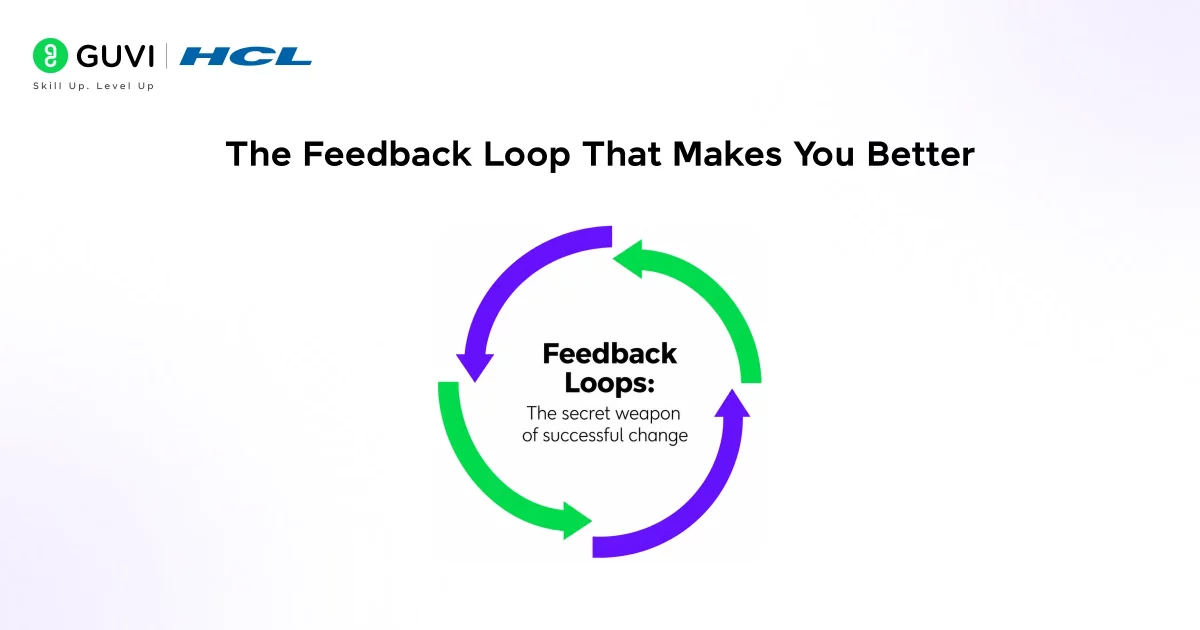
- Ask for Specific Feedback
“How did I do?” produces useless feedback.
“Was my answer to the leadership question specific enough or did it sound generic?” produces actionable feedback.
The more targeted your questions the more useful the answers.
- Track Your Progress
Keep a simple log after every session.
- What questions were asked
- Which answers went well
- Which ones need work
- What you are fixing next time
Looking back three weeks later and seeing how far you have come is genuinely motivating when preparation starts to feel exhausting.
- Fix One Thing at a Time
Trying to fix pacing, eye contact, answer structure, and storytelling all at once fixes none of them.
Pick the single most important thing. Focus on it entirely. Once it feels natural move to the next.
Focused improvement compounds faster than scattered improvement.
- Celebrate the Small Wins
You delivered a crisp two-minute answer without rambling. That is real progress.
You made eye contact throughout the whole answer. That matters.
Small consistent improvements add up to a fundamentally different interview performance over time. Notice them. They are proof the work is paying off.
Things That Silently Kill Interview Performance
- Answering the question you wish they asked
You hear a question, your brain jumps to a story you want to tell, and you answer that instead of what was actually asked. Practice listening to the full question before drafting an answer.
- Telling your entire career story for every answer
A question about conflict resolution is not an invitation to explain your professional philosophy. Stay on point. Answer what was asked. Stop when you have answered it.
- Filling silence with noise
When you do not know what to say immediately, the temptation is to fill the gap with “um, so, basically, you know.”
Practice sitting with two seconds of silence. A brief pause reads as confidence. Nervous filler reads as uncertainty.
- Forgetting that enthusiasm matters
Technical competence gets you considered. Genuine enthusiasm gets you hired.
Practice communicating not just what you have done but why you are genuinely excited about this specific opportunity.
Your Simple Weekly Practice Plan
You do not need hours every day. You need consistent focused practice over several weeks.
Week 1: Foundation
Record yourself answering ten common questions. Watch every recording. Write down the three biggest things to fix.
Week 2: Behavioral Deep Dive
Prepare five strong STAR stories covering different competencies. Practice each until you can tell it in under two minutes without notes. Time yourself every time.
Week 3: Live Sessions
Run two to three full mock interviews with a real person or an AI tool. Treat each one as the real thing. Debrief thoroughly after each session.
Week 4: Polish and Pressure
Focus entirely on weak spots from week three. Add unexpected questions to your sessions. Practice recovering gracefully when you do not know an answer.
If you want to build real confidence and improve your interview performance through mock interview practice, do not miss the chance to enroll in HCL GUVI’s Intel & IITM Pravartak Certified Artificial Intelligence & Machine Learning course. Endorsed with Intel certification, this course adds a globally recognized credential to your resume, a powerful edge that sets you apart in the competitive AI job market.
Final Thoughts
Here is what nobody tells you about interview preparation. The goal is not to memorize perfect answers.
Perfect answers delivered robotically lose to genuine confident specific answers delivered by someone who clearly knows themselves and communicates well under pressure.
Mock interviews do not just teach you what to say. They teach you to be comfortable in the situation itself. When you are comfortable you are more yourself. When you are more yourself you are more compelling. When you are more compelling you get offers.
Go practice. You have got this.
FAQs
1. How many mock interviews should I do before the real thing?
At minimum three to five full sessions. If your last two felt strong and consistent you are ready. If you are still discovering new weak spots keep going.
2. What if I have nobody to practice with?
Use AI-powered mock interview tools, record yourself on video, or find online communities where job seekers practice together. Professional mock interview services are also worth the investment for high-stakes roles.
3. Should I memorize my answers word for word?
No. Memorized answers sound memorized and interviewers notice immediately. Practice the structure and key points until you can deliver them naturally in your own words every time.
4. How do I handle a question I genuinely do not know how to answer?
Take a brief visible pause, acknowledge you are thinking, then work through the question out loud. Interviewers respect clear thinking and honesty far more than a confident wrong answer.
5. Is mock practice worth it even if I am experienced?
Absolutely. Experienced professionals often have ingrained habits that have never been examined. Rusty delivery. Overconfidence that reads as arrogance. A few sessions before any important interview keeps your skills sharp regardless of experience level.
Success Stories

About the Author
Vishalini Devarajan
An Aerospace Engineer turned content writer, I focus on making complex concepts easy to understand through well-structured, reader-friendly blogs. Whether it’s a technical topic or a non-technical one, I love creating content that is clear, engaging, and impactful.
View all posts by Vishalini Devarajan
Connect with me @







Did you enjoy this article?