


Data Science Articles
Serializability in DBMS: A Detailed Guide
How to Rename a Column in SQL: A Beginner's Step-by-Step Guide
Best Power BI Course With Certificate: Top Options for Beginners


Get In Touch For Details! Request More Information

How to become a Data Science Architect?
Nov 29, 2025 6 Min Read 821 Views
(Last Updated)
In today’s data-driven world, businesses rely on data to make informed decisions, enhance performance, and develop more effective products. But behind every efficient data system is the person who makes it all work, and they are the Data Science Architect.
A Data Science Architect is a professional who designs and manages the complete structure that allows data to be collected, stored, and analyzed effectively. They act as the bridge between data engineers, analysts, and data scientists, ensuring that all systems work together smoothly. Their goal is to create data solutions that are scalable, secure, and ready for advanced analytics or machine learning.
In this blog, we’ll explore everything you need to know about becoming a Data Science Architect – who they are, why their role is important, what skills and tools you’ll need, the steps to build this career, and what the future looks like in this growing field.
Table of contents
- Who Is a Data Science Architect
- Importance of a Data Science Architect
- Key Roles and Responsibilities
- Designing Data Systems
- Integrating Data Sources
- Optimizing Data Pipelines
- Collaborating Across Teams
- Ensuring Security And Compliance
- Skills Required to Become a Data Science Architect
- Technical Skills
- Analytical Skills
- Soft Skills
- Tools and Technologies Used
- Step-by-Step Guide to Becoming a Data Science Architect
- Challenges in This Career Path
- Future Scope and Salary Insights
- Conclusion
- FAQs
- What is the main role of a Data Science Architect?
- Is a Data Science Architect different from a Data Scientist?
- How much experience is needed to become a Data Science Architect?
- Which industries hire Data Science Architects?
- Can a software engineer transition into a Data Science Architect role?
Who Is a Data Science Architect
A Data Science Architect is a professional who designs, builds, and manages the systems that support data processing and analysis. They plan how data flows across different platforms, ensuring that it’s stored securely, processed efficiently, and available for analytics and machine learning.
They work closely with data engineers, analysts, and scientists to create a structure that allows data to move smoothly across all stages — from collection to visualization. In simple terms, a Data Science Architect is akin to an architect for data systems, responsible for ensuring that everything behind the scenes operates smoothly. By combining technical expertise with strategic planning, they help businesses make the most of their data while maintaining scalability, accuracy, and security.
Importance of a Data Science Architect
Data Science Architects play a vital role in shaping how an organization uses data effectively. They turn a company’s data goals into reality by designing the systems that move information smoothly from collection to analysis. Without them, data processes can become slow, unorganized, and difficult to scale.
Let’s look at the key reasons why the Data Science Architect role is so important:
- Strategic Decision-Making: They design strong data systems that help businesses make smart, data-driven decisions instead of relying on guesswork.
- Efficient Data Management: They build and organize data infrastructure so that information is easily available, accurate, and well-structured for analysis.
- Scalability and Performance: They ensure that systems can handle large and growing amounts of data without losing speed or performance.
- Cross-Team Collaboration: They act as a bridge between engineers, analysts, and business teams, ensuring that everyone works together efficiently.
- Innovation and AI Support: They create the foundation needed for advanced analytics, artificial intelligence, and machine learning projects to succeed.
Looking to explore the foundations before stepping into an advanced role like a Data Science Architect? Do check out HCL Guvi’s Data Science eBook, a go-to guide for your journey in data science. It covers essential topics such as Python for data handling, statistics, machine learning basics, data visualization, and real-world project case studies. It’s perfect for learners who want a structured, easy-to-follow path to understand how data systems and models work together.
Key Roles and Responsibilities
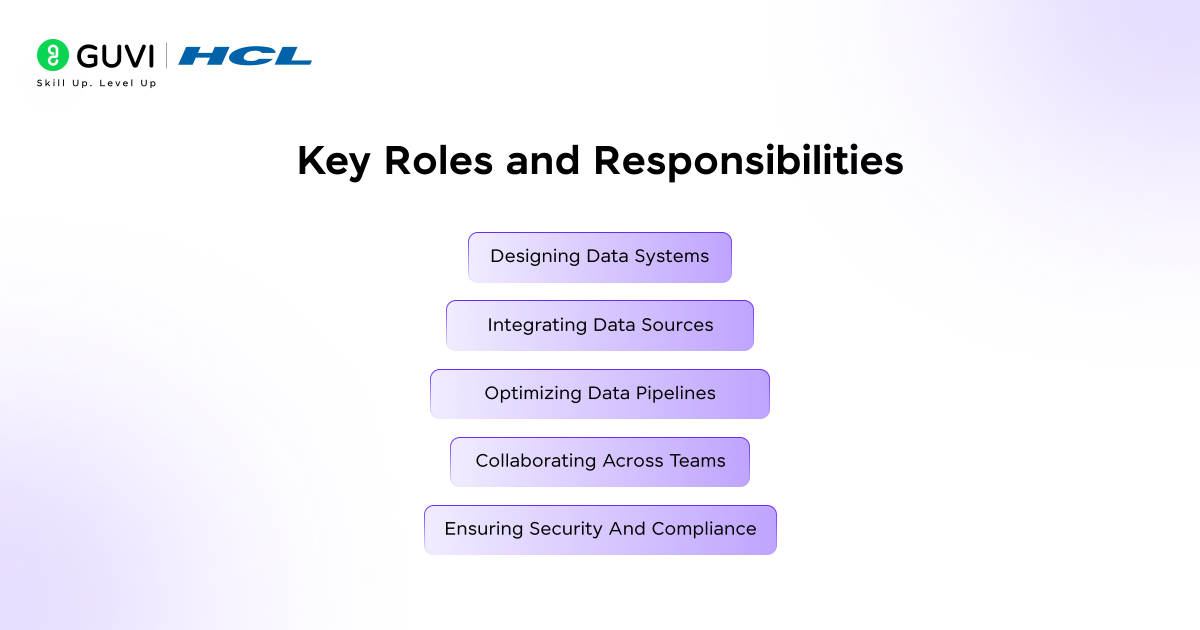
A Data Science Architect wears many hats — designer, problem solver, strategist, and mentor. Their work shapes how data moves, transforms, and delivers insights across an organization. Below are the key roles and responsibilities that define this impactful position.
1. Designing Data Systems
Every powerful data solution begins with a strong architectural design, and that’s where the Data Science Architect steps in. They plan and build scalable systems that handle data efficiently, ensuring that storage, access, and performance remain seamless across all levels.
Key responsibilities:
- Create blueprints for scalable and high-performance data systems.
- Select the right tools and technologies for data storage and processing.
- Design frameworks that can easily adapt to new data sources or workloads.
- Ensure that data models are optimized for both analytics and machine learning.
Example: Designing a cloud-based data warehouse for an e-commerce company that tracks user interactions and enables real-time personalization.

2. Integrating Data Sources
Data flows in from everywhere — apps, sensors, CRMs, and web platforms. A Data Science Architect ensures these streams come together like pieces of a puzzle. They build systems that integrate multiple data sources into a unified and reliable structure.
Key responsibilities:
- Connect diverse data sources such as APIs, IoT devices, and internal databases.
- Implement pipelines that collect, transform, and store data in usable formats.
- Ensure that all integrated data maintains accuracy and consistency.
- Automate data ingestion processes to minimize manual errors.
Example: Merging customer behavior data from websites, social media, and sales records into one analytics dashboard for a unified customer view.
3. Optimizing Data Pipelines
Fast insights require fast systems. Data Science Architects fine-tune pipelines to keep data moving smoothly from collection to consumption. They make sure the system performs efficiently and delivers up-to-date insights with minimal delay.
Key responsibilities:
- Monitor and improve the performance of data pipelines.
- Minimize data latency and ensure real-time availability of insights.
- Automate ETL (Extract, Transform, Load) processes to handle large data volumes.
- Maintain high data quality through validation and monitoring.
Example: Developing automated ETL pipelines that refresh dashboards daily, providing executives with real-time business intelligence.
4. Collaborating Across Teams
Great data architecture isn’t built in isolation; it thrives through collaboration. Data Science Architects act as the link between technical experts and decision-makers, aligning everyone toward a unified data vision.
Key responsibilities:
- Work closely with engineers, analysts, and data scientists to design end-to-end solutions.
- Translate business requirements into technical system designs.
- Communicate complex data concepts to non-technical stakeholders.
- Guide teams to use data systems effectively and efficiently.
Example: Collaborating with the marketing and data teams to build predictive models that forecast campaign performance.
5. Ensuring Security And Compliance
With massive data comes massive responsibility. A Data Science Architect protects sensitive data and ensures every system follows strict security and privacy regulations.
Key responsibilities:
- Design and implement robust data security frameworks.
- Manage user access and authorization controls.
- Apply encryption and anonymization techniques for data protection.
- Ensure compliance with global standards like GDPR and ISO.
Example: Establishing encrypted databases and automated compliance checks to safeguard customer information.
Skills Required to Become a Data Science Architect
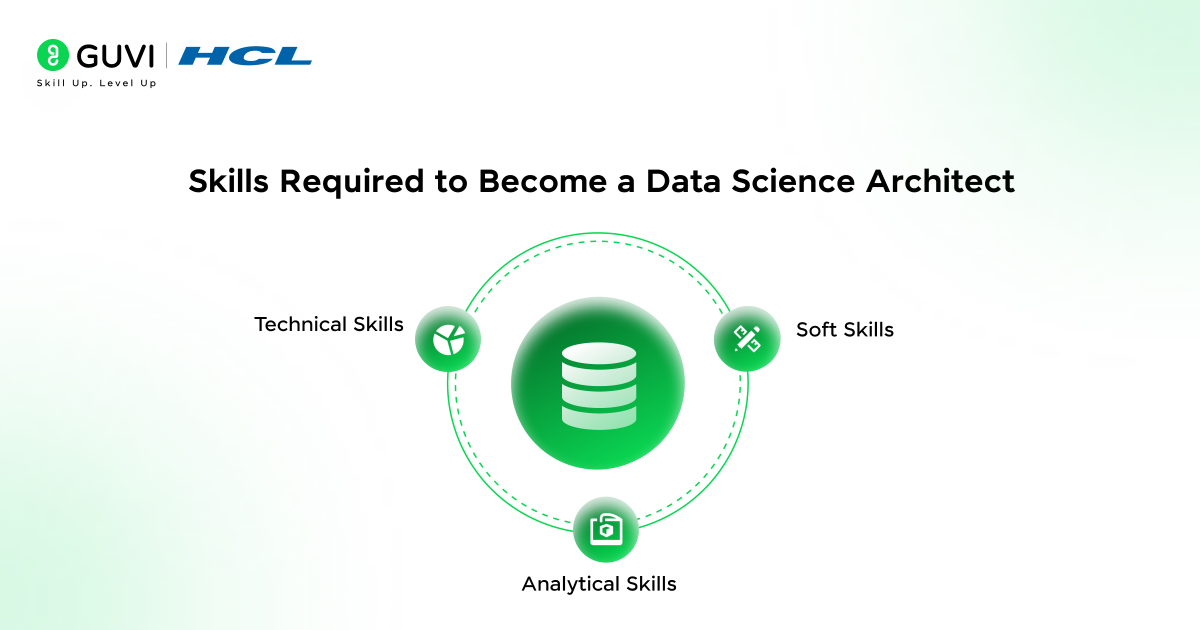
To become a successful Data Science Architect, you need a blend of technical expertise, analytical thinking, and leadership abilities. This combination allows you to design efficient systems, make strategic data decisions, and guide teams toward data-driven success. Let’s look at the essential skills that define a Data Science Architect.
1. Technical Skills
A strong technical foundation is the backbone of this role. Data Science Architects must be hands-on with tools and technologies that power modern data systems.
- Programming: Master languages like Python, R, Java, or Scala to build and automate data solutions.
- Data Platforms: Work with frameworks such as Hadoop, Spark, and Kafka for handling large-scale data processing.
- Databases: Gain expertise in SQL, NoSQL, and MongoDB for efficient data storage and retrieval.
- Cloud Tools: Use platforms like AWS, Azure, or Google Cloud to deploy scalable, cloud-based data architectures.
- Machine Learning Frameworks: Understand tools like TensorFlow and PyTorch to support AI and ML system integration.
2. Analytical Skills
Analytical skills help you turn raw data into valuable insights. A Data Science Architect must know how to model, visualize, and interpret complex data relationships to guide decision-making.
- Data Modeling and Visualization: Create structured models and dashboards for easy data interpretation.
- Statistical Analysis and Predictive Modeling: Use mathematical and statistical techniques to predict future trends.
- Problem-Solving and Logical Thinking: Approach data challenges with clarity and design practical, effective solutions.
3. Soft Skills
Technical knowledge alone isn’t enough — leadership, communication, and collaboration make a Data Science Architect truly effective.
- Strong Communication: Bridge the gap between technical teams and business leaders through clear and effective communication.
- Project Management: Manage timelines, resources, and teams for large-scale data projects.
- Strategic Planning and Leadership: Align data strategies with business goals and lead innovation across departments.
Tools and Technologies Used
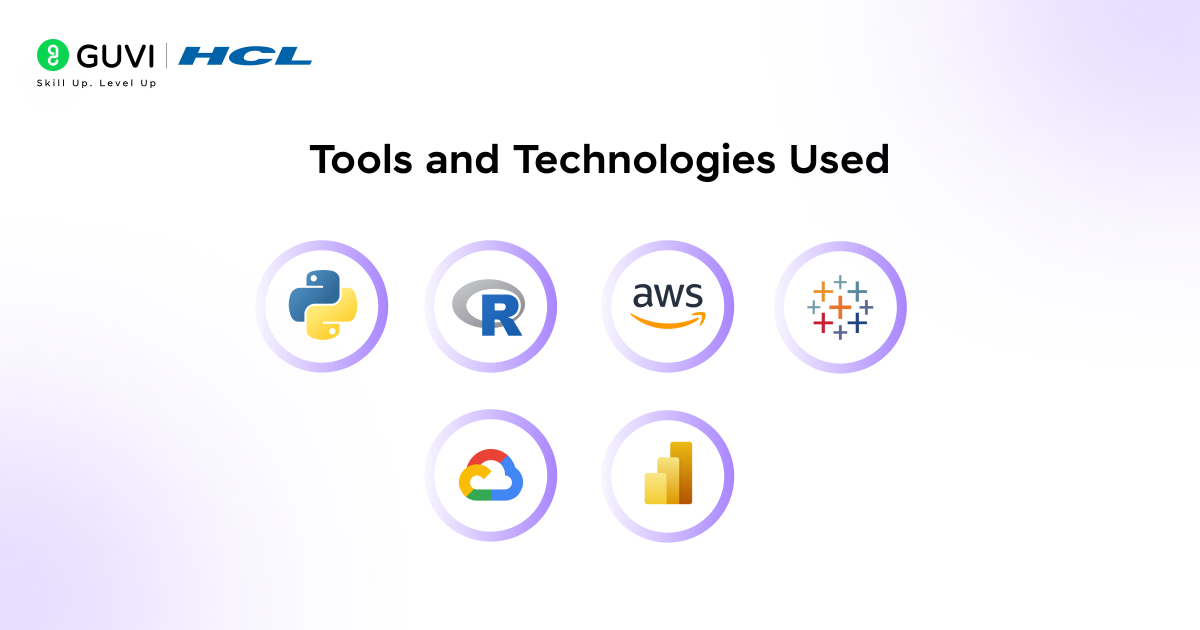
A Data Science Architect uses several tools and technologies to build strong and scalable data systems. These tools help in managing data, creating dashboards, and automating workflows. Below are the main tools and technologies used in this role:
- Programming Tools: Python and R — used for data analysis, automation, and machine learning.
- Data Visualization Tools: Tableau and Power BI — help create dashboards and visual reports.
- Data Storage Tools: MySQL and MongoDB — used to store and organize data; Hadoop — handles large-scale data systems.
- Cloud Platforms: AWS, Azure, and Google Cloud — provide secure and scalable environments for processing and analyzing data.
- Automation and Integration Tools: Apache Airflow — automates workflows; Apache Spark — processes big data quickly for analysis.
If you prefer learning in small, actionable lessons, the 5-Day Free Data Science Email Series is ideal. Over five days, you’ll receive bite-sized lessons on Python basics, data preprocessing, visualization techniques, machine learning workflows, and industry use cases — right in your inbox.
Step-by-Step Guide to Becoming a Data Science Architect
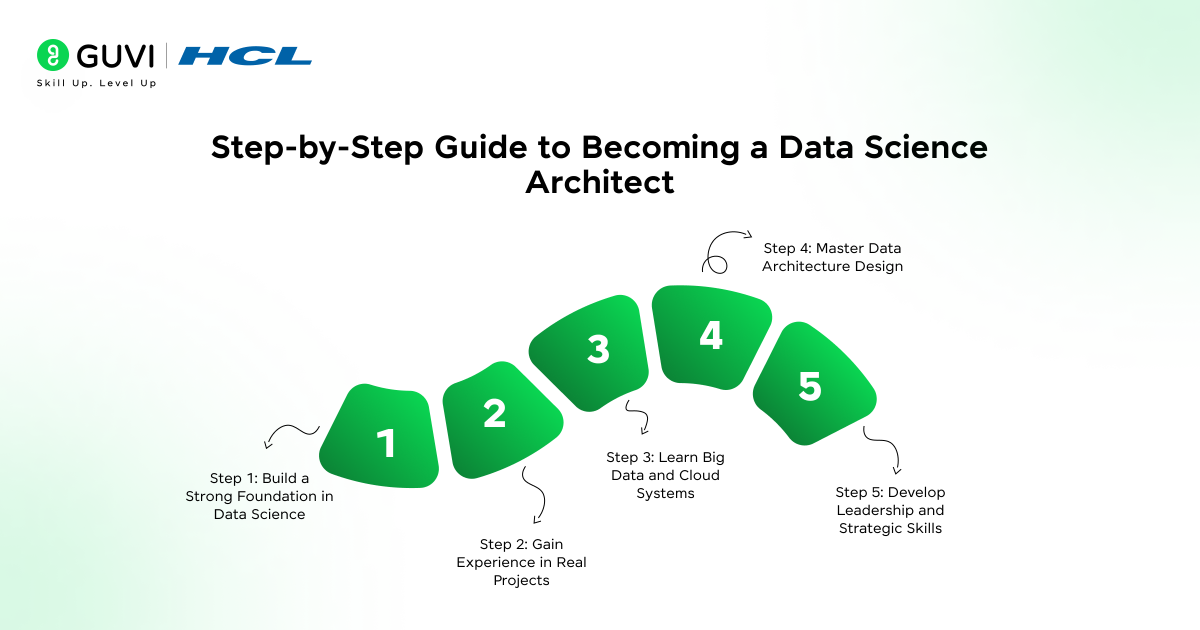
Becoming a Data Science Architect requires continuous learning, hands-on practice, and strong leadership. Below are the key steps to help you build your career path in this field:
- Step 1: Build a Strong Foundation in Data Science
Start by learning the basics of data collection, cleaning, analysis, and visualization. Take online courses or certifications to understand how data science works in real projects. - Step 2: Gain Experience in Real Projects
Work on real-world datasets to understand how data systems behave in different situations. This practical experience helps you improve your problem-solving and technical thinking. - Step 3: Learn Big Data and Cloud Systems
Explore tools like Hadoop, Spark, and AWS to handle large-scale data effectively. These technologies are essential for building scalable and high-performance data systems. - Step 4: Master Data Architecture Design
Learn how to design complete data pipelines, from data collection to analysis and visualization. Focus on creating efficient, secure, and easily scalable architectures. - Step 5: Develop Leadership and Strategic Skills
Build strong communication, planning, and leadership skills. As a Data Science Architect, you’ll guide teams, align data strategies with business goals, and ensure smooth execution.
Challenges in This Career Path
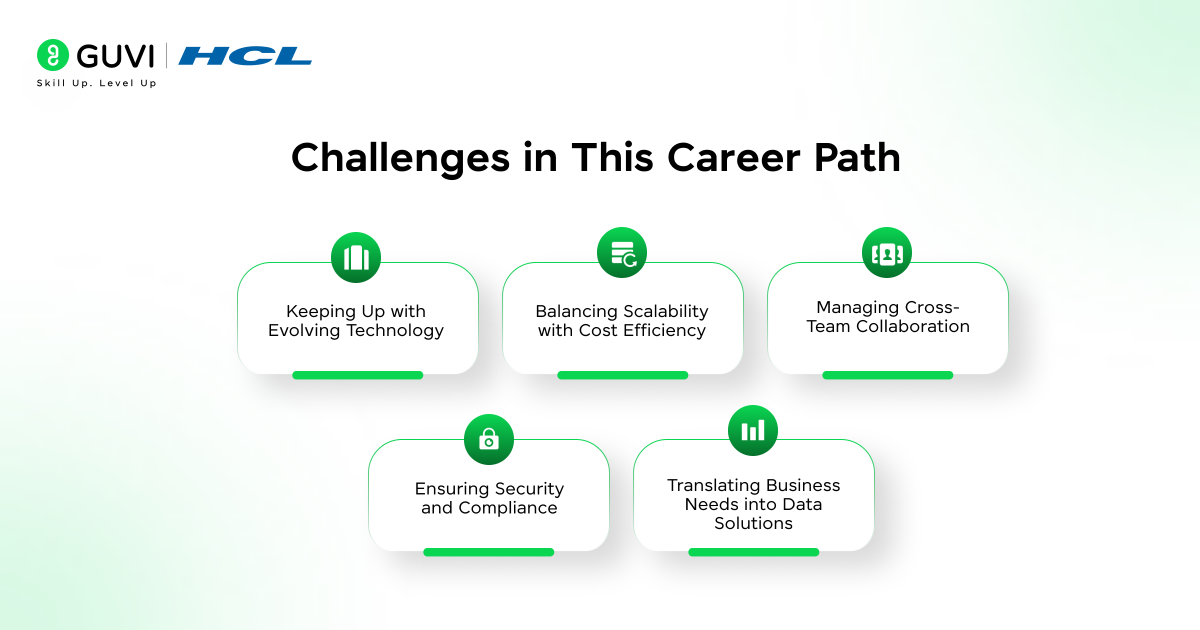
The journey to becoming a Data Science Architect is exciting but also filled with challenges. This role demands both technical expertise and strategic decision-making. Here are some of the common challenges professionals face in this career path:
- Keeping Up with Evolving Technology
The field of data science changes rapidly. New tools, frameworks, and methods appear frequently, and staying updated with trends like AI, big data, and cloud analytics is essential. - Balancing Scalability with Cost Efficiency
Designing data systems that can scale with growing business needs while keeping costs under control is one of the toughest parts of the job. - Managing Cross-Team Collaboration
A Data Science Architect often works with multiple teams — engineers, analysts, and business leaders. Coordinating across these groups requires clear communication and planning. - Ensuring Security and Compliance
Data security is a top priority. Architects must design systems that protect sensitive information and follow privacy regulations like GDPR or HIPAA. - Translating Business Needs into Data Solutions
Converting business goals into practical technical solutions requires both business understanding and technical insight, a skill that comes with experience.
Future Scope and Salary Insights
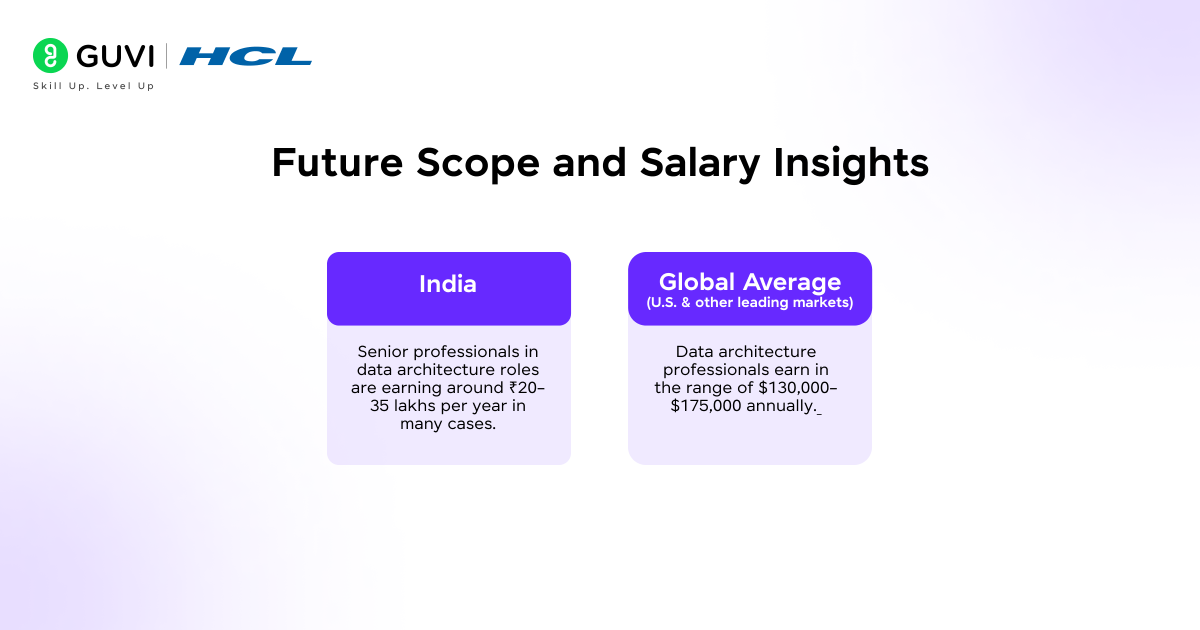
The role of a Data Science Architect is set to grow rapidly as companies invest in cloud computing, AI, and large-scale analytics solutions. Data is now one of the most critical assets for businesses, and the architects who build and manage these systems are becoming indispensable.
- India: Senior professionals in data architecture roles are earning around ₹20–35 lakhs per year in many cases.
- Global Average (U.S. & other leading markets): Data architecture professionals earn in the range of $130,000–$175,000 annually.
Reference- Glassdoor
Growing Demand:
- With the rise of cloud platforms (AWS, Azure, Google Cloud), companies need specialists who understand how to deploy data systems at scale.
- The push toward real-time analytics, IoT, and big data means more complex data architectures, which increases the need for professionals who can design them.
- As AI/ML adoption increases, the systems to support those models must be robust, scalable, and efficient — roles filled by Data Science Architects.
- These professionals often move into leadership, strategy, and architecture roles, making their career trajectories strong and their compensation upward-trending.
Conclusion
Becoming a Data Science Architect is not just about mastering tools — it’s about developing a vision for how data can drive innovation across an organization. This role combines strong technical expertise with strategic thinking and leadership, making it one of the most rewarding careers in today’s digital world.
With the right mix of continuous learning, practical experience, and system-level understanding, you can move from being a data professional to becoming the architect who designs scalable, intelligent data systems that power real business impact.
If you’re ready to take that next step, the HCL Guvi’s Data Science Course offers a complete, mentor-led curriculum covering Python, SQL, Machine Learning, Data Visualization, Statistics, Power BI, and real-world project deployment. It’s a hands-on, job-focused program designed to help you become industry-ready as a future Data Science Architect.
FAQs
1. What is the main role of a Data Science Architect?
They design and oversee the entire data system that supports analytics, AI, and reporting.
2. Is a Data Science Architect different from a Data Scientist?
Yes. Data Scientists build models, while Architects design the systems that make modeling possible.
3. How much experience is needed to become a Data Science Architect?
Typically, 5–8 years of experience in data engineering, analysis, or system design.
4. Which industries hire Data Science Architects?
Technology, finance, healthcare, retail, and e-commerce industries have high demand for this role.
5. Can a software engineer transition into a Data Science Architect role?
Absolutely. With data engineering, analytics, and cloud knowledge, it’s a natural career shift.
Success Stories

About the Author
Jebasta
I translate the language of data into stories that anyone can understand. As a writer with a data science background, I simplify analytics, AI, and decision-making so beginners and enthusiasts can confidently explore the world of data.
View all posts by Jebasta
Connect with me @











Did you enjoy this article?