


Programming Languages Articles
Why Is Python an Interpreted Language? How Python Executes Code Internally Explained
Why Java & C# Beat the Hype Cycle?


Get In Touch For Details! Request More Information

Top 10 Hardest and Easiest Programming Languages in 2026
Feb 26, 2026 9 Min Read 307295 Views
(Last Updated)
If you are a beginner who wishes to start learning to code, it’s natural to look for the easiest programming language to start your programming journey. There are close to five hundred programming languages that modern coders use.
While most languages are pretty easy, some of them are the hardest programming languages to learn. It’s important to understand that the difficulty of a programming language is subject to vary by individuals, their skills, and experience.
With this article, we have tried to rank some of the common programming languages from easiest to hardest. You can check out their use cases and their pros/cons below to get the best out of your coding journey.
Quick Answer:
The easiest programming languages for beginners are Python, HTML, and JavaScript. The hardest are Malbolge, Haskell, and Assembly Language. If you’re just starting out, Python is the #1 recommended first language in 2026 it has readable English-like syntax, massive job demand, and free learning resources everywhere.
Table of contents
- What Are the Easiest and Hardest Programming Languages? (2026 Ranked List)
- What Makes a Programming Language 'Easy' or 'Hard'?
- Programming Languages: Easiest to Hardest
- HTML
- JavaScript
- Python
- Ruby
- JAVA
- C++
- Assembly Language
- Prolog
- Haskell
- Malbolge
- More Programming Languages Worth Learning in 2026
- PHP
- Go (Golang)
- Kotlin
- Best Programming Languages for Specific Careers
- Web Development
- Data Science and Machine Learning
- Mobile Development
- Which Programming Language Should You Learn?
- Intention
- Use Case
- Difficulty Level
- Learning Resources and Community
- Final Words
- Easiest Programming Language to Learn FAQs
- Which is the easiest programming language to learn?
- Which is the easiest programming language to start coding?
- What is the hardest coding language to learn?
- Which coding language should I learn first?
- How much time does it take to learn coding?
What Are the Easiest and Hardest Programming Languages? (2026 Ranked List)
Here’s the full ranked list at a glance scroll down for detailed explanations of each language:
| Rank | Language | Difficulty | Best For | Job Demand 2026 |
|---|---|---|---|---|
| #1 — Easiest | HTML | ⭐ Very Easy (1/10) | Web structure & design basics | High |
| #2 | JavaScript | ⭐⭐ Easy (2/10) | Web development, front-end & full-stack | Very High |
| #3 | Python | ⭐⭐ Easy (2/10) | AI, data science, automation | Very High ↑ |
| #4 | Ruby | ⭐⭐⭐ Easy-Med (3/10) | Back-end web development | Medium |
| #5 | Java | ⭐⭐⭐ Medium (5/10) | Enterprise apps, Android dev | Very High |
| #6 | C++ | ⭐⭐⭐⭐ Hard (7/10) | Systems, game dev, OS | High |
| #7 | Assembly | ⭐⭐⭐⭐ Very Hard (8/10) | Hardware, embedded systems | Low/Niche |
| #8 | Prolog | ⭐⭐⭐⭐ Very Hard (8/10) | AI logic systems, NLP | Low/Niche |
| #9 | Haskell | ⭐⭐⭐⭐⭐ Expert (9/10) | Academic & functional programming | Low/Niche |
| #10 — Hardest | Malbolge | ⭐⭐⭐⭐⭐ Extreme (10/10) | Theoretical/academic only | None |
To help you get started, we’ve put together a free JavaScript ebook that covers the basics, key concepts, and real-world applications. Whether you’re a complete beginner or brushing up your skills, this ebook will be your perfect guide!👉 [Download Your Free JavaScript Ebook]
What Makes a Programming Language ‘Easy’ or ‘Hard’?
Before we dive into each language, it helps to understand what actually determines difficulty. Programmers and researchers typically measure it across four dimensions:
- Does the language use English-like words or cryptic symbols? Python reads almost like plain English. Assembly Language does not. Syntax Readability:
- How much prior knowledge do you need? HTML can be picked up in a day by anyone. Haskell requires understanding lambda calculus and category theory. Learning Curve:
- How helpful are the error messages? Python gives friendly, readable errors. C++ can produce 100-line template errors for a tiny mistake. Error Tolerance:
- How many tutorials, communities, and courses exist? JavaScript has millions of free resources. Malbolge has almost none. Available Resources:
Programming Languages: Easiest to Hardest
1. HTML
HTML or Hypertext Markup Language, is a markup language, rather than a programming language. Still, it is one of the first steps taken in the journey of learning coding. It gives a good idea of the basics of programming, hence it can be referred to as the easiest programming language to learn. It is used to define the text, color, and appearance of other dynamic elements/buttons on the webpage.
Applications of HTML
- Create web pages
- Define web element structures
- Defines the appearance of web elements
- Modified versions of HTML are used to define pages and entire web applications. Eg: FBML in the case of Facebook.
Why HTML is Easy
- Easy to understand, learn, and remember the syntax
- Simple open and close tags to implement core actions
- Easy debugging
Here is the basic Hello, World! in HTML:
<!doctype html>
<html lang="en">
  <head>
    <meta charset="utf-8" />
    <title>Hello World</title>
  </head>
  <body>
    <h1>Hello, world!</h1>
  </body>
</html>
Also Read: Best Websites to Learn HTML & CSS

2. JavaScript
JavaScript is a web programming language that allows you to develop interactive client-side web elements or web pages. It’s one of the easiest programming languages for beginners.
Combined with HTML and CSS, along with frameworks like Node, Angular, and React, one can build both client-side and server-side web applications and websites. Hence, it’s considered among the best programming languages for web development.
Also Read: YouTube Channels to Learn JavaScript
Applications of JavaScript
- Build the client-side of the website
- Build a server-side through in combination with Node.js
- Build browser-based games
- Develop interactive, engaging mobile and web applications
❓ Python or JavaScript: which should a beginner learn first?
If your goal is web development (building websites and apps), start with JavaScript. If your goal is AI, data science, or automation, start with Python. Both are excellent first languages the right choice depends entirely on the career you want.
Why JavaScript is Easy
- It can be compiled with most browsers to get real-time results
- Highly popular. Thus, many resources for effective learning
- Greater results in fewer efforts
- Great building block to learning other languages
Here is the basic Hello, World! in JavaScript:
<!doctype html>
<html lang="en">
  <head>
    <meta charset="utf-8" />
    <title>Hello World with JavaScript</title>
  </head>
  <body>
    <h1 id="message"></h1>

    <script>
      // Insert text into the page
      document.getElementById("message").textContent = "Hello, world!";
    </script>
  </body>
</html>
3. Python
Python is a fairly easy, all-purpose programming language to learn because of its easy-to-understand syntax and variety of libraries, and ready-made functions. This makes Python a good language for beginners to learn as well. Python has a wide variety of applications. It is a programming language that doesn’t have a steep learning curve yet allows learners to enter high-paying careers.
Applications of Python
- Extensively used for machine learning
- Used for data science and data analytics
- Create programs for IoT and electronics
- Web development through Django or Flask
Why Python is Easy
- It uses English words in its syntax, making Python programs highly readable and understandable
- The syntax uses a lot of white spac,e which makes it appear less overwhelming
- It’s easy to debug
- A great number of readymade libraries and functions
Here is the basic Hello, World! in Python:
# Basic Hello World program in Python
print("Hello, World!")
Also Read: Websites to learn Python
4. Ruby

Ruby was born after combining several programming languages. It’s an open-source natural programming language that focuses on simplicity and productive use for back-end programming.
Also Read: Resources to Learn Ruby
Applications of Ruby
- Building servers
- Helps in web scraping and crawling
- Used in software development. E.g. HULU, Shopify, etc.
- Web development through Ruby on Rails
Why Ruby is Easy
- The syntax language uses a lot of English words.
- Minimum and crisp code commands required to implement the heaviest of tasks
- A free and open-source language that provides great flexibility and enables easy modification
- Great community to support new learners
Here is the basic Hello, World! in Ruby:
# Basic Hello World program in Ruby
puts "Hello, World!"
Important Note:
Ruby is easy and elegant, but job demand in India has declined relative to Python and JavaScript. If job placement is your primary goal, prioritise Python or JavaScript first. Learn Ruby afterward if you work with Rails-based projects.
5. JAVA
JAVA is one of the most popular programming languages for software and application development. It extensively uses object-oriented programming and is among the easiest programming languages to learn. It works on the Write Once, Run Everywhere concept.
Applications of JAVA
- Build desktop software
- Build mobile applications with elaborate backend support
- Game development
- Big Data applications
Why JAVA is Easy
- Easy for people with prior experience in object-oriented programming
- The syntax uses words from the English language
- Concise nature of codes
Here is the basic Hello, World! in Java:
// Basic Hello World program in Java
public class HelloWorld {
    public static void main(String[] args) {
        System.out.println("Hello, World!");
    }
}
Also Read: Best website to Learn Java
If ChatGPT is part of your daily work, it is time to use it better.
HCL GUVI’s Bharat AI Initiative, powered by OpenAI, helps you build advanced ChatGPT skills with structured prompting and practical guidance. Available in English, Hindi, Marathi, Tamil, and Telugu, this program is absolutely free!
6. C++
C++ is an extensive programming language that helps build programs where the hardware and software are intricately involved. Interacting with memory is a little difficult in C++ and the advanced syntax could put off beginners.
Applications of C++
- Build operating systems. Eg: Linux Kernel, Google Chrome OS, etc.
- Build elaborate software like Photoshop.
- Build GUI-based applications like Microsoft Office.
- Build database management software
Why C++ is Tough
- It has a very typical, specific, and complex syntax
- It’s difficult to learn without learning C
- It’s tricky to manage memory
- Although highly efficient, C++ is a very dynamic language, and it’s a little difficult to keep track.
Here is the basic Hello, World! in C++:
// Basic Hello World program in C++
#include <iostream>
using namespace std;

int main() {
    cout << "Hello, World!" << endl;
    return 0;
}
7. Assembly Language
Assembly language is among the hardest programming languages to learn as they’re run and used differently than the above high-level languages. It’s a low-level language used to directly communicate with hardware, only the code is readable by humans.
Reading and understanding Assembly Languages isn’t easy because the codes are assembled. You must also be familiar with the internal functioning of a computer/hardware/CPU to really work with assembly languages, thus making it one of the toughest programming languages to learn.
Applications of Assembly Languages
- Develop hardware
- Develop electronic microprocessors
- High-performance device development
- Build high-frequency trading platforms
Why Assembly Languages Are Tough
- Need a great understanding and interaction of computers with hardware
- It can’t be understood or interpreted without understanding the entire context of the code
- Hard to debug
- As a low-level language, one needs to fulfill a large knowledge gap before learning
- Very complex syntax
Here is the basic Hello, World! in Assembly Language:
; Basic Hello World program in x86 Assembly (NASM)
section .data
    msg db "Hello, World!", 0xA ; message with newline
    len equ $ - msg             ; length of the message

section .text
    global _start

_start:
8. Prolog

Prolog, meaning Logical Programming, lays utmost emphasis on building accurate logic from the start. It is one of the best programming languages language for AI and Natural Language Processing (NLP) programs.
Applications of Prolog
- AI CRM, systems, and applications
- Build chatbots
- Build cost-effective and low-maintenance programs
Why Prolog is Tough
- Can’t get away with logical inconsistencies
- Inputs and outputs can be inconsistent
- Difficult to build logic as functions defined through goals, rules, and facts can restrict beginners with less logical proficiency
- Uncommon data structures from common programming languages
- Online resources can’t be applied directly for guidance
Here is the basic Hello, World! in Prolog:
% Basic Hello World program in Prolog
:- initialization(main).

main :-
    write('Hello, World!'), nl,
    halt.
9. Haskell
Haskell is a programming language built on the Lambda Calculus. It works in a functional paradigm, unlike most modern programming languages, which take a more intuitive outlook. This makes it a hard programming language to learn for modern developers.
Applications of Haskell
- Extensively used to write powerful C code for application development
- Academic and research purposes
- Industrial development
- Data processing and software testing
- JavaScript is used by 62% of developers, making it the most popular programming language in the 2024 Stack Overflow survey.
- HTML and CSS are used by 53% of developers, underscoring their continued importance in web development.
- Python is used by 51% of developers, showing its dominance across data science, AI, and general-purpose programming.
- Rust was admired by 72% of developers in the 2026 Stack Overflow survey, making it the most respected programming language.
- Among developers using Rust, 34% reported it as their main language for daily work.
Why Haskell is Tough
- The syntax uses abrupt words
- Very difficult to identify errors and correct them
- More about focused, clear, and mapped thinking than actual coding
- Huge jargon makes it difficult to figure out
Here is the basic Hello, World! in Haskell:
-- Basic Hello World program in Haskell
main :: IO ()
main = putStrLn "Hello, World!"
10. Malbolge
Malbolge is one of the esoteric programming languages. Hence, it’s intended to be impossibly challenging to learn. The first Malbolge program wasn’t completed until two years after its creation. It was done by a compiler based on Lisp.
Malbolge is a self-evolving language whose syntax is almost impossible to comprehend because of the lack of white spaces or coherent words at all.
Applications of Malbolge
- Although a few programs were written with Malbolge, it’s simply impractical to use if you can’t understand the syntax or the logic. This makes it the hardest programming language for anyone to work with.
Why Malbolge is Tough
- The syntax almost can’t be understood
- Language self-alteration leads to undefined or unexpected behavior
- Scanty learning resources available
Here is the basic Hello, World! in Malbolge:
(=<`#9]~6ZY32Vx/4Rs+0Po-&Jk)"Fh}|Bcy?`=|{z@w>t!o<mk
Learning a programming language is just the first step- what matters is how you use it! If you’re serious about building a career in software development, then join our Full Stack Development Email Course and receive curated lessons, project ideas, and coding insights delivered directly to your inbox. Whether you’re tackling backend, frontend, or full-stack workflows, this series gives you the roadmap to project mastery!
If ChatGPT is part of your daily work, it is time to use it better.
HCL GUVI’s Bharat AI Initiative, powered by OpenAI, helps you build advanced ChatGPT skills with structured prompting and practical guidance. Available in English, Hindi, Marathi, Tamil, and Telugu, this program is absolutely free!
More Programming Languages Worth Learning in 2026
1. PHP
PHP has been one of the backbones of the web for more than two decades. Many websites still run on it, and it continues to play a major role in server-side development. Learners who start with PHP get hands-on practice in building real-world applications that connect front-end design with backend logic.
Benefits of Learning PHP
- Beginner-friendly syntax with fast results
- Compatible with most web hosting services
- Large support community with thousands of tutorials
Applications of PHP
- Creating interactive websites
- Developing content management systems like WordPress and Joomla
- Writing scripts for backend processes
Tips for Learning PHP
- Practice building a blog or portfolio website
- Learn how PHP works with MySQL for database management
- Explore frameworks like Laravel to improve coding practices
Difficulty Level: Easy
2. Go (Golang)
Go was created by Google to make programming faster and more reliable. It balances ease of use with strong performance, which makes it appealing to developers working on cloud-based systems and microservices. Its syntax is simple, yet it introduces advanced concepts like concurrency.
Benefits of Learning Go
- Simple, readable syntax
- Designed for high performance in modern applications
- Strong industry demand, especially in cloud services
Applications of Go
- Building scalable APIs
- Developing server-side software
- Writing networking tools and distributed systems
Tips for Learning Go
- Start with the official Go Tour tutorial
- Practice concurrency by building small parallel tasks
- Use frameworks like Gin or Echo to build web servers
Difficulty Level: Moderate (Easier than C++, harder than PHP)
3. Kotlin
Kotlin is the preferred language for Android development and integrates smoothly with Java. It is more concise and safer than Java, which reduces bugs and makes it appealing for mobile developers. The official support from Google makes Kotlin a practical investment for the future.
Benefits of Learning Kotlin
- Fully interoperable with Java projects
- Modern syntax with reduced boilerplate code
- Strong adoption in Android development
Applications of Kotlin
- Creating Android mobile apps
- Building cross-platform applications
- Backend development with frameworks like Spring Boot
Tips for Learning Kotlin
- Use Android Studio for project-based learning
- Study Java-to-Kotlin comparisons to ease the transition
- Explore Jetpack Compose for modern Android UI development
Difficulty Level: Easy to Moderate
Reading about programming is just the first step — mastering it is what gets you hired.
Visit HCL GUVI’s Learn Hub to explore structured learning guides on trending programming languages and start building job-ready skills today.
Best Programming Languages for Specific Careers
1. Web Development
Web development remains one of the most common career paths for programmers. A mix of frontend and backend languages is required to design, build, and maintain websites that are interactive and reliable. The most valuable languages for web development include:
- HTML and CSS: Foundation of website design and structure
- JavaScript: Adds interactivity and connects frontend to backend logic
- PHP: Handles server-side processes and supports content management systems
- TypeScript: A superset of JavaScript that improves large-scale project stability
Web Development
- Average Salary Range (India): ₹2, 50,000-₹9,00,000 per year
- Source: Glassdoor: Web Developer Salaries India
2. Data Science and Machine Learning
Data-driven careers have grown rapidly across industries. Languages that allow fast analysis, model building, and visualization are key for anyone working in artificial intelligence or analytics. Essential programming languages for data science include:
- Python: Simplifies data analysis and offers strong machine learning libraries
- R: Focuses on statistical modeling and research-based applications
- Julia: Provides speed for numerical computing and large datasets
- SQL: Manages structured data stored in databases
Data Science and Machine Learning
- Average Salary Range (India): ₹9, 00,000-₹22,50,000 per year
- Source: Glassdoor: Data Scientist Salaries India
3. Mobile Development
Mobile applications shape daily digital experiences. Developers working in this area need languages that build responsive apps for Android and iOS while maintaining performance. The most in-demand languages for mobile development include:
- Kotlin: Official language for Android app development with modern syntax
- Swift: Primary language for building iOS apps with strong safety features
- Java: Still widely used for Android development and supported by many frameworks
- C#: Supports cross-platform app creation through frameworks like Xamarin
Mobile Development
- Average Salary Range (India): ₹5, 18,750-₹13,00,000 per year
- Source: Glassdoor: Mobile Developer Salaries India
If ChatGPT is part of your daily work, it is time to use it better.
HCL GUVI’s Bharat AI Initiative, powered by OpenAI, helps you build advanced ChatGPT skills with structured prompting and practical guidance. Available in English, Hindi, Marathi, Tamil, and Telugu, this program is absolutely free!
Which Programming Language Should You Learn?
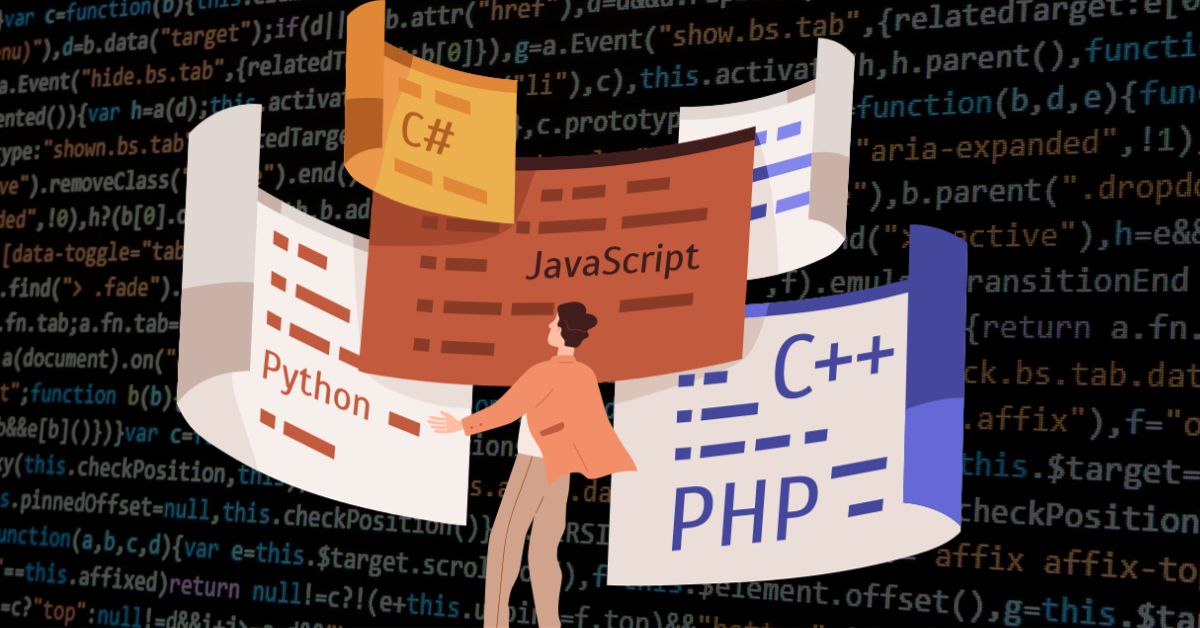
Choosing the best programming language to learn could be a task for a newbie. Although there are numerous coding boot camps, online tech courses, videos, books, and websites to learn coding, you can keep the following factors in mind before choosing a language to learn:
1. Intention
You must know your aim of learning a programming language before beginning your learning journey. Some languages are more memory-focused, while some may focus on ease of access or running efficiency.
If you just wish to learn a language to gain a skill or for personal use, you can opt for a fairly easy language and work your way up. The best programming languages for the job could be one with widespread acceptance or requiring high expertise.
2. Use Case
Each programming language has its own use. Different languages are used to train AI models, write programs for low-level devices, web development, application development, data science, analytics, game development, and software development.
Before selecting a programming language, you must know what you’re looking to build, and then decide accordingly based on your skills and understanding.
3. Difficulty Level
With the above list of the easiest and hardest programming languages to learn, you must have understood that each language takes some time to wrap your head around.
So, you must choose an easy language to begin with, and then improve your skill proficiency to gain mastery of better, more complex programming languages.
4. Learning Resources and Community
In the tech world, the learning community plays a very important role in ensuring your growth. You can see which coding languages have the best or biggest community if you’re a beginner.
Similarly, you must have access to good learning resources if you are going to learn a new coding language. So, it’s wiser to choose a coding language that has easily accessible, good-quality learning resources available from the start.
Unlock JavaScript programming language mastery with our free JS eBook: learn faster, code smarter, and build projects with confidence.
Final Words
Learning new programming languages has many benefits. You gain more skills, become a better programmer, and widen your horizons in the tech world. Although you must understand that it’s a continuous process.
One must give higher priority to learning a relevant and useful programming language rather than the simplest or toughest programming language. This would help you give meaning to your coding journey. We hope you find the easiest and hardest programming languages to learn with this article.
Easiest Programming Language to Learn FAQs
1. Which is the easiest programming language to learn?
HTML, CSS, PHP, JavaScript, GoLang, R, Ruby, Python, and C are considered to be the easiest programming languages to learn for beginners.
They have simple syntax with words closer to the English language and are fairly popular, thus enabling good availability of learning opportunities.
2. Which is the easiest programming language to start coding?
HTML, CSS, and JavaScript are fairly among the easiest programming languages to start coding. Afterward, you can take up coding Bootcamps or certificate courses to learn more deeply.
3. What is the hardest coding language to learn?
Most esoteric programming languages like Malbolge, Cow, Whitespace, etc. are considered the hardest coding languages to learn with close to no applications or advantages.
4. Which coding language should I learn first?
HTML, CSS, JavaScript, and C are among the coding languages you should learn first before moving to more extensive programming languages.
5. How much time does it take to learn coding?
It could take anywhere around a month to a couple of years to learn to code and gain proficiency in a programming language, based on its difficulty and skills required to learn the same.
The key is to keep practicing and challenging yourself to get better.
Success Stories

Did you enjoy this article?
Comments










Awesome
Very helpful insights. I wish to maintain connection with you as I start a new career in coding. Thanks a great deal.
Dear madam, your article is helpful to me i want to learn javascript. ,
Give about java script
JavaScript
Liked it succinct
It was very helpful for me. I will strive without regret~
like this information
I’m a new coder and looking for direction
Thankyou sir or mam