


Artificial Intelligence and Machine Learning Articles
CI/CD Pipelines for Machine Learning Projects
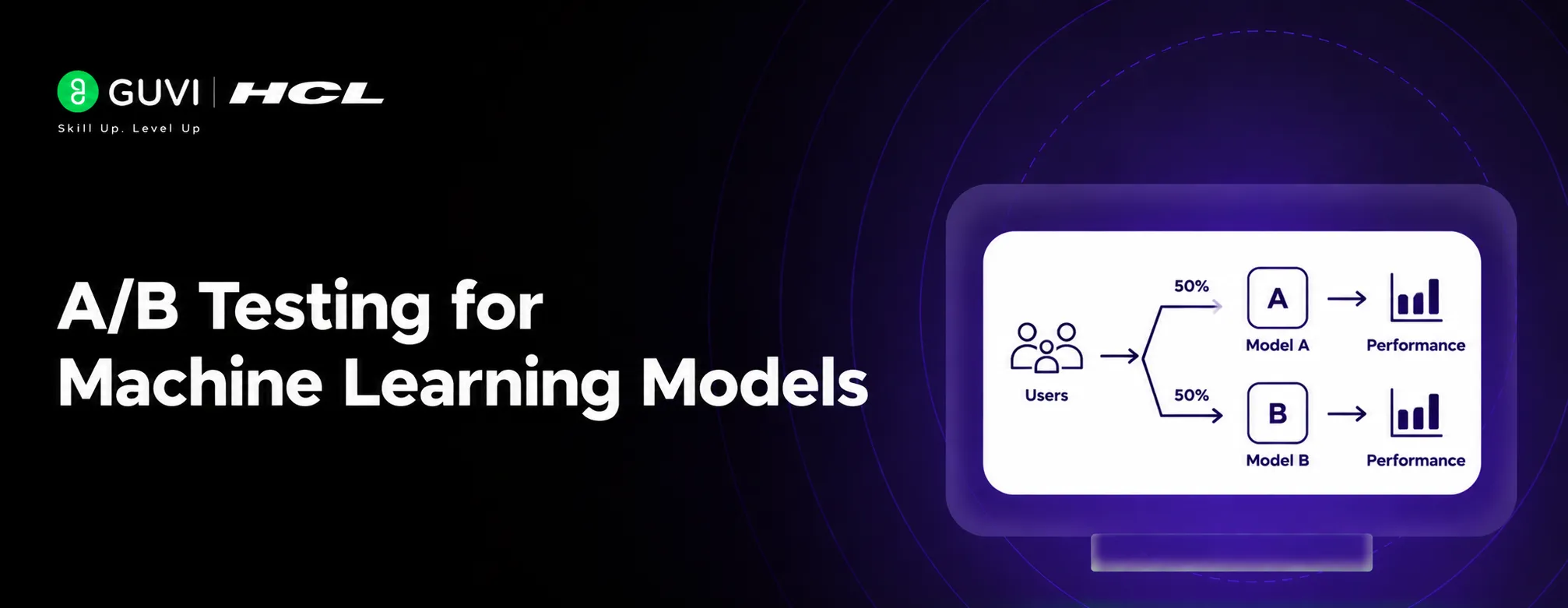
A/B Testing for Machine Learning Models
Canary Deployment Strategies for ML Models
What is Model Drift Detection: Keeping Models Accurate in Production

Get In Touch For Details! Request More Information
Cowork Claude Code: The AI Coding Partner That Handles More Than Just Code
May 26, 2026 5 Min Read 728 Views
(Last Updated)
For years, developers have been using code tools like calculators. You type something in, get a result out, and move on. But, today’s work no longer fits into isolated tasks. Developers create documentation, review pull requests, solve production problems, communicate with teams, manage deployment processes, create prototypes, explain technical concepts to non-technical persons, and then switch from one tool to another.
It’s the constant context switching that is where productivity fails.
That’s why Cowork is one of the most promising advancements in the modern AI development landscape. Cowork takes the traditional idea of an autofill tool, but adds the notion of a collaborative AI workspace that is centered around Claude Code workflows, rather than just a code editor.
Cowork Claude Code aims to make it easy for developers and professionals to interact with AI, just like they interact with a teammate during coding, planning, debugging, reviewing, documentation and execution.
Table of contents
- Why Developers Are Getting Tired of Traditional AI Coding Tools
- What is Cowork Claude Code?
- The Shift From Coding Assistance to Workflow Assistance
- How Cowork Claude Code Helps Students
- Why Context Awareness Matters
- The Rise of AI Pair Programming
- The Hidden Productivity Problem: Mental Fatigue
- Real-World use Cases for Cowork Claude Code
- Startup Teams
- Freelancers
- Students and Beginners
- Technical Writers and Content Creators
- Why Cowork Claude Code Feels More Human
- The Role of AI Collaboration in Modern Careers
- Limitations Users Should Understand
- Why Cowork Claude Code Matters Right Now
- Wrapping it up:
- FAQs
- What is Cowork Claude Code?
- Is Cowork Claude Code only for developers?
- How is Cowork Claude Code different from traditional AI coding tools?
- Can beginners use Cowork Claude Code?
- Does Cowork Claude Code replace developers?
Why Developers Are Getting Tired of Traditional AI Coding Tools
The majority of AI coding assistants available today are specialized to write snippets of code.
That sounds impressive until you spend an actual workday using them.
Here’s what usually happens:
- Tell the AI to write a function.
- Then, you have to describe your project structure manually.
- Then you’re talking about dependencies.
- You describe business logic then.
- Then you navigate to another tab and write documentation.
- Then it’s onto Slack.
- That means summarizing updates for your manager.
- When this happens, you troubleshoot deployment issues.
All of a sudden, the “AI assistant” is another tool you need to manage.
This is where many professionals begin noticing a major gap.
Writing syntax is not the sole purpose of modern software development. It’s about managing work flows.
The same problem occurs with students’ learning development.
When a student is creating his first React project, he doesn’t just need some assistance with components. They also need:
- Error explanations
- Architecture guidance
- README generation
- API understanding
- Git support
- Deployment help
- Testing suggestions
- Project organization
- Learning resources
Traditional AI coding tools often fail because they treat development as isolated prompts rather than connected work.
Cowork Claude Code approaches this differently.
It doesn’t function as a smart-autofill mechanism but more as a smart collaborator, aware of the current context.
That is a distinction that people don’t realize.
What is Cowork Claude Code?
Cowork Claude Code is an AI-powered co-working environment for developers beyond coding.
It can help you, beyond helping inside an IDE, with:
- Coding tasks
- Debugging
- Documentation
- Workflow planning
- Technical communication
- Project organization
Context Continuity is the top feature of Cowork Claude Code.
The platform maintains workflows and doesn’t require the user to repeatedly explain what they’re doing, their project structure, and what their workflow is for. This makes the work easier for students and professionals.
It’s more of an instructional search engine for the beginners , rather than just a search engine.
The Shift From Coding Assistance to Workflow Assistance
One major change happening in AI development tools is the shift from “code generation” to “workflow support.”
Most program writers don’t spend so much time writing new code as people think.
Much of the time spent during the workday is spent on:
- Reading existing systems
- Planning implementations
- Reviewing code
- Writing documentation
- Fixing bugs
- Coordinating with teams
This is why many professionals are turning to AI tools that can assist them in more than just creating functions.
Cowork Claude Code fits into this new category of AI collaboration tools.
It is geared towards minimizing friction between different levels of development rather than between individual tasks.
You can also check out: How to Build a Plugin from Scratch in Cowork
How Cowork Claude Code Helps Students
Students sometimes get confused since tutorials are not always problems that they encounter in the real development.
Learners often face:
- Dependency conflicts
- Version mismatches
- Broken APIs
- Confusing errors
- Poor project structures
- Overwhelming documentation
This is where collective AI can be helpful.
A student building a React portfolio project, for example, can use Cowork Claude Code to:
- Outline the structure of the project
- Generate reusable components
- Understand debugging errors
- Improve responsive design
- Write deployment instructions
- Create cleaner documentation
Instead of memorizing syntax, students begin understanding how systems work together.
This learning shift is crucial because good developers learn the concepts behind why and how, not just what to copy.
The rise of collaborative AI workspaces came from a growing realization that writing code is only a small part of real software engineering. Studies across engineering organizations consistently showed that developers spend large portions of their time on debugging, code reviews, documentation, team discussions, and workflow coordination rather than just producing new code. Modern AI development environments evolved to support this broader workflow by integrating coding assistance with collaboration, project memory, task management, and communication directly into the development process.
Why Context Awareness Matters
Repetitive prompting is one of the most common frustrations of using an older AI assistant.
- You describe your structure.
- Next, describe what your folder structure is.
- After that, describe the setup process of the API.
- Explain coding conventions again.
That repetition breaks concentration.
Cowork Claude Code is very context-sensitive. This enables developers to remain in “flow state” and limits unnecessary interruptions.
For larger projects, this becomes extremely valuable.
Try out debugging authentication problems, creating new API docs and deployment notes, and getting it all done in one collaborative workflow.
This level of continuity is beneficial for saving time and mental effort.
The Rise of AI Pair Programming
Typically, pair programming was two developers working together to solve problems.
Now, AI is changing that experience.
Cowork Claude Code can help with:
- Reviewing logic
- Identifying edge cases
- Suggesting architecture improvements
- Improving readability
- Planning features
- Generating documentation
This is particularly beneficial for freelance and individual developers who work alone.
Cowork does not seem to be a code-generation tool but a technical partner.
That distinction matters.
The Hidden Productivity Problem: Mental Fatigue
People usually talk about productivity in terms of speed.

However, mental fatigue is much greater in development.
Developers are always going back and forth between:
- IDEs
- Browsers
- Documentation
- Team chats
- Cloud dashboards
- Project management tools
Each of the switches consume mental energy.
Cowork Claude Code reduces some of this fragmentation by helping users manage multiple layers of work inside a connected environment.
This can lead to:
- Better focus
- Faster execution
- Lower frustration
- Improved workflow consistency
For remote teams, where communicating and documenting is essential to everyday work, that’s even more valuable.
You can also check out: Guide to AI Cowork Systems for Enterprise Workflows
Real-World use Cases for Cowork Claude Code
Startup Teams
Small teams of startups tend to work on multiple tasks simultaneously. A single developer could be responsible for creating the frontend, backend APIs, testing, deployment, and documentation.
Cowork can manage these workflows with fewer tools that don’t need to be disconnected.
Freelancers
Freelancers are always busy with various communications with clients and keeping track of updates.
To help create Cowork Claude Code can help create:
- Progress summaries
- Technical documentation
- Feature explanations
- Proposal drafts
- Project notes
This minimizes administrative tasks and time.
Students and Beginners
Cowork helps beginners to learn interactive, understand mistakes and organize projects better.
Technical Writers and Content Creators
Collaborative AI can be used by technical educators and content creators for:
- Research assistance
- Code examples
- Simplifying technical concepts
- Structuring tutorials
Why Cowork Claude Code Feels More Human
One common complaint about AI tools is that they feel robotic.
You ask something.
The AI provides generic responses.
You re-prompt repeatedly.
Over time, the process becomes tedious.
Cowork’s collaborative design feels different because it supports ongoing interaction instead of isolated prompts.
This will make brainstorming easier.
Together, developers can discuss feature ideas, brainstorm architectural suggestions, produce documentation, and polish workflows all within one environment.
That continuity allows for a more natural and productive experience.
You can also check out: How to Install Cowork Financial Services Plugins: Step-by-Step Guide
The Role of AI Collaboration in Modern Careers
AI is not just about automating tasks.
It is transforming the way that professionals work together.
Future technical careers will increasingly reward skills like:
- Problem-solving
- Communication
- Workflow management
- AI collaboration
- System thinking
Knowing how to use AI tools such as Cowork Claude Code can be as significant as knowledge of programming languages.
But there’s still no denying the importance of strong technical fundamentals.
AI works best when guided by people who understand systems clearly.
Limitations Users Should Understand
Even though it has its benefits, Cowork Claude Code remains an AI-driven system.
This means that users should not rely blindly on the products.
Still, AI-generated output can do the following:
- Introduce inefficient logic
- Miss security concerns
- Produce outdated solutions
- Contain incorrect assumptions
The key is to use AI as a tool to assist, never replacement for critical thinking.
Developers who combine technical understanding with AI collaboration will likely perform far better than those relying entirely on automation.
Why Cowork Claude Code Matters Right Now
There are a lot of tools that can already create code using artificial intelligence.
But what makes Cowork different is its focus on helping people work more efficiently across the entire development lifecycle.
- For students, this means faster learning.
- For developers, it means less hassle in their workflows.
- For teams, it means smoother collaboration and communication.
- For freelancers and startups, it means handling bigger workloads while resource constraint.
The industry is gradually shifting towards shared AI workplaces.
Cowork Claude Code reflects that shift very clearly.
Go beyond experimenting with AI coding tools and build real-world AI expertise with structured learning. Join HCL GUVI’s Artificial Intelligence and Machine Learning Course to master in-demand AI skills through industry-focused training and hands-on projects. Build a strong digital portfolio through GitHub, get access to opportunities with 600+ hiring partners and learn with confidence backed by a 7-Day Preboot Refund Policy.
Wrapping it up:
AI coding assistants are becoming more than just code completion and code snippets. Modern professionals require tools which assist them in planning, debugging, documenting, collaborating and communicating during development.
That’s where Cowork Claude Code comes in.
By focusing on workflow collaboration rather than isolated code generation, it creates a more practical and human-centered AI experience for students, developers, freelancers, and teams.
Hope this blog gave you a clear idea of how Cowork Claude Code can improve productivity and learning.
FAQs
1. What is Cowork Claude Code?
Cowork Claude Code is an AI-powered collaborative workspace for coding, debugging, documentation, workflow planning, and technical communication.
2. Is Cowork Claude Code only for developers?
No, It can also be useful for students, freelancers, startup teams, technical writers and product professionals.
3. How is Cowork Claude Code different from traditional AI coding tools?
Traditional tools are primarily about code generation, whereas Cowork is more about the wider workflow collaboration and context help.
4. Can beginners use Cowork Claude Code?
Yes. It is also useful for beginners to grasp the errors, plan the projects, learn the workflows and enhance technical knowledge.
5. Does Cowork Claude Code replace developers?
No. It is not meant to replace but to help professionals. Strong technical knowledge and critical thinking are still essential.
Success Stories

About the Author
Vishalini Devarajan
An Aerospace Engineer turned content writer, I focus on making complex concepts easy to understand through well-structured, reader-friendly blogs. Whether it’s a technical topic or a non-technical one, I love creating content that is clear, engaging, and impactful.
View all posts by Vishalini Devarajan
Connect with me @




Did you enjoy this article?