


Career Articles
Accountant vs Data Analyst Salary in India After Switching Careers - Best Guide
Finance Managers: Could Data Science Be Your Next Career Move?
Insurance Claims Executive to Data Analyst: Is It a Good Switch?
Banking Executive (Loans, KYC) to Data Analyst: Skills and Career Path


Get In Touch For Details! Request More Information
Cognizant GenC Next Recruitment Process 2026: Eligibility, Rounds & Preparation – Best Guide
Sep 10, 2026 7 Min Read 840 Views
(Last Updated)
Table of contents
- TL;DR
- What Is Cognizant GenC Next?
- What Is the Cognizant GenC Next Recruitment Process in 2026?
- What Is the GenC Next Eligibility Criteria for 2026?
- What Happens in Each GenC Next Selection Round?
- Registration and Screening
- Communication and Aptitude Assessments
- Technical Assessment
- Technical Interview
- Final GenC Next Mapping and LOI
- Which Technical Skill Clusters Are Used in GenC Next 2026?
- GenC vs GenC Pro vs GenC Next: What Is the Difference?
- How Should You Prepare for the Cognizant GenC Next Recruitment Process?
- Start with Communication and Aptitude
- Build One Strong Technical Cluster
- Practise SQL Separately
- Prepare Your Projects
- Prepare for Follow-Up Questions
- Real-World Example: How a Fresher Moves Through the Cognizant GenC Next Recruitment Process
- Common Mistakes to Avoid in the Cognizant GenC Next Recruitment Process
- Prepare for Cognizant Interviews with HCL GUVI
- Conclusion
- FAQS
- What is the Cognizant GenC Next recruitment process in 2026?
- What is GenC Next eligibility for 2026?
- Is Cognizant GenC Next a separate exam from GenC?
- Which skills should I prepare for GenC Next 2026?
- Is 70% mandatory for Cognizant GenC Next 2026?
- Can I choose my technical skill cluster?
- What happens in the Cognizant GenC Next technical interview?
- Does clearing the GenC assessment guarantee GenC Next?
- Does Cognizant charge a fee for GenC Next recruitment?
- Where should I check the latest Cognizant GenC Next hiring update?
TL;DR
The Cognizant GenC Next recruitment process for 2026 engineering campus hiring typically moves through registration and screening, communication and aptitude assessments, a skill-cluster-based technical assessment, a technical interview, and final role mapping. A key point is that candidates may first be evaluated for GenC and then considered for GenC Pro or Cognizant GenC Next based on academics, certifications, assessment performance, interview performance, and Cognizant’s final decision. For the referenced 2026 engineering campus drive, GenC Next eligibility included a 70% academic requirement and no standing arrears. Exact stages can vary by drive, so always follow your live Cognizant notification.
The Cognizant GenC Next recruitment process is a fresher hiring route used in Cognizant’s campus hiring ecosystem to identify candidates with stronger technical performance for the GenC Next category. GenC Next 2026 is especially relevant to engineering students preparing for communication, aptitude, technical assessment, and interview stages.
The important part is that Cognizant GenC Next is not always a completely separate application journey. In the 2026 campus material, candidates could be evaluated at the GenC level first and then considered for higher categories based on their overall performance.
This guide explains the Cognizant hiring process for GenC Next, eligibility, skill clusters, assessment flow, preparation priorities, and the points you should verify in your own campus notification.
What Is Cognizant GenC Next?
Cognizant GenC Next is a higher fresher hiring category within the broader Generation Cognizant ecosystem. In the referenced 2026 campus-hiring material, GenC Next was mapped to the Programmer Analyst designation, while GenC was mapped to Programmer Analyst Trainee.
The broader Generation Cognizant program is Cognizant’s hiring and development pathway for emerging talent. Cognizant says GenCs receive foundational training, upskilling opportunities, exposure to different clients and technologies, and no service bond.
For GenC Next 2026, the important distinction is performance-based mapping. The campus material says candidates are initially evaluated for GenC, while academic qualifications, certifications, assessment results, and interview performance can influence consideration for GenC Pro or Cognizant GenC Next.
So, the Cognizant GenC Next recruitment process should be understood as a selection pathway within the wider GenC hiring flow rather than a guaranteed separate track for every applicant.
What Is the Cognizant GenC Next Recruitment Process in 2026?
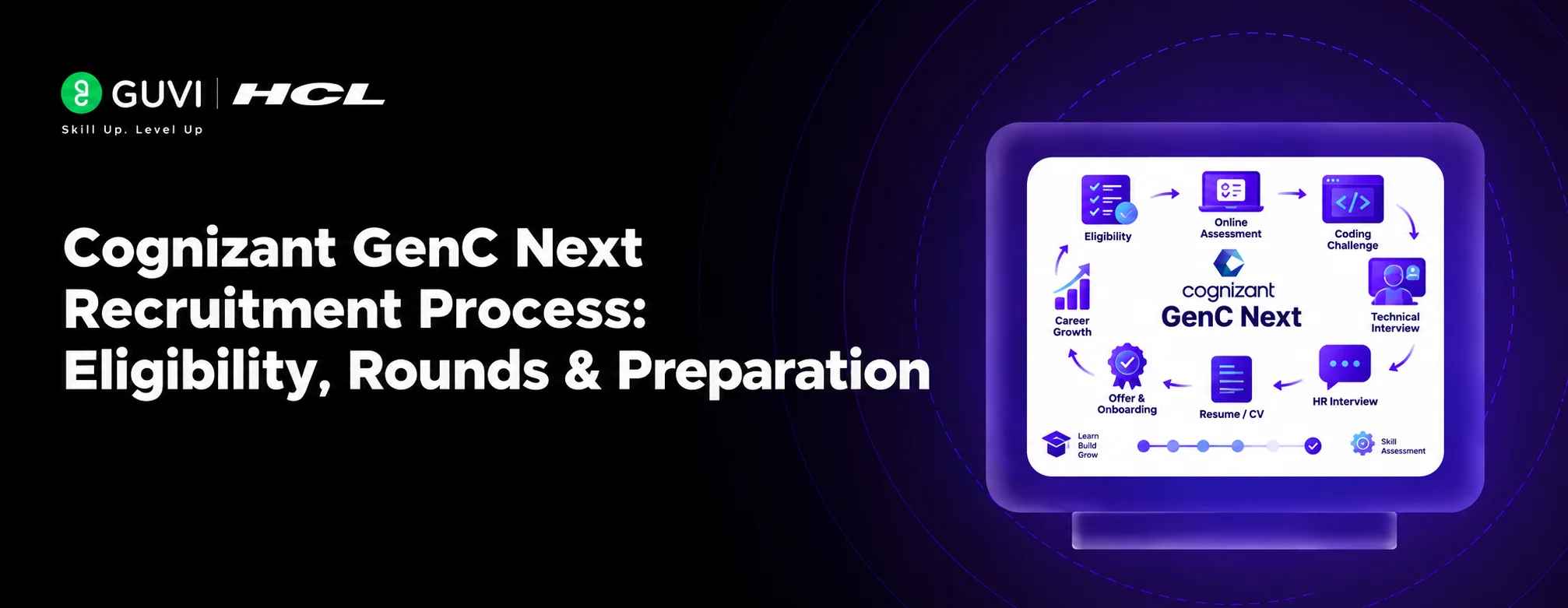
The Cognizant GenC Next recruitment process generally includes the following stages for the referenced 2026 engineering campus drive:
| Stage | What Happens | What It Checks |
| Registration | Candidate details and documents are submitted | Basic eligibility and profile accuracy |
| Screening | Cognizant reviews eligible profiles | Drive-specific requirements |
| Communication Assessment | English communication is evaluated | Listening, speaking and comprehension |
| Aptitude Assessment | Quantitative, reasoning and verbal ability are tested | Problem-solving and analytical ability |
| Technical Assessment | Candidate is tested in an assigned skill cluster | Programming, SQL and related technical skills |
| Technical Interview | Candidate discusses technical concepts, coding, projects and problem-solving | Technical depth and role suitability |
| Final Mapping | Cognizant maps successful candidates to GenC, GenC Pro or GenC Next | Overall performance and business requirements |
| LOI | Selected candidates receive a Letter of Intent | Final selection outcome |
Some campus notices show communication and aptitude as separate assessment events, while others may group them within a broader first assessment stage. Cognizant’s official hiring guide also says its hiring process can vary by role and location.
That is why your college placement notice and Cognizant communication should take priority over a generic pattern found online.
The Cognizant GenC Next recruitment process is therefore best prepared for as a sequence of filters rather than one single exam.
What Is the GenC Next Eligibility Criteria for 2026?
For the referenced 2026 engineering campus drive, the Cognizant GenC Next recruitment process used the following eligibility conditions:
- 2026 graduates with B.E., B.Tech., M.E. or M.Tech. degrees, subject to the streams accepted in that drive.
- Minimum 70% in Class 10, Class 12, diploma, UG and PG where applicable. Rounding 69.9% to 70% was not allowed.
- No standing arrears.
- Flexibility to work from any Cognizant office location, shift timing, and technology based on business needs.
- Indian nationals or OCIs residing in India for the referenced opportunity.
- Accurate academic and personal information during registration.
For comparison, the same campus material listed a 60% academic threshold for GenC and GenC Pro applicants. This makes the academic requirement one of the clearest differences between the referenced 2026 GenC and GenC Next categories.
However, do not treat this GenC Next eligibility as a universal Cognizant rule for every future drive. Cognizant can change eligible batches, branches, academic thresholds, assessment stages, and hiring categories for different campus or off-campus opportunities.
Also, do not mix the eligibility of a general GenC off-campus opportunity with GenC Next engineering campus hiring. They can target different degrees and use different conditions.
What Happens in Each GenC Next Selection Round?
1. Registration and Screening
The Cognizant GenC Next recruitment process begins with accurate registration. Candidates may need to provide a resume, photograph, academic information, and relevant industry certifications where available.
The 2026 campus material also stresses that names, dates of birth, marks, and academic timelines should match supporting documents. Incorrect information can affect screening or later background verification.
Do not choose a technical cluster casually. Your preference may be collected during registration, but Cognizant retains the final decision on the cluster used for assessment.
2. Communication and Aptitude Assessments
Communication and aptitude are important early filters in the Cognizant GenC Next recruitment process. Communication tasks can check how clearly you understand and respond in English, while aptitude typically checks numerical ability, reasoning, and verbal ability.
For aptitude preparation, revise arithmetic, percentages, ratios, logical reasoning, data interpretation, and verbal basics. This guide to preparing for aptitude questions can help you build a structured practice routine.
Do not focus only on coding because GenC Next 2026 still requires you to clear the earlier assessment stages before reaching the technical interview.
3. Technical Assessment
The technical assessment is one of the most important parts of the Cognizant GenC Next recruitment process because it helps Cognizant evaluate programming and database skills before interview mapping.
The referenced 2026 campus material listed Skill Cluster 1 as the default cluster. It included Java, ANSI SQL, HTML, CSS, and JavaScript, with 85% of questions focused on Java and ANSI SQL.
Additional cluster options included Python with ANSI SQL and cloud fundamentals, and C# with ANSI SQL, HTML, CSS, and JavaScript. The final assessment cluster can still be decided by Cognizant.
If Java is your cluster, revise concepts using Java interview questions and answers.
SQL is important across the reported clusters, so practice joins, subqueries, functions, constraints, and query writing with SQL interview questions.
4. Technical Interview
Candidates who clear the assessment stages move to the technical interview. For Cognizant GenC Next hiring, this stage can cover your assigned programming language, SQL, web or cloud basics where relevant, problem-solving, academic projects, certifications, and questions from your resume.
The interview should not be treated as a memorization round. Be ready to explain why your solution works, discuss or write code, describe a project from problem to implementation, and handle follow-up questions.
Candidates preparing through the Python cluster can revise common concepts using Python interview questions.
If your cluster includes cloud fundamentals, cloud computing guide can help you revise IaaS, PaaS, SaaS, and deployment basics.
5. Final GenC Next Mapping and LOI
This is the part many candidates misunderstand about the Cognizant GenC Next recruitment process. Clearing the assessments does not automatically mean you will receive the GenC Next category.
The 2026 campus material says candidates can be considered for GenC Pro or Cognizant GenC Next based on academic qualifications, certifications, assessment performance, and the interview process. Final mapping remains at Cognizant’s discretion.
Candidates who are selected then move toward the Letter of Intent and subsequent onboarding requirements communicated by Cognizant.
In the referenced 2026 campus hiring material, candidates were initially evaluated for GenC. Consideration for GenC Pro or GenC Next came later based on academics, certifications, assessment performance, and interview results. This means strong performance across the complete Cognizant GenC Next recruitment process matters more than simply preparing for one technical round.
Which Technical Skill Clusters Are Used in GenC Next 2026?
The technical part of the Cognizant GenC Next recruitment process was organized around skill clusters in the referenced 2026 campus material.
| Skill Cluster | Main Skills |
| Cluster 1 | Java, ANSI SQL, HTML, CSS, JavaScript |
| Cluster 2 | Python, ANSI SQL, Cloud Fundamentals |
| Cluster 3 | C#, ANSI SQL, HTML, CSS, JavaScript |
Cluster 1 was the default cluster in the referenced 2026 material, and 85% of its questions were stated to focus on Java and ANSI SQL.
The preparation lesson is simple: do not study every programming language at the same depth. Build strong fundamentals in the cluster communicated to you, but stay flexible because final cluster assignment can depend on Cognizant.

GenC vs GenC Pro vs GenC Next: What Is the Difference?
The Cognizant GenC Next recruitment process sits within a Cognizant hiring process that can map successful candidates to different GenC categories.
| Category | 2026 Campus Designation | Academic Threshold in Referenced Drive | How Mapping Works |
| GenC | Programmer Analyst Trainee | Minimum 60% | Base evaluation category |
| GenC Pro | Programmer Analyst | Minimum 60% | Considered based on profile and performance |
| GenC Next | Programmer Analyst | Minimum 70% | Considered based on academics, certifications and assessment/interview performance |
This table should not be treated as a permanent company-wide rule. Cognizant may issue different criteria for different hiring programs.
For students searching specifically for Cognizant GenC Next 2026, the safest approach is to use the exact campus brochure or hiring communication received for your batch.
How Should You Prepare for the Cognizant GenC Next Recruitment Process?
A good preparation plan follows the order of the Cognizant GenC Next recruitment process.
Start with Communication and Aptitude
Spend time on spoken English, listening, sentence structure, numerical ability, reasoning, and verbal questions. These stages can stop you before you reach the technical round.
Build One Strong Technical Cluster
If you are preparing for Java, prioritise Java and SQL before spending large amounts of time on extra technologies.
For Python, combine Python fundamentals with SQL and cloud basics. For C#, revise C#, SQL, and core web technologies.
Practise SQL Separately
SQL appears across the reported technical clusters, so it deserves its own preparation time. Practise writing queries instead of only reading definitions.
Prepare Your Projects
You should be able to explain:
- What problem your project solves
- What you personally built
- Which technologies you used
- One technical challenge you faced
- How you tested or improved the solution
Prepare for Follow-Up Questions
Cognizant GenC Next interviews can go deeper than basic definitions. If you mention a certification, framework, database, project, or programming language on your resume, be ready to answer questions about it.
The Cognizant GenC Next recruitment process rewards balanced preparation across communication, aptitude, technical skills, and interview clarity.
Real-World Example: How a Fresher Moves Through the Cognizant GenC Next Recruitment Process
Consider Priya, a 2026 B.Tech CSE student with more than 70% throughout her academics and no standing arrears. Her campus is participating in a Cognizant engineering hiring drive.
Priya registers with accurate academic details and prepares first for communication and aptitude. She then focuses on the default Java and ANSI SQL cluster instead of studying several languages at once.
After clearing the technical assessment, she enters the interview ready to explain Core Java, SQL queries, web basics, and her final-year project. Based on her academics, certifications, assessment performance, and interview, Cognizant may consider her for Cognizant GenC Next.
The example shows why the Cognizant GenC Next recruitment process is cumulative. One strong coding round alone does not guarantee the final category.
Common Mistakes to Avoid in the Cognizant GenC Next Recruitment Process
1. Assuming GenC Next is guaranteed once you clear the test: Final mapping can depend on your complete profile and Cognizant’s decision. Prepare for every stage instead of treating one round as the only deciding factor.
2. Using old eligibility rules: GenC Next eligibility can change between hiring drives. Verify your batch, degree, percentage requirement, backlog rule, and accepted streams from the exact notification you receive.
3. Ignoring communication and aptitude: Strong coding does not help if you fail an earlier mandatory assessment. Keep communication, reasoning, and quantitative practice in your plan.
4. Studying too many technical stacks: Focus first on the cluster communicated for your assessment. Depth in the relevant language and SQL is more useful than shallow preparation across several languages.
5. Paying for a job or assessment slot: Cognizant states that it does not charge candidates a fee at any stage of recruitment. Use only official hiring communication and verify suspicious offers through Cognizant’s recruitment notices.
Prepare for Cognizant Interviews with HCL GUVI
If the Cognizant GenC Next recruitment process is your first major campus hiring experience, prepare for it as a complete placement process rather than only a coding test.
HCL GUVI’s MNC interview preparation guide for freshers can help you plan aptitude, project explanation, technical revision, communication, and interview practice in a structured way.
Conclusion
The Cognizant GenC Next recruitment process in 2026 combines academic eligibility, communication and aptitude assessments, technical evaluation, and interview performance before final category mapping. GenC Next 2026 candidates should pay special attention to their assigned technical cluster, SQL, project explanations, and the earlier non-technical assessment stages.
Most importantly, Cognizant GenC Next is not a category you should assume is guaranteed before final selection. Use your campus notification as the final source for eligibility and round details, prepare for the complete Cognizant hiring process, and keep your documents and registration information accurate from the beginning.
FAQS
1. What is the Cognizant GenC Next recruitment process in 2026?
The Cognizant GenC Next recruitment process generally includes registration and screening, communication and aptitude assessments, a technical assessment, a technical interview, final category mapping, and a Letter of Intent for selected candidates. Exact sequencing can vary by drive.
2. What is GenC Next eligibility for 2026?
For the referenced 2026 engineering campus drive, GenC Next eligibility included B.E., B.Tech., M.E. or M.Tech. candidates with at least 70% across the required academic levels and no standing arrears. Always verify the exact notification for your college or hiring drive.
3. Is Cognizant GenC Next a separate exam from GenC?
Not necessarily. In the 2026 campus material, candidates were initially evaluated for GenC and could later be considered for Cognizant GenC Next or GenC Pro based on academics, certifications, assessments, and interview performance.
4. Which skills should I prepare for GenC Next 2026?
GenC Next 2026 campus material listed clusters covering Java and ANSI SQL with web technologies, Python and ANSI SQL with cloud fundamentals, and C# with ANSI SQL and web technologies. Prepare mainly for the cluster communicated to you.
5. Is 70% mandatory for Cognizant GenC Next 2026?
The referenced 2026 engineering campus brochure specified a minimum 70% academic record for GenC Next applicants. This should not be assumed for every future Cognizant GenC Next hiring drive, so check your specific notification.
6. Can I choose my technical skill cluster?
You may be allowed to state a preference, but the referenced 2026 campus material says final skill-cluster mapping is decided by Cognizant. Prepare for the cluster mentioned in your assessment communication.
7. What happens in the Cognizant GenC Next technical interview?
The technical interview can test programming fundamentals, SQL, problem-solving, projects, certifications, and technologies linked to your skill cluster. You should also be ready for follow-up questions based on your resume.
8. Does clearing the GenC assessment guarantee GenC Next?
No. The Cognizant GenC Next recruitment process considers overall performance, and final mapping to GenC, GenC Pro, or Cognizant GenC Next remains Cognizant’s decision.
9. Does Cognizant charge a fee for GenC Next recruitment?
No. Cognizant states that it does not charge candidates a fee at any stage of recruitment and has not authorized agencies or partners to collect recruitment fees.
10. Where should I check the latest Cognizant GenC Next hiring update?
Check the official Cognizant Careers site and your college placement communication. The public Cognizant Careers GenC page covers the broader program, while campus-specific Cognizant GenC Next 2026 details may be shared through individual hiring notices.
Success Stories

About the Author
Reemsha Khan
Always been a storyteller at heart. Now, I turn complex topics into simple, easy-to-understand stories through content. Hope you find it helpful.
View all posts by Reemsha Khan
Connect with me @









Did you enjoy this article?