


Career Articles
How to Explain Job Hopping Without Sounding Unstable - Best Guide
Why Full Stack Developers Are in High Demand in 2026?
How to Choose a Skill to Learn Next Based on Your Career Goals - Best Guide 2026
Importance of Soft Skills in 2026: Why They Are the Real Career Differentiator


Get In Touch For Details! Request More Information

Career Options After 20 Years of IT Experience: A Complete Guide to Your Next Professional Move
Feb 05, 2026 6 Min Read 3718 Views
(Last Updated)
Having worked in the IT sector for 20 years is a huge milestone. You have seen technologies change over those years, teams growing, systems evolving, and the transition of businesses from manual to automated operations driven by AI. With two decades of experience, you’re not only a developer, tester or engineer, but you’re also someone with deep domain understanding, a leadership mindset, and the ability to guide large-scale digital transformation.
But after investing so much of your life in IT, a big question comes up:
“What’s next?”
“What are the best career options after 20 years in IT?
Whether you seek growth, stability, a new challenge, or a complete re-invention of your career, this blog will provide you with an overview of every potential opportunity.
And will allow senior IT professionals to better understand the most lucrative, sustainable, and realistic career paths available to them.
Quick answer:
IT professionals with 20 years can find many avenues to pursue, such as becoming CTO, CIO, or Product Head. Alternatively, they can also specialise in an area of high demand, such as cyberspace, Artificial Intelligence or Data Science. Others may choose to go into consulting, freelance work, launch their own business, or teach. They can also work at a high seniority level within a Program Manager, Solution Architect, etc.
Table of contents
- How to Make a Career Shift After 20 Years in IT
- Understand Your Motivation for Change
- Identify Your Skills and Strengths
- Update Yourself on Modern Tools
- Explore Internal Opportunities First
- Network Smartly
- Prepare a Strong Senior-Level Resume
- Start With a Slow, Safe Transition
- Top Career Options After 20 Years in IT
- Transition into Leadership Roles (Most Popular)
- Move into Solution Architecture
- Become a Project or Program Manager
- Switch to High-Demand Technologies (Future-Proof Roles)
- IT Consulting (Highly Paid)
- Freelancing or Contract Roles
- Become a Trainer, Mentor, or Corporate Coach
- Entrepreneurship / Start Your Own Tech Venture
- Future-Proof Skills Senior IT Professionals Should Learn
- Wrapping it up:
- Is it too late to change my career after 20 years in IT?
- What are the most realistic roles for someone with 20+ years of IT experience?
- Do I need to learn coding again to shift into a new IT role?
How to Make a Career Shift After 20 Years in IT
It is important to know how to make a smooth transition before making decisions on what career path to pursue. The career change after a 20-year-long IT experience will need strategy and planning, along with the occasional upgrade of skills. Below are the essential steps that help you transition confidently without starting from scratch.
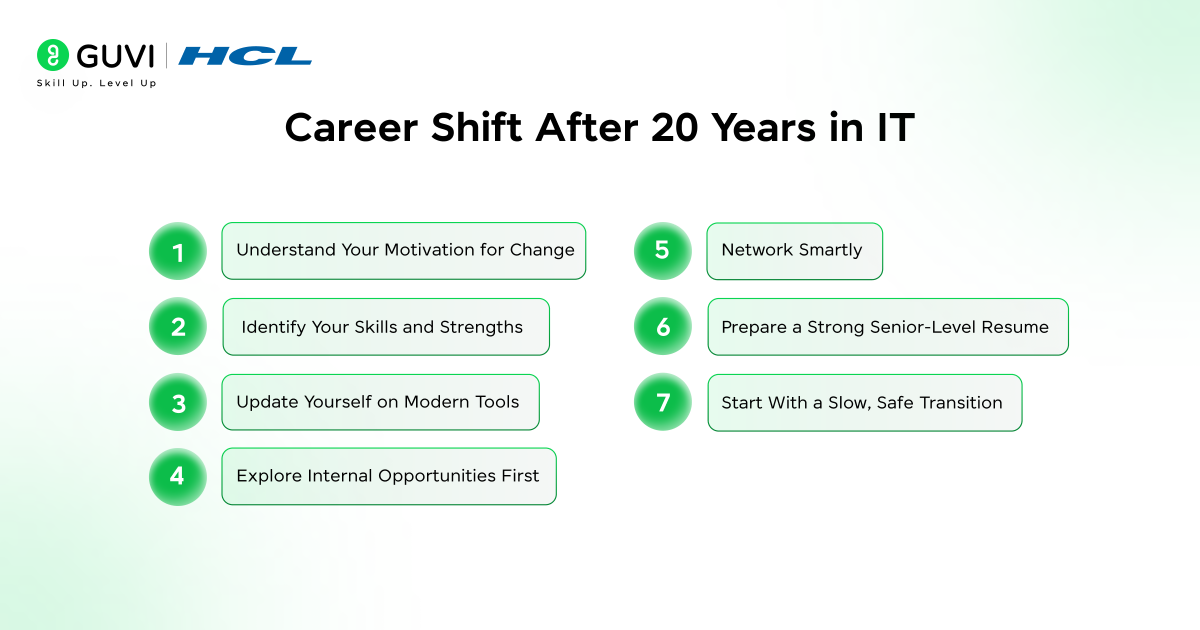
1. Understand Your Motivation for Change
The first and most important step is to know the reason why you want a change. Your motivation influences which direction you should take.
Start by asking yourself:
- Do you want less stress?
- Do you want to stop coding?
- Do you want a higher salary?
- Do you like leadership positions?
- Would you be flexible or work as a freelancer?
- Are you interested in working in a new technical area?
Also read: 15 Highest-Paying IT Skills in 2026: Boost Your Tech Career
2. Identify Your Skills and Strengths
After 20 years, you’ve developed a rich skill set. Identify:
- Your strongest technical abilities
- Your experience in project delivery
- Your domain expertise (finance, telecom, healthcare, etc.)
- Your ability to manage teams or clients
- Your leadership style
- Your communication and decision-making strengths
This helps map your existing abilities to your next career.
3. Update Yourself on Modern Tools
When you update your skills, the career shift becomes easier. Work on:
- Learning trending technologies
- ITIL, Scrum, PMP, AWS, Azure, and other certifications can be updated.
- Learning by doing hands-on projects
- Practicing new tools through hands-on projects
- Taking structured upskilling programs like HCL GUVI Zen Classes
Also read: How to Find Your Perfect Career Field (A Proven Method That Works)
4. Explore Internal Opportunities First
The need to change companies is not always needed. A lot of organisations facilitate inside career changes, particularly for long-term employees.
Explore roles such as:
- Solution/Enterprise Architect.
- Product Manager/ Product Owner.
- Team Leader or Delivery Manager.
- Cloud transformation teams
- Cybersecurity or compliance initiatives
- Process improvement or governance roles

5. Network Smartly
In the case of senior-level jobs, job portals are less effective compared to networking. Most companies contribute to leadership and other top-level technical roles using referrals.
Where to network:
- LinkedIn: Share knowledge, comment on the trends in the industry, and network with the relevant leaders.
- Tech conferences: Cloud, cybersecurity, AI and leadership and related events
- Webinars and workshops: Good visibility, connections
- Alumni groups: A very good source of opportunities based on trust
- Previous colleagues or managers: Old contacts often lead to the best offers.
6. Prepare a Strong Senior-Level Resume
Your resume has to change as your career changes. The companies are more about your impact rather than the technologies that you used a long time ago, after 20 years.
What to highlight:
- Leadership achievements: Teams that were under your management, improvements that were made, and decisions made.
- Cost optimization efforts: Reduced operational costs, enhanced performance and conserved business time.
- Performance of teams gets enhanced: Mentoring, process optimisation, training, and conflict resolution.
- Client success stories: The way your job benefited the client in business.
- Technical contributions: Building choices, robotization, and design.
- Measurable achievements: Hit 35% better system efficiency, managed ₹10 crore projects, etc.
What to avoid:
- Outdated tools from the early 2000s
- Listing every technology you have ever used
- Repeating old job responsibilities
Also read: Steps to Decide the Right Career Path
- Over 48% of IT professionals consider making a major career shift after 15–20 years of work due to burnout, new interests, and evolving industry trends.
- Senior IT roles like Solution Architect, Program Manager, and Delivery Head are among the fastest-growing positions globally as companies seek strong leadership talent.
- Professionals with 20+ years of experience are 3× more likely to succeed in consulting, mentoring, freelancing, and advisory roles because of their deep domain expertise and industry insight.
7. Start With a Slow, Safe Transition
The career shift does not have to be immediate; you can gradually change your position while you are still in your current job or position.
Try this approach:
- Enroll in part-time up-skilling programs
- Observe the way managers or architects operate
- Handle dual responsibilities
- Example: Move from developer → tech lead → solution architect.
- Do freelancing without quitting your current position
- Mentor Juniors
Also read: Career Networking: The Power Of Word Of Mouth
Top Career Options After 20 Years in IT
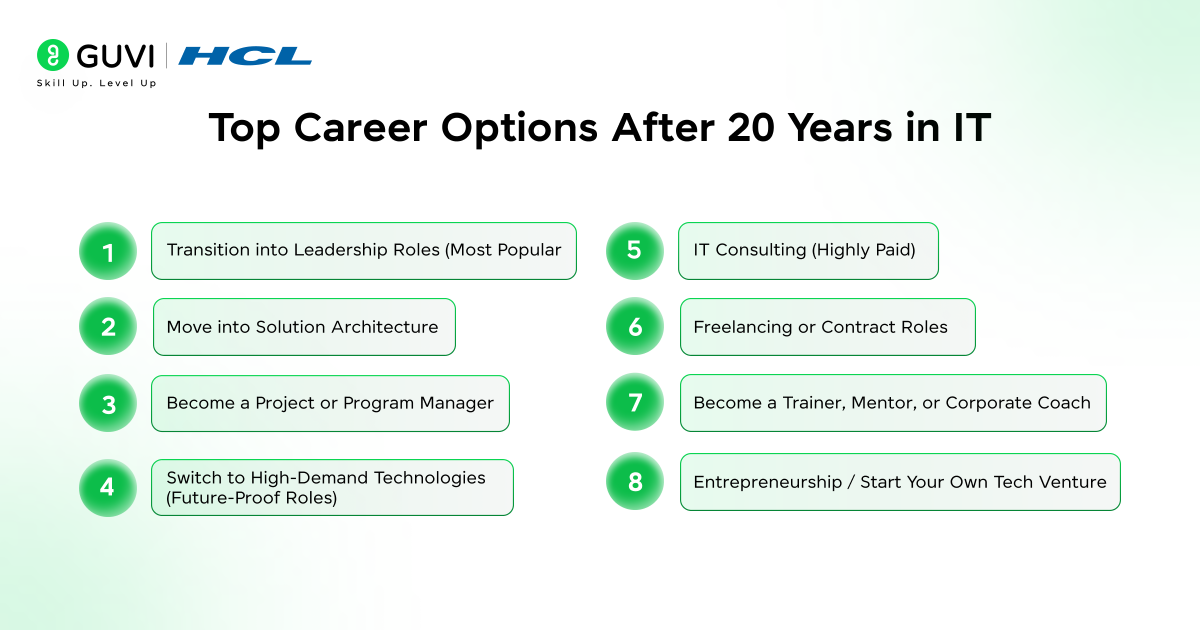
1. Transition into Leadership Roles (Most Popular)
The leadership positions will enable you to shift the execution to strategy, where you will be able to lead teams, make high-level decisions and make an impact on businesses using your experience.
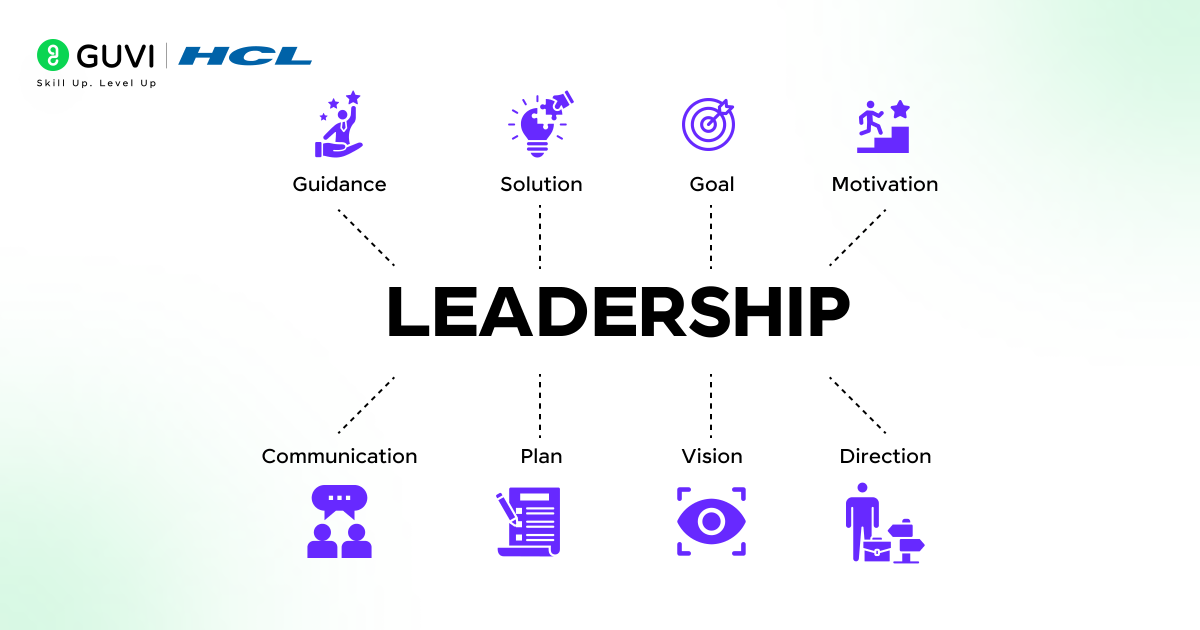
- CIO (Chief Information Officer): The coordinator is in control of the internal IT systems, infrastructure and technology strategy to ensure that business operations run smoothly.
- VP of Engineering: leads technical teams, establishes the technical standards of work, and makes sure that each of the projects is completed efficiently and on time.
- Director of Technology: Manages technologists, architecture and long-term technological investments to ensure the systems of the organisation are scalable.
- Product Manager / Product Head: Specifies product objectives, feature priorities and collaborates with the engineering and design teams to create user-oriented products.
- Delivery Manager: Delivers projects on time, manages the team, and ensures good communication between the clients and the developers.
2. Move into Solution Architecture
- Cloud Architect: Plans and deploys cloud services on clouds such as AWS, Azure, or GCP so that it can be scaled and secured.
- Solution Architect: Develops entire system architecture to address business challenges with the appropriate combination of software, tools and technologies.
- Enterprise Architect: Synchronises long-term business objectives of the organisation and technology roadmap, and enterprise systems.
3. Become a Project or Program Manager
Project and program management jobs look at the aspects of planning, coordination, timelines and stakeholder management; these are best suited when one loves organising teams and driving delivery.
- Project Manager: Develops, coordinates, and implements projects and also delivers within timelines, budgets and quality standards.
- Program Manager: Supervises a team of associated projects and integrates them into the overall business goals of the company.
4. Switch to High-Demand Technologies (Future-Proof Roles)
Entering high-demand jobs in AI, cloud, cybersecurity, or DevOps will allow you to remain relevant and receive higher pay by mastering recent and rapidly developing technologies.
- AI/ML Specialist: Develops smart systems and predictive models based on machine learning algorithms and data.
- Cybersecurity Specialist: Guards the systems against cyber threats, risk management and compliance with security measures throughout the organisation.
- Cloud engineer / Cloud expert: Produces, installs, and supports cloud platforms to enhance scalability, as well as to minimize the infrastructure expense.
- Data Scientist / Analyst: Derives conclusions based on data to facilitate decision making, develop reports and predictive models.
Also read: How to Change Your Career from Marketing to Data Science?
5. IT Consulting (Highly Paid)
Consulting allows you to operate with various companies as a specialist consultant, developing complicated issues and assisting organisations to enhance their technology plans.
- IT Strategy Consultant: Consults businesses on ways of planning and executing technology strategies that can drive business objectives.
- Cloud Migration Consultant: Leads organisations in the process of migrating their applications, systems, and data into the cloud.
- Digital Transformation Advisor: Ensures that businesses modernise aspects of their businesses through automation, cloud, AI and modern technologies.
6. Freelancing or Contract Roles
Freelancing offers flexibility, independence, and the capacity to work on projects that one would be good at in addition to getting a good salary.
- Freelance Project Manager: Handles contract work with clients and is fully flexible and independent.
- Freelance Cloud Consultant: Offers cloud architecture and deployment solutions to several clients.
- Technical Documentation writer: Develops manuals, user guides, and software and system technical documentation.
- Full-Stack Freelance Web Developer: Develops both frontend and backend systems on a project basis to international customers.
Also read: Top 10 Steps to Kickstart Your Career as a Machine Learning Engineer
7. Become a Trainer, Mentor, or Corporate Coach
Coaching or teaching enables you to spread your 20 years of experience with the learners and companies, and hence a rewarding and highly regarded career.
- EdTech Instructor: Offers online technology-related courses to students and working professionals.
- Corporate Trainer: Organizes employee training on new technologies to companies.
- Tech Mentor: Mentor junior programmers or freshers, and develop their skills and career path.
8. Entrepreneurship / Start Your Own Tech Venture
Another option is to start your own business where you can create a business based on your skills, be it consulting, cloud services, SaaS, or training.
- SaaS Founder: Develops and introduces software-as-a-service solutions related to particular markets or industries.
- IT Consulting Business owner: Proposes services and advises businesses.
- Agency or owner of Cloud or Cybersecurity: Specialises in cloud or security solutions to businesses.
- EdTech Startup Founder: Produces learning environments, classes, or technological education networks.
- Digital Agency Owner: Proposes web development, marketing, automation and digital transformation services.
Future-Proof Skills Senior IT Professionals Should Learn
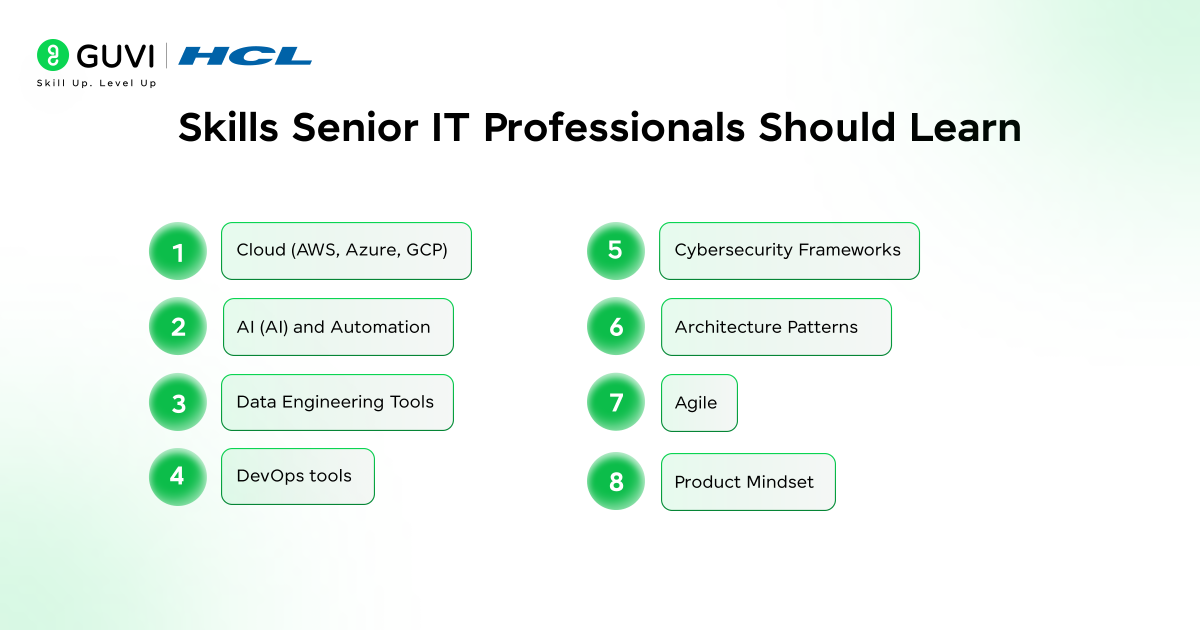
1. Cloud (AWS, Azure, GCP):
The cloud service providers have developed skills that allow you to create, run and maintain scalable solutions to develop applications with lower cost infrastructure and performance.
2. AI (AI) and Automation
AI and Automation technologies give you tools for developing Smart Systems for automation of Operations and Learning from the Data available to you, as well as automating many of your mundane repetitive tasks, thus increasing Operational Efficiency.
3. Data Engineering Tools
Data Engineering allows companies to aggregate and organise large amounts of Data that can assist them in Making Decisions Based on Current Data.
4. DevOps tools
Using DevOps, companies can improve the development life cycle because DevOps automates portions of Development, Testing, and Deployment of Software, thus providing quicker and more dependable delivery of Software Solutions.
5. Cybersecurity Frameworks
Cybersecurity knowledge provides you with the understanding of how to protect various Systems from Cyberattacks and manage the risk associated with Information Security while maintaining Compliance with Governmental and Industry security Standards.
6. Architecture Patterns
The understanding of Architecture Patterns forms the Foundation of the ability to design Efficient Systems and Long-Term Sustainability for the continuity of successful business operations.
7. Agile
Agile provides opportunities for teams to Deploy Products Quickly and effectively while simultaneously learning from breaking down Projects into smaller components. Agile facilitates Team Collaboration and Continuous Delivery of Product Updates.
8. Product Mindset
With Product Mindset, organizations are able to identify the Needs of Customers and Prioritize features to build First thus enabling the creation of Products that address real Customer Needs and Provide Business Value.
If you’re planning a career shift and want guidance to stand out in senior-level interviews, explore the HCL GUVI Interview Mastery Course. This course helps you refine your communication, structure powerful answers, and understand modern interview expectations, making it ideal for experienced professionals preparing to step into new roles, technologies, or leadership positions. Start learning the strategies that help you present your expertise with confidence.
Wrapping it up:
Transitioning to a new career after twenty years in the technology sector should not be viewed as starting over, but rather as taking advantage of the knowledge and skills previously acquired. Once you have developed significant technical knowledge, the capability to implement a variety of projects, and experience in a given technology space, then you will have greater options than ever before. Regardless of whether you desire to move into management, technical architecture, consulting, cyber security, continuing education, or starting your own small business, each of these directions will allow you to continue building upon your existing skills.
Critical components of any successful transition are understanding what you want to do next, developing your current skillset through modernisation of tools, and selecting a direction that matches your strengths and objectives. With a solid plan and continual growth, the next step in your professional development has the potential to be one of the most lucrative periods of your career.
1. Is it too late to change my career after 20 years in IT?
It’s not too late to make a career change. Many senior professionals have successfully transitioned from IT to other areas such as leadership, consulting, architecture, cloud computing, cybersecurity and more by drawing on their IT experience.
2. What are the most realistic roles for someone with 20+ years of IT experience?
A number of senior roles are being offered in high demand today. Examples would be Solution Architect, Program Manager, Delivery Manager, CTO/CIO, Cloud Consultant, Cybersecurity Manager, or similar roles.
3. Do I need to learn coding again to shift into a new IT role?
Not necessarily. There are a large number of senior-level positions such as: project management; product management; architectural and transformational consulting; cyber security leadership and governance roles; that focus primarily on strategy rather than on coding skills.
Success Stories

About the Author
Vishalini Devarajan
An Aerospace Engineer turned content writer, I focus on making complex concepts easy to understand through well-structured, reader-friendly blogs. Whether it’s a technical topic or a non-technical one, I love creating content that is clear, engaging, and impactful.
View all posts by Vishalini Devarajan
Connect with me @













Did you enjoy this article?