


Interview Articles
InfyTQ Interview Experience 2026: Process, Questions, Preparation & Tips
Deloitte NLA Interview Experience 2026: Rounds, Questions and Preparation - Best Guide
Capgemini Exceller Interview Questions 2026: Coding, Technical, HR, and AI Prep - Best Guide
Wipro Elite NTH Interview Experience 2026: What Candidates Say


Get In Touch For Details! Request More Information
Placement Strategy 2026: Complete Guide for Students
Aug 11, 2026 3 Min Read 3722 Views
(Last Updated)
A placement strategy is a structured plan covering resume building, aptitude practice, coding preparation, and interview skills that helps you convert campus recruitment opportunities into job offers. This guide walks you through every stage of the 2026 placement season.
Table of contents
- TL;DR Summary
- What is a Placement Strategy?
- On-Campus vs Off-Campus vs Pool Drives
- Complete Placement Strategy Checklist for India in 2026
- Building Your Resume the Right Way
- What Recruiters Actually Look For
- Quick Fixes That Make a Difference
- Cracking Aptitude and Coding Rounds
- Acing Technical and HR Interviews
- Common Placement Mistakes to Avoid
- Manage Placement Season Stress
- To wrap up
- Frequently Asked Questions
- What are placement strategies?
- How to master campus placement?
- What is the best time to prepare for placement?
- Do soft skills matter in placement success?
- How to manage placement stress?
- How many months before placement season should I start preparing?
TL;DR Summary
- A placement strategy means preparing resume, aptitude, coding, and interview skills together, not in isolation
- India’s employability rose to 56.35% in 2026, so competition is higher but so is hiring intent
- Recruiters now test skills over degrees, so projects and certifications matter more than CGPA alone
- Start preparing at least 3 to 6 months before placement season begins
- On-campus, off-campus, and pool drives each need slightly different prep, so know which one you’re targeting
What is a Placement Strategy?
You already know the goal: get placed. But most students only prepare for interviews and forget the stages before it. A placement strategy fixes that gap by treating your resume, aptitude, coding practice, and interview prep as one connected plan instead of separate last-minute tasks.
India’s overall employability rose to 56.35% in 2026, up from 54.81% the previous year, according to the India Skills Report 2026. Computer science graduates now show 80% employability, among the highest of any stream.
This shift matters for you. Recruiters are hiring more freshers this year, but they are also filtering harder on actual skills instead of college brand alone.
Explore HCL GUVI’s interview preparation course for complete guidance.
On-Campus vs Off-Campus vs Pool Drives
Knowing which recruitment channel you’re preparing for changes how you should plan your time.
| Factor | On-Campus | Off-Campus | Pool Drives |
|---|---|---|---|
| Who conducts it | Your college placement cell | Company directly or via portals | Multiple colleges together |
| Competition level | Limited to your batch | Open to all eligible graduates | Wider, across colleges |
| Application mode | College coordinates it for you | You apply yourself via LinkedIn, careers page | College or consortium coordinates |
| Best for | Students with strong CGPA cutoffs | Students missed by on-campus drives | Smaller colleges with fewer recruiter visits |
| Preparation focus | Company-specific test patterns | Resume visibility, networking, cold outreach | Broad aptitude and technical readiness |
| Typical timeline | Fixed placement season | Year-round | Seasonal, often after on-campus |
Complete Placement Strategy Checklist for India in 2026
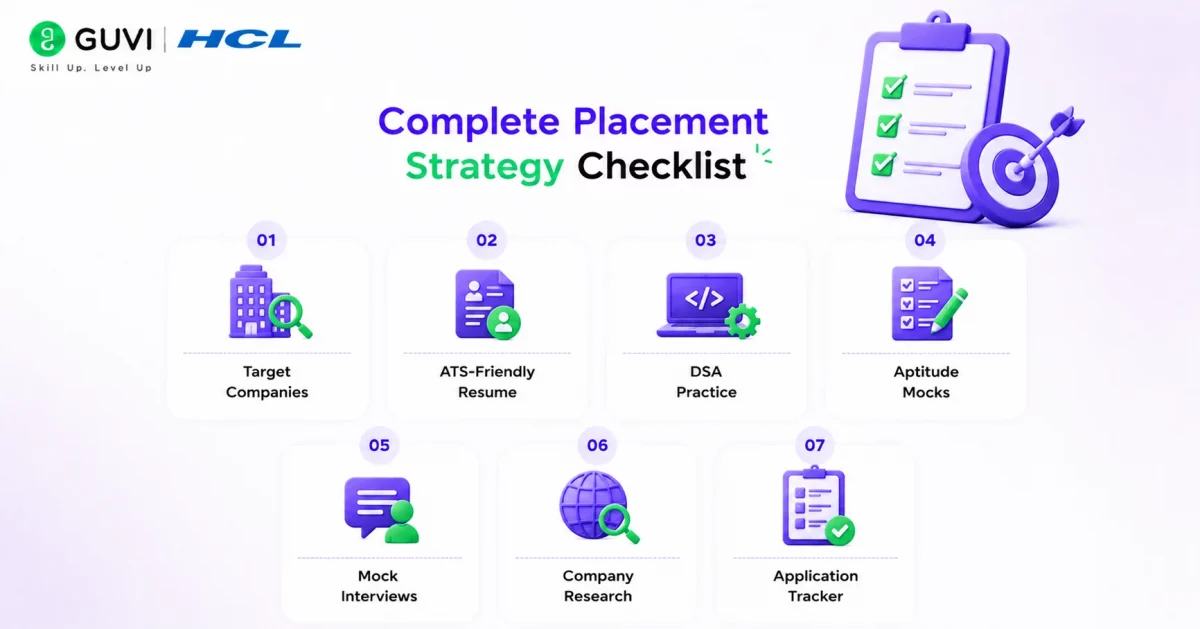
Use this as your master checklist before placement season begins.
- Map out target companies across product-based, service-based, startups, and core sectors
- Build one ATS-friendly resume and customize it per role
- Practice 100 to 150 DSA problems, focused on patterns rather than memorizing solutions
- Take at least 50 to 100 mock aptitude tests
- Do a minimum of 3 to 5 mock technical interviews
- Research each company’s culture, products, and recent news before HR rounds
- Keep a tracker for applications, deadlines, and follow-ups
Want structured guidance instead of piecing this together alone? HCL GUVI’s Interview Preparation course walks you through aptitude, coding, and interview rounds with mock practice built in.
Building Your Resume the Right Way
Your resume is the first filter recruiters apply, often before they’ve read a single project description in detail.
What Recruiters Actually Look For
- A clean, one-page layout with clear sections for education, projects, and skills
- Skills that genuinely match the job description, not an exaggerated list
- At least one internship, freelance project, or hackathon entry that shows real work
Quick Fixes That Make a Difference
- Keep formatting simple so Applicant Tracking Systems can parse it correctly
- Proofread twice and get a senior or mentor to review it once more
- Use HCL GUVI’s Free Resume Builder to create an ATS-friendly version in minutes
Cracking Aptitude and Coding Rounds
Aptitude tests filter out 60 to 70 percent of applicants before the coding round even begins, so speed and accuracy matter more than perfection here.
Focus your practice on:
- Quantitative aptitude: percentages, profit and loss, time and work
- Logical reasoning: puzzles, seating arrangements, coding-decoding
- Verbal ability: reading comprehension and sentence correction
Acing Technical and HR Interviews
Technical interviews test how you think, not just whether you get the right answer. Always clarify the problem, discuss your approach out loud, and start with a brute-force solution before optimizing it.

HR rounds are where many strong technical candidates lose offers. Recruiters are checking for genuine interest in the role and honest, specific answers, not rehearsed scripts. Prepare two or three thoughtful questions to ask them in return.
Common Placement Mistakes to Avoid
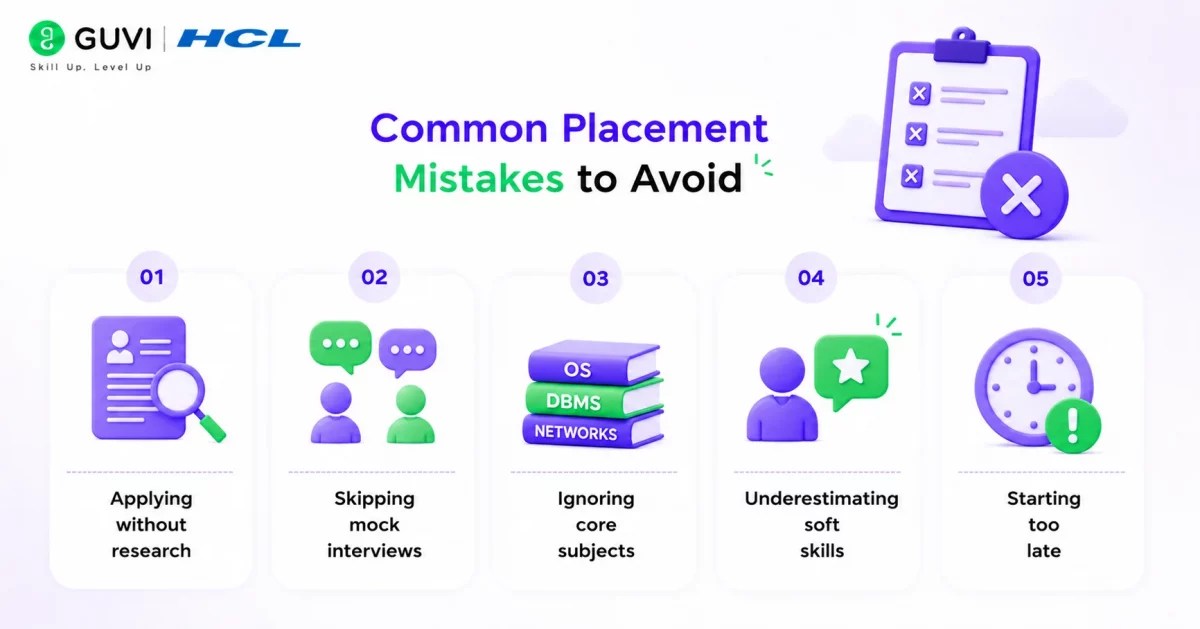
- Applying without research: Sending the same resume everywhere without tailoring it wastes shortlisting chances.
- Skipping mock interviews: Real interview pressure feels different from solo practice, so mocks matter.
- Ignoring core subjects: OS, DBMS, and networks still come up heavily in technical rounds.
- Underestimating soft skills: Close technical scores are often decided by communication and attitude.
- Starting too late: Cramming in the last month rarely beats three to six months of steady prep.
Manage Placement Season Stress
Hey geeks! It is completely understandable to feel anxious during placement season, but it’s important to take care of your mental and emotional well-being while working on your goal.
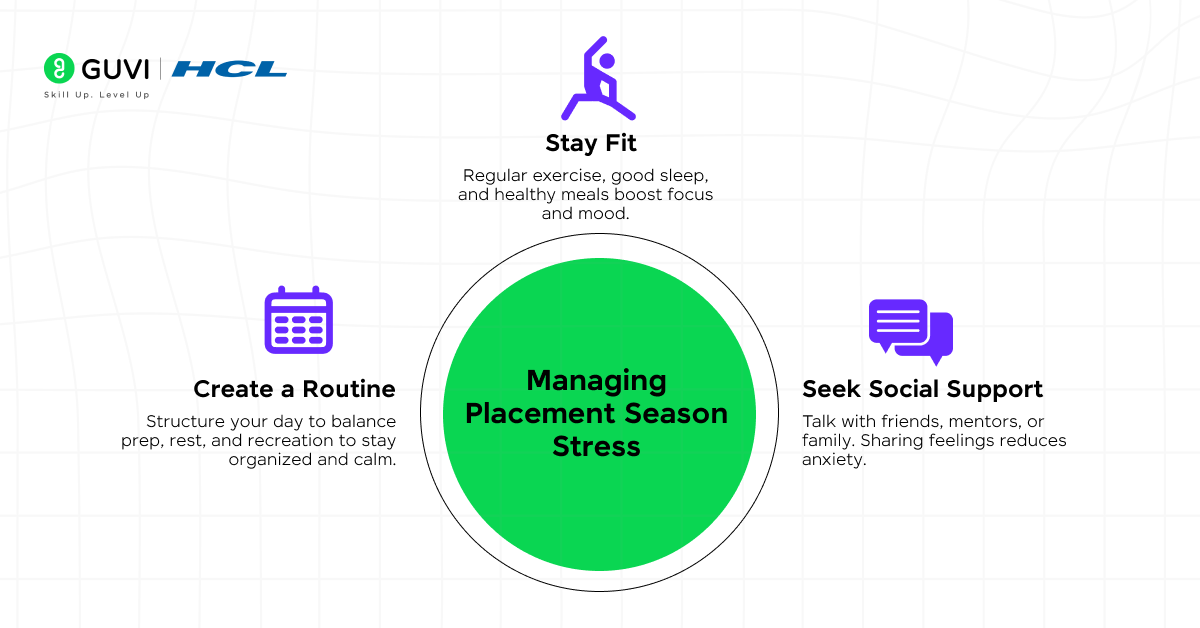
Create a daily routine: Structure your day to take less stress, balance preparation, rest, and recreation.
Stay Fit: Regular exercise, good sleep, and eating healthy will help you focus and balance your mood.
Seek Social Support: Talk to friends, mentors, or family and open up about how you feel to help lighten the stress.
To wrap up
Improving your placement strategy in 2026 comes down to preparing early and treating every stage, resume, aptitude, coding, and interviews, as one connected process. Recruiters are prioritizing skills and real project work over CGPA alone, which works in your favor if you prepare consistently.
Start three to six months ahead, track your applications across on-campus, off-campus, and pool drives, and don’t skip mock interviews. Consistency beats last-minute intensity every time.
Frequently Asked Questions
1. What are placement strategies?
It is your personalized roadmap to success. This involves strategic resume building, skill development, rigorous mock interviews, and consistent aptitude practice. Also, investing time in company research and networking.
2. How to master campus placement?
Mastering placement games involves smart and balanced play.. Understand recruitment process, for different company types. Your core focus must be on building strong technical and problem-solving skills (like DSA) alongside regular practice of aptitude and communication tests.
3. What is the best time to prepare for placement?
The best time to start preparing is at least three to six months before the placement season officially kicks off.
4. Do soft skills matter in placement success?
Absolutely, Soft skills are often the deciding factor, especially when technical scores between candidates are very close. Employers seek candidates who have strong communication skills, positive attitude and a problem solving mindset.
5. How to manage placement stress?
Feeling stressed during placements is completely normal, but managing it wisely is key to boosting your performance. Start by creating a clear, balanced daily routine and sticking to it. Make sure you regularly exercise and get enough rest.
6. How many months before placement season should I start preparing?
Most successful candidates start preparing three to six months in advance, giving enough time to build projects, practice DSA, and take mock interviews.
Success Stories

About the Author
Salini Balasubramaniam
A curious, information-savvy writer loves to turn deep insights into authentic and engaging content that connects. With experience in writing for brands and driving audience engagement, I believe that words can make a powerful difference.
View all posts by Salini Balasubramaniam
Connect with me @










Did you enjoy this article?