


Full Stack Development Articles
Claude for Architecture and Engineering Documentation
Freelancing as a Python Developer: Getting Your First Client


Get In Touch For Details! Request More Information

Caching Strategies Every Backend Developer Must Know
Aug 19, 2026 3 Min Read 364 Views
(Last Updated)
Caching strategies are techniques used to store frequently accessed data temporarily so applications can retrieve it faster without repeatedly querying the database or external services. Effective caching reduces response times, lowers server load, and improves scalability. Understanding caching strategies is essential for backend developers who want to build high-performance and reliable applications.
Table of contents
- TL;DR
- What Are Caching Strategies?
- Why Are Caching Strategies Important?
- How Does Caching Work?
- What Is Cache-Aside Strategy?
- What Is Write-Through Caching?
- What Is Write-Back Caching?
- What Is Write-Around Caching?
- Comparison of Popular Caching Strategies
- What Tools Are Commonly Used for Caching?
- Key Takeaways
- Conclusion
- FAQs
- What are caching strategies?
- Which caching strategy is most commonly used?
- What is the difference between write-through and write-back caching?
- Why is caching important for backend development?
- Which caching tool is most popular?
TL;DR
- Caching stores frequently used data for faster access.
- Proper caching reduces database load and improves application performance.
- Common caching strategies include cache-aside, write-through, write-back, and write-around.
- Choosing the right strategy depends on your application’s requirements.
- Poor cache management can lead to stale data and consistency issues.
What Are Caching Strategies?
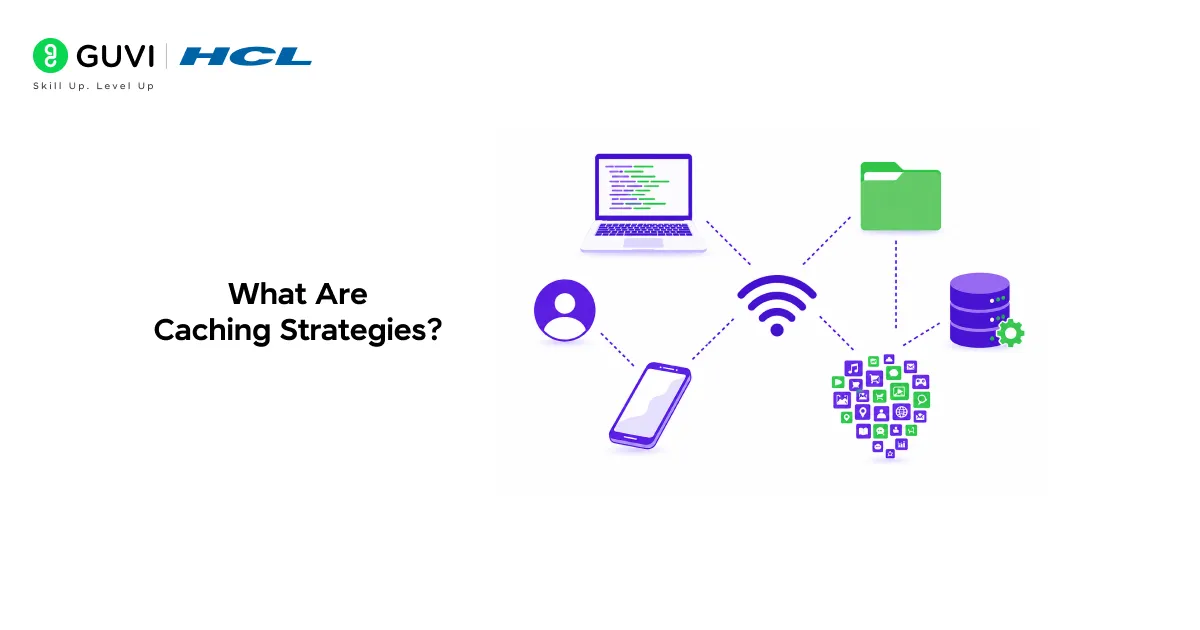
Caching strategies are approaches used to determine how data is stored, retrieved, and updated in a cache. Instead of fetching data from a slower source every time, applications can retrieve data from a cache, which is typically much faster.
Think of a cache as a temporary storage layer positioned between your application and the database. When data is requested repeatedly, the cache serves it quickly, reducing the need for expensive database queries.
Some benefits of caching include:
- Faster response times.
- Reduced database workload.
- Improved scalability.
- Better user experience.
Large-scale applications such as social media platforms, streaming services, and e-commerce websites rely heavily on caching to handle millions of requests efficiently.
Read More: Caching in System Design: Concepts & Strategies Explained
Why Are Caching Strategies Important?
As applications grow, database operations often become a performance bottleneck. Every database query consumes resources, and repeated requests for the same data can significantly impact performance.
Caching helps solve this problem by storing frequently accessed information closer to the application.
Some major advantages include:
- Improved performance. Data can be retrieved much faster from memory than from a database.
- Reduced latency. Users experience quicker response times when cached data is available.
- Lower infrastructure costs. Fewer database queries reduce resource consumption.
- Better scalability. Applications can handle higher traffic volumes more efficiently.
Data Point: Accessing data from memory can be hundreds or even thousands of times faster than retrieving it from disk-based storage systems.
Ready to build backend systems that scale? HCL GUVI’s Software Development Course covers caching, system design, and backend fundamentals to help you build production-ready applications.
How Does Caching Work?
Caching works by storing frequently requested data in a high-speed storage layer such as memory.
A typical workflow looks like this:
- A user requests data.
- The application checks the cache.
- If the data exists, it is returned immediately.
- If the data is missing, the application retrieves it from the database.
- The retrieved data is stored in the cache for future requests.
This process reduces repeated database access and improves overall application performance.
What Is Cache-Aside Strategy?
Cache-aside, also known as lazy loading, is one of the most widely used caching strategies.
With this approach, the application first checks the cache when data is requested. If the data is unavailable, it retrieves the data from the database and stores it in the cache.
- How Cache-Aside Works
- Check the cache.
- If data exists, return it.
- If data does not exist, query the database.
- Store the result in the cache.
- Return the data.
- Advantages of Cache-Aside
- Easy to implement.
- Efficient use of cache storage.
- Only frequently accessed data is cached.
- Disadvantages of Cache-Aside
- Initial cache misses can increase response time.
- Risk of stale data if cache invalidation is not handled properly.
Best Practice: Cache-aside is often the preferred choice for read-heavy applications where data changes infrequently.
What Is Write-Through Caching?
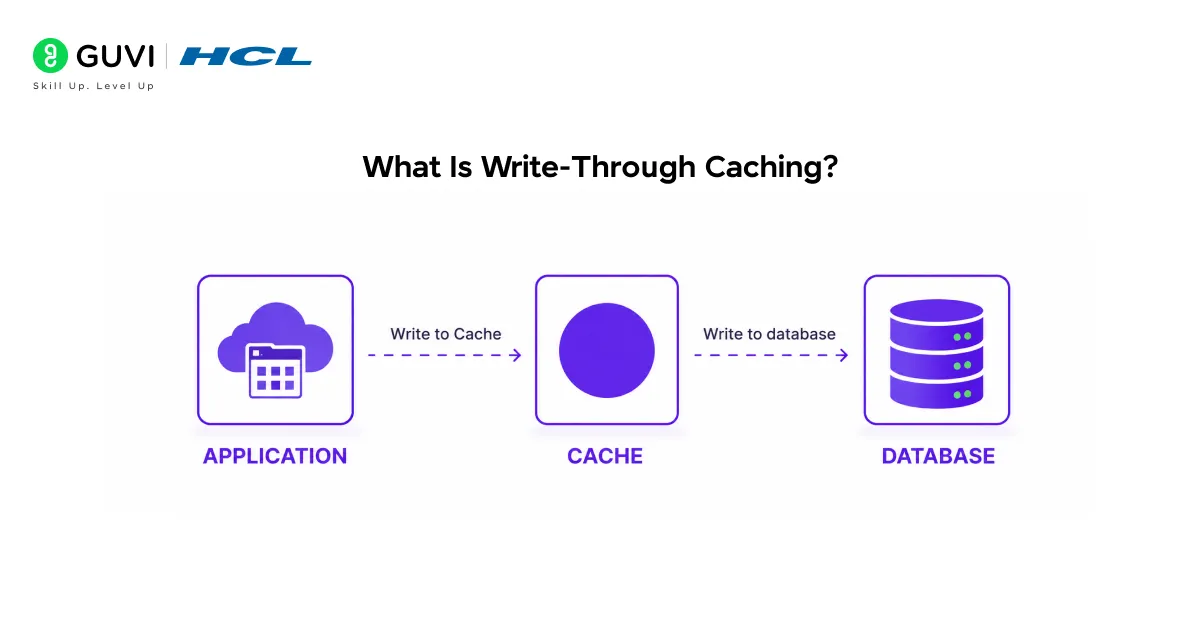
Write-through caching updates both the cache and the database simultaneously whenever data changes.
This ensures that the cache always contains the latest information.
- How Write-Through Works
- Application receives a write request.
- Data is written to the cache.
- Data is immediately written to the database.
- Both storage layers remain synchronized.
- Advantages of Write-Through
- Consistent data between cache and database.
- Reduced cache misses for recently updated data.
- Simpler cache management.
- Disadvantages of Write-Through
- Increased write latency.
- Additional overhead during update operations.
Pro Tip: Write-through caching works well for systems where data consistency is more important than write performance.

What Is Write-Back Caching?
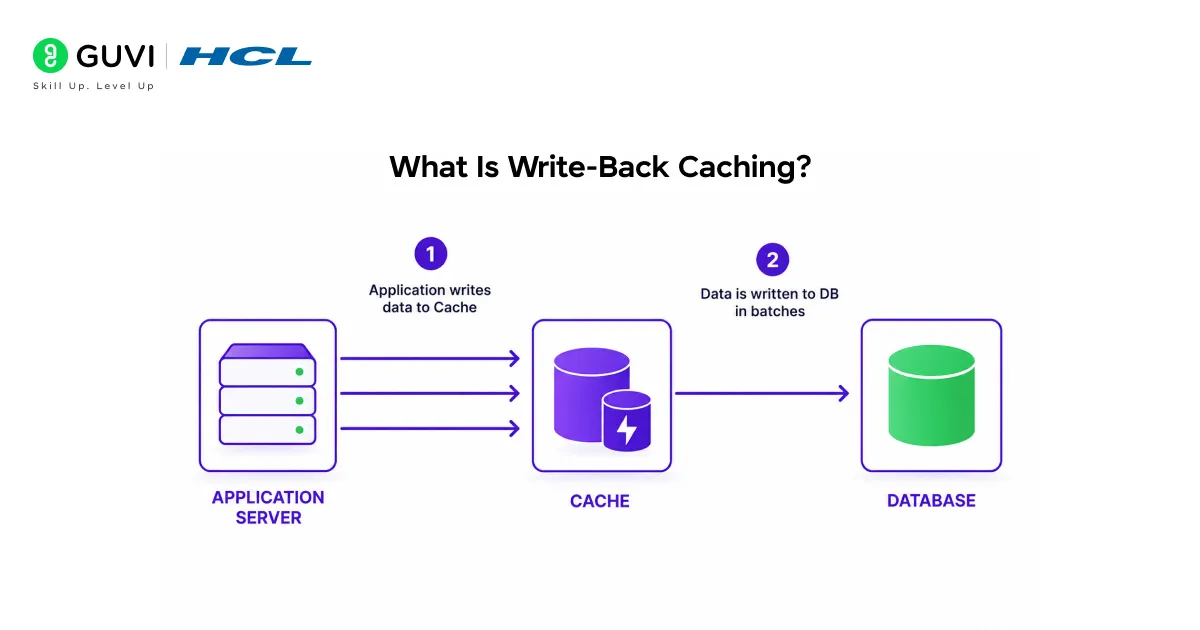
Write-back caching, sometimes called write-behind caching, updates the cache immediately and delays writing data to the database.
This approach prioritizes speed by reducing database write operations.
- How Write-Back Works
- Application writes data to the cache.
- Cache acknowledges the write operation.
- Database updates occur later in the background.
- Advantages of Write-Back
- Faster write operations.
- Reduced database load.
- Improved performance under heavy workloads.
- Disadvantages of Write-Back
- Risk of data loss if the cache fails before database synchronization.
- More complex implementation.
Warning: Write-back caching should be used carefully in systems where data durability is critical.
What Is Write-Around Caching?
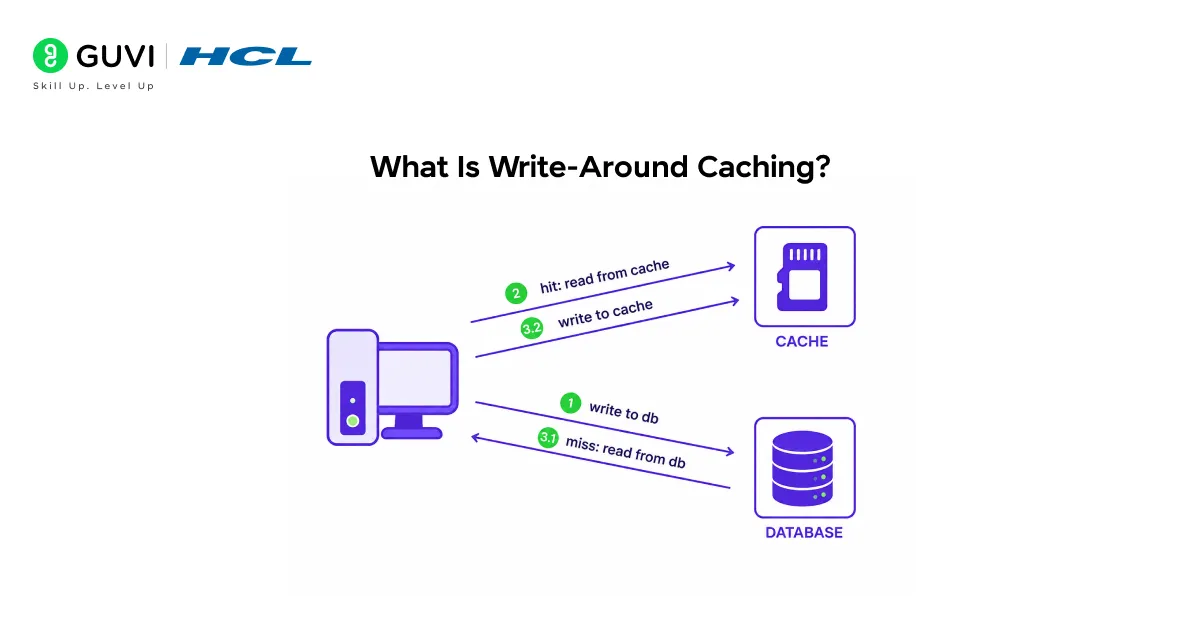
Write-around caching bypasses the cache during write operations and stores data directly in the database.
The cache is only updated when data is later requested.
- Advantages of Write-Around
- Prevents unnecessary cache entries.
- Reduces cache pollution.
- Useful for infrequently accessed data.
- Disadvantages of Write-Around
- Higher latency for newly written data.
- Increased cache misses immediately after writes.
This strategy is often used when large volumes of data are written but only a portion is frequently read.
Comparison of Popular Caching Strategies
| Strategy | Read Performance | Write Performance | Data Consistency |
| Cache-Aside | High | Medium | Medium |
| Write-Through | High | Lower | High |
| Write-Back | High | Very High | Lower |
| Write-Around | Medium | High | Medium |
Each strategy involves trade-offs between performance, consistency, and complexity.
The best choice depends on your application’s requirements.
What Tools Are Commonly Used for Caching?
Several technologies help implement caching in backend applications.
Popular caching solutions include:
- Redis
- Memcached
- Hazelcast
- Apache Ignite
- Amazon ElastiCache
Redis is particularly popular because it provides high-speed in-memory storage and supports advanced data structures.
Did You Know? Redis is widely used for session management, rate limiting, leaderboards, and distributed caching in modern web applications.
Key Takeaways
- Caching strategies improve application performance by reducing database access.
- Cache-aside is one of the most commonly used caching approaches.
- Write-through prioritizes consistency, while write-back prioritizes speed.
- Write-around helps avoid unnecessary cache storage.
- Choosing the right strategy depends on application requirements.
- Tools like Redis and Memcached simplify cache implementation.
- Effective cache management is essential for long-term performance.
Conclusion
Caching is one of the most powerful optimization techniques available to backend developers. By reducing database load and serving data faster, caching strategies can dramatically improve application performance and scalability.
However, there is no universal caching strategy that fits every use case. The key is understanding the trade-offs between performance, consistency, and complexity. By selecting the right caching strategy for your application, you can build backend systems that remain fast, reliable, and scalable even as traffic grows.
FAQs
What are caching strategies?
Caching strategies are methods for determining how data is stored, retrieved, and updated in a cache. They help improve application performance and reduce database load.
Which caching strategy is most commonly used?
Cache-aside is one of the most widely used caching strategies because it is simple to implement and works well for read-heavy applications.
What is the difference between write-through and write-back caching?
Write-through updates both the cache and the database immediately, while write-back updates the cache first and delays updates to the database. Write-back offers better performance but introduces consistency risks.
Why is caching important for backend development?
Caching reduces response times, lowers database workload, and improves scalability. It helps applications handle more traffic efficiently.
Which caching tool is most popular?
Redis is one of the most popular caching solutions due to its speed, flexibility, and support for various data structures.
Success Stories

About the Author
Vishalini Devarajan
An Aerospace Engineer turned content writer, I focus on making complex concepts easy to understand through well-structured, reader-friendly blogs. Whether it’s a technical topic or a non-technical one, I love creating content that is clear, engaging, and impactful.
View all posts by Vishalini Devarajan
Connect with me @





































Did you enjoy this article?