


Data Science Articles
Data Analyst or Data Scientist: Which Has Better Demand for Mid-Career BPO Professionals?
CFA Charterholders: Are You Missing Out on Data Science Opportunities?
Data Analyst Jobs for BPO Experience in India
BPO Team Leader to Analytics Manager: Skills, Roadmap and Salary

Get In Touch For Details! Request More Information
BPO Workforce Management Analyst to Data Analyst: What Skills Transfer?
Oct 22, 2026 4 Min Read 36 Views
(Last Updated)
Working as a BPO Workforce Management Analyst involves more than managing employee schedules. You may track call volumes, monitor service levels, forecast staffing requirements, analyze productivity, and prepare reports that help teams meet business targets. These responsibilities can provide a strong foundation for a career in data analytics.
If you are considering a move from workforce management to a Data Analyst role, you may already have experience working with numbers, identifying trends, and explaining performance results. The main challenge is learning additional tools and analytical techniques that employers expect from data professionals.
You do not need to start from scratch. By connecting your existing workforce management experience with skills such as SQL, Excel, Power BI, and data visualization, you can build a practical transition plan and demonstrate your readiness for analytics roles.
Table of contents
- TL;DR
- What Skills Transfer From Workforce Management to Data Analytics?
- Data Interpretation and Trend Analysis
- Forecasting and Planning
- Reporting and Dashboard Preparation
- Problem-Solving and Root Cause Analysis
- Business Communication
- What New Skills Do You Need to Become a Data Analyst?
- How Can You Transition From WFM to Data Analytics?
- Step 1: Identify Your Existing Skills
- Step 2: Strengthen Excel and Learn SQL
- Step 3: Learn a Visualization Tool
- Step 4: Build Portfolio Projects
- Step 5: Apply for Relevant Roles
- What Projects Should You Build for Your Portfolio?
- What Career Opportunities Can You Explore?
- Conclusion
- FAQs
- Can a BPO Workforce Management Analyst become a Data Analyst?
- Which skills transfer best from workforce management to data analytics?
- Do I need Python to become a Data Analyst?
- Which tools should I learn first?
- What projects should a WFM analyst include in a portfolio?
- What jobs can I apply for after workforce management?
TL;DR
- BPO Workforce Management Analysts already work with operational data, forecasts, and performance metrics.
- Skills such as reporting, trend analysis, forecasting, and problem-solving transfer well to data analytics.
- Excel, SQL, Power BI, and basic statistics can help you expand your technical capabilities.
- Projects based on staffing, productivity, and service levels can strengthen your portfolio.
- Workforce Analytics, Operations Analyst, and Data Analyst roles are potential career options.
- Focus on demonstrating analytical skills and business impact rather than relying only on your current job title.
What Skills Transfer From Workforce Management to Data Analytics?
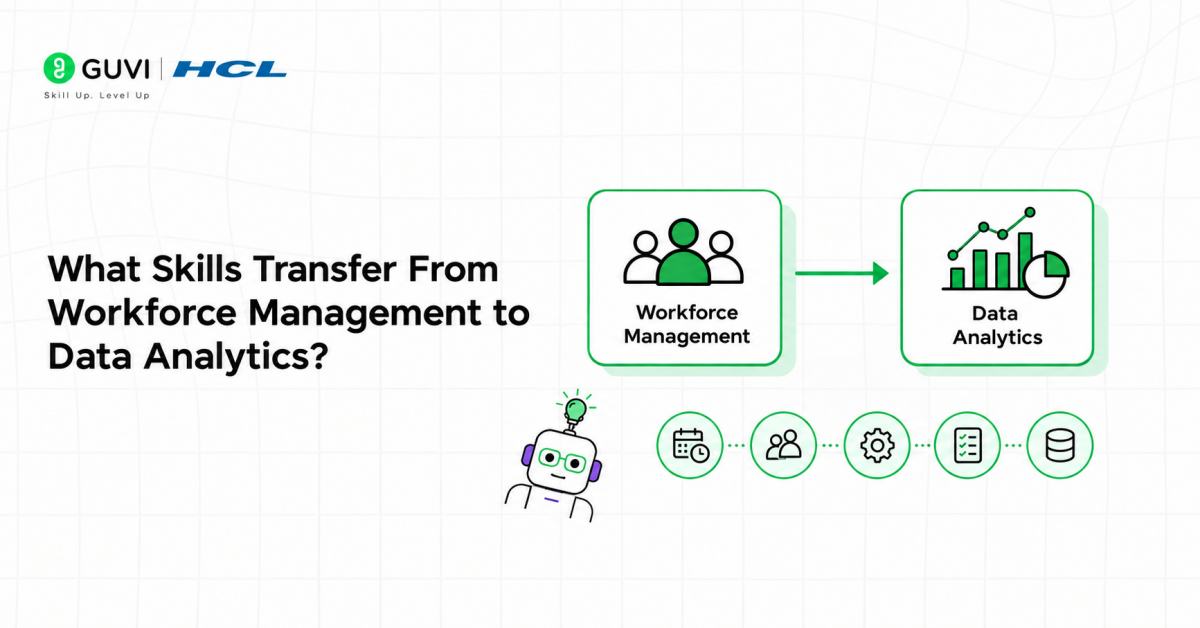
Workforce Management (WFM) and data analytics share several responsibilities. Both involve interpreting data, identifying patterns, and supporting decisions. Your experience can therefore help you understand analytical problems in a business setting.
1. Data Interpretation and Trend Analysis
WFM analysts regularly examine call volumes, average handling time, absenteeism, occupancy, and service levels. Comparing these metrics across shifts, days, or months helps identify patterns and operational challenges.
Data Analysts use similar approaches to understand sales performance, customer behavior, product usage, and business outcomes.
For example, if you notice that service levels consistently decline during particular hours, you can investigate the relationship between incoming call volumes and available staffing. This is an analytical approach that can be applied across industries.
2. Forecasting and Planning
Forecasting is an important part of workforce management. You may estimate future call volumes and determine staffing requirements based on historical trends.
These skills are relevant to analytics roles involving demand forecasting, resource planning, and performance prediction. Although advanced predictive modeling may require additional statistical or programming knowledge, your existing forecasting experience provides a useful starting point.
3. Reporting and Dashboard Preparation
Preparing daily, weekly, or monthly reports helps managers understand operational performance. You may already work with spreadsheets, charts, performance summaries, and management reports.
Data analytics builds on these responsibilities by emphasizing interactive dashboards, automated reporting, and clear visual communication.
Learning tools such as Power BI or Tableau can help you turn regular reports into dashboards that make trends easier to explore.
4. Problem-Solving and Root Cause Analysis
When a team misses its service-level target, a WFM analyst may investigate staffing shortages, unexpected call volumes, absenteeism, or changes in average handling time.
Data Analysts also investigate why a metric changed instead of simply reporting the result. They compare relevant variables, validate assumptions, and present evidence-based explanations.
This ability to ask the right questions is valuable because analytics is not just about creating charts. It is about helping businesses understand problems and make better decisions.
5. Business Communication
WFM analysts often explain performance trends and staffing recommendations to operations managers and team leaders.
Data Analysts must also communicate findings to stakeholders who may not have a technical background. Presenting insights clearly, explaining limitations, and recommending practical actions are transferable skills.
Transition from BPO workforce management to data analytics by building on your experience with forecasting, scheduling, and performance metrics. HCL GUVI’s Data Science Course helps you develop practical skills in Python, statistics, data analysis, and data visualization through hands-on projects.
What New Skills Do You Need to Become a Data Analyst?
Your current experience is a useful foundation, but you will need to strengthen your technical skills to compete for Data Analyst positions.
1. Excel: Learn advanced formulas, lookup functions, pivot tables, data cleaning, conditional formatting, and charts. Excel is useful for analyzing structured data and preparing reports.
2. SQL: Learn how to retrieve, filter, group, and combine data from databases. Practice writing queries using SELECT, WHERE, GROUP BY, and JOIN.
3. Power BI or Tableau: Learn to build interactive dashboards, create useful visualizations, and present performance metrics clearly. Choose one tool initially rather than trying to master both at once.
4. Basic statistics: Understand averages, percentages, distributions, correlation, and the difference between correlation and causation. These concepts help you interpret findings accurately.
5. Data cleaning: Learn how to handle missing values, duplicate records, inconsistent formats, and incorrect entries before analyzing a dataset.
6. Analytical storytelling: Practice explaining what the data shows, why the finding matters, and what action a business could consider.
Python can be a valuable additional skill, particularly for automation and advanced analysis, but you can begin building foundational analytics skills with Excel, SQL, and a dashboard tool.
How Can You Transition From WFM to Data Analytics?
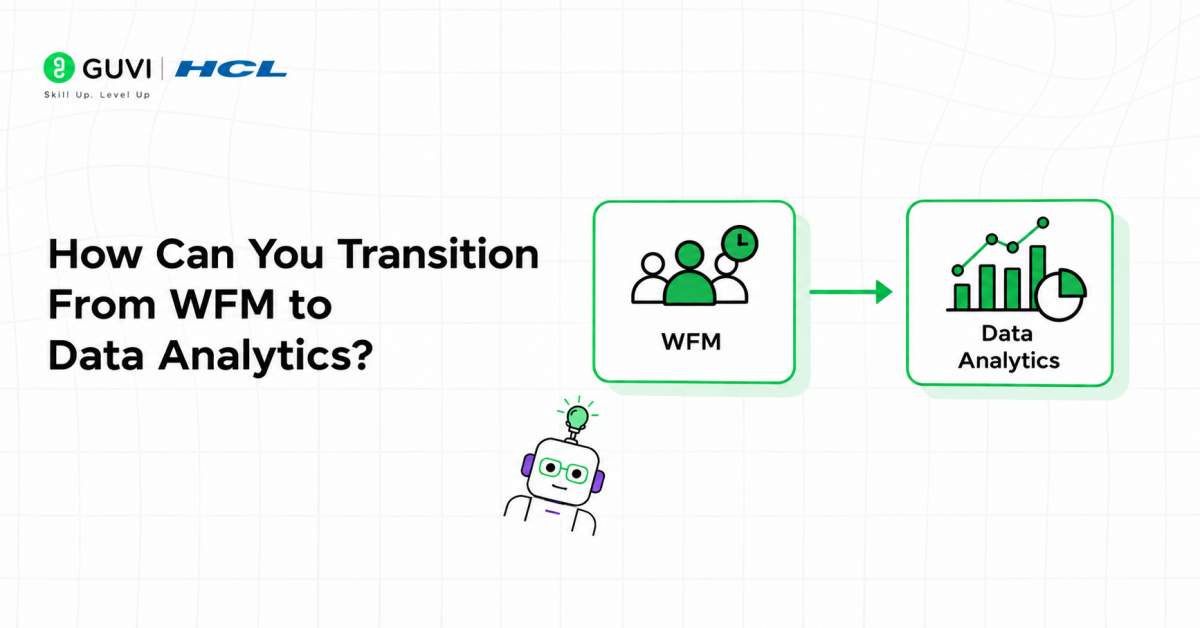
A structured roadmap can help you build on your current experience without trying to learn everything simultaneously.
Step 1: Identify Your Existing Skills
List the reports, metrics, forecasts, and operational problems you currently handle. Identify which responsibilities involve data analysis, and note the tools you use regularly.

This helps you recognize your strengths and determine which skills need improvement.
Step 2: Strengthen Excel and Learn SQL
Start by improving your spreadsheet skills. Then practice SQL using sample datasets related to customer service, sales, or workforce operations.
Focus on solving practical questions, such as identifying peak-volume periods or comparing performance across teams.
Step 3: Learn a Visualization Tool
Build a dashboard that displays service levels, call volumes, staffing requirements, and productivity metrics. Add filters and clear visual summaries so users can explore the results.
Step 4: Build Portfolio Projects
Create two or three projects that demonstrate your ability to clean data, analyze trends, and communicate findings. Document the business question, methods, results, and recommendations.
Step 5: Apply for Relevant Roles
Explore positions such as Data Analyst, Workforce Analyst, Operations Analyst, Reporting Analyst, and Business Intelligence Analyst. Compare job descriptions to identify the skills employers request most often.
Tailor your resume to highlight analytical responsibilities and measurable achievements rather than describing your work only as scheduling or reporting.
Workforce management metrics can answer many business questions beyond staffing. For example, analyzing the relationship between call volume, average handling time, and service levels can help identify operational bottlenecks. A well-designed dashboard using these metrics can become a relevant portfolio project when applying for data analytics roles.
What Projects Should You Build for Your Portfolio?
Choose projects that connect your WFM experience with broader analytics skills.
1. Workforce Performance Dashboard
Use Excel or Power BI to visualize service levels, absenteeism, occupancy, and productivity. Highlight patterns and recommend areas for further investigation.
2. Call Volume Forecasting Analysis
Analyze historical call volumes to identify recurring patterns and estimate future demand. Compare your estimates with actual results when available, and explain the limitations of your approach.
3. Operations Performance Report
Use SQL and a visualization tool to compare performance across teams, shifts, or reporting periods. Explain which metrics changed and what additional information would help identify the causes.
Use public or synthetic datasets for your portfolio. Do not publish confidential employee, customer, or company data from your workplace.
What Career Opportunities Can You Explore?
Your next role will depend on your technical skills, project experience, and the requirements of individual employers.
- Data Analyst: Analyzes datasets, identifies trends, and communicates findings.
- Workforce Analyst: Uses staffing and operational data to improve workforce planning.
- Reporting Analyst: Develops reports and dashboards to monitor business performance.
- Operations Analyst: Examines processes, productivity, and operational efficiency.
- Business Intelligence Analyst: Builds dashboards and reporting solutions to support business decisions.
A Workforce Analyst or Reporting Analyst position may be a natural next step because it builds directly on your current experience. You can also apply for Data Analyst roles when you meet their technical requirements.
Conclusion
Moving from a BPO Workforce Management Analyst role to data analytics is a realistic career goal when you build on your existing strengths and address technical skill gaps. Your experience with forecasts, service levels, productivity metrics, and operational reporting can help you understand real business problems.
Focus on learning Excel, SQL, and a visualization tool, then demonstrate your abilities through practical projects. With a clear learning plan and a resume that highlights your analytical contributions, you can prepare for opportunities in workforce analytics, reporting, operations, and data analysis.
FAQs
1. Can a BPO Workforce Management Analyst become a Data Analyst?
Yes. WFM analysts often have experience with reports, forecasts, and performance metrics. Learning SQL, data visualization, and statistics can help them prepare for Data Analyst roles.
2. Which skills transfer best from workforce management to data analytics?
Trend analysis, forecasting, reporting, problem-solving, metric interpretation, and stakeholder communication are particularly useful transferable skills.
3. Do I need Python to become a Data Analyst?
Not always. Many entry-level roles emphasize Excel, SQL, and visualization tools. Python can expand your options and is especially useful for automation and more advanced analysis.
4. Which tools should I learn first?
Start with Excel, then learn SQL and one visualization tool such as Power BI or Tableau. Add Python based on your career goals and target job requirements.
5. What projects should a WFM analyst include in a portfolio?
A workforce performance dashboard, call volume forecasting analysis, and operations performance report can demonstrate relevant analytical skills.
6. What jobs can I apply for after workforce management?
Depending on your skills and experience, consider Workforce Analyst, Reporting Analyst, Operations Analyst, Business Intelligence Analyst, and Data Analyst positions.
Success Stories

About the Author
HCL GUVI
This article was selected and published as part of the HCL GUVI AI Blogathon 2026, an initiative designed to encourage students, AI enthusiasts, and aspiring tech writers to simplify complex AI concepts through impactful technical content. The contest recognized high-quality, original, and insightful AI-focused blogs, with selected authors receiving publication opportunities on the HCL GUVI blog platform along with official author credits and recognition.
View all posts by HCL GUVI
Connect with me @






Did you enjoy this article?