


Artificial Intelligence and Machine Learning Articles
AI/ML Skills Gap 2026: Why Companies Can't Find Job-Ready Talent
20 AI/ML Interview Questions Recruiters Can Use Without a Tech Background - Best Guide
How Industry-Backed AI/ML Bootcamps Are Changing the AI/ML Hiring Pipeline - Best Guide 2026
From IT Support to AI Engineer: A Realistic Career Switch Guide 2026

Get In Touch For Details! Request More Information
AI Mock Interviews: Your Personal Practice Coach
Jul 06, 2026 6 Min Read 692 Views
(Last Updated)
You know you need to practice for your interview. You know mock interviews work. But your friend is busy. Your mentor is in a different time zone. The career counselor has a three-week waitlist.
Meanwhile, your interview is in five days.
This is where traditional interview prep falls apart. Not because you lack motivation, but because you lack access. You cannot practice at 11 PM when the anxiety hits. You cannot run through the same question fifteen times without feeling guilty about someone else’s time.
AI mock interviews solve this. Sounds too good to be true?
This guide will show you exactly how AI interview practice works, when it outperforms human coaching, where it falls short, and how to use it strategically to walk into your next interview genuinely prepared instead of just hoping your nerves do not take over.
Table of contents
- Quick TL;DR Summary
- What AI Mock Interviews Actually Do For You
- The Interview Types AI Handles Best
- Things That Silently Kill AI Mock Interview Practice
- Your Simple Four-Week AI Practice Plan
- Week 1: Build Your Baseline
- Week 2: Focus on Structure
- Week 3: Add Pressure and Variety
- Week 4: Polish Your Top Ten
- Top AI Mock Interview Platforms Compared
- When to Use AI vs When to Use Human Practice
- Final Thoughts
- FAQs
- Can AI mock interviews really replace practicing with a real person?
- How many AI practice sessions should I do before my interview?
- Are free AI mock interview tools good enough or should I pay for premium?
- Will using AI practice make my answers sound robotic in the real interview?
- Can AI help with interviews in languages other than English?
Quick TL;DR Summary
- AI mock interviews simulate real interview environments by asking questions, analyzing your answers, and giving instant feedback without needing a real interviewer.
- These tools help candidates practice anytime, reduce nervousness, and improve communication and confidence before actual interviews.
- This guide explains how AI mock interview platforms work, which interview types they support best, and what their limitations are.
- You will learn how to choose the right AI interview tool and how to combine AI practice with human feedback for better results.
- The article also includes practical preparation strategies, common mistakes to avoid, and tips to make AI interview practice feel more natural and effective.
What AI Mock Interviews Actually Do For You
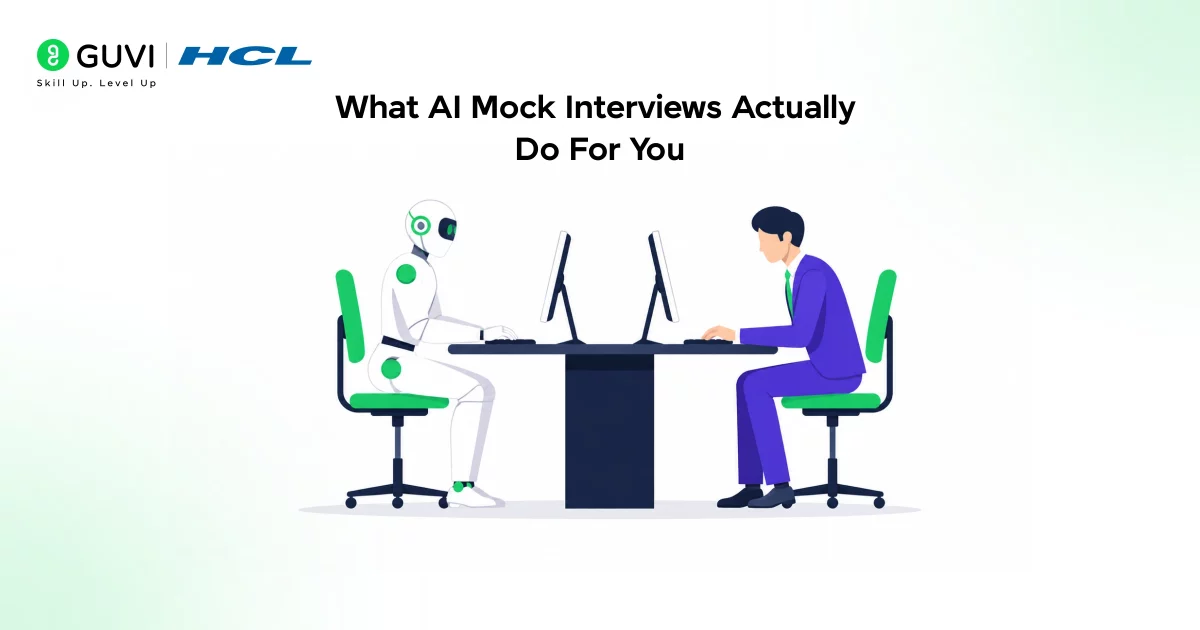
- They Give You Unlimited Practice Without Social Cost
The first time you completely bomb an answer, it stings less when the listener is AI.
No judgment. No awkwardness. No feeling like you wasted someone’s time.
You can fail, reset, and try again immediately. This psychological safety accelerates learning in ways traditional practice cannot match.
- They Catch Speech Patterns You Never Knew Existed
AI analyzes every word, pause, and filler.
“You said ‘um’ forty-three times in that answer.” You would never get this level of granular feedback from a friend trying to be supportive.
The best AI tools track speech pace, word choice, confidence markers, and even facial expressions. You get quantified feedback on things that feel subjective.
- They Adapt to Your Specific Role and Level
Generic interview questions prepare you generically.
AI platforms trained on thousands of real interviews can generate role-specific questions for your exact position. Senior software engineer at a fintech startup? The questions reflect that. Entry-level marketing coordinator? Completely different set.
The practice feels relevant because it is.
- They Create Pressure Without Stakes
AI tools can simulate time pressure, unexpected follow-ups, and difficult interviewer personalities.
You learn to think clearly when challenged, all while knowing that bombing this answer costs you nothing. By the time you face real pressure, your brain has already done it dozens of times.
Read More: How AI Is Changing Coding Interviews
The Interview Types AI Handles Best
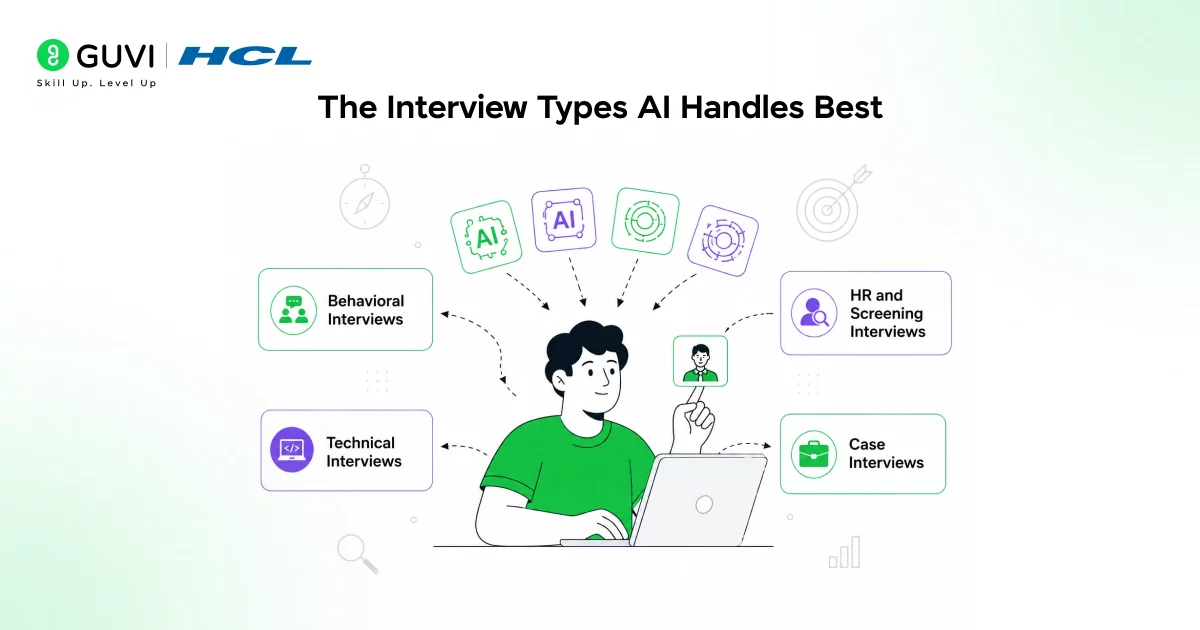
- Behavioral Interviews
AI excels at behavioral questions because the evaluation criteria are clear and structured.
AI tools analyze whether your answer follows the STAR framework, contains specific details, demonstrates clear outcomes, and stays concise. They catch vague language like “I helped the team” and push you to quantify your actual contribution.
What AI does well:
- Ensuring your stories follow proper structure
- Identifying missing elements (no clear result, vague situation)
- Tracking answer length and pacing
- Suggesting stronger action verbs and specificity
- Generating unlimited behavioral prompts across competencies
Practice these with AI:
- “Tell me about a time you had to influence someone without authority.”
- “Describe a situation where you failed to meet a deadline.”
- “Give me an example of when you handled conflicting priorities.”
- “Tell me about a time you had to deliver difficult feedback.”
- “Describe a situation where you disagreed with a decision and how you handled it.”
- Technical Interviews
AI-powered coding interview platforms are some of the most sophisticated tools available.
They do not just check if your code works. They evaluate your problem-solving approach, code efficiency, communication clarity, and whether you ask the right clarifying questions.
What to practice:
- Live coding with real-time syntax feedback
- Explaining your approach before writing code
- Talking through trade-offs between different solutions
- Debugging broken code while verbalizing your thought process
- System design discussions with scalability considerations
Sample technical practice prompts:
- “Implement a function to detect cycles in a linked list and explain your approach.”
- “Design a rate limiter for an API and discuss the trade-offs.”
- “Debug this code that is causing memory leaks and walk me through your reasoning.”
- “Explain how you would optimize a slow database query.”
- “Design a notification system for a social media platform.”
- HR and Screening Interviews
AI is surprisingly effective for HR questions because it identifies the corporate speak and generic answers that make candidates forgettable.
An AI tool will flag “I am a hard worker” as meaningless and push you toward specifics. It forces precision where most candidates hide behind vagueness.
Practice these questions:
- “Why do you want to leave your current role?”
- “What are your salary expectations and how did you arrive at that number?”
- “Why is there a gap in your employment history?”
- “What makes you interested in this company specifically?”
- “Tell me about a weakness that has actually affected your work.”
- Case Interviews
AI case interview tools simulate consulting-style problems with structured frameworks.
They evaluate whether you ask the right questions, break down complex problems systematically, make reasonable assumptions, and communicate clearly under time pressure.
Practice these scenarios:
- “Estimate the market size for electric vehicle charging stations in India.”
- “A retail client saw a 30% drop in online conversions. Diagnose the problem.”
- “Should a bank launch a cryptocurrency trading platform? Build your recommendation.”
- “How would you price a subscription service with no direct competitors?”
Research indicates that candidates who combine AI-powered practice tools with human feedback sessions perform about 35% better in real interviews compared to those relying on only one approach. This is because AI helps build technical precision and structured responses, while human feedback adds context, authenticity, and nuance, leading to more balanced and interview-ready communication.
Things That Silently Kill AI Mock Interview Practice
- Treating AI Feedback as Optional Suggestions
The AI tells you that you rambled. You think “yeah but my answer was still pretty good.”
This is how people practice for weeks and see no improvement. AI feedback is data. Ignore data at your own risk.
- Practicing Without Intent
Running through questions mindlessly creates mindless habits.
Before each session, decide what you are working on. “Today I am fixing filler words.” “This session is about cutting answer length.” “I am practicing thinking out loud during technical problems.”
Unfocused practice reinforces whatever you already do. Focused practice builds new skills.
- Skipping the Uncomfortable Parts
You hate case interviews so you avoid them in practice. Then you bomb them in real interviews.
AI removes the social cost of failure. Use that. Practice the things you are worst at until they stop being weaknesses.
- Expecting Instant Transformation
You are not going to nail every answer after three sessions.
Real improvement takes fifteen to twenty focused practice sessions over several weeks. People quit after five sessions because they do not see dramatic change.

The change is happening. It is just not visible yet. Trust the process.
Studies show that AI-powered interview preparation tools can reduce interview anxiety by up to 40% because repeated exposure to realistic interview scenarios helps candidates build familiarity, improve response fluency, and develop confidence faster than traditional preparation methods alone.
Your Simple Four-Week AI Practice Plan
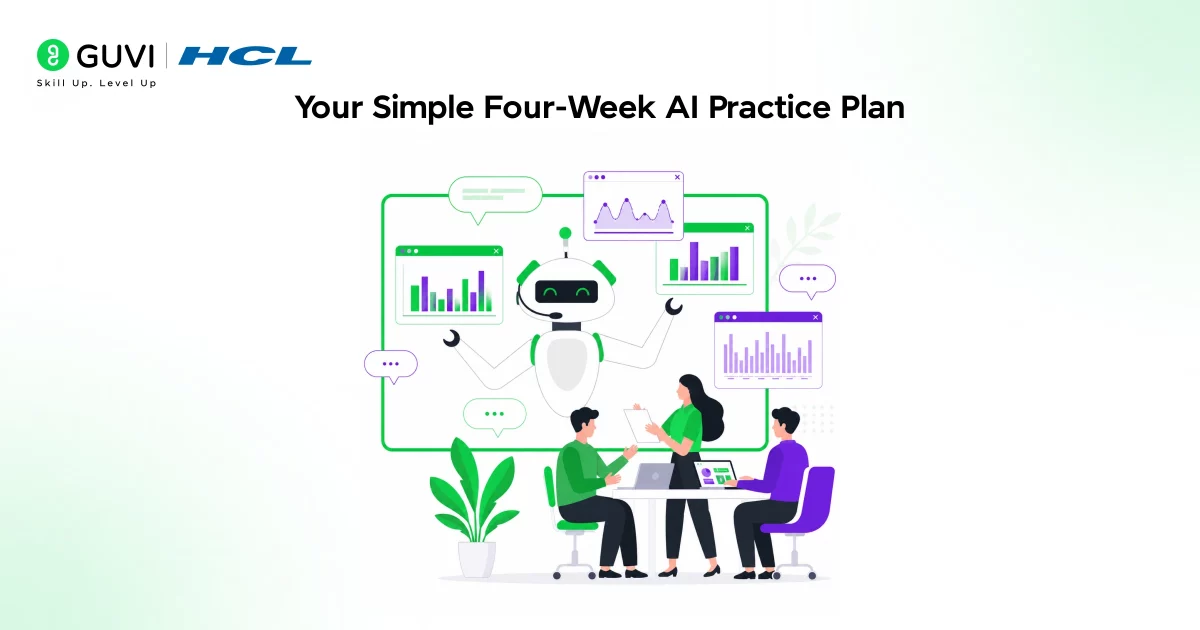
You do not need hours every day. You need structured consistent practice with clear goals.
Week 1: Build Your Baseline
- Run three full AI mock interview sessions (one every two days)
- Record every session
- Watch every recording completely
- Create a list of your three biggest problems based on AI feedback and your own observation
- Do NOT try to fix anything yet
Week 2: Focus on Structure
- Practice fifteen common behavioral questions using STAR framework
- Use AI to verify structure, not content quality
- Aim for answers between 90 seconds and 2 minutes
- Track your filler word count and try to reduce it by 20% from week one
- Run four sessions this week
Week 3: Add Pressure and Variety
- Enable hard mode or unexpected follow-up questions in your AI platform
- Practice technical questions or case studies depending on your role
- Simulate back-to-back questions without breaks
- Run five sessions
- Have one human review session mid-week to validate what AI is telling you
Week 4: Polish Your Top Ten
- Identify the ten questions most likely to appear in your actual interview
- Practice each one at least three times with AI
- Record your final versions
- Watch them back and confirm they feel natural, not memorized
- Run two full mock interviews combining behavioral, technical, and HR questions
- Debrief with a human if possible
We at HCL GUVI have built a free Resume Builder Tool featuring top recommended templates aligned with industry standards, all curated by leading recruiters. This tool can help you easily clear the initial screening stage.
Top AI Mock Interview Platforms Compared
- For Technical Interviews
LeetCode, HackerRank, CodeSignal
- Strengths: Massive question libraries, company-specific practice, real coding environment
- Weaknesses: Limited behavioral practice, sometimes unrealistic time constraints
- Best for: Software engineers, data scientists, technical roles
Pramp, Interviewing.io
- Strengths: Live peer matching, real-time coding with humans, actual interview feel
- Weaknesses: Requires scheduling, quality varies with partner
- Best for: Engineers who want human interaction with technical focus
- For Behavioral Interviews
Big Interview, InterviewBuddy
- Strengths: Structured STAR feedback, video recording, industry-specific questions
- Weaknesses: Limited technical depth, sometimes generic feedback
- Best for: Non-technical roles, career changers, early-career professionals
Yoodli, Orai
- Strengths: Speech analysis, filler word tracking, presentation skills
- Weaknesses: Less focus on content quality, more on delivery
- Best for: Anyone struggling with communication clarity
- For Comprehensive Practice
Interview Warm Up (Google), My Interview Practice
- Strengths: Free, accessible, good baseline practice
- Weaknesses: Basic feedback, limited customization
- Best for: Initial practice, budget-conscious candidates
Final Round AI, Interviewer.AI
- Strengths: AI-generated follow-ups, detailed analytics, role-specific scenarios
- Weaknesses: Premium pricing, learning curve
- Best for: High-stakes interviews, competitive roles, career pivots
When to Use AI vs When to Use Human Practice
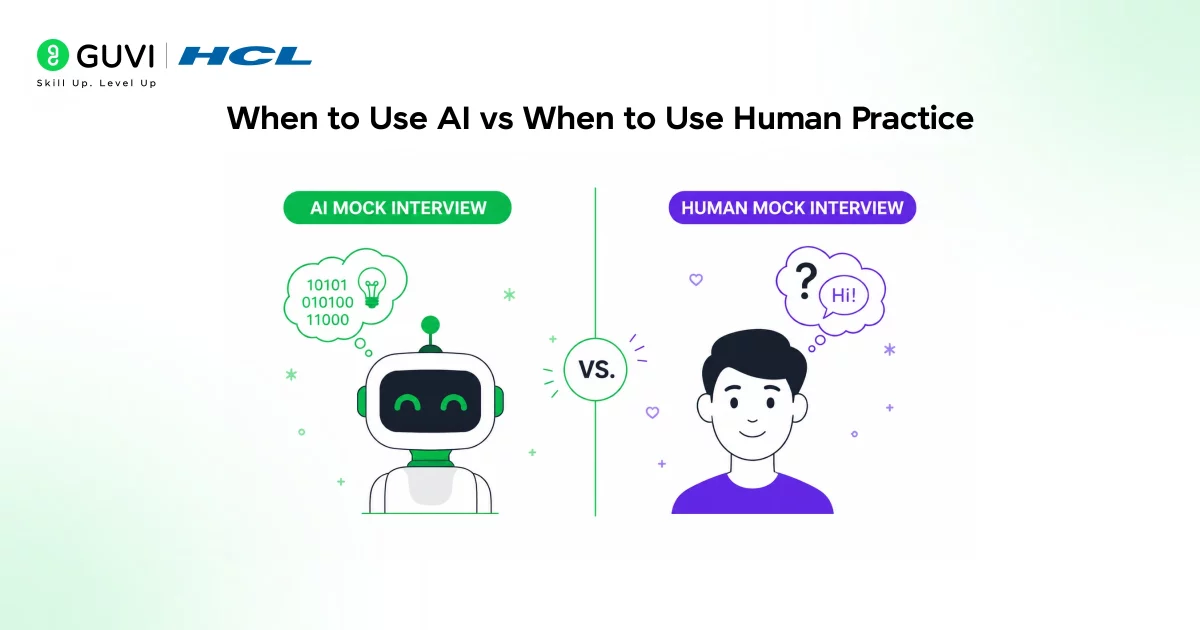
- Use AI When You Need:
- Volume practice (answering the same question multiple times)
- Objective speech metrics (filler words, pace, clarity)
- Flexible scheduling (3 AM practice sessions)
- Low-stakes experimentation (trying different answer approaches)
- Technical coding practice with instant feedback
- Role-specific question generation
- Progress tracking over time
- Use Human Practice When You Need:
- Authenticity validation (does this sound genuine)
- Cultural fit assessment (company-specific preparation)
- Unexpected conversational flow
- Nuanced follow-up questions
- Non-verbal communication feedback
- Industry-specific insight
- Emotional support and confidence building
The best preparation uses both strategically.
If you want to build real confidence and improve your interview performance through AI-powered practice, do not miss the chance to enroll in HCL GUVI’s Intel & IITM Pravartak Certified Artificial Intelligence & Machine Learning course. Endorsed with Intel certification, this course adds a globally recognized credential to your resume, a powerful edge that sets you apart in the competitive AI job market while giving you hands-on experience with the same AI technologies powering modern interview preparation tools.
Final Thoughts
AI mock interviews are not a shortcut. They are a force multiplier.
AI does not replace the hard work of interview preparation. It makes that work accessible, measurable, and dramatically more effective by giving you unlimited access to realistic practice conditions.
The candidates who get the most value from AI tools are the ones who use them intentionally. Not as a replacement for human coaching, but as a way to compress weeks of scattered practice into focused, measurable improvement.
You do not need perfect answers. You need confident, clear, specific answers delivered by someone who has done this exact thing dozens of times before the real interview happens.
AI mock interviews give you those dozens of times.
FAQs
1. Can AI mock interviews really replace practicing with a real person?
No, and they should not. AI provides unlimited practice volume and objective metrics that humans cannot match, but humans catch authenticity, cultural fit, and conversational nuance that AI misses. The best preparation combines both: use AI for repetition and skill building, use humans for validation and refinement.
2. How many AI practice sessions should I do before my interview?
Minimum ten to fifteen focused sessions over two to three weeks. If your last three sessions show consistent improvement and you feel comfortable with your top ten likely questions, you are ready. If new problems keep appearing, keep practicing.
3. Are free AI mock interview tools good enough or should I pay for premium?
Free tools like Google’s Interview Warm Up work well for baseline practice and common questions. Premium platforms offer role-specific questions, detailed analytics, and better feedback quality. If this is a high-stakes interview (significant pay increase, career change, dream company), premium tools are worth the investment.
4. Will using AI practice make my answers sound robotic in the real interview?
Only if you memorize word-for-word instead of internalizing structure and key points. Use AI to build the framework and confidence, then practice delivering answers naturally in your own words. If your last few AI sessions feel conversational rather than recited, you are on the right track.
5. Can AI help with interviews in languages other than English?
Increasingly, yes. Many platforms now support multiple languages with varying quality. Speech recognition accuracy matters most test the platform in your interview language before committing. For non-English interviews, combining AI practice with native-speaker human review is especially important.
Success Stories

About the Author
Vishalini Devarajan
An Aerospace Engineer turned content writer, I focus on making complex concepts easy to understand through well-structured, reader-friendly blogs. Whether it’s a technical topic or a non-technical one, I love creating content that is clear, engaging, and impactful.
View all posts by Vishalini Devarajan
Connect with me @





Did you enjoy this article?