


Career Articles
Capgemini Exceller Technical Assessment 2026: AI + Technical - Best Guide
Cognizant GenC Elevate Exam Pattern & Syllabus for Freshers 2026 - Best Guide
Capgemini Exceller Placement Papers and Solutions 2026 - Best Guide
How to Pass the Accenture Recruitment Process 2026/27: The Complete Guide


Get In Touch For Details! Request More Information
7 Advanced Computer Skills to Learn for Career Growth
Aug 17, 2026 7 Min Read 4324 Views
(Last Updated)
Two colleagues start the same job on the same day, same qualifications, same starting salary. Three years later, one is leading projects and the other is still doing the same tasks. The difference usually isn’t talent, it’s which advanced computer skills they picked up along the way.
Advanced computer skills are specialized technical abilities beyond everyday computer use, like programming, data analysis, AI/ML, cloud computing, and cybersecurity, that make you significantly more valuable to employers. In today’s tech-driven world, simply knowing the basics is not enough to stay competitive.
This guide covers the 7 skill areas worth learning in 2026, what each one pays, and where to start, think of it as a friendly guide from one professional to another.
Table of contents
- Why Advanced Computer Skills Matter for Your Career?
- Advanced Computer Skills at a Glance
- Advanced Computer Skills To Master
- Master Programming and Software Development
- Dive into Data Analysis and Visualization
- Explore AI and Machine Learning
- Get Familiar with Cloud Computing
- Strengthen Cybersecurity Know-How
- Embrace DevOps and Automation
- Other Specialized Digital Skills (Design, Marketing, and More)
- Best Advanced Computer Skills to Learn in India (2026)
- Which Advanced Computer Skills Product Companies and GCCs Prioritize
- Which Advanced Computer Skills IT Services Firms Prioritize
- The Vernacular Learning Advantage
- Why Certifications Matter More in Indian Hiring
- Go Deep Before You Spread Thin
- Common Mistakes to Avoid When Building Advanced Computer Skills
- Learning Tools Instead of Solving Problems
- Spreading Across Too Many Skills at Once
- Skipping Hands-On Projects
- Ignoring Certifications Because "Skills Matter More"
- Stopping Once You Hit "Good Enough"
- Conclusion
- FAQs
- What advanced computer skills are most in demand right now?
- Do I need to learn coding even if I'm not in a tech role?
- Which cloud platform should I learn first—AWS, Azure, or Google Cloud?
- How much does mastering AI and machine learning boost my career prospects?
- Can cybersecurity knowledge benefit me even if I'm not in IT?
Why Advanced Computer Skills Matter for Your Career?
Having advanced computer skills isn’t just limited to tech jobs; it’s becoming essential across industries. Companies today rely heavily on digital tools and data, so they seek employees who can leverage advanced computer skills to drive results.
Here are a few reasons why building advanced computer skills can accelerate your career growth:
- Competitive Edge: Advanced skills (like programming or data analysis) set you apart from colleagues who only have basic skills. You’ll be the go-to person when complex tech challenges arise.
- Higher Productivity: Advanced computer skills that let you automate tasks or analyze data efficiently save you time and increase your output, a win-win for you and your employer.
- Career Mobility: These advanced computer skills open doors to roles in emerging fields (think cloud computing or AI) and make it easier to transition between industries.
Simply put, the more you level up your advanced computer skills, the more opportunities you create for yourself.
Advanced Computer Skills at a Glance
Before diving into each of these advanced computer skills in detail, here’s how they compare on learning time, salary impact, and where to start.
| Skill Area | Best For | Typical Time to Job-Ready | Salary Impact | Where to Start |
|---|---|---|---|---|
| Programming & Software Development | Career switchers, automation-minded professionals | 4 to 8 months | High; foundational for most tech roles | Python or JavaScript |
| Data Analysis & Visualization | Business, finance, operations professionals | 3 to 5 months | High; SQL is one of the most requested skills globally | SQL plus a spreadsheet deep-dive |
| AI & Machine Learning | Anyone wanting the strongest current wage premium | 4 to 6 months for practical fluency | Highest; 62% wage premium in 2026 (PwC) | Prompt engineering, then Python for ML |
| Cloud Computing | IT professionals, infrastructure-focused roles | 3 to 6 months per platform | High; growing steadily | AWS or Azure free tier |
| Cybersecurity | Security-minded professionals, IT support | 4 to 6 months for fundamentals | High, and rising with threat volume | Security+ fundamentals |
| DevOps & Automation | Developers, infrastructure engineers | 5 to 8 months | High; automation skills compound with other tech skills | Git, then CI/CD basics |
| Specialized Digital Skills (Design, Marketing) | Creative and business-facing professionals | 2 to 4 months | Moderate to high, domain-dependent | One tool mastered deeply beats several tools known shallowly |
Advanced Computer Skills To Master
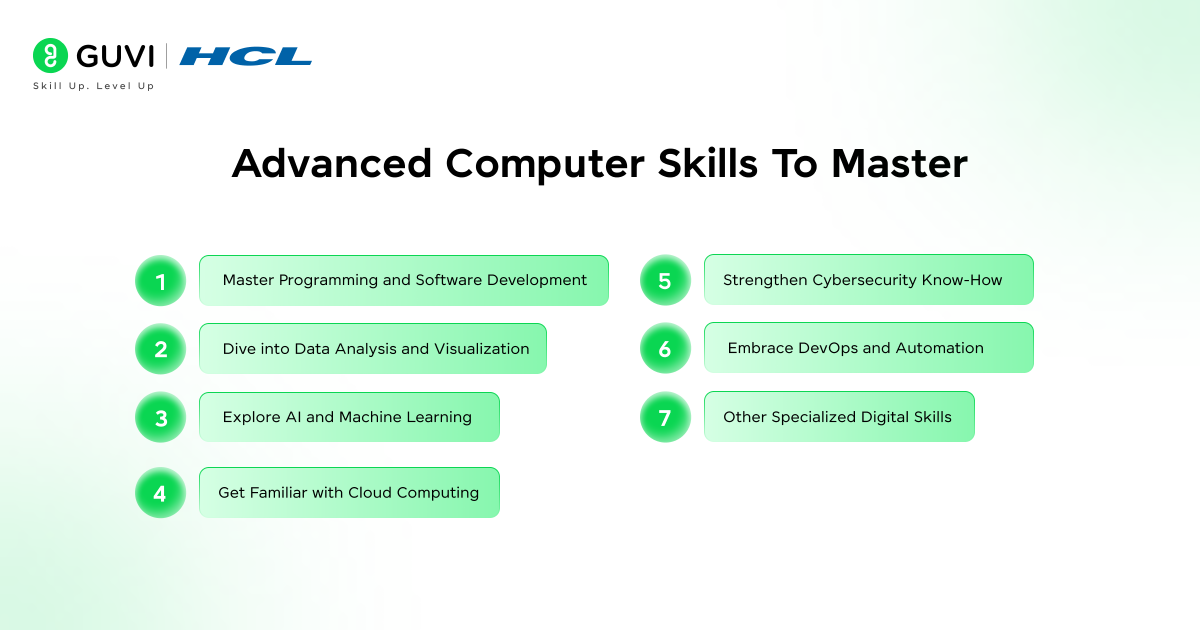
Now that you have understood the importance of gaining advanced master skills, it’s time to explore the specific skill areas you might consider focusing on.
1. Master Programming and Software Development
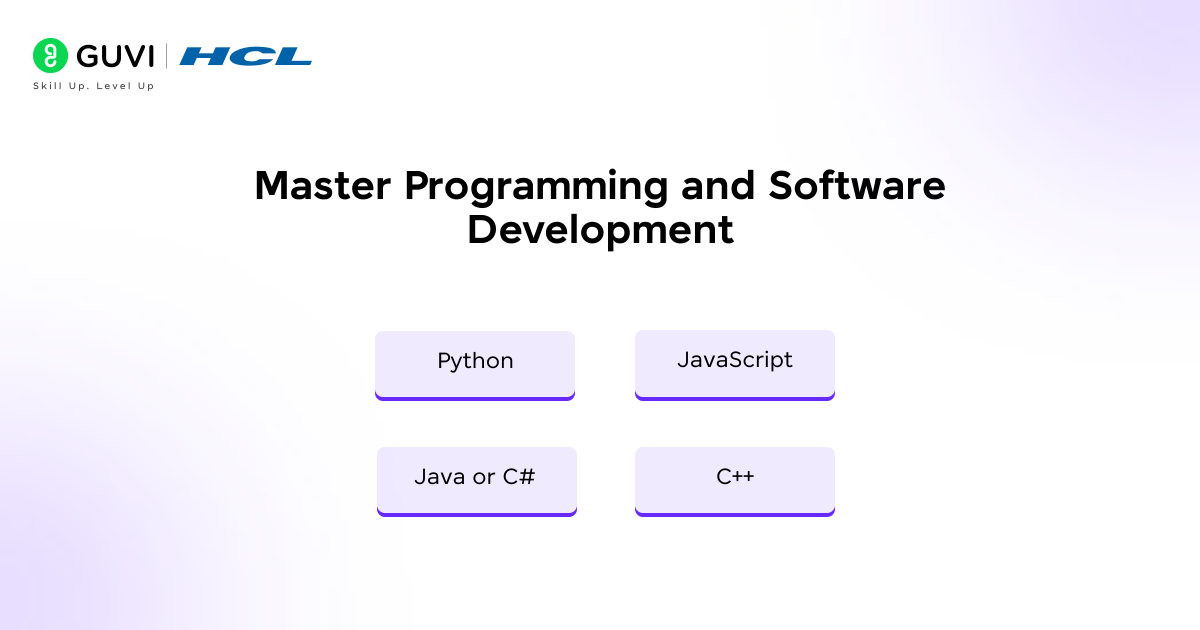
If you’ve only dabbled in coding or never tried it, learning to program is a game-changer. Computer programming is a vital advanced skill that enables you to create, maintain, and test software applications.
Even if you’re not aiming to become a full-time software developer, programming knowledge is incredibly useful – it helps in automating repetitive tasks, building websites or apps, and understanding the technology that powers your business.
Skills to focus on: Start with a popular programming language and then branch out. Some in-demand languages include:
- Python: A versatile, beginner-friendly language used in web development, data science, scripting, and more.
- JavaScript: The language of the web. If you want to develop interactive websites or web applications, JavaScript is essential.
- Java or C#: These are widely used in enterprise environments for building large-scale applications (Java is common in backend systems and Android apps, while C# is key for Windows applications and Unity game development).
- C++: A lower-level language that’s great for understanding how software interacts with hardware. C++ is used in high-performance applications, game development, and systems programming.
Pro Tip: You don’t need to learn every language out there. Focus on one or two that align with your career goals.
If you want to master programming and software development, consider enrolling in HCL GUVI’s IITM Pravartak and MongoDB Certified Online AI Software Development Course. Endorsed with NSDC certification, this course adds a globally recognized credential to your resume, a powerful edge that sets you apart in the competitive job market.
Also Read: How To Learn Any Programming Language? This Will Help
2. Dive into Data Analysis and Visualization
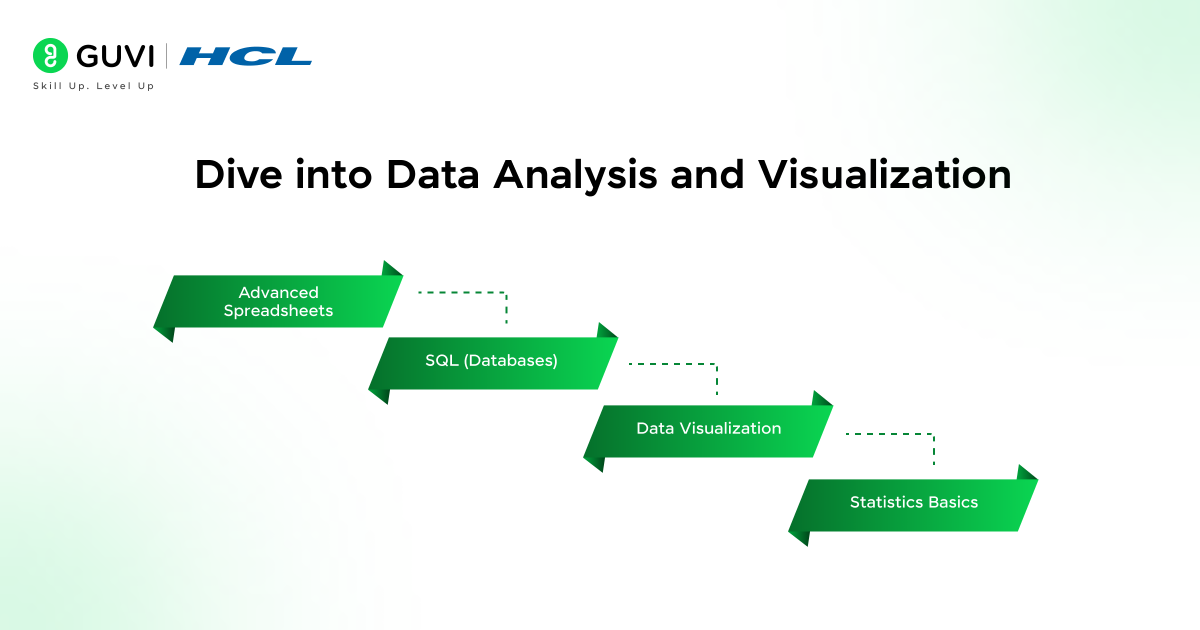
We live in the age of data. Organizations have more information than ever, and they need professionals who can make sense of it. Data analysis is the skill of collecting, cleaning, and interpreting data to extract useful insights.
Instead of making decisions on gut feeling or guesswork, you’ll be relying on real evidence, which is incredibly valuable to employers.
Skills and tools to learn:
- Advanced Spreadsheets: Go beyond basic Excel. Learn to use functions, pivot tables, and macros.
- SQL (Databases): SQL is the language for querying databases. It allows you to pull and manipulate data from large corporate databases or big data systems.
- Data Visualization: It’s not just about analyzing data – you need to present it clearly. Tools like Tableau, Power BI, or Python’s Matplotlib/Seaborn libraries help turn raw numbers into charts and dashboards that tell a story.
- Statistics Basics: A bit of statistical knowledge helps you interpret data correctly. Understanding concepts like averages, variance, correlation, and statistical significance will make your analyses more robust.
Among the advanced computer skills employers want — cloud, AI/ML, cybersecurity — SQL for data analysis remains one of the most consistently requested. HCL GUVI’s SQLKata gives you hands-on SQL practice, a skill that pairs well with almost every career path in this list.
3. Explore AI and Machine Learning
Artificial intelligence (AI) and machine learning (ML) are no longer futuristic concepts – they’re here now, impacting every industry from healthcare to finance to entertainment. Machine learning, a subset of AI, involves teaching computers to learn from data and make predictions or decisions without explicit programming.
Meanwhile, practical AI skills can also mean knowing how to effectively use AI-powered tools (like chatbots or intelligent assistants) in your work. This has become one of the most prominent skill areas to learn in the tech world today.
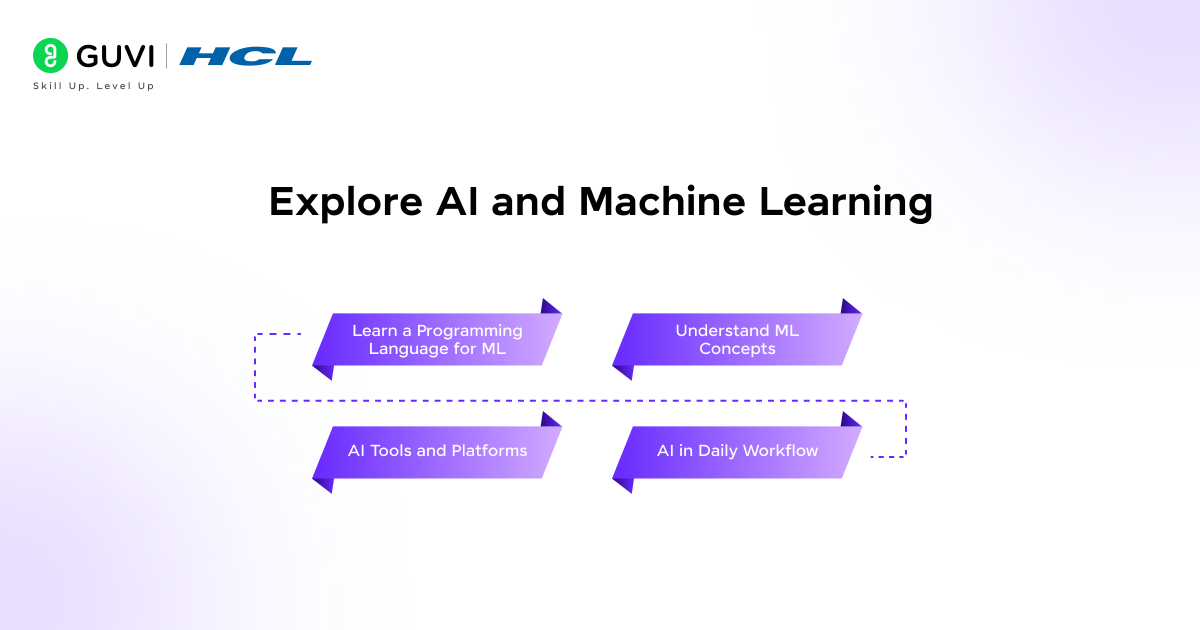
Skills to focus on: If you’re new to AI, start with machine learning fundamentals:
- Learn a Programming Language for ML: Python is the dominant language in AI/ML because of its powerful libraries. R is another option, especially for statistical analysis.
- Understand ML Concepts: Get familiar with core concepts such as algorithms, model training vs. testing, and data preprocessing. You don’t have to become a math genius, but understanding how models learn will help you apply them correctly.
- AI Tools and Platforms: Practice using frameworks like TensorFlow or PyTorch for building models.
- AI in Daily Workflow: On the practical side, learn to use AI-powered tools. This could be as simple as mastering a AI coding assistant (like GitHub Copilot) or learning to craft good prompts for AI chatbots.
If you’re serious about mastering artificial intelligence and machine learning, don’t miss the chance to enroll in HCL GUVI’s Intel & IITM Pravartak Certified Artificial Intelligence & Machine Learning course. Endorsed with Intel certification, this course adds a globally recognized credential to your resume, a powerful edge that sets you apart in the competitive AI job market.
4. Get Familiar with Cloud Computing
Gone are the days when companies ran all their software on local servers in a back room. Now, everything is moving to the cloud, which means running your applications and storing data on remote servers that you access via the internet.
Cloud computing skills are in huge demand, and learning them can open up roles such as cloud developer, cloud engineer, or solutions architect.
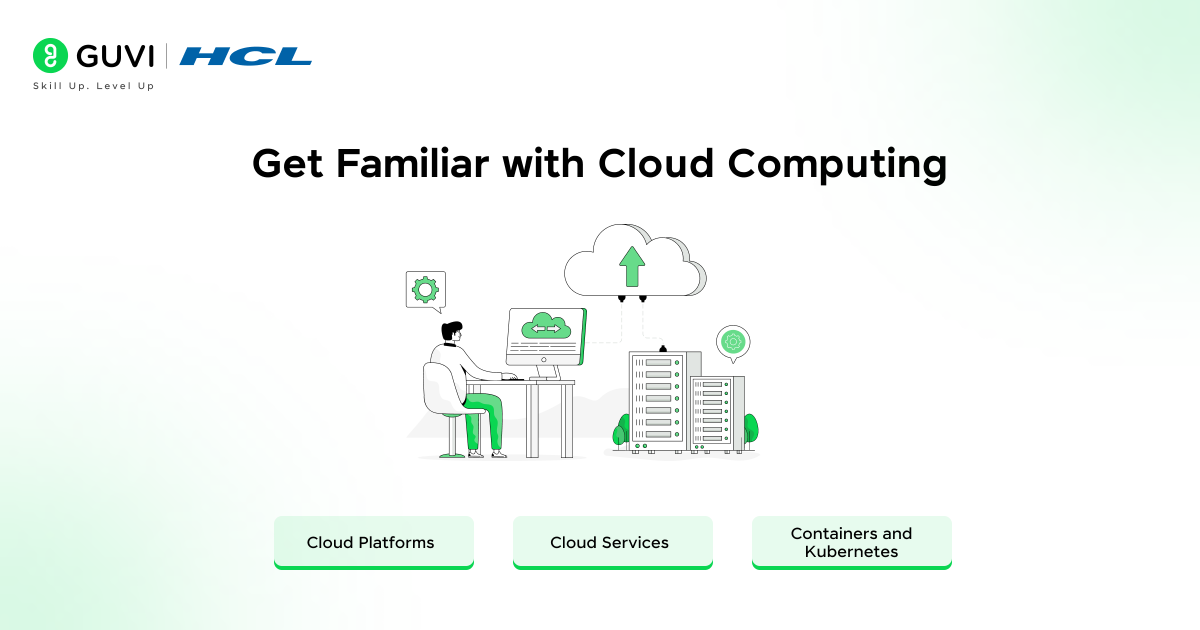
Skills and tools to learn:
- Cloud Platforms: Start with one of the big three – AWS, Azure, or Google Cloud. Each has a learning path and free tier for practice.
- Cloud Services: Within each platform, get to know core services. For AWS, examples include EC2 (virtual servers), S3 (storage), and RDS (managed databases). Azure and GCP have equivalents.
- Containers and Kubernetes: Modern cloud deployment often uses containers (with tools like Docker) to package applications. Docker lets you create lightweight, portable application containers; Kubernetes helps orchestrate and manage containers at scale.
5. Strengthen Cybersecurity Know-How
Every day, you hear about data breaches, hacks, or new cybersecurity threats. It’s a reminder that security skills are critically important.
Even if you’re not planning to become a cybersecurity specialist, having a solid understanding of cybersecurity practices is an advanced skill that will benefit your career.
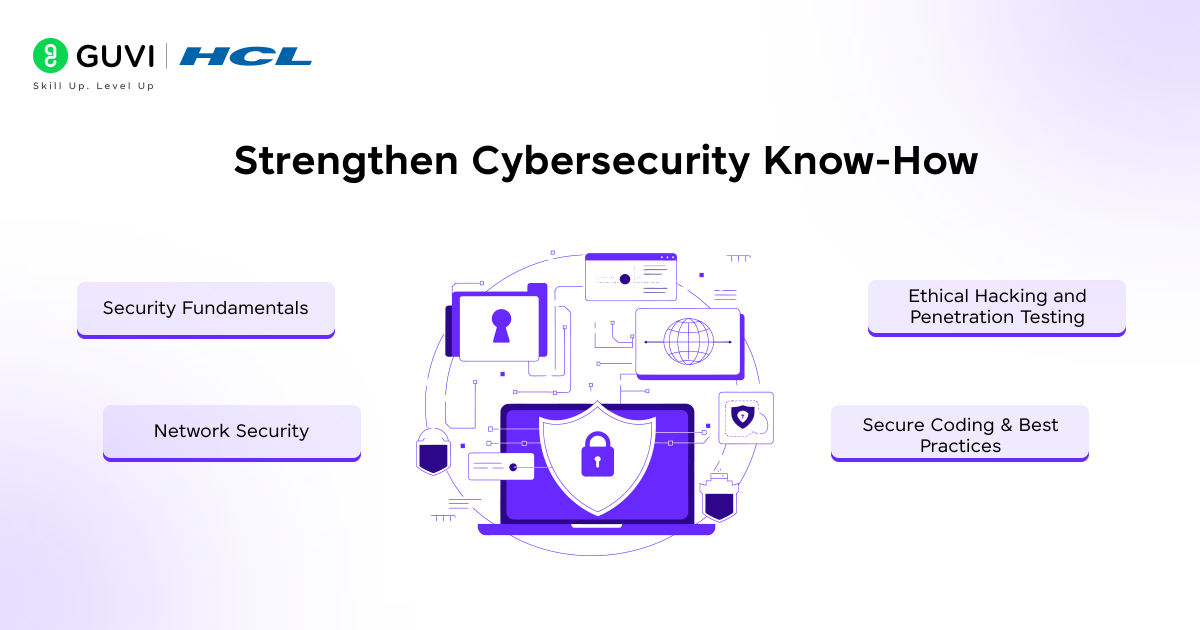
Skills to focus on:
- Security Fundamentals: Start with the basics of how attacks happen and how to defend against them. Learn about common threats like malware, phishing, and ransomware.
- Network Security: Know how networks can be secured using firewalls, VPNs, and intrusion detection systems. If you’re comfortable with networking basics (IP addresses, routing, ports), build on that by exploring how to secure those networks.
- Secure Coding & Best Practices: If you have programming knowledge, learn how to write secure code. Even if you’re not coding daily, understanding this helps you spot weaknesses.
- Ethical Hacking and Penetration Testing: This is the fun part – you can learn how to think like a hacker (ethically, of course!). There are courses and labs where you practice breaking into systems in controlled environments.

6. Embrace DevOps and Automation
In the software world, development and operations used to be separate silos – developers built the app, IT ops deployed and managed it. Today, that model is fading in favor of DevOps, a culture and set of practices that bridge development and operations.
DevOps engineers specialize in automating the process of software delivery: from code commit to testing, to deployment, and monitoring. Even if you’re not a DevOps engineer, understanding these practices and tools will significantly boost your technical prowess.
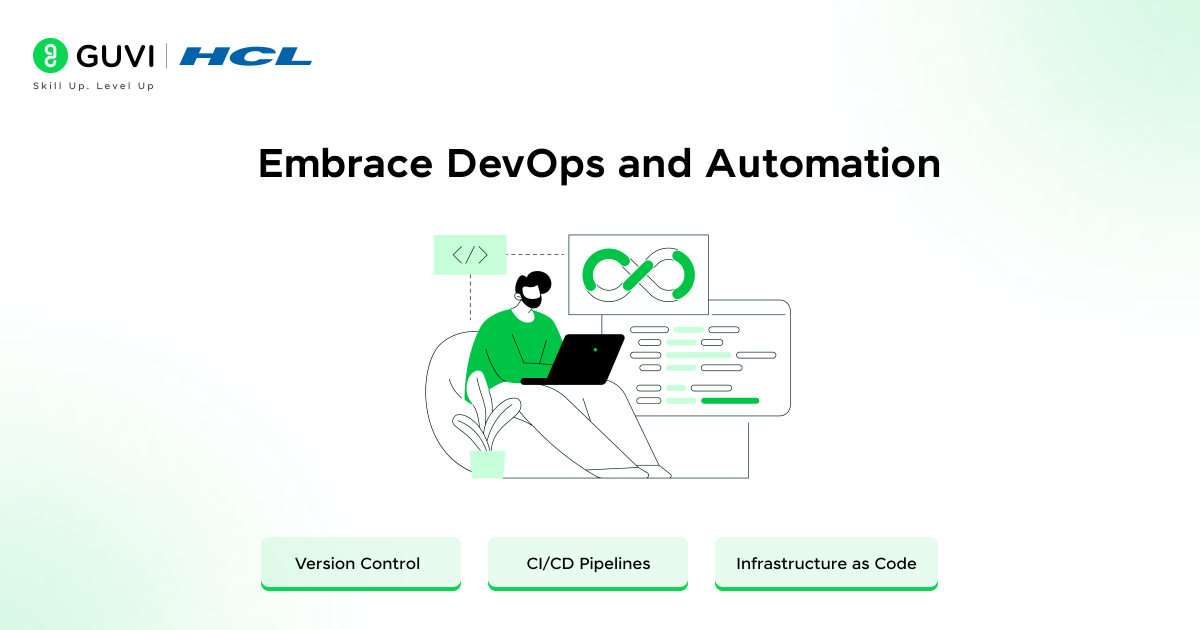
Skills and tools to learn:
- Version Control: First off, if you haven’t already, learn Git (and platforms like GitHub or GitLab). Version control is fundamental for any collaborative coding or scripting work.
- CI/CD Pipelines: Continuous Integration and Continuous Deployment (CI/CD) are core DevOps concepts. Tools like Jenkins, GitHub Actions, or GitLab CI allow teams to automatically build, test, and deploy code whenever changes are made.
- Infrastructure as Code: Tools such as Terraform or Ansible let you script and version-control your infrastructure setup. Instead of manually configuring servers, you write a template. This ensures consistency and easy replication of environments.
Want to master DevOps in a structured manner with guidance from an actual mentor? Then consider enrolling in HCL GUVI’s NSDC Certified Advanced DevOps & Cloud Engineering Course that offers the DevOps Program with certification to gain job-ready DevOps skills within 3-5 months through Vernacular upskilling, 360-degree Career Guidance, Globally Recognized Certifications & End-to-End Placement Guidance.
7. Other Specialized Digital Skills (Design, Marketing, and More)
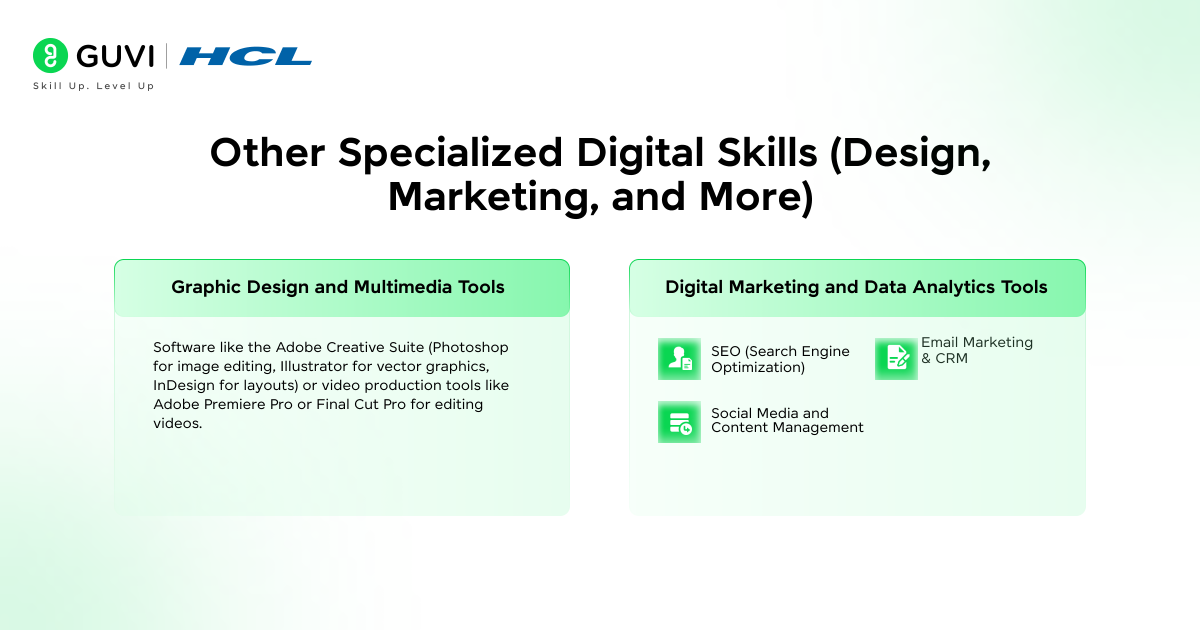
Not all advanced computer skills are about programming or IT infrastructure. In many careers, specialized software proficiency can set you apart. Depending on your field, consider developing advanced skills in areas like digital design or digital marketing.
These are computer-centric skills that can be just as critical for career growth in their respective domains:
1. Graphic Design and Multimedia Tools
If you’re in a role that involves communication, marketing, or creative output, knowing how to create and edit visual content is a huge plus.
This could mean learning professional design software like the Adobe Creative Suite (Photoshop for image editing, Illustrator for vector graphics, InDesign for layouts) or video production tools like Adobe Premiere Pro or Final Cut Pro for editing videos.
2. Digital Marketing and Data Analytics Tools
For those inclined toward business and marketing, developing digital marketing skills is highly beneficial. Modern marketing is extremely data-driven and technical. It’s not just about coming up with a catchy slogan; it’s about using digital tools to reach the right audience and measure impact.
Key skills include:
- SEO (Search Engine Optimization): Understanding how to optimize content so that it ranks higher on Google. This involves keyword research, on-page optimization techniques, and using tools like Google Search Console.
- Social Media and Content Management: Knowing how to use platforms’ advanced features for blogging can be valuable.
- Email Marketing & CRM: Using email marketing software (MailChimp, Sendinblue) to create campaigns, and Customer Relationship Management systems (like Salesforce or HubSpot) to manage leads and clients effectively.
Of course, many other specialized skills are depending on your career path. The key is to identify what digital skills are most valued in your target field and make a point to learn those. Mastering a domain-specific tool can catapult you to expert status on your team.
According to research, 82% of middle-skill jobs now require digital skills, and roles demanding these skills pay 23% more on average. It’s even projected that 90% of all jobs will require digital literacy within the next decade. In short, becoming proficient with advanced computer skills isn’t just for tech specialists – it’s quickly becoming a baseline for success in any career. Employers are willing to pay a premium for workers who can navigate the digital world confidently, so every bit of upskilling you do can have a direct payoff.
Best Advanced Computer Skills to Learn in India (2026)
The picture above is global, but if you’re building your career specifically in India, a few things shift the calculus.
1. Which Advanced Computer Skills Product Companies and GCCs Prioritize
- Amazon, Microsoft, and Flipkart weight AI/ML, cloud, and automation skills heavily
- These roles often pay a real, measurable premium for candidates who have them
2. Which Advanced Computer Skills IT Services Firms Prioritize
- TCS, Infosys, Wipro, and HCL hire broadly across all seven skill areas covered in this guide
- Certifications and structured learning paths carry as much weight as raw project experience, especially for freshers
3. The Vernacular Learning Advantage
- Platforms like HCL GUVI offer courses in Tamil, Hindi, and other regional languages alongside English
- This meaningfully lowers the barrier for students who found English-only tutorials slowing them down
4. Why Certifications Matter More in Indian Hiring
- NSDC-endorsed, Intel-endorsed, or IIT-affiliated certifications tend to clear resume screens faster than self-taught familiarity alone
- This matters most for entry-level roles, where recruiters are filtering hundreds of applications quickly
5. Go Deep Before You Spread Thin
- Indian job postings increasingly ask for a combination, like “Python plus AWS” or “SQL plus Power BI,” rather than one skill in isolation
- Master one core skill first, then add a complementary one, rather than dabbling in all seven at once
Common Mistakes to Avoid When Building Advanced Computer Skills
Even motivated learners chasing advanced computer skills fall into these traps. Watch out for:
1. Learning Tools Instead of Solving Problems
- Jumping straight into a specific tool (a cloud platform, a BI tool) without first understanding the underlying concept it’s built on
- This leaves you stuck the moment a job asks for a different tool that does the same job
2. Spreading Across Too Many Skills at Once
- Trying to learn programming, cloud, AI, and cybersecurity simultaneously usually means none of them reach a job-ready depth
- One of the advanced computer skills covered here, learned deeply, beats four learned shallowly
3. Skipping Hands-On Projects
- Watching tutorials without building anything real is the single biggest reason people “learn” a skill but can’t demonstrate it in an interview
- Even one small, finished project outweighs hours of passive video-watching on a resume
4. Ignoring Certifications Because “Skills Matter More”
- Skills do matter more in the long run, but certifications are often what gets your resume past the first filter, especially at larger Indian companies
- Treat certifications as the door-opener, not the destination
5. Stopping Once You Hit “Good Enough”
- Tools and best practices in every one of these seven skill areas keep shifting, especially AI and cloud
- Revisiting and updating a skill every 12 to 18 months keeps it from quietly becoming outdated
Conclusion
In conclusion, your career growth is directly tied to how well you adapt to technology. The more advanced computer skills you master, the more valuable you become to employers, and the more control you gain over your professional journey.
Start small, pick one skill that excites you, and commit to learning it consistently. Over time, these skills will stack up, giving you not just a job advantage, but also the confidence to shape your career on your own terms.
FAQs
1. What advanced computer skills are most in demand right now?
Many employers look for skills like programming (Python, JavaScript), data analysis (Excel, SQL, Power BI, Tableau), cloud platforms (AWS, Azure), cybersecurity basics, and AI/ML fundamentals.
2. Do I need to learn coding even if I’m not in a tech role?
Absolutely. Basic programming skills can help you automate repetitive tasks, manipulate data, and create simple tools. Even in non-IT roles, knowing how to script or code can improve efficiency and set you apart.
3. Which cloud platform should I learn first—AWS, Azure, or Google Cloud?
Start with the one most commonly used in your industry.
– AWS is broadly adopted across sectors.
– Azure is popular in enterprises using Microsoft infrastructure.
– Google Cloud shines in data analytics and AI integration.
4. How much does mastering AI and machine learning boost my career prospects?
A lot. Employers are increasingly seeking “AI-literate” professionals who know how to use AI tools effectively. Additionally, mastering AI skills is linked to an average earnings boost of up to 30%, with new job creation on the rise.
5. Can cybersecurity knowledge benefit me even if I’m not in IT?
Yes. Cybersecurity fundamentals, like recognizing phishing, securing your data, or understanding encryption, are valuable in any role. Companies want staff who understand security risks.
Success Stories

About the Author
Jebasta
I translate the language of data into stories that anyone can understand. As a writer with a data science background, I simplify analytics, AI, and decision-making so beginners and enthusiasts can confidently explore the world of data.
View all posts by Jebasta
Connect with me @










Did you enjoy this article?