


Data Science Articles
Can a Senior Accountant With 2–3 Years of Experience Switch to Data Analytics?
CA to Data Analyst: Is It a Good Career Move?
How to Write a Data Analyst Resume With BPO Experience That Gets Your Skills Noticed
Which Data Analytics Certifications Help Accountants and Finance Professionals?


Get In Touch For Details! Request More Information
What Projects Should BPO Professionals Build for a Data Analyst Portfolio?
Oct 12, 2026 4 Min Read 60 Views
(Last Updated)
If you have worked in BPO for a few years, you may already understand customer satisfaction, service-level agreements (SLAs), quality scores, productivity, and team performance. These experiences can give you a useful starting point when transitioning into Data Analytics. However, employers also want evidence that you can work with data, use analytical tools, and turn findings into business insights.
The best data analyst portfolio projects for BPO professionals connect familiar operational problems with tools such as Excel, SQL, and Power BI. You do not need to build complicated machine learning models to demonstrate your ability. Instead, focus on projects that answer realistic business questions and explain how your findings could support better decisions.
Table of contents
- TL;DR
- Why Should BPO Professionals Build Data Analyst Portfolio Projects?
- What Are the Best Data Analyst Portfolio Projects for BPO Professionals?
- Customer Support Performance Dashboard
- SLA Breach Analysis Using SQL
- Employee Productivity and Quality Analysis
- Workforce Planning and Staffing Analysis
- Customer Satisfaction and Feedback Analysis
- Repeat Contact and Resolution Analysis
- How Should You Choose Projects Based on Your Experience?
- How Do You Make Your Portfolio Projects Stand Out?
- Where Can You Get Data for Your Projects?
- Conclusion
- FAQs
- What are the best portfolio projects for BPO professionals?
- Do I need Python for a Data Analyst portfolio?
- How many projects should I include in my portfolio?
- Can a BPO Team Leader build a Data Analyst portfolio without work experience in analytics?
- Should I upload my BPO reports to GitHub?
- How can I explain my portfolio during a Data Analyst interview?
TL;DR
- Build portfolio projects around customer support, SLA performance, quality monitoring, workforce planning, and customer satisfaction.
- Use Excel, SQL, and Power BI to demonstrate practical analytical skills.
- Choose projects that solve specific business problems rather than creating dashboards without a clear purpose.
- Explain your findings and recommendations, not just the charts you create.
- Use public or synthetic datasets and never share confidential employer or customer information.
- Experienced BPO professionals should highlight operational knowledge alongside their technical skills.
- Two or three well-documented projects can be more useful than a large collection of unfinished projects.
Why Should BPO Professionals Build Data Analyst Portfolio Projects?
A portfolio demonstrates what you can do beyond the responsibilities listed on your resume.
For BPO professionals, it can also help connect previous experience with a new technical direction. You may already understand why response times matter, how quality scores affect performance, or why staffing levels influence customer service. Projects allow you to demonstrate how you would investigate these issues using data.
For example, instead of simply stating that you monitored SLA performance, you could build a dashboard that identifies SLA breaches, compares performance across teams, and highlights recurring patterns.
This approach demonstrates analytical thinking, tool proficiency, and business understanding in one project.
Build a portfolio that showcases your analytical skills with HCL GUVI’s Data Science Course. Learn Python, data analysis, statistics, and data visualization through hands-on projects that help you prepare for data-focused career opportunities.
What Are the Best Data Analyst Portfolio Projects for BPO Professionals?
1. Customer Support Performance Dashboard
Build a dashboard that tracks ticket volume, average resolution time, first-response time, customer satisfaction, and unresolved cases.
Business question: Which support areas need attention to improve service performance?
Your dashboard could include:
- Daily and monthly ticket trends
- Resolution time by category
- Customer satisfaction by channel
- Open versus resolved tickets
- Performance against service targets
Conclude with two or three findings supported by your dataset. For example, identify which category has the longest resolution time and investigate possible reasons.
2. SLA Breach Analysis Using SQL
Tools: SQL and Excel or Power BI
Create a project that examines cases where service-level targets were missed.
Use SQL to filter records, group cases by category, calculate breach rates, and compare performance across time periods or teams.
Business question: When and where are SLA breaches most frequent?
Include queries, summarized results, and visualizations. Explain how the findings could help a business investigate bottlenecks or improve workload distribution.
3. Employee Productivity and Quality Analysis
Tools: Excel or Power BI
Analyze a synthetic dataset containing employee IDs, tickets handled, quality scores, attendance, and resolution times.
Business question: How do productivity and quality vary across teams or time periods?
Explore questions such as:
- Which teams handle the highest workload?
- Are high ticket volumes associated with lower quality scores?
- How does performance change month over month?
- Which patterns require further investigation?
Avoid assuming that an employee with lower output is underperforming without considering workload complexity, working hours, or other relevant factors.
4. Workforce Planning and Staffing Analysis
Tools: Excel, SQL, or Power BI
Create a project that compares incoming ticket volumes with available staffing levels across shifts.
Business question: Are staffing levels aligned with workload patterns?
Your analysis could identify peak hours, compare demand across weekdays, and highlight periods when staffing may be insufficient.
This project is especially relevant if you have experience in workforce management, operations, or team leadership.
5. Customer Satisfaction and Feedback Analysis
Tools: Python or Excel, with Power BI for visualization if needed
Use survey responses or a suitable public dataset to examine customer satisfaction scores, complaint categories, and resolution outcomes.
Business question: Which factors are associated with lower customer satisfaction?
You could group feedback into categories, compare satisfaction across channels, and investigate whether resolution time is associated with customer ratings.
If you use text analysis, begin with simple category counts before attempting advanced sentiment analysis. Clearly explain the limitations of your dataset.
6. Repeat Contact and Resolution Analysis
Tools: SQL and Power BI
Analyze synthetic support records to understand how often customers contact support again about the same issue.

Business question: Which issue categories have higher repeat-contact rates?
Compare categories, resolution times, and first-contact resolution rates. Your findings could help identify processes that need clearer instructions, better troubleshooting, or additional training.
This project demonstrates that you can connect operational metrics with potential business improvements.
How Should You Choose Projects Based on Your Experience?
Your project selection should reflect the experience you already have and the role you want next.
| Your BPO Background | Recommended Project |
|---|---|
| Customer support | Customer satisfaction dashboard |
| Quality assurance | Quality score analysis |
| Team Leader | Productivity and performance dashboard |
| Workforce management | Staffing and workload analysis |
| Reporting or MIS | SLA analysis using SQL |
| Operations | Repeat-contact and process improvement analysis |
If you have less than four years of experience, start with two projects that demonstrate your core technical skills.
If you have four or more years of experience, choose projects that reflect more complex business questions, such as workforce planning, process efficiency, or performance trends. Show how you interpret the results and communicate recommendations.
How Do You Make Your Portfolio Projects Stand Out?
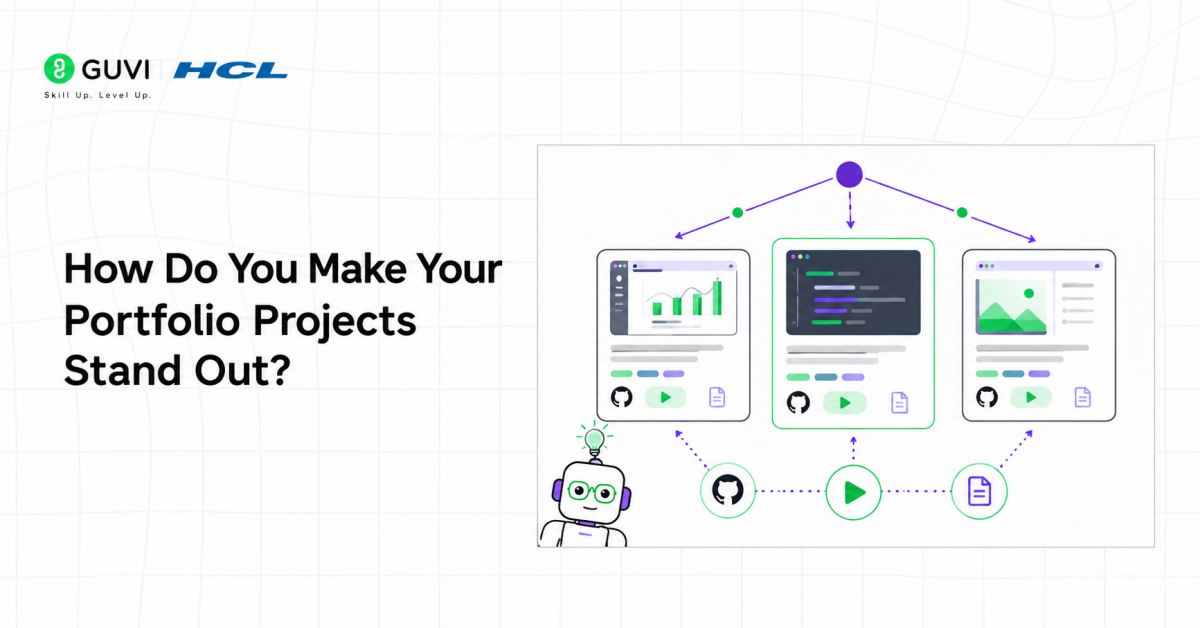
A dashboard alone is not enough. Recruiters should understand what problem you investigated and what you learned.
For every project, include:
- Problem statement: Explain the business question.
- Dataset: Describe the source, size, and important fields.
- Tools used: Identify Excel, SQL, Power BI, or Python.
- Methodology: Explain how you cleaned and analyzed the data.
- Key findings: Present two or three insights supported by results.
- Recommendations: Explain what actions the findings could inform.
- Limitations: Mention missing data, assumptions, or factors that need further investigation.
Publish your code and documentation on GitHub where appropriate. Include screenshots and a clear README explaining how someone can understand or reproduce your work.
Pro Tip: Do not invent business results to make a project look impressive. Clearly label synthetic data, distinguish findings from recommendations, and report only results supported by your analysis.
Where Can You Get Data for Your Projects?
You can use public datasets from reputable data repositories or create synthetic datasets that resemble common BPO operations.
Useful starting points include:
- Kaggle Datasets for customer service, sales, and business datasets.
- UCI Machine Learning Repository for publicly available datasets suitable for analysis.
- Your own synthetic data generated for ticket volumes, SLA targets, productivity, and customer satisfaction.
Never upload confidential company reports, customer details, employee records, or internal performance data to a public portfolio. Use anonymized public or synthetic data instead.
Conclusion
Building a Data Analyst portfolio is an opportunity to turn your BPO experience into evidence of analytical ability. You already understand many of the business problems that analysts investigate, from missed SLAs and customer dissatisfaction to staffing and productivity challenges.
Start with two or three projects that match your experience, use Excel, SQL, or Power BI to analyze the data, and explain your findings in clear business language. A strong portfolio should show not only that you can use analytical tools but also that you can understand a problem, investigate it systematically, and recommend sensible next steps.
FAQs
1. What are the best portfolio projects for BPO professionals?
Customer support dashboards, SLA breach analysis, employee productivity analysis, workforce planning, and customer satisfaction projects are useful starting points.
2. Do I need Python for a Data Analyst portfolio?
Not necessarily. Excel, SQL, and Power BI can demonstrate many foundational analytics skills. Python becomes useful for more advanced data cleaning, automation, and analysis tasks.
3. How many projects should I include in my portfolio?
Start with two or three complete projects that demonstrate different skills. Focus on quality, documentation, and business relevance rather than project count.
4. Can a BPO Team Leader build a Data Analyst portfolio without work experience in analytics?
Yes. You can use public or synthetic datasets to demonstrate analytical skills. Your BPO experience can help you choose realistic problems and interpret the results.
5. Should I upload my BPO reports to GitHub?
No, not if they contain confidential company, customer, or employee information. Use public or synthetic datasets and follow your employer’s data policies.
6. How can I explain my portfolio during a Data Analyst interview?
Describe the business problem, the data you used, your tools and methodology, the findings, and the recommendations. Be prepared to explain your decisions and acknowledge the project’s limitations.
Success Stories

About the Author
HCL GUVI
This article was selected and published as part of the HCL GUVI AI Blogathon 2026, an initiative designed to encourage students, AI enthusiasts, and aspiring tech writers to simplify complex AI concepts through impactful technical content. The contest recognized high-quality, original, and insightful AI-focused blogs, with selected authors receiving publication opportunities on the HCL GUVI blog platform along with official author credits and recognition.
View all posts by HCL GUVI
Connect with me @









Did you enjoy this article?