


Artificial Intelligence and Machine Learning Articles
Finance Manager to Data Analytics: Career Growth, Salary and Seniority
How to Evaluate LLM Outputs in Production Deployments
AI/ML Skills Gap 2026: Why Companies Can't Find Job-Ready Talent
20 AI/ML Interview Questions Recruiters Can Use Without a Tech Background - Best Guide


Get In Touch For Details! Request More Information
Claude for Writing Engineering RFCs (Request for Comments)
Aug 21, 2026 3 Min Read 435 Views
(Last Updated)
Engineering teams rely on Request for Comments (RFCs) to propose new features, document architectural decisions, and gather feedback before implementation. Claude engineering RFC helps teams prepare these documents faster by organizing technical ideas, summarizing design decisions, and creating consistent proposal formats. Writing a strong RFC still requires engineering expertise, but Claude significantly reduces the time spent drafting and formatting technical documentation while keeping collaboration efficient.
Table of contents
- TL;DR
- What Is an Engineering RFC?
- How Can Claude Help Write RFCs?
- Structuring an Effective RFC
- Documenting Technical Trade-Offs
- Improving Collaboration During RFC Reviews
- Real-World Example
- Challenges and Limitations
- Key Takeaways
- Conclusion
- FAQs
- Can Claude write engineering RFCs?
- Can Claude document technical trade-offs?
- Can Claude summarize architecture discussions?
- Should AI-generated RFCs be reviewed?
- Who can benefit from using Claude for engineering RFCs?
TL;DR
- Claude helps draft engineering RFCs faster.
- AI organizes technical proposals into a structured format.
- It summarizes design decisions, trade-offs, and implementation plans.
- Human review ensures technical accuracy.
- Claude improves consistency across engineering documentation.
What Is an Engineering RFC?
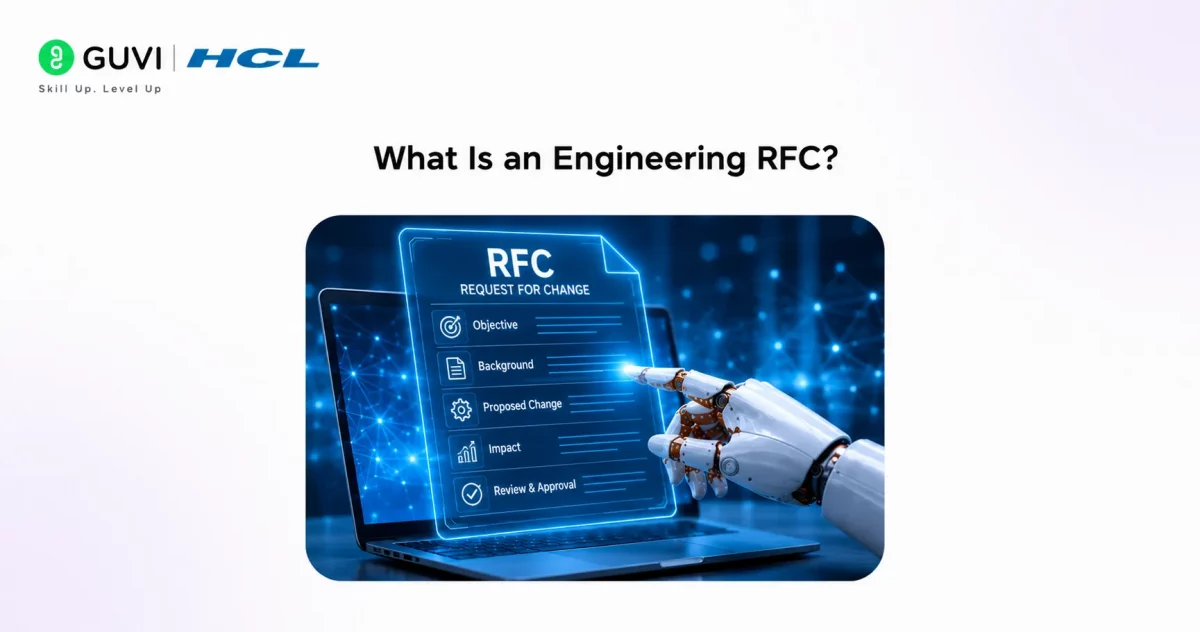
A Request for Comments (RFC) is a document used to propose technical changes before development begins. It explains the problem, proposed solution, implementation approach, expected impact, and potential risks so engineering teams can review and provide feedback.
Instead of replacing technical discussions, RFCs encourage collaboration by documenting important decisions before code is written.
Common RFC topics include:
- System architecture changes
- API design proposals
- Infrastructure improvements
- Database migrations
- Security enhancements
- Development workflows
Read More: Claude for Grant Writing in Nonprofits
Many engineering organizations use RFCs to create a permanent record of technical decisions, making future maintenance and onboarding much easier.
How Can Claude Help Write RFCs?
Claude assists engineers by transforming design notes, brainstorming sessions, and architecture discussions into organized technical documents.
It can help draft:
- Problem statements
- Proposed solutions
- Technical overviews
- Architecture summaries
- Risk assessments
- Migration strategies
- Rollout plans
- Open questions
Pro Tip: Provide Claude with design notes, diagrams, and technical constraints before generating an RFC. Better context leads to more useful technical documentation.
Structuring an Effective RFC
Well-written RFCs help reviewers quickly understand the proposal and provide meaningful feedback. Claude can organize content into a logical structure that is easy to follow.
A typical RFC includes:
- Background and context
- Problem statement
- Proposed solution
- Alternative approaches considered
- Benefits and trade-offs
- Implementation plan
- Risks and mitigation strategies
- Success metrics
Following a consistent structure makes technical reviews more productive.
Best Practice: Ask Claude to explain complex technical concepts in simple language where appropriate so cross-functional stakeholders can participate in RFC discussions.
Documenting Technical Trade-Offs
Every engineering decision involves trade-offs between scalability, performance, complexity, security, and maintainability. Claude can help organize these considerations into clear comparison sections.
Examples include:
- Performance versus simplicity
- Build versus buy decisions
- Monolith versus microservices
- SQL versus NoSQL databases
- Synchronous versus asynchronous processing
Presenting trade-offs clearly allows reviewers to evaluate the proposal more effectively.
Data Point: Engineering teams often make faster architectural decisions when design trade-offs are documented alongside the proposed solution.
Improving Collaboration During RFC Reviews
RFCs are designed to encourage discussion before implementation begins. Claude can help teams prepare documents that make technical reviews more productive by presenting ideas clearly and identifying areas that require feedback.
To improve collaboration:
- Clearly define the problem being solved.
- Document assumptions and constraints.
- Identify reviewers from different teams.
- List unresolved questions for discussion.
- Update the RFC after review meetings.
Structured documentation reduces misunderstandings during the design process.

Build production-ready applications with HCL GUVI’s Full Stack Development Course. Learn modern frontend and backend technologies, APIs, databases, and deployment through real-world projects.
Real-World Example
Imagine a backend engineering team planning to migrate from a monolithic application to a microservices architecture.
Instead of manually writing a lengthy proposal, the lead engineer provides Claude with architecture diagrams, migration goals, performance requirements, and technical notes. Claude organizes the information into a structured RFC covering the problem statement, proposed architecture, implementation phases, expected benefits, identified risks, and rollout strategy.
The engineering team reviews the draft, refines technical details, gathers stakeholder feedback, and finalizes the RFC before development begins.
Challenges and Limitations
Claude can simplify technical documentation, but it cannot replace engineering expertise or architectural decision-making.
Some limitations include:
- AI depends on accurate technical input.
- Architecture diagrams still require manual creation.
- Technical assumptions should be verified.
- Security and compliance reviews require specialists.
- Final approval should remain with engineering leadership.
Warning: Never approve an AI-generated RFC without validating technical designs, implementation details, security considerations, and architectural decisions.
Key Takeaways
- Claude accelerates engineering RFC writing.
- AI organizes technical proposals into consistent documentation.
- Well-structured RFCs improve design reviews.
- Human validation is essential for technical accuracy.
- Clear documentation supports better engineering collaboration.
- Claude reduces documentation effort while improving readability.
Conclusion
Claude is a valuable assistant for engineering teams preparing Request for Comments documents. By organizing technical ideas, summarizing design decisions, and structuring implementation plans, it helps engineers spend less time formatting documents and more time solving technical problems.
However, successful RFCs require careful technical validation, stakeholder feedback, and engineering judgment. When combined with experienced reviewers and accurate technical information, Claude becomes an effective tool for producing clear, collaborative, and well-structured engineering RFCs.
FAQs
Can Claude write engineering RFCs?
Yes. Claude can draft structured RFCs using design notes, technical requirements, and project documentation.
Can Claude document technical trade-offs?
Yes. Claude can organize comparisons between different architectural approaches and explain their advantages and limitations.
Can Claude summarize architecture discussions?
Yes. Claude can convert meeting notes and technical discussions into organized RFC sections.
Should AI-generated RFCs be reviewed?
Yes. Engineers should verify every technical detail, assumption, and implementation plan before approval.
Who can benefit from using Claude for engineering RFCs?
Software engineers, solution architects, DevOps engineers, engineering managers, and technical leads can all use Claude to streamline RFC creation.
Success Stories

About the Author
HCL GUVI
This article was selected and published as part of the HCL GUVI AI Blogathon 2026, an initiative designed to encourage students, AI enthusiasts, and aspiring tech writers to simplify complex AI concepts through impactful technical content. The contest recognized high-quality, original, and insightful AI-focused blogs, with selected authors receiving publication opportunities on the HCL GUVI blog platform along with official author credits and recognition.
View all posts by HCL GUVI
Connect with me @













Did you enjoy this article?