


VLSI Design Articles
What Does a 6-Month VLSI Program Curriculum from IIT Delhi Actually Teach You? We Break It Down
Semiconductors Explained: A Complete Guide to Modern Technology(2026)
High-Paying Jobs for Diploma Students in Semiconductor Industry in India
HCL GUVI for VLSI Training: Master Chip Design and Verification with Industry-Aligned Course


Get In Touch For Details! Request More Information
VLSI Roadmap: 11 Steps to Become a Successful VLSI Engineer
Jul 14, 2026 6 Min Read 6416 Views
(Last Updated)
The semiconductor industry is booming, but many students and freshers feel lost when trying to enter VLSI. They hear about high salaries and global job demand, yet struggle to understand where to start. Confusing subjects, expensive tools, and scattered online resources often lead to frustration and self-doubt.
Many beginners jump into VLSI without a clear plan and quickly feel overwhelmed. They study random topics, switch courses often, and still feel unprepared for interviews. What they really need is a simple explanation, clear direction, and a step-by-step learning path.
This blog solves that problem. It explains VLSI in simple terms and provides a structured 11-step roadmap to help students and freshers build the right skills and confidently prepare for a global semiconductor career.
Quick Answer
Start with strong electronics fundamentals, then learn basic programming and Linux skills. Next, move to RTL design with Verilog/SystemVerilog, followed by simulation, verification, and synthesis. After that, explore physical design and DFT, build hands-on projects, and finally prepare your resume and interview skills to land your first VLSI job.
Table of contents
- Who Should Follow This VLSI Roadmap?
- Overview of VLSI Career Paths
- Step 1: Core Skills in Your VLSI Roadmap
- Start your VLSI for beginners journey with strong basics.
- Step 2: Learn Programming Basics for VLSI
- Step 3: Master Linux & VLSI Work Environment
- Step 4: RTL Design Using Verilog / System Verilog
- Step 5: Simulation & Functional Verification
- Step 6: Introduction to VLSI Verification & UVM
- Step 7: Synthesis & Static Timing Analysis (STA)
- Step 8: Physical Design (Backend VLSI Flow)
- Step 9: DFT Fundamentals
- Step 10: Tools, Projects & Practical Exposure
- Step 11: Resume, Interviews & Job Readiness
- Fresher-friendly VLSI resume tips:
- Frontend vs Backend VLSI: How to Decide Your Path in the VLSI Roadmap
- How Long Does It Take to Learn VLSI?
- What are all the Common Mistakes Students Make While Following a VLSI Roadmap
- Conclusion
- Frequently Asked Questions
- Is VLSI hard for freshers?
- Can non-ECE students learn VLSI?
- Is coding mandatory?
- Do VLSI jobs require M.Tech?
- What is the salary for VLSI freshers?
- How long does it take to learn VLSI?
- Which companies hire VLSI engineers?
- Is VLSI a stable career choice?
- What's the difference between VLSI design and verification?
- Can I learn VLSI online?
Who Should Follow This VLSI Roadmap?
This VLSI career path guide works for:
- ECE, EE, and EEE engineering students
- Recent graduates looking for their first job
- Career switchers with electronics knowledge
- Complete beginners wanting to learn VLSI from scratch
If you’re interested in chip design and hardware engineering, this roadmap is for you.

Also Explore: What is VLSI?
Overview of VLSI Career Paths
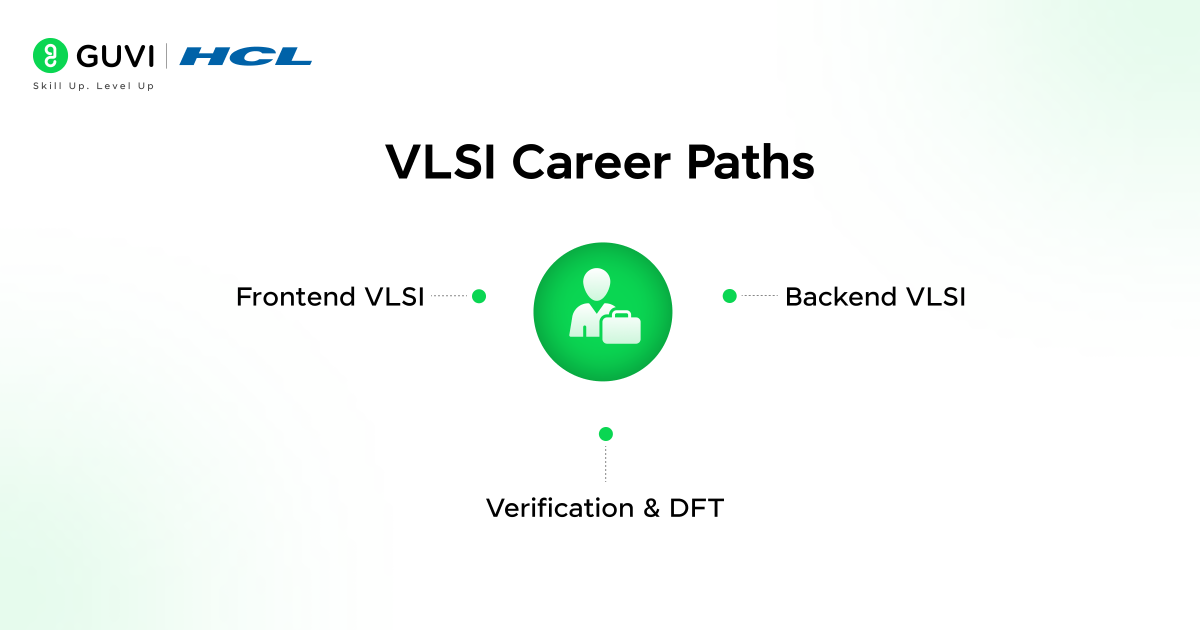
- Frontend VLSI roles: Engineers who write code to design chip logic using Verilog. They create the behavior and functionality of circuits.
- Backend VLSI roles: Engineers who convert designs into physical chip layouts. They handle placement, routing, and chip optimization.
- Verification & DFT roles: Verification engineers test designs for bugs. DFT engineers add special circuits for testing manufactured chips.
- Entry-level job expectations: Fresh graduates can expect 4-8 lakhs per year in India. With the right skills and projects, top companies offer 8-12 lakhs. VLSI jobs for freshers are growing rapidly.
Step 1: Core Skills in Your VLSI Roadmap
Start your VLSI for beginners journey with strong basics.
- Digital electronics concepts: Review flip-flops, counters, multiplexers, and state machines. These building blocks appear in every chip design.
- CMOS basics: Understand how transistors work. CMOS is the foundation of modern chip technology.
- Timing & logic design essentials: Learn setup time, hold time, and propagation delays. These timing concepts are critical for chip functionality.
- Interview relevance: Every VLSI interview tests fundamentals. Companies reject candidates who can’t explain basic concepts clearly. Spend two weeks strengthening your foundation before moving forward.
Step 2: Learn Programming Basics for VLSI
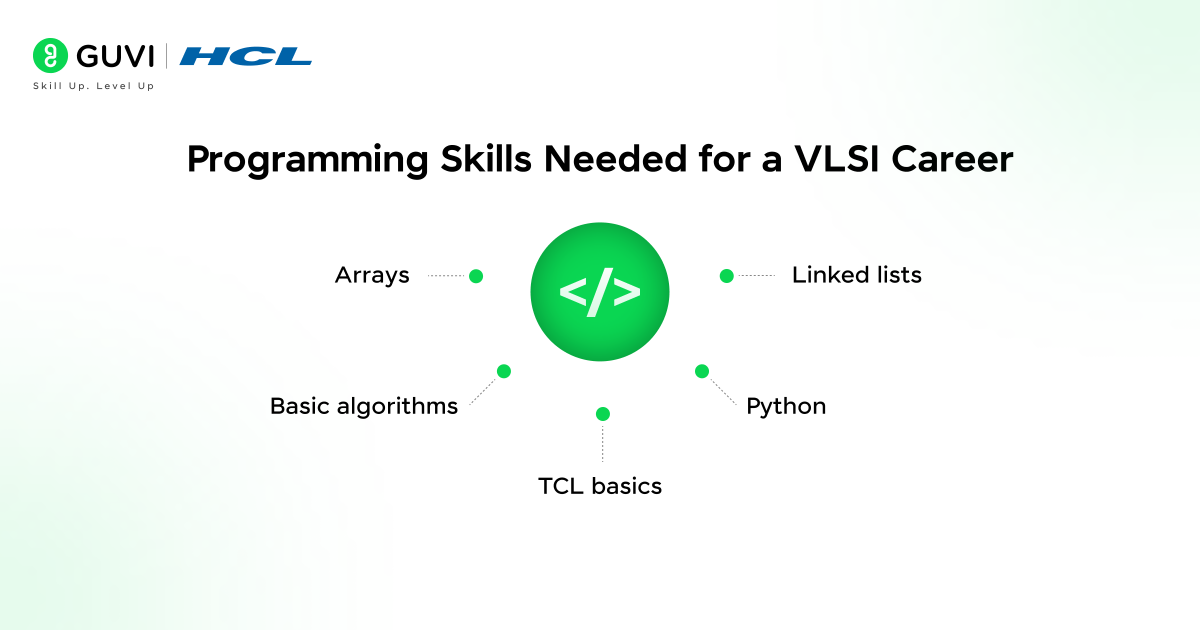
- Why C programming matters: VLSI tools use C-based concepts. Understanding C helps you learn hardware description languages faster.
- Basics of data structures: Know arrays, linked lists, and basic algorithms. This knowledge helps in verification and scripting tasks.
- Introduction to scripting (Python / TCL): Get familiar with Python or TCL basics. Many VLSI automation tasks use scripts. You don’t need expert-level knowledge, just basic awareness.
Programming skills make you a stronger VLSI engineer. Spend three weeks building this foundation.

Step 3: Master Linux & VLSI Work Environment
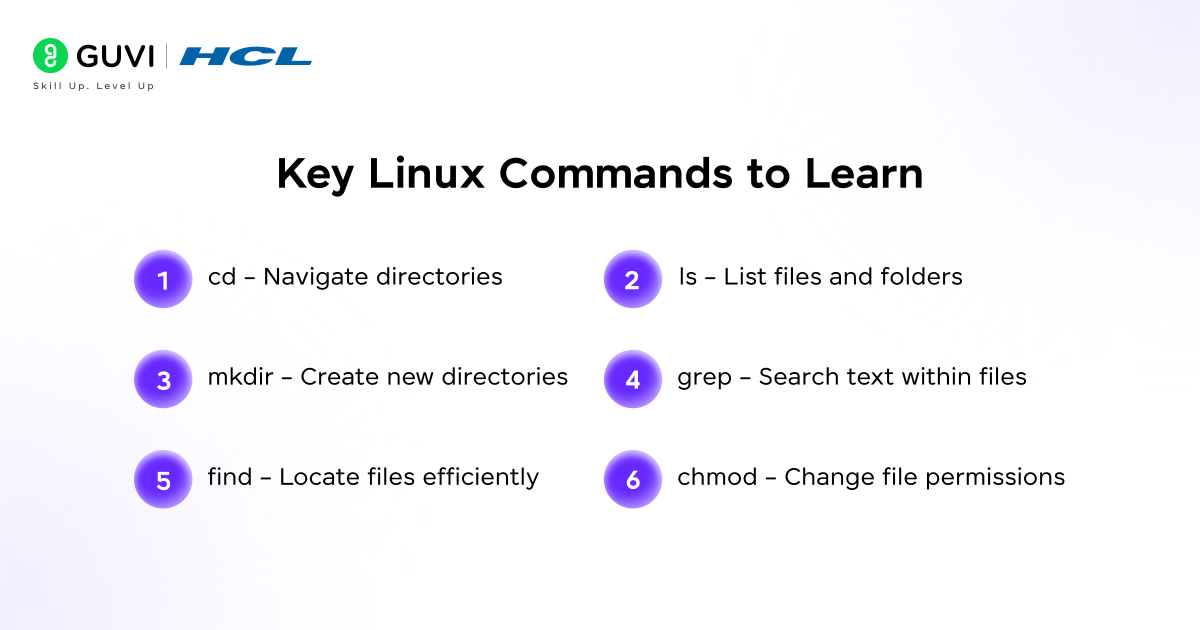
- Essential Linux commands: Learn cd, ls, mkdir, grep, find, and chmod. These commands help you navigate and work efficiently.
- File handling & automation basics: Understand how to create, move, and search files. Learn simple shell scripts for repetitive tasks.
- Why Linux is mandatory in VLSI companies: All professional VLSI tools run on Linux systems. You’ll use terminals daily at work. Companies expect every engineer to know Linux basics.
Practice Linux commands for one week until they become natural.
Step 4: RTL Design Using Verilog / System Verilog
RTL design fundamentals: RTL (Register Transfer Level) means writing code that describes hardware. You define how data moves between registers.
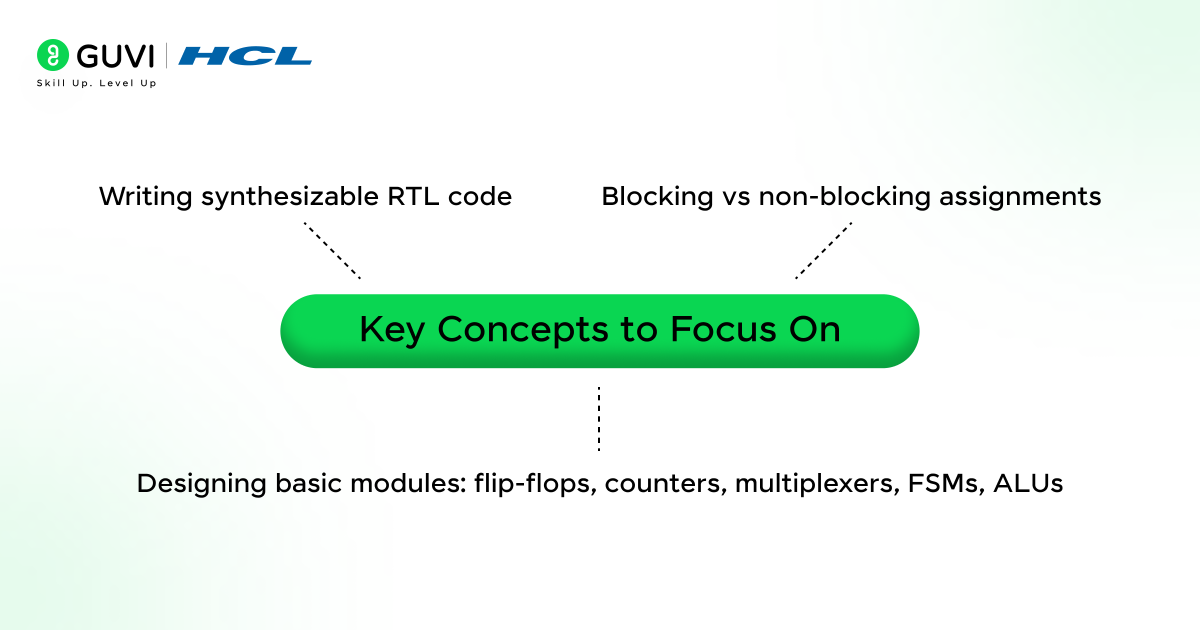
Verilog vs SystemVerilog: Verilog is the foundation language for hardware design. SystemVerilog adds advanced features useful for both design and verification. Start with Verilog first.
Writing synthesizable RTL code: Not all code converts to actual hardware. Learn the rules for writing code that synthesis tools can turn into physical circuits.
Common fresher mistakes:
- Using delays in synthesizable code
- Mixing blocking and non-blocking assignments incorrectly
- Creating latches by accident
- Writing poor coding style
Spend six to eight weeks mastering Verilog. Write small designs like counters, ALUs, FSMs, and simple processors.
Starting your VLSI journey? Strengthen your digital electronics, programming, and problem-solving fundamentals with beginner-friendly tutorials, Python Handbook, Operating System Tutorial, and hands-on learning resources on HCL GUVI Learn Hub
Step 5: Simulation & Functional Verification
- Testbench basics: Create separate code that tests your RTL design. Testbenches apply inputs and check if outputs are correct.
- Simulation flow: Run your design with test inputs. Watch signal waveforms to verify behavior matches specifications.
- Debugging strategies: Learn to read waveforms, trace signal values, and find logic errors. Good debugging skills save hours of work.
- Tools awareness (industry standard): ModelSim, Questa, and VCS are popular simulation tools. Understand simulation concepts, not just specific tool buttons.
Practice building testbenches for every design you create.
Step 6: Introduction to VLSI Verification & UVM
- Verification flow overview: Verification engineers create comprehensive tests to find bugs before manufacturing. This prevents costly chip failures.
- UVM basics for freshers: Universal Verification Methodology is the industry standard framework. Learn basic components like drivers, monitors, and scoreboards.
- Assertions & coverage concepts: Assertions automatically check conditions during simulation. Coverage measures how thoroughly you tested the design.
- Verification engineer career scope: Verification roles are abundant and well-paid. Many companies specifically hire verification freshers. If you enjoy finding bugs and problem-solving, this path offers excellent opportunities.
Step 7: Synthesis & Static Timing Analysis (STA)
RTL to gate-level flow: Synthesis converts your RTL code into actual logic gates using standard cell libraries.
Setup, hold & clock concepts:
- Setup time: Data must be stable before the clock edge
- Hold time: Data must remain stable after the clock edge
- Clock concepts: Understanding clock domains and frequency
Timing closure basics: Ensuring all signals meet timing requirements. This prevents chip failures and performance issues.
Industry importance: Every VLSI engineer must understand timing. Interview questions always include STA concepts. Master these thoroughly.
Step 8: Physical Design (Backend VLSI Flow)
- Floorplanning concepts: Deciding where major circuit blocks sit on the chip. Good floorplanning reduces wire length and improves performance.
- Placement & routing basics: Placing standard cells optimally and connecting them with metal wires. This step determines final chip performance.
- Power, performance & area (PPA): Balancing three critical factors. Chips need low power consumption, high speed, and small size.
- Backend fresher roles: Physical design has numerous job openings. Companies actively hire freshers for PPA optimization work.
Read: How to Become a VLSI Designer?
Step 9: DFT Fundamentals
- Scan chains & ATPG basics: Scan chains make internal chip signals accessible for testing. ATPG (Automatic Test Pattern Generation) creates test patterns to detect manufacturing defects.
- Why DFT is in high demand: Testing ensures chip quality. Every manufactured chip needs thorough testing. DFT skills are valuable and sought-after. Entry-level opportunities in DFT: Many companies hire DFT freshers specifically. Competition is lower compared to other domains, making it easier to get your first job.
Step 10: Tools, Projects & Practical Exposure
Overview of VLSI tools (no tool piracy): Industry uses Synopsys, Cadence, and Mentor Graphics tools. Use free academic versions or open-source alternatives for learning.
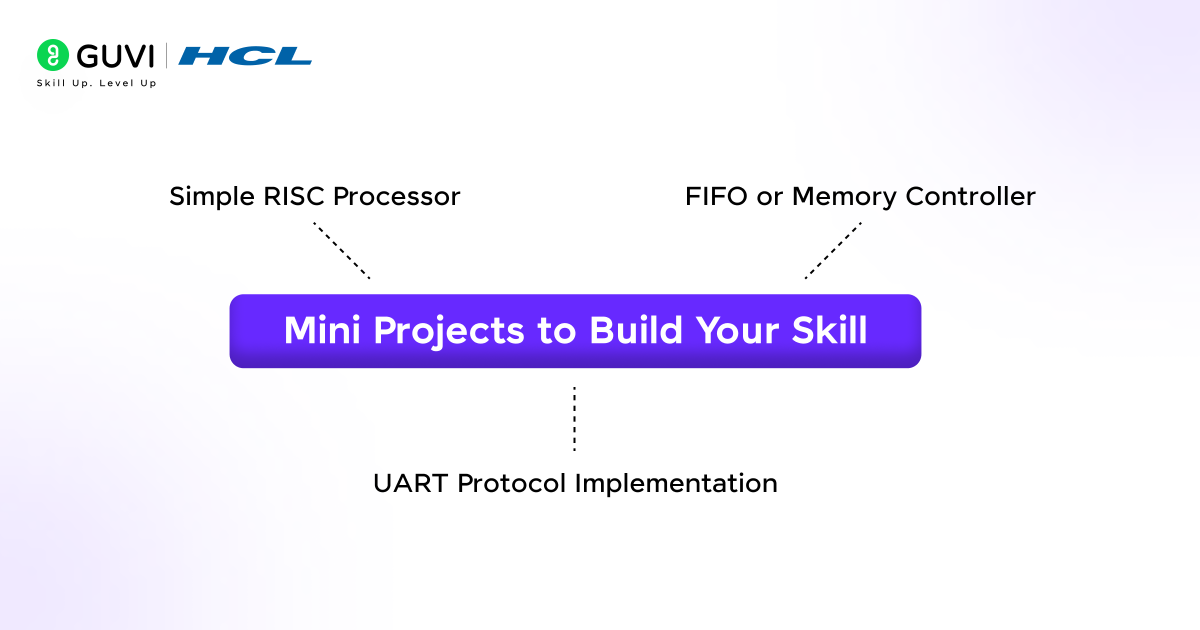
Mini projects for students: Build projects demonstrating your skills:
- Simple RISC processor
- FIFO or memory controller
- UART protocol implementation
- Any verification project
- How to gain hands-on experience: Create GitHub repositories with your projects. Contribute to open-source hardware projects. Participate in online VLSI challenges.
Projects prove your practical knowledge to employers.
Step 11: Resume, Interviews & Job Readiness
Fresher-friendly VLSI resume tips:
- Highlight relevant coursework and skills
- List projects with technical details
- Mention tools and languages clearly
- Keep it concise and error-free
- Project-based interview prep: Explain your projects deeply. Interviewers ask detailed questions about implementation choices and challenges faced.
- Internship vs full-time strategy: Internships provide industry exposure. Many companies convert strong interns to full-time employees. Apply for both simultaneously.
- Global hiring trends: VLSI opportunities exist worldwide. India’s semiconductor ecosystem is expanding. The USA, Taiwan, and Europe offer excellent packages. Remote positions are increasing.
Read: Top VLSI Engineer Skills
No programming experience? Start with HCL GUVI’s free C handbook before picking a project — it explains variables, loops, functions, and pointers from absolute scratch: C Programming Tutorial
Frontend vs Backend VLSI: How to Decide Your Path in the VLSI Roadmap
| Parameter | Frontend VLSI | Backend VLSI |
| Core Skills Required | RTL coding (Verilog/SystemVerilog), functional verification, timing analysis | Physical design, floorplanning, placement & routing, PPA optimization, layout |
| Primary Focus Area | Design and verification of digital logic | Chip implementation and optimization |
| Learning Difficulty | Moderate – strong logic and coding skills required | Moderate to High – requires spatial understanding and physical design concepts |
| Coding Requirement | High (RTL & verification languages) | Medium (scripts + tool-driven flow) |
| Visualization\Spatial Skills | Low to Medium | High |
| Salary Expectation | Competitive fresher and experienced packages | Often slightly higher than frontend roles |
| Growth Potential | Often slightly higher than frontend roles | Very strong due to specialization |
| Special Note | Verification engineers can earn more than both frontend and backend roles | Highly valued for advanced-node designs |
Best choice for freshers: Try both during learning. Your interest will guide you. Both paths offer excellent career growth.
How Long Does It Take to Learn VLSI?
- 6-month learning plan: Focus intensely on one domain. Master fundamentals, RTL design, and either verification or physical design. Build three solid projects. Start applying for internships.
- 12-month structured roadmap: Cover multiple domains comfortably. Learn frontend and backend basics thoroughly. Complete five projects. Prepare comprehensively for interviews.
Daily study schedule suggestion:
- 2 hours learning concepts
- 2 hours hands-on practice
- 1 hour project work
- Regular revision on weekends
Want to learn VLSI Design and Verification skills and start an exciting career as a VLSI Engineer? HCL GUVI’s VLSI Design & Verification Course is your ticket into the semiconductor world.
This course teaches you everything important: RTL design, FPGA prototyping, ASIC flow, verification methods, and popular industry tools like Verilog, VHDL, and SystemVerilog.
These are the key skills you need to succeed in chip design and manufacturing. You’ll learn from real industry experts, get practical hands-on practice, and be ready to work at leading VLSI companies.
What are all the Common Mistakes Students Make While Following a VLSI Roadmap
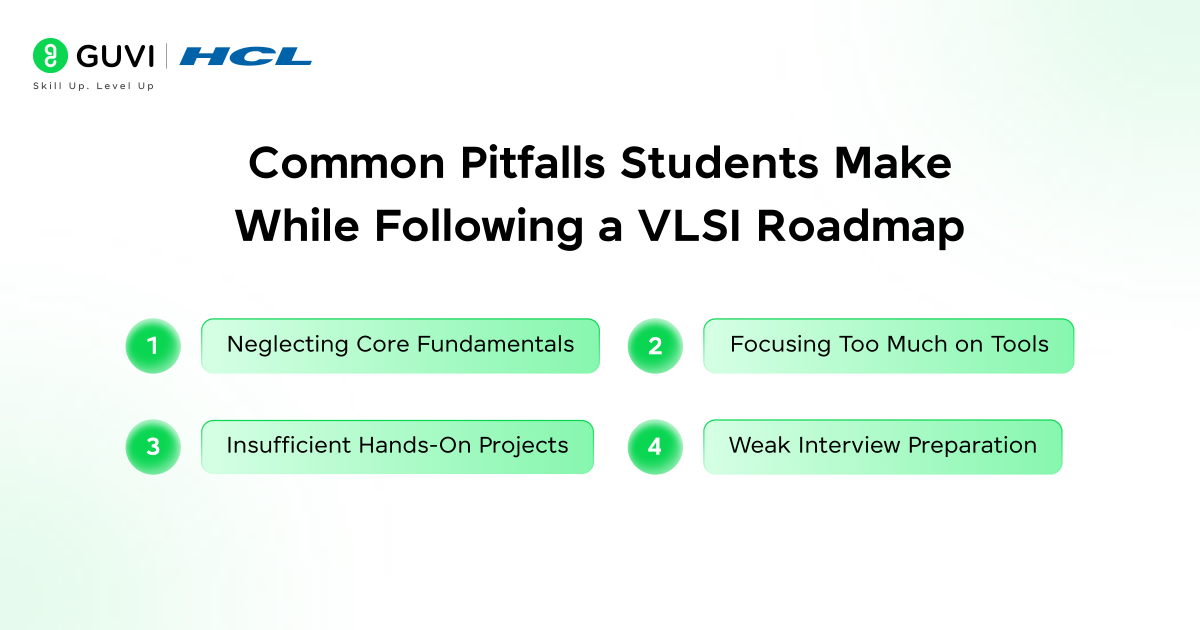
- Skipping fundamentals: Don’t rush to advanced topics. Strong basics help you learn everything else faster and perform better in interviews.
- Tool-focused learning: Don’t obsess over specific tools. Learn concepts first. Tools change frequently, but concepts remain constant.
- Lack of projects: Reading tutorials isn’t enough. Build projects that demonstrate your practical skills. Employers want to see what you can do.
- Poor interview preparation: Technical knowledge alone doesn’t guarantee jobs. Practice explaining concepts clearly and solving problems under time pressure.
Conclusion
The VLSI field offers strong career growth and long-term stability. By following a clear roadmap, building skills step by step, and staying consistent, you can prepare yourself for industry demands. Start early, practice regularly, and stay focused. Your journey toward a successful VLSI engineering career begins today.
Frequently Asked Questions
1. Is VLSI hard for freshers?
VLSI requires patience and consistent practice, but it’s definitely learnable. Following a structured VLSI learning roadmap makes it manageable. Thousands of freshers successfully enter this field every year.
2. Can non-ECE students learn VLSI?
Yes, absolutely. Basic electronics understanding helps, but motivated students from any background can learn VLSI. Focus on building fundamentals systematically and you’ll succeed.
3. Is coding mandatory?
Yes, but it’s hardware coding (Verilog/SystemVerilog), which is different from software coding. You also need basic programming skills for automation and scripting tasks.
4. Do VLSI jobs require M.Tech?
No, not mandatory for most positions. A strong bachelor’s degree with excellent projects and skills gets you jobs. Master’s degrees help for specialized research roles and certain abroad opportunities.
5. What is the salary for VLSI freshers?
VLSI freshers in India typically earn ₹3-6 lakhs per year, depending on the company and your skills. With good projects and internship experience, you can expect higher packages. Top companies and MNCs often offer ₹6-10 lakhs for talented freshers.
6. How long does it take to learn VLSI?
With dedicated effort, you can learn VLSI basics in 6-9 months. Becoming job-ready usually takes 10-12 months of consistent learning and practice. The timeline depends on your background and how much time you invest daily.
7. Which companies hire VLSI engineers?
Major companies include Intel, Qualcomm, NVIDIA, AMD, Broadcom, Texas Instruments, Samsung, MediaTek, and Indian companies like Semiconductor Labs and startups. Many automotive and IoT companies also hire VLSI engineers.
8. Is VLSI a stable career choice?
Yes, very stable. The semiconductor industry is growing rapidly with increasing demand for chips in AI, automotive, 5G, and IoT. VLSI skills remain relevant for decades, making it a future-proof career.
9. What’s the difference between VLSI design and verification?
Design engineers create chip circuits and write RTL code. Verification engineers test these designs to find bugs and ensure they work correctly. Both roles are equally important and well-paid.
10. Can I learn VLSI online?
Absolutely. Many professionals have learned VLSI through online courses. The key is choosing courses with hands-on projects, practical labs, and mentor support to guide your learning journey.
Success Stories

About the Author
Salini Balasubramaniam
A curious, information-savvy writer loves to turn deep insights into authentic and engaging content that connects. With experience in writing for brands and driving audience engagement, I believe that words can make a powerful difference.
View all posts by Salini Balasubramaniam
Connect with me @














Did you enjoy this article?