


Java Articles
Kafka Streams Tutorial: Build Your First Data Pipeline
What is ArrayList in Java: A Complete Guide
What is HashMap in Java: How It Works, Methods, and Examples


Get In Touch For Details! Request More Information
Is Java Still Relevant in 2026? 10 Reasons to Learn Java
Sep 23, 2026 4 Min Read 9712 Views
(Last Updated)
Have you ever wondered what it takes to build seamless, scalable applications that power everything from enterprise systems to cloud-based platforms? Becoming a Java Full Stack Developer opens doors to crafting solutions that define modern technology.
Java’s unparalleled reliability, cross-platform capabilities, and rich ecosystem of frameworks make it the ideal choice for developers aiming to master both backend and frontend development. This article will guide you through the top reasons to learn Java and why it is still relevant!
Table of contents
- AI Overview
- Why Java Is Still Relevant in 2026
- Why Java Is Still Relevant in 2026
- Enterprise-Grade Reliability
- Cross-Platform Compatibility (WORA)
- Thriving in Cloud Computing
- Active Language Evolution
- Extensive Libraries and Frameworks
- Security and Stability
- Strong in Big Data and AI
- Java in Android Development
- Job Market and Career Opportunities
- Future-Proof with Long-Term Support (LTS)
- What Makes Java Different From Newer Programming Languages?
- Java 25 LTS: What Developers Should Know in 2026
- Java in 2026: Key Facts
- Wrapping Up
- Frequently Asked Questions
- Why is Java still relevant in 2026?
- Is Java still a good language for beginners?
- How does Java's security make it relevant in 2026?
AI Overview
Java is still relevant in 2026 because it remains widely used for enterprise software, backend development, cloud applications, microservices, and large-scale systems. Its mature ecosystem, backward compatibility, regular releases, and long-term support options continue to make it a practical choice for developers and businesses.
Why Java Is Still Relevant in 2026
- Strong adoption in enterprise and backend development
- Mature ecosystem with Spring, Hibernate, Maven, and other tools
- Support for cloud-native and microservices development
- Regular Java releases and modern language improvements
- Java 25 is the current LTS release
- Large existing codebases create continued demand for Java skills
- Strong performance, portability, and JVM ecosystem
- Continued use in finance, e-commerce, enterprise, and other industries
Why Java Is Still Relevant in 2026
| Area | Java in 2026 | Why It Matters |
|---|---|---|
| Enterprise Development | Widely used for large-scale applications | Supports long-term, maintainable systems |
| Backend Development | Strong ecosystem with Spring and Spring Boot | Useful for APIs, web applications, and microservices |
| Cloud Computing | Supported across major cloud platforms | Suitable for scalable cloud applications |
| Performance | JVM provides mature runtime optimization | Useful for high-throughput applications |
| Ecosystem | Large collection of frameworks and libraries | Reduces development effort |
| Security | Strong typing, mature libraries, and security tooling | Useful for applications handling sensitive data |
| Developer Skills | Java knowledge transfers to frameworks and JVM technologies | Supports backend and full-stack career paths |
| Long-Term Support | Java 25 is the latest LTS release | Gives organizations a stable upgrade path |
| Modern Features | Records, pattern matching, virtual threads, and other improvements | Keeps the language relevant for modern development |
1. Enterprise-Grade Reliability
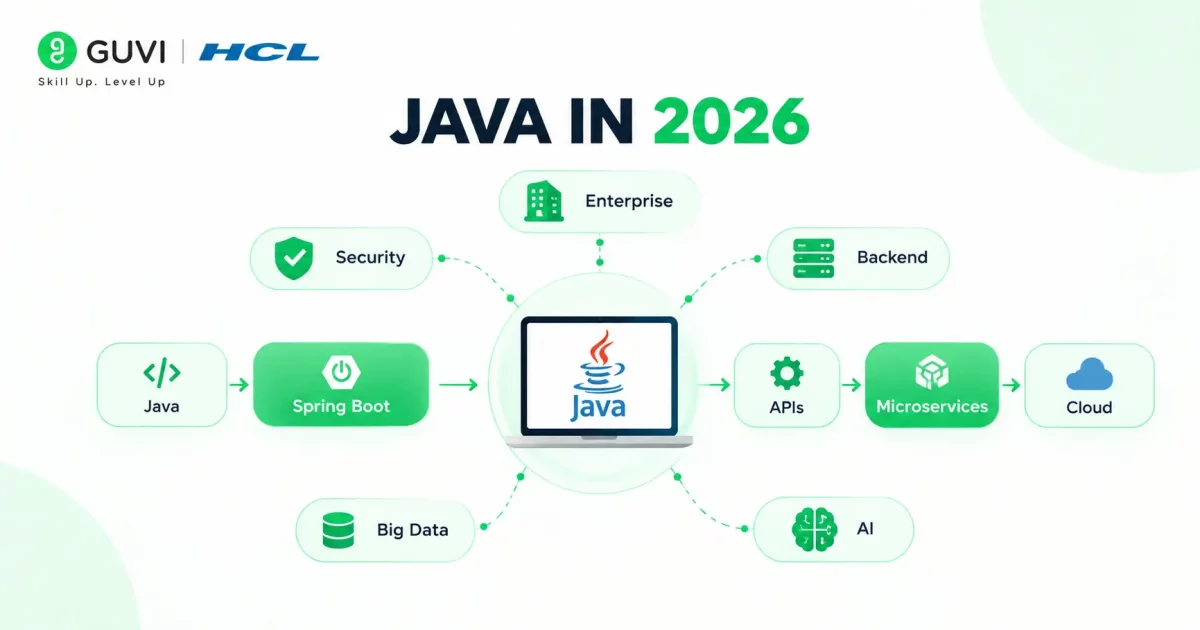
Java is the go-to language for enterprise applications due to its reliability and scalability. Large companies, including banks, insurance firms, and government institutions, still trust Java to build secure, high-performance systems. Its robust frameworks like Spring and Java EE enable developers to create complex, scalable solutions, keeping Java entrenched in the enterprise world.
2. Cross-Platform Compatibility (WORA)
Java’s core principle of Write Once, Run Anywhere (WORA) remains a crucial reason for its relevance. Java applications can run on any device with a Java Virtual Machine (JVM), making it ideal for cross-platform development. Whether it’s desktops, servers, or embedded devices, Java’s platform independence is a key advantage in 2026.
3. Thriving in Cloud Computing
Cloud computing is the backbone of modern application development, and Java is deeply integrated into this ecosystem. Java supports leading cloud platforms like AWS, Microsoft Azure, and Google Cloud, making it a prime choice for building cloud-native applications. With microservices architectures thriving in the cloud, Java’s Spring Boot framework shines for creating scalable, cloud-based systems.
4. Active Language Evolution
Java has undergone continuous improvements, with new releases every six months since 2017. These updates introduce modern features like records, sealed classes, and pattern matching, ensuring that Java remains competitive with newer languages. Java 17 and Java 21 (LTS releases) have added features that make it easier for developers to write clean, efficient code while retaining backward compatibility.
5. Extensive Libraries and Frameworks
Java’s ecosystem offers a vast array of libraries, frameworks, and APIs that speed up development and reduce boilerplate code. Popular frameworks like Spring, Hibernate, and Maven help developers build everything from simple web apps to large-scale enterprise systems. This rich ecosystem makes Java a powerful tool for tackling almost any software development challenge.
6. Security and Stability
Java is known for its robust security features, which is why it’s used in industries that require high security, such as finance and healthcare. Features like the Security Manager and sandboxing allow developers to restrict the execution of untrusted code. The language’s focus on backward compatibility ensures long-term stability for mission-critical systems that rely on older versions.
7. Strong in Big Data and AI
Java plays a significant role in big data and machine learning. Many big data frameworks, including Apache Hadoop and Apache Spark, are written in Java, making it essential for handling massive datasets. In AI and machine learning, Java frameworks like DeepLearning4J provide powerful tools for building AI applications in enterprise environments, where performance and scalability are critical.
8. Java in Android Development
Although Kotlin is now the preferred language for Android development, Java remains relevant. A large portion of existing Android apps is still written in Java, and developers familiar with Java can easily transition to Kotlin. Java’s extensive libraries and tools continue to play a critical role in the Android ecosystem, making it indispensable for mobile app development.
9. Job Market and Career Opportunities
In 2026, Java developers are still in high demand across industries. Many enterprises continue to rely on Java for their backend systems, and as a result, Java job listings remain plentiful. With the growing use of Java in cloud computing, microservices, and big data, professionals skilled in Java are well-positioned for lucrative and stable careers.

Knowing Java powers enterprise systems, cloud platforms, and Android apps is reassuring — but job listings want developers who can actually write it. HCL GUVI’s Code Kata gives you real Java coding problems to build interview-ready skills, so you’re positioned for the demand this article describes.
10. Future-Proof with Long-Term Support (LTS)
Java’s LTS (Long-Term Support) releases, such as Java 11, Java 17, and the upcoming Java 21, provide a stable and reliable platform for businesses that prioritize stability. These LTS releases allow companies to adopt modern Java features while benefiting from extended support and security updates. This gives developers confidence in Java’s longevity and continued relevance.
What Makes Java Different From Newer Programming Languages?
Java is not necessarily the newest or simplest option for every development task, but its strength lies in its combination of maturity, portability, ecosystem support, and long-term maintainability.
Java also continues to evolve. Recent releases have introduced features such as records, pattern matching, virtual threads, and other language and runtime improvements. Oracle’s Java documentation shows that Java 25 continues this evolution rather than simply maintaining legacy functionality.
This means developers can work with a mature platform while still benefiting from newer language and runtime capabilities.
Java 25 LTS: What Developers Should Know in 2026
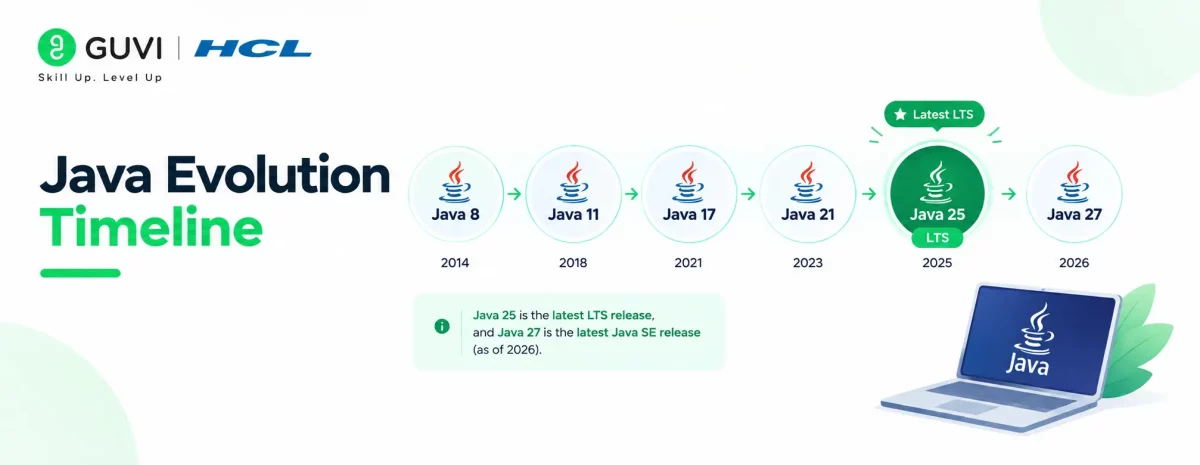
Java follows a regular release cycle, with Long-Term Support releases providing a stable option for organizations that prefer longer maintenance periods. As of 2026, JDK 25 is the latest Long-Term Support release, while JDK 27 is the latest Java SE release.
Java 25 includes language, library, runtime, security, and performance improvements. Its documentation also includes continued work around pattern matching and other modern Java capabilities.
For learners, this means you do not need to learn Java as an unchanged legacy language. Modern Java includes features designed to make development more expressive and efficient while retaining compatibility with the broader Java ecosystem.
Java in 2026: Key Facts
- Java 25 is the latest Long-Term Support release.
- Java 27 is the latest Java SE release as of September 2026.
- Java continues to receive regular feature releases.
- Modern Java includes capabilities such as records, pattern matching, and virtual threads.
- Java remains widely used across enterprise and backend development.
- The Java ecosystem continues to expand around Spring Boot, cloud platforms, databases, messaging, testing, and microservices.
Unlock your potential as a Java Full-Stack Developer with our comprehensive Java Full-Stack development course! Dive deep into the world of Java, mastering front-end and back-end development to build powerful, dynamic web applications. Gain hands-on experience with essential tools and frameworks like Spring Boot, Hibernate, Angular, and React, all while learning best practices for performance optimization and scalable coding. Start your journey today and become the all-in-one developer every company is searching for!
Wrapping Up
Becoming a Java Full-Stack Developer is more than just learning a language; it’s about embracing an ecosystem that supports innovation, security, and scalability. Java’s robust frameworks, active evolution, and integration with cloud computing ensure that your skills will remain in demand across industries.
As you step into this dynamic field, remember that mastering Java is not just about staying relevant but about shaping the future of technology. With endless opportunities in enterprise systems, big data, and even mobile app development, your career as a Java Full Stack Developer is poised for long-term success. Let Java be your gateway to a future-proof and impactful career!
Frequently Asked Questions
Why is Java still relevant in 2026?
Java continues to be relevant due to its stability, scalability, and widespread use in enterprise applications, mobile development (via Android), and its robust ecosystem of libraries and frameworks.
Is Java still a good language for beginners?
Yes, Java is still an excellent language for beginners due to its simple syntax, strong community support, vast learning resources, and ability to easily transition to other programming languages.
How does Java’s security make it relevant in 2026?
Java’s extensive built-in security features, including encryption, authentication, and access control, make it a go-to choice for secure enterprise applications and sensitive data handling.
Success Stories

About the Author
Chittaranjan Ghosh
Java Corporate Trainer with 9+ years of experience, currently honing skills and inspiring learners at GUVI. Passionate about simplifying complex concepts and empowering the next generation of developers. Let's code and grow together!
View all posts by Chittaranjan Ghosh
Connect with me @


















Did you enjoy this article?