


Career Articles
Accountant vs Data Analyst Salary in India After Switching Careers - Best Guide
Finance Managers: Could Data Science Be Your Next Career Move?
Insurance Claims Executive to Data Analyst: Is It a Good Switch?
Banking Executive (Loans, KYC) to Data Analyst: Skills and Career Path


Get In Touch For Details! Request More Information
Technical Project Manager vs Project Manager 2026
Aug 05, 2026 4 Min Read 3532 Views
(Last Updated)
A Technical Project Manager manages engineering-heavy projects using deep tech knowledge of code, cloud, and system design. A Regular Project Manager manages timelines, budgets, and people across any industry, without needing technical depth.
So what’s the actual difference between Technical Project Manager vs Project Manager? Read the blog to know more about the topic. Here, this guide breaks everything down in the simplest way so you can figure out which path matches your skills, your goals, and the future you want to build.
Table of contents
- TL;DR Summary
- Current Landscape for Project Management
- Technology Integration
- Agile and Hybrid Methodologies
- Emphasis on Soft Skills
- Technical Project Manager vs Project Manager: Quick Comparison Table
- What is a Technical Project Manager?
- Skills a Technical PM Needs in 2026
- What is a Regular Project Manager?
- Skills a Regular PM Needs in 2026
- How the Two Roles Work Differently Day to Day
- Top Technical Project Manager Roles in India 2026
- Technical PM vs Project Manager Salary in India (2026)
- Which Path Should You Choose?
- Conclusion
- FAQs
- What is the difference between a Technical Project Manager and a Project Manager?
- Do Technical Project Managers need to know how to code?
- Which pays more, Technical PM or Regular PM, in 2026?
- Can a Regular Project Manager become a Technical Project Manager?
- Which industries hire the most Technical Project Managers in India?
TL;DR Summary
- Technical Project Manager (TPM): Works closely with engineers, understands APIs, cloud platforms, and system architecture, and usually earns more in tech hubs like Bengaluru and Hyderabad.
- Regular Project Manager (PM): Focuses on budgets, schedules, and stakeholder coordination, and can work across construction, retail, marketing, or IT.
- Salary in India (2026): Technical PMs typically earn between ₹14 LPA and ₹33 LPA, while regular PMs typically earn between ₹7 LPA and ₹23 LPA, depending on experience and city.
- Best fit: Choose Technical PM if you already have a tech background and enjoy solving engineering problems. Choose Regular PM if you’re strong at organizing people and processes across industries.
Current Landscape for Project Management
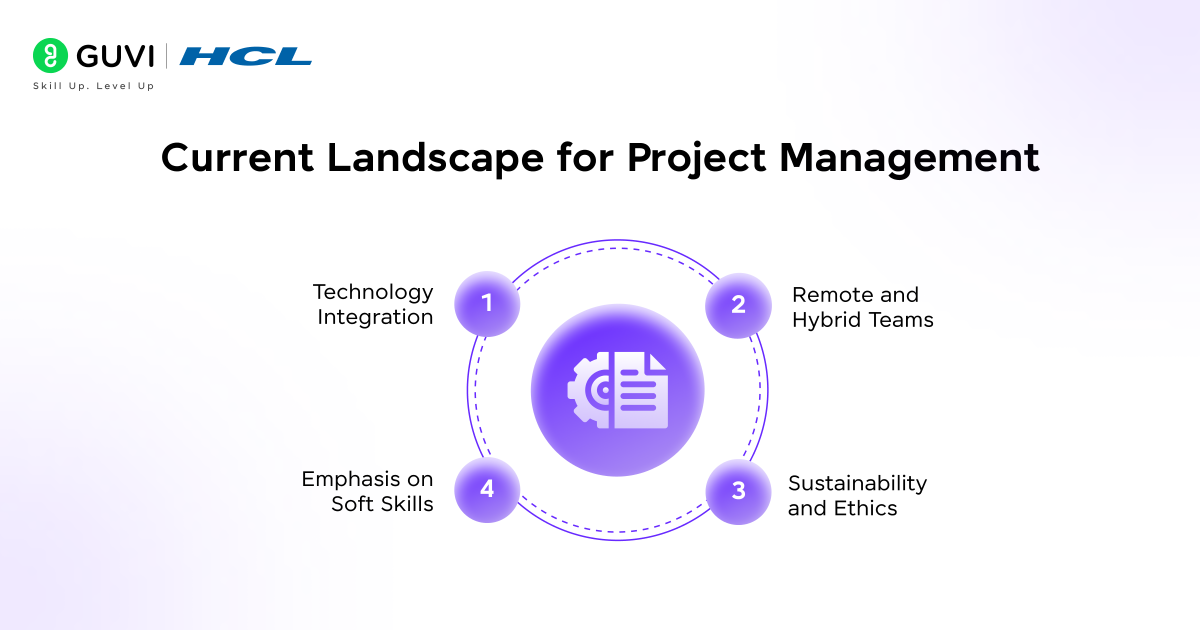
Over the next decade, project management jobs will grow by 33%, which equals almost 22 million new jobs across 11 major countries. Here are the major trends in project management.
Technology Integration
AI, automation, and data analytics are transforming project management by automating scheduling, risk prediction, and resource planning.
Remote and Hybrid Teams
As remote and hybrid work grow, strong digital communication is essential. Project managers depend on collaboration tools to keep dispersed teams aligned, engaged, and productive across time zones.
Agile and Hybrid Methodologies
Traditional waterfall methods are fading because they’re too rigid for today’s fast-changing work environments. Teams now prefer hybrid approaches that blend structure with Agile flexibility for better results.
Emphasis on Soft Skills
As technology handles more routine tasks, soft skills are becoming essential. Project managers rely on leadership, communication, and emotional intelligence to motivate teams and manage complex stakeholder relationships.
Explore Project Management Course by HCL GUVI, a short-term, self-paced program with global certifications. Learn key concepts from beginner to advanced levels, all in the comfort of your preferred language.
- Millions of new project management jobs will be created by 2027.
- China and India will lead this growth.
- Project managers are essential for productivity.
- Not having enough project managers could cost the world billions of dollars.
Technical Project Manager vs Project Manager: Quick Comparison Table
| Factor | Technical Project Manager | Regular Project Manager |
|---|---|---|
| Core focus | System design, feasibility, and engineering execution | Budgets, timelines, and stakeholder coordination |
| Background needed | Coding basics, cloud, APIs, SDLC | Business, operations, or general management |
| Common tools | Jira, GitHub, Jenkins, Azure DevOps | MS Project, Asana, Trello, Excel |
| Team managed | Developers, QA, DevOps engineers | Business teams, vendors, cross-functional staff |
| Typical industries | Software, fintech, cybersecurity, SaaS | Construction, retail, marketing, healthcare |
| India salary range (2026) | ₹14 LPA to ₹33 LPA | ₹7 LPA to ₹23 LPA |
| Career ceiling | CTO, VP of Engineering | PMO Director, Program Manager |
What is a Technical Project Manager?
A Technical Project Manager (TPM) doesn’t need to write production code every day, but understands enough about how software gets built to make informed calls on architecture, timelines, and trade-offs.
You’ll usually find TPMs sitting between engineering and business teams. They translate business requirements into technical specifications, and explain technical constraints back to stakeholders in plain language.
What a TPM actually does:
- Works with engineers to assess whether an idea is technically feasible
- Coordinates development, QA, and security teams so nothing breaks at the handoff
- Flags technical risks early, like scalability limits or fragile system design
- Makes build-versus-buy and architecture decisions alongside tech leads
Skills a Technical PM Needs in 2026
- Working knowledge of SDLC and Agile/Scrum
- API design and system integration basics
- Cloud fundamentals (AWS, Azure, or GCP)
- CI/CD and version control (Git)
- Database fundamentals
- Ability to translate technical risk into business language
What is a Regular Project Manager?
A Regular Project Manager (also called a generalist PM) makes sure a project finishes on time, stays within budget, and matches what stakeholders asked for. You don’t need a technical background for this role.
Regular PMs are the connective tissue of a project. They run status meetings, track deliverables, manage vendor contracts, and keep everyone aligned on what’s next.
What a regular PM actually does:
- Builds and maintains the project schedule
- Tracks budget and controls scope creep
- Runs stakeholder communication end to end
- Identifies risks and creates contingency plans

Skills a Regular PM Needs in 2026
- Scheduling and resource planning
- Budget forecasting and vendor management
- Stakeholder communication and negotiation
- Risk identification and mitigation
- Proficiency with project tracking tools
How the Two Roles Work Differently Day to Day
The clearest way to see the split is in how each PM handles the same situation.
Gathering requirements: A Technical PM asks “what database do we need, and will this scale to 10x users?” A Regular PM asks “what does the client want, and what’s the budget?”
When something breaks: A Technical PM asks whether the system design caused the failure. A Regular PM asks whether the process or team allocation caused the delay.
Working with engineers: A Technical PM earns credibility through technical fluency. A Regular PM trusts engineers on the “how” and focuses on the “when.”
Top Technical Project Manager Roles in India 2026
Technical PM demand is concentrated in a handful of fast-growing sectors right now. If you’re evaluating this path, these are where most of the hiring is happening:
- SaaS and product companies: Roles focused on platform scalability and release cycles
- Fintech and banking tech: Roles requiring compliance-aware architecture decisions
- Cybersecurity firms: Roles managing threat response and secure system rollouts
- AI and ML companies: Roles coordinating model deployment pipelines with engineering
- Cloud infrastructure providers: Roles overseeing migration and DevOps projects
Technical PM vs Project Manager Salary in India (2026)
| Experience Level | Technical PM (Annual) | Regular PM (Annual) |
|---|---|---|
| Entry-level (0 to 3 yrs) | ₹8 LPA to ₹14 LPA | ₹5 LPA to ₹8 LPA |
| Mid-level (4 to 7 yrs) | ₹14 LPA to ₹22 LPA | ₹7 LPA to ₹18 LPA |
| Senior-level (8+ yrs) | ₹22 LPA to ₹33 LPA+ | ₹14 LPA to ₹23 LPA |
Figures are drawn from Glassdoor and Payscale India 2026 salary reports and vary by city, employer, and certification.
Which Path Should You Choose?
Go Technical PM if:
- You already have some coding, engineering, or IT background
- You enjoy solving system-level problems, not just tracking tasks
- You’re aiming for a CTO or VP of Engineering track long term
Go Regular PM if:
- You come from business, operations, or a non-tech field
- You want a role that transfers cleanly across industries
- You’re strongest at coordinating people rather than debugging systems
Neither path is objectively better. One rewards technical depth, and the other rewards range.
Conclusion
A Technical Project Manager and a Regular Project Manager both keep projects on track, but they get there differently. One leans on system knowledge, the other on process and people skills. Your existing background is usually the strongest signal for which path fits.
If you’re weighing this decision, start by being honest about what energizes you: solving a scaling problem with engineers, or aligning ten stakeholders on a deadline. That answer usually points you to the right role faster than any salary chart can.
FAQs
What is the difference between a Technical Project Manager and a Project Manager?
A Technical Project Manager manages engineering-heavy projects using system design and coding knowledge, while a Regular Project Manager manages timelines, budgets, and coordination without needing technical depth.
Do Technical Project Managers need to know how to code?
Not necessarily. Most TPMs don’t write production code daily, but understanding APIs, cloud basics, and system design helps them make better calls with engineering teams.
Which pays more, Technical PM or Regular PM, in 2026?
Technical PMs generally earn more in India, especially in tech hubs, with senior roles crossing ₹30 LPA compared to a lower ceiling for most generalist PM roles.
Can a Regular Project Manager become a Technical Project Manager?
Yes. Many PMs move into technical roles by learning cloud fundamentals, Agile frameworks, and tools like Jira, GitHub, and Azure DevOps.
Which industries hire the most Technical Project Managers in India?
Software, fintech, cybersecurity, SaaS, and AI companies are the biggest hirers of Technical PMs in 2026, driven by rapid product and infrastructure scaling.
Success Stories

About the Author
Salini Balasubramaniam
A curious, information-savvy writer loves to turn deep insights into authentic and engaging content that connects. With experience in writing for brands and driving audience engagement, I believe that words can make a powerful difference.
View all posts by Salini Balasubramaniam
Connect with me @















Did you enjoy this article?